
DRIFT AUDIO
Listen to this story
Choose a voice, then press play.
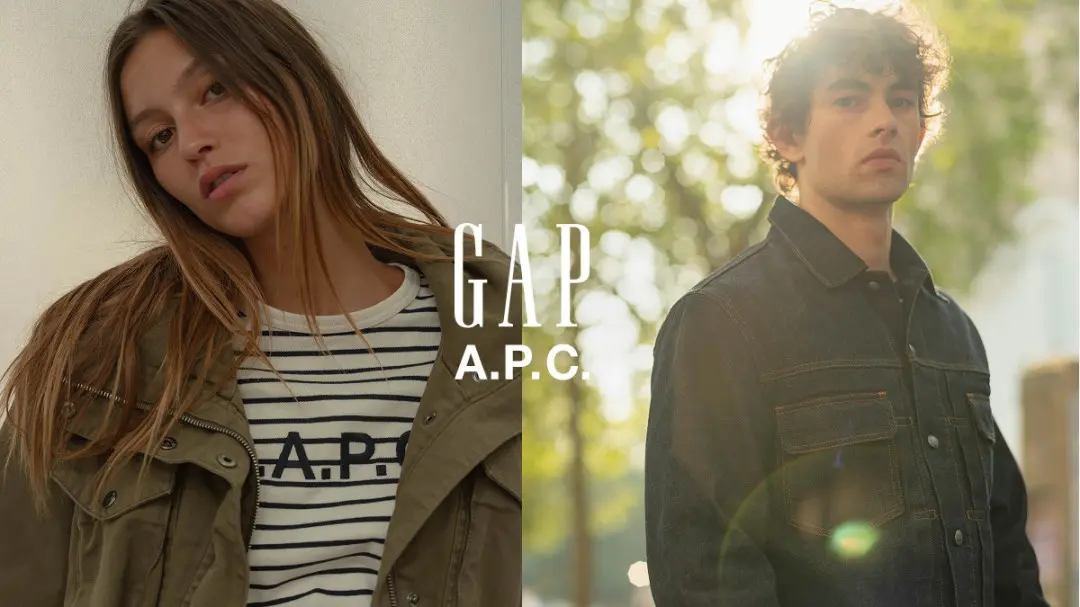
Twenty years after a drink turned into an idea, Gap and A.P.C. open the same door on September 18: a wardrobe built from Montmartre and shopping-mall denim alike.
At 9 a.m. ET on Friday, September 18, Gap opens sales on a 39-piece collection built with A.P.C., the Paris label better known to most people by its full name, Atelier de Production et de Création. The assortment spans menswear, womenswear, and accessories, and it will run to 34 pieces in the UK, where it lands at 2 p.m. BST the same day. Pricing in the US ranges from $28 to $328, per Gap’s own announcement; in the UK, the range is £25 to £245.
The collection sells at gap.com, at ten select Gap stores in the US and Canada, and at A.P.C.’s own Mercer Street store in Manhattan, a fitting detail given that store’s own history with the brand. It will also roll out across Japan, the UK, Europe, Turkey, China, Mexico, Australia, and the Middle East, with launch activations planned in both New York and Tokyo. Members of Gap’s Encore loyalty program and Gap cardholders get first crack at it a day early, on September 17, at a pop-up event in New York and online.
View this post on Instagram
Mark Breitbard, president and CEO of Gap Brand, has framed the project as a matter of shared instinct rather than a strategy memo, crediting the partnership’s origin to what he’s called a mutual pull toward each other’s design values. Jean Touitou has gone further, describing the whole collaboration as an exercise in what he calls “sheer casual,” his own shorthand for the line between dressed-up and relaxed that both brands were chasing. What that shared instinct produced, according to both houses, is less a co-branded capsule than an attempt to merge two ideas of casual dressing that had somehow never formally met: Gap’s mall-born Americana and A.P.C.’s famously austere Left Bank minimal.
The timing isn’t incidental. A.P.C. lands in the middle of what’s become a fairly packed year of outside partnerships for Gap, which has already put out an archive-inspired GapStudio line under Zac Posen, a Reed Krakoff-designed handbag collection, and collaborations with Sean Wotherspoon and Malbon in 2026 alone. Gap’s own corporate materials describe these partner-brand projects, gathered under the internal label GapX, as part of a broader push to stay in cultural conversation, the same push that’s been credited with a sharp rebound in the brand’s standing with younger shoppers, whose TikTok following alone has grown roughly tenfold over the past year according to industry tracking. A.P.C. is by far the most France-forward name on that list.
flow
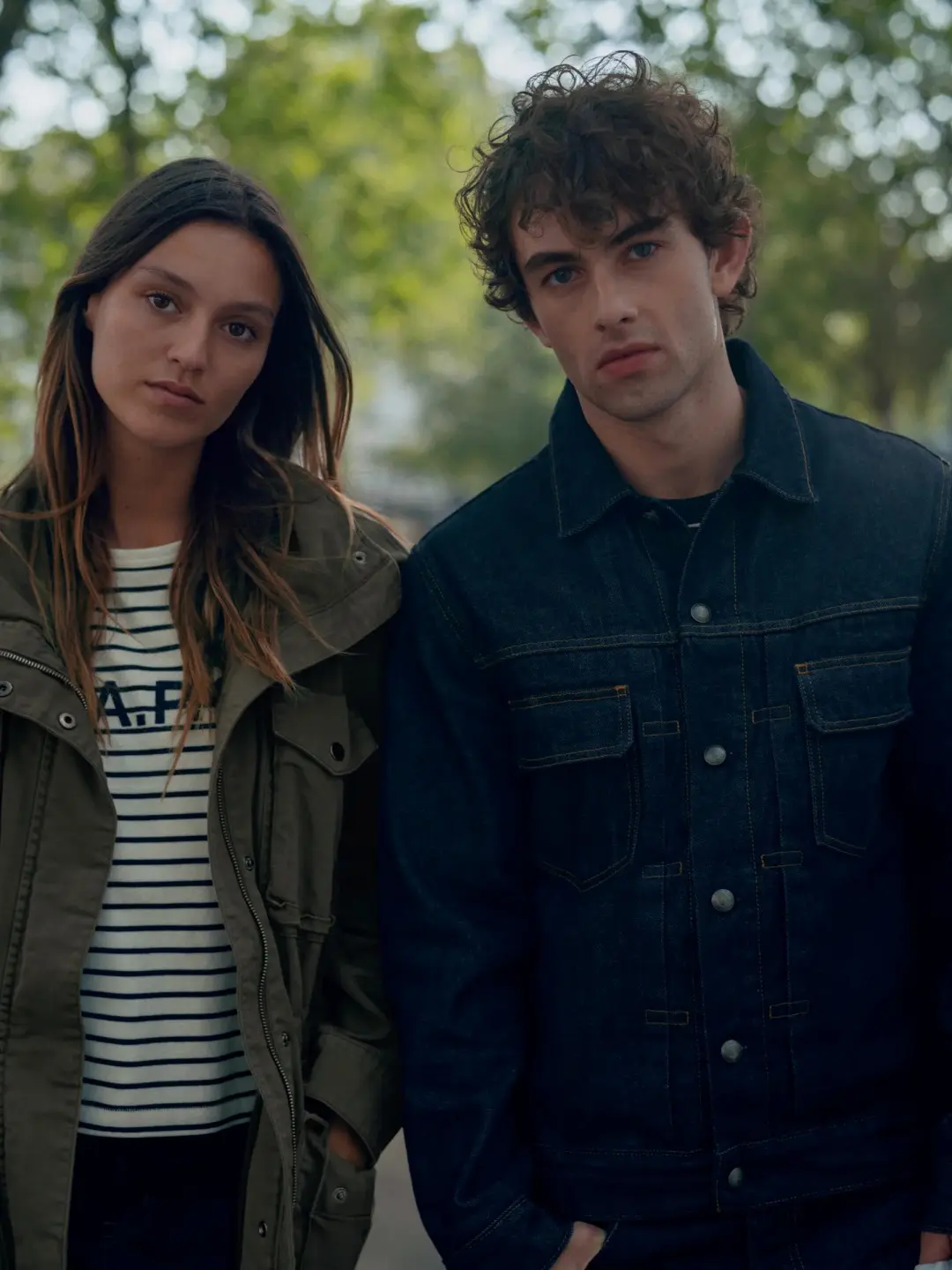
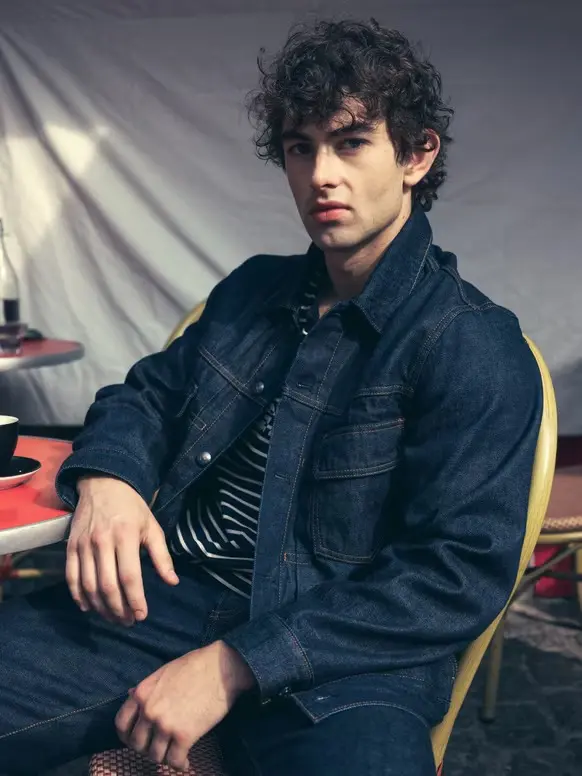
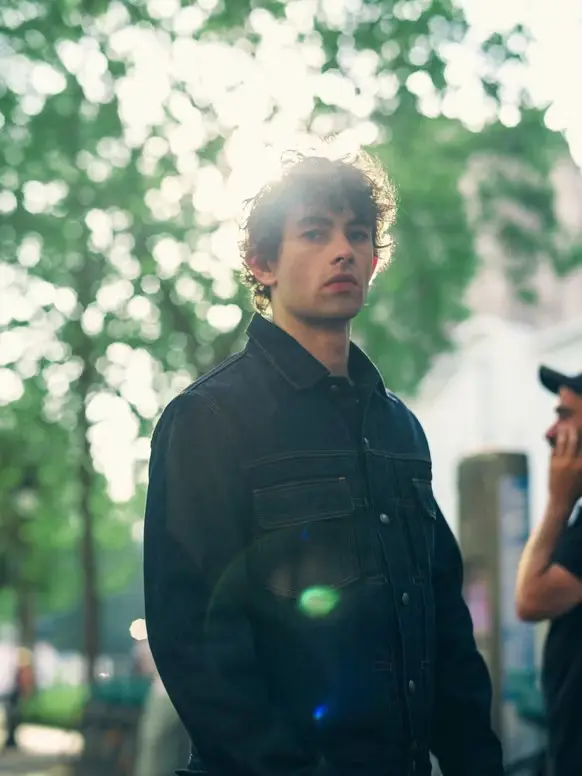
Denim carries the collection, and both brands’ archives did the heavy lifting. On the men’s side, the Denim Jacket and Relaxed Straight Jeans are cut from premium Japanese denim and priced under $200, a nod to the raw Japanese selvage that built much of A.P.C.’s own reputation decades before this partnership existed. Women’s styles lean on Gap’s own well-worn fits, the High Rise Stride and the Low Rise ’90s Loose, both cut in 100% cotton rigid denim, alongside a Shaped Denim Jacket and a classic Icon Denim Jacket finished with an archive-inspired lining.
The wash techniques are deliberately old-fashioned, built to fade and crease the way vintage denim does rather than arrive pre-distressed. Jean Touitou has likened the collection’s cargo jackets, in French military slang, to battle dress. That framing fits the rest of the denim story too: nothing here is meant to look new for long. The goal, by Touitou’s own account elsewhere, was to reach a level of fabric sourcing and construction that reads as A.P.C. without carrying an A.P.C. price tag, a balance he has said the Gap partnership made possible in a way few of his other collide have.
One early hands-on account from a Marie Claire writer who tried the collection ahead of launch noted that the denim runs slightly looser through the leg than expected, with a waistband that sits less cinched than more conventional skinny cuts, something she solved by adding a belt rather than sizing down. The same writer found the fit through the hip and thigh closer to true to size, a detail that lines up with A.P.C.’s own long-standing reputation for jeans that are cut for wear rather than for a single perfect first try-on. Touitou has said he expects pieces from the collection to last in people’s closets for a decade or more, treating longevity as a design requirement for this project rather than a marketing line tacked on after the fact.
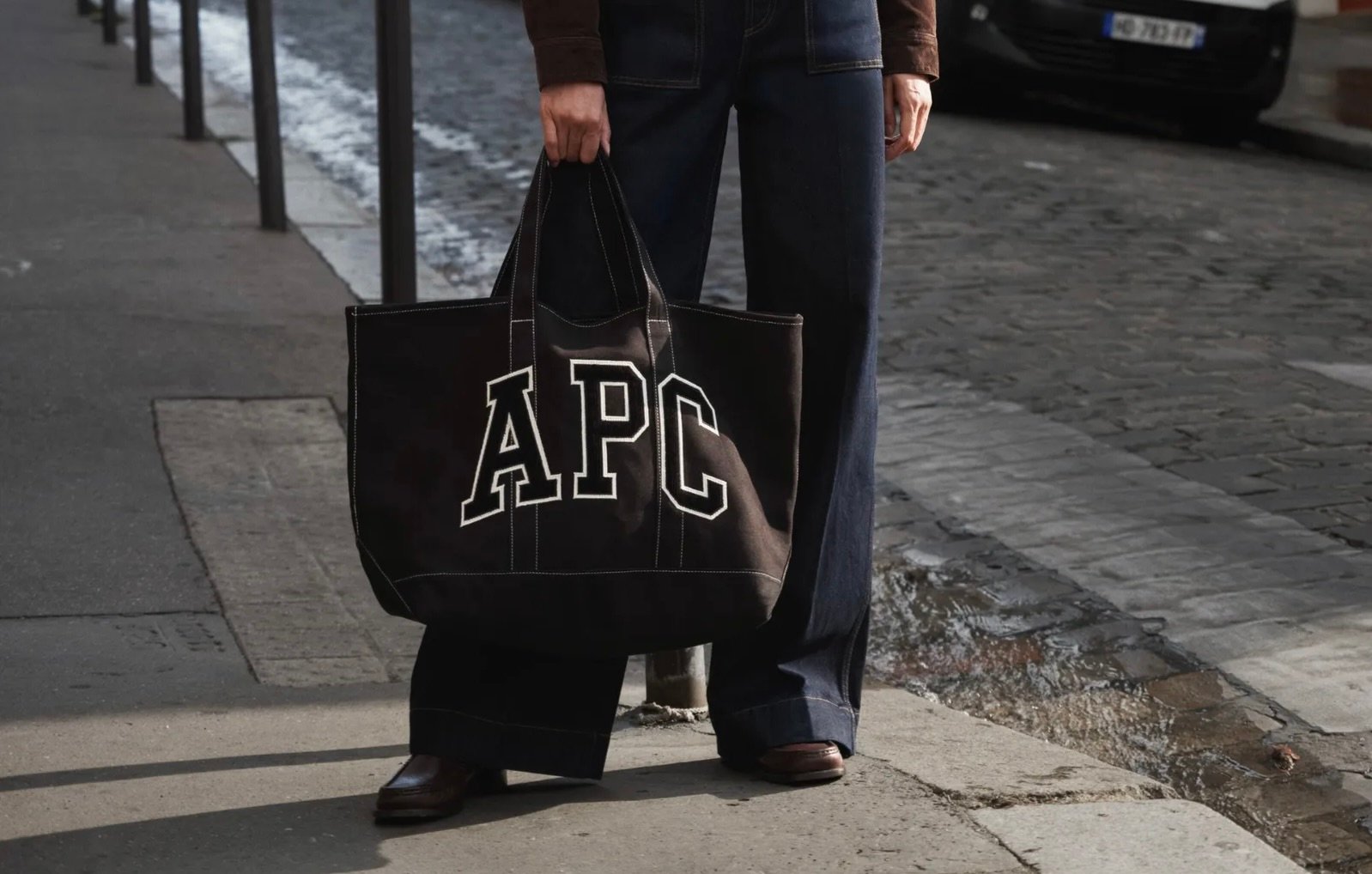
A.P.C. Canvas Tote Bag
stir
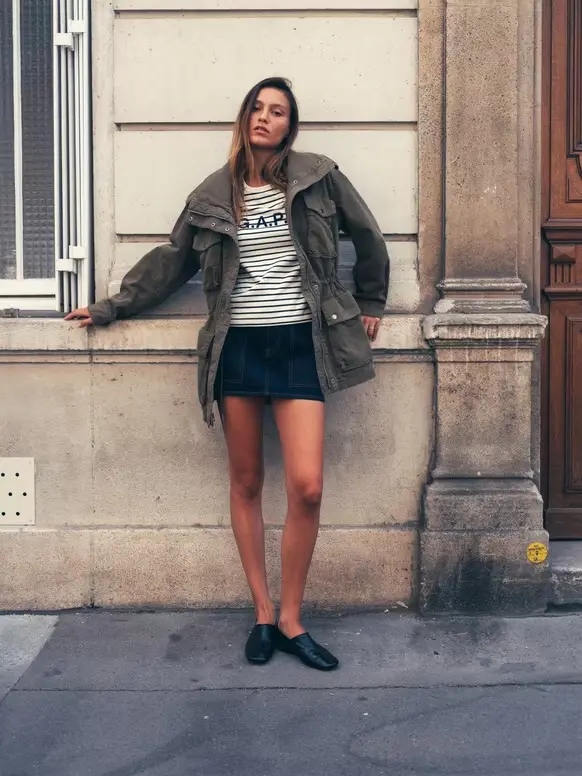
Past the denim, the collection widens into tailoring, Oxford shirting, functional outerwear, knitwear, and accessories, all pulling from a shared, deliberately narrow color story. A reimagined sailor stripe, the kind of Breton pattern A.P.C. has leaned on for years, runs through the range as a connective motif, joined by mod-influenced matching sets, utility detailing, and graphics that carry both brands’ names. Judith Touitou, A.P.C.’s artistic director, has called the stripe motif the collaboration’s signature. Fabrications get more luxurious away from the denim, with cashmere, wool, and corduroy doing most of the work, including an ivory cable-knit cardigan with ribbed collars and cuffs and statement buttons that has already drawn attention as one of the collection’s standout pieces.
An Extra Heavyweight Hoodie and a run of accessories carry a reworked version of Gap’s own arch logo, a small detail that effectively hands A.P.C.’s famously spare branding vocabulary a new, more collectible form. The overall palette stays neutral and restrained, in keeping with what Judith Touitou has described as A.P.C.’s enduring preference for a reduced, almost austere color story. Both Touitous have talked about the pairing as a lesson in elevating basics rather than reinventing them, pairing tailored pieces with the collection’s more relaxed items rather than treating the two as separate wardrobes.
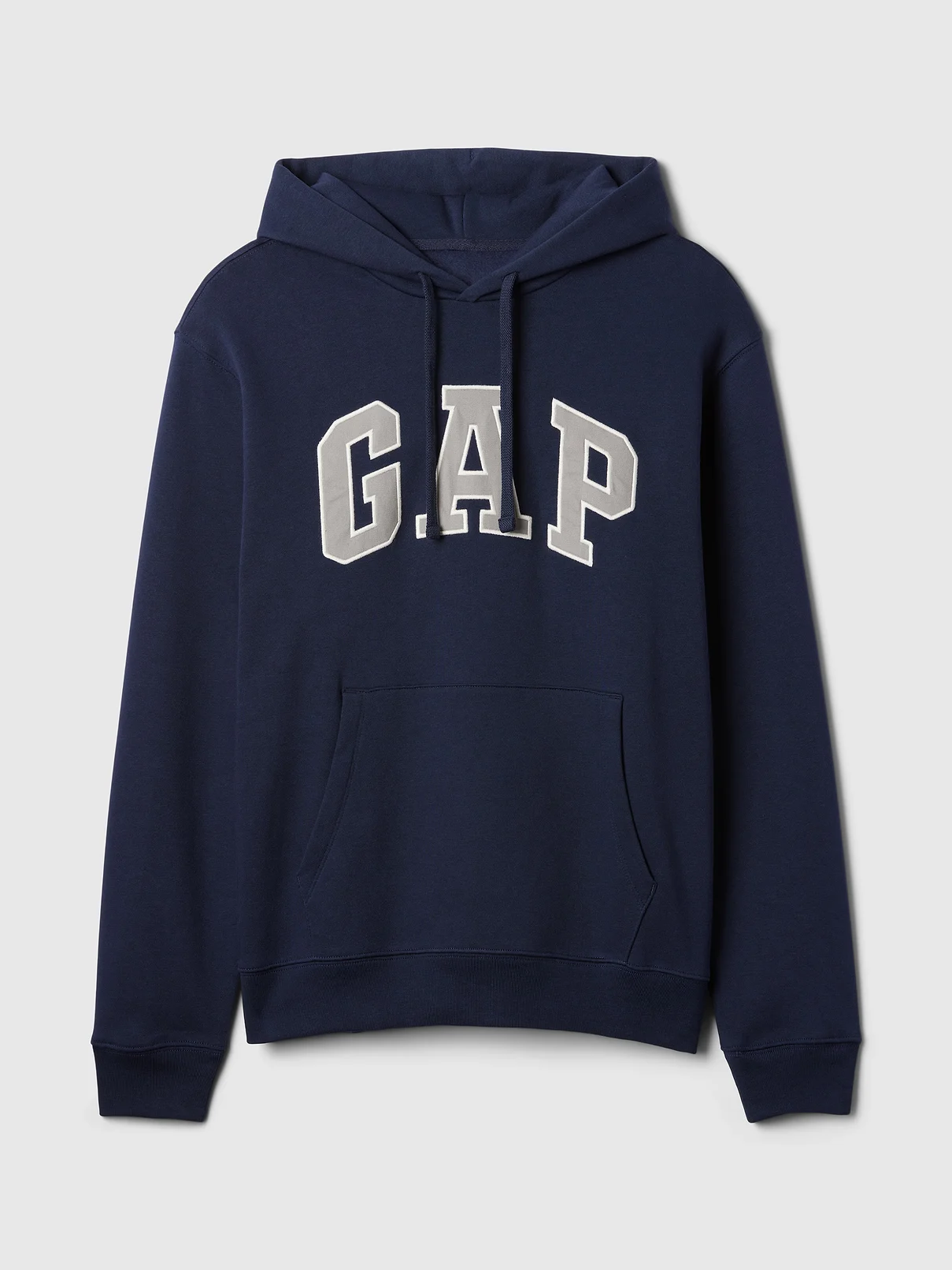
Gap Varsity Logo Hoodie
move
The campaign built around the collection leans hard into the era both brands cited as inspiration: 1960s cinema, music, and art, filtered through a five-minute short film called The Long Way. It was directed by Karl Cannone, styled by Alastair McKimm, the former i-D editor-in-chief who has since consulted on campaigns for houses including Saint Laurent and Calvin Klein, and overseen by Gap’s Head of Creative, Calvin Leung. The film was shot in the historic Montmartre neighborhood and stars American rapper ian, who broke out in 2024 with the single “Figure It Out” and the mixtape Valedictorian, alongside French DJ Paloma Le Friant, the Paris- and Los Angeles-trained daughter of French Touch DJ Bob Sinclar, who has played sets alongside her father at Tomorrowland and headlined her own slots at Coachella.
Both brands have pointed specifically to Dustin Hoffman’s show in The Graduate, released in France as Le Lauréat, as a touchstone for the American side of the project, and to the French New Wave, and Jean-Luc Godard’s Breathless in particular, for the Parisian half. The resulting film follows the collection’s striped Breton shirts, denim miniskirts, and cargo jackets around the neighborhood in a loose, unhurried style meant to echo Godard’s own spontaneity on camera. It premieres on both brands’ social and digital channels timed to the collection’s launch, rather than through a traditional press screening.

Montmartre Cobblestone Street
two
The collaboration’s origin story predates any of the people currently running either brand’s day-to-day business. Zac Posen, who has been Gap Inc.’s executive vice president and creative director since February 2024, has been friends with Jean and Judith Touitou for roughly twenty years. Before joining Gap Inc., Posen ran his own eponymous label from 2001 until its 2019 closure, and led womenswear design at Brooks Brothers from 2014 to 2020. By Jean Touitou’s own account, the project began the way real friendships tend to, not the way corporate tie-ups usually get pitched: a drink with Posen and Mark Breitbard turned into a shared mood board of 1960s references, which turned into the collection itself.
The two houses’ own histories run in genuinely different directions before this point. Gap was founded in San Francisco in 1969 by Donald and Doris Fisher, and now sits alongside Old Navy, Banana Republic, and Athleta under the Gap Inc. umbrella, led since August 2023 by CEO Richard Dickson, who arrived from Mattel after leading the turnaround of its Barbie and Hot Wheels lines and has since made outside design talent, Posen included, a visible piece of Gap Inc.’s own recovery story. A.P.C. came along nearly two decades later, founded in Paris in 1987 by Jean Touitou, a Tunisian-French designer who’d previously worked for Kenzo and Agnès b. before striking out with a menswear line originally labeled only “HIVER 87.” Judith Touitou joined the company in 1996, working her way into the role of artistic director alongside Jean, whom she later married. A.P.C.’s Mercer Street store, one of this collection’s three physical retail points, opened in 1993, making it one of the earliest signs of the brand’s reach outside France.
Touitou’s own relationship to American style predates A.P.C. by decades and runs deeper than most collaborators bring to a Gap tie-up. By his own account, his teenage wardrobe in Paris was built almost entirely around army surplus stores stocking English and American military stock, with no French references in the mix at all. That history undercuts the easy assumption that this project is simply A.P.C. lending Gap some Parisian polish. Touitou has pushed back on that reading directly, arguing that American culture shaped his own design sensibility long before Gap ever entered the picture.
A.P.C. has built a long track record of collaborations before this one, including projects with Nike, Carhartt WIP, Marc Jacobs, JJJJound, sacai, and Kanye West. What distinguishes the Gap partnership, by Touitou’s own description, is scale: a mass-market reach that his smaller, more niche collide rarely offer, paired with a level of craft he says he didn’t expect to find outside A.P.C.’s own ateliers. Judith Touitou has said the finished collection made her rethink assumptions she and Jean had going in about what a wide-audience collaboration would require them to sacrifice.
fin
The US and Canada launch runs through gap.com, the ten participating Gap stores, and A.P.C.’s Mercer Street location, all opening at 9 a.m. ET on September 18. The UK gets its own window that same day, at 2 p.m. BST, through gap.co.uk and Gap’s Covent Garden store in London. From there, the collection reaches Europe, Turkey, China, Mexico, Australia, and the Middle East on a rolling basis alongside the US and UK drops.
Japan is confirmed among those international markets, and Gap and A.P.C. have described a Tokyo launch activation running alongside the New York event, though neither brand’s Japan-specific site had posted a local release date, store list, or yen pricing for the collection as of this writing. Judith Touitou, reflecting on the finished project, described what started between two old friends over drinks as something that “started from friendship also ended with friendship,” a fairly rare throughline for a collaboration built to sell in ten countries.
Related Articles
Nubian Put Distressed Cotton Jersey On Needles Track
20th Exclusive Vol.7. Needles. Four shapes. Black and grey. 19 September 2026. All NUBIAN doors […]