DRIFT AUDIO
Listen to this story
Choose a voice, then press play.
A Tokyo textile house spends twenty years perfecting its own tempo, then hands Jordan Brand a fictional ball club to prove it.
Sasaki’s first pair of Jordans was an Air Jordan 6, bought when he was fourteen. He has since describe that purchase as feeling like owning a small piece of a whole culture, and that personal history sits underneath a collide that, on paper, looks like a mismatch of scale: a family-sized Tokyo textile studio working alongside Jordan Brand, the athletic label that grew out of Nike’s 1984 deal with Michael Jordan and became a fully separate Nike subsidiary in September 1997. That institutional weight is part of why NÒMARHYTHM TEXTILE and Jordan Brand didn’t build this rel around a specific player, shoe, or even the basketball court at all.
Rhude x Jordan Brand Campaign
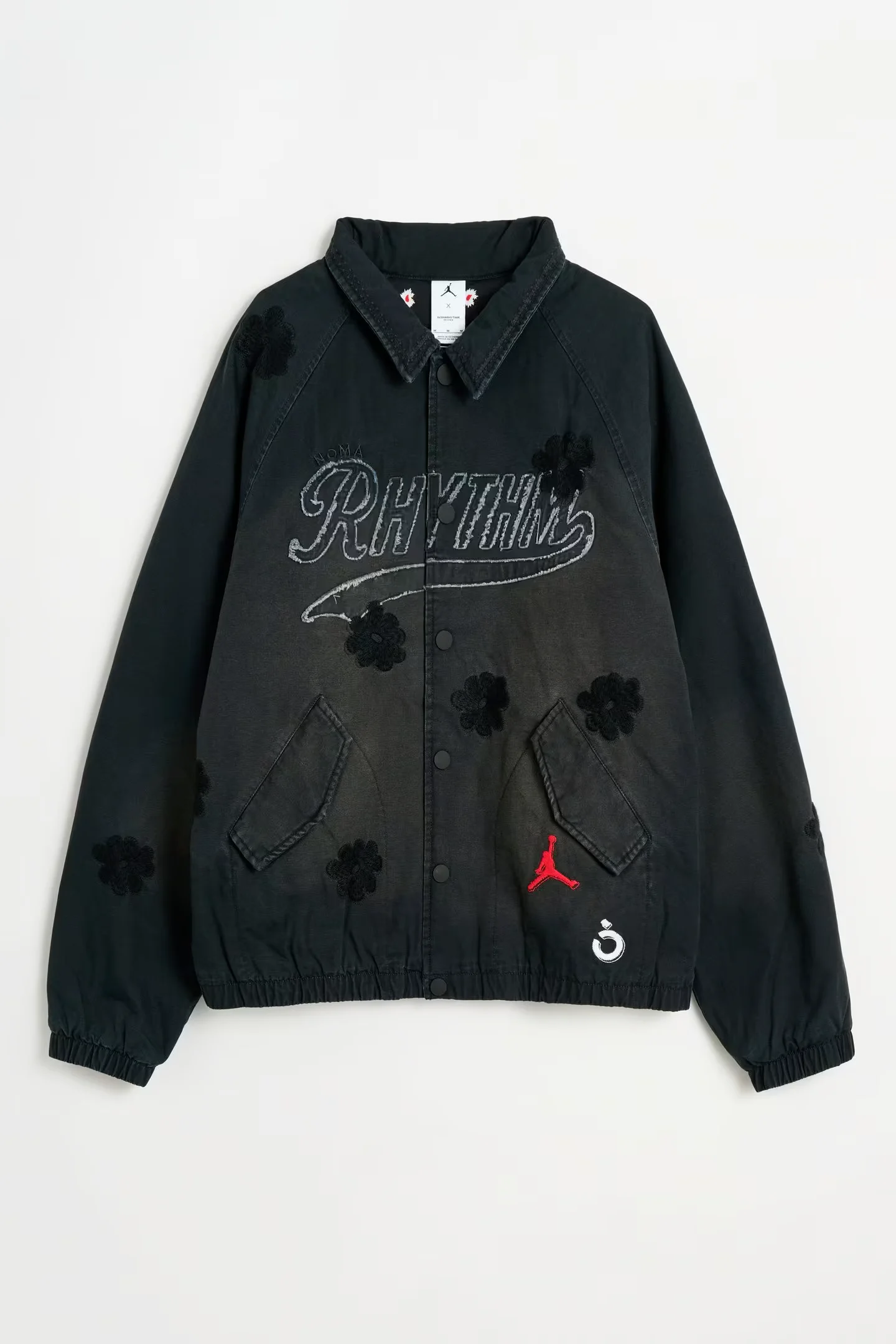
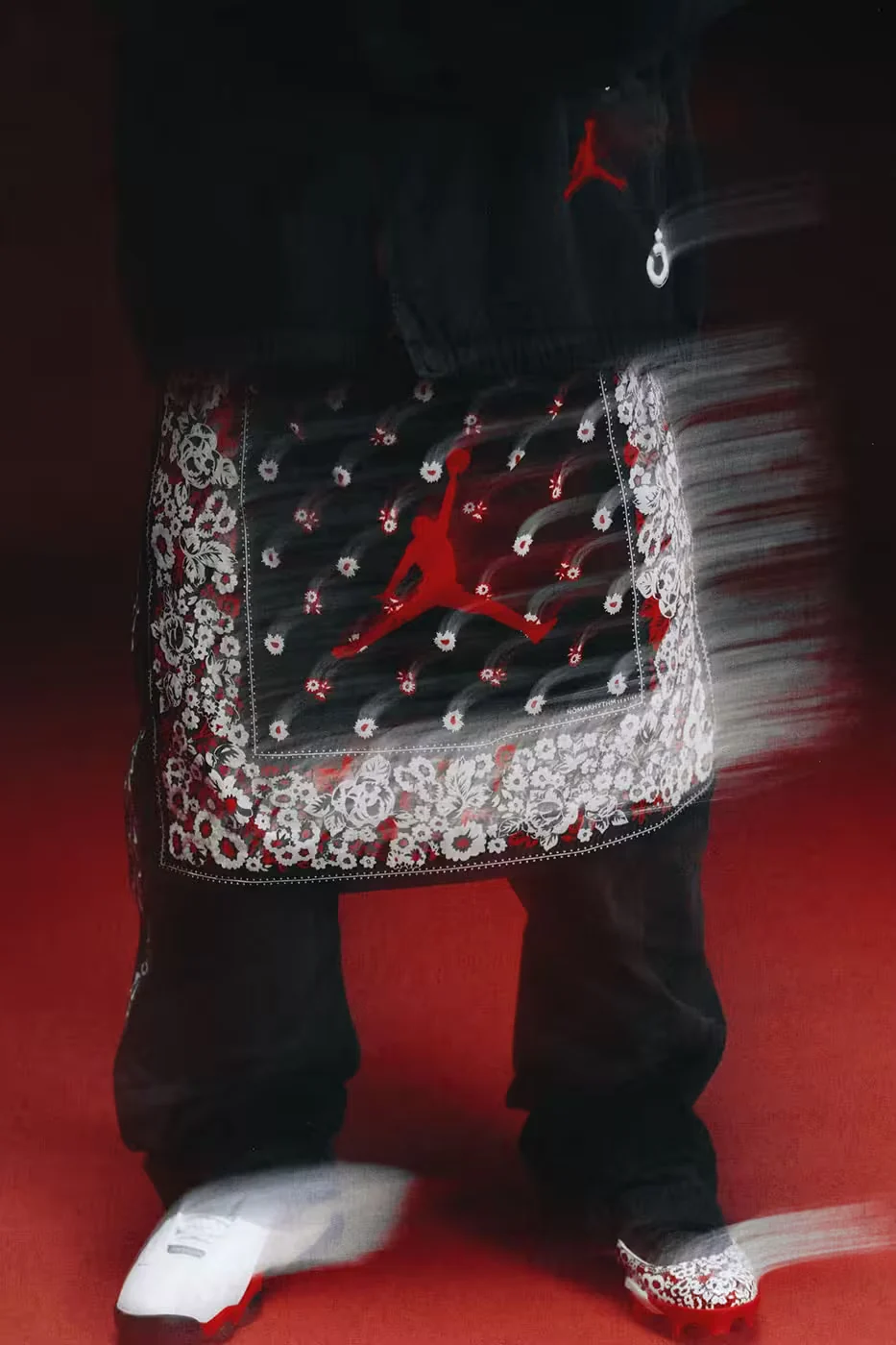
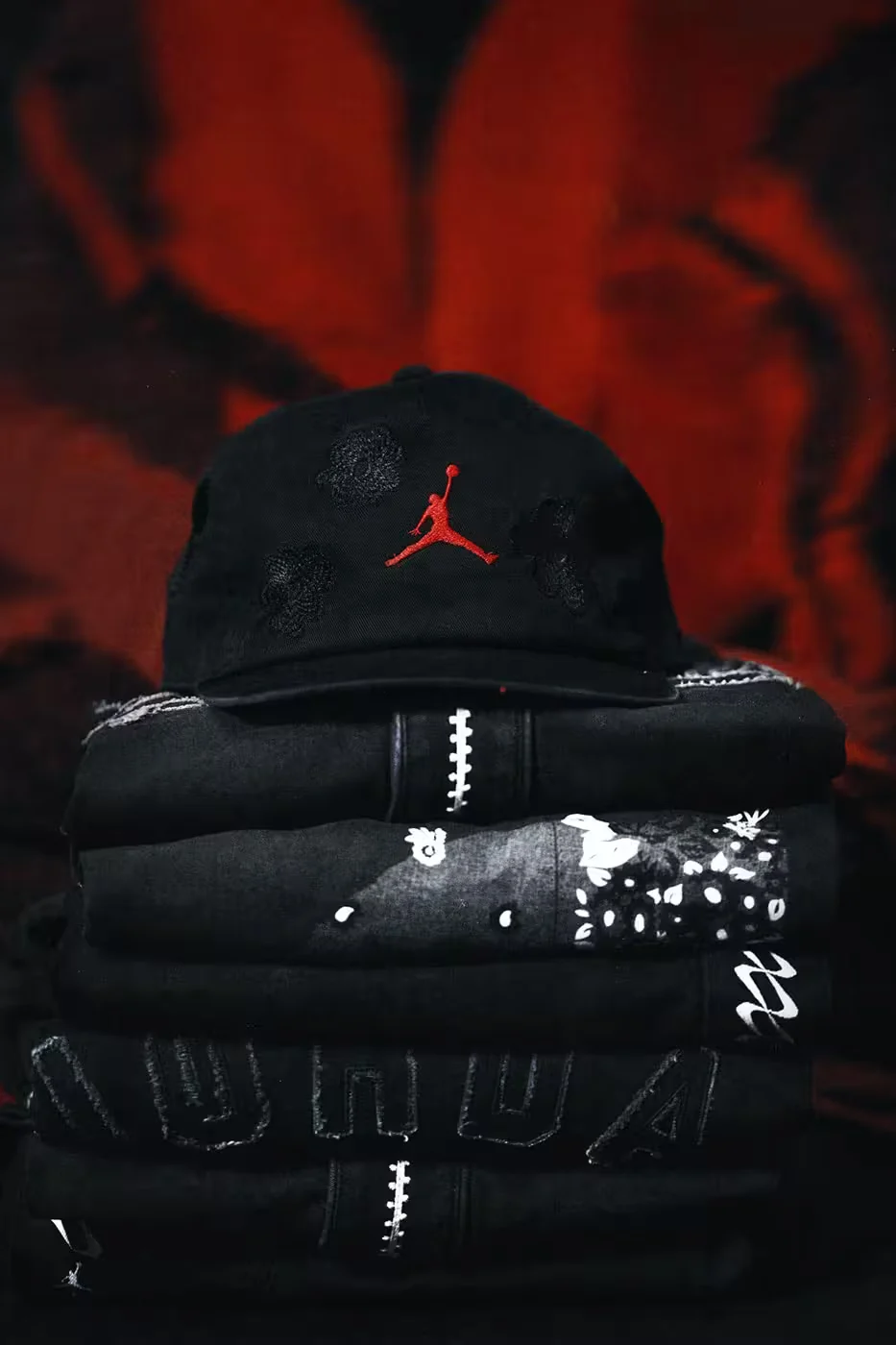
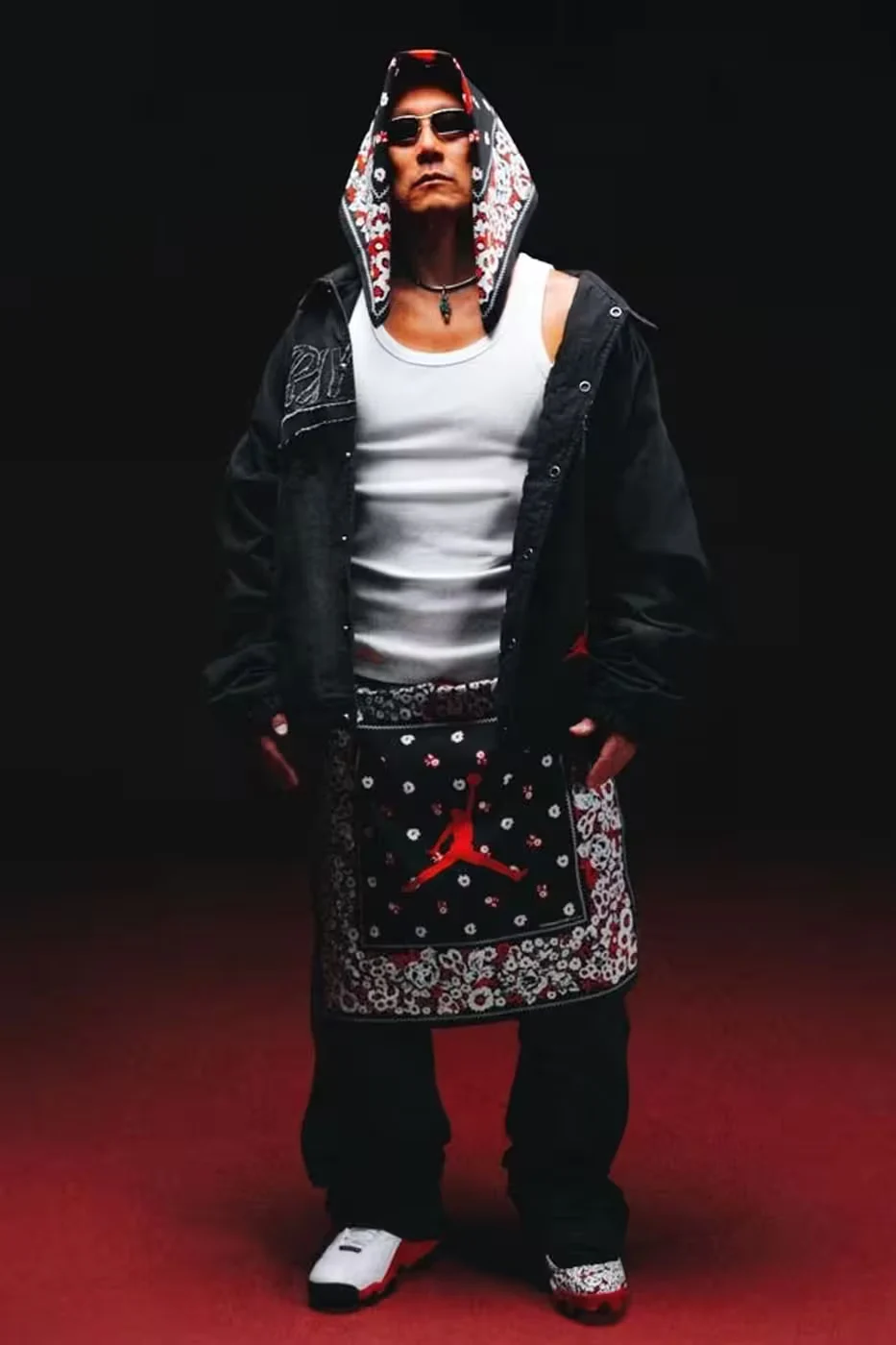
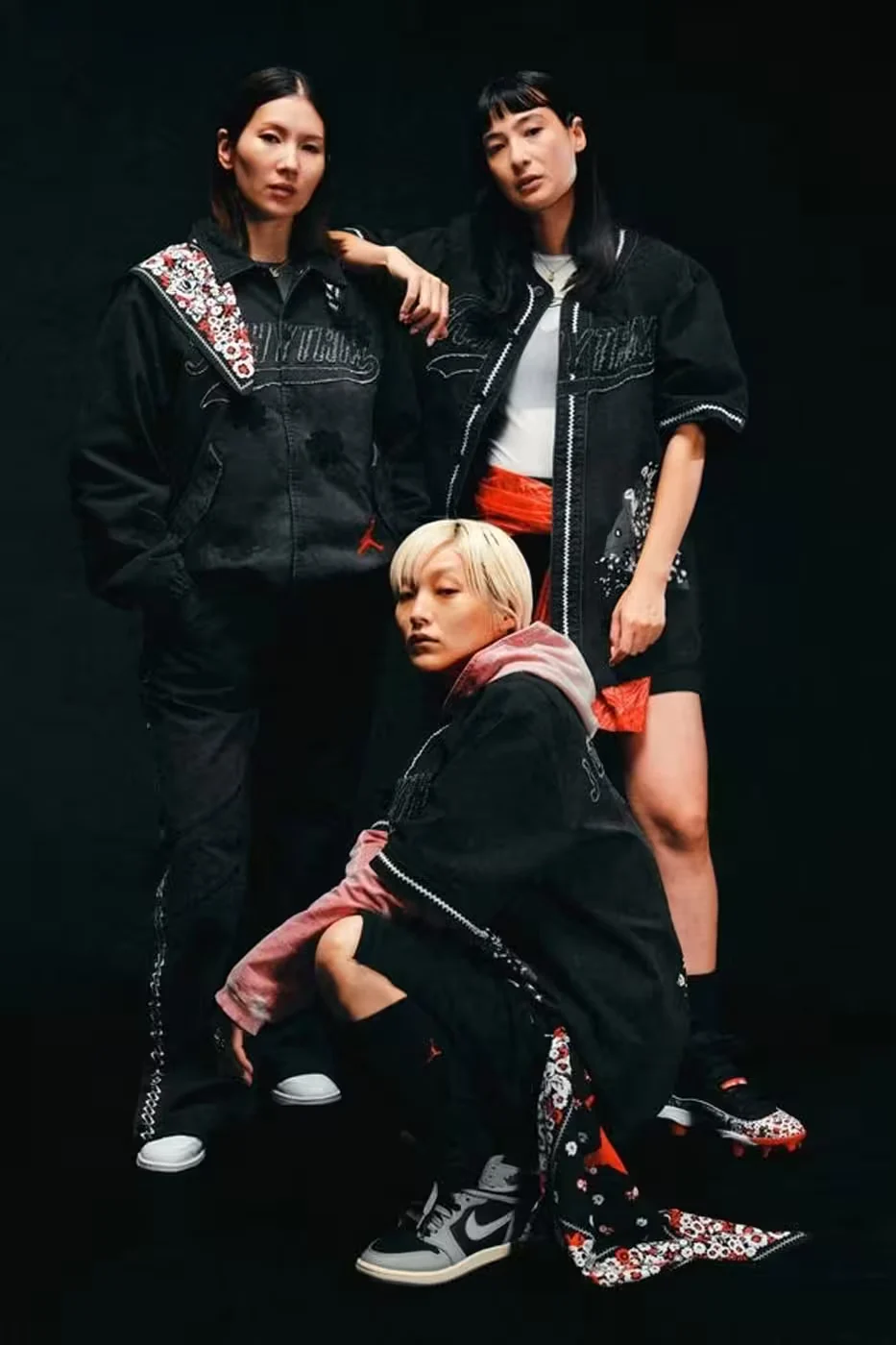
NÒMARHYTHM TEXTILE‘s collide with Jordan Brand reached Japanese shelves on September 4, 2026, first through the label’s own weekend store, then from September 12 through Dover Street Market Ginza and the boutique GR8, according to rely source. A two-day pop-up ran alongside the rel at StandBy in Harajuku on September 5 and 6. Every piece in the five-item lineup holds to a deliberately narrow palette, black fabric cut through only by Jordan Brand’s red Jumpman, with wash treatments applied across the garments so they would carry texture and character rather than sit flat and new.
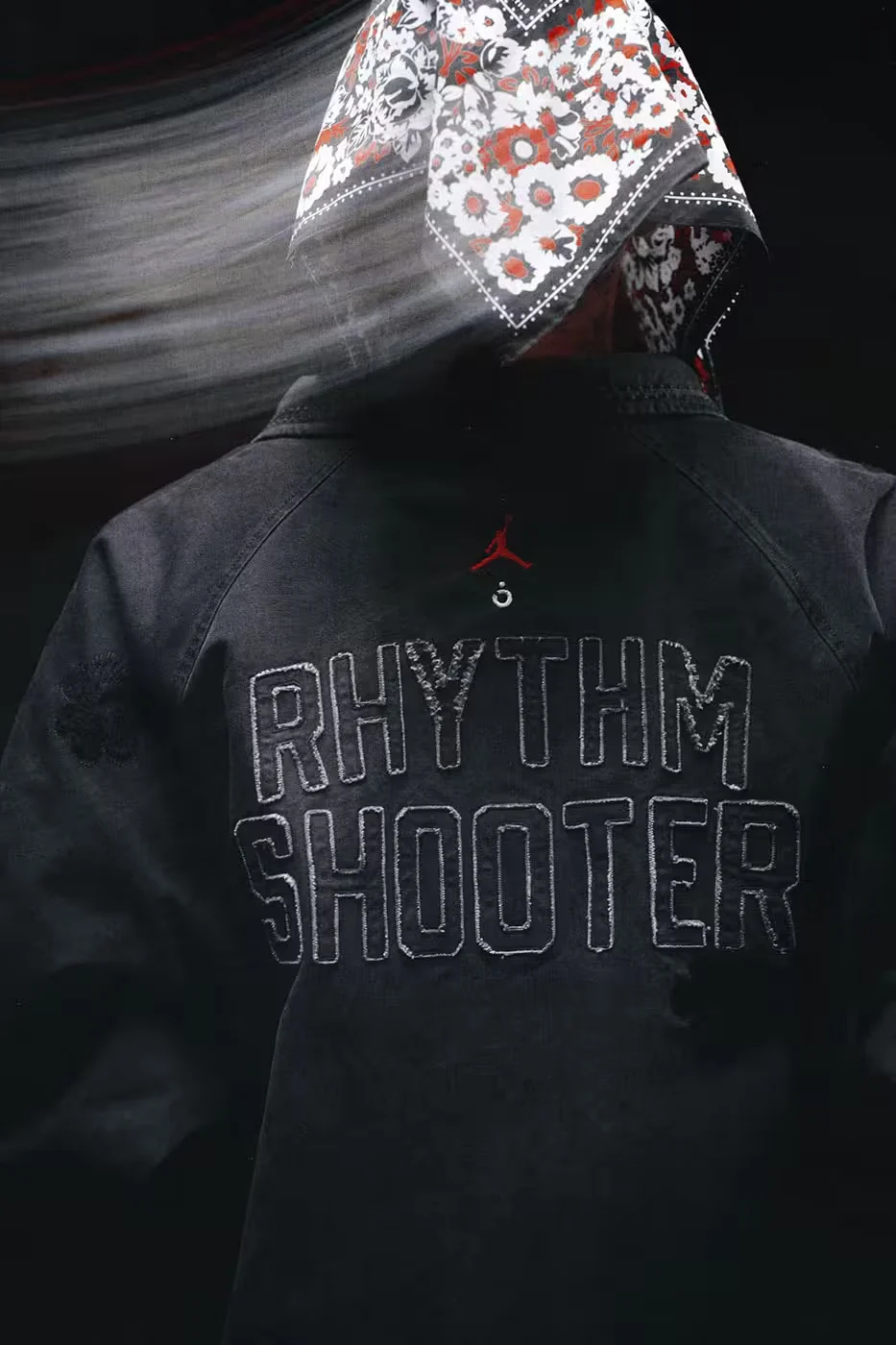
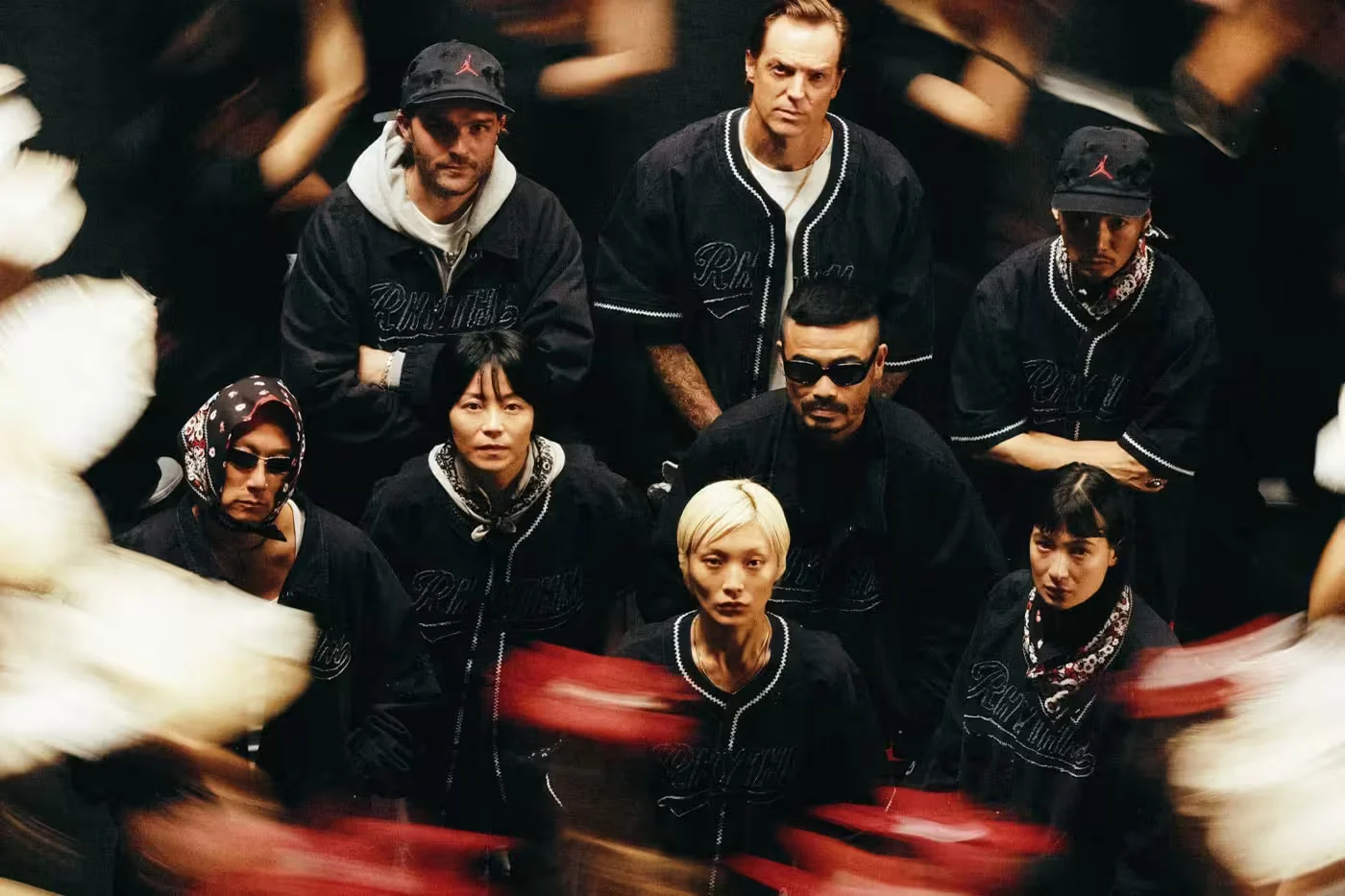
The collection skips basketball almost entirely. Instead, Masako Noguchi and Takuma Sasaki, NÒMARHYTHM TEXTILE’s co-founders, built the rel around a fictional baseball club named RHYTHM, and let that invented team carry every design decision.
That approach sets RHYTHM apart from most of Jordan Brand’s other apparel and footwear collaborations, which typically orbit a real athlete, a real team, or a specific sil from the archive. Inventing a club with no players, no history, and no games played gave NÒMARHYTHM TEXTILE a blank canvas to design toward, closer to building a costume department for a story that only exists inside the collection itself than to producing licensed merchandise for an existing franchise.
stir
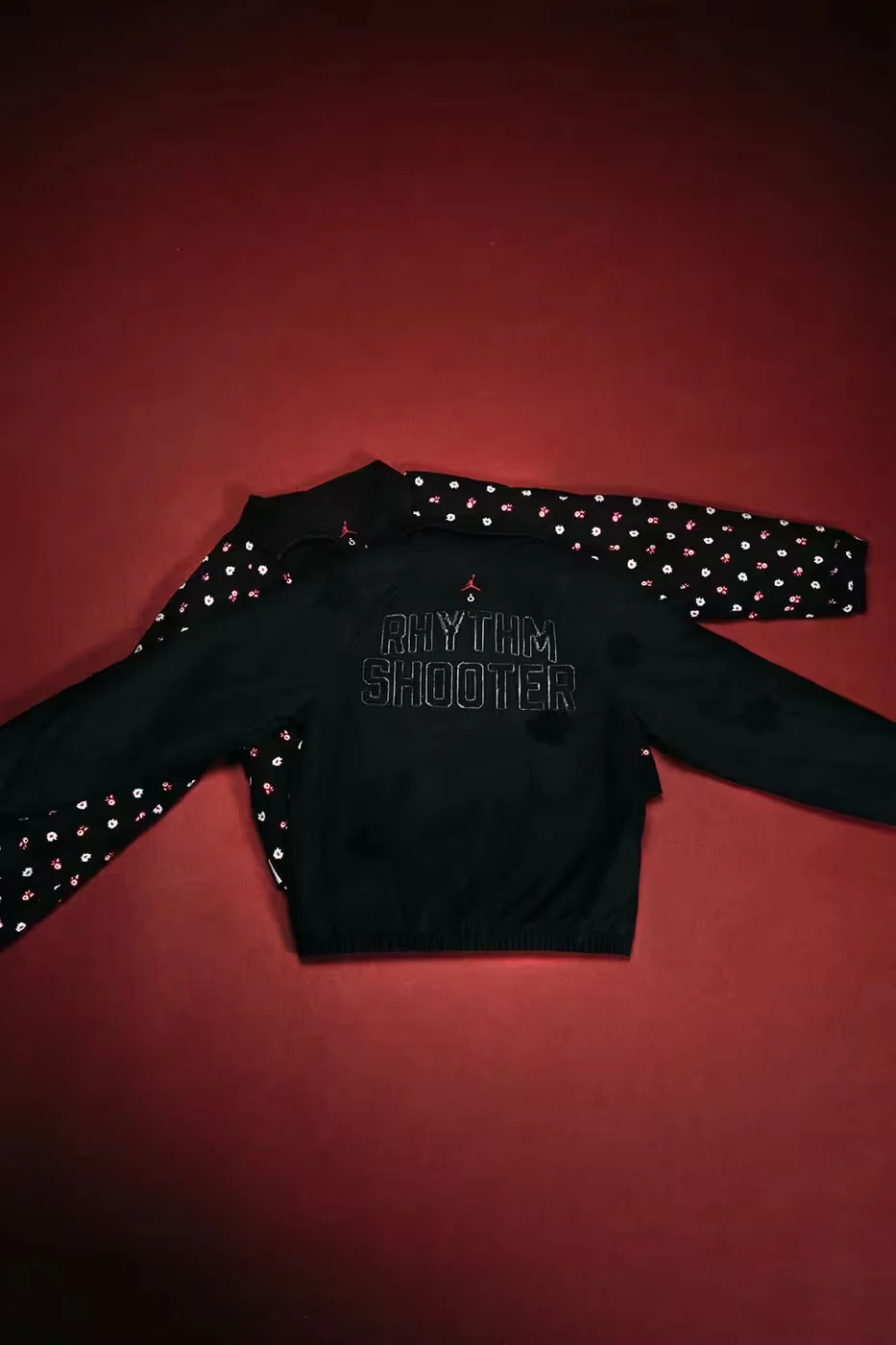
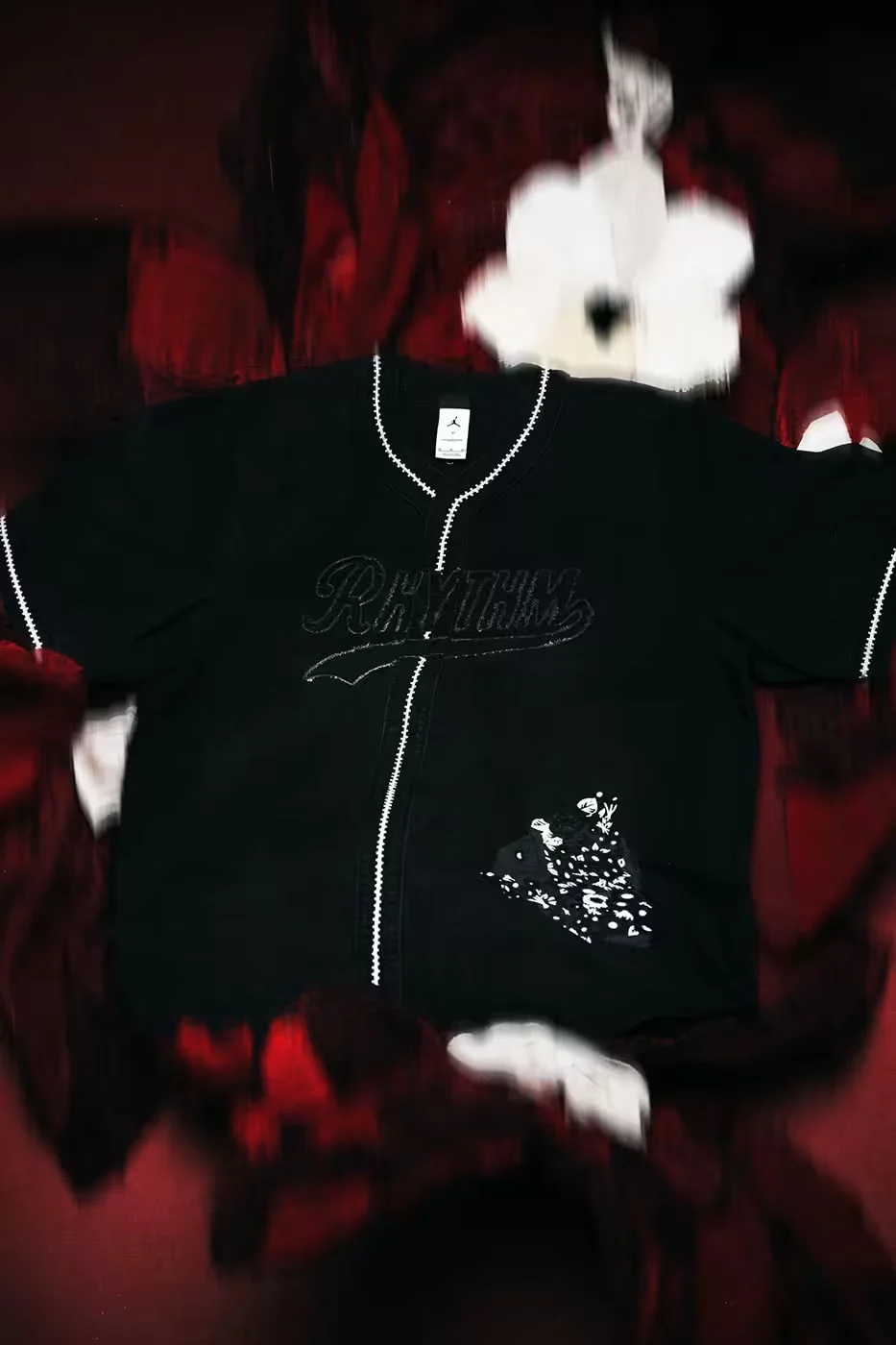
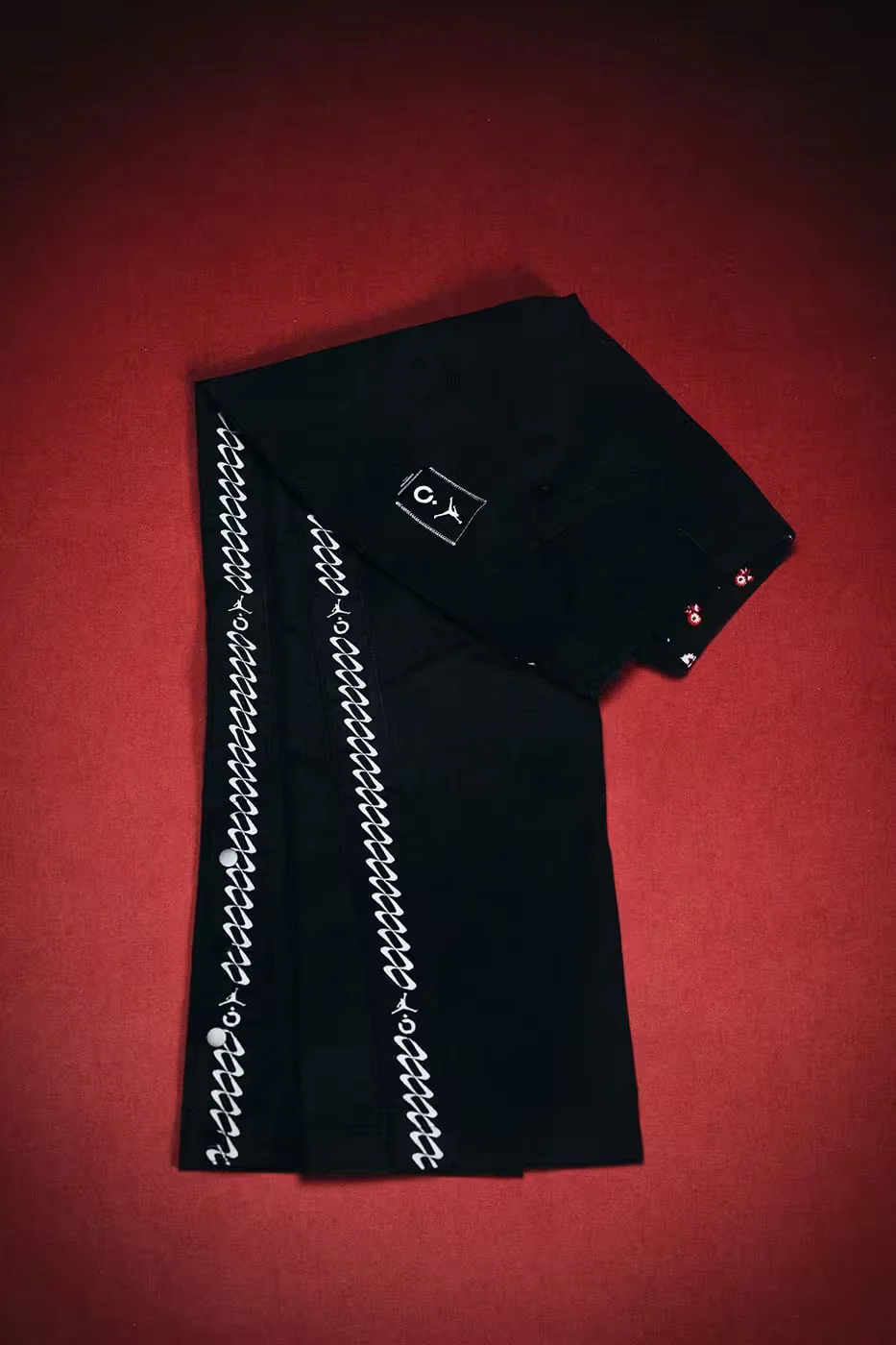
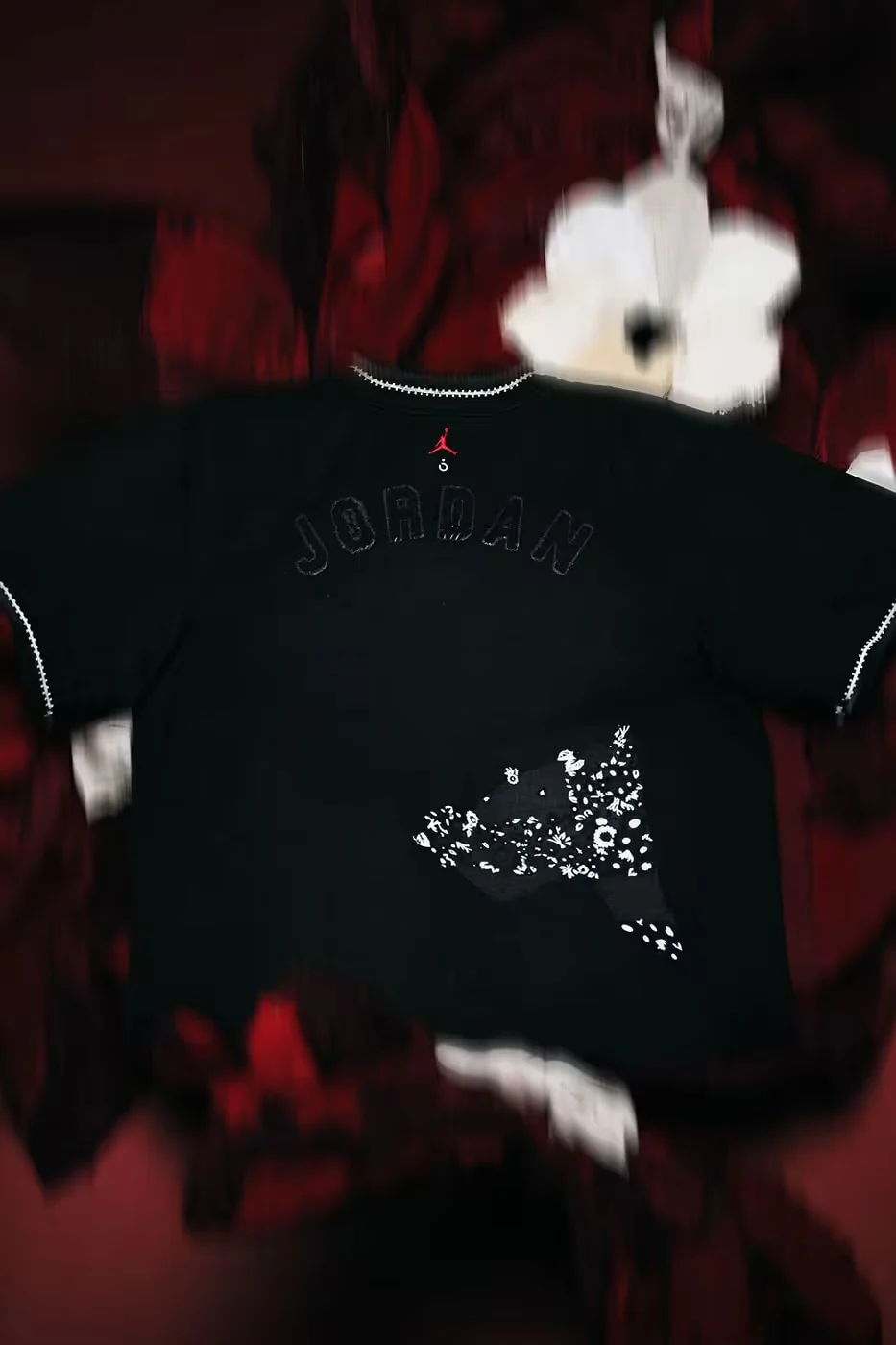
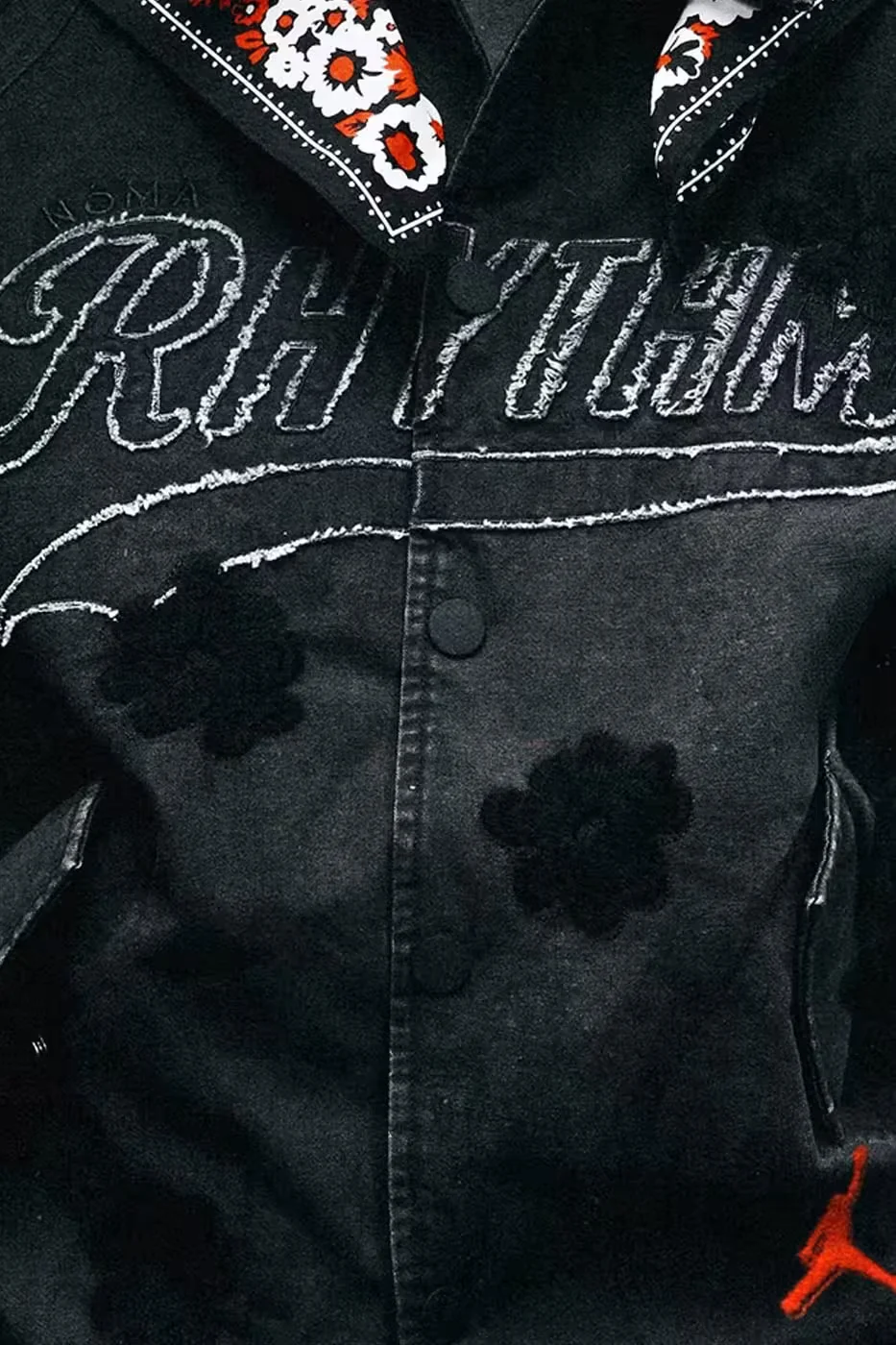
The undisputed centerpiece is a bomber jacket priced at ¥52,030, carrying embroider floral motifs, graphic appliqués, embroider detail at the collar, and a fully patterned interior lining that brings the RHYTHM story into a space only the wearer sees. Noguchi describe the jacket as brung together everything the fictional team represents, pulling multiple techniques into a single garment rather than spreading them thin across the collection. A baseball jersey follows at ¥37,400, distinguish by a diagonally set button placket, embroidered trim, an allover bandana print, and diamond-shaped embroidery detail. The matching trousers, priced at ¥20,680, apply NÒMARHYTHM TEXTILE’s signature twist construction alongside custom jacquard taping, a technique the label has used across past seasons to give flat woven fabric a sense of movement.
Sasaki say that black was chosen throughout the collection specific for its strong existing association with Jordan Brand, and that the wash treatments applied to every garment were meant to bring out texture and character while keeping each piece comfortable and natural against the body from the first wear. The goal, in his account, was making sure a person could appreciate the collection’s construction details the moment they picked up a piece, rather than only after repeated wear revealed them. That focus on tactile, first-touch detail runs consistently through NÒMARHYTHM TEXTILE’s catalog outside this collide too, where hand-dyed pieces and bandana-embroider denim are priced closer to designer outerwear than typical collaboration merchandise, reflecting the amount of manual labor built into each garment.
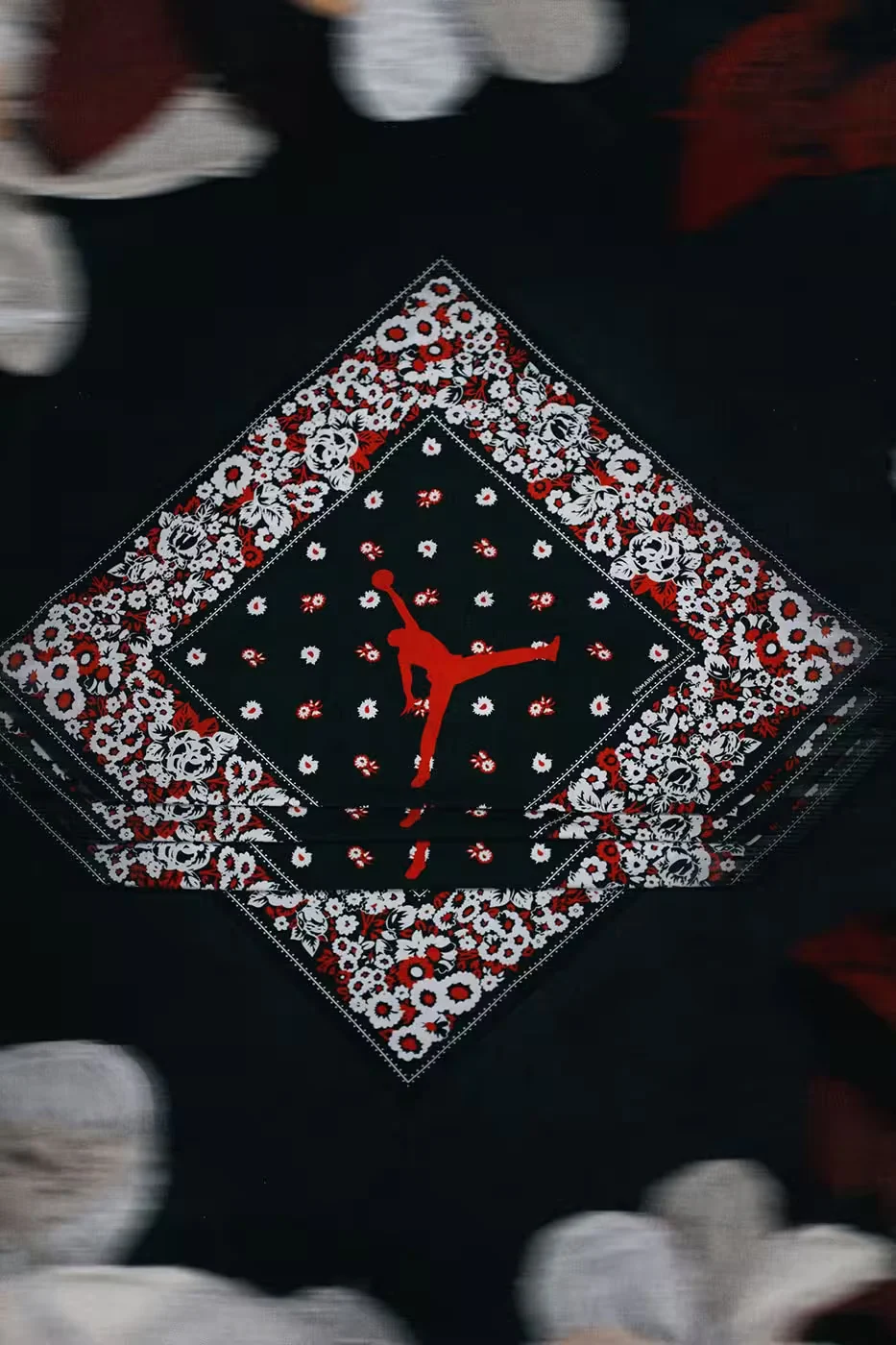
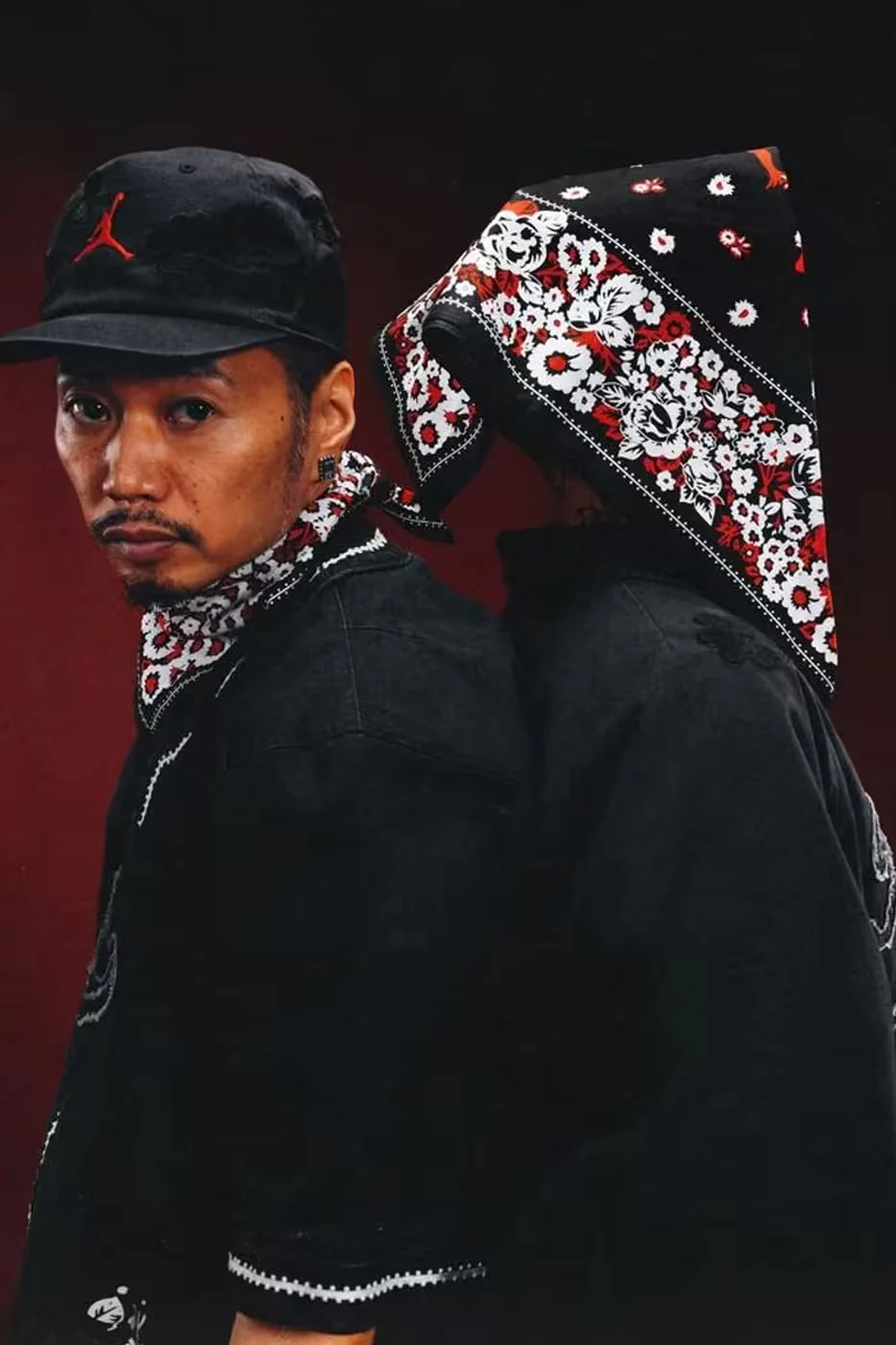
Rounding out the lineup are a printed bandana at ¥6,930 and a co-branded cap at ¥10,340, both smaller-format pieces built to carry the collection’s central graphic. That graphic fuses NÒMARHYTHM TEXTILE’s hand-drawn “Draw Your Garden” floral pattern directly with the red Jumpman mark, printed onto a lightweight bandana base. Noguchi called the design, among the label’s most personal after twenty years of textile work, one they had wanted to pair with the Jumpman from the earliest planning stages of the partnership, and said seeing that single piece of fabric turned into something carrying equal weight to their own logo was, in her words, incredibly rewarding.
View this post on Instagram
flow
The RHYTHM collection did not arrive without setup. It follows a Jordan Brand collide with the Yomiuri Tokyo Giants, Japan’s oldest professional sports franchise and, by most measures, its most successful, having played out of Tokyo Dome since the stadium opened in 1988 under the ownership of media conglomerate Yomiuri Shimbun Holdings. That first project debuted July 17, 2026, and incorporated NÒMARHYTHM TEXTILE’s own “Draw Your Garden” print into the professional team’s own uniforms. Per Sasaki, the full team wore the collaborative kit across three games at Tokyo Dome that month, in front of a packed stadium he described as carrying real energy for the brand.
Baseball’s place in that first project was not incidental. Noguchi told Hypebeast that the sport is deeply woven into Japanese life, recalling watching games on television with her family most nights growing up, a domestic familiarity that made baseball, rather than basketball, the more natural anchor for a Tokyo-rooted brand working with an American sportswear giant. Building the RHYTHM collection on top of that Tokyo Giants groundwork let NÒMARHYTHM TEXTILE and Jordan Brand extend a story already in progress onto a larger, more international stage rather than starting from zero, with the fictional RHYTHM club effectively functioning as a follow-up chapter to a team that actually exists.
length
NÒMARHYTHM TEXTILE was founded in Tokyo in 2005 as NOMA t.d., the joint project of Noguchi, whose background is in fine arts, and Sasaki, whose experience came from retail buying and running a boutique.
That profile also traces the origin of “Draw Your Garden” itself: Noguchi developed the print during the 2020 pandemic, after noticing flowers pushing up through cracks in city concrete, and expanded the brand’s existing recurring paisley pattern, itself a nod to the traditional bandana, into the sprawling floral composition that now anchors the Jordan Brand release. She deliberately avoided using the word “bandana” in the pattern’s own title despite that origin. A companion pattern called “Butterfly’s Revenge” has also become one of the label’s recognizable sig, alongside “CAMOFLOWER,” which the founders have separately cited as an equally defining moment in the brand’s design history, per HBX’s own brand page for the label.
Once the thirteen-year solo stretch ended, NÒMARHYTHM TEXTILE moved through a run of convincer built on shared philosophy rather than scale alone. Nike has worked with the label for more than five years running, NEEDLES, the Keizo Shimizu-founded label built out of the Nepenthes retail group, produced an archival-inspired capsule with NÒMARHYTHM TEXTILE built around a teddy jacket and a hand-dyed puffer shirt, and JOURNAL STANDARD rel an exclusive mesh jacket carrying the brand’s sig bandana print earlier this summer. Stüssy has also been named among the label’s convincer. The label rebranded from NOMA t.d. to NÒMARHYTHM TEXTILE this year specifically to mark the twenty-year milestone, a decision the founders have framed as a know statement about creative integrity over the industry’s relentless seasonal calendar, rather than a cosmetic name change.
Sasaki has described the calculus behind saying yes to a partner this way: the deciding factor was never the size of the brand on the other side of the table, but whether that brand’s own philosophy lined up closely enough with NÒMARHYTHM TEXTILE’s to make the collaboration feel like a genuine exchange rather than a licensing arrangement. That standard, applied consistent since 2018, is part of why the label’s collide list stays relatively short even now, five years into its most visible partnership with Nike and Jordan Brand.
Rhythm x Jordan Brand Women’s Collection
spec
The Jordan Brand relationship itself predates the RHYTHM collection by several months. According to Noguchi and Sasaki, the partnership opened in February 2026 with a considerably more public gesture: wrapping the entire facade of Harajuku’s landmark 6142 building in a custom, hand-created “Draw Your Garden” textile print, a long-held ambition for the brand realized in the middle of Tokyo’s street-culture district. Before that project began, the Jordan team had already spent time visiting NÒMARHYTHM TEXTILE’s collections in both Tokyo and Paris, building the kind of familiarity Sasaki says shaped how the RHYTHM collaboration eventually came together. He described the approach as consistent with how the label works with every collaborator: extended conversation and relationship-building well before a single sketch is finalized, rather than a rushed licensing deal.
Sasaki also singled out how thoroughly the Jordan team worked through the details of the collection, testing and refining pieces repeatedly rather than approving them on a first pass, which he credited as central to keeping the label’s handcraft intact at a genuinely global production scale. He framed collide itself, across every partner NÒMARHYTHM TEXTILE has taken on since 2018, as fundamentally a question of teamwork rather than one side simply licensing the other’s name, and said the Jordan team’s grasp of what the label actually does with textiles and craftsmanship, not just what it looks like from the outside, mattered more to him than the size of the brand behind the project.
extend
Retail context helped underline the stakes: Dover Street Market Ginza, one of the collection’s carrying stores, is itself the Tokyo outpost of Rei Kawakubo and Adrian Joffe’s multi-brand concept, first opened in London in 2004 and expanded into a converted 1946 department store building in Ginza, a fitting home for a collection built around blending institutional heritage with indie design.
That research went both directions. As part of the process, Noguchi visited Jordan Brand’s own campus and explored its historical archives and materials in person, a trip she described as fascinating from both a design and a research perspective. What stayed with her most, she told Hypebeast, was less any single archivel garment than the brand’s openness to trying things it hadn’t tried before, a quality she said mirrors what NÒMARHYTHM TEXTILE has aimed for across its own twenty years.
fin
Taken together, the Harajuku building wrap, the Tokyo Giants uniforms at Tokyo Dome, and now the RHYTHM apparel collection form a single continuous project rather than three unrelated announcements, each stage handing the “Draw Your Garden” print a slightly larger stage than the one before it. No date has been announced for either the RHYTHM collection, or the fictional team concept behind it, will extend beyond this single capsule, and neither NÒMARHYTHM TEXTILE nor Jordan Brand has said whether a next chapter is already in motion.
Related Articles
Nubian Put Distressed Cotton Jersey On Needles Track
20th Exclusive Vol.7. Needles. Four shapes. Black and grey. 19 September 2026. All NUBIAN doors […]