DRIFT AUDIO
Listen to this story
Choose a voice, then press play.
In This Story
- A New Landmark for Birkenstock in Tokyo
- Why Shibuya Was the Natural Choice
- Inside the Brand’s Sixth Japanese Concept Store
- Designing Around the Footbed Philosophy
- Core Styles, Seasonal Releases and the 1774 Collection
- The Heritage Behind the Cork-Latex Footbed
- Japan’s Growing Role in Birkenstock’s Global Strategy
- Connecting Wellness, Sustainability and Street Culture
- What the Shibuya Opening Signals for 2026 and Beyond
- The Future of Birkenstock Retail in Japan and Worldwide
On July 1, Birkenstock will inaugurate its latest concept store in the pulsating mid of Shibuya, Tokyo. This marks a significant milestone for the German heritage brand: its 13th directly operated official store in Japan and the sixth in its growing portfolio of concept spaces. Far more than a retail expansion, the opening embodies a thoughtful alignment between Birkenstock’s enduring commitment to anatomical wellness and Shibuya’s role as a vibrant crucible of cultural innovation, diverse values, and trendsetting energy.
In an era where footwear often prioritizes fleeting aesthetics over foundational function, Birkenstock’s move into Shibuya reaffirms its core mission: delivering anatomically correct footbeds to all people, enabling them to walk as nature intended. This new outpost promises to deepen the brand’s presence in one of the world’s most discerning and dynamic markets, inviting locals and visitors alike to experience comfort not as compromise, but as a quiet revolution in everyday movement.
View this post on Instagram
stir
Birkenstock’s story stretches back to 1774, when Johann Adam Birkenstock was documented as a shoemaker in the Hessian village of Langen-Bergheim, Germany. Generations later, in the late 19th century, Konrad Birkenstock pioneered the contoured footbed—an innovation that mimicked the imprint of a healthy foot in soft sand. This was no mere cushion; it was a paradigm shift in shoemaking, emphasizing support, flexibility, and natural alignment over rigid, flat soles prevalent at the time.
By the 1960s, the iconic footbed sandals—such as the Arizona and Madrid—had become emblems of countercultural freedom in the United States, embraced by those seeking authenticity amid mass-produced conformity. Yet the brand’s DNA remained rooted in orthopedic principles. The footbed, crafted from layers of cork, latex, jute, and suede, molds to the wearer’s foot over time, promoting better posture, muscle engagement, and long-term foot health. Materials like premium cork from sustainable sources underscore a philosophy of durability and environmental mindfulness.
This heritage of function-first design has propelled Birkenstock from niche health footwear to a global cultural force. Collaborations with high fashion houses—think Proenza Schouler, Jil Sander, Manolo Blahnik, and more recent creative partnerships—have elevated the silhouette without diluting its essence. In Japan, where craftsmanship, minimalism, and mindful living intersect powerfully, Birkenstock found fertile ground early on, initially as health-oriented options before evolving into street-style staples.
icon
Birkenstock’s journey in Japan reflects a deepening symbiosis. The brand’s emphasis on quality, tradition, and natural materials resonates with Japanese values of wabi-sabi—finding beauty in imperfection and longevity—and a cultural reverence for well-made objects. Early introductions in the 1980s positioned the sandals for older demographics seeking comfort, but by the late 1990s and 2000s, younger generations discovered them amid outdoor booms and a broader appreciation for functional fashion.
Today, Birkenstock’s retail footprint in Japan exemplifies strategic growth. Prior concept stores in Harajuku (the first), Shinjuku (with its “co-existence” theme blending raw concrete and bamboo), Nagoya, and Osaka’s Shinsaibashi flagship (the fourth concept and 12th permanent store earlier in 2026) have tailored experiences to each locale’s character. These spaces go beyond sales floors; they are immersive environments featuring curved displays inspired by the footbed’s organic lines, natural woods, and thoughtful integrations of local aesthetics.
The Shibuya addition builds on this momentum. As the brand eyes ambitious global expansion—planning dozens of new stores in 2026 alone—Japan remains a priority market. The new store will showcase core classics alongside seasonal offerings and the premium 1774 collection, allowing visitors to engage deeply with materials, history, and customization.
region
Shibuya is no accidental choice. This district stands as Tokyo’s epicenter of youth culture, fashion experimentation, and cosmopolitan energy. Iconic for its scramble crossing—symbolizing organized chaos and forward momentum—Shibuya has birthed and amplified subcultures from gyaru aesthetics to streetwear evolutions, influencing global trends for decades.
Fashionistas, creators, designers, and international visitors flock here for eclectic boutiques, cutting-edge retail, and a vibrant intersection of tradition and modernity. Shibuya embodies diversity: salarymen brushing shoulders with Harajuku-inspired youth, tourists capturing moments amid neon and historic echoes, and innovators shaping tomorrow’s aesthetics. It is a place where values clash and harmonize, fostering new cultural dialogues—much like Birkenstock’s own evolution from orthopedic roots to fashion mainstay.
The brand’s know—“delivering footbeds to all people”—finds perfect resonance here. In a neighborhood that celebrates individuality and collective flow, Birkenstock offers footwear that supports personal journeys while grounding them in universal human anatomy. Walking through Shibuya’s energetic streets in a pair of molded Arizonas or Bostons transforms the mundane commute into an act of mindful presence. The store will serve as a sanctuary amid the bustle, a space to slow down, explore heritage products, and perhaps discover how a simple sandal can bridge centuries of German engineering with Japanese sensibilities of precision and harmony.
xp
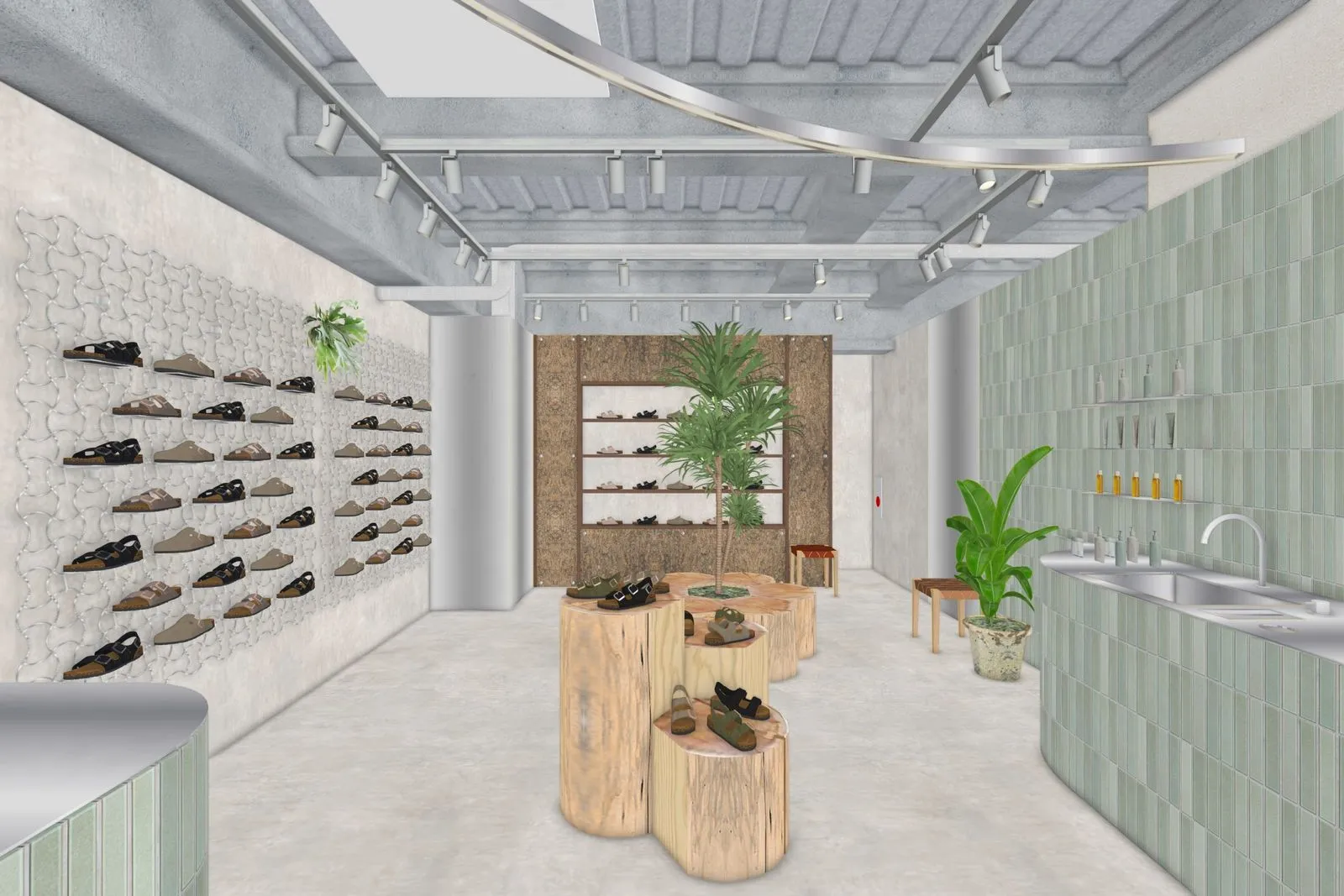
While specific interior details await the July 1 unveiling, patterns from previous Japanese concept stores suggest a sophisticated, sensory-rich environment. Expect displays that echo the footbed’s contours, natural materials highlighting cork and leather textures, and zones dedicated to care essentials—perhaps repair services or customization options that underscore longevity.
The two-level or thoughtfully zoned layout (common in recent flagships) will likely integrate Shibuya’s urban pulse: large windows framing the district’s vitality, seating areas encouraging try-ons and conversations, and curated selections reflecting seasonal trends alongside timeless pieces. High-end 1774 offerings, with their elevated craftsmanship, will appeal to collectors, while approachable core lines welcome newcomers.
This is retail as ritual—inviting customers to understand not just the product, but the biomechanics behind it. Educational elements on foot health, material sourcing, and the brand’s 250+ year legacy could enrich the visit, aligning with Japan’s appreciation for knowledgeable consumption.
imply
Birkenstock’s expansion arrives at a timely juncture. Post-pandemic, consumers worldwide prioritize comfort, authenticity, and holistic well-being. In Japan, where aging demographics meet a vibrant youth culture attuned to sustainability and mental health, the footbed’s promise of natural walking gains renewed relevance. Shibuya’s forward-looking ethos amplifies this: a store here signals Birkenstock’s investment in evolving alongside its audience, not merely selling to it.

Sustainable threads run deep. Cork harvesting supports ecosystems, and the brand’s repair culture promotes circularity—values that align with Japanese traditions of mottainai (regret over waste). Collaborations, such as those with local creatives or international partners, further weave Birkenstock into the fabric of contemporary design discourse.
For the fashion and design community, this opening invites fresh styling explorations. Pair a classic Arizona with tailored trousers for elevated streetwear, or layer with tabi-inspired socks for a nod to Japanese heritage. In Shibuya, where boundaries blur, Birkenstock becomes a versatile canvas.
fin
The Shibuya concept store is more than the 13th outpost; it is a statement of confidence in Japan’s market and Birkenstock’s global trajectory. As the brand pushes toward hundreds of direct stores worldwide, these concept spaces serve as cultural embassies—adapting to local nuances while exporting a universal message of healthy, intentional movement.
Visitors to the new store on July 1 and beyond will find more than sandals. They will encounter a philosophy that values the body’s natural mechanics, the craft of enduring materials, and the joy of discovery in a dynamic city. In Shibuya’s intersection of past, present, and future, Birkenstock plants a footbed that invites everyone to step forward—comfortably, consciously, and in step with their own rhythm.
This expansion underscores a deeper truth in today’s fashion landscape: true style emerges not from discomfort or trend-chasing, but from alignment—with one’s feet, values, and the world around. Birkenstock in Shibuya promises to be a destination where that alignment feels not only possible but profoundly liberating.
n
From the DRIFT archive: Inside the World’s Most Iconic Ski Experiences
Related Articles

Master Chief Reports to Call of Duty Now: Inside Xbox’s Second Reset Wave
Twenty-five years after Halo launched the original Xbox, the next mainline game belongs to Activision. […]