DRIFT AUDIO
Listen to this story
Choose a voice, then press play.
recall
- Food Design Meets Fashion’s Elite World
- “It all started with a coffee shop” – Alice Malaret of Douceurs Capitales
- I do whatever I want because nobody ever taught me the rules» – Johanna Alscheken of eeeat
- “What we care about is not perfecting a flawless product, but experimentation” – Alessandra Pallotta & Sara Ferroni of Forniture Pallotta
- Craft
- Why Food Design is the Future of Convivial Creativity
In the rarefied world of fashion, where precision and image reign supreme, a new breed of creatives is injecting pure, unfiltered joy. Food designers like Alice Malaret of Douceurs Capitales, Johanna Alscheken of eeeat, and the duo behind Forniture Pallotta—Alessandra Pallotta and Sara Ferroni—are transforming formal soirées into immersive, play experiences. Their edible installations, surreal platings, and conceptual banquets turn guests—be they Anna Wintour, journalists, or investors—into wide-eyed children discovering jelly mosaics, breadstick sculptures, and fountains of pink margaritas.
This is more than catering. It is food as art, show, and culture connector in an era dominated by screens and neutral tones. As Alice Malaret observes, “We spend time on our phones, tapping glass. Food brings us back to our primordial sensitivity.” Their work bridges the rigid codes of haute with the messy, sensual realities of human connection—conviviality at its most inventive.
What you are about to read is one of those articles that writes itself. The careers of these visionaries overflow with real life: detours through fashion design, corporate jobs, tailoring, and humble beginnings in cafés or home kitchens. There is no need for elaborate prose. Their own words, paired with the stories of their casuals—from Miu Miu to Hermès, Nike to The Attico—illuminate the path. This new chapter of How to Become explores not just techniques, but mindsets: experimentation over perfection, instinct over rules, and a childlike imagination that refuses to fade.
stir
Alice Malaret’s journey into food design began not in a Michelin-starred kitchen, but in a Parisian café she opened in the 11th arrondissement in 2019. A business school graduate with a corporate background and a lifelong passion for art, Malaret pursued French pastry training and staged with a renowned chef before taking the leap into entrepreneurship. That café became her laboratory—and her gateway to fashion.
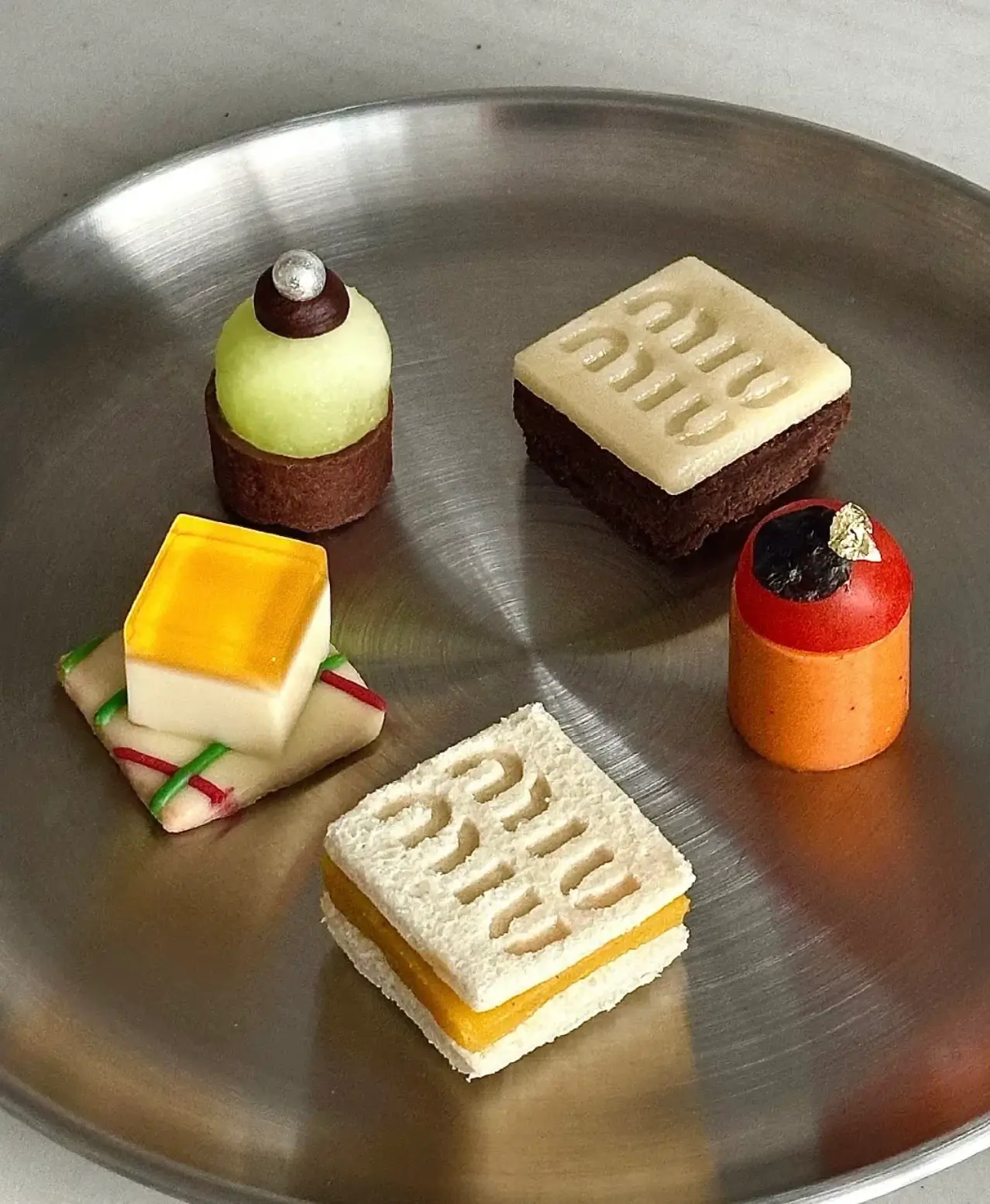
One regular customer, enchanted by her creations, invited her to cater for Miu Miu. “It was with Miu Miu: we made trays with pink bites, chocolate hearts and cake pop with bows,” she recalls. From there, Douceurs Capitales evolved from a neighborhood spot (now run by a former employee) into a full-spectrum creative studio. Today, her team includes designers, chefs, assistants, architects, and artists working from a dedicated catering space.
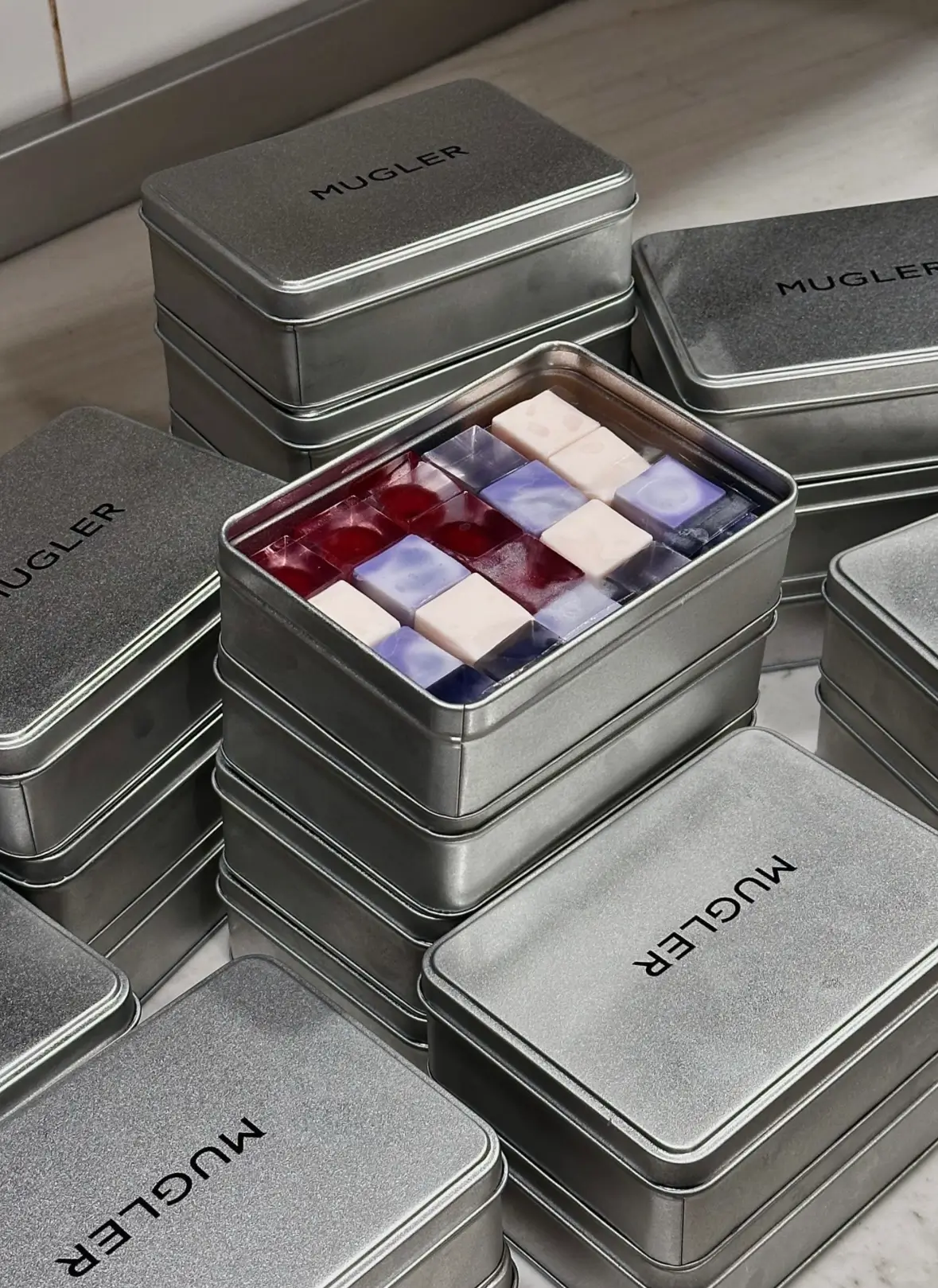
Malaret’s signature lies in jelly installations—vibrant, pixelated mosaics that blur the lines between art, architecture, pâtisserie, and performance. These aren’t mere desserts; they are sensory provocations. Guests encounter textures that defy expectation: something that looks inedible yet invites touch, taste, and wonder. The contrast between opacity and transparency sparks curiosity and instinctual delight.
What does your creative process look like? “The creative process happens mostly in my head, when I’m not working. I’m an evening person, so I get a lot of ideas when the day is over. I will then draw my ideas and find what they have in common with food, whether it be a texture, a material, and find ways we can transform them. I always work with an assistant with an arts or design background—never food, because it’s too limiting. I also love to collaborate with artists and designers, like glass artists or furniture designers, and then a chef that helps me throughout the creation process.”
This interdisciplinary approach is key. Custom molds, cookie-cutters replicating logos, bespoke packaging, and inventive boxes become integral to each project. Cooking itself is “actually a very small part of the job.” The real work lies in world-building.
Jelly chose her as much as she chose it. “I was fascinated by its texture and sensorial feel. It doesn’t seem edible at first sight, so it’s a super fun material to work with.” The pixel installations have gone viral repeatedly, drawing public fascination and proving food’s power to reconnect us with primitive sensibles in a monochrome, digital age.
Specializing in one ingredient wasn’t a calculated strategy for success. “I don’t think that using one category of food is the key to success. My aim is to create a creative identity. It’s also a very personal path: who am I creatively, and what do I want to express through the medium of food? Experimenting is what allows you to create unique things. It’s important not to stay confined to one category: jelly only came as a result of everything I explored before.”
Advice for aspiring food designers: “If you stick to your identity rather than being inspired by trends, you can really make a difference.”
Biggest misconception: Many see food design as a fleeting trend. Malaret disagrees emphatically. “I believe that food will soon be considered a true art form and we’ll have food exhibitions just like regular artists in galleries. It’s just the beginning.” The sensorial amplification in our screen-saturated world only heightens its relevance.
flow
Johanna Alscheken once dreamed of Paris, London, or New York ateliers while growing up in Munich, a city she initially resented. Unable to leave, she studied tailoring and fashion design, supporting herself in hospitality. Cooking started as a side pursuit—elaborate themed dinners in her living room, emptied for tomato texture explorations or monochromatic courses.
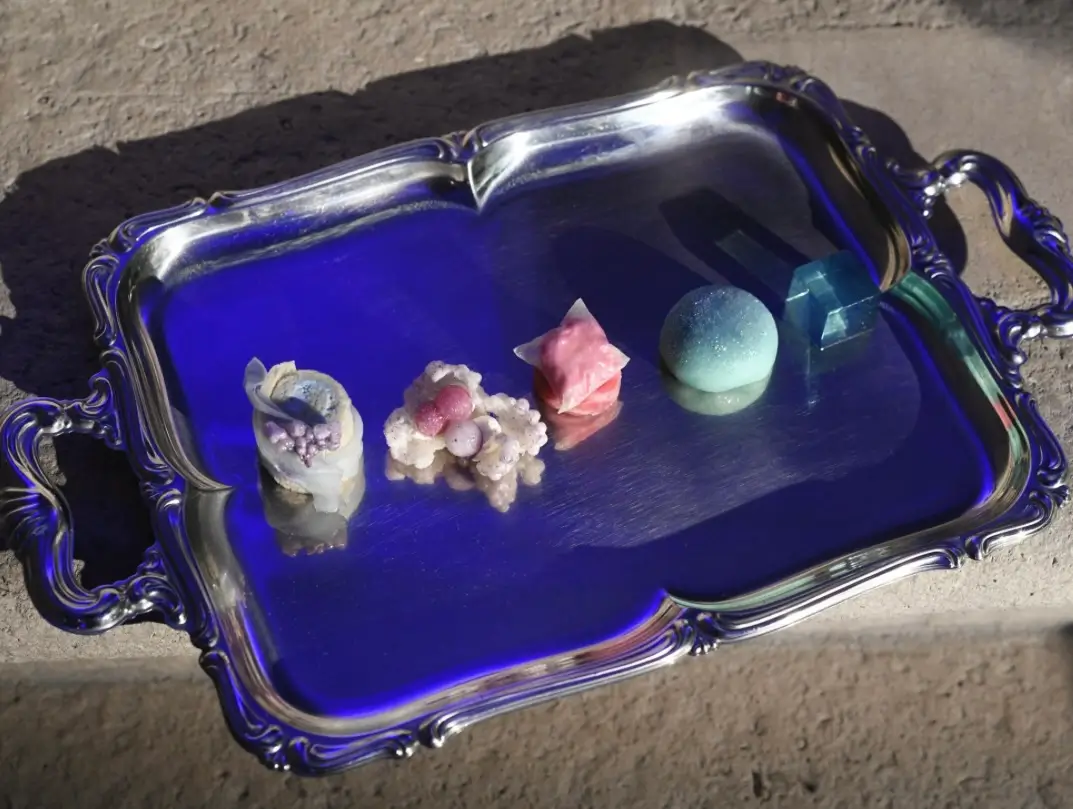
Instagram became her unexpected launchpad. What began as personal documentation evolved into eeeat, a plant-based culinary studio offering concept catering, curated dinners, and creative projects across Europe. The page attracted luxury brands almost immediately. Her first major collaboration? Hermès. “Someone from the Germany team must have found my Instagram account… I borrowed the space of a friend who owned an antique store… I was completely improvising. They came over, I didn’t even have enough chairs: it was chaos.” They booked three more events.
Alscheken’s aesthetic is instinctual and rule-breaking. “I do whatever I want because nobody ever taught me the rules.” When established chefs tried refining her visions for luxury clients, the feedback was clear: “Do it the way Johanna does it!” Her work celebrates imperfection, play, and personal voice over polished technique.
Why are luxury brands turning to food designers? “There seems to be a collective desire to slow down, make things from scratch, and reconnect with traditions and simpler pleasures… At the same time, health has become part of the cultural conversation.”
She built a supportive ecosystem in Munich, once lacking in creative energy. “I created this little corner for myself where I go to work every day happy to see my friends.” Today, a wave of similar practitioners follows, proving that staying and building can transform a scene. “Your hometown wouldn’t be boring if enough people stayed.”
Skills to run a business like eeeat: Humility and adaptability are non-negotiable. “You can’t think you’re too good for anything, especially in the beginning. I’m still the one who cleans the kitchen… And then you also have to be adaptable.” Surround yourself with grounded peers who understand the freelance life—not just cheerleaders.
In an oversaturated landscape, authenticity endures. “You have to find your own niche and try to stay authentic… Authenticity will definitely still stand out in the long run.” Build sustainable beyond algorithms: a backup plan, diversified income, and real community.
experiment
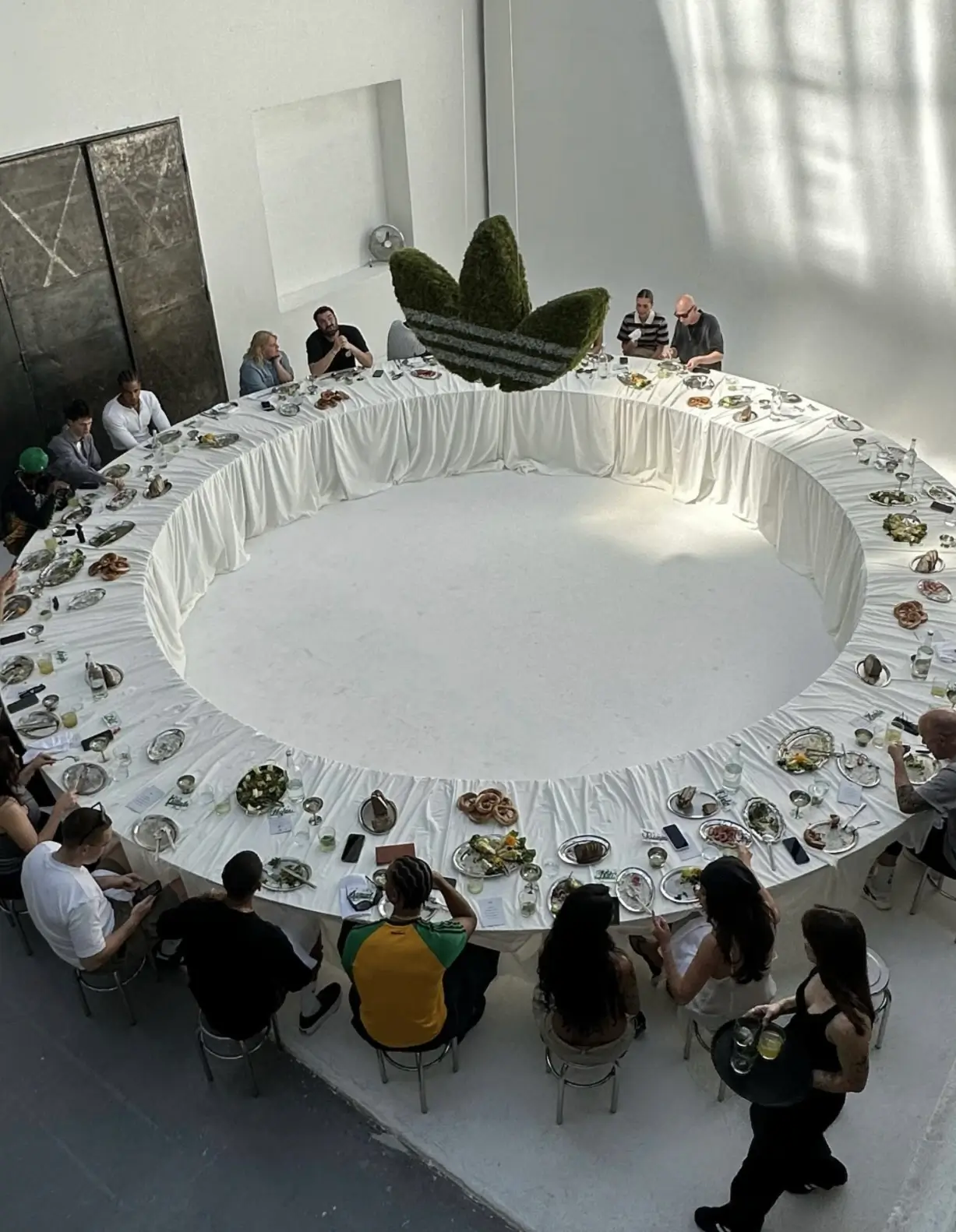
Forniture Pallotta transcends plating. The Milan-based (formerly Berlin) studio designs entire experiential ecosystems: waitstaff as performers, tables as sculptures, spaces as edible narratives. Founded by Alessandra Pallotta in 2011 after fashion design work and earlier collectives like Cibo, the studio now partners with Sara Ferroni. Their language fuses German unconventionality with Italian love for bread and baked goods—transformed into high-heeled shoes, serving trays, and architectural wonders.
Inspiration flows from everywhere: fashion, interiors, cinema, music. Clients in fashion often need coaxing to embrace surprise, unlike the freer art world. Yet the results dazzle—from breadstick recreations of The Attico bags and savory jelly tables to pink margarita fountains and Nike collides. Forniture Pallotta x M¥SS KETA, x Elmar Cucine, x Fondazione Elpis, and more showcase their boundary-pushing ethos.
Staying at the forefront: “Experimentation in food has always been so interesting, and there is still so much to explore… we create edible stories.”
Approach to fashion projects: Deep immersion into the client’s world—location, guest list, objectives—while defending creative ownership. “A major part of our work is defending the creative ownership of the project.” Waitstaff become a close-knit team of artists.
Hiring qualities: A 360-degree vision and open mind top the list. “We would hire an accountant! Jokes aside…” Assistants handle operations, but imagination rules: “Everything around us is a source of inspiration: a roll of tape can become a doughnut, which in turn becomes a bracelet. Imagination is that childlike part that, in a creative person, never leaves.”
Their ethos prioritizes process over flawlessness. “What we care about is not perfecting a flawless product, but experimentation.”
path
Synthesizing their insights reveals common threads for anyone aspiring to this field:
- Cultivate a Distinct Creative Identity Start with personal exploration. Malaret’s evenings of ideation, Alscheken’s rule-free plating, and Pallotta/Ferroni’s material transformations all stem from deep self-inquiry. Experiment relentlessly. Formal culinary training helps but isn’t mandatory—interdisciplinary backgrounds in art, design, or fashion often provide fresher perspectives.
- Build Through Doing and Documenting Host themed dinners, photograph everything, share authentically. Social media can accelerate visibility, as it did for Alscheken, but treat it as a tool, not the foundation. Create portfolios showcasing process, not just final plates.
- Embrace Multidisciplinarity and Collaboration Work with artists, architects, and non-food creatives. Custom fabrication (molds, installations) often matters more than recipes. Learn to translate concepts across disciplines.
- Master the Business Realities Expect to scrub floors at 3 a.m. in the early days. Negotiate creative control diplomatically. Build networks of peers. Diversify beyond one platform or client type. Understand logistics: guest counts, venues, technical constraints.
- Prioritize Sensory and Emotional Impact In a digital age, reconnect people to touch, taste, and play. Draw from fashion’s visual language but subvert it with humor and tactility. Think installations, performances, and narratives that linger.
- Stay Resilient and Adaptive Trust instincts. Defend your voice. View “chaos” (like Alscheken’s first Hermès dinner) as opportunity. The field rewards those who evolve with cultural shifts—sustainability, health, slowness—while remaining play.
Challenges persist: client education, scalability, defining the role amid blurring lines between styling, design, and art. Yet the reward is profound. As these founders demonstrate, food design restores humanity to exclusive spaces. It turns events into treasure hunts of delight.
Fashion’s embrace signals deeper hunger—for connection, surprise, and the eroticism of the everyday. Dalí might approve: when sex remains codified, food offers liberating expression.
Aspiring food designers, begin where you are. Open that pop-up, host those friends, sketch the impossible. Your unique lens—forged in coffee shops, living rooms, or fashion ateliers—may be exactly what the table needs next. The future of the plate is edible storytelling, and the pioneers have left the rules deliciously unwritten.
n
From the DRIFT archive: Inside the World’s Most Iconic Ski Experiences · Nike & Chipotle: How a Young Cancer Patient’s Burrito Ritual Became a Once-in-a-Lifetime Sneaker
Related Articles

Master Chief Reports to Call of Duty Now: Inside Xbox’s Second Reset Wave
Twenty-five years after Halo launched the original Xbox, the next mainline game belongs to Activision. […]