



DRIFT AUDIO
Listen to this story
Choose a voice, then press play.
In This Story
- Rel
- A Watch Built Around One Specific Midnight
- Inside the Dial: Painting Paris in Two Layers of Enamel
- The Tourbillon, the Equation of Time, and a Ship Called the Royal Louis
- Choose Your Own Sky: The Personalized Edition
- Breguet’s Actual Flying Tourbillon (And Why It’s a Different Watch)
- Where and How to See It
- Fin
stir
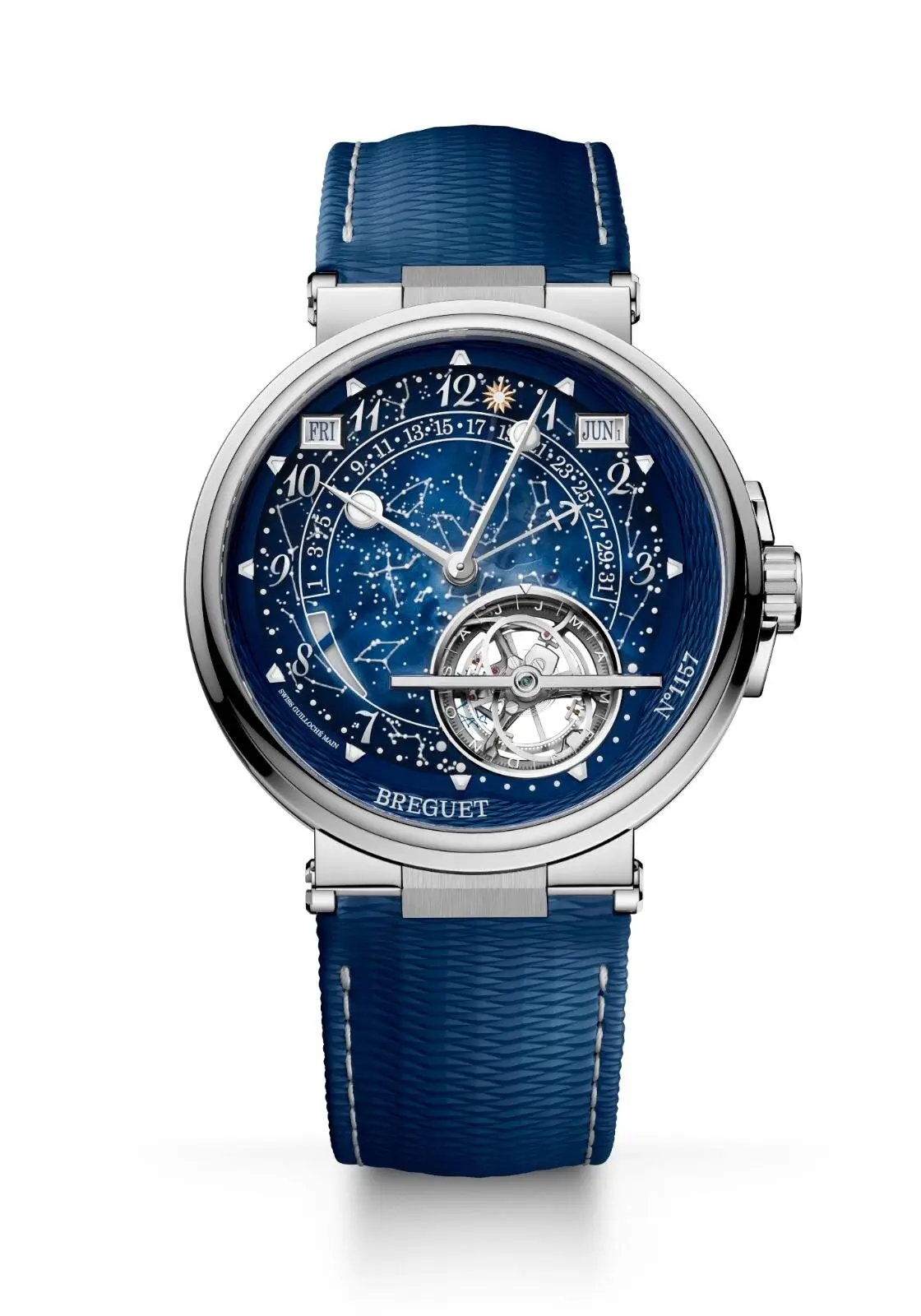
For 2026, Breguet is marking the 225th anniversary of the tourbillon’s patent — granted to founder Abraham-Louis Breguet on June 26, 1801 — with a small cluster of anniversary pieces across its Classique, Tradition, and Marine lines. The one built specifically around a night sky is the Marine Tourbillon Équation Marchante 5887, in two new platinum references: 5887PT/YS/5WVSL, on a rubber strap, and 5887PT/YS/PW0 SL, on a platinum bracelet. Both share a 43.9mm platinum case, a tourbillon positioned prominently at 5 o’clock, a running equation of time, and a perpetual calendar — and both carry a two-layer sapphire dial that depicts, in enamel and luminescent paint, the night sky directly over Paris at the moment the tourbillon patent was granted.
The bracelet reference, PW0 SL, goes further: it’s limited to 25 pieces and can be personalized, letting the buyer choose a different date and location for the sky depicted on the dial. Pricing on both is by inquiry only — Breguet lists them as “recommended retail price, please contact a point of sale” rather than a published figure, which is standard for the brand’s higher-complication anniversary pieces. In Japan, new Breguet pieces typically route through the brand’s four directly operated boutiques — Ginza, Isetan Shinjuku, Nihombashi Mitsukoshi, and Hankyu Umeda — with Boutique Ginza acting as the primary press and inquiry point.
View this post on Instagram
flow
The Marine 5887 isn’t a new silhouette built for this anniversary — it’s the third gen of a line that goes back to 1990, with a major redesign in 2017 that turned it into Breguet’s most technically dense sports-adjacent watch. The Équation Marchante version, specifically, debuted in 2017 in platinum and rose gold, then picked up a slate-and-brown rose gold variant in 2020 for the tourbillon’s 220th anniversary, and a platinum-and-black “moonlit ocean” colorway in 2024. The 2026 anniversary editions follow that same pattern of returning to one watch, again and again, to mark each turn of the calendar — except this time, instead of changing the case metal or dial tincture, Breguet changed what the dial actually shows.
What it shows is specific almost to the point of stubbornness: not a generic starfield, not an abstract constellation pattern, but the real configuration of stars that would have been view over Paris at midnight on June 26, 1801 — the exact date the French government granted Breguet’s tourbillon patent under the Republican calendar as “Brevet No. 157 du 7 Messidor An IX.” It’s the kind of detail that only matters if you already know the story, and Breguet is betting that the people buying a 5887 already do.
That date sits at the center of Breguet’s entire 2026 anniversary push, not just this one watch. The same June 26, 1801 reference point shows up engraved into the case of the Classique Tourbillon 7357 (a direct descendant of Ref. 3350, the first wristwatch tourbillon the modern Breguet manufacture produced, back in 1989) and worked into the French-blue colorway of the Tradition Tourbillon 7047. The Marine 5887 is simply the version of that anniversary story that goes furthest with it — turning a date stamped on a 225-year-old patent document into the literal subject matter of a dial.
in
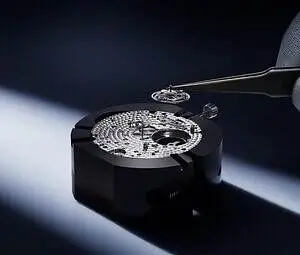
The technical work behind that dial is where this watch earns its place in a features story rather than a spec sheet. The central dial disc is sapphire crystal, and Breguet’s artisans have painted it on both sides. On the underside, a hand-painted miniature in transparent, blue-gradient grand feu enamel lays down the base color and depth of the night sky — the kind of work that requires firing the enamel at extreme heat, with each firing capable of either finishing the piece or ruining it outright. On the top surface, a second hand-painted miniature layer uses phosphorescent paint to mark out the stars and constellations themselves, so that in daylight the dial reads as a deep, gradient blue, and in the dark the star pattern glows — the same blue phosphorescence Breguet uses on the watch’s hour and minute hands.
It’s a genuinely unusual way to solve the “starry dial” problem that’s become something of a minor trend across high watchmaking in the past few years, usually solved with aventurine (a glittering, mica-flecked glass that reads as a static field of stars regardless of light). Breguet’s approach is more literal and more laborious: a specific sky, fixed to a specific date, rendered in a material that behaves differently depending on whether you’re looking at it under a lamp or in a dark room. The hand-guilloché finishing elsewhere on the dial — and the case’s coin-edge detailing — are standard 5887 vocabulary; the painted sapphire disc is the part that’s new.
straddle
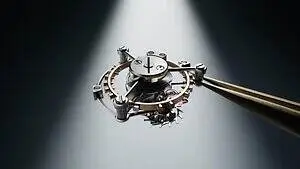
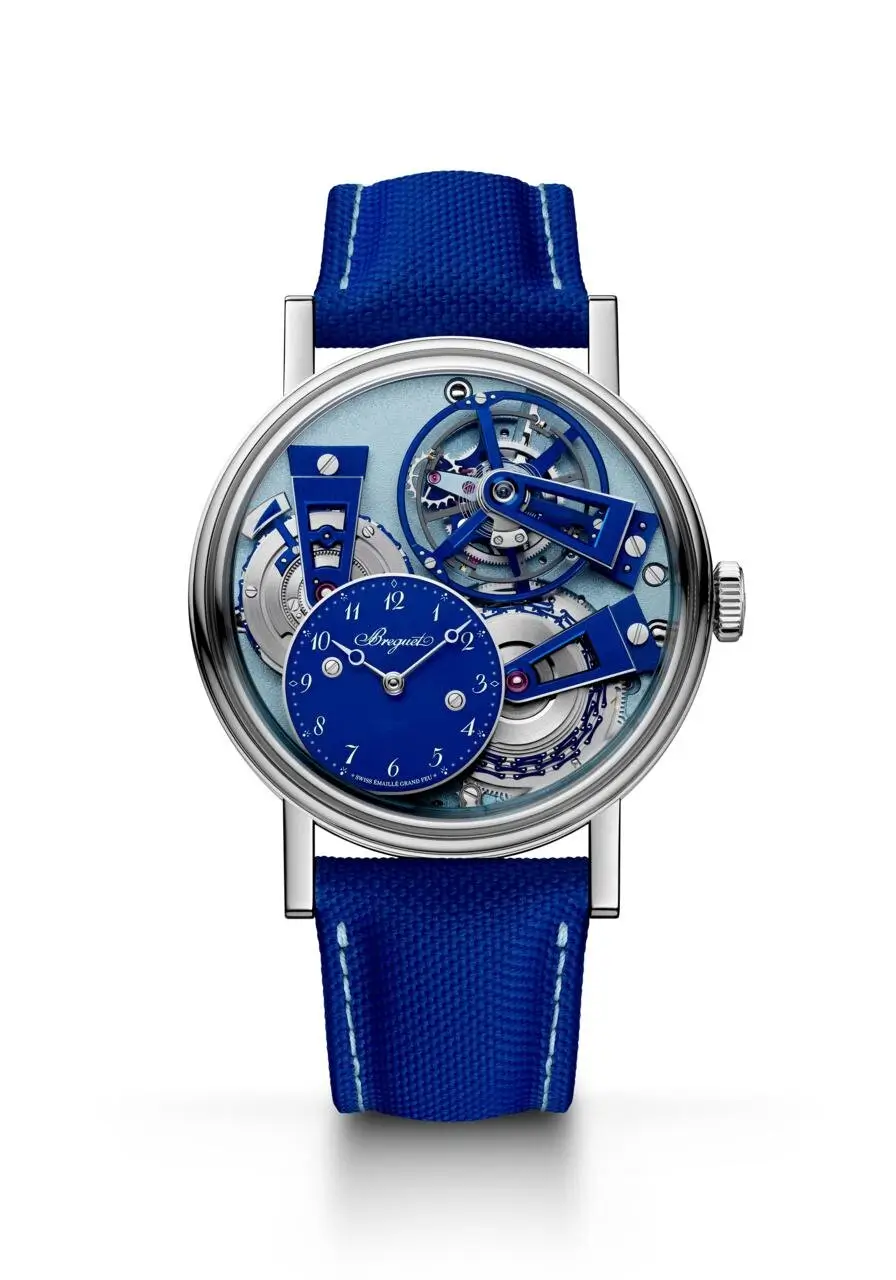
Underneath that dial sits Caliber 581DPE, a 563-component automatic movement with an 80-hour power reserve — long for an automatic watch with a tourbillon — running at 4Hz thanks to a silicon Breguet balance spring inside a titanium tourbillon cage. The tourbillon itself sits at 5 o’clock, fully visible, completing one rotation every 60 seconds, and doubles as the mounting point for the equation-of-time cam, which is what drives one of this watch’s rarer functions: a running equation of time, displayed via a small gold sun-tipped hand that shows true solar time (based on the sun’s actual position) running alongside ordinary civil time. It’s a complication most brands don’t bother with at all, and Breguet has a specific historical claim to it — Louis XVIII appointed Abraham-Louis Breguet “Horloger de la Marine Royale” (watchmaker to the Royal Navy) in 1815, which is the institutional memory the entire Marine line exists to honor.
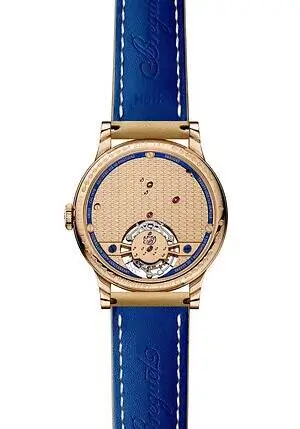
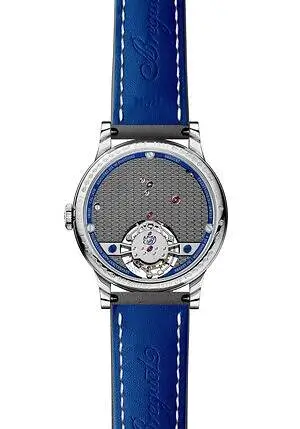
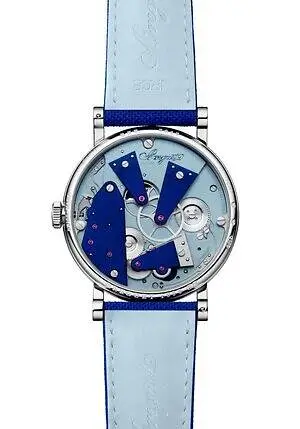
A perpetual calendar runs across the 9-to-3 o’clock arc of the dial, and a power-reserve indicator sits between 7 and 9 o’clock. Flip the watch over and the sapphire caseback reveals a hand-engraved depiction of the Royal Louis — an 18th-century French Navy flagship — spread across several of the movement’s bridges, along with the watch’s peripheral oscillating weight, a winding rotor mounted at the edge of the movement rather than the center, specifically so it doesn’t block the view of the engraving underneath it.
edition
The platinum-bracelet reference, 5887PT/YS/PW0 SL, is where Breguet turns the dial concept into something closer to bespoke commissioning. Limited to 25 numbered pieces, it carries the same dual-layer enamel-and-phosphorescent construction as the standard anniversary piece, but buyers can specify a different date and location, and Breguet’s artisans will repaint the dial to match whatever sky the buyer actually wants memorialized — a wedding night, a child’s birth, the night a deal closed. It’s a meaningfully different proposition from the rest of the anniversary run: everywhere else, Breguet is selling a piece of its own institutional history; here, it’s selling the same craft applied to the buyer’s.
It’s worth being clear-eyed about what that means in practice. Breguet hasn’t published what the personalization process costs on top of the watch itself, how long a custom dial takes to produce, or how far in advance an order needs to be placed — all reasonable questions for anyone seriously considering it, and all best directed straight to a boutique rather than guessed at here.
scope
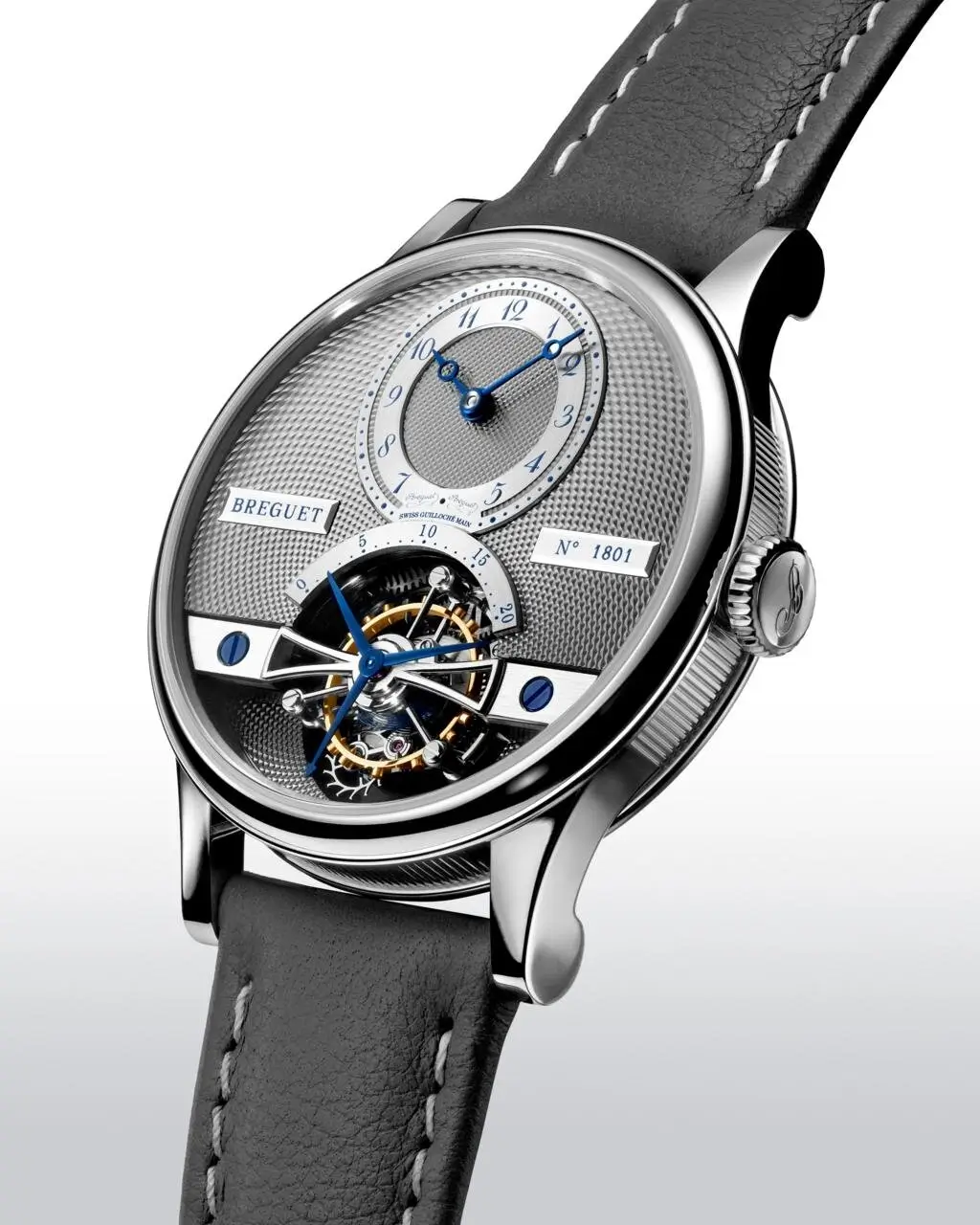
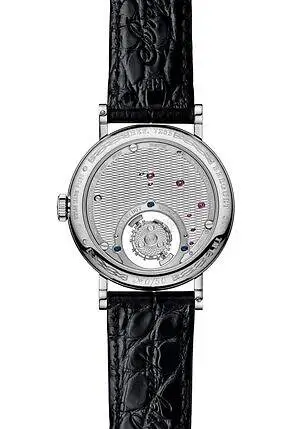
Here’s the detail worth getting right: the Marine 5887’s tourbillon, however dramatically it’s staged at 5 o’clock, is a conventional tourbillon — supported by bridges on both sides, not a flying tourbillon. Breguet does have a flying tourbillon, but it lives in a different watch entirely: the Classique Tourbillon Sidéral 7255, unveiled in June 2025 for the brand’s 250th anniversary and limited to 50 pieces worldwide. It’s Breguet’s first flying tourbillon ever — meaning the cage is held by a bridge on only one side, leaving it visually unsupported, appearing to float — and it’s also built around Breguet’s “Mystery” construction, a near-twenty-year-old house concept built to make the drive mechanism to a given display invisible. Combine the two and the tourbillon doesn’t just float; it floats with no apparent connection to anything driving it.
View this post on Instagram
The Sidéral’s dial leans into the same celestial language as the 5887, but in a more abstract register: an aventurine grand feu enamel surface that catches light like a static field of stars, rather than a specific, date-stamped sky. The name itself is the tell — “sidéral” references sidereal time, the astronomical system that measures a day against the fixed stars rather than the sun, a nod to the fact that “tourbillon” itself was an astronomical term centuries before Breguet borrowed it for a watch part. The Sidéral runs on a hand-wound Caliber 187M1, in a smaller 38mm case (platinum or 18K Breguet gold), on an alligator strap, with a recommended retail price published in some markets at roughly ¥31 million (tax included) at launch. If what actually drew you to this story was “a tourbillon that looks like it’s floating with no visible support,” this is technically the watch — it’s simply a different one from the watch with the literal Paris sky on its dial.
huh
Both watches fall under Breguet’s invitation-only, inquiry-based retail model rather than open online ordering — standard practice at this end of high watchmaking. In Japan, that means the brand’s four directly operated boutiques: Breguet Boutique Ginza, inside the Nicolas G. Hayek Center; the in-store spaces at Isetan Shinjuku, Nihombashi Mitsukoshi, and Hankyu Umeda. Boutique Ginza is the standing point of contact for stock and viewing inquiries on new pieces generally, and is the most likely first stop for either the 5887 anniversary editions or the Sidéral 7255, though availability for any individual piece should be confirmed directly rather than assumed.
sum
What’s genuinely interesting about the 5887 anniversary editions isn’t the tourbillon — Breguet has been putting tourbillons in this watch since 2017 — it’s the decision to treat a dial as a documentary object instead of a decorative one. Most “starry night” watch dials, including Breguet’s own Sidéral, are gesturing at the idea of a night sky; this one is reproducing an actual, specific, datable sky, with enough technical commitment (two enamel layers, two different finishing techniques, a phosphorescent layer that only reveals itself in the dark) that it reads less like a flourish and more like an argument: that the exact astronomical conditions of June 26, 1801, are themselves part of the tourbillon’s design history, and worth preserving with the same rigor as the movement underneath them.
The personalized 25-piece version pushes that idea somewhere stranger and more interesting — turning a piece of brand mythology into a private one. There’s an obvious tension in that pitch, though: Breguet’s whole case for the anniversary editions is institutional memory, a specific sky tied to a specific patent that belongs to the brand’s own history. The personalized version trades that historical specificity for personal specificity, which is a different kind of luxury entirely — closer to a commissioned portrait than a piece of brand heritage.
Related Articles

Under Rue de Castiglione, Liaigre Gives Hôtel Costes a Spa With No Hard Corners
A 20-meter lap pool, eight treatment rooms and not one sharp angle: Studio Liaigre’s spa […]