DRIFT AUDIO
Listen to this story
Choose a voice, then press play.
In This Story
- A Festival Reveal With Bigger Implications
- Inside Pokémon Tales: The Misadventures of Sirfetch’d & Pichu
- Why Aardman, Specifically
- The Real Cost Of Choosing Slow
- Stop-Motion Is Having A Moment, And Not By Accident
- What It Signals For Every Brand Watching
stir
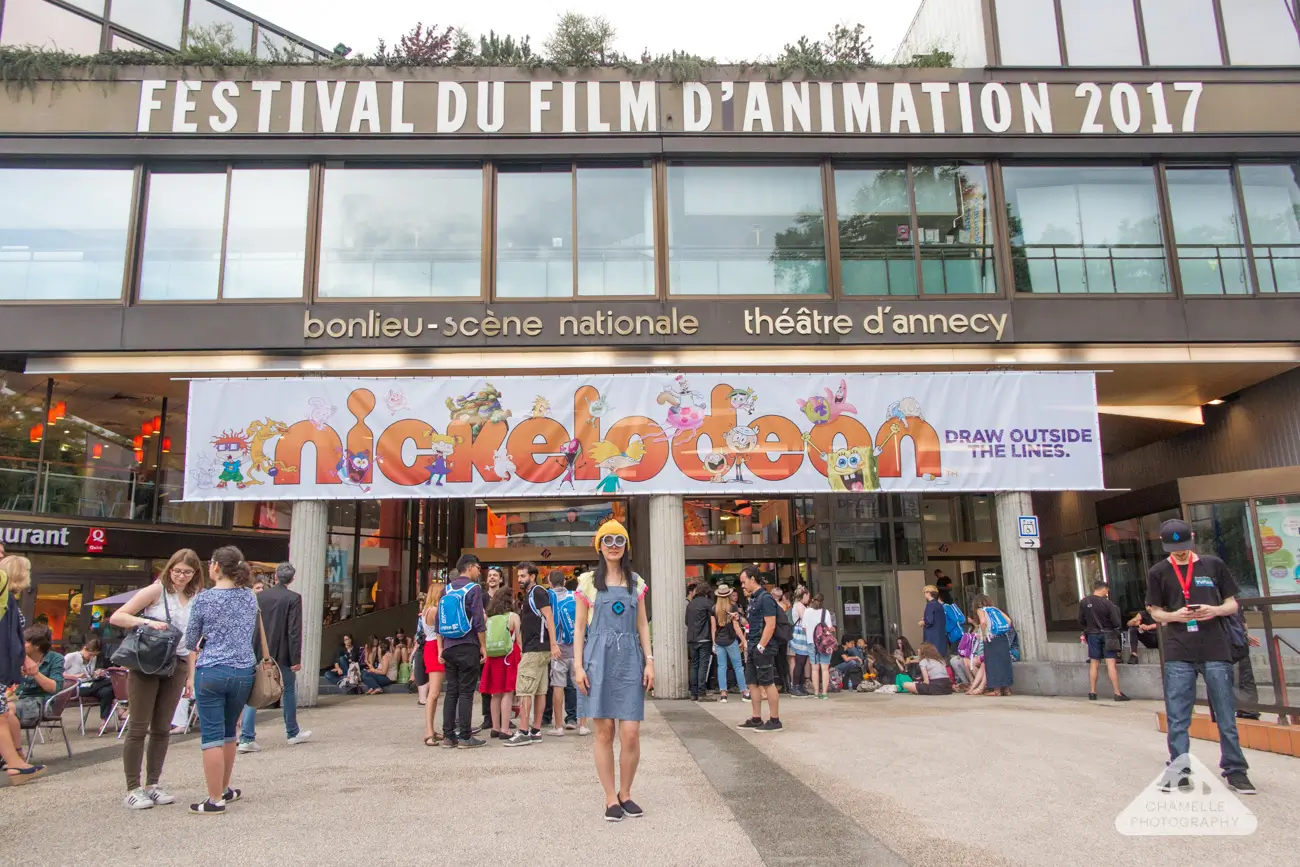
Annecy turned 50 this year, and the French lakeside festival used its anniversary edition — running June 21 to 27, 2026, and coinciding with the opening of the new Cité internationale du cinéma d’animation — to give Aardman a proper victory lap. Peter Lord, Nick Park and David Sproxton, the trio who built the studio’s reputation one frame at a time, were guests of honour at a dedicated career celebration. It was the right room, in other words, for The Pokémon Company to put fresh detail behind a partnership it first announced back in December 2024.
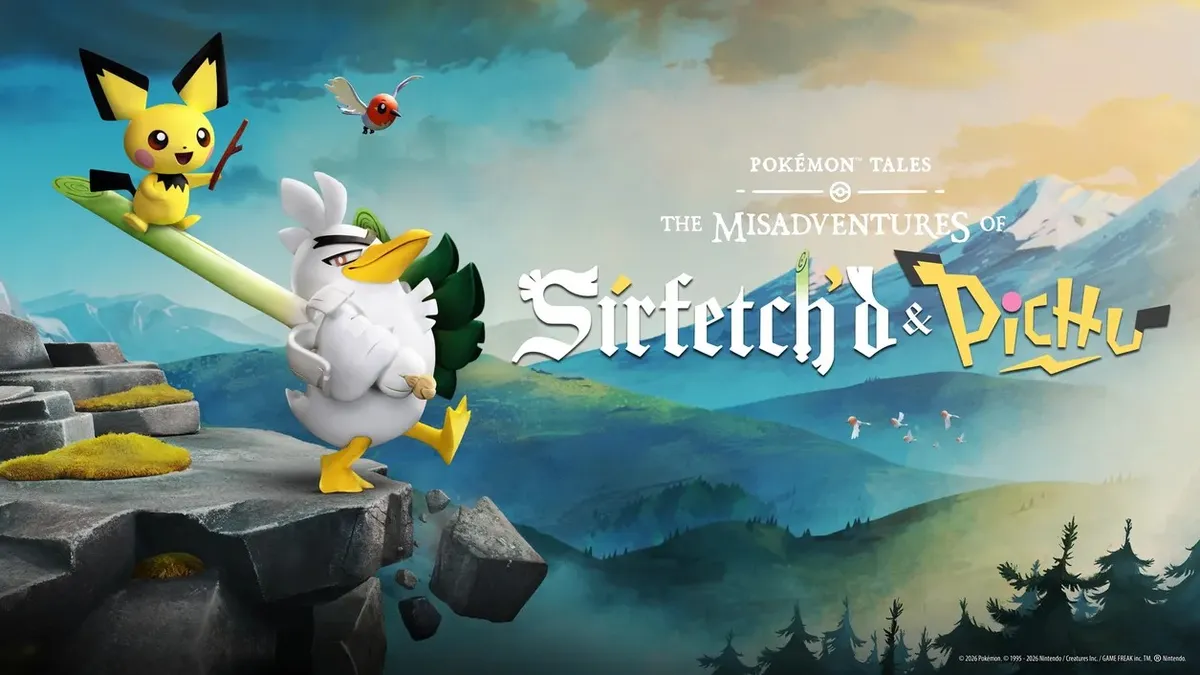
That detail is Pokémon Tales: The Misadventures of Sirfetch’d & Pichu, a stop-motion series set for 2027. On its own, a new animated spin-off barely registers as news in a franchise that produces content constantly. What makes this one worth a longer look is the company The Pokémon Company chose to make it with, and the moment it chose to make that relationship view
2026 is not a neutral year to make this kind of announcement. It’s the year synthetic imagery stopped being a novelty and became wallpaper — in advertising, in social feeds, in pitch decks. Against that backdrop, a brand with effectively unlimited budget and total creative control chose puppets, sets, and a camera that moves twenty-four times a second to tell a story it could have generated in an afternoon. That’s not an accident of scheduling. It’s a decision, made loudly, in public, at the festival built to celebrate exactly this kind of craft.
The timeline behind the project is worth tracing, because it shows a brand building toward this moment rather than stumbling into it. The Pokémon Company first confirmed the Aardman partnership back in December 2024, with both sides describing the deal in deliberately vague terms — a “special project,” no title, no format confirmed. A first-look teaser surfaced roughly seven months later, finally putting a name and a visual style to the announcement. The full unveiling at Annecy’s 50th edition closes that loop, arriving at the one event guaranteed to put the project in front of the audience most likely to understand exactly what kind of statement it is. Three separate beats, spaced across eighteen months, each one timed to land with maximum craft-world credibility rather than maximum speed. That pacing is itself instructive: a generative pipeline could have produced a finished trailer in a fraction of the time it took Aardman simply to confirm a visual identity.
in
The series follows two unlikely companions — Sirfetch’d, the duelling leek-wielding knight of a Pokémon, and Pichu, the perpetually over-excited baby Electric type — through the Galar region, the UK-inspired setting introduced in Pokémon Sword & Shield. It’s a fitting pairing of studio and setting: Galar’s aesthetic already leans on a kind of cosy, lived-in Britishness that Aardman has spent five decades perfecting in places like Mossy Bottom Farm.
Early teaser material shows a Wooloo (Galar’s sheep Pokémon, and a none-too-subtle wink at Aardman’s own Shaun the Sheep) grazing in the background while the two leads stumble into trouble. The studio’s signature texture is unmistakable even in a few seconds of footage: hand-finished sets, visible tooling on character models, the slightly imperfect rhythm that separates stop-motion from anything rendered.
In the project’s original announcement, Aardman managing director Sean Clarke called it a huge honour to be working with The Pokémon Company International, framing it as a meeting point between the world’s biggest entertainment brand and his studio’s particular obsession with craft and character. The Pokémon Company has been similarly effusive in its own materials, describing the production team’s work in terms of warmth and texture rather than scale or speed — language that’s notable mainly for what it doesn’t mention. Nobody on either side of this partnership is talking about turnaround time.
huh
Plenty of studios do stop-motion. Laika has built an entire identity around it, most recently with the buzz surrounding Wildwood. France’s Cinema Fantasma and a handful of boutique outfits keep the technique alive in commercials and shorts. But Aardman occupies a different cultural slot. Fifty years in, the studio isn’t just associated with a technique — it’s associated with a temperament: gentle, dry, slightly absurd, unmistakably handmade. You can see the maker’s thumbprints in Morph. You can see them in Gromit’s eyebrows doing more emotional work than most CGI faces manage with a full rig.
That reputation is the actual asset The Pokémon Company is buying. Plenty of studios — digital, hybrid, or otherwise — could have delivered a technically competent Pokémon cartoon for less money and in less time. None of them would have arrived with Aardman’s specific authority on the question of what “handmade” is worth. Licensing that authority, and putting it on a property as universally recognised as Pokémon, isn’t really a production decision. It’s a positioning one.
It also isn’t the first time Aardman’s name has been used this way. The studio’s recent work spans a Royal Mint commemorative coin marking its own 50th anniversary, a pensions campaign for Nest built around its visual language, and a forthcoming Young V&A exhibition dedicated to its production process. Brands keep reaching for Aardman specifically when they want an association with effort — with the idea that somebody spent real hours doing something the hard way because the hard way still matters.
It’s also worth noting how crowded — and how commercially healthy — the stop-motion field around Aardman has become, which makes the choice less of a default and more of a real selection among genuine alternatives. Laika’s upcoming Wildwood generated tens of millions of organic views off a single trailer, evidence that audiences will actively seek out the format rather than merely tolerate it. Studios like Cinema Fantasma have built sustainable businesses on commercial and short-form stop-motion work precisely because brands are willing to pay for the look. The Pokémon Company didn’t pick Aardman because the technique was scarce. It picked Aardman because, within a genuinely competitive field of skilled physical-animation studios, none of them carry quite the same instant cultural shorthand for “this was made by hand, and made well.”
expend
It’s worth being honest about what this decision actually costs, because that’s where its meaning lives. Stop-motion is slow by design — sets are built and lit like miniature soundstages, puppets are repositioned by hand frame by frame, and a single minute of finished footage can represent weeks of work from an animation team. None of that is cheaper or faster than a generative pipeline, and everyone involved knows it. Aardman isn’t competing on price. It never has.
That’s precisely why the deal functions as a statement rather than just a production choice. A company sitting on one of the most lucrative IP libraries on the planet didn’t need to prove anything to its shareholders by spending more time and money than the brief required. It chose to anyway, and chose to make that choice visible — through Annecy, through press materials that lean hard on words like “craft” and “hand-crafted,” through a teaser that foregrounds texture over polish. In an industry currently obsessed with stripping cost out of every stage of production, paying a premium for human hands is itself the message.
There’s also a quieter signal in when this is happening. Streaming budgets have tightened across the board over the past two years, and animation has been one of the categories most aggressively targeted for AI-assisted cost-cutting — pre-visualisation, background generation, in-betweening. Choosing the most labour-intensive animation style available, at this exact moment, reads less like nostalgia and more like a deliberate countercurrent.
extent
Pokémon and Aardman aren’t operating in isolation. Annecy’s own 2026 programme made the trend explicit, dedicating a special history celebration to Aardman alongside work-in-progress showcases from Laika’s Wildwood and other physical-production studios. Stop-motion has quietly become one of the clearest ways the wider animation industry signals “a human did this,” at a moment when audiences are getting noticeably better at spotting — and rejecting — the alternative.
Some of this is generational nostalgia reasserting itself; some of it is pure differentiation in a content landscape saturated with synthetic imagery. Either way, the studios built on physical craft are finding themselves with more cultural leverage than they’ve had in years, simply by continuing to do what they’ve always done. Aardman wasn’t trying to catch a trend. The trend caught up to Aardman.
That matters for how this Pokémon deal should be read. It isn’t a one-off curiosity — it’s one data point in a broader pattern of major IP holders quietly steering high-visibility projects toward physical animation techniques, precisely because those techniques now carry a meaning that polished CGI and synthetic imagery currently can’t buy at any price.
fin
You don’t need to care about Pokémon, or even about animation, for this to be worth noting. The underlying logic applies well beyond entertainment: as generative tools make “fast and good enough” the default everywhere, visible evidence of human time and skill becomes its own form of differentiation. A brand that can credibly say “we did this the hard way, on purpose” is making a claim that’s getting harder — and more valuable — to make every year.
For an editorial audience that lives across fashion, shoe, design, and culture, the parallel isn’t subtle. The same instinct that makes a hand-finished pair of shoes or a small-batch capsule collection feel worth the premium over a mass-produced equivalent is exactly what The Pokémon Company is banking on here. Craft-as-marketing isn’t new. What’s new is how starkly the alternative — algorithmically generated, instantly available, forgettable by design — has sharpened the contrast.
From the DRIFT archive: Dyson x PORTER: Engineering Meets Urban Craft in the OnTrac Limited Edition · Tactical Elegance: Inside Bramford London Aqua Blue Three-Pocket Watch Roll
Related Articles
Under Rue de Castiglione, Liaigre Gives Hôtel Costes a Spa With No Hard Corners
A 20-meter lap pool, eight treatment rooms and not one sharp angle: Studio Liaigre’s spa […]