DRIFT AUDIO
Listen to this story
Choose a voice, then press play.
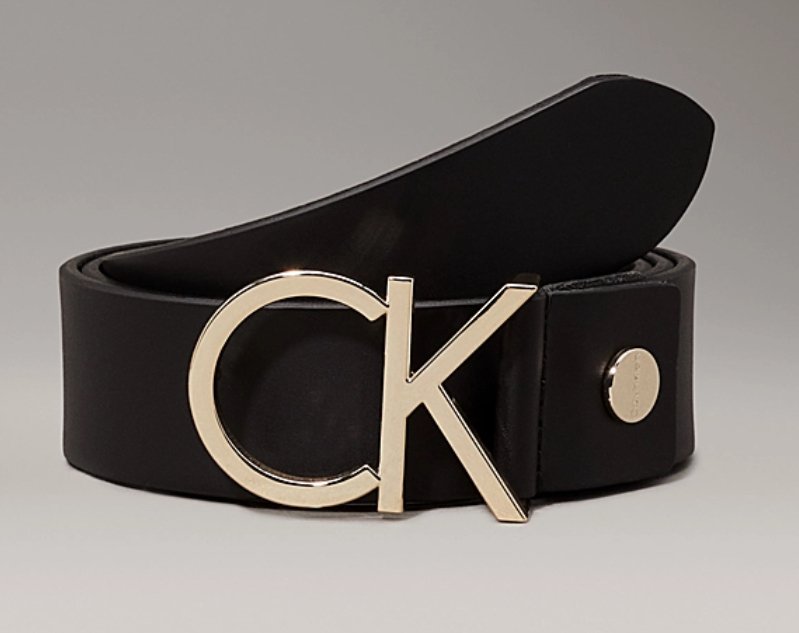
There are few accessories in contemporary fashion that so elegantly balance functionality, cultural imprint, and sculptural austerity as the Calvin Klein Leather Logo Belt. It’s an object that at first seems almost too straightforward to merit analysis—a band of full-grain leather with a metallic emblem at its core. But its apparent simplicity is precisely what has transformed it into a quietly subversive statement of taste and authority.
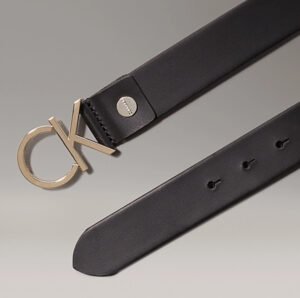
Rooted in the American minimalism that Calvin Klein helped define throughout the late 20th century, this belt channels the brand’s ongoing commitment to clarity of form and structural elegance. It’s not an ornamental piece. Rather, it is utilitarian chic at its most distilled. Cut from smooth black leather, often polished but never flashy, the strap adheres to a strict geometry. It recalls the architectural integrity of New York’s skyline: no excessive flourishes, just clean lines and confident utility. The silver-tone “CK” buckle—whether rendered in brushed steel, matte chrome, or antique brass—serves as both a fastening device and a quiet signifier of modern heritage.
In a culture increasingly saturated by logomania and overt branding, the Calvin Klein logo belt resists maximalism while still asserting its presence. Its logo is not hidden, but it’s measured—positioned like punctuation on a sentence rather than a billboard. There’s intention in that restraint. The wearer isn’t screaming wealth or aspiration, but signaling fluency: an understanding of fashion’s lexicon without the need for translation.
The belt has transcended its role as a mere accessory to become a kind of uniform—worn with tailored wool trousers in boardrooms, looped through denim at downtown galleries, or cinching oversized blazers in off-duty model style. It bridges generations. On the one hand, it nods to the corporate power dressing of the 1990s—a time when Calvin Klein’s aesthetic was synonymous with precision and sexual ambiguity. On the other, it remains anchored in the now, picked up by a generation of wearers who remix wardrobe classics with ironic detachment and gender fluidity.
In this context, the belt functions as both relic and rebirth. For those who recall Kate Moss and Mark Wahlberg in their Calvin Klein campaigns—full of deliberate rawness and hyper-modern sensuality—the belt becomes a piece of that memory. For newer audiences, it aligns with a wave of post-normcore styling: the idea that essentials, when executed with fidelity and control, can eclipse trend.
But perhaps what’s most powerful about the Calvin Klein Leather Logo Belt is how it thrives on tension. Between austerity and recognizability. Between masculinity and softness. Between background and emphasis. Like the best elements of American design, it doesn’t shout; it endures. It wraps around the body not merely to hold garments in place, but to center the silhouette with sharp intentionality.
In an age of constant reinvention, it stands as a rare thing—a belt that speaks volumes by saying so little.
Related Articles

Ameri Put Wrangler On Drive And Cut It To Two Denims
First Ameri × Wrangler drop. Jacket ¥30,800. Pants ¥26,400. Blue, black, pink. 29 September. Drive […]