DRIFT AUDIO
Listen to this story
Choose a voice, then press play.
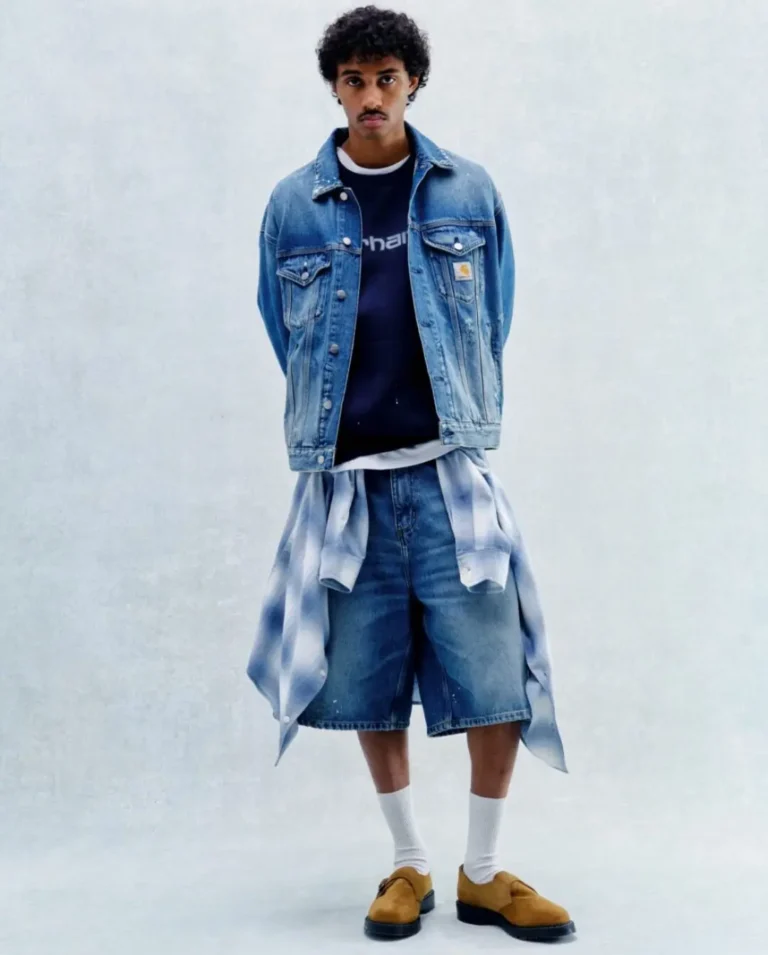
FW 2026 Icons stay on 12 oz Dearborn Canvas and denim. Double Knee, Single Knee, Michigan, Detroit, Active, Classic Vest. Tobacco and dark navy join Hamilton Brown and black.
The first thing you touch on a Carhartt Icon is not a logo. It is a corner. Pocket bag, rivet, three needles where one would have been cheaper. Carhartt WIP still builds the Fall and Winter 2026 Icons that way. 12 oz Dearborn Canvas. Denim when the season wants indigo instead of duck. Triple stitch. Metal rivets. Engraved shank buttons. Zippers that feel like hardware, not trim.
Hamilton Brown is the brown that already meant work before it meant a lookbook. Black is the other constant. This winter the palette opens two more rooms. Tobacco. Dark navy. Each one in a washed hand and a hard hand. Soft on arrival, or stiff enough to remember the board it came off.
WIP’s own language for the line is continuity. Garments close to the American archetypes that sat on job sites more than a hundred years ago. Recognizable by construction, not by a seasonal print. The wider FW 2026 lookbook can chase destroy washes and field hybrids. Icons do not. The block stays. Color and finish move around it.
Carhartt began as workwear in the United States. Dearborn is a Michigan place name that became a cloth name. WIP, Work In Progress, took those cuts into a parallel life: same bones, different weather, different cities, the same wrinkle logic.
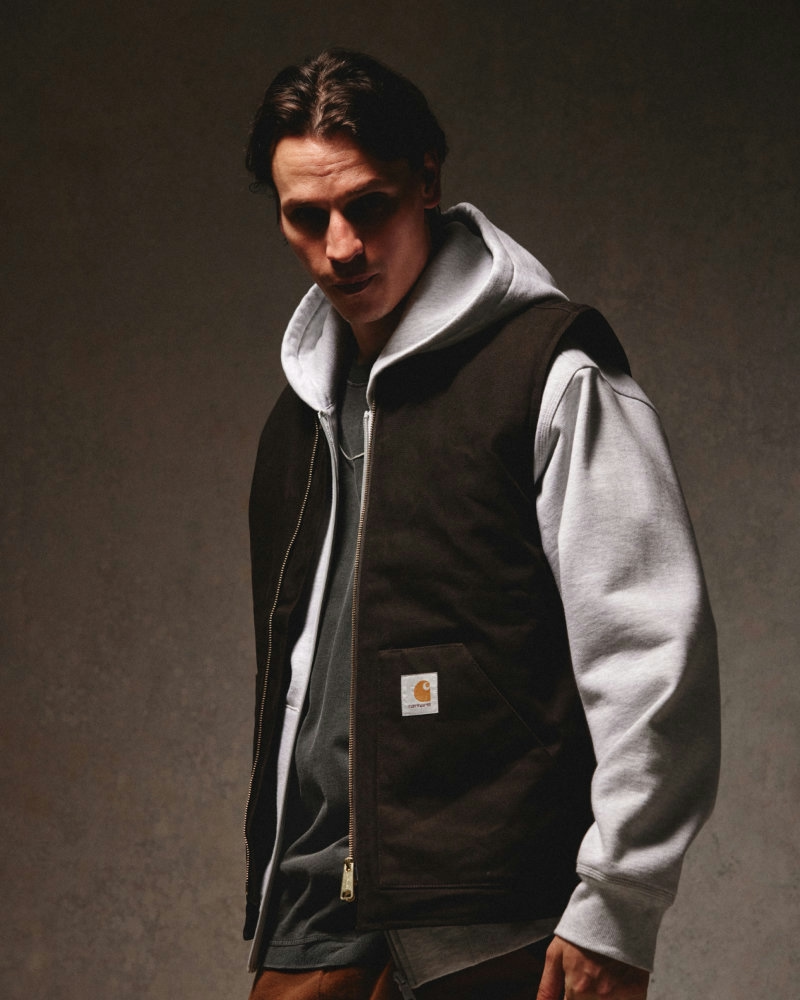
Man wearing a dark brown Carhartt vest over a grey hoodie and t-shirt.
century
An Icon is a stubborn object. You can date a photograph by hair and by the building behind the wearer. You cannot always date the jacket. That is the point WIP keeps repeating in the Icons chapter. Form stays solid. Details stay readable. Fabric and tincture cycle.
12 oz cotton Dearborn Canvas is heavy enough to take a scrape and not open a hole on the first season. Denim does the same job in another fiber. Triple stitching is not decoration. It is a third chance at a seam that will be pulled when a hammer hangs off a loop. Rivets stop a pocket corner from becoming a tear. Shank buttons and zippers carry engraving because the hardware was always meant to be seen after the dye faded.
Hamilton Brown hides dirt until the dirt becomes part of the brown. Black goes pale at the fold and at the thigh. Tobacco will take sun the way a barn door takes sun. Dark navy will hold night longer than black does in certain light. Washed pieces skip the first month of stiffness. Rigid pieces make the wearer do that month.
None of this is a new theory of clothes. It is why these cuts survived long enough to be called Icons instead of last year’s chore.
flow
The Double Knee Pant is the archive talking. Reinforced knees. Metal rivets on that extra panel. Tool pockets. Hammer loop. WIP dates the sil past eighty years. A work pant that expected a floor, a roof, a truck bed.
The extra knee is not a fashion panel. It is a second skin where the first one dies. You kneel. The outer cloth takes the gravel. The inner cloth takes the body. Rivets keep the two layers from chewing each other at the edge.
The Single Knee Pant is the same sentence with one clause removed. Triple stitch remains. Tool pockets remain. The double layer at the kneecap does not. The line streamlines. The pant still knows where a tool goes. It no longer wears armor for a job the wearer may not have.
WIP has said the Double Knee is the blueprint for the Single Knee and for the Simple Pant further down the family. That is a family tree, not a merchandising ladder. One archive knee. Several degrees of protection.
Both pants take the new tobacco and the new navy. Both still take Hamilton and black. Rigid Double Knee in a dark color will show a pale oval at each kneecap by spring. That oval is the record.
two
The Michigan Coat is the chore coat that refused a new name. Corduroy collar. Button front. Patch pockets. Four-pocket face that WIP still lists as typical. Loose, straight, hem just under the hip. First made in denim, later in Dearborn Canvas. The brand’s own note: over a century old, details barely changed.
A chore coat is a coat you work in, not a coat you save. Corduroy at the collar is sweat and weather management. Buttons instead of a full zip because a chore coat is opened and closed all day. Patch pockets because a welt is slower to get a glove into.
Winter Michigan in this chapter sits in dark navy against black, rigid. Hamilton Brown remains the brown the coat was born in. The collar is still the tell from ten feet.
The Detroit Jacket is the garage jacket. Waist length. Corduroy collar again. Welt pockets. Zip at the chest. Zip down the front. Shorter than the Michigan. Closer to the belt. A jacket for a space that is not quite outdoors and not quite a living room.
Detroit as a word carries factories and winters. The jacket carries a zip chest pocket because a garage hand wants a pocket that does not dump when you bend over an engine. Welt pockets sit flatter than patches on a short body.
Winter Detroit in the same navy and black rigid as the Michigan. Other seasons have already run Hamilton against tobacco on lighter Detroit bodies. The waist-length block does not change. The dirt on it does.
Michigan is the longer sentence. Detroit is the clipped one. Same family of collar and canvas. Different hours of the day.
grew
The Active Jacket is the Icon that started as something softer. More than fifty years ago Carhartt took a Hooded Zip Sweatshirt and rebuilt it. Reinforced shell. Quilted lining. Drawstring hood. Kangaroo pocket. Full zip. Those parts are still the parts.
That reconstruction is why the Active crossed rooms the chore coat never had to argue about. Quilt on the inside reads as winter. Shell on the outside reads as work. Hood cinches against wind that a collar alone will not stop. The kangaroo pocket is one cave for both hands.
Skate, site, night bus, gallery opening that did not ask for a coat. The Active absorbed all of that without growing a fashion collar. WIP keeps the OG Active on the Icons rail because the reconstruction already happened. Seasonal shells change. The zip-hood-pocket grammar does not.
The Classic Vest is the Active after the sleeves leave. Kangaroo pocket stays. Zip stays. Rib knit collar replaces the hood. Back hem drops longer than the front so a bend does not flash a belt. Tobacco rigid is in the current mix. Hamilton Brown rigid sits in the same family.
A vest is the in-between garment. Too much jacket for a heated room. Not enough jacket for a dock. The rib collar is the only apology the canvas makes.
View this post on Instagram
author
WIP’s closing idea is the one that keeps Icons from becoming costume. These garments passed through generations and through subcultures without losing the original silhouette. The patterns remain. What changes is what each wearer brings. Every wrinkle. Every crease.
That is the opposite of a pristine drop. Rigid tobacco will map a wallet. Rinsed navy already looks like it has a year. Hamilton Brown swallows a paint flick and keeps it. Black shows the thigh first.
Workwear that survives a century does it by being simple enough to repair with a story and stubborn enough not to need a new story every season. Double Knee. Single Knee. Michigan. Detroit. Active. Classic Vest. The names are place names and job names. The cloth is Dearborn or denim. The new colors are tobacco and dark navy. The old colors did not leave.
Subcultures borrowed the block because the block did not flinch. Rave, skate, hip-hop, gallery, farm, union hall. Same rivet. Different soundtrack. FW 2026 does not rewrite that loan. It issues the loan in two more colors and two hands of the same canvas.
The crease is the signature the factory cannot print.
Related Articles
Inside “Still Here After Rain,” GRIND Magazine’s Carhartt WIP Spring/Summer 2026 Story
A twelve-model editorial for Japanese fashion title GRIND turns Carhartt WIP’s Spring/Summer 2026 collection into […]