DRIFT AUDIO
Listen to this story
Choose a voice, then press play.
A Tokyo accessories house and a 102-year-old English football brand meet again over floral boa knapsacks, polka-dot mini Bostons and four more pieces due October 30.
The double diamond has been stitched onto FA Cup final shirts, World Cup kits and a whole gen of 1990s training tops. This autumn it turns up somewhere less expected: on the front of a plush, flower-scattered knapsack that reads closer to a stuffed toy than a kit bag. Casselini, the Tokyo label better known for women’s bags and accessories than for anything worn to a match, has teamed up with Umbro again for a six-piece collection of bags, wearables and cold-weather accessories. The idea lives in the pairing itself. Umbro supplies the sportswear shapes and the logo, while Casselini supplies the prints, the textures and the clear sense that none of it is headed for a training ground.
Signal. What happened: Casselini and Umbro have announced a new women’s collide of six pieces spanning bags, apparel and winter accessories, pitched as sporty design crossed with feminine pattern. Exact object: a Fake Boa Knapsack (9,900 yen) in floral, animal print and striped versions; a Print Boston mini bag (9,900 yen) with oversized dots in sax blue and black; a Track Jacket with a drawcord hem (20,900 yen); a Flower Zip Parka (19,800 yen); a Reversible Tippet (5,720 yen); and a Jacquard Watch knit cap (5,500 yen). When and where: pre-orders open Friday, October 9, 2026 on Casselini’s official online store, with general release from Friday, October 30 at Casselini stores and online. Source: Japanese trade rel notices for the 2026 lineup, cross-checked against Casselini’s own collision pages for earlier editions; the new pieces were not yet listed on Casselini’s store at the time of writing. Why it matters: it shows Umbro’s Japanese show program reaching well past menswear and streetwear into a mass-market women’s accessories audience, and the partnership has now outlasted a single trend cycle. Earlier: a cover of Umbro’s Japan-market tie-ups with KIDILL and CITEN tracks the same brand from the opposite, menswear end of the market.
None of the six pieces is a football shirt, and that may be the most telling design decision in the lineup. Much of Umbro’s recent fashion work has reworked jerseys, drill tops and tracksuits for a streetwear crowd. This collection starts from the accessories drawer and works outward, with a track jacket and a zip parka playing supporting roles. Football becomes a graphic accent rather than a uniform, closer to a charm clipped to a bag strap than a kit hung on a mannequin.
stir
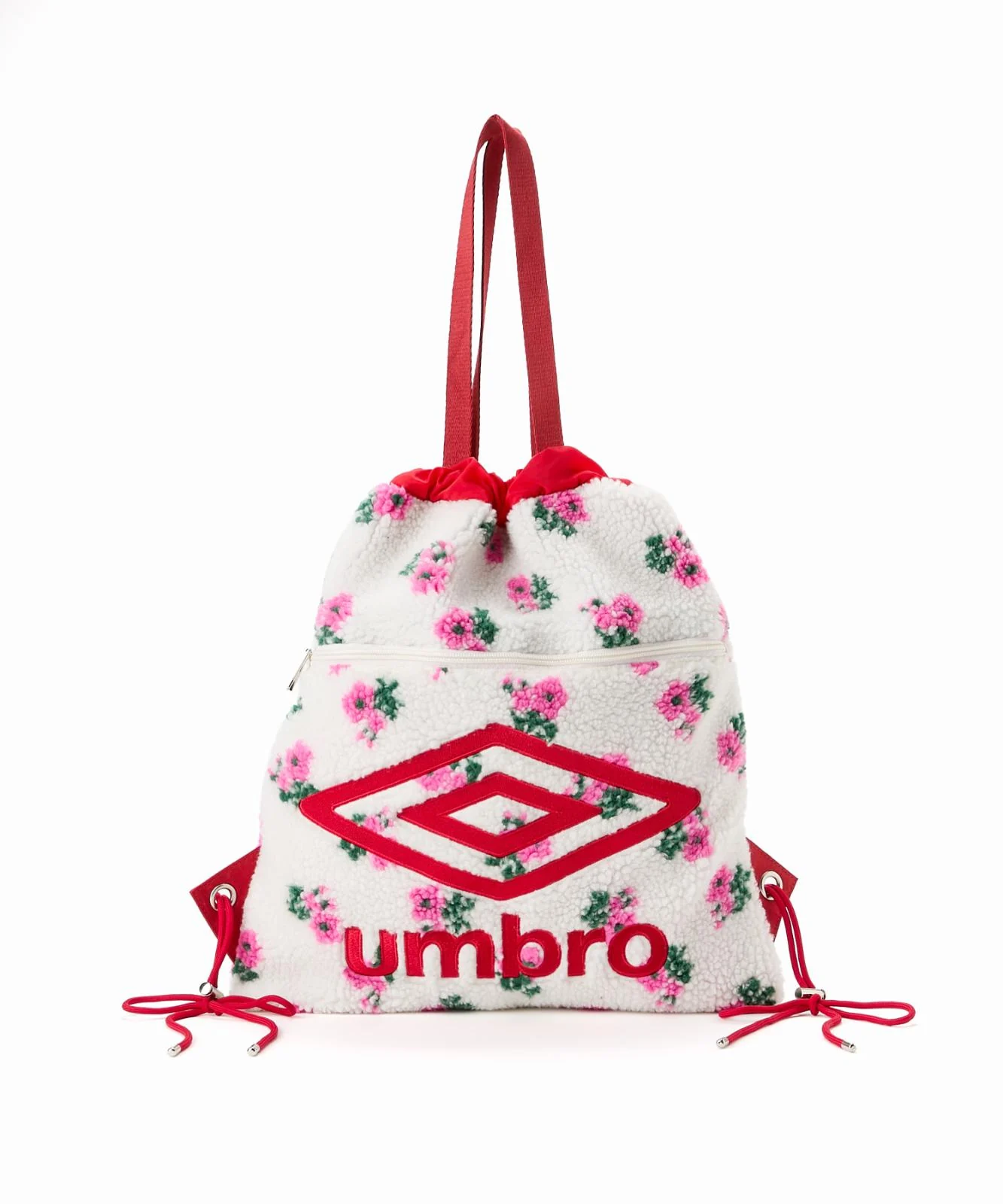
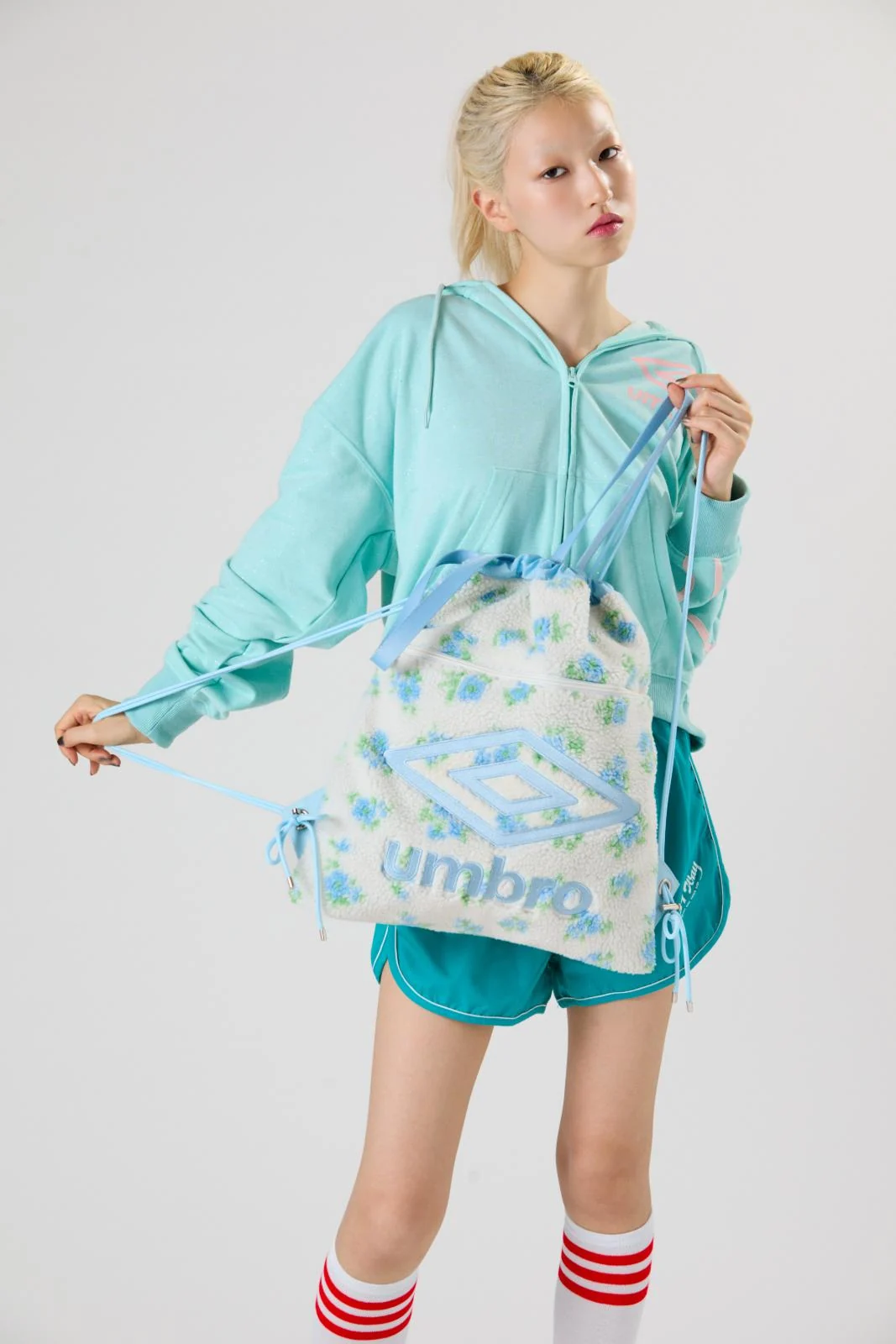
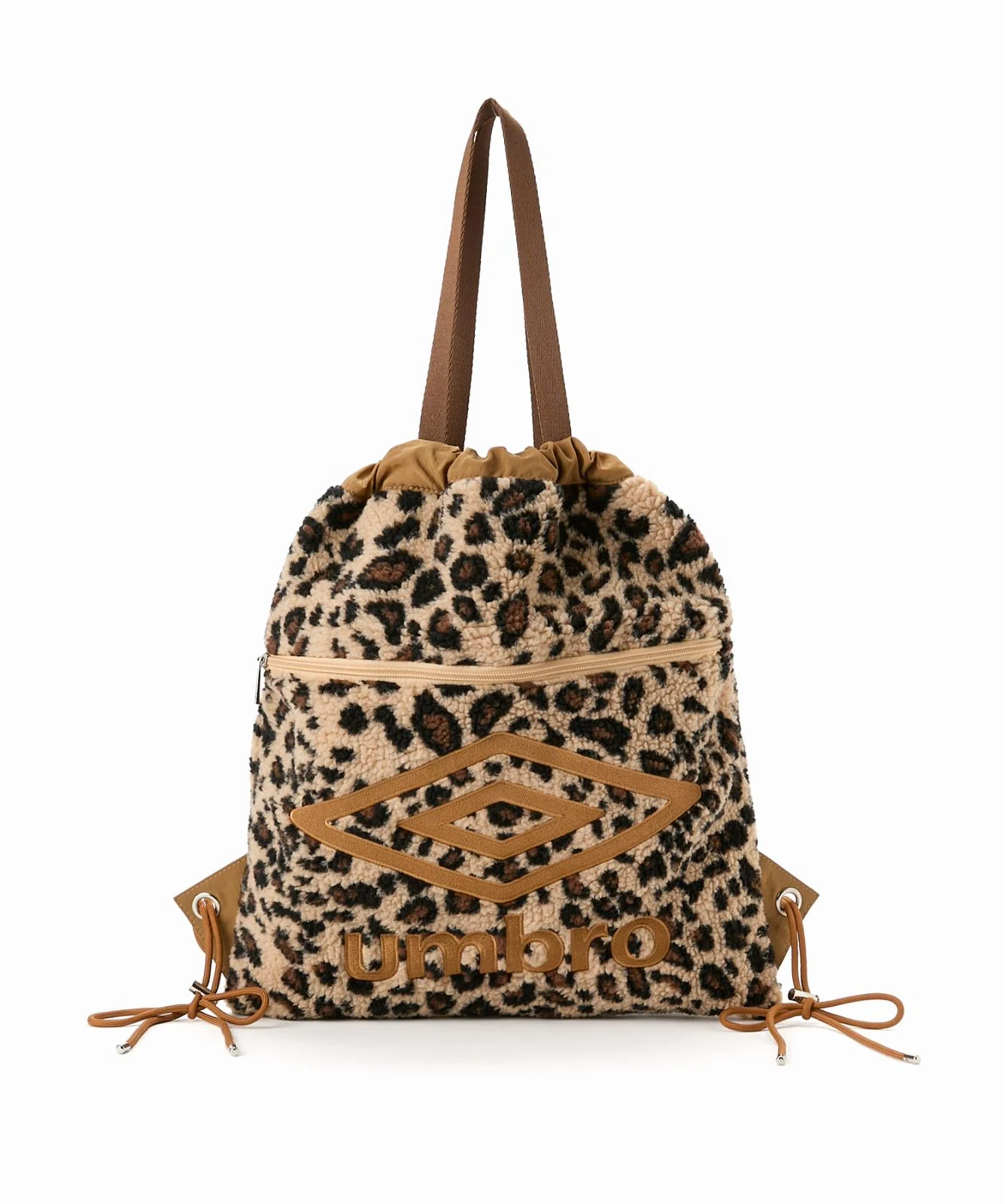
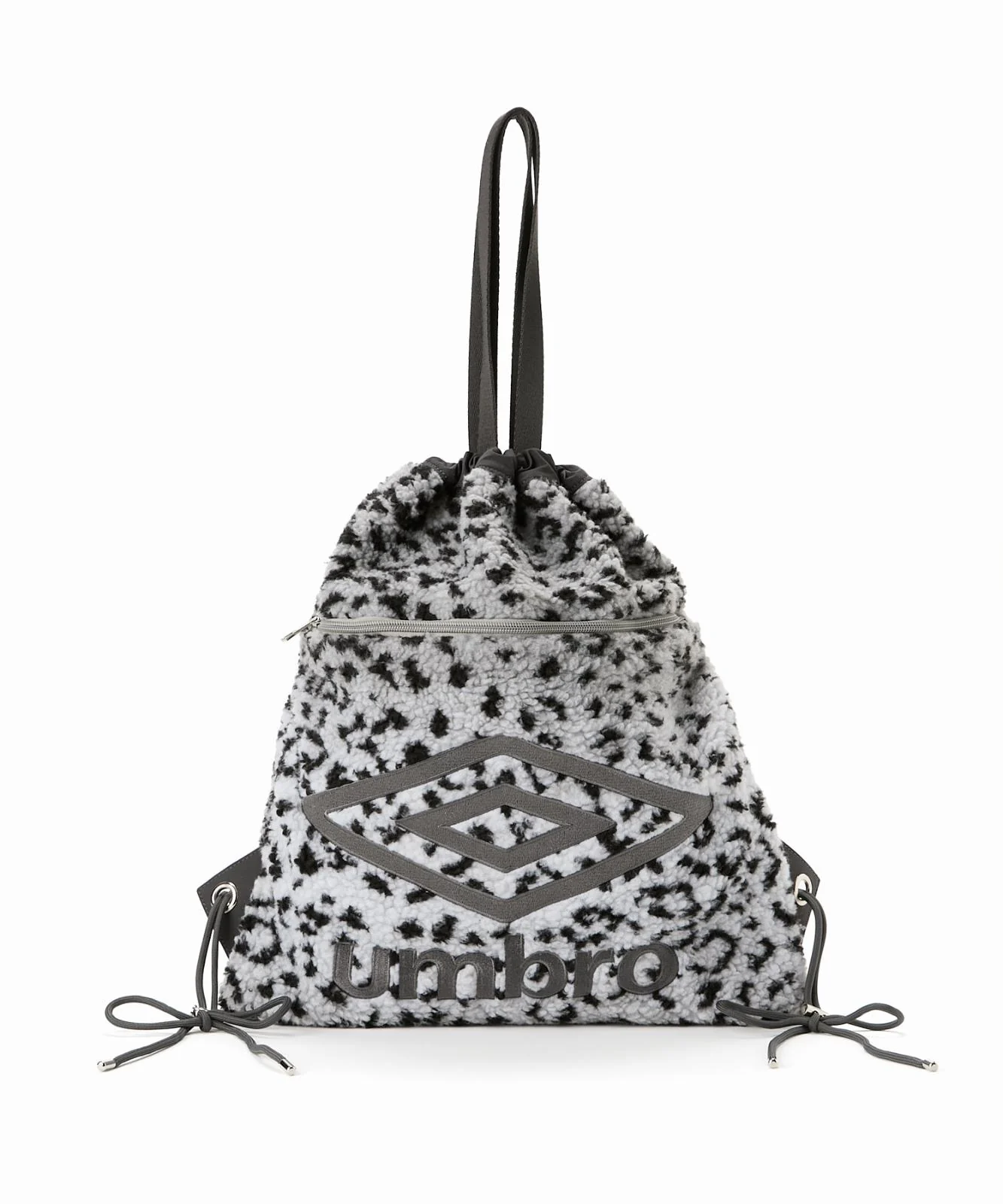
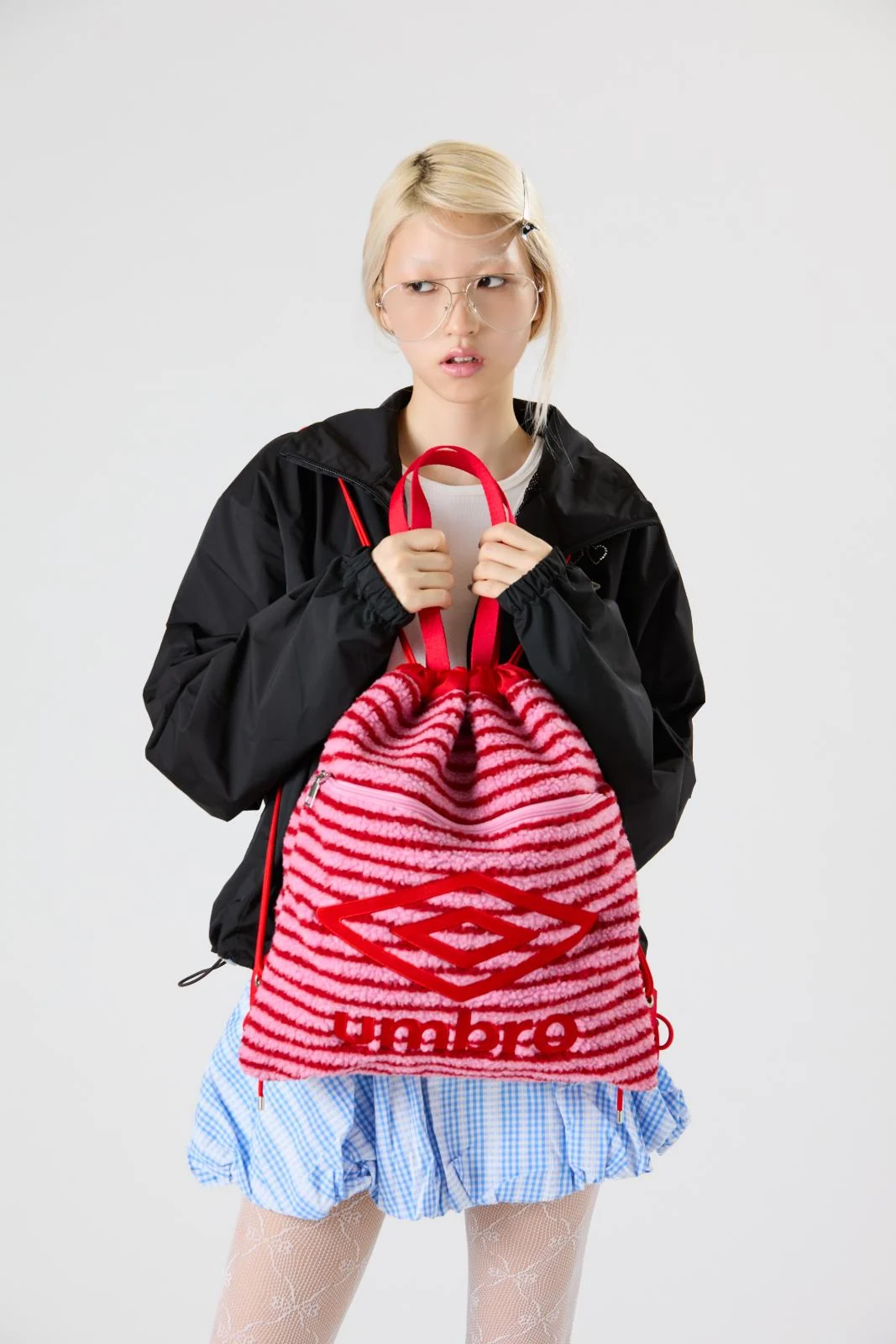
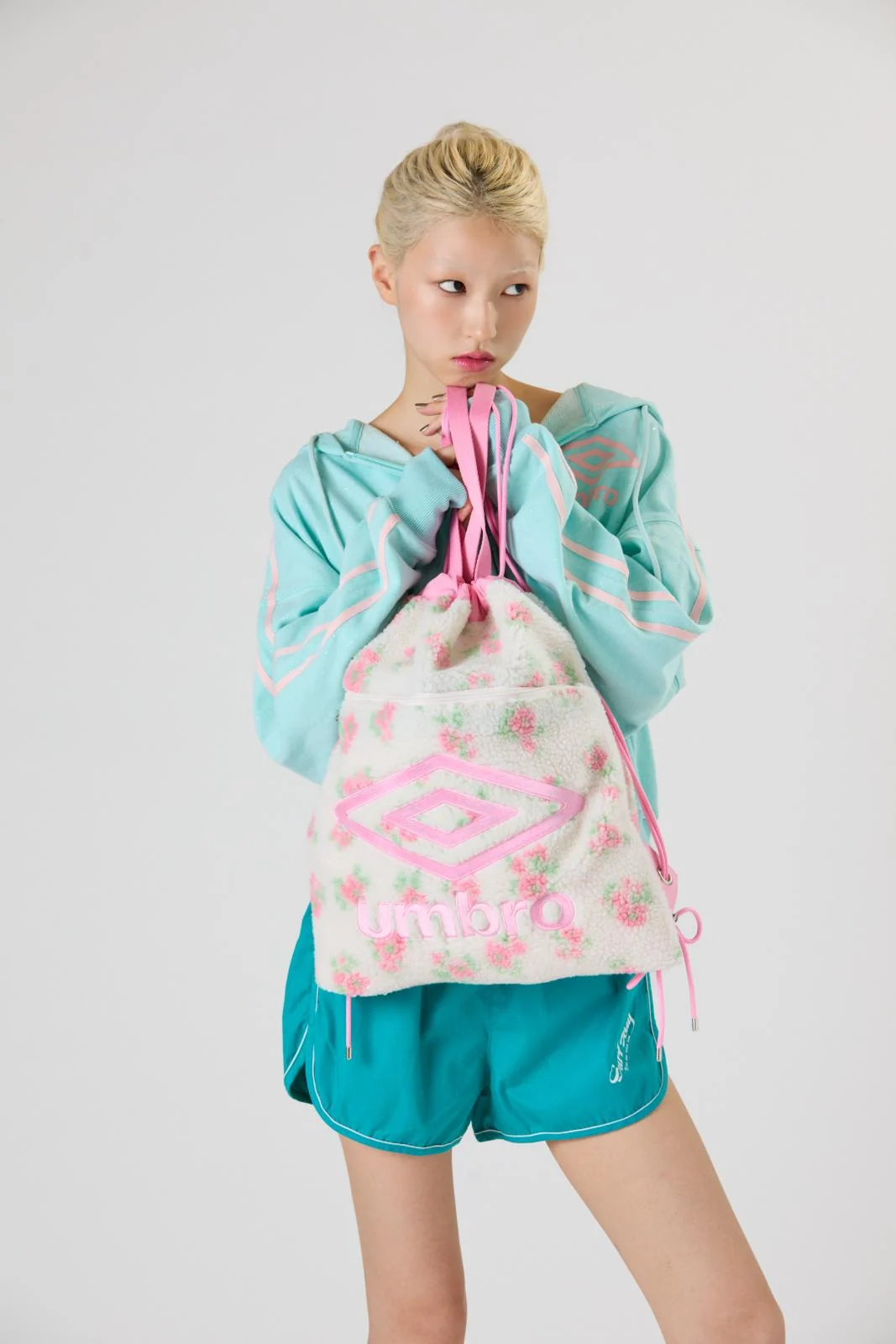
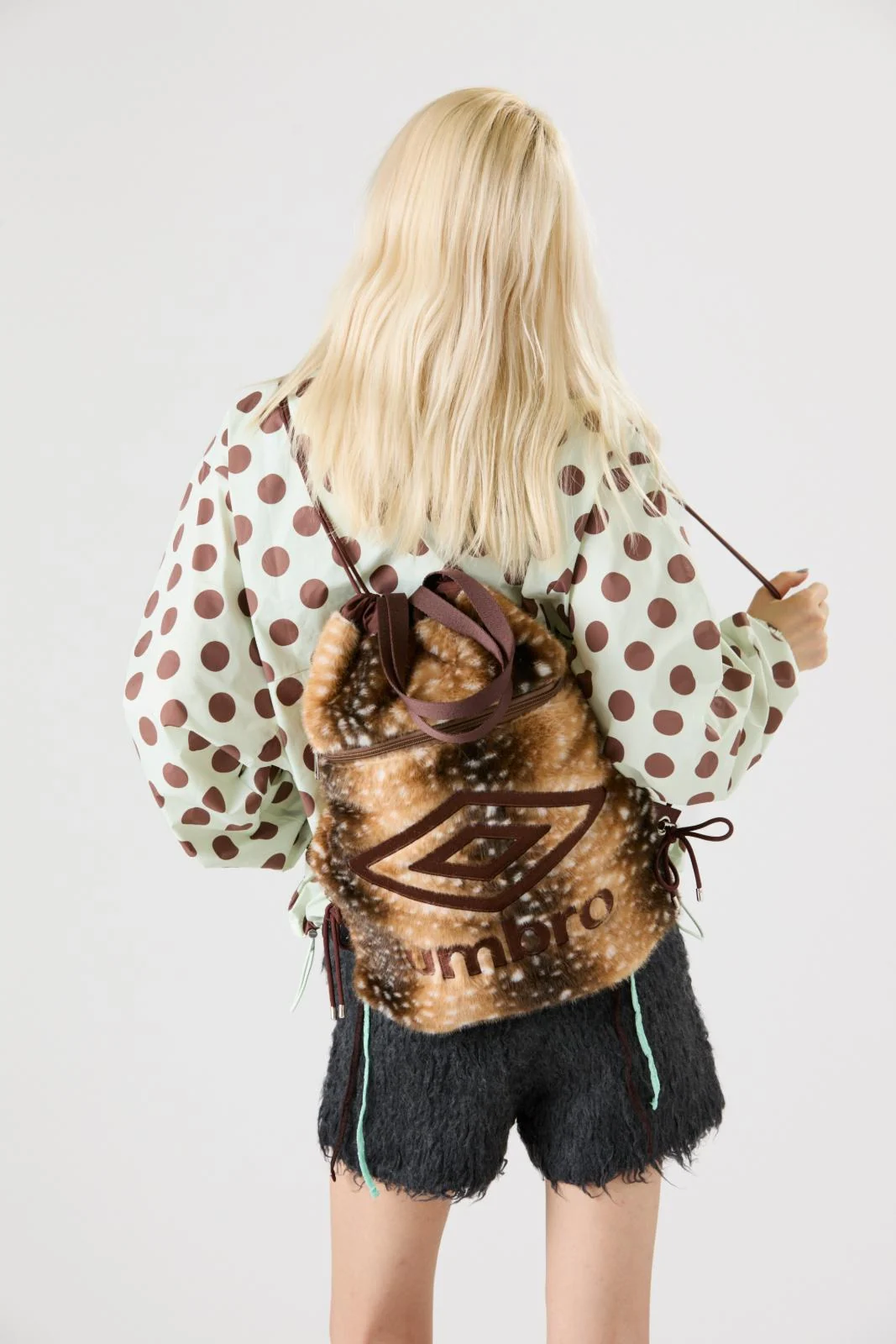
Leading the campaign is the Fake Boa Knapsack, priced at 9,900 yen. Its body is covered in a dense faux boa pile, the soft, curly fleece that Japanese retail simply calls boa, and it comes in several moods. The floral model is the gentlest of them: small, softly rendered flowers scattered across the pile, with the Umbro logo set in a contrasting accent color so the branding registers as a detail rather than a billboard. Alongside it sit a louder animal print version and a striped model, the latter nodding, intentionally or not, to the hoops of a terrace scarf.
Casselini has not yet published full specifications for the new version. The knapsack has anchored every edition of the partnership so far, though, and the brand’s product copy for earlier runs described a bag sized to take an A4 file and a 500ml bottle, with a zipped front pocket for a phone or wallet, handles long enough to carry it as a tote, and ribbon details on the adjustable shoulder straps. Those earlier versions also proved the concept with shoppers. The floral knapsacks in red and navy from the December 2024 launch sold out after release and went back into additional production, an early sign that the pairing had found its audience. The range has widened since. The original knapsack launched in four colorways, navy, red, animal print and black, and the earlier version is still listed on Casselini’s store in eight, running from red and animal print through purple, pink and grey to moss green, green and charcoal.
The tactile quality is the point. A drawstring or knapsack shape is about as basic as sports bags get, the kind of thing carried to school gyms and Sunday league pitches for decades. Wrapping it in faux fur takes the most utilitarian object in the sportswear catalog and turns it into a winter accessory, one that happens to carry a football logo rather than one designed around it.
straddle
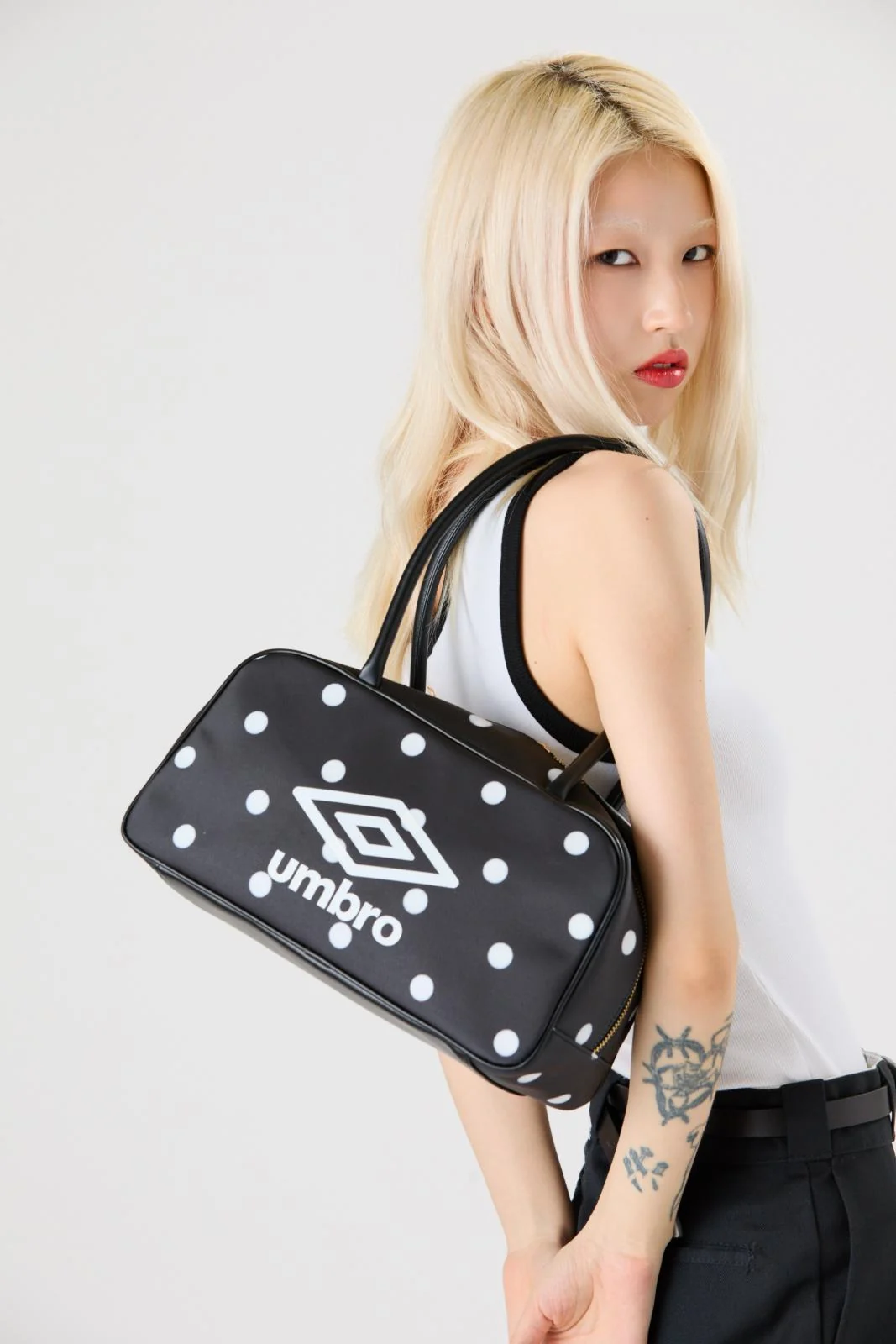
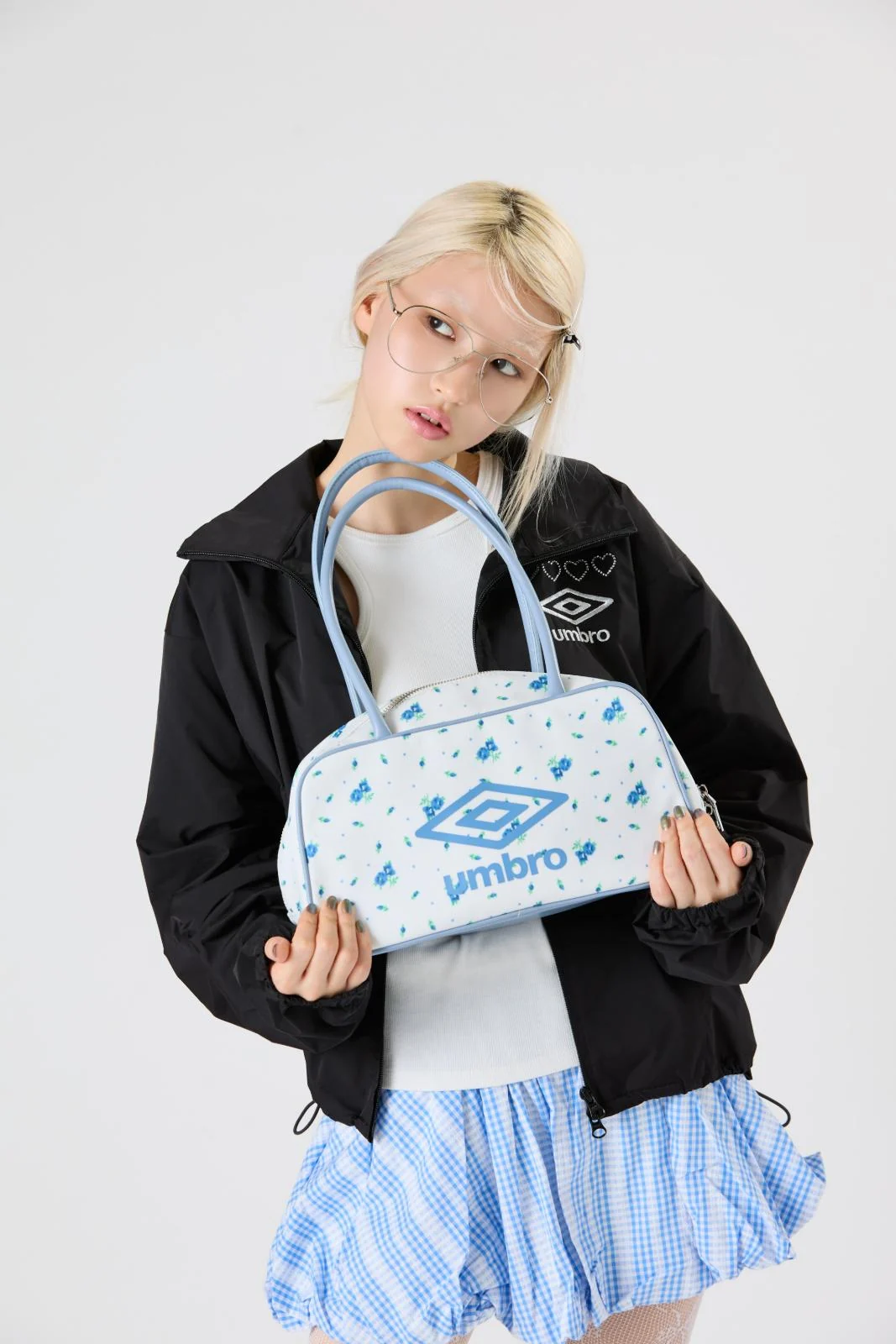
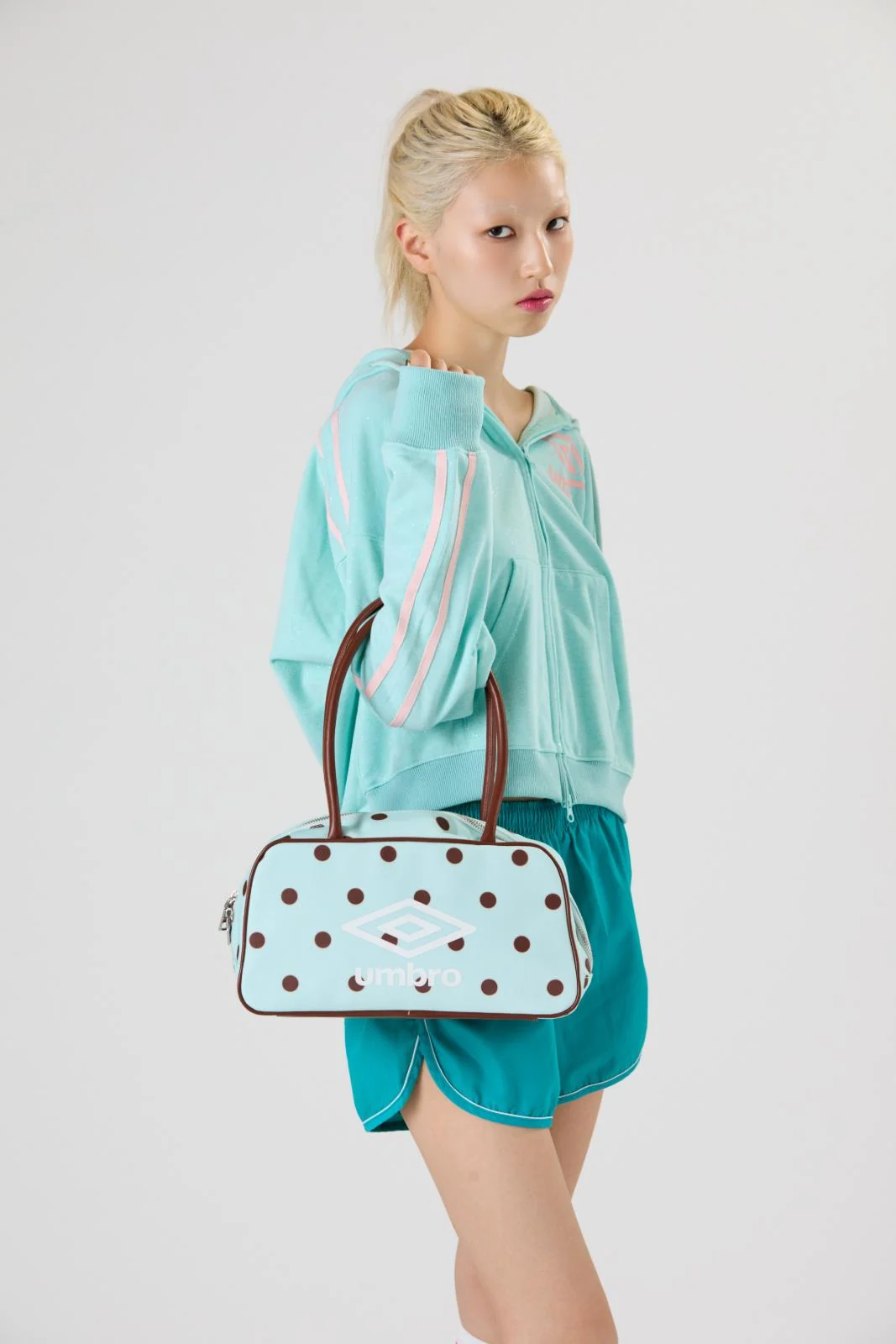
Smaller and more deliberately retro, the Print Boston is the drop’s second headline item. Also priced at 9,900 yen, it is a mini Boston bag with a compact barrel body and long handles, a proportion that lets it hang from the crook of an arm or swing from the hand. In sax blue and in black, it is printed with oversized polka dots, a graphic more often seen on vintage dresses than anywhere near a football ground. Set against a sports logo, the dots give the bag a slightly off-kilter mood, part 1960s dress print and part 1990s gym bag.
A Boston bag has appeared in the collaboration before. Last autumn’s version was sold as a two-way printed mini Boston at the same 9,900 yen price, offered in a wide palette that ran from off-white and beige to bordeaux and pink. This year the dot print takes over as the bag’s signature.
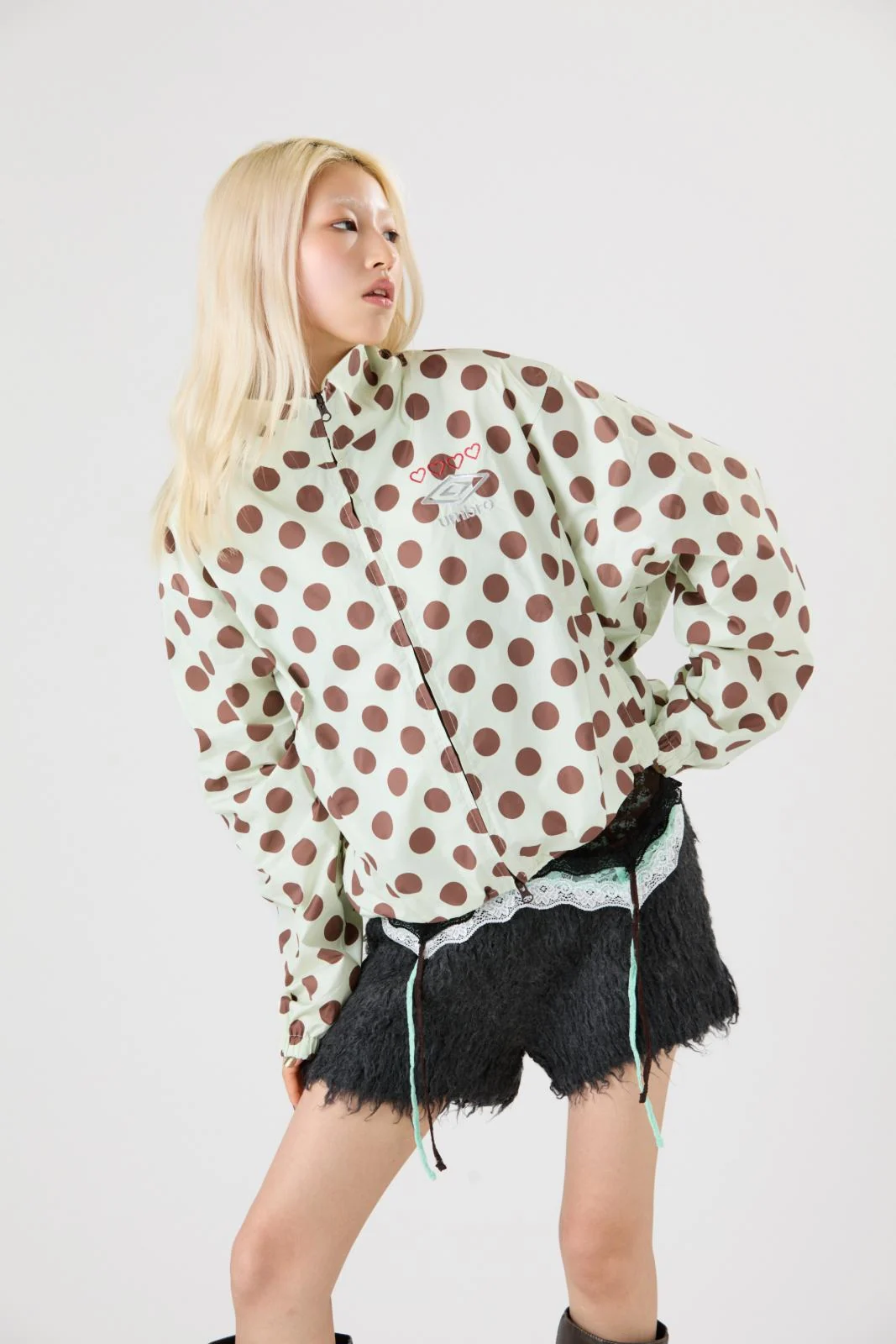
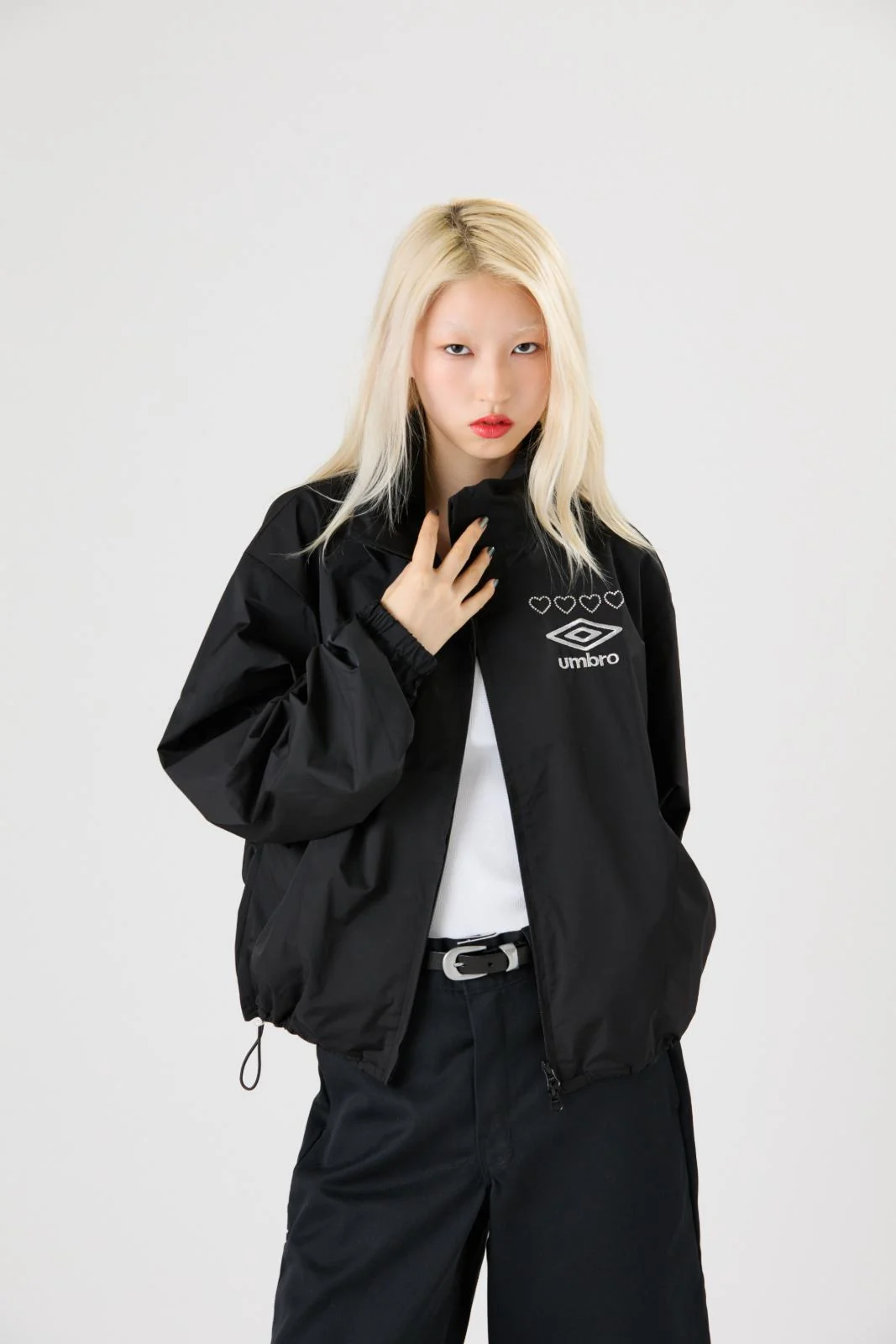
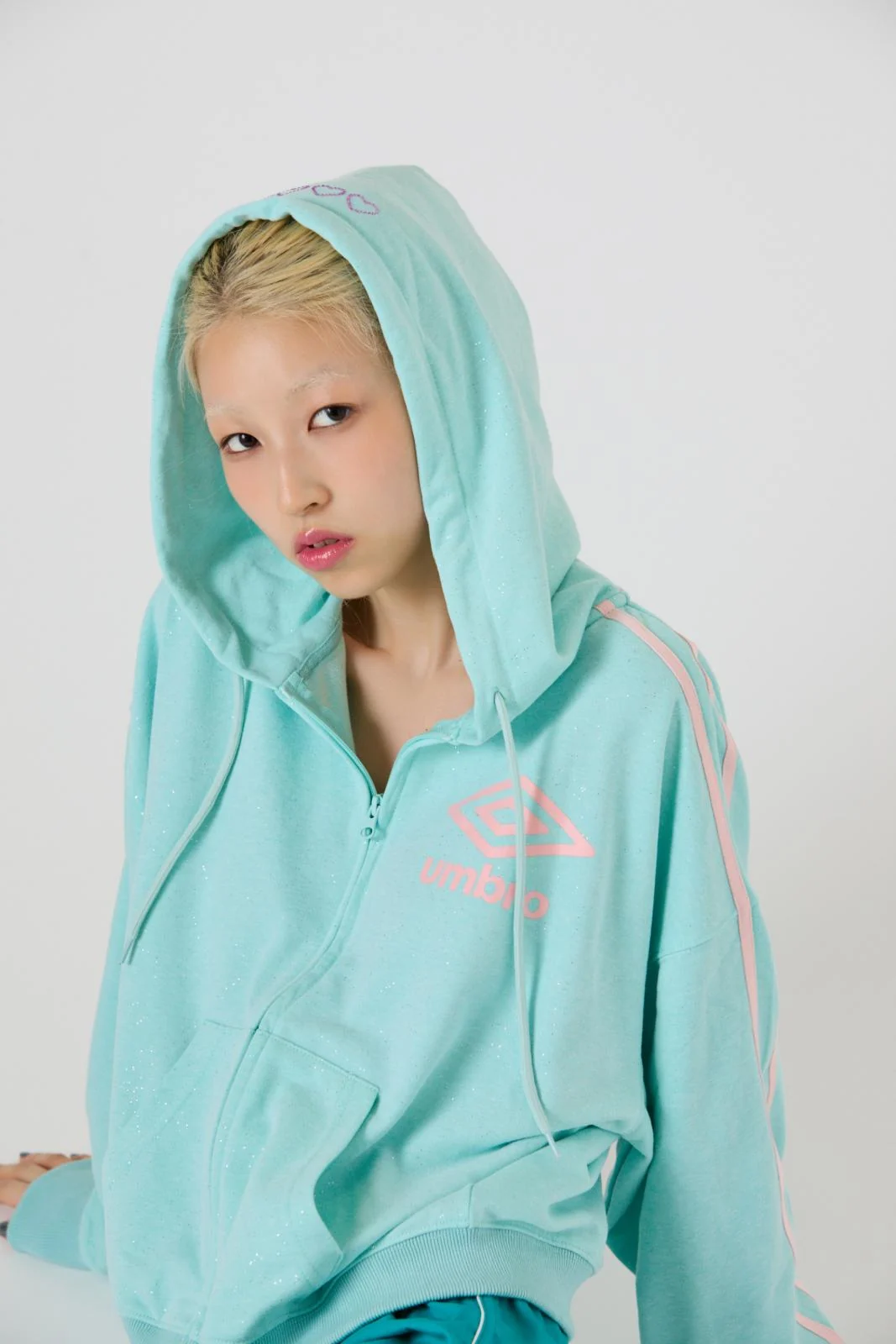
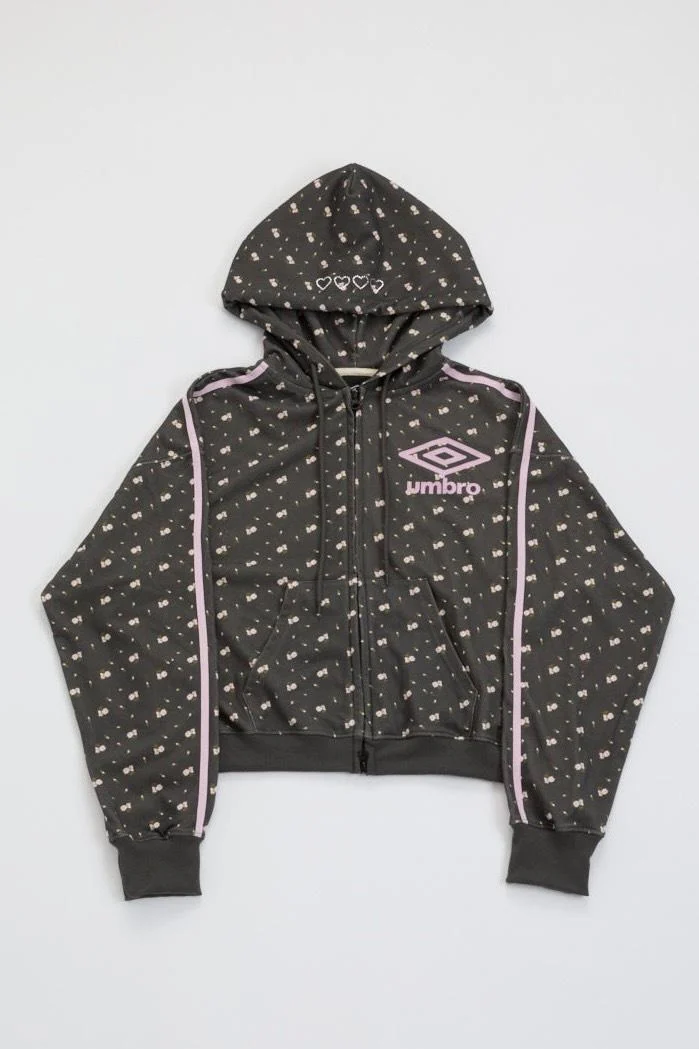
On the apparel side, the Flower Zip Parka (19,800 yen) scatters small florals over a zip-front hoodie and runs a line of accent color along each side, a detail that echoes the side tape of a training top. It is meant to work in both directions: for something active, or layered over a skirt or a dress for a softer look. The Track Jacket (20,900 yen), the most expensive piece in the drop, is also the most overtly Umbro item, finished with a drawcord at the hem so the silhouette can be pulled in at the hem.
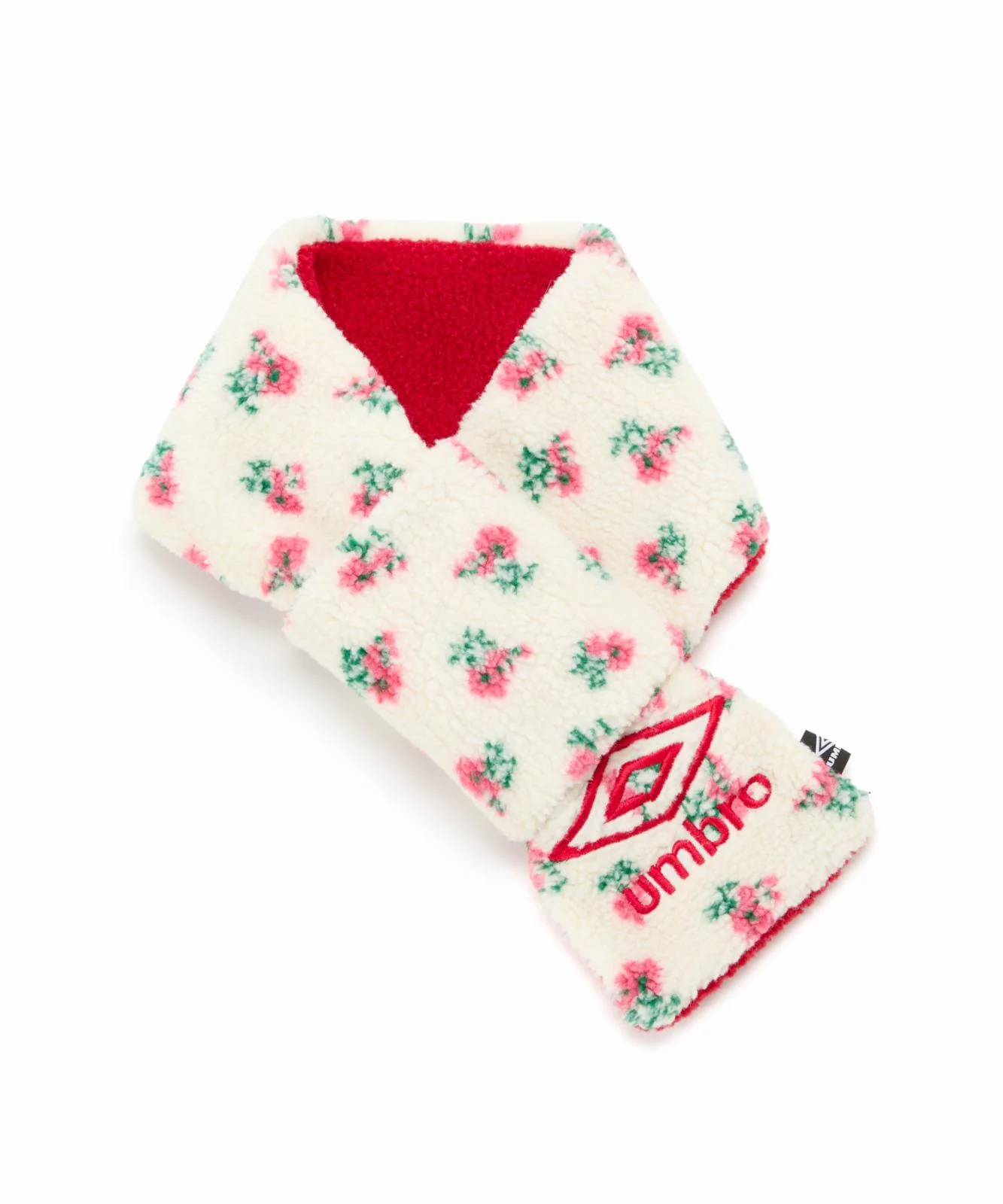
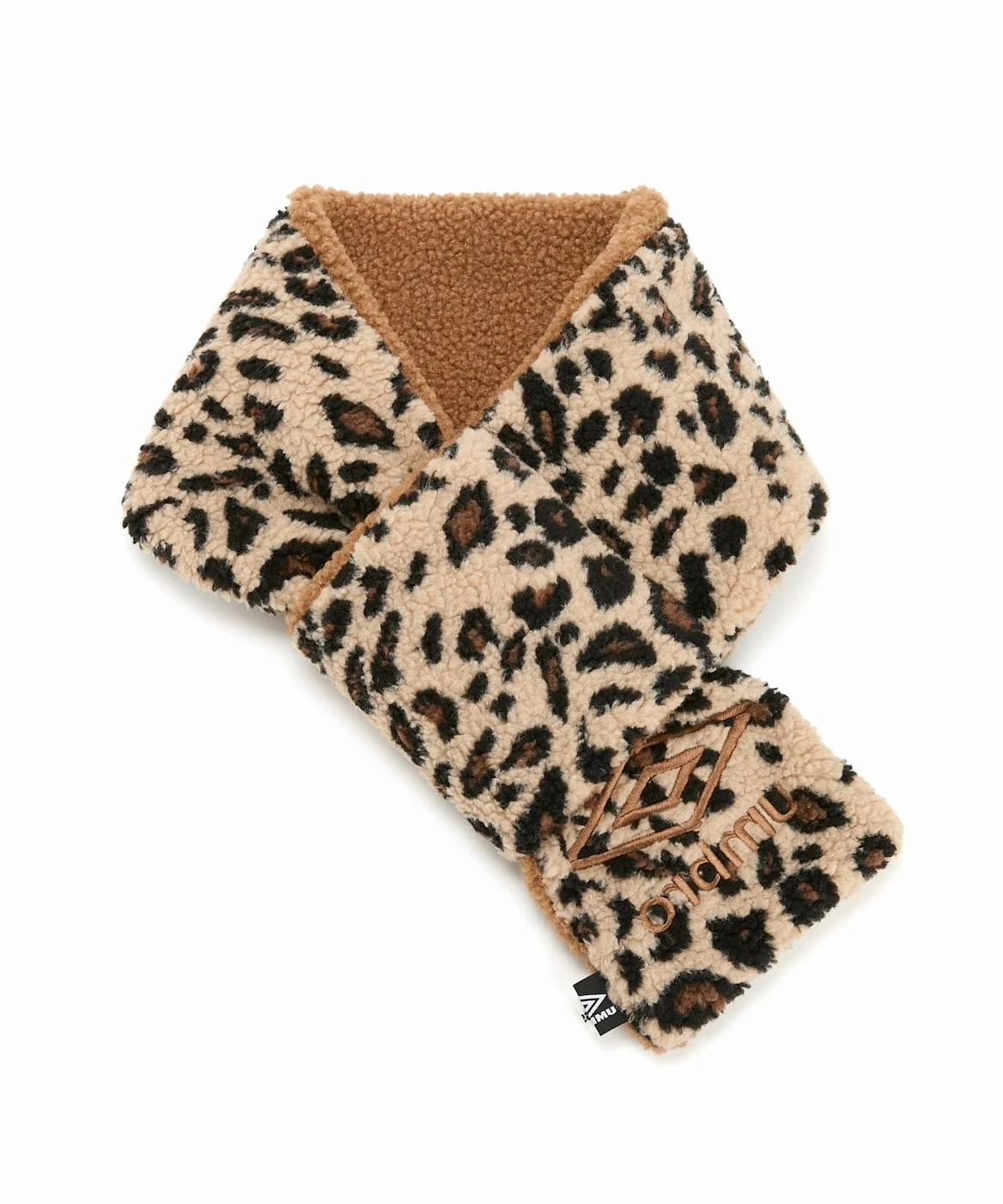
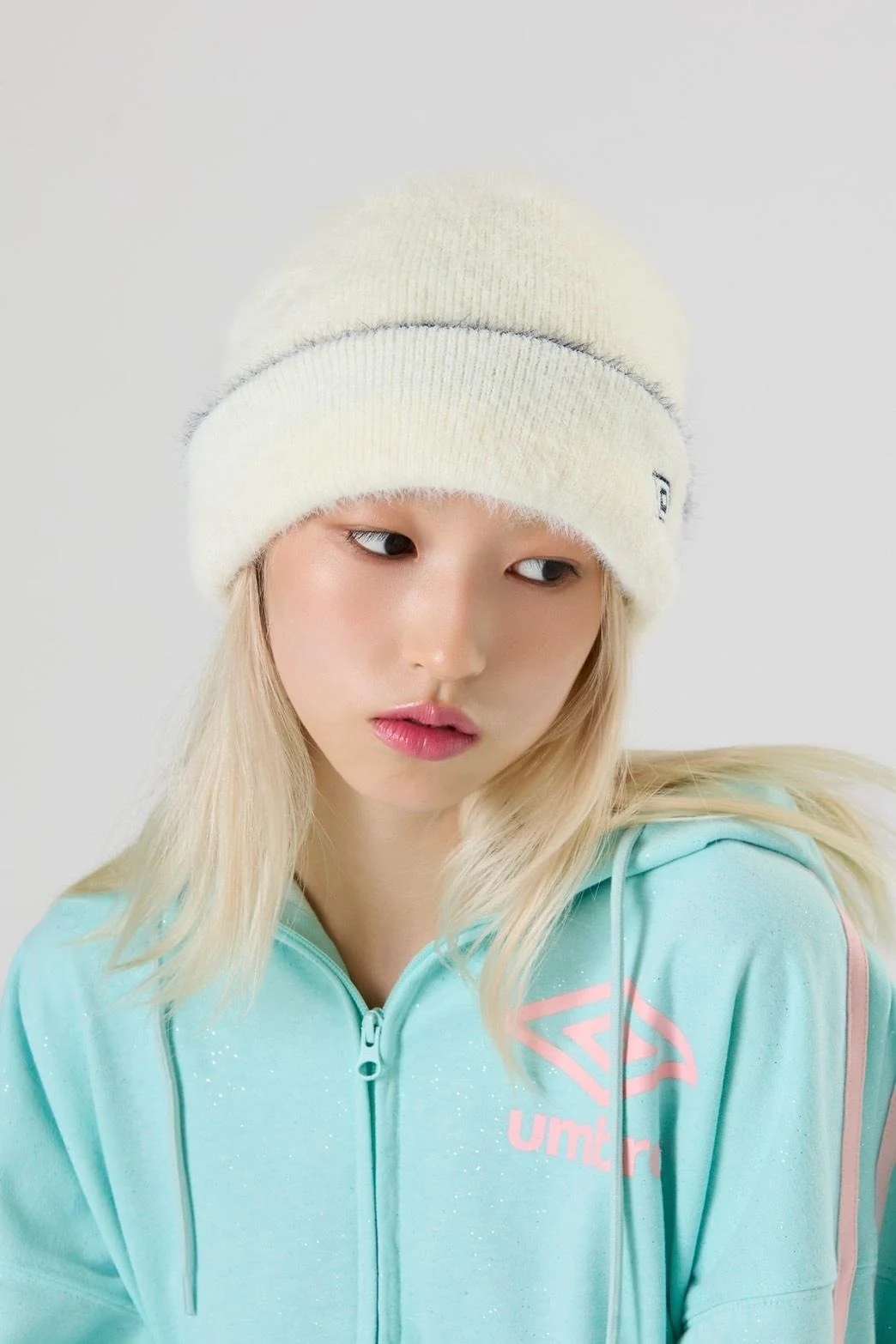
Two smaller cold-weather pieces round out the set. The Reversible Tippet, a short scarf at 5,720 yen, and the Jacquard Watch, a knit watch cap at 5,500 yen, both return from the previous season under the same names and at the same prices. Repeating them suggests Casselini treats these as staples of the partnership rather than one-off novelties.
three
Short as it is, the collaboration’s history is remarkably consistent. Casselini first paired with Umbro in December 2024, opening online pre-orders ahead of a general release on Friday, December 20. That debut lineup ran to four pieces: a sweatshirt, a knit watch cap, a waist bag and the faux boa knapsack, shot for the lookbook by photographer Kaori Akita with styling by Arisa Takeda. Casselini’s description of the idea has barely changed since then: take sporty items that are already on trend and cross them with the brand’s catchy, girlish details.
By autumn 2025, Casselini was billing its Umbro edition as the third installment of the partnership. That lineup had grown to include earmuffs, a reversible tippet, a hoodie and the two-way mini Boston alongside the knapsack and the watch cap. The season’s copy summed up the brief neatly, describing a look that was a little sporty but still recognizably the wearer’s own, built around bags and small accessories that could shift a mood on their own.
The 2026 edition follows the same rhythm, with online reservations opening three weeks before a Friday in-store release, and it adds a track jacket that pushes the collaboration further into Umbro’s core territory. The prices on the returning pieces have not moved at all, which is its own kind of statement about how the two brands see the customer.
shh
Casselini Co., Ltd. was established on February 17, 1987, and keeps its offices in Jingumae, the Shibuya neighborhood that wraps around Harajuku. The company describes its business plainly: planning, manufacturing, wholesaling and selling women’s fashion accessories, with bags first among them. Almost four decades on, its online store carries the namesake line alongside a home goods offshoot and several other labels.
The namesake brand’s stated philosophy is about mixing rather than matching. Casselini frames itself around being yourself with a sense of play, proposing accessories that combine several tastes at once and keep pace with the day-to-day swings of a wearer’s mood. Football, in that context, is simply one more flavor to blend in. The Umbro pieces sit in the store’s collaboration section beside other partnerships, and the method is consistent throughout: borrow a recognizable code, then soften it. The Umbro tie-up has also become one of the store’s own talking points: the online shop’s list of popular search terms puts the Umbro collaboration right alongside seasonal staples like autumn and winter bags and tippets.
View this post on Instagram
place
Umbro’s own origin story is about as far from Harajuku as it gets. The company was founded in 1924 in Wilmslow, Cheshire, by brothers Harold and Wallace Humphreys, who began out of a cupboard in their family’s pub before moving into a workshop, and the name itself is a contraction of HUMphreys BROthers. Umbro made its kit debut at the 1934 FA Cup final, where both finalists wore its shirts, and Brazil won the 1958 World Cup in its kit.
In Japan the brand is run by Descente, which closed out Umbro’s centenary year with a Harajuku pop-up running into December 2024, only a couple of weeks before the first Casselini pieces went on sale.
Umbro’s collaboration calendar in 2026 has been crowded. This year brought a third chapter with designer Aitor Throup, scheduled by Umbro for spring 2026 and arriving fourteen years after their previous project, and through the year it has worked with a run of Japanese labels on tracksuits and other football staples. What separates the Casselini partnership is the customer. Those projects mostly sell to people who already know exactly what a drill top is. Casselini sells to people shopping for a winter bag, and the double diamond arrives as part of the print.
extend
Behind all of this sits the long tail of blokecore, a term coined on TikTok in December 2021 for wearing vintage football shirts with jeans and trainers. The trend’s later and softer branch, sometimes called blokettecore, paired jerseys with skirts, bows and other coquette details. Casselini’s connection read like that idea translated into accessories. The ribbons on earlier knapsack straps, the dotted Boston and the flowers on the zip parka each take a piece of sports vocabulary and dress it in something sweeter.
The approach also explains the price architecture. Four of the six pieces sit below 10,000 yen, with only the two apparel pieces climbing toward 20,000 yen, which keeps the collide in the territory of an day accessory rather than a collector’s grail. That position has held since the first drop, and the identical pricing on the returning knapsack, tippet and watch cap suggests neither brand sees much reason to change it.
fin
Pre-orders open on Friday, October 9, 2026 through Casselini’s official online store. The full collection goes on general sale from Friday, October 30 at Casselini stores and online. The six pieces and their prices are the Fake Boa Knapsack at 9,900 yen, the Print Boston at 9,900 yen, the Track Jacket at 20,900 yen, the Flower Zip Parka at 19,800 yen, the Reversible Tippet at 5,720 yen and the Jacquard Watch at 5,500 yen. No release outside Japan has been announced.
As of October 5, Casselini’s dedicated Umbro page still showed only pieces from earlier seasons, including the previous knapsack, tippet and watch cap, listed at the same prices the new versions will carry.
Related Articles
Moncler Re/Icons Takes On Four Archive Jackets at Once, and Isetan Shinjuku Gets Them First
Moncler’s 2026 Re/Icons chapter reworks four archive down styles dating from 1954 to 2009, and […]