Child Studio: Architects of Temporal Alchemy

April 24, 2025
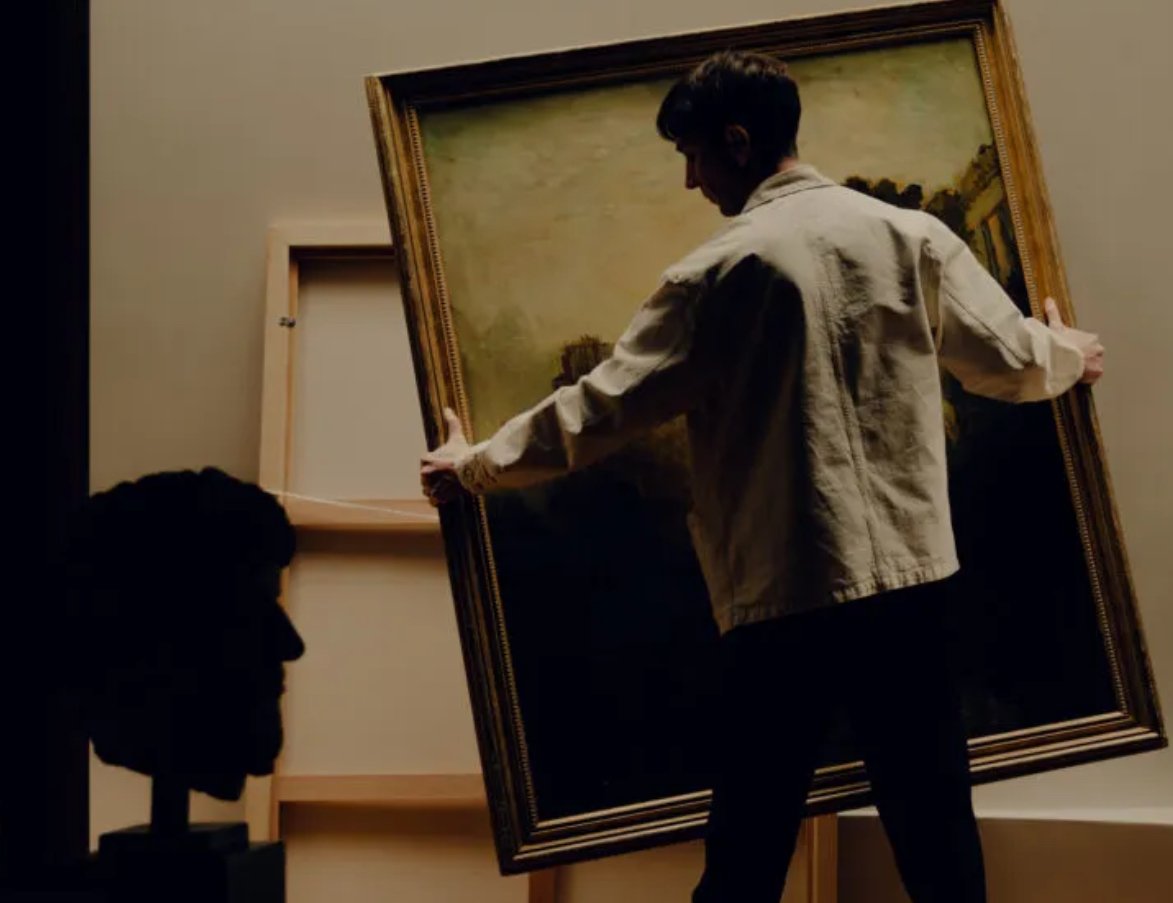
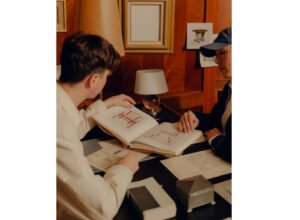
In the heart of Clerkenwell, London—tucked behind the solemn stones of Charterhouse Square and housed within a converted Victorian horology workshop—Child Studio operates like a cross-temporal observatory. The studio’s founders, Alexy Kos and Che Huang, have engineered more than an interior design practice: they’ve crafted an anachronistic sanctum where the fabric of time frays and reforms at will.
One corner hums with the digital flicker of AI-powered pigment reconstructions, while another preserves the quiet dignity of a 1950s Czech sealing station, exhaling beeswax into the ozone-tinged air like a ghost exhaling into the future.
A 1972 Braun calculator rests next to a gleaming resin printer, symbolizing the studio’s central belief: the past and future must coexist as collaborators, not opposites. This is not nostalgia for nostalgia’s sake. This is chronological synthesis, where design becomes a vessel of memory and imagination.
Foundational Philosophy: Design as Temporal Fiction
Child Studio’s approach is rooted in what Kos and Huang refer to as “temporal fiction”—a creative framework that treats interiors as narrative mediums, capable of evoking emotions and impressions from eras long past or yet to come. Their manifesto includes three cardinal tenets:
- “Every space contains latent histories waiting to be reactivated.”
- “Authenticity lies in emotional resonance, not historical accuracy.”
- “Light is the most potent time-travel medium.”
These principles frame a deeply experimental, almost cinematic design language. The duo employs sonic archaeology, recreating the acoustics of spaces that no longer exist; material palimpsests, layering surfaces with successive period finishes; and olfactory scoring, developing custom scents that correspond to specific decades or subcultures.
Take their 2023 Belsize Park Bauhaus Revival. Here, concrete columns were laced with iron filings sourced from Weimar-era industrial refuse to create a patina that behaves authentically over time. Smart windows were programmed to replicate the sun’s passage across the Dessau workshop in 1923. Even the ambient soundscape pulsed with low-frequency recreations of László Moholy-Nagy’s lost sound experiments—turning everyday movement into an immersive, historical theatre.
Signature Projects: Case Studies in Chrono-Spatial Engineering
Each Child Studio project functions as a microcosm of their broader mission: to design experiences where time folds in on itself.
Project 1: Mid-Century Tokyo in Post-War England
Brighton Sushi Den, 2022
Inside a repurposed 1964 Brutalist post office in Brighton, Child Studio recreated the vanished world of Tokyo’s jazz kissaten—a subculture that peaked in the 1960s and quietly disappeared. Here, a 14-meter shou sugi ban countertop was scorched using traditional Japanese techniques but bonded with carbon nanotube resin to withstand modern utility standards. The ambient scent—delivered through HVAC infusions of hinoki oil and a trace of tobacco ash—transported diners to the smoky intimacy of a Ginza backstreet café.
Project 2: Soho’s Carnal Memory
Eyewear Atelier, 2023
This boutique is more than a retail outlet—it’s a sensory memoir of Soho’s decadent past. Framed by flesh-toned Perspex, displays mimic the seductive allure of 1970s peep shows. Visitors navigate a space lined with chalk outlines of historical vice locations, from raunchy cabarets to scandalous nightclubs. The lighting system, precisely tuned to replicate the electrical irregularities of late 1970s neon, flickers not just with light, but with cultural electricity.
Project 3: The Impossible Salon
Vienna Psychoanalysis Café, Forthcoming 2025
Still under construction, this Viennese café will offer an environment shaped by the internal architectures of psychoanalysis. Settees mimic the incline of Freud’s original treatment couch. The sound system blends century-old streetcar noises with live-captured neural feedback from guests, creating a closed loop between mind and environment. Even the tableware is radical—crafted from edible materials rich in anxiolytic adaptogens, designed to literally calm the nerves of patrons while they dine.
Material Science Meets Historical Alchemy
At the core of Child Studio’s success is its material library, a carefully assembled collection of over 12,000 items—each indexed not only by type and location but by emotional effect.
Notable Samples
- Pre-war Czech glass infused with uranium oxide, casting an otherworldly green shimmer
- Decommissioned NASA mylar insulation, used for interior sheathing in high-concept lofts
- Salvaged East German acoustic panels, some still humming with embedded surveillance residue
To manipulate these rare materials, the studio developed proprietary techniques:
- Chronostratigraphy: Layered reveals that show the “archaeology” of a wall or floor
- Patina Acceleration: Electrochemical aging systems that advance materials to exact historical points
- Memory Washing: Enzymatic treatments that “soften” the clinical sterility of new materials, giving them the texture of the lived-in
Such innovations aren’t simply aesthetic flourishes—they are technical interventions in design as historiography.
The Business of Time Travel
Though they operate with the finesse of artisans, Child Studio is no less rigorous as a business entity. Their workshop is run like a conceptual laboratory, staffed with 14 highly specialized team members: including a former CERN archivist, a material chemist, and a forgery detection expert once employed by Christie’s.
Fee Structure
- Hourly Rate: £285
- Material Sourcing Premium: 18%
- Period Decay Clause: Clients must sign a clause affirming their willingness to let materials age as intended, rejecting artificial preservation
Clients don’t come for convenience. They come to escape the tyranny of contemporary design. A majority—86%—cite emotional refuge as a primary motive. Nearly three-quarters report experiencing “chrono-nostalgia,” a longing for time periods they never lived through. And more than half describe their final environments as “pleasantly haunted.”
Critical Reception & Theoretical Frameworks
As much as Child Studio delights elite clients, it also intrigues the academic and institutional worlds. Their projects have been featured in the MoMA’s 2024 symposium “Design as Time Machine”, and the duo has guest lectured at the AA School of Architecture, where their process is taught under the lens of Applied Proustian Theory.
Endorsements
- MIT’s Media Lab references their work in its Alternative Temporalities think-tank.
- The Design Museum hosted a retrospective in late 2024 under the theme “Perceptual Time in the Age of Acceleration.”
But acclaim hasn’t come without critique.
Controversies
- Aesthetic Gentrification: Detractors argue the studio commodifies historical trauma or cultural memory for luxury consumption.
- Temporal Colonialism: Some scholars accuse them of selectively appropriating non-Western histories without sufficient contextual grounding.
- Sustainability Dilemma: Though known for adaptive reuse, their practice of sourcing obscure materials across 40+ countries raises questions about carbon cost and ethical extraction.
These tensions don’t diminish the value of their work but underscore its cultural potency—Child Studio operates at the controversial intersection of history, commerce, and emotion.
The Future of Chrono-Design
Looking ahead, the studio’s ambitions remain as radical as ever. Their 2026–2030 roadmap reads like speculative fiction.
Initiatives in Development
- “Period Bleed” Interiors: Homes that evolve physically over time to mimic architectural shifts between decades.
- Neuro-Temporal Interfaces: Rooms that shift color temperature, scent, or sound based on occupants’ brainwave patterns.
- Eternal Return Project: A mixed-use building that cycles through twelve historical styles over a calendar year—both visually and acoustically.
Their legacy ambitions are equally audacious. Plans are underway to launch the Institute for Applied Nostalgia, a research center studying the neurological and sociological effects of time-themed environments. Kos and Huang also aim to publish the Atlas of Lost Atmospheres, an exhaustive design reference manual cataloging obsolete moods and settings from the 18th to 21st centuries.
Epilogue: The Persistence of Memory
In Child Studio’s oeuvre, design is not merely spatial—it is temporal dramaturgy. Each space is staged like a scene in a film we forgot we once loved, lit not just for beauty but for memory. Their guiding belief is simple yet profound: the present is not neutral—it is haunted. And rather than flee those specters, they make rooms where ghosts feel welcome.
As Huang delicately adjusts a 1968 Olivetti Praxis 48 typewriter while Kos runs a spectral simulation on discontinued Swedish enamel, their synchrony reveals a quiet truth: time travel doesn’t require machinery. It requires materials, memory, and method.
Essential Data
- Average Project Timeline: 14 months, including a 3-month historical immersion phase
- Global Sourcing Radius: 43 countries
- Visual Historical Tolerance: ±3 years
- Acoustic Tolerance: ±0.5 dB
Visitation
By appointment only
Child Studio Temporal Atelier
Clerkenwell, London EC1M 6EH
Here, the air smells like beeswax, ozone, and unfinished stories. The walls whisper dates in forgotten dialects. This is not just where design lives—it’s where time reawakens.
Related Articles

France Just Banned Social Media for Kids Under 15, and the Fight Over Anonymity Is Only Getting Started
France becomes the first EU nation to bar under 15s from social platforms, and critics […]