Christopher Nolan’s The Odyssey Trailer Turns Homer’s Epic Into a Monumental IMAX Event
May 6, 2026
0
DRIFT AUDIO
Listen to this story
Choose a voice, then press play.
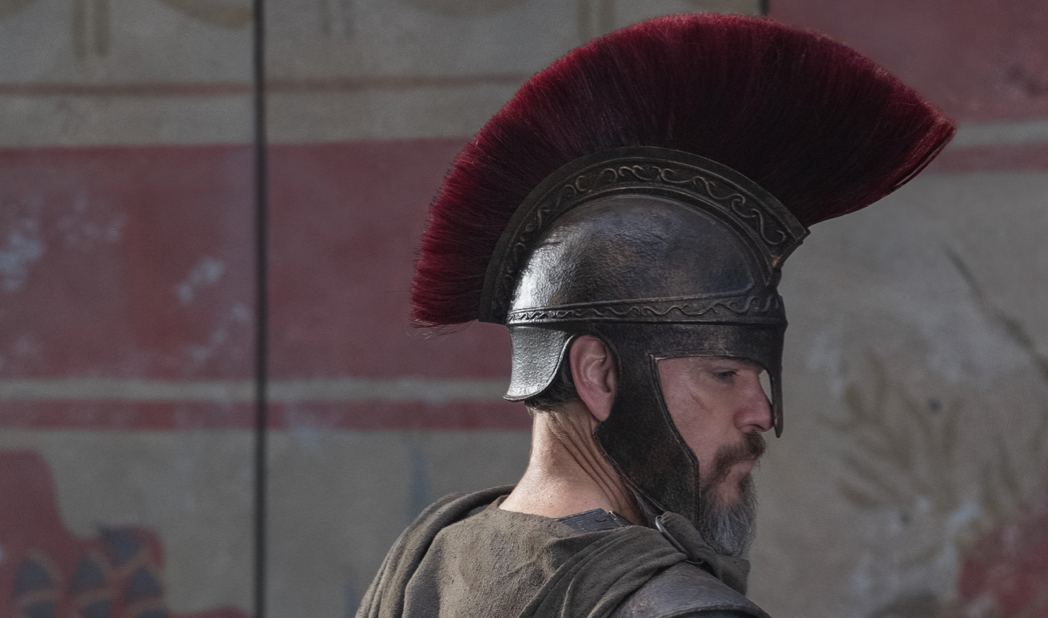
What becomes immediately apparent is the scale of commitment behind the production. Shot entirely on IMAX film using newly developed large-format technology, the trailer positions itself somewhere between epic historical spectacle and existential survival drama. It carries the tactile realism of Dunkirk, the cosmic emotional weight of Interstellar, and the structural intensity associated with Oppenheimer, yet still feels distinctly singular. Even in trailer form, the project communicates an almost militant dedication to practical filmmaking.
flow
The opening movement establishes the film’s governing tension immediately. Three seconds of silence give way to a deep, destabilizing Ludwig Göransson horn note before the trailer unveils an immense aerial shot over a violent ocean at false dawn. The imagery does not romanticize nature. Instead, the sea becomes antagonistic, oppressive, and almost sentient. Michael Caine returns with a gravelly narration that frames Odysseus not as a triumphant hero, but as a man spiritually disassembled by war and exile.
When Matt Damon appears as Odysseus, weathered and exhausted, the performance immediately leans away from classical heroism. His line, “We didn’t win Troy. We survived it. Now the sea wants the rest of us,” reframes the mythology through trauma rather than glory. The implication is clear: this adaptation is less interested in gods granting adventure than in examining the psychological cost of endurance. The ocean itself becomes entropy embodied, a continuation of Nolan’s long-running fascination with time slowly eroding identity.
The practical photography reportedly captured off Iceland and Greece reinforces that philosophy. Salt spray hitting the lens, unstable water movement, freezing atmospherics, and massive wave formations all contribute to an overwhelming sense of physical danger. Unlike digitally sterilized blockbuster environments, these sequences appear determined to make audiences feel the cold, the exhaustion, and the isolation.
scope
The trailer’s transition into the Trojan War flashbacks introduces Nolan’s familiar non-linear editorial structure. Rapid cuts, overlapping chronology, and emotionally fragmented imagery create a sense of memory collapsing into itself. Benny Safdie appears as Agamemnon, while Jon Bernthal delivers one of the trailer’s defining lines regarding Odysseus: “He knew it was unwinnable. Somehow the bastard still won it for us.”
Importantly, the trailer avoids glorifying warfare. Troy is shown through mud, exhaustion, fire, and visceral injury rather than triumphant conquest. Odysseus pulling arrows from wounded soldiers is framed with disturbing intimacy. This interpretation appears deeply conscious of the moral contradictions embedded in Homeric mythology. Odysseus is simultaneously strategist, father, survivor, manipulator, and destroyer.
That complexity may become one of the film’s greatest strengths. Rather than presenting mythology as clean archetype, the trailer suggests Nolan is treating these figures as psychologically fractured human beings burdened by history and violence.
amb
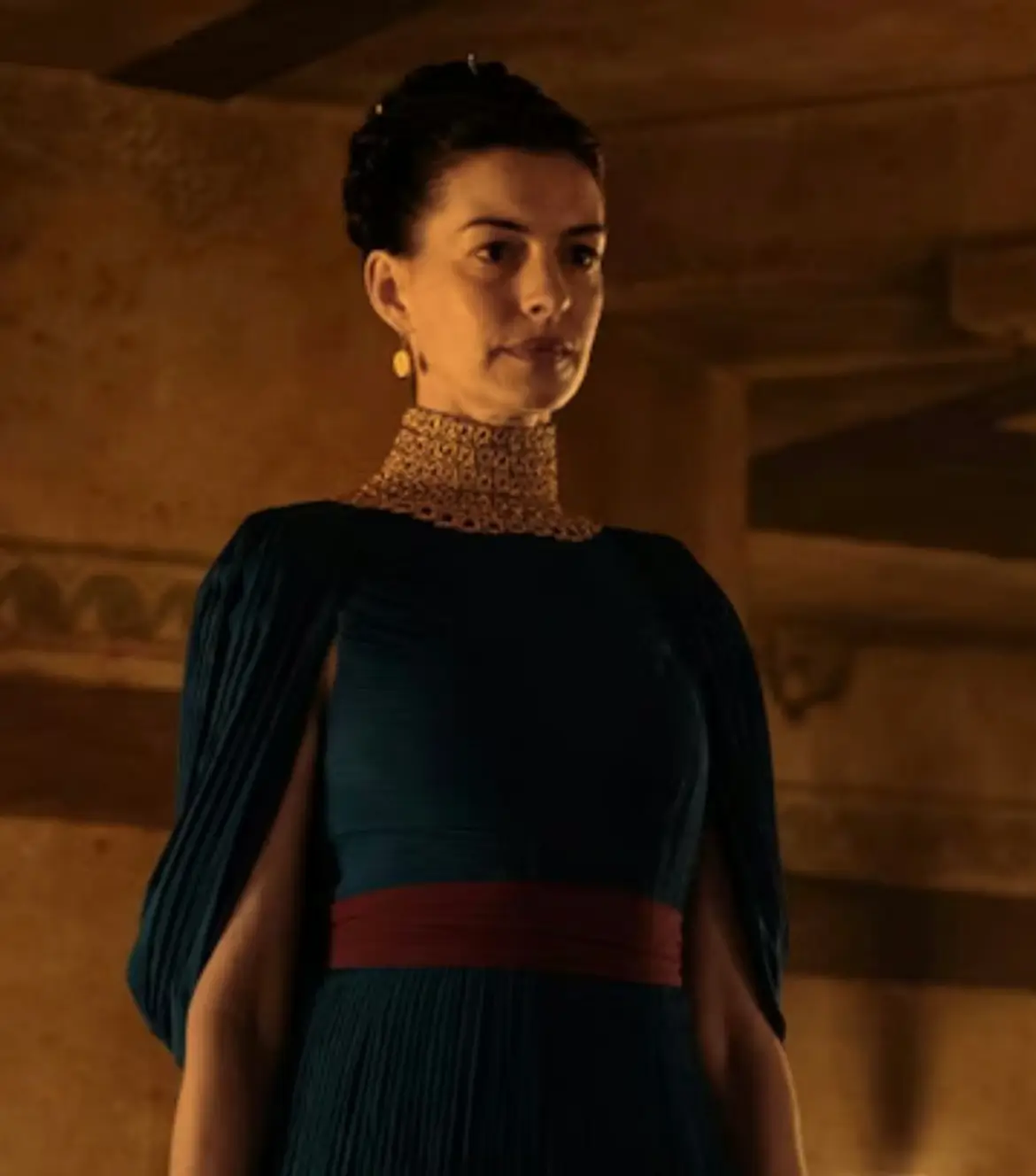
The Ithaca sequences radically shift the trailer’s emotional register. Sunlight replaces storm clouds, but the tension intensifies. Anne Hathaway as Penelope becomes one of the trailer’s most compelling presences, embodying restraint, patience, and suppressed fury. Her line, “This house is waiting for its master. Not for substitutes,” communicates years of emotional exhaustion beneath controlled composure.
Meanwhile, Robert Pattinson appears as Antinous with unsettling aristocratic menace. His interpretation feels less cartoonishly villainous and more politically parasitic — a man slowly consuming another household from within. The palace environment itself becomes claustrophobic despite its scale, filled with shadows, firelight, excess, and implied violence.
Tom Holland as Telemachus introduces emotional volatility into the equation. His performance appears fueled by inherited rage and unresolved grief, positioning him not merely as a son waiting for his father, but as a young man shaped by absence and humiliation.
These domestic sequences may ultimately become the emotional core of the film. Nolan appears to transform the “waiting at home” subplot into an active siege narrative about power, class decay, inheritance, masculinity, and psychological endurance.

praxis
The trailer’s middle section escalates into increasingly surreal territory while somehow maintaining physical realism. The Cyclops sequence immediately stands out. Massive practical cave construction, dim torchlight, collapsing rock effects, and brutal physical choreography make the encounter feel horrifyingly tangible. Odysseus whispering “Nobody… has to know it was me” cleverly weaponizes the mythology’s famous wordplay while reinforcing themes of identity concealment and moral compromise.
The Sirens sequence reportedly uses practical water photography and hypnotic staging rather than CGI excess, while Charlize Theron as Circe radiates seductive menace through smoke, mirrors, shifting architecture, and environmental illusion. Her line, “Stay. That world you remember is already ash,” feels especially revealing, implying the film may frame nostalgia itself as a destructive force.
Then comes Zendaya as Athena, appearing amid bursts of golden light with an almost philosophical detachment. Her dialogue reinforces the film’s central thematic concern: whether intelligence and manipulation can truly outmaneuver fate.
Visually, the scale appears staggering. Underwater photography, desert horizons functioning as mythological voids, enormous ship battles, and practical pyrotechnics all reinforce the production’s obsession with material authenticity. Hoyte van Hoytema once again appears to push IMAX cinematography toward something simultaneously intimate and monumental.
mood
The climax montage detonates into violence. Arrows tear through the great hall. Pattinson’s Antinous reportedly continues smirking even in defeat. Penelope herself is shown armed during the slaughter, subtly reconfiguring her role from passive observer into active participant.
What stands out is the grounded brutality. These are not stylized comic-book action beats. Bodies collapse heavily. Blood stains marble. Physical consequence dominates every frame. Odysseus roaring, “I need every last one of them gone,” transforms vengeance into emotional release after decades of humiliation and displacement.
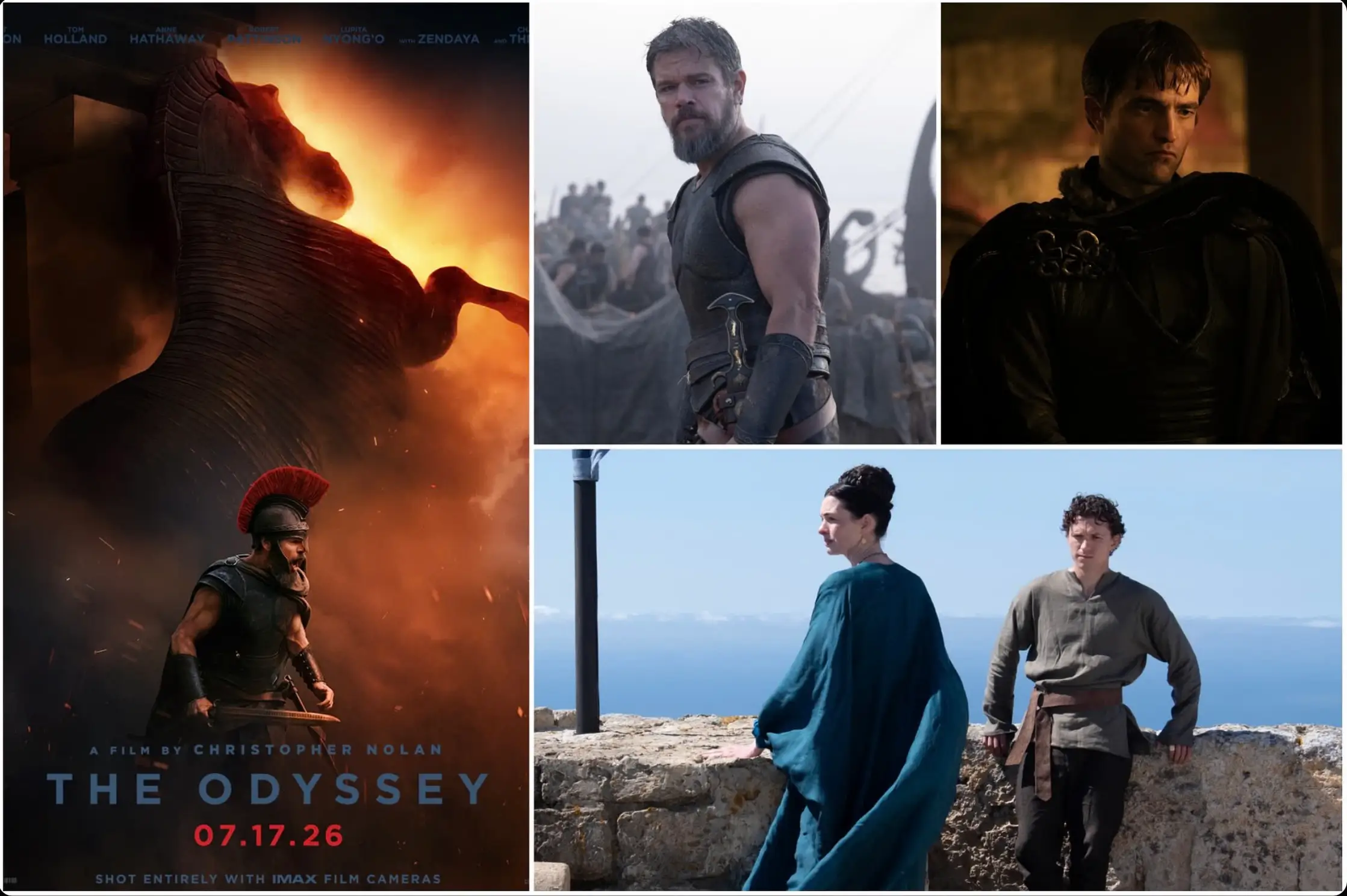
The final title card confirms the release date of July 17, 2026, while the closing Olympus tease hints at larger divine conflict still looming beyond the revenge narrative itself.
fin
What makes this trailer resonate so intensely is not simply scale, but clarity of artistic conviction. In less than three minutes, Christopher Nolan transforms an ancient poem into something emotionally immediate for contemporary audiences. Themes of endless war, political decay, masculinity under pressure, fractured fatherhood, emotional endurance, and toxic power structures all feel painfully current.
The practical-effects philosophy is not merely aesthetic nostalgia. It aligns directly with the film’s thematic priorities. Weight matters. Water matters. Physical suffering matters. Nolan’s resistance to digital artificiality becomes an extension of the story’s obsession with reality, consequence, and survival.
At the center remains Matt Damon, carrying the exhaustion of myth itself across his shoulders. Around him, Anne Hathaway appears poised to anchor the emotional gravity of the film, while Robert Pattinson, Tom Holland, Zendaya, and Charlize Theron elevate the ensemble into something unusually layered for blockbuster cinema.
If the trailer is any indication, The Odyssey is not attempting to modernize Homer by simplifying him. It is attempting something far riskier: making myth feel physically, psychologically, and spiritually overwhelming again.
Previous article
← “MUTT” by NAV & Quavo: The Pack Is Back After Six YearsRelated Articles
Master Chief Reports to Call of Duty Now: Inside Xbox’s Second Reset Wave
Twenty-five years after Halo launched the original Xbox, the next mainline game belongs to Activision. […]