DRIFT AUDIO
Listen to this story
Choose a voice, then press play.
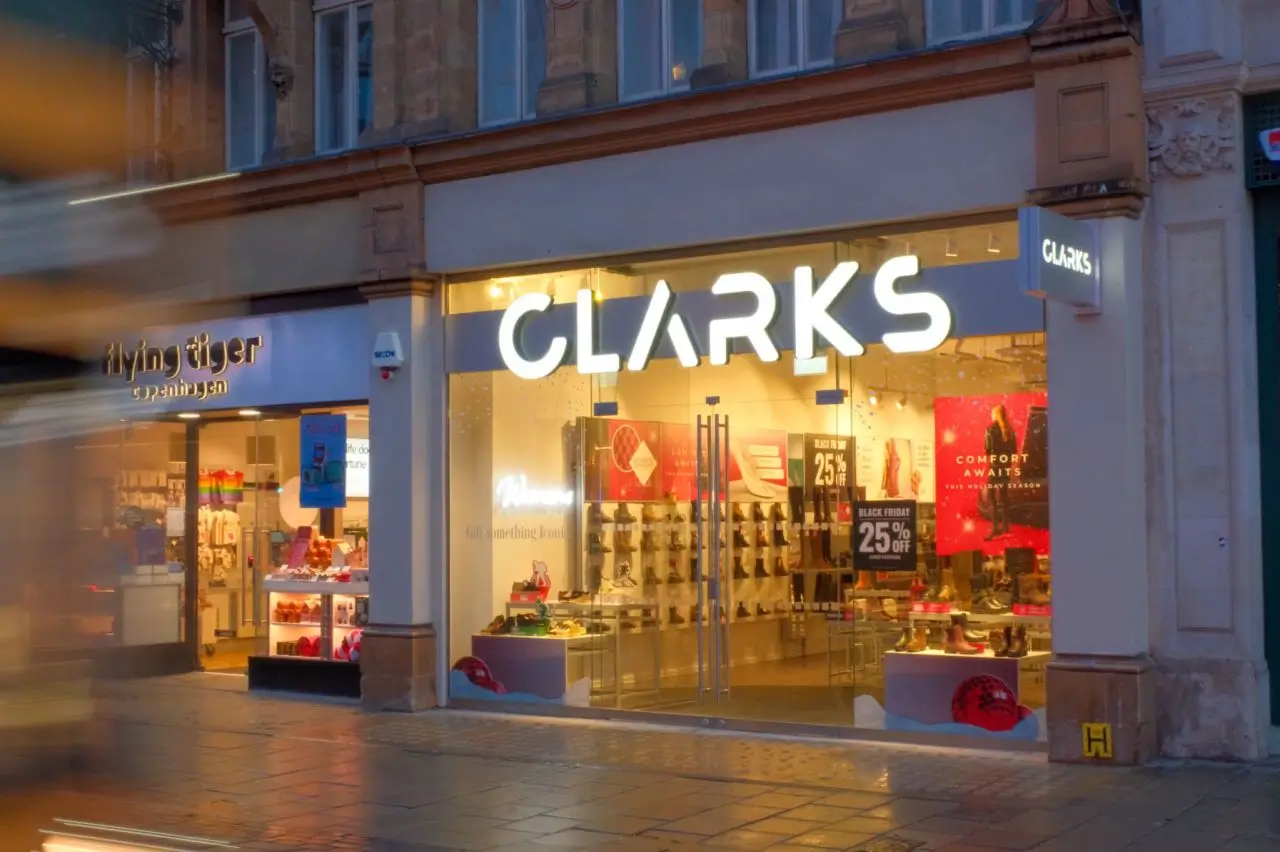
Clarks, the venerable British footwear brand founded in 1825, has unveiled one of its most ambitious retail strategies in recent history. The company plans to open approximately 150 new brick-and-mortar stores worldwide in 2026, marking a significant pivot toward physical retail resurgence even as digital channels accelerate. This move comes on the heels of a successful financial turnaround, positioning the heritage shoemaker to reclaim market share in key territories while maintaining disciplined profitability.
View this post on Instagram
stir
The expansion is strategically weighted toward high-growth markets. According to reports, 50 new locations are earmarked for China, representing about one-third of the total openings. Another 40 stores will target the United States, reflecting renewed confidence in the North American market. In Europe, Clarks will strengthen its footprint in core Western markets—particularly France, Germany, and Spain—through a direct-management model aimed at roughly doubling its business presence in these countries.
Joe Ulloa, President for the UK and Europe, has been central to this strategy. In interviews, Ulloa highlighted that 29 stores had already opened or were in advanced stages by late May 2026. In Europe alone, the company targets 15-20 new openings, with 11 already secured by mid-year. Recent European openings include stores in Barcelona and Bilbao (Spain), multiple sites in Italy (Turin, Milan, and upcoming locations in Sicily, Valmontone, and Pescara), France, Belgium, and the UK.
This physical push is noteworthy because many traditional retailers have struggled with brick-and-mortar in the post-pandemic era. Clarks is betting that experiential retail—emphasizing comfort, heritage craftsmanship, and personalized fitting—still resonates strongly with consumers tired of purely online transactions for footwear.
flow
The expansion is grounded in solid financial recovery. Under rigorous cost discipline and operational auditing led in part by Ulloa’s regional leadership, Clarks returned to full profitability. Reports cite an operating profit turnaround of around £66.3 million. This stability elicits reinvestment without compromising margins—a critical balance for a 201-year-old company with deep roots but modern competitive pressures.
Clarks has navigated challenges including fluctuating raw material costs, shifting consumer preferences toward casual and comfortable styles, and intense competition from both fast-fashion players and premium shoe brands. By focusing on its core strengths—quality, comfort (think iconic Desert Boots and Wallabees), and now broader lifestyle extensions—the brand is repositioning itself as “shoes for everyone” while expanding categories.
scope
Clarks is not abandoning digital; it is integrating it aggressively. The company plans to launch 20 new third-party digital channels in 2026. More significantly, a proprietary Clarks Marketplace platform is slated for rollout to the US and Europe in 2027 (with some European elements launching earlier in 2026).
This marketplace, powered by technology partners like Marketplacer, goes beyond footwear. It features curated third-party brands that align with Clarks’ values of quality, sustainability, and lifestyle appeal. Partners include heritage names like Hunter, children’s eco-friendly lines such as Frugi, travel brands like Antler, and others. By April 2026, the “Brands now at Clarks” marketplace reportedly included over 100 partner brands, extending into apparel, accessories, and lifestyle products.
This omnichannel approach addresses modern consumer behavior: customers research and buy across platforms but still value physical touchpoints for footwear. The direct-management system in Europe aims to ensure brand consistency across channels, while franchise partnerships in markets like Spain provide scalable growth with local expertise.
why
Several factors drive this timing:
- Post-Anniversary Momentum: 2025 marked Clarks’ 200th anniversary. Celebrations helped refresh brand awareness and provided a platform for relaunch narratives around accessibility and lower price points in some lines to broaden appeal.
- China’s Enduring Pull: Despite economic headwinds, China remains a massive footwear market. Clarks’ established presence (hundreds of points of sale historically) allows scaled expansion. The focus on comfort footwear aligns well with growing middle-class demand for quality daily wear.
- US Opportunity: The US market offers significant upside. Clarks has opened concept stores under the Cloudsteppers line (focused on lightweight, cushioned comfort) in locations like Texas, with more planned. Renewed emphasis on standalone stores aims to rebuild visibility after periods of concession-heavy or reduced presence.
- European Consolidation: Direct management in France, Germany, and Spain allows better control over customer experience, inventory, and data—key for personalization and loyalty programs.
- Broader Category Expansion: Moving beyond pure footwear into apparel and lifestyle helps increase basket size and frequency of visits, both in-store and online.
View this post on Instagram
frame
Joe Ulloa’s role has been pivotal. As President of UK and Europe, he has championed data-driven decision-making, cost optimization, and brand relaunch initiatives. His background in leadership and operations has helped stabilize the European business while supporting global coordination.
Ulloa has emphasized “rigorous cost discipline” paired with targeted reinvestment. In interviews, he noted strong wholesale growth (55% for Autumn-Winter 2026 collections) and improved franchise performance (up 60% in some Spanish partners). His framework appears to blend:
- Operational Auditing: Identifying inefficiencies across supply chain and retail operations.
- Product Innovation: Updating core lines while introducing new categories.
- Channel Balance: Hybrid growth avoiding over-reliance on any single model.
- Talent and Partnership: Collaborating with franchisees and tech providers.
This balanced leadership has enabled the current aggressive yet sustainable roadmap.
challenge
No expansion of this scale is without hurdles:
- Economic Uncertainty: Inflation, geopolitical tensions, and consumer spending caution could impact discretionary purchases.
- Supply Chain Resilience: Footwear relies on global materials; disruptions remain a risk.
- Competition: In China, local and international brands vie for share. In the US, dominant players like Nike and emerging comfort-focused competitors challenge positioning.
- Execution: Managing 150+ openings requires flawless logistics, hiring, and training.
- Digital Marketplace Maturity: Curating partners while protecting brand equity demands careful governance.
Clarks’ history of innovation (from early vulcanized rubber soles to modern comfort tech) and family-rooted values provide a strong foundation to navigate these.
imply
Clarks’ strategy reflects broader retail trends: hybrid models winning over pure-play online or traditional retail. Heritage brands with strong IP are leveraging nostalgia while modernizing operations. The focus on “healthy profit margins” signals maturity—prioritizing sustainable growth over reckless expansion.
For the footwear industry, this could signal renewed confidence in physical retail for categories requiring fit and tactile experience. Success here might encourage other mid-tier heritage players.
fin
With the US/Europe marketplace launch planned for 2027, Clarks aims for a fully integrated global ecosystem. Potential future moves could include deeper Asia penetration beyond China, further category extensions (athleisure, kids’ lines), and sustainability initiatives that align with younger consumers.
The 150-store push in 2026 represents not just square footage but a declaration of intent: a 201-year-old company adapting boldly while honoring its legacy of craftsmanship and comfort.
Clarks is proving that with disciplined leadership, strategic focus, and customer-centric innovation, even established icons can recapture momentum in a dynamic global marketplace. As Joe Ulloa and the team execute this roadmap, the industry will watch closely to see how this balanced physical-digital surge translates into long-term market leadership.
Related Articles
Shell, Floral Print, Gold Lace Lock
Air Foamposite One Floral/Black. AA3963-002. 11 December 2026. $240. Black nubuck eyestay, mesh tongue, metallic gold Swoosh dubrae.