DRIFT AUDIO
Listen to this story
Choose a voice, then press play.
The dessert was originally made by a Long Island bakery that only sells them there, online (for pickup), and at one gourmet grocery store’s two locations on New York City’s Upper East Side, where lines wrap around the block and the cakes often sell out within an hour, despite them tasting “unspeakably awful,” according to the New York Post.
This is the story of how a simple, nostalgic-looking treat became the latest symbol of our collective hunger—not just for sugar, but for shared cultural moments in a fragmented digital age.
View this post on Instagram
stir
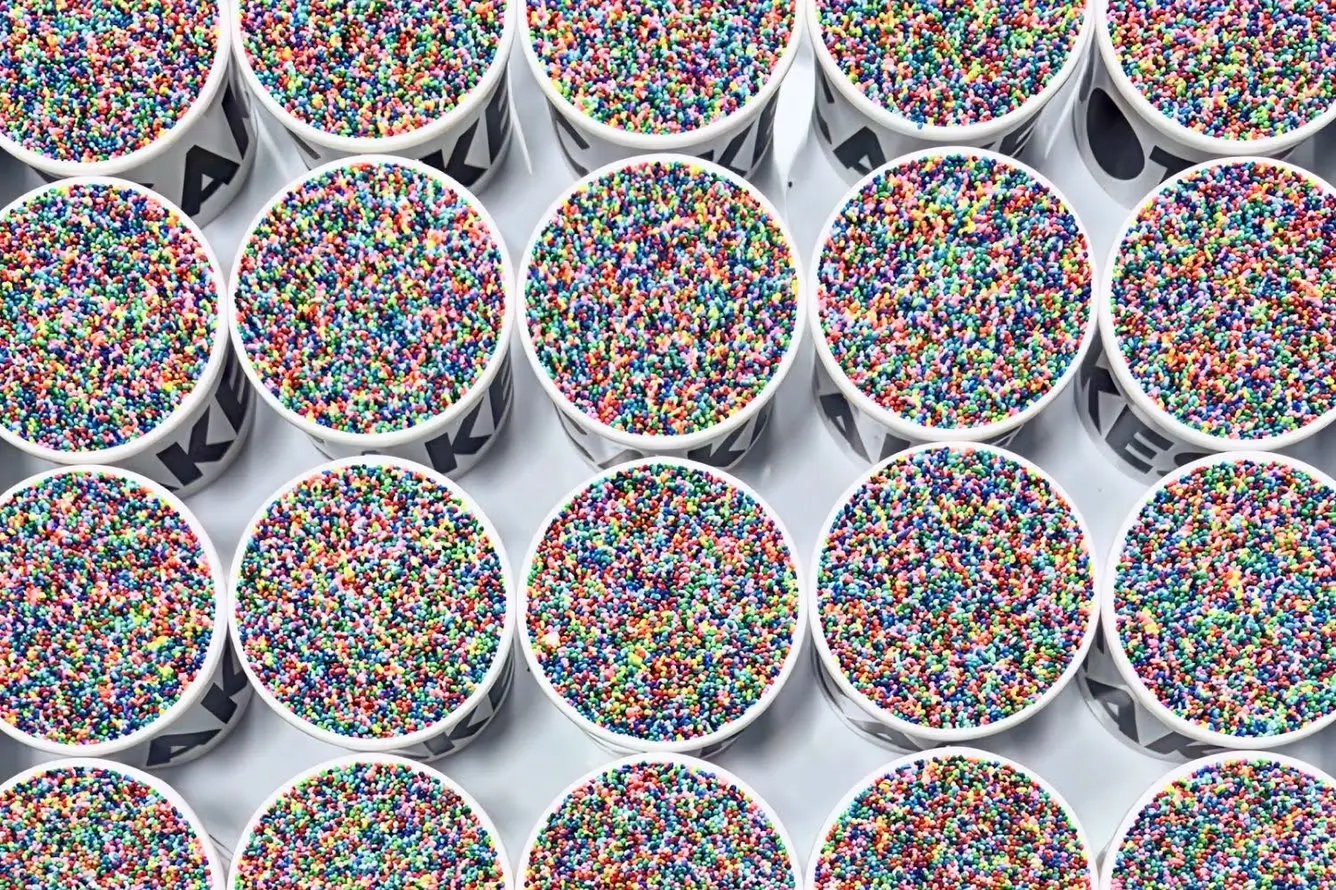
The Dot Cakes bakery, based in Roslyn on Long Island, is a family-run operation founded by mother-daughter duo Sondra Posner and Alex Posner. Their signature “Dotcups” are 8-ounce single-serving desserts: layers of cake and frosting topped with a thick, crunchy crust of multicolored nonpareil sprinkles (those tiny spherical ones that have been on cookies and ice cream cones for generations).
They sell through their website with limited drops, at their physical location, and most famously at Butterfield Market on the Upper East Side. Deliveries happen on specific days, and demand has been so intense that the store has implemented two-per-customer limits and rapid sell-outs. Prices hover around $11 each.
The concept isn’t revolutionary. It’s essentially a deconstructed cupcake or a fancy version of those sprinkle-covered birthday cakes from childhood bakeries. Some critics and commenters online have pointed out similarities to Mexican cortadillos or other sprinkle-heavy treats. Yet the specific presentation—in a clear cup, with that satisfyingly hard sprinkle shell that produces crisp ASMR scraping sounds on video—hit the algorithm jackpot in May 2026.
TikTok and Instagram Reels exploded with videos of people tapping spoons against the sprinkle layer, breaking through to the soft cake beneath. The visual contrast—vibrant rainbow dots against creamy frosting and fluffy cake—proved irresistible in a platform that rewards bright colors, textures, and quick sensory satisfaction.
straddle
Scarcity has always been a powerful driver of desire, and the dot cake phenomenon weaponizes it perfectly. Butterfield Market drops create genuine lines that wrap around the block, even in rain. Social media accounts dedicated to tracking New York lines, like @whatisthislinefor.nyc, have documented the chaos.
This artificial (or at least supply-constrained) rarity turns buying a dot cake into an event. Influencers and regular New Yorkers alike post their hauls, creating a feedback loop. The more people see others struggling to get one, the more desirable it becomes. It’s FOMO (fear of missing out) distilled into a portable dessert.
The New York Post’s harsh review calling them “unspeakably awful” only added fuel. In the attention economy, controversy sells. Defenders praised the nostalgia and texture; detractors called it dry Funfetti cake mix in a cup or overpriced sprinkles on basic cake. Both sides generated views.
By late May and early June 2026, the trend had spread beyond Manhattan. Connecticut bakeries started offering their versions. Long Island spots saw increased traffic. Home cooks flooded TikTok with DIY tutorials using boxed cake mix, canned frosting, and bulk nonpareils. Recipes appeared on sites like The Modern Nonna and Recipe Diaries, often with gourmet twists like lemon mascarpone or chocolate chip cookie variations.
flow
Why do sweet treats keep going viral? The dot cake is just the latest in a long line: cronut, rainbow bagels, cloud bread, Dalgona coffee, baked feta pasta (savory but adjacent), Dubai chocolate, and countless others.
Several factors converge:
- Sensory ASMR and View Show: Platforms like TikTok thrive on close-up, high-production food porn. The crisp tap of a spoon on nonpareils, the slow reveal of layers, the satisfying dig—it’s hypnotic. Dubai chocolate’s crunchy kataifi pastry created similar auditory and textural fascination.
- Accessibility and Replicability: Unlike complex molecular gastronomy, dot cakes are easy to approximate at home. This democratizes the trend while keeping the “authentic” version scarce and premium. Anyone can participate, but only some can claim the real NYC experience.
- Nostalgia in an Anxious World: In times of economic uncertainty, political division, and post-pandemic social recalibration, comfort foods evoke childhood simplicity. Dot cakes look like something from a 1990s birthday party—bright, fun, unpretentious. Even if taste is polarizing, the emotional hit is strong.
- Single-Serving Convenience: The GLP-1 era (think Ozempic and similar weight-loss drugs) has changed eating habits. People want indulgence without committing to an entire cake. A personal cup fits perfectly into portion control while still feeling like a treat.
- Monoculture Craving: As media fragments, viral foods provide rare shared reference points. Everyone scrolling TikTok sees the same dot cake videos. Discussing them becomes small talk, memes, and community. The @nolitadirtbag post linking Knicks losses to dot cakes exemplifies how quickly it entered local lore.
Economists and culture commentators sometimes call these “recession desserts”—affordable luxuries during tough times. But DŌ cookie dough went viral in 2017 during a strong economy, showing it’s not purely financial. It’s about escapism, joy, and connection.
scope
For The Dot Cakes bakery, this has been transformative. Alex Posner told Good Morning America how surreal it is to see constant videos. They’ve scaled production, added options like Dotcake balls, cinnamon buns (Saturdays only), and customizable designs. Nationwide shipping is available, expanding their reach.
Butterfield Market benefits from foot traffic and prestige. Other bakeries and chains are jumping in, creating dupes or inspired items. This mirrors Dubai chocolate, which started with one Dubai shop but spawned global imitations, flavor collaborations, and even concerns about pistachio shortages.
Critics worry about saturation. When every café offers a dot cake variant, the magic fades. We’ve seen it with previous trends. Yet the core idea—textural, colorful, shareable mini desserts—may endure in new forms.
show
Not everyone is charmed. Some view it as emblematic of late-stage consumerism: spending $11 on mediocre cake for content. Others celebrate the creativity and small business success.
There’s a gendered angle too—dessert trends often skew toward female creators and audiences, reflecting longstanding cultural associations between women and sweets. Influencer culture amplifies this, turning personal consumption into public show.
Health-wise, the timing with GLP-1 drugs is fascinating. People on these medications sometimes report reduced cravings, yet viral desserts persist. Perhaps they represent mindful indulgence or rebellion against restriction. Or maybe the drugs simply make smaller portions more appealing.
Environmentally and ethically, mass sprinkle production and shipping add to the conversation about food trends’ footprint. But for most participants, it’s lighthearted fun.
idea
The beauty is in the simplicity. Basic recipe:
- Bake a cake (boxed mix works; flavors like vanilla, chocolate, or funfetti recommended).
- Crumble or cut into small pieces.
- Layer in an 8-oz cup with frosting.
- Top with a thick layer of mixed nonpareil sprinkles pressed gently for the signature crust.
Elevate it with homemade buttercream, fresh fruit, or flavored extracts. Lemon olive oil cake with mascarpone offers a sophisticated twist. Vegan versions exist too.
The key is the sprinkle layer density—it must be thick enough to create that satisfying break.
fin
As of early June 2026, dot cakes show no signs of slowing. They’ve spread to other states and inspired international interest. But trends move fast. The next one—perhaps something savory-sweet, or involving a new texture like freeze-dried elements—could emerge tomorrow.
What endures is our need for these moments. In a world of endless scrolling and digital disconnection, a bright, crunchy, shareable dessert offers temporary unity. We gather (virtually) around the same silly thing, debate its merits, recreate it, and move on—until the next viral bite.
The dot cake may taste like childhood nostalgia or disappointment, depending on expectations. But its real flavor is communal joy, algorithmic serendipity, and the enduring human love for something sweet to brighten the day.
If you’re queuing on Madison Avenue, attempting a homemade batch, or just watching the spectacle, you’re participating in a modern ritual. In the end, viral desserts aren’t really about the food. They’re about us—our desires, our boredom, our creativity, and our endless search for the next little hit of delight.
Related Articles

Garage Italia’s Electric Spiaggina Puts the Fiat 500’s Riviera Years on Battery Power
Ten kilowatts, rattan seats and a €85,000 starting price: Garage Italia's 500 Spiaggina rebuilds Ghia's 1958 beach car for the yacht crowd.