DRIFT AUDIO
Listen to this story
Choose a voice, then press play.
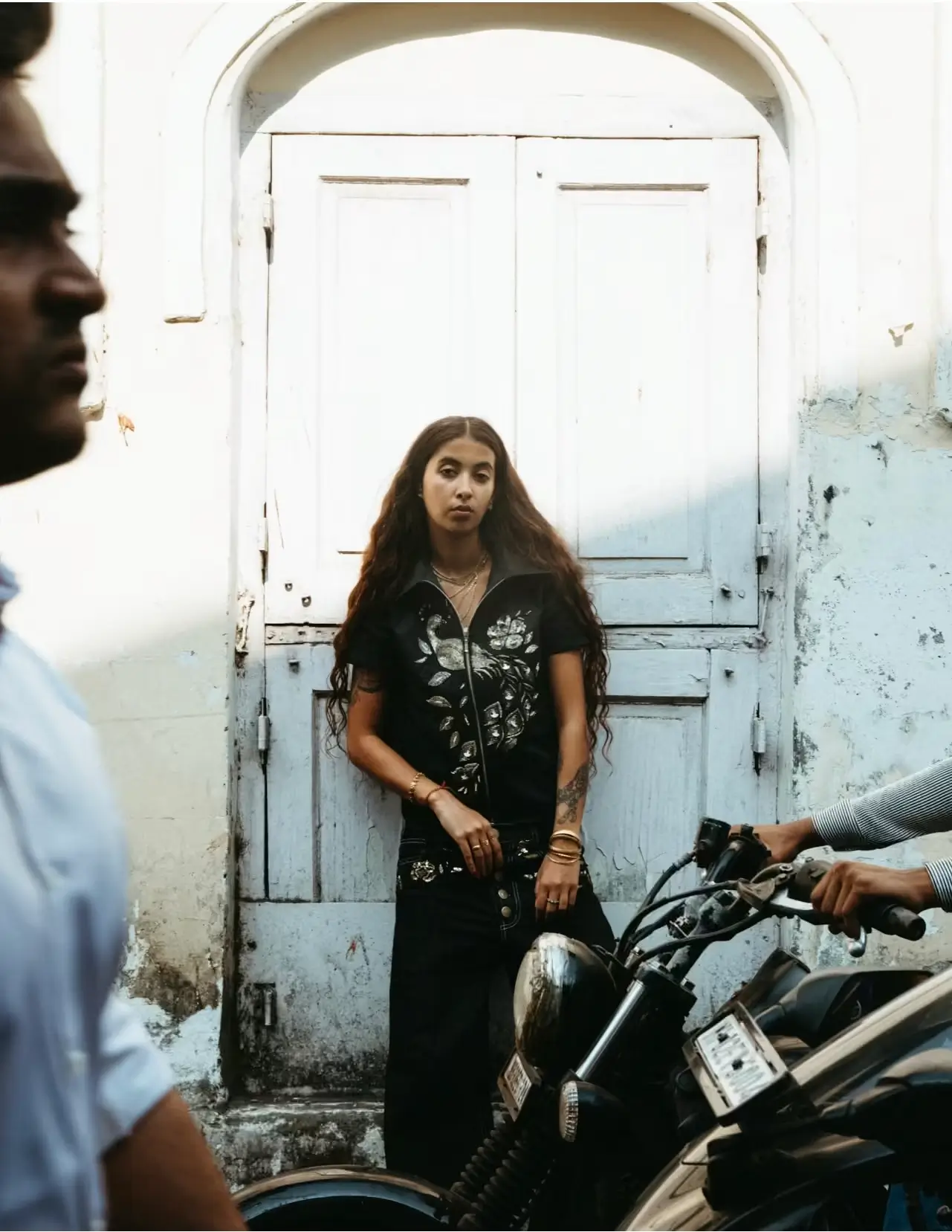
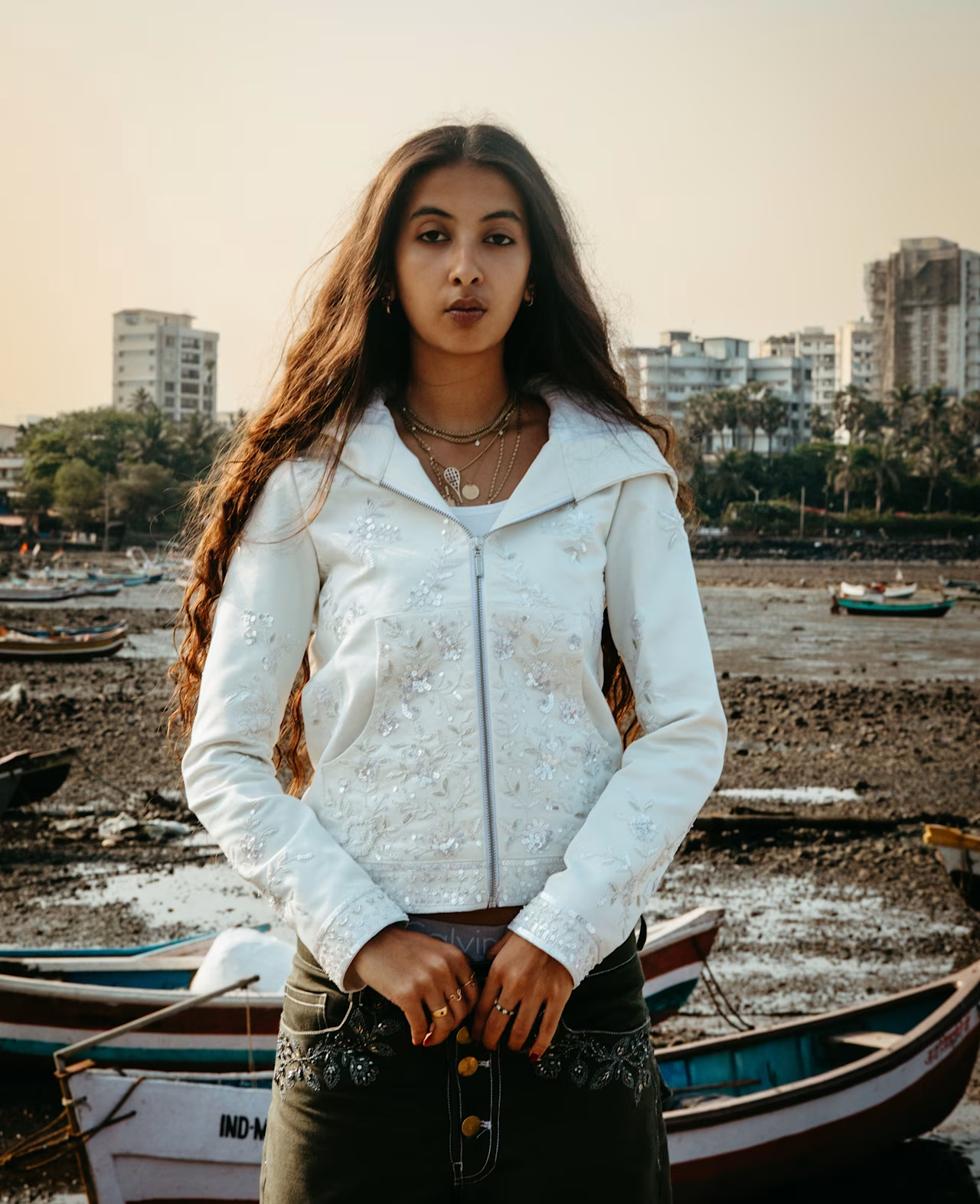
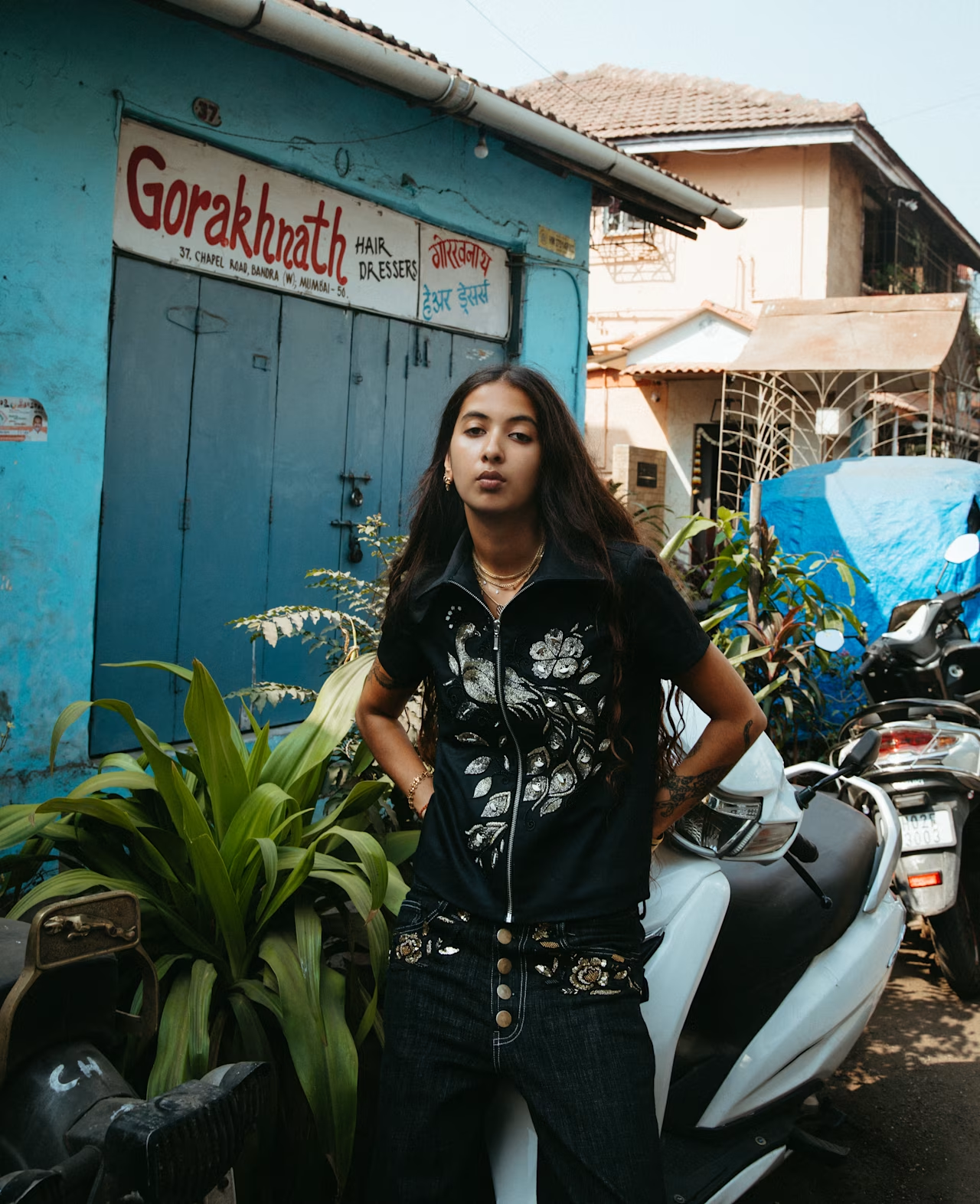
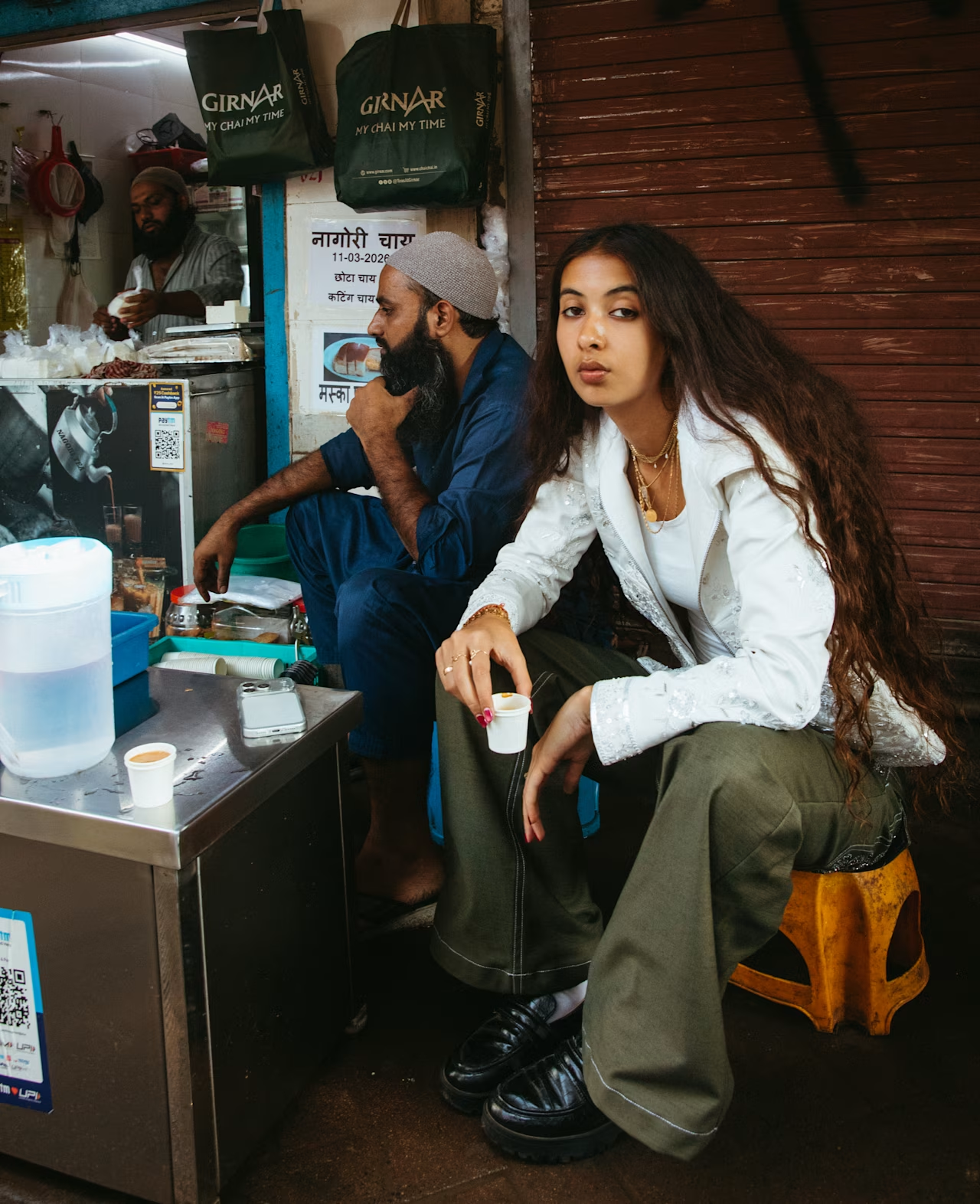
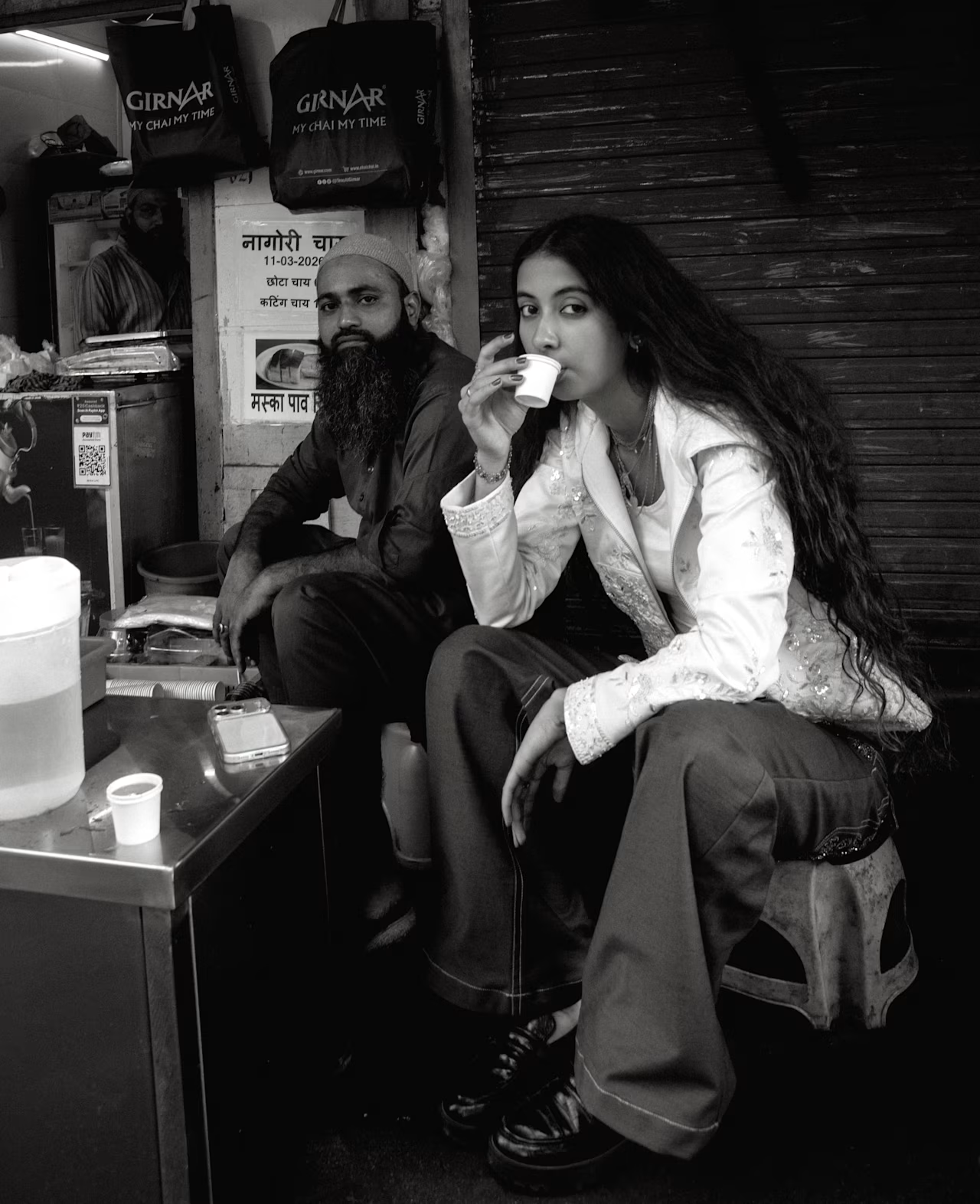
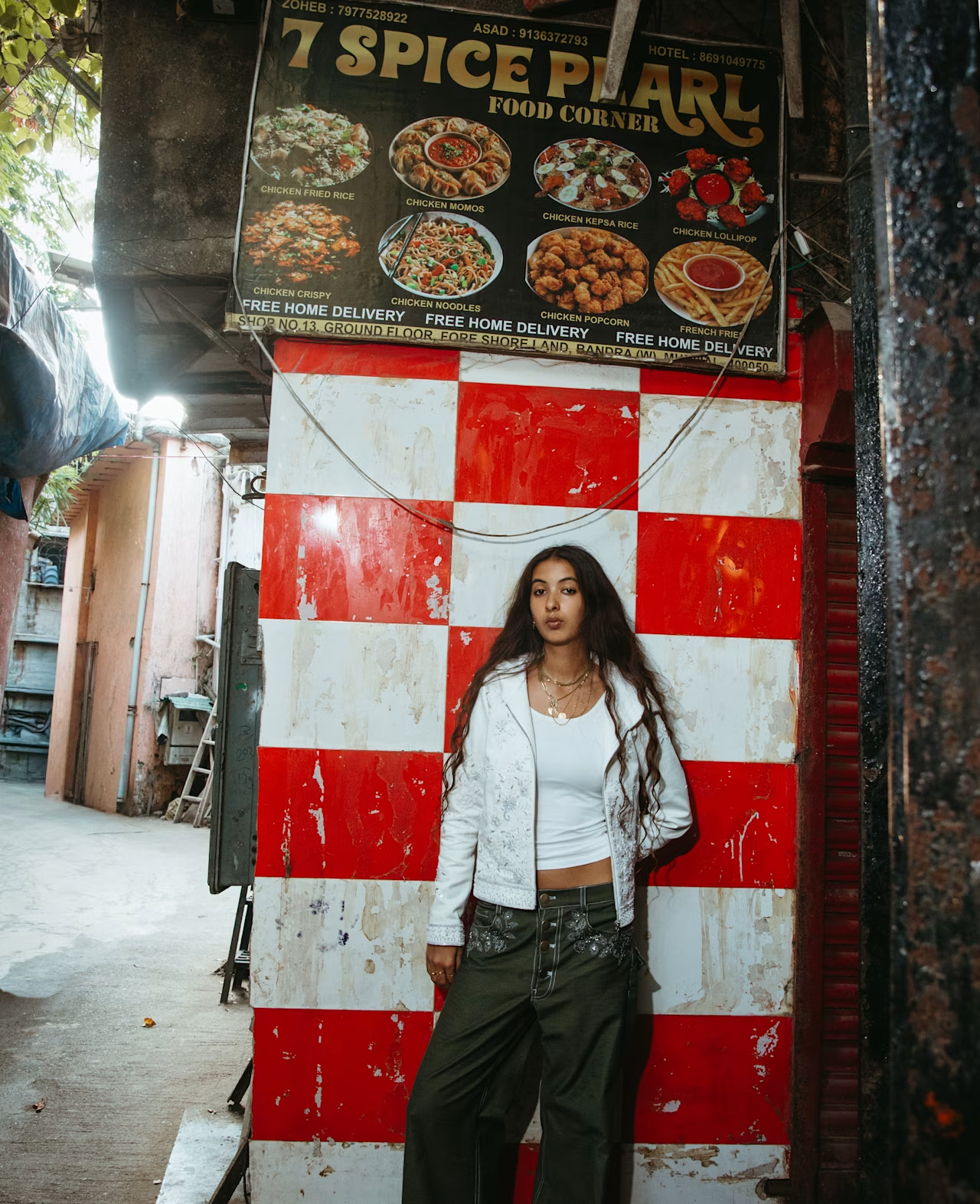
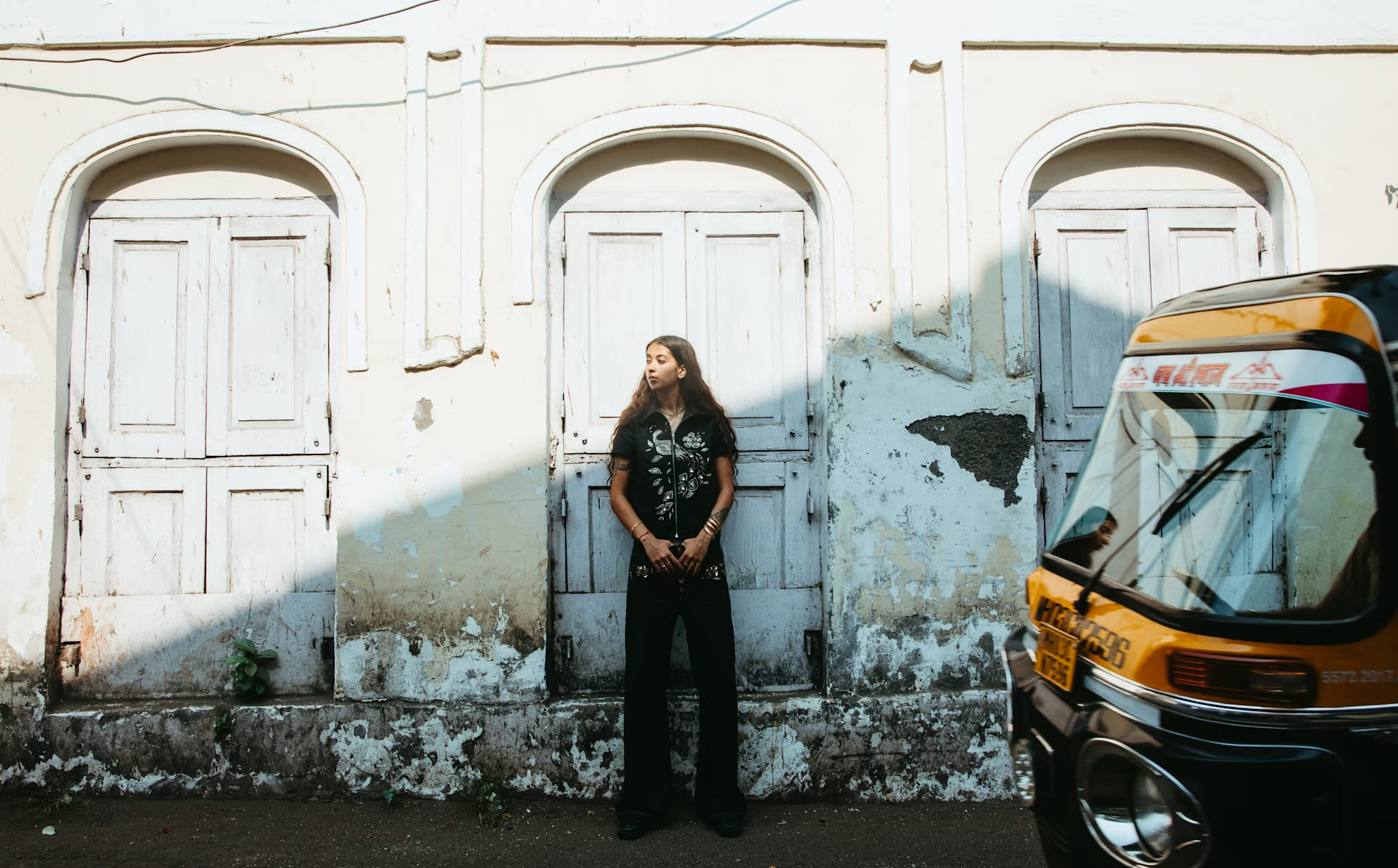
In the whirlwind of global fashion feeds, where polished studio shoots and tightly choreographed runway moments often dominate, Diya Joukani has carved out a radically different space. The 25-year-old Mumbai native, founder of DIYADIYA (often styled DiyaDiya Studio), has become an internet phenomenon not through calculated campaigns but through unscripted, vibrant glimpses of daily life in one of the world’s most dynamic cities. Clad in her hand-embroidered streetwear, she strides through Bandra’s bustling streets, shares chai with locals, interacts with street animals, and navigates the chaos of construction and commerce—all captured in raw, addictive videos set to tracks like Frank Ocean’s “Nights.”
Her approach isn’t just content; it’s a blueprint. By fusing traditional Indian artisanal techniques like zardozi and aari embroidery with contemporary streetwear silhouettes, Joukani is proving that authenticity, place, and community can propel a brand from a home studio to global recognition in months. Collections sell out instantly, a Nike Air Max content deal materialized, and even Rihanna has offered a co-sign. More profoundly, she’s shifting the narrative around Indian creativity, elevating local craft while inviting the world into Mumbai’s lived reality.
This is more than a viral success story. It’s a case study in how a new generation of designers is redefining fashion’s center of gravity—one that doesn’t require Paris or New York as a prerequisite.
View this post on Instagram
stir
Joukani’s journey began not in fashion school but in the trenches of retail and styling. Born and raised in Bandra, Mumbai—a neighborhood often compared to creative hubs like Soho or Hackney for its vibrant thrift scene and independent boutiques—she worked shop floors at vintage stores and even Kenzo. Customers frequently complimented her personal style, which blended Indian culture elements with Western ease. She styled friends, including emerging musicians, for album covers and videos.
Yet something was missing. “I make the clothes that I want to see in the world,” she has said. In July 2024, she designed her first jacket using YouTube tutorials for pattern-making, a friend’s sewing machine, and sheer determination. It took three weeks. She loved the result and never looked back. Quitting her job overnight, she leaned into made-to-order pieces from home before scaling to her own studio.
Her self-taught ethos is central. Colliding with a local “Masterji” in Bandra for technical guidance, she quickly mastered construction while infusing pieces with deep culture knowledge. No formal design rituals here—ideas strike at night, sketches follow on her iPad, and execution happens swiftly. This instinct-driven process keeps the brand feeling alive and immediate.
sil
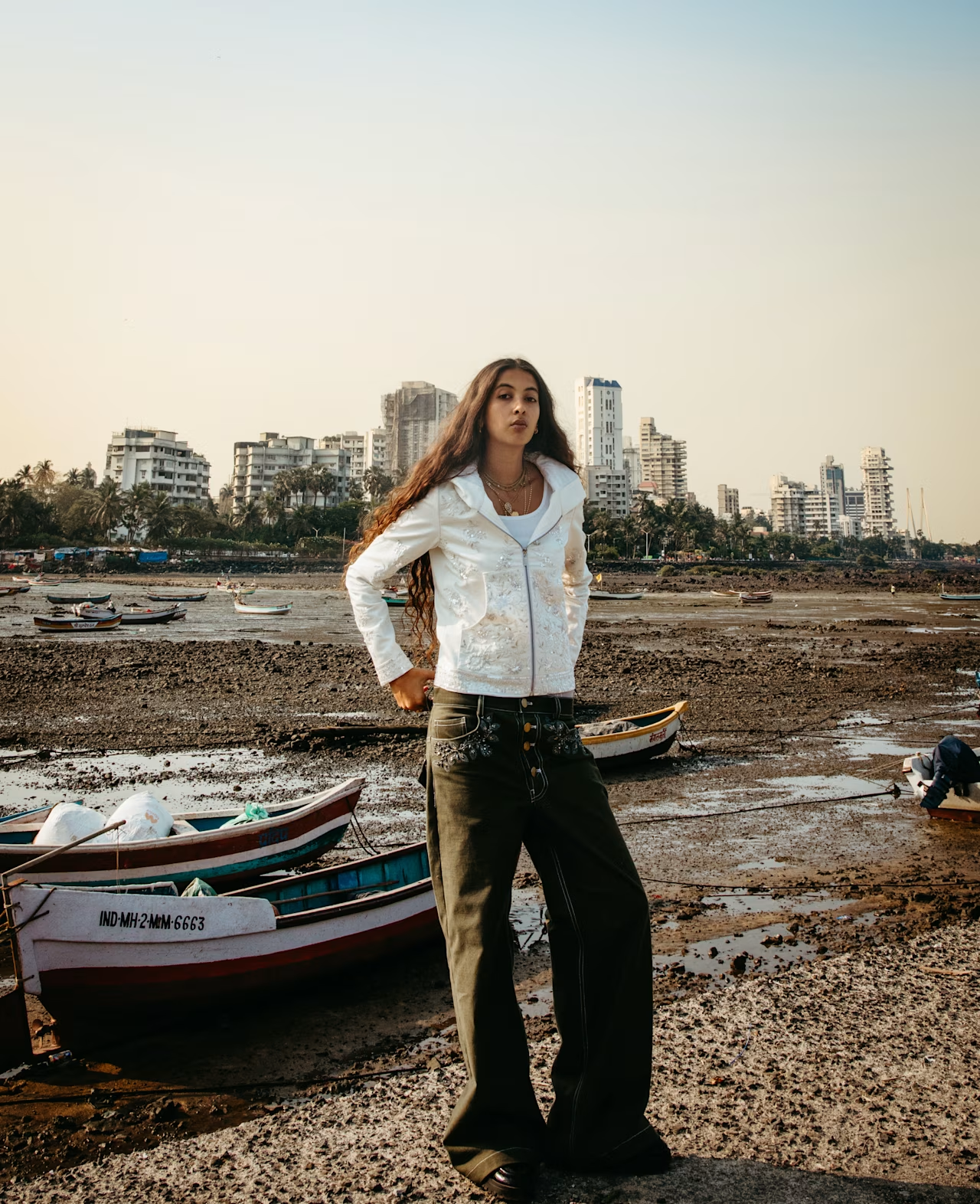
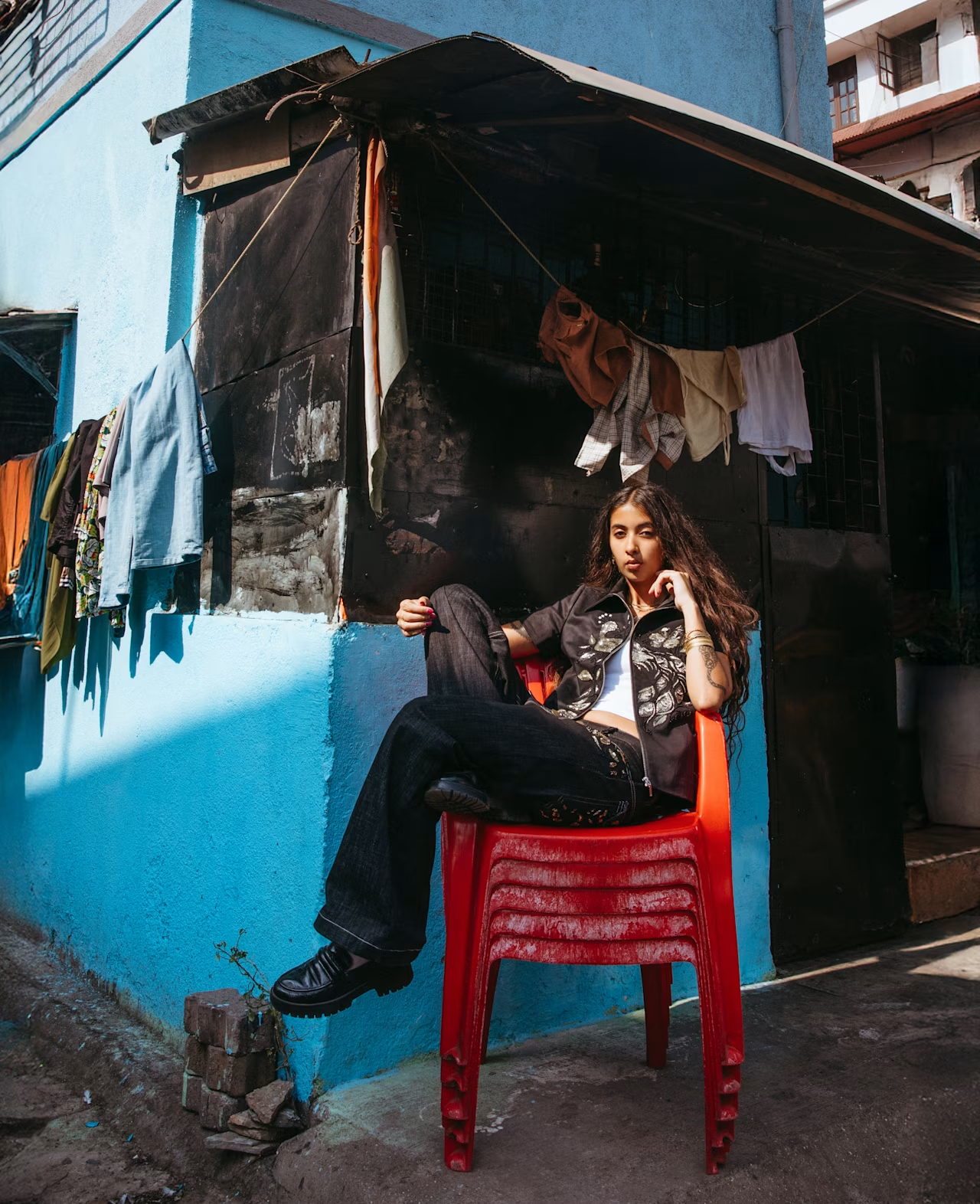
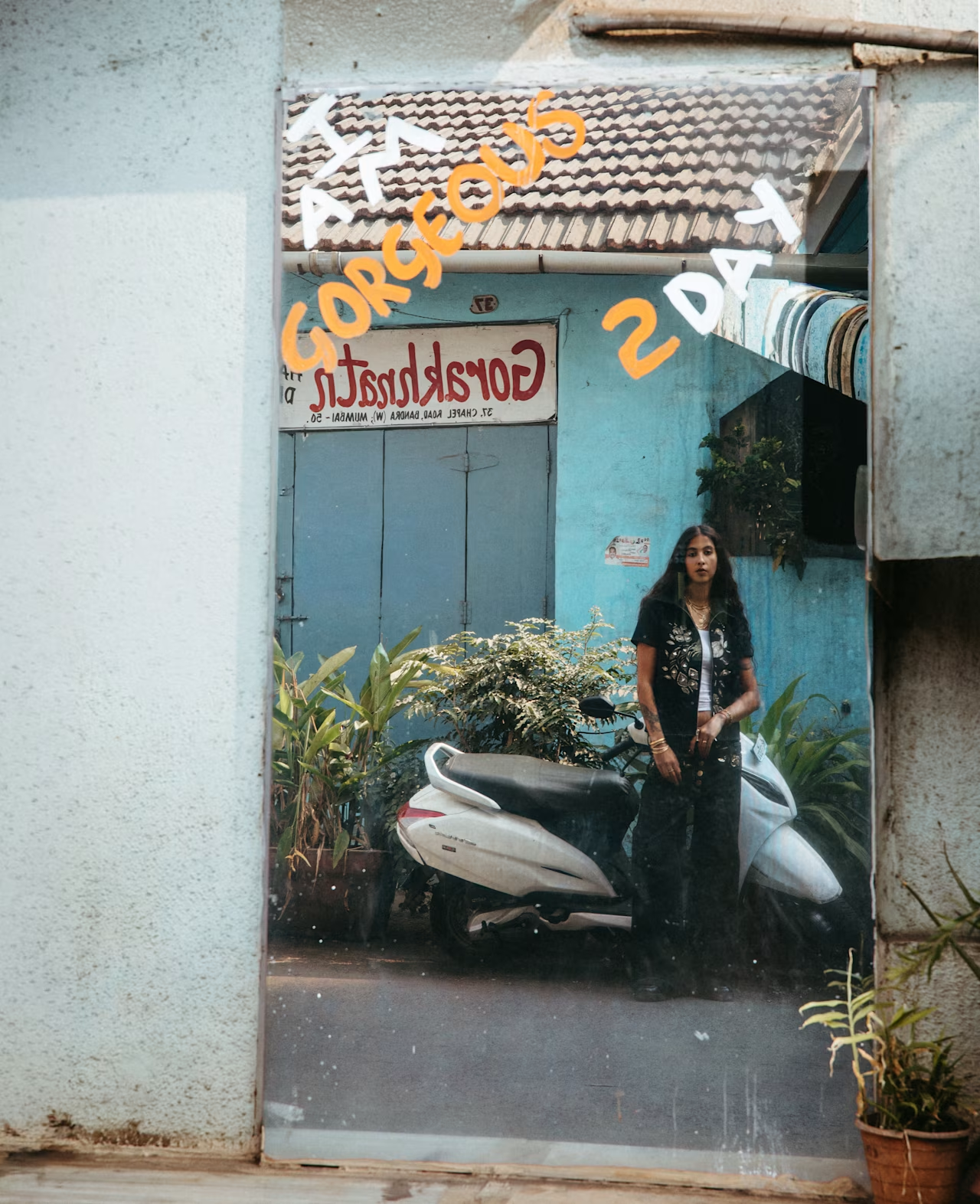
What sets DIYADIYA apart is its reverence for Indian craft. Joukani’s pieces—zip-up hoodies, denim, cargos, button-ups, jackets—feature labor-intensive handwork: zardozi (metallic thread embroidery, often with beads, sequins, or wires evoking Mughal opulence), aari (hook-needle chain stitching for intricate floral or geometric patterns), cutdana, dabka, kamdani, nakshi, and mukaish. A single jacket can involve 100,000 to 500,000 beads, taking 3-5 days for embroidery alone, plus stitching and finishing.
Fabrics are predominantly Indian-spun, with some Japanese velvet denim for contrast. Techniques draw from local traditions, including those from Mumbai’s fishing villages. The result? Streetwear that feels simultaneously rooted and forward: a 1947 Bombay zardozi denim zip-up, peacock-motif jackets inspired by Jaipur trips, or pyramid designs nodding to Dahi Handi festivities. Prices range roughly $150–$450, making the craft accessible without diluting its value.
Joukani is explicit about preservation: “There’s so much talent in my city and my country… I just want to shine a light on that.” By placing these techniques on everyday garments rather than ceremonial wear, she ensures they live beyond weddings and festivals. It’s a contemporary wardrobe that honors heritage while addressing modern realities—wearable, durable, and proudly loud. Mumbai’s energy—“shiny, glamorous, loud”—infuses every piece.
This mixer isn’t appropriation; it’s evolution. While global brands have drawn from Indian motifs (sometimes problematically), Joukani centers the artisans. Her team—skilled craftspeople she highlights in videos and credits—remains visible and elevated.
excite
Joukani’s true innovation lies in presentation. Instead of sterile lookbooks, her videos embed clothing in Mumbai’s fabric. Viewers watch her eat street food, ride with rickshaw drivers, lead goats, climb into forklifts, or skateboard through alleys. The “cool girl walk”—casual stride, wired headphones, one hand in pocket, waist-length hair flowing—has spawned global imitators from Egypt to Brazil.
These aren’t staged productions. “I don’t decide—I quite literally just go outside,” she explains. Filmed often by her dad or tailors (who are paid and enthusiastic participants), the clips capture spontaneous interactions. Local spots like a favorite chai auntie’s stall or juice vendors have seen business boom. Community members approach her to join in.
This format does several things brilliantly. It demystifies fashion, showing clothes in motion and context. It spotlights Mumbai’s humanity—its hospitality, chaos, resilience, and warmth—countering reductive stereotypes of “yoga, food, saris.” And it builds emotional connection. As one observer noted, it creates a “new grammar of place,” making viewers feel like insiders.
Critics have questioned the aestheticization of working-class life for marketing. Joukani’s response, implicit in her work, is inclusion: she brings artisans and locals along, fostering pride and economic ripple effects. The virality educated global audiences about India’s vibrancy, with her noting how little outsiders knew.
flow
The proof is in the traction. First collection sold out on launch day. Her Instagram (@diyajoukani) thrives with pre-order DMs and lifestyle posts. Nike tapped her for Air Max content. Rihanna’s engagement amplified view. Pop-ups, runways, and expansions (jackets, bags, belts, shoes) are in motion. She envisions physical retail and bringing international fashion weeks to Bombay.
Culturally, Joukani represents a broader shift. In an era of digital fatigue and calls for authenticity, her work bridges Global South creativity with worldwide audiences. She highlights India’s “City of Dreams” ethos—hustle, community support amid chaos—and positions Mumbai as a fashion capital. Indian hip-hop (Divine, AP Dhillon, Diljit Dosanjh) soundtracks her world, signaling cross-pollination.
For young designers, especially in non-traditional hubs, her path is empowering: “You don’t need to live in New York, London, Paris, or Milan anymore.” View, consistency, and self-belief suffice. Her “delusional” confidence—manifesting success—resonates with Gen Z’s entrepreneurial spirit.
n
From the DRIFT archive: The Rockefeller Center Christmas Tree 2025: A Tradition Rooted in Memory and Monumentality
Related Articles

The Frankie Shop Takes Milan: Oversized Suiting Moves Into the Quadrilatero
Eleven years after a Lower East Side boutique, Gaëlle Drevet’s label opens its first Italian […]