DRIFT AUDIO
Listen to this story
Choose a voice, then press play.
The Roadie lace-up boot is a quiet debut for a designer who rarely does anything shh, and that restraint is the point.
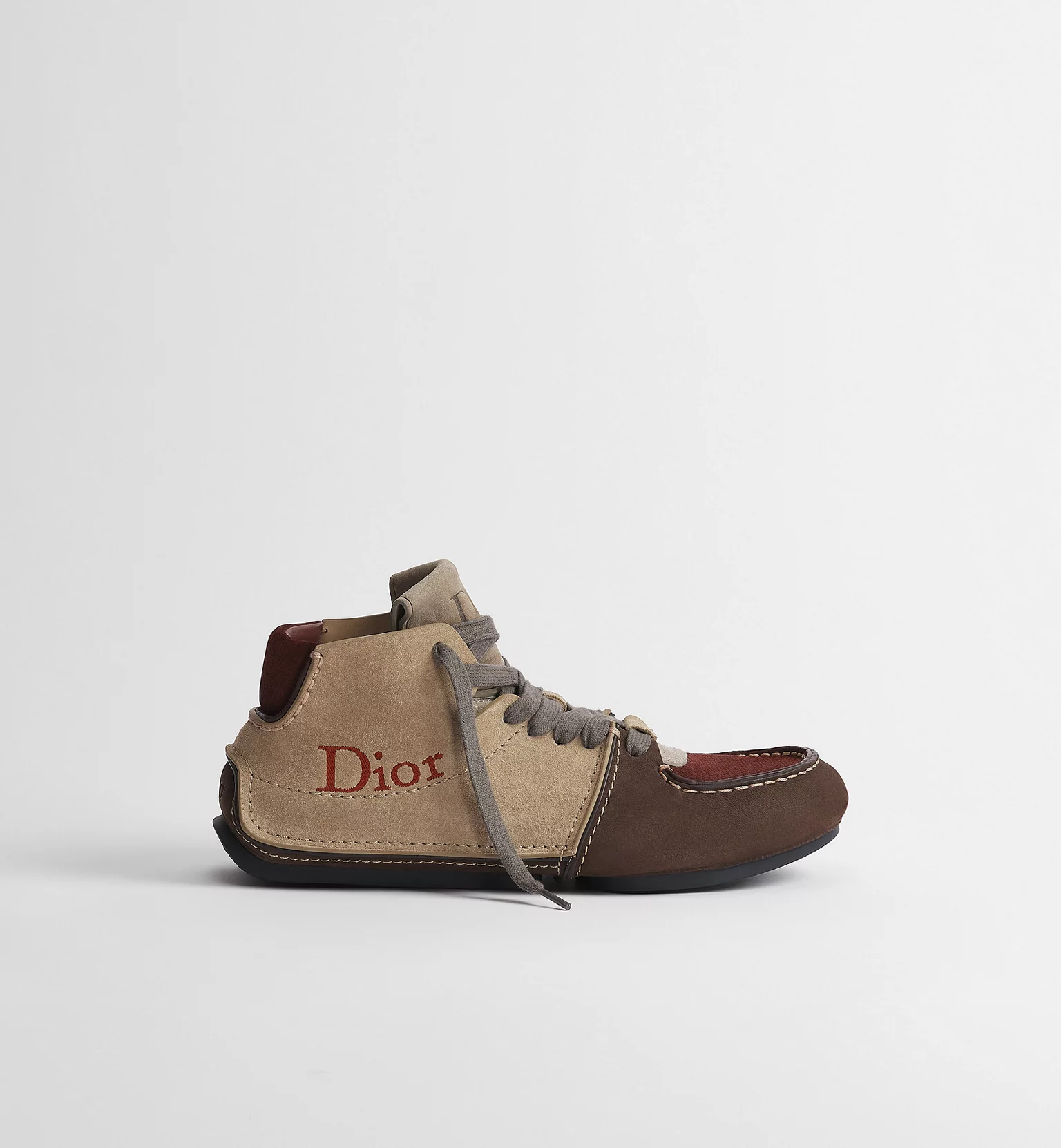
Jonathan Anderson’s first fashion show for Dior produced a lot of noise, from the front row to the general anticipation around what his first men’s collection would look like after the Kim Jones years. The Roadie lace-up boot was not built to add to any of that conversation. Presented on the runway for the house’s Spring/Summer 2026 collection, it is Anderson’s debut signature shoe for Dior, and it arrives looking more like something pulled from a 1960s rally car glovebox than a runway centerpiece. That is by design. The boot takes its cues from the vintage driving shoe, a low, flexible style built for the pedal work of a manual gearbox rather than the sidewalk, and stretches it into a high-top silhouette that still moves like the original. There is a long tradition of driving shoes getting reinterpreted by fashion houses, usually flattened into loafers or slip-ons that keep the moccasin stitching but lose the function. Anderson’s version keeps the function and adds height, which is the less obvious move and the one that makes the Roadie read as a boot first and a reference second.
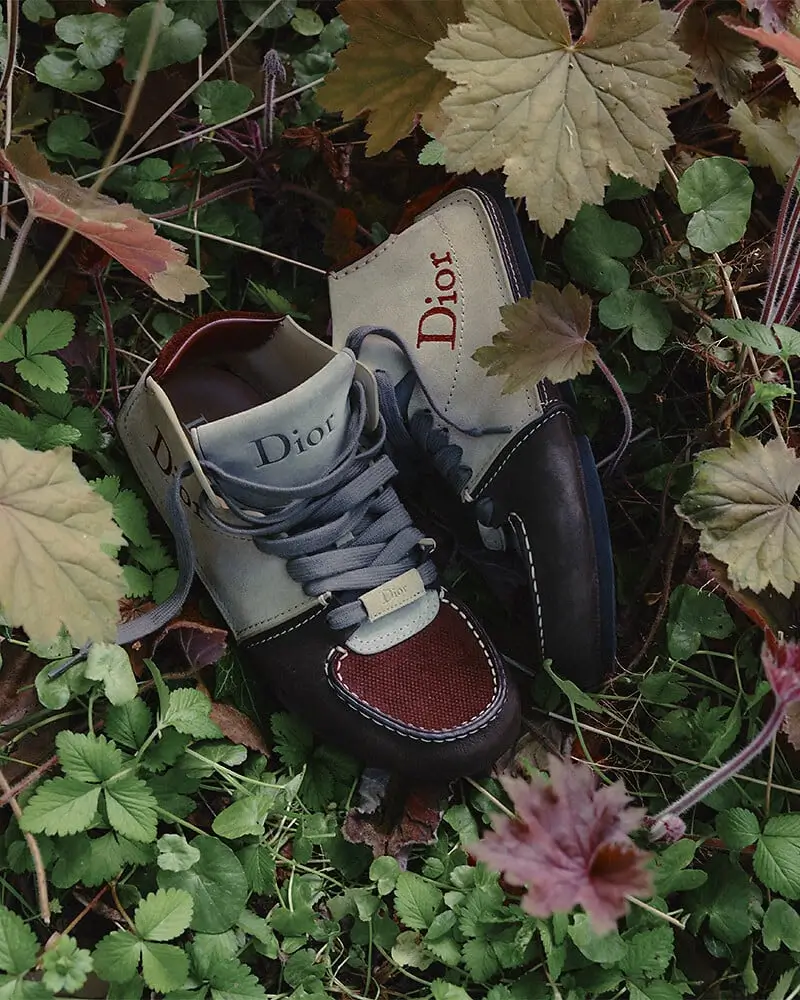
Dior shoes photographed among dense green foliage and autumn leaves.
in
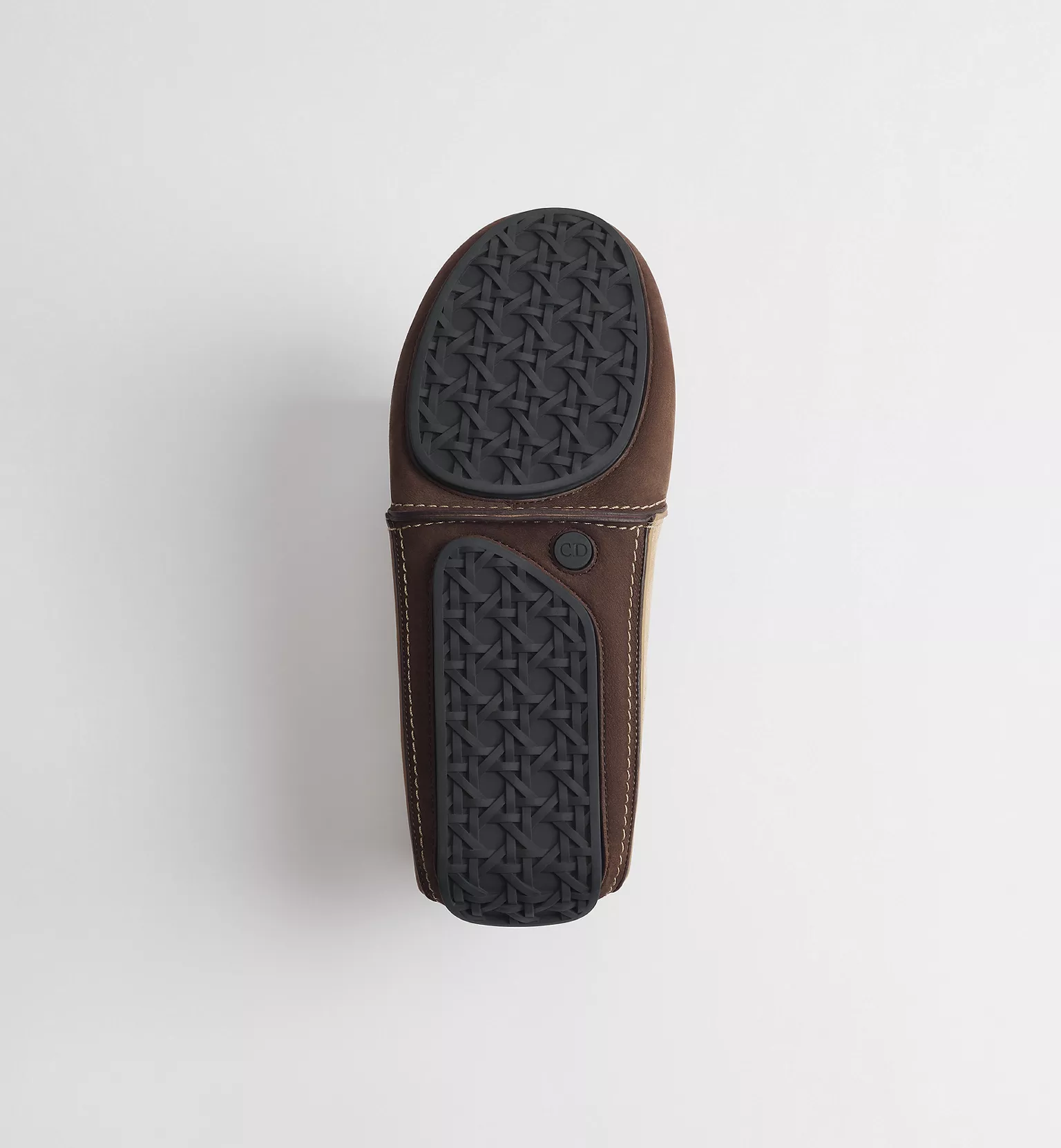
The engineering sits underfoot. Dior describes the construction as unreinforced, meaning the sole is built without the internal stiffening most boots rely on for shape. What replaces it is a tubular unit that runs the length of the shoe, giving the Roadie the kind of give a sneaker has while keeping the silhouette of something closer to a boot. Some coverage of the shoe has described the sole as split into two sections that move independently with the foot, which lines up with the flexibility Dior is marketing as the design’s central technical achievement. It is not a loud piece of engineering. There is no visible cushioning system, no branded foam wedge. The sole does its work and lets the upper carry the design.
That restraint matters more than it might sound like on paper. Unreinforced construction is a harder thing to get right than it is to talk about; it means every bit of structure in the shoe has to come from how the pieces are cut and stitched together rather than from a shank or a stiff midsole hidden inside. Get it wrong and a boot like this collapses at the ankle after a few wears. Dior’s own materials describe the result as flexible without losing shape, a claim that usually gets tested in the first month a shoe is actually on someone’s feet rather than in a lookbook. Nothing about the underfoot construction is branded the way a cushioning platform on a performance sneaker would be. It reads instead as a shoemaking decision, the kind a workshop would make rather than a product team.
straddle
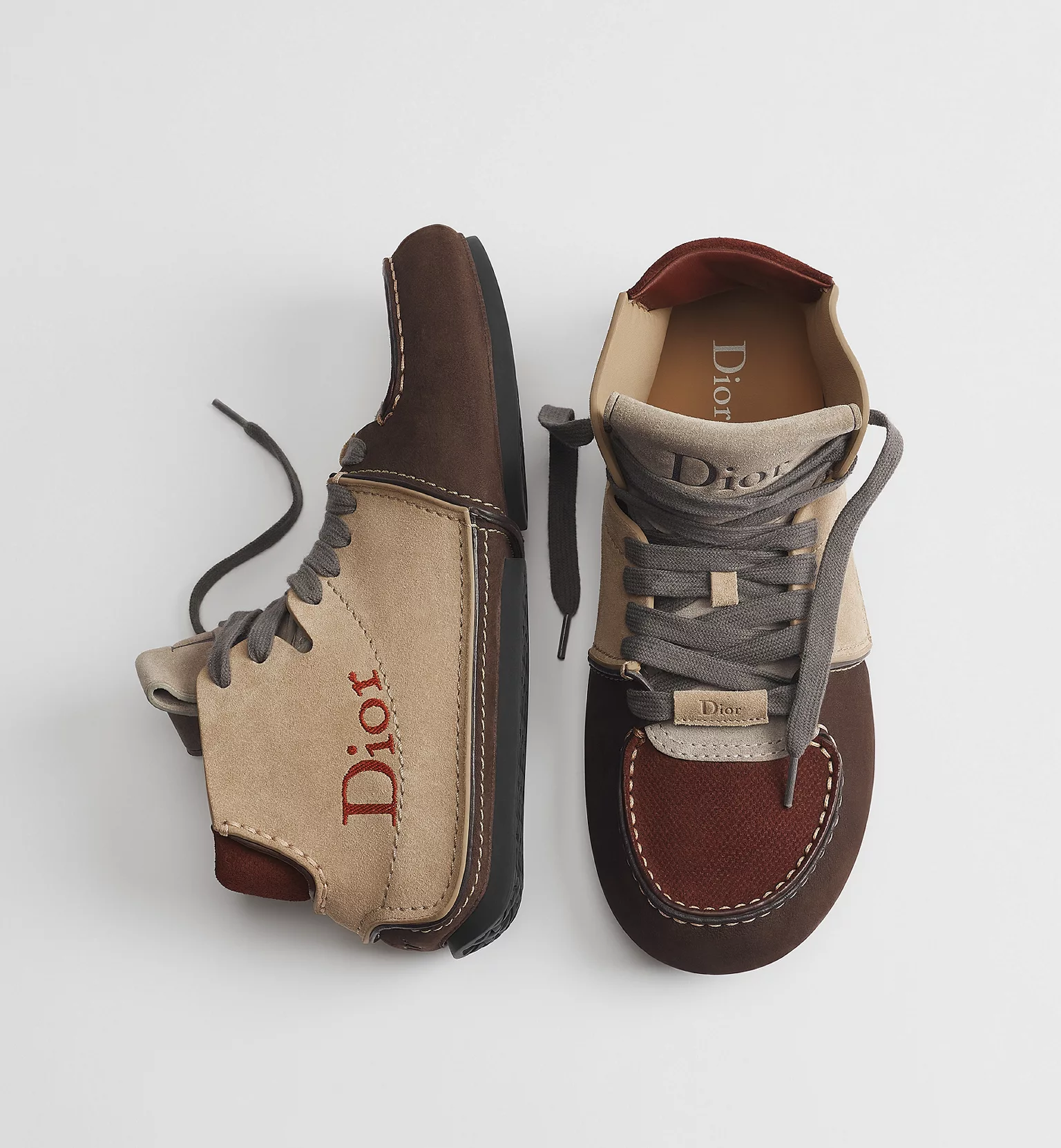
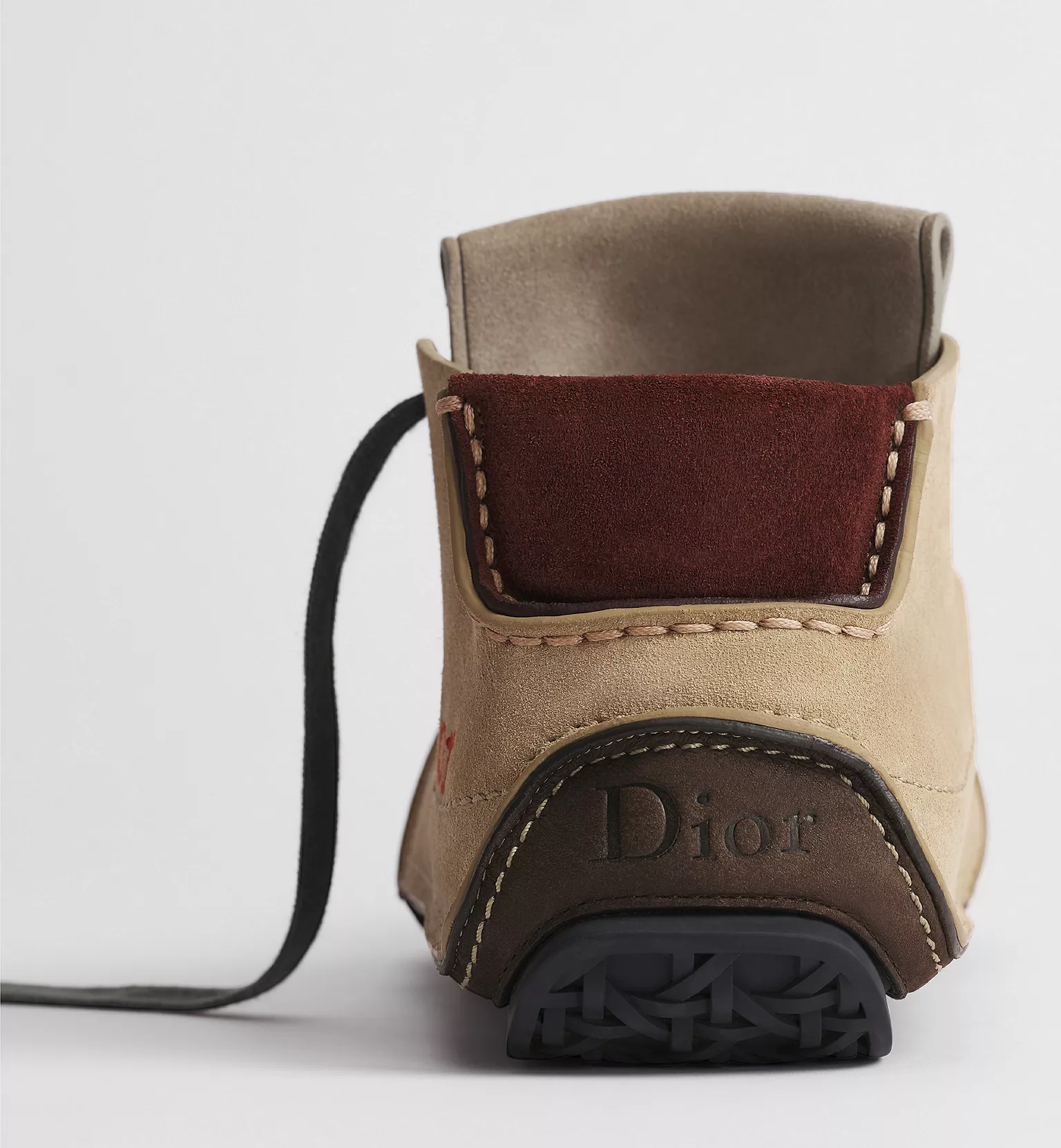
Materials are where the shoe starts to reveal its price point. Dior lists the Roadie as built from suede calfskin with a lambskin lining, produced in Italy, and other reporting on the release notes a nubuck and printed suede combination across different colorways, giving each pair a slightly different surface texture depending on the finish. The padded collar and the chunky, suede-tipped laces are the parts that read as driving shoe. The parts that read as Dior are quieter: an embroidered signature on the side panel, embossing on the tongue and heel, a small leather loop at the back. The rubber outsole carries an engraved cannage pattern, the house’s woven-chair motif that has shown up on Dior bags and hardware for decades, here flattened into a grip surface instead of sitting somewhere more decorative. It is a small choice that says something about how Anderson wants Dior’s codes to show up on his footwear going forward: present, identifiable, but tucked into a place most people will only notice once they turn the shoe over. Nothing about the Roadie shouts its house of origin from across a room. The branding is there for the person wearing it, and for whoever gets close enough to look.
stance
Anderson’s first Dior collection also included a shoe built off a Vans skate silhouette, and footwear writers have already pointed out that the Roadie’s sole and moccasin-style vamp bear a resemblance to Nike’s Considered line from the mid 2000s, a low-key sustainability project that never had mainstream reach. Either that is a direct reference or a coincidence of shared engineering logic, the comparison says something about how Anderson is approaching Dior’s shoe wall. He is not opening with a status sneaker built to be photographed from ten feet away. He is opening with references that reward someone who has actually spent time looking at footwear archives, luxury or otherwise. That has been the throughline of his early moves at the house: reworking familiar shapes with enough technical change that they stop being references and start being their own thing. Anderson built his reputation at Loewe largely on exactly this kind of translation, taking utilitarian objects and running them through a luxury filter without stripping out what made the original interesting. The Roadie suggests he intends to do the same at Dior, treating a driving shoe with the seriousness his Loewe teams once applied to basket bags and gardening clogs. Whether that approach holds across a full footwear range remains to be seen, but the opening argument is a coherent one.
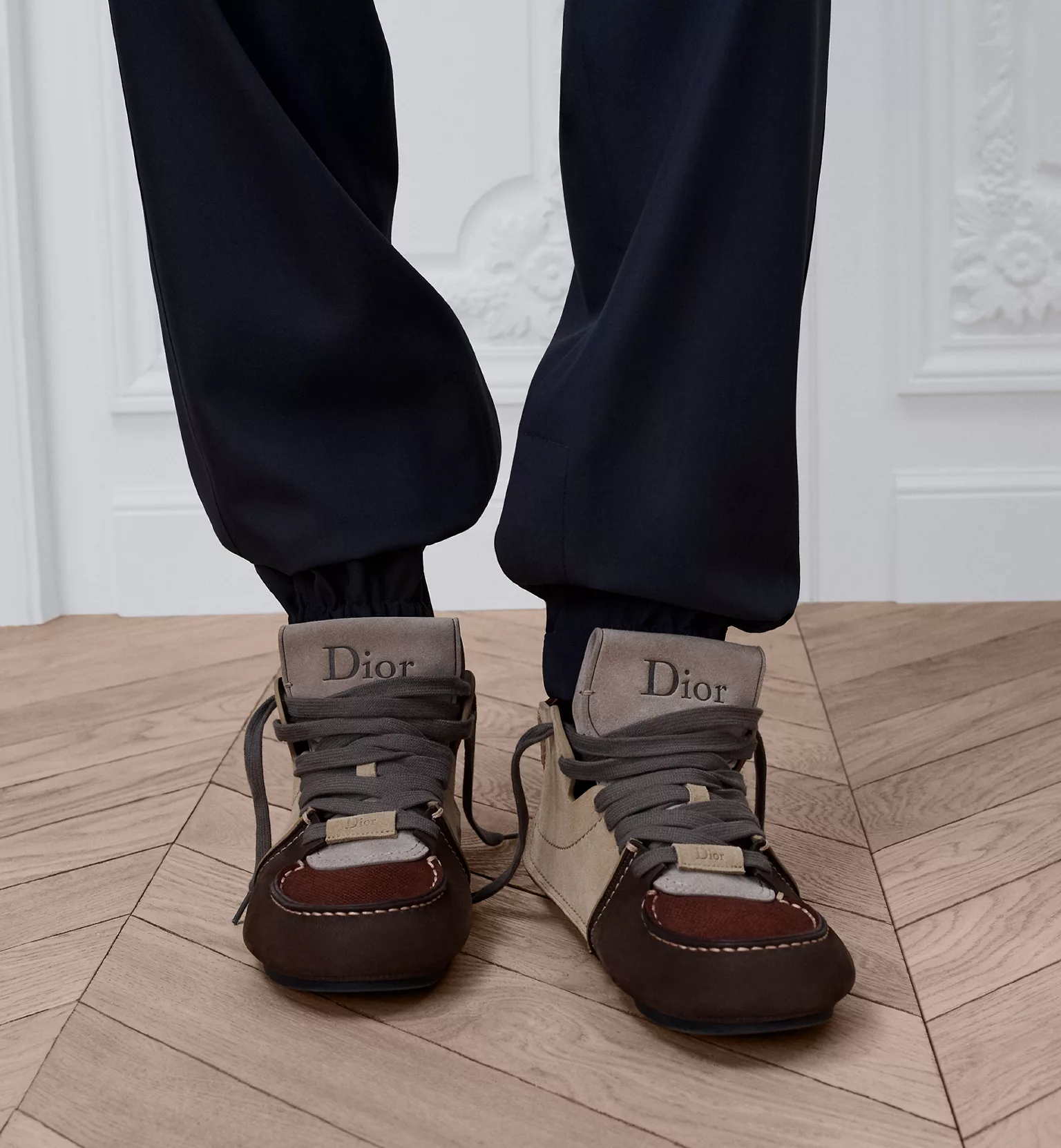
Dior shoes in brown and beige worn with black trousers on a parquet floor.
fin
The Roadie is available now through Dior’s webstore and in boutiques, priced at $1,200. Four colorways have shipped so far: brown, gray, dark green and beige, with material combinations that shift slightly between them, including a beige pair that mixes green and purple suede accents. There is no indication yet of a limited run tied to the runway debut specifically, which suggests Dior is treating the Roadie as an ongoing part of the men’s footwear offering rather than a one-season statement piece. For a house that has leaned on archive reissues and collaboration heat to move product in recent years, a fully original boot built around an engineering idea is a different kind of opening statement. The Roadie will not define Anderson’s footwear language on its own. It reads more like a first sentence than a finished argument, one that puts construction over branding and reference over reproduction, and lets a shoe look a little odd if the engineering underneath actually holds up.
Read Drift’s related feature, The Dior Men Summer 2026: Jonathan Anderson’s First Step and New Chapter.
Related Articles

From the AZG to the LeBron 24: Every Chapter of Nike’s Longest Signature Run
LeBron James opens a record 24th NBA season in Philadelphia this fall, and the LeBron […]