
DRIFT AUDIO
Listen to this story
Choose a voice, then press play.
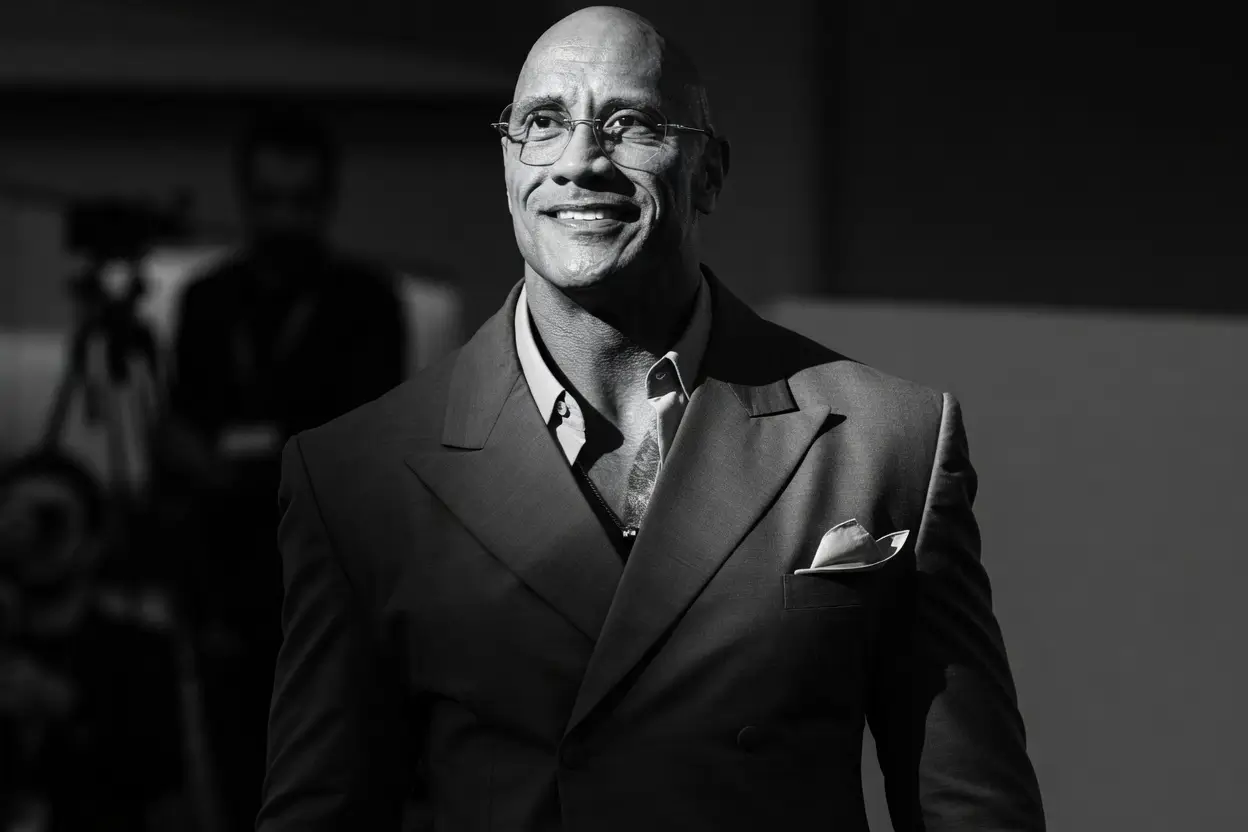
In the high-stakes arena of modern celebrity, where personas are meticulously curated and culture capital is traded like haute watches at auction, Dwayne “The Rock” Johnson stands as something of an anomaly. At 54, the former WWE superstar turned box-office titan has engineered one of the most deliberate evolutions in Hollywood history—not merely a pivot from pectoral-popping action hero to dramatic thespian, but a full-spectrum recalibration of what it means to wield influence in an era obsessed with authenticity, vulnerability, and cross-culture resilience.
This is not the Rock of yesteryear, the larger-than-life grappler whose catchphrases electrified arenas and whose early filmography leaned into CGI-fueled spectacle. That version still exists, of course—profitable, beloved, omnipresent on social media feeds. But in 2026, as he prepares for the live-action Moana (hitting theaters July 10) and fields prestige contributions that would make any actor’s agent discover allure, Johnson is signaling a deeper chapter. One where physical transformation meets emotional excavation, where Polynesian roots inform global storytelling, and where even a tequila-fueled private jet conversation reveals the man beneath the myth.
stir
Johnson’s most recent showcase, The Smashing Machine—A24’s raw biopic of MMA fighter Mark Kerr, directed by Benny Safdie—marked a watershed. Audiences and critics watched, often in stunned silence, as the man known for effortless charisma disappeared into a role demanding physical diminution, psychological fragility, and the quiet devastation of addiction. Prosthetics reshaped his iconic brow; his frame, once a temple of sculpted power, conveyed the toll of human struggle. Early Oscar chatter was fervent, positioning him in the Best Actor conversation alongside heavyweights. Though nominations ultimately favored others, the show ignited conversations about reinvention that echo far beyond awards season.
In fashion terms, this was Johnson trading the bombastic tailoring of red-carpet blockbusters for something more subdued yet intentional. Think custom Prada and Dolce & Gabbana during the press circuit—structured yet fluid silhouettes that honored his physique while nodding to a new era of thoughtful minimalism. His longtime stylist Ilaria Urbinati has spoken of subverting expectations for a man of his stature, favoring pieces that balance power with introspection. At the 2026 Met Gala, Johnson made waves in a Thom Browne ensemble featuring a pleated skirt, mohair tailcoat, and intricate silk ribbons evoking mortal versus immortal forms—a bold statement on duality that aligned perfectly with his artistic pivot.
This isn’t superficial costume-changing. It’s culture design thinking: Johnson leveraging his Samoan and Black heritage to infuse roles with layered identity. The Smashing Machine wasn’t just acting; it was world-building, much like a heritage streetwear drop that references archival techniques while pushing forward. The film’s grainy 16mm aesthetic and unflinching intimacy forced viewers to confront the cost of spectacle—the very machine that once defined Johnson’s career.
flow
Fast-forward (or sail onward) to Moana. Reprising his voice role as the demagogue Maui in Disney’s live-action adaptation, Johnson steps into a production helmed by Thomas Kail (Hamilton) that promises view opulence and culture staunch. Filmed across Atlanta and Hawaii, the July 10 release positions Maui not merely as comic relief but as a bridge between ancient Polynesian wayfinding and contemporary global narratives. Catherine Lagaʻaia steps into the titular role, with Johnson’s physical presence—long hair, tattoos, transformative prowess—bringing tactile weight to the beloved character.
The live-action iteration arrives amid heightened scrutiny of Disney remakes, yet early trailers suggest reverence: vibrant visuals, authentic casting, and Johnson’s genuine emotional investment. It cements his status as a Disney icon, extending his reach into family audiences while layering adult subtext—resilience, legacy, the weight of expectation—onto spectacle.
extent
Beyond the screen, Johnson’s Teremana Tequila embodies his design ethos: small-batch craftsmanship honoring terroir, sustainability, and cultural storytelling. Founded with partners, the brand draws from Jalisco highlands, blending tradition with modern accessibility. “Spirit of the Earth” isn’t marketing fluff; tastings reveal nuanced profiles—añejo with depth, blanco with clarity—that reward the discerning palate much like a well-curated watch collection rewards the horology enthusiast.
In interviews, Johnson treats the business with the same rigor as a film role: hands-on distillery visits, quality obsession, and a commitment to uplifting communities. It’s lifestyle design at scale—inviting consumers into a narrative of grounded ambition, not unlike premium sneaker collaborations that fuse athletic heritage with street cred.
link
What truly signals Johnson’s “more important things” is his slate of auteur projects. He’s reteaming with Safdie, while lining up Darren Aronofsky and, most strikingly, Martin Scorsese. The untitled Scorsese project—a Hawaii-set crime drama evoking Goodfellas or The Departed—pairs Johnson with Leonardo DiCaprio and Emily Blunt in a true-story exploration of Hawaiian underworld dynamics. It’s a seismic pairing: Scorsese’s mastery of moral ambiguity meeting Johnson’s physical charisma and cultural authenticity.
Aronofsky, who directed The Wrestler and praised Johnson’s “fearless” work in Smashing Machine, represents another dive into psychological depths. These aren’t paycheck gigs; they’re deliberate alignments with directors who probe human frailty, much as contemporary fashion houses revisit archival cuts to interrogate modernity.
Johnson has described this phase as “Level Five”—a hard-won peace where presentation yields to presence. In the Esquire profile that inspired this piece, he opens up about a testicular cancer scare coinciding with Jumanji press, marital “stuff,” and the deliberate choice to share vulnerability. No longer the invulnerable superhero, he’s modeling a masculinity rooted in resilience and openness—resonant in today’s culture landscape of redefined norms.
narr
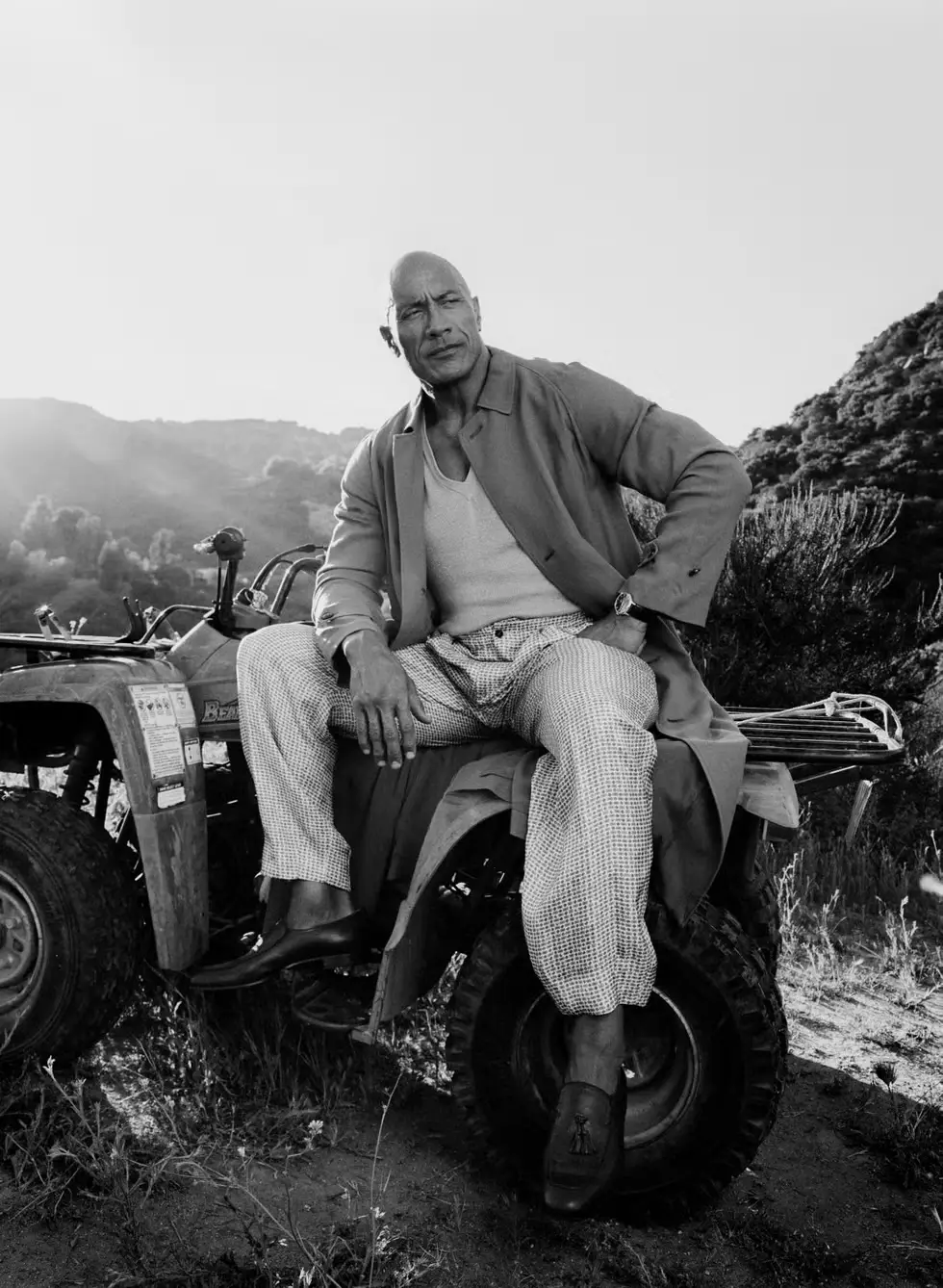
Johnson’s personal style has matured in tandem. Early wrestling-era leather and bold graphics gave way to tailored suits, luxury knits, and now experimental pieces like Thom Browne’s gender-fluid tailoring. He favors pieces that accommodate his build—structured shoulders, strategic proportions—while experimenting with texture and silhouette. Vintage trousers, Cartier accessories, Hermès layering: it’s power dressing reimagined for the thoughtful polymath.
Streetwear influences persist—shoe culture, athletic references—but elevated. Merges and personal drops (real or aspirational) would fit seamlessly into wheelhouse: think oversized yet refined hoodies nodding to Samoan tattoos, or watches blending horological precision with oceanic motifs. His Met Gala appearance wasn’t outlier; it was evolution, using fashion to externalize internal transformation.
look
Johnson’s personal life anchors the narrative. Married to Lauren Hashian since 2019, father to daughters, he navigates fame’s demands with intentional privacy. References to therapy, family time, and reticent workouts underscore a man prioritizing flow state over constant performance. His social media remains a masterclass in engagement—upbeat, generous, human—yet the off-camera reality involves the same struggles as anyone: health scares, relational work, legacy-building.
In synch, he treads carefully, advocating dialogue (suggesting Bruce Springsteen and political figures converse) over division.
As Moana sails into theaters and prestige projects loom, Johnson isn’t chasing relevance—he’s architecting it. From wrestling rings to A24 intimacy, Disney pageantry to Scorsese grit, his is a career of adaptive design: responsive to cultural currents yet rooted in core values of grit, growth, and mana.
Read Drift’s related feature, The Smashing Machine: Emily Blunt and Dwayne Johnson Shine in a Gritty Biopic.
n
From the DRIFT archive: Eddie Murphy to Receive the AFI Life Achievement Award in 2026 · Echoes in a Small Room: Goo Goo Dolls Rediscover Their Voice at Tiny Desk