Future & Tyla Ignite the World Cup 2026 Opening with Global Anthems + More

June 13, 2026
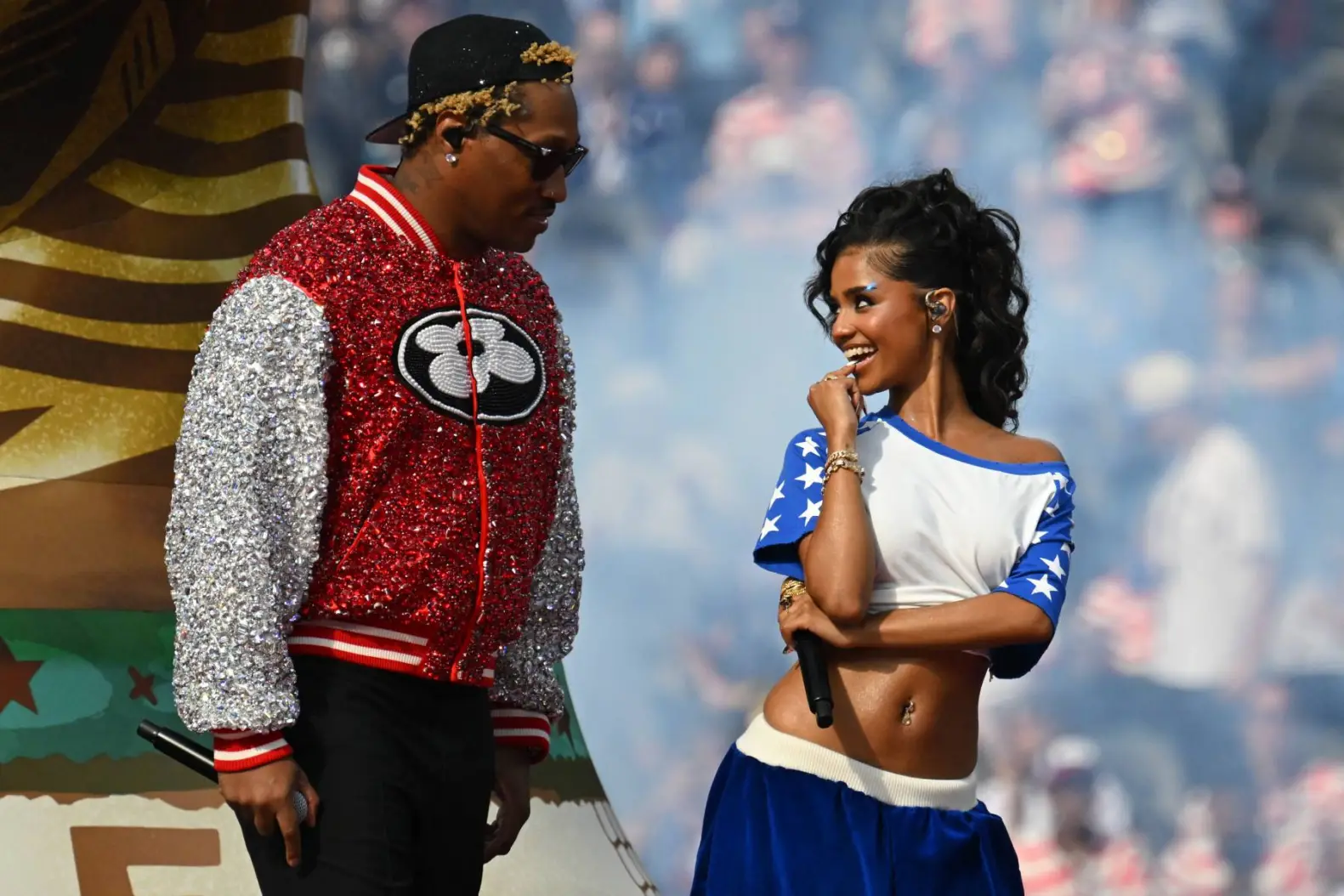
In the electric haze of SoFi Stadium, where the golden California sun dipped into a horizon of roaring anticipation, the FIFA World Cup 2026 opening ceremony unfolded not merely as a prelude to football’s grandest stage—but as a vibrant cultural manifesto. On June 12, 2026, Los Angeles, the beating heart of global entertainment, hosted a spectacle that fused sport, music, fashion, and identity into one unforgettable symphony. At its pulsating center stood Future and Tyla, declaring “Game Time” with unapologetic swagger, while BLACKPINK’s Lisa, Anitta, and Rema ignited the night with their genre-defying anthem “Goals.”
This was more than a kickoff. It was a celebration of diaspora, rhythm, and reinvention—perfectly aligned with the ethos of exploring where culture, style, and human flourishing intersect. The expanded 48-team tournament’s multi-city opening ceremonies (spanning Los Angeles, Mexico City, and Toronto) set the tone for a truly continental World Cup, but LA’s edition stole the spotlight with its star power and boundary-pushing energy.
View this post on Instagram
stir
SoFi Stadium, a architectural marvel nestled in Inglewood, transformed into a living canvas of American ambition and global unity. Massive LED displays showcased iconic LA landmarks—Hollywood hills, the Santa Monica Pier, and the glittering downtown skyline—interwoven with African, Latin, and Asian motifs. Dancers in flowing white ensembles, evoking both purity and dynamism, moved in synchronized waves around a towering replica of the FIFA World Cup trophy, while pyrotechnics and confetti painted the sky in vibrant hues.

The ceremony’s design language felt deliberately cinematic: geometric patterns inspired by street art, heritage textiles reimagined in modern silhouettes, and lighting that shifted from warm sunset oranges to electric blues. It wasn’t just production design; it was a fashion-forward narrative of convergence, where sportswear met high-concept couture.
flow
Future, the Atlanta trap vision whose influence has reshaped modern hip-hop, and Tyla, the South African breakout sensation who bottled the infectious spirit of amapiano and pop, delivered a performance that felt predestined. Their connection “Game Time,” from the Official FIFA World Cup 2026 Album, made its live debut with raw charisma.
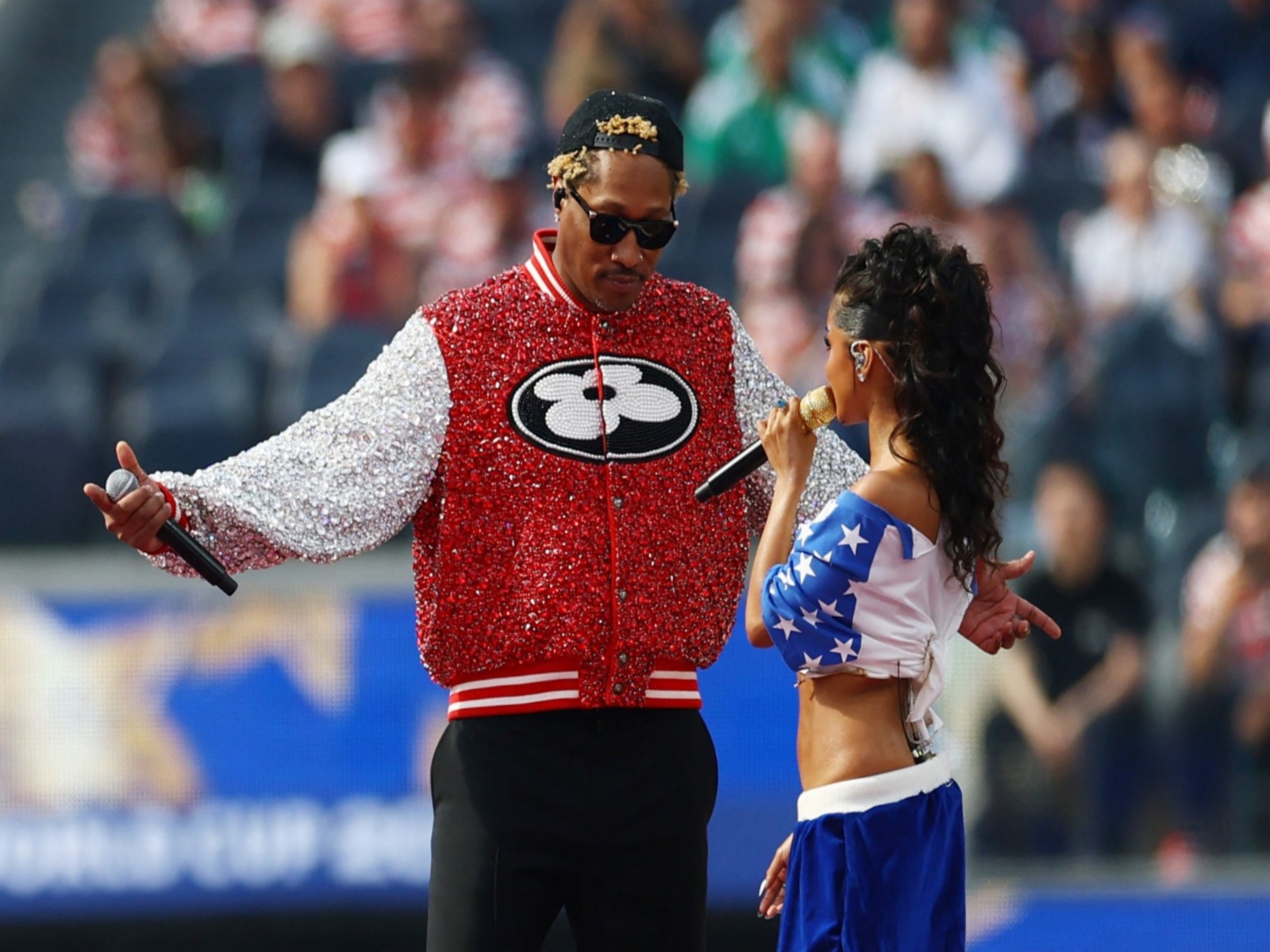
Clad in a sparkling red-and-silver varsity jacket emblazoned with bold graphics, Future exuded larger-than-life energy—his signature braids catching the light as he commanded the stage with gravelly flows. Tyla, radiant in a stars-and-stripes off-shoulder crop top and velvet blue bottoms, brought effortless cool and South African pride, her moves fluid yet precise. The chemistry was palpable: a passing of the baton between American trap innovation and African rhythmic vitality.
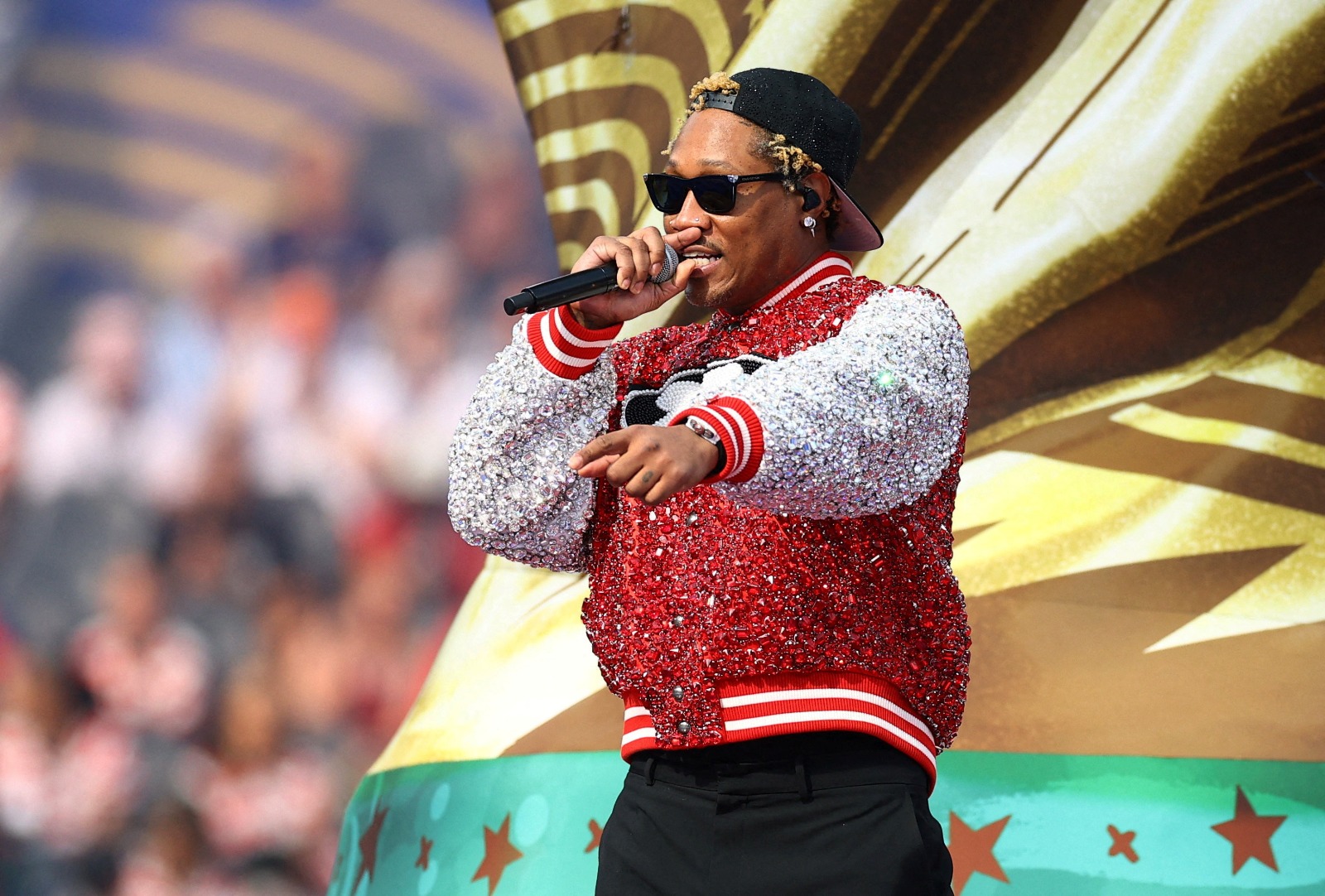
“Game Time” pulses with anthemic bravado—lyrics that double as both battle cry and dancefloor invitation. Performing it live at the World Cup wasn’t just promotional; it marked hip-hop’s formal coronation on football’s biggest stage. For Future, a veteran of culture moments, this was another chapter in expanding his global footprint. For Tyla, already a fashion darling (repping clear heels and bold accessories in related appearances), it amplified her role as a bridge between continents.
Their set captured the ceremony’s core tension and release: tension in the build-up of beats, release in the crowd’s roar as the USA prepared to face Paraguay. It was joyful, competitive, and undeniably stylish—precisely the fusion Invent Blog readers crave.
triad
If Future and Tyla ignited the party, Lisa, Anitta, and Rema elevated it to transcendent heights. Their track “Goals,” a high-octane fusion of K-pop precision, Brazilian funk flair, and Afrobeats grooves, received its explosive live premiere. The trio—representing Thailand/South Korea, Brazil, and Nigeria—embodied the World Cup’s promise of unity through diversity.
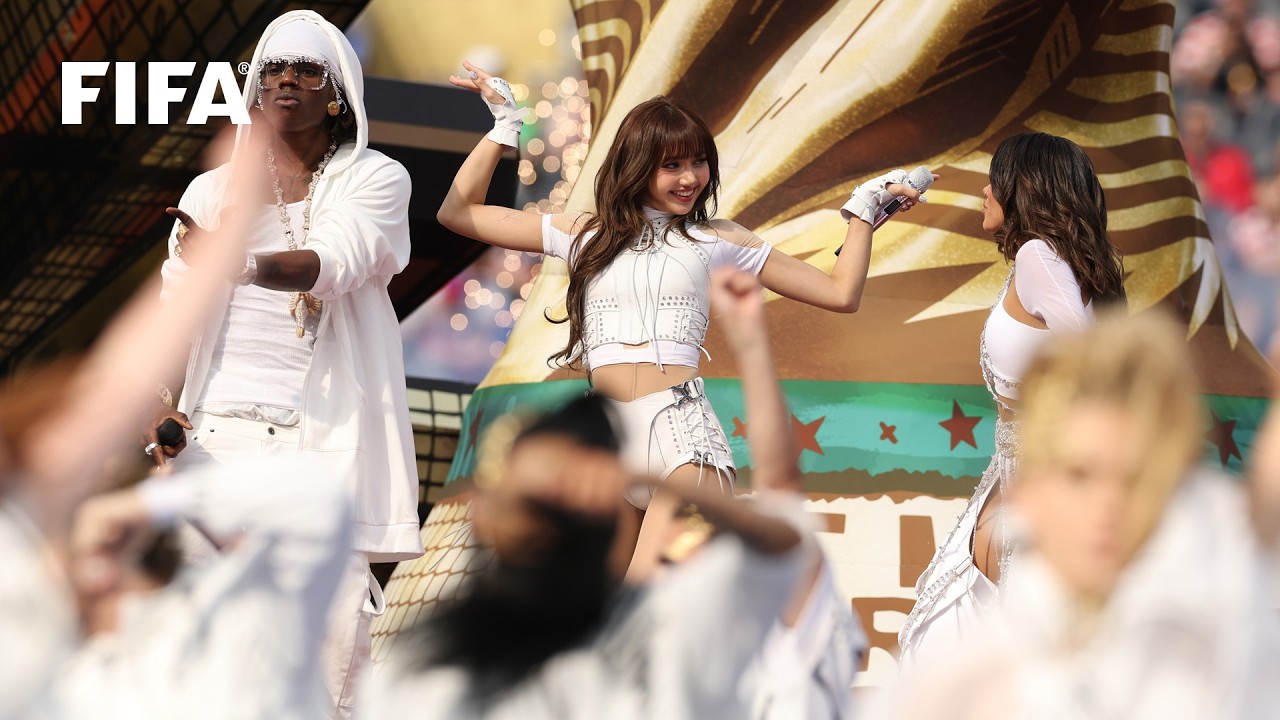
Lisa, making history as the first K-pop artist to grace a World Cup opening ceremony, shone in a sleek white studded crop top and shorts ensemble that blended futuristic minimalism with athletic edge. Her sharp choreography and commanding stage presence lit up the stadium, proving once again why she’s a global fashion and music force. Anitta, the Brazilian powerhouse, radiated sensuality and strength in coordinated whites with intricate detailing, while Rema brought charismatic energy in a hooded white look layered with chains and bold accessories.
The performance was a visual feast: synchronized dances, hand-holding moments of sisterly solidarity between Lisa and Anitta, and explosive group formations. “Goals” isn’t subtle—it’s an earworm of empowerment, with verses celebrating ambition, resilience, and joy. Live, it became an anthem for the entire tournament, resonating across languages and borders.
This connection highlights a larger trend: music as soft power in global events. From Shakira’s Latin anthems in Mexico City to these LA sets, the 2026 World Cup soundtrack is redefining how we experience sport—through rhythm, style, and shared emotion.
style
Beyond the music, the ceremony was a runway for sport-fashion crossovers. Tyla’s patriotic yet sexy styling nodded to American pageantry while honoring her roots. Future’s bedazzled jacket fused streetwear haute with stadium-ready shine. The dancers’ monochromatic white looks—flowing fabrics with structured accents—evoked both purity and power, reminiscent of high-fashion interpretations of athletic uniforms.
Expect this momentum to carry into the tournament: player kits reimagined by luxury houses, fan activations blending sneaker culture with national pride, and celebrity sightings that blur the lines between pitch-side glamour and Met Gala-level curation. Lisa’s presence alone guarantees elevated K-fashion conversations, while Anitta and Rema bring Latin and African diasporic influences into the mainstream dialogue.
more
The Los Angeles ceremony arrived at a pivotal moment. With the World Cup hosted across North America for the first time, it symbolizes unity amid complexity. Shows like these transcend entertainment—they foster dialogue, celebrate hybrid identities, and remind us of sport’s role in human connection.
Future’s hip-hop infusion brings authenticity from America’s urban cores. Tyla’s amapiano roots spotlight Africa’s rising cultural export. Lisa’s K-pop breakthrough shatters barriers in Western-dominated stages. Anitta and Rema complete the global mosaic. Together, they paint a portrait of a world where borders dissolve in the face of shared beats and dreams.
For the fashion and design community, this event offers rich inspiration: how heritage motifs translate to contemporary silhouettes, how performance wear evolves into everyday luxury, and how cultural storytelling informs branding.
look
As the 2026 FIFA World Cup kicks into high gear—with matches spanning 16 cities across three nations—the energy from LA’s opening will linger. “Game Time” and “Goals” are destined for heavy rotation in stadiums, playlists, and editorial spreads alike.
Fiat’s funky new models might appeal to fans navigating the tournament’s vast geography, but on this night, the real mobility was cultural—ideas, rhythms, and styles traveling freely across continents.
The World Cup has always been about more than goals scored. It’s about the stories told, the communities formed, and the futures declared. In Los Angeles, Future, Tyla, Lisa, Anitta, and Rema didn’t just perform—they set the tone for a tournament that promises to be as stylish, diverse, and electrifying as the city that hosted its American launch.
The beautiful game is back, louder and more vibrant than ever. Game on.
Related Articles
Rose Byrne and Mary Bronstein Are Doing It Again, and This Time They Brought Jenna Ortega
A coach and her prodigy are about to become the most dangerous relationship in a […]