Raised by the Pacific: Ethan Ewing and the Unpredictable Waves of Straddie

March 7, 2026
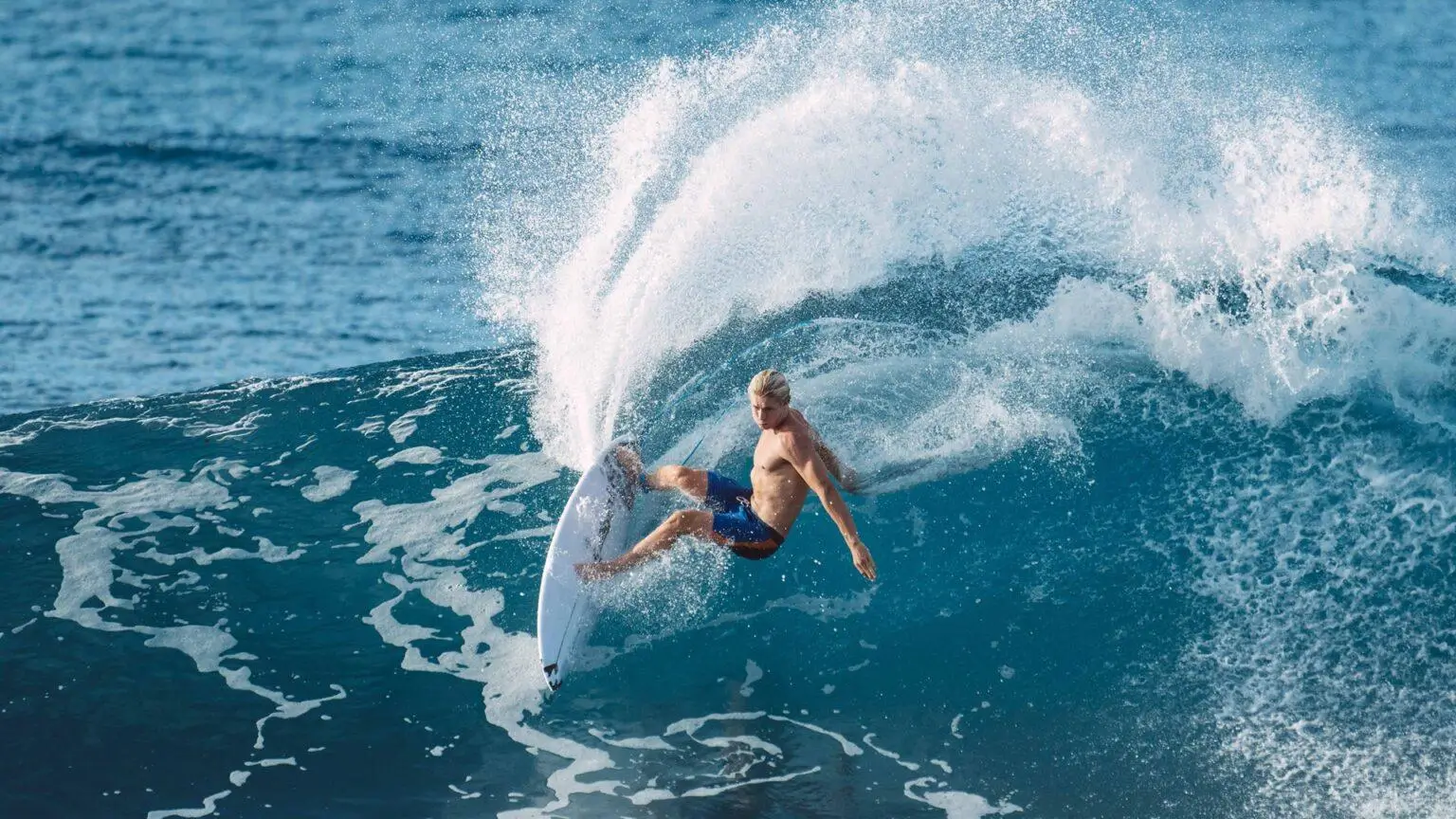
Some athletes inherit a love for their sport. For Australian surfer Ethan Ewing, it feels closer to inheritance than discovery. “It’s in our blood,” he once said, reflecting on the way surfing threaded through his childhood like a natural rhythm rather than a deliberate choice.
Some of his earliest memories take place not in a classroom or playground but on the shifting shoreline of North Stradbroke Island, known to the local Quandamooka People as Minjerribah. There, on the sand at Main Beach, young Ethan was pushed onto waves by his father, beginning a relationship with the ocean that would eventually carry him onto the global stage of the World Surf League.
The island is home to around 2,000 people. It is quiet, windswept, and isolated in ways that feel increasingly rare along Australia’s busy eastern coastline. Yet for surfers, it holds something priceless: constantly shifting sandbanks, rocky points, and the raw, unpredictable energy of the Pacific Ocean.
For a child learning to surf, it is both playground and proving ground.
grow
Minjerribah is not a place that produces surfers by accident. It shapes them.
The island sits just off the coast of Brisbane and is reached by ferry across Moreton Bay. Despite the relative proximity to the mainland, the island maintains a sense of separation from urban life. Long stretches of dunes roll into the ocean. The horizon appears uninterrupted. On many mornings, the only sounds are the wind and the waves.
Surfing culture here is quiet but deeply embedded. Generations of families have lived with the ocean as part of daily life. Children learn early to read the tides and winds. A good sandbank becomes a temporary treasure. A sudden shift in swell direction can transform an empty beach into a world-class wave overnight.
For young Ethan, this environment was both classroom and playground.
Main Beach stretches for more than 30 kilometers, offering endless opportunities to explore different wave shapes. Further north, rocky points create peeling rights when the conditions line up. Unlike predictable reef breaks or engineered surf parks, Straddie’s waves constantly evolve. The sand moves. Storms reshape the coastline. A perfect bank might last a week or disappear overnight.
Learning to surf here means learning adaptability.
That skill would later become one of Ewing’s defining strengths.
View this post on Instagram
flow
Surfing rarely begins with the individual. More often, it begins with family.
Ethan grew up surrounded by the culture of the sport. His father was deeply involved in surfing and introduced him to the ocean almost as soon as he could stand. The ritual of pushing a child into small waves—hands steady on the board, guiding the first ride—forms a familiar scene across Australian beaches.
But on Stradbroke Island the experience carried extra significance. The waves were not always gentle. The ocean could turn quickly. Rip currents, sudden swells, and shifting sandbars demanded awareness.
Learning here meant respecting the sea.
From those early sessions, Ethan developed a natural feel for wave movement. Rather than forcing maneuvers, he learned to flow with the rhythm of the ocean. The result would later become one of the most recognizable surfing styles on the professional circuit.
Observers often describe Ewing’s surfing as smooth, precise, and deeply connected to the wave itself. It is a style that echoes earlier eras of surfing while remaining perfectly suited to modern high-performance competition.
style
In professional surfing, style matters.
The sport is scored partly on technical difficulty but equally on fluidity, commitment, and creativity. A surfer’s approach to a wave can be as distinctive as a musician’s voice.
Ewing’s style has often been compared to some of Australia’s most admired surfers of previous generations. There is a classical elegance to his turns: deep rail carves, perfectly timed cutbacks, and a remarkable sense of balance.
Instead of attacking the wave in frantic bursts, he draws long, powerful lines across its face.
This approach reflects the environment where he learned to surf. The shifting sandbanks of Stradbroke reward patience and timing. Surfers must wait for the wave to reveal its shape before committing to a maneuver.
It is surfing as conversation rather than confrontation.
And for Ethan, that conversation began long before competitions entered the picture.
stir
The transition from local talent to international competitor rarely happens overnight.
For many young surfers, regional contests serve as the first stage. Beach events across Queensland allowed Ewing to test his abilities against other rising surfers. Gradually, results began to accumulate.
The surf world started paying attention.
Junior competitions revealed that his style translated well into the scoring systems used in professional events. Judges rewarded the control and power in his turns. Sponsors began to notice.
Eventually, he qualified for the elite tier of professional surfing, the Championship Tour run by the World Surf League. The tour carries surfers across the globe, from Indonesian reefs to Hawaiian winter swells.
For someone raised on a small island, the change in scale can be dramatic.
Yet many observers noted that Ewing appeared comfortable in almost any environment.
life
One of the unique aspects of surfing is the way athletes remain tied to their home breaks even after reaching international success.
Professional surfers travel constantly. They compete across continents and oceans. Yet most still speak about their local beach with an almost spiritual reverence.
For Ewing, that place is Minjerribah.
Returning to the island between competitions offers a reset. Away from the noise of global surf culture, the environment remains simple: waves, wind, and the slow rhythm of island life.
This connection to home is more than nostalgia.
Surfing is deeply influenced by place. The waves that shape a surfer’s early years leave a permanent imprint on their approach to the ocean.
Ewing’s calm confidence in large, unpredictable surf reflects the environment that formed him.
culture
Australia holds a special position in the history of modern surfing.
From the explosive rise of professional surfing in the late twentieth century to the dominance of Australian surfers on global tours, the country has produced some of the sport’s most influential figures.
The long coastline offers a staggering variety of waves: reef breaks, beach breaks, point breaks, and everything in between. The culture surrounding these waves blends competition with a relaxed coastal lifestyle.
For young surfers growing up here, role models appear almost everywhere.
Local heroes surf alongside beginners. Surf shops double as community hubs. Early morning sessions before school are part of everyday life.
Ewing grew up within this environment, absorbing the traditions of Australian surfing while gradually adding his own interpretation.
idea
One of the defining lessons of surfing is patience.
Unlike many sports, surfers cannot control the playing field. Waves arrive when they choose. Wind and tide shift the conditions constantly.
Learning to read the ocean requires time.
For a child growing up on Stradbroke Island, those lessons unfold naturally. Long days at the beach teach the rhythms of swell direction and tide movement. Surfers learn to anticipate when the waves will improve.
This patience shapes both technique and mentality.
In competition, it allows surfers to remain calm even when conditions become chaotic. Instead of chasing every wave, they wait for the right moment.
Ewing’s performances often reflect this mindset. His best rides emerge from careful wave selection and precise timing.
aware
The Pacific Ocean that wraps around Australia’s eastern coastline is both generous and unpredictable.
Storm systems thousands of kilometers away can send powerful swells toward Queensland. On some days the waves arrive clean and organized. On others they crash chaotically against the shore.
For surfers, this unpredictability is part of the allure.
It creates a constant sense of possibility.
On Stradbroke Island, these swells interact with shifting sandbanks and rocky outcrops, producing waves that can change character within hours. A small beach break might suddenly form perfect peeling walls. A previously empty stretch of coast might become the best wave on the island.
Growing up in such conditions forces surfers to stay alert.
Every session becomes an opportunity to discover something new.
emotive
While competitive surfing provides global recognition, the deeper culture of the sport extends far beyond contests.
Surfing carries elements of travel, art, environmental awareness, and personal exploration. Many surfers speak about the ocean in emotional or even spiritual terms.
For Ewing, this perspective remains visible despite his professional success.
The smooth flow of his surfing suggests a relationship with waves that predates competition. It reflects years spent simply enjoying the ocean rather than chasing scores.
That authenticity resonates with fans.
In a sport sometimes criticized for becoming overly technical, surfers who maintain a sense of artistry often stand out.
fwd
Ethan Ewing’s career continues to evolve.
As the professional surfing landscape grows more competitive each year, athletes must constantly refine their skills. New generations arrive with fresh techniques and fearless approaches to heavy waves.
Yet Ewing’s strength lies in a style that feels timeless.
Rather than chasing trends, he continues to build on the foundation formed during those early sessions at Main Beach on North Stradbroke Island.
The island remains there, unchanged in its essential character: windswept dunes, shifting sandbanks, and the relentless pulse of the Pacific.
It is the place where a young surfer first felt the push of a wave beneath his board.
And in many ways, it is still the place that defines him.
fin
Looking back at the beginnings of great athletes often reveals something surprisingly simple.
For Ethan Ewing, the story does not begin with trophies or sponsorships. It begins with a child on a surfboard, a parent’s steady push, and the first glide across a small wave.
The setting—Minjerribah’s Main Beach—might seem remote to much of the world. Yet it contains all the essential ingredients of surfing’s enduring appeal.
An open horizon.
A powerful ocean.
And a young surfer discovering that the waves beneath his feet might shape the rest of his life.
That is where the journey started.
And in many ways, it is where it still lives.
Related Articles

Ducks of a Feather Trades Eugene for the World Cup With Its Nike Total 90 “Beautiful Game”
Division Street’s collegiate shoe imprint steps outside Oregon for a 300 pair Total 90 built […]