DRIFT AUDIO
Listen to this story
Choose a voice, then press play.
Montreal’s genre-film institution closes out its anniversary lineup with Refn’s hallucinatory comeback as opening film, a Freaks sequel to close, and a career tribute to Takashi Shimizu in between
In This Story
- Thirty Years, One Massive Final Wave
- Her Private Hell: Refn’s Return From the Fog
- A Career Honored, Mid-Comeback
- Takashi Shimizu Gets His Due
- Freaks Part II and the Rest of the Anniversary Slate
- Getting to Montreal
Fantasia International Film Festival has unveiled the final and largest wave of programming for its 30th edition, confirming a slate that now runs past 125 features and 200 shorts across three weeks in Montreal, from July 16 through August 2, 2026. The festival’s official announcement, shared alongside the full lineup, sets the tone for the anniversary: Fantasia’s opening slot goes to Nicolas Winding Refn’s Her Private Hell, and the closing slot to Zach Lipovsky and Adam Stein’s Freaks Part II, bookending a program that also folds in a full career tribute to Japanese horror director Takashi Shimizu, a slate of 4K restorations under the Fantasia Retro banner, and a run of honorary awards tied to the festival’s three-decade history.
The scale of this final wave is itself notable. As IndieWire’s exclusive unveiling of the complete lineup notes, it feels fitting that a genre-cinema outlet founded the same year as the festival would be the one to break the news — both institutions turning 30 in 2026, and both built around the same appetite for programming that sits outside the mainstream festival circuit’s usual comfort zone. Ticket pre-sales for the full slate open July 3 at 10:00 a.m., with the festival presented by MELS in collaboration with Concordia University and backing from Telefilm Canada, SODEC, and the city of Montreal.
View this post on Instagram
stir
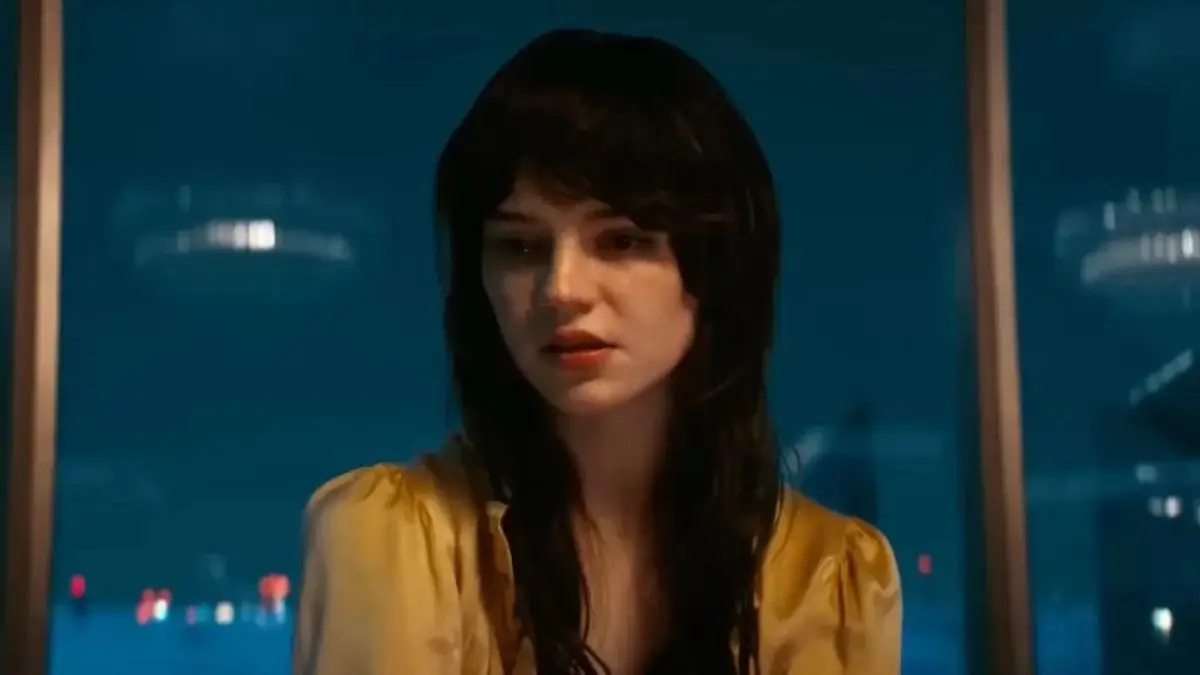
The marquee title of the anniversary edition is Her Private Hell, Nicolas Winding Refn’s first feature film since 2016’s The Neon Demon, following a stretch spent largely in television with Amazon’s Too Old to Die Young and Netflix’s Copenhagen Cowboy. Fantasia’s own program notes describe it as an audacious return to feature filmmaking — a gorgeous, mysterious act of cinema that surfaces through spectral mist like dream transcriptions from the beyond, drawing on Bava, Suzuki, Argento, and Vadim by way of Hans Christian Andersen, and steeped in saturated color and surrealist wit. The film is set in a fog-bound, futuristic city whose architecture curves and glows like pathways into the subconscious, and stars Sophie Thatcher (Yellowjackets, Companion), Charles Melton (May December, Riverdale), Havana Rose Liu (Lurker, Bottoms), Kristine Froseth (Sharp Stick, The Buccaneers), and Dougray Scott (My Oxford Year, Mission: Impossible 2).
Fantasia’s description frames the film as a hallucinatory fairy-tale death trip, inspired in part by Refn’s own harrowing experience with death and resurrection — language that positions Her Private Hell as a deeply personal project rather than a straightforward return to genre form. The film had already made its way through Cannes as an official selection earlier this year before landing at Fantasia for its Canadian premiere, with Neon handling distribution. That path — Cannes selection followed by a genre-festival premiere in North America — is an unusual one for a director whose work has historically split the difference between arthouse festival programming and midnight-movie cult status, and it underlines how thoroughly Refn’s career has always resisted a clean categorization as either.
The cast assembled around the project is itself a signal of how the film is being positioned commercially. Sophie Thatcher and Charles Melton both arrive with recent breakout attention — Thatcher from the horror-adjacent ensemble work of Yellowjackets and the tightly wound two-hander Companion, Melton from the awards-season visibility of May December— while Havana Rose Liu and Kristine Froseth bring their own strand of festival-circuit credibility from Lurker and Bottoms on one side and Sharp Stick on the other. Dougray Scott, the most established name in the ensemble by conventional Hollywood metrics, rounds the cast out with a career that spans studio franchise work and prestige television alike. Assembling a cast this legible to mainstream audiences around a film this formally uncompromising suggests Neon is treating Her Private Hell as a genuine crossover bet rather than a specialty release aimed purely at Refn’s existing cult following — a strategy that mirrors how the distributor has handled other high-concept genre auteur work in recent years.
That framing also matters for how the film is likely to travel beyond Fantasia. A Cannes premiere followed by a genre-festival Canadian premiere, rather than a straight theatrical rollout, suggests Neon is building festival momentum deliberately before any wider release — a strategy that worked well for the distributor’s prior awards-adjacent genre plays, and one that positions Fantasia’s Montreal audience as an early tastemaking checkpoint rather than a secondary market.
flow
Alongside the film itself, Fantasia is presenting Refn with its 2026 Cheval Noir Career Achievement Award in the festival’s opening minutes, along with a dedicated masterclass. The timing — honoring a thirty-year career in the same breath as premiering a genuinely new film — gives the tribute a different shape than a typical lifetime-achievement moment; it reads less like a retrospective coda and more like a mid-comeback victory lap. Refn’s filmography traces back to 1996’s Pusher, the Copenhagen-set crime drama that simultaneously launched his own career and those of Mads Mikkelsen and Zlatko Burić, and continues through Bleeder (1999), Fear X (2003), the Pusher sequels (2004, 2005), Bronson (2008), Valhalla Rising (2009), Drive (2011), Only God Forgives (2013), and The Neon Demon (2016) — a run that established him as one of the defining stylists of 21st-century genre cinema, before his pivot to episodic television in the late 2010s.
You either have it or you don’t.
Sophie Thatcher, Charles Melton, Kristine Froseth, Havana Rose Liu and Diego Calva star in HER PRIVATE HELL by NWR. Experience it only in theaters July 24. pic.twitter.com/mZsIIniht5
— NEON (@neonrated) June 30, 2026
Off-set, Refn has spent much of that same period championing filmmakers he admires, organizing restorations, and curating retrospectives of neglected genre work — including a coffee-table book on exploitation poster art and byNWR.com, a streaming platform he runs as a living archive of restorations he and his team have initiated. Fantasia’s framing of the award leans directly into that dual role, positioning Refn as both a working artist and a self-appointed preservationist for the kind of genre cinema the festival itself has spent thirty years championing.
It’s a role that maps unusually well onto Fantasia’s own institutional identity. The festival built its reputation over three decades by championing filmmakers largely ignored by more traditional festival circuits — a mission that runs directly parallel to Refn’s own curatorial project. Pairing the Cheval Noir award with a masterclass rather than a purely ceremonial presentation gives the honor practical weight: attendees get direct access to the thinking behind a career that has moved from scrappy Copenhagen crime cinema to Hollywood studio work and back out again into deeply personal, self-financed filmmaking, often within the same handful of years.
due
The other major career honoree in this final wave is Takashi Shimizu, the director behind the Ju-on franchise, whose relationship with Fantasia stretches back decades. Born in Japan’s Gunma Prefecture in 1972, Shimizu built his reputation with the direct-to-video Ju-on saga before expanding into features including Marebito (2004), Reincarnation (2005), and Sana (2023), alongside genre detours like the live-action Kiki’s Delivery Service (2014) and the sci-fi thriller Humunculus(2021). Fantasia’s tribute includes the world premiere of his new film Village of Eight Gravestones and the North American premiere of The Mouths, giving the honor real programming weight rather than a purely ceremonial gesture.
Shimizu’s presence at the festival also carries a mentorship dimension the program notes make a point of highlighting: as an executive producer, he has helped launch the careers of younger genre filmmakers including Yuta Shimotsu, whose New Group screened at Fantasia in 2025, and Eriko Katagiri, whose When You Open the Door is part of this year’s lineup. That throughline — an honoree whose own catalog is being celebrated in the same program as work by directors he helped bring up — mirrors the structure of the Refn tribute and speaks to how deliberately Fantasia has built its 30th-anniversary honors around continuity rather than nostalgia alone.
The pairing of Shimizu’s honor with two new premieres rather than a single retrospective screening is also a departure from how career tributes typically function at genre festivals, where an honoree’s earlier work often does the heavy lifting while a token new project rounds things out. Giving Shimizu both a world premiere and a North American premiere in the same edition treats him less as a legacy figure being celebrated for past achievement and more as an active filmmaker whose current output remains central to the festival’s programming — a distinction Fantasia’s notes make explicit by stressing that he “remains a prolific and pertinent director” rather than simply a formative one.
also
Closing the festival is Freaks Part II, the sequel from directors Zach Lipovsky and Adam Stein, receiving its world premiere on the festival’s final night. The choice to close a 30th-anniversary edition with a sequel to a prior Fantasia-adjacent property, rather than another auteur showcase, is its own kind of statement — a nod to the festival’s history of championing genre franchises that built cult followings through festival play rather than conventional theatrical marketing, and a reminder that Fantasia’s identity has always been as much about audience-driven cult favorites as director-driven art cinema.
Between the Refn opener and the Lipovsky/Stein closer, the final wave adds a dense run of additional titles spanning animation, action, and international genre cinema — among them the Kazakh drama Sicko, following a North American premiere after its Rotterdam Film Festival debut; the adult-animation feature Jim Queen, from Bobbypills, the studio behind Europe’s genre-adjacent animation scene; and Bowels of Hell, a Brazilian body-horror comedy produced by Rodrigo Teixeira, the Oscar-nominated producer behind The Witch and Call Me by Your Name. The sheer geographic range packed into this single wave — Kazakhstan, France, Brazil, alongside the North American and Japanese titles anchoring the marquee slots — underscores how far Fantasia’s programming has expanded beyond its original East Asian and North American genre-cinema focus over three decades, without losing the specificity that made its early editions distinctive.
The 30th-anniversary programming also extends into Fantasia Retro, which adds nine restorations and special screenings this year, including a new 4K restoration of Takashi Miike’s Gozu (2003) — the film that helped cement Miike’s Western reputation following Fantasia’s 1997 North American premiere of his earlier Fudoh — alongside a restored presentation of the Filipino animated feature Hayop Ka! (2021), rescued from relative obscurity by the preservationists at Deaf Crocodile after a pandemic-disrupted original release. That restoration work sits alongside eight further Retro titles, including City War, Le Confessional, The Delinquent, Full Blast, Hong Kong Godfather, Les Loups, Possible Worlds, and Thrilling Bloody Sword — a slate that reads less like a nostalgia sidebar and more like an active preservation project running in parallel with the festival’s premiere programming.
Additional honorees rounding out the anniversary slate include animator Don Hertzfeldt, receiving the festival’s Indie Maverick Award, and Robert Lepage and Louise Portal, both recipients of the Denis-Héroux Award, alongside a separate Canadian Trailblazer Award. Many of the anniversary events are free to the public, and Fantasia has confirmed the 30th-edition celebrations will continue past the festival itself with a five-week retrospective screening series — extending the anniversary well beyond the three weeks of the festival proper and into the late summer and early fall.
hint
Fantasia’s 30th edition runs July 16 through August 2, 2026, in Montreal, with the complete lineup — including previously announced first- and second-wave titles, shorts programming, and details on artist talks and special exhibitions — now live on the festival’s official site. Ticket pre-sales open July 3 at 10:00 a.m., ahead of general sales closer to the festival’s opening night. For a program built this heavily around scale — three weeks, three-figure feature counts, and a full slate of career-spanning tributes — the throughline running from Refn’s opening-night comeback to Shimizu’s mentorship-driven honor to the Lipovsky/Stein closer is less about any single marquee title and more about a festival using its anniversary to make an argument for its own institutional memory: that thirty years in, Fantasia’s relationships with the filmmakers it champions are still generating new work, not just retrospectives of old work.
For more from the filmmaker, read Drift’s report on Nicolas Winding Refn’s Maniac Cop revival.
Related Articles
Under Rue de Castiglione, Liaigre Gives Hôtel Costes a Spa With No Hard Corners
A 20-meter lap pool, eight treatment rooms and not one sharp angle: Studio Liaigre’s spa […]