DRIFT AUDIO
Listen to this story
Choose a voice, then press play.
From a historical perspective, pennants partly inherit the tradition of banners, which already existed in Roman times and later throughout medieval Europe. During great military campaigns, imperial armies marched across conquered territories raising standards mounted on horizontal crossbars attached to poles. Their function was one of mutual recognition among different military units as well as distinction from enemy forces. Similarly, they were used by the armies of an ancient Chinese dynasty, believed by many to have invented the modern flag, while others trace the practice back to Egyptian and Indian civilisations. Returning to Europe, during the Middle Ages this tradition expanded further, with banners displayed in varying sizes and for different occasions, such as celebrating the greatness of a kingdom or feudal estate during ceremonies, or demarcating territory. Advancing through the centuries — from banners used by guilds and universities to evangelical missions and naval contexts — we arrive at the second half of the nineteenth century, when football was born in England. Thus, the modern pennant came into existence.
View this post on Instagram
Pennants, often triangular in shape and derived from nautical signaling flags, evolved into symbols of identity and allegiance. In naval contexts, they fluttered from masts to indicate rank or affiliation. Heraldic banners in medieval tournaments and battles carried coats of arms that proclaimed lineage and valor. These objects were not mere decorations; they were talismans of identity in chaotic environments. When football emerged from the public schools and universities of Victorian Britain, it absorbed many of these aristocratic and military traditions. The sport’s early codification under the Football Association in 1863 coincided with a broader cultural fascination with ritual, fair play, and gentlemanly conduct.
By the late 19th century, football clubs adopted crests, tincture, and eventually pennants as visual extensions of their identity. What began as practical identifiers on the pitch—helping spectators and players distinguish teams in an era before standardized kits—quickly took on deeper meaning. The pennant became a portable emblem of club history, much like a battle standard.
how
Founded by the affluent upper classes of Britain, football immediately established its own rules and rituals. It is likely because of the social background of its pioneers that the elegant custom of exchanging pennants between opposing teams emerged. Here the banner changed its meaning, becoming part of the etiquette of sport. The exchange became a prior sign of respect towards the opponent, as well as a symbol of friendship. In Italy too, the practice appears to have been adopted from the very first matches at the end of the nineteenth century. Although it is unclear whether these took the form of pennants or other standards, a newspaper confirmed the presence of banners during what is considered the first football match played in Italy, held on 6 January 1898 between Genoa and a representative side from Turin.
This ritual spread rapidly across Europe and beyond as the game globalized. In the early 20th century, international tours by British clubs helped export not just tactics but also customs. Exhibition matches between touring sides and local teams often featured elaborate gift exchanges, reinforcing bonds between nations and clubs. By the interwar period, the pre-match pennant swap was a fixture in domestic and international fixtures alike. It echoed diplomatic protocols: a handshake and token of goodwill before competition commenced.
In South America, where football ignited with particular passion, pennants took on vibrant, screen-printed forms that reflected cultural exuberance. European versions favored embroidered borders and fringes, emphasizing craftsmanship. The exchange was not merely ceremonial; it created tangible links. Pennants from famous encounters adorned club museums, player homes, and fan collections, preserving memories of rivalry and respect.
Famous examples abound. In 1965, England captain Bobby Moore exchanged pennants with Italy’s side at Wembley. Cesare Maldini swapped with Benfica’s Mário Coluna before European Cup ties. Johan Cruyff and Emlyn Hughes did so in Liverpool-Barcelona clashes. These moments, captured in grainy photographs, humanize the captains as representatives of something larger than themselves. The pennant acts as a bridge: club to club, nation to nation.
Вижте тази публикация в Instagram.
standard
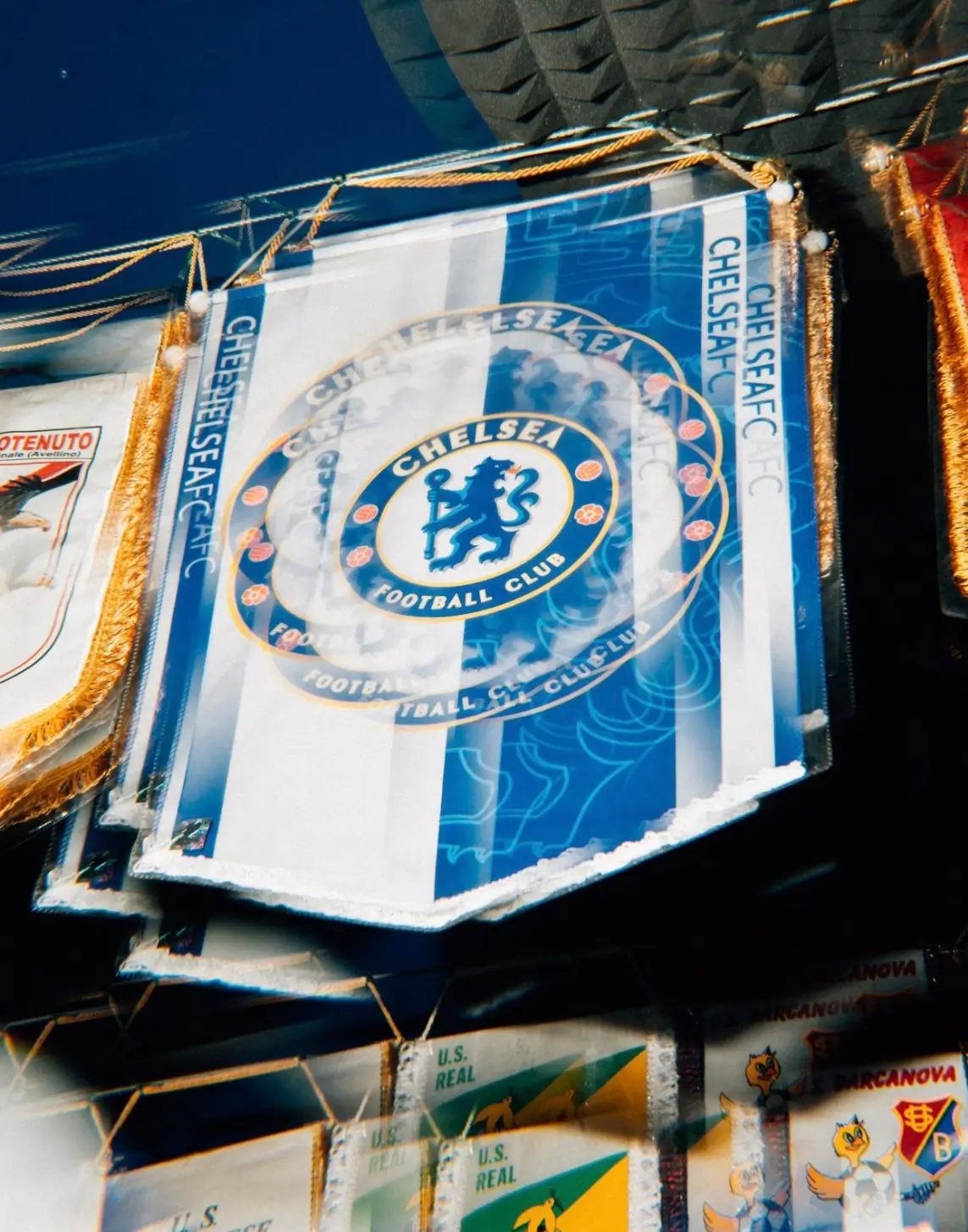
Early pennants were bespoke masterpieces. Until the late 1960s, clubs commissioned unique pieces for significant matches, using high-quality fabrics, hand-embroidery, golden fringes, hanging cords, and wooden rods. Artisans tailored each one, incorporating crests, dates, opponent names, and sometimes player autographs. Materials ranged from wool felt to silk, with designs stitched rather than printed.
The 1970s brought industrialization. Mass production via screen-printing and synthetic fabrics standardized designs for cost efficiency. While this democratized access, it diluted uniqueness. Pennants became souvenirs as much as ritual objects. In the U.S., felt pennants boomed with collegiate and professional sports, influencing global aesthetics. Yet in football’s heartlands, the pre-match exchange retained prestige.
Designs vary by region. European pennants are often triangular or shield-shaped with borders. South American ones burst with color and narrative elements. Modern innovations include Palestino’s Gaza rubble-embedded pennants — a powerful political statement — or Virtus Entella’s resin sculptures replacing fabric. Uruguay’s metal Nike pennant for a 2020s friendly pushed boundaries further, blending tradition with contemporary art.
Craftsmanship remains key for collectors. Embroidery conveys prestige; fringes add elegance. A well-made pennant feels substantial — textile history in hand.
myth
Pennants carry folklore. Argentina’s Club Atlético Independiente allegedly sent one to the Moon via Apollo 11 astronauts, whom they made honorary members. Neil Armstrong reportedly confirmed it. Whether myth or fact, it underscores the object’s talismanic power.
In 2017 FA Cup action, Sutton United’s captain offered a pennant; Theo Walcott arrived empty-handed, sparking etiquette debates. New Caledonia’s dreamcatcher-like gift to Jamaica caused momentary suspicion. These anecdotes reveal the ritual’s emotional weight: gestures of respect can affirm or undermine sportsmanship.
In club museums, pennants form archives of glory and defeat. They document tours, derbies, and European nights. For fans, they evoke nostalgia—faded felt whispering of packed terraces and legendary players.
The ritual promotes reciprocity, a core anthropological principle. Gift exchange builds alliances, diffuses tension, and humanizes opponents. In an era of intense commercialization and tribal fandom, it reminds us football connects as much as it divides.
shh
Today’s game prioritizes speed and spectacle. Pennant exchanges persist mainly in Champions League ties, internationals, or derbies. Many leagues omit them for routine fixtures to streamline protocols. Clubs cite costs, especially in friendlies with customized items. The COVID-19 pandemic halted even high-profile swaps temporarily.
Standardization and mass production reduced perceived value. With kits, scarves, and memorabilia flooding markets, the pennant risks becoming quaint. Shirt-swapping at full-time has partially supplanted it as a post-match honor.
Yet decline is not inevitable. Clubs like Palestino and Virtus Entella innovate, proving the format’s adaptability.
rare
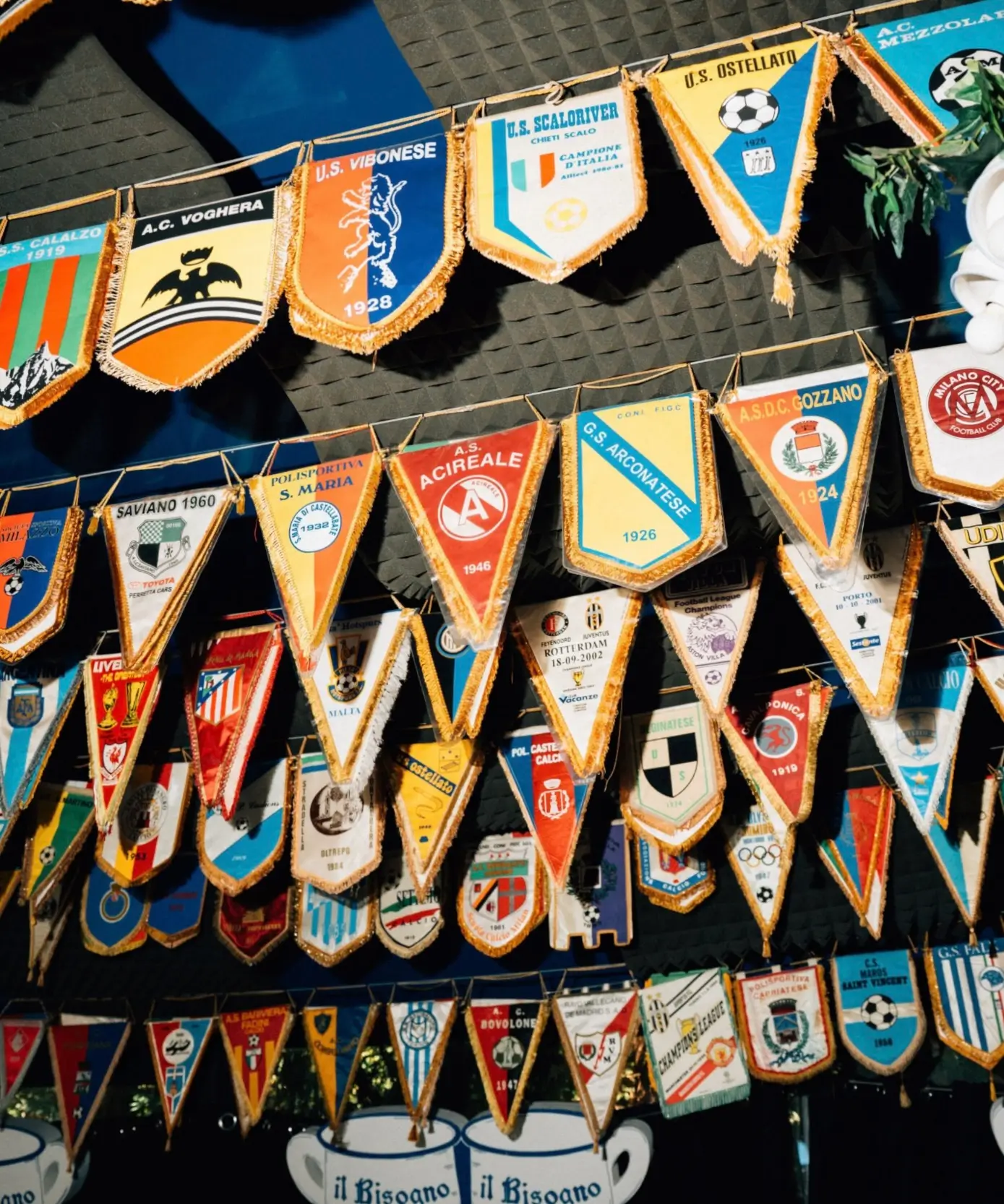
Pennants inspire dedicated collectors. Italy’s Marco Cianfanelli curates over 11,500 in the Pennants Museum digital archive. Pino Palese holds around 20,000, displayed in his restaurant and stored carefully. Collectors trade via networks, rescue items from bins, and value rarity over monetary worth.
Vintage pieces from the early 20th century command interest. Unique designs or those from historic matches appreciate. Collecting fosters community, preserving football’s material culture against digital ephemerality.
show
A revival could enrich the sport. Clubs might commission artists for limited-edition pennants, blending heritage with modern design. Sustainable materials, digital storytelling through QR codes linking to match histories, or fan-voted elements could engage supporters.
In youth academies, teaching the ritual instills respect. Internationals could feature culturally significant designs. Museums and exhibitions would elevate pennants as art. Brands like Nike have experimented; broader adoption could follow.
Economically, premium collectibles generate revenue while enhancing brand lore. Aesthetically, they counter football’s homogenization. In an age craving authenticity amid VAR debates and super-leagues, tangible symbols of tradition matter.
archive
The football pennant endures as a modest yet profound artifact. From Roman standards to Victorian pitches, it embodies identity, respect, and shared history. Its exchange — brief, ceremonial — encapsulates sport’s dual nature: competition tempered by camaraderie.
As the beautiful game navigates commercialization and globalization, reviving this custom offers balance. Not every match needs fanfare, but key fixtures deserve the weight of symbolism. By investing in craftsmanship, innovation, and education, football can ensure pennants remain not relics but living threads in its rich tapestry.
Future captains will continue shaking hands, exchanging these textile heirs, and stepping onto the pitch with mutual regard. In their folds lie stories of glory, rivalry, and friendship — indelible marks on the sport’s soul. A renaissance is not nostalgia; it is progress rooted in memory.
Related Articles

Under Rue de Castiglione, Liaigre Gives Hôtel Costes a Spa With No Hard Corners
A 20-meter lap pool, eight treatment rooms and not one sharp angle: Studio Liaigre’s spa […]