DRIFT AUDIO
Listen to this story
Choose a voice, then press play.
Porsche opened its archive to a workshop in Bicester. What came back is a two-seat, battery-powered 550 Spyder at 80 percent scale, capped at 250 cars.
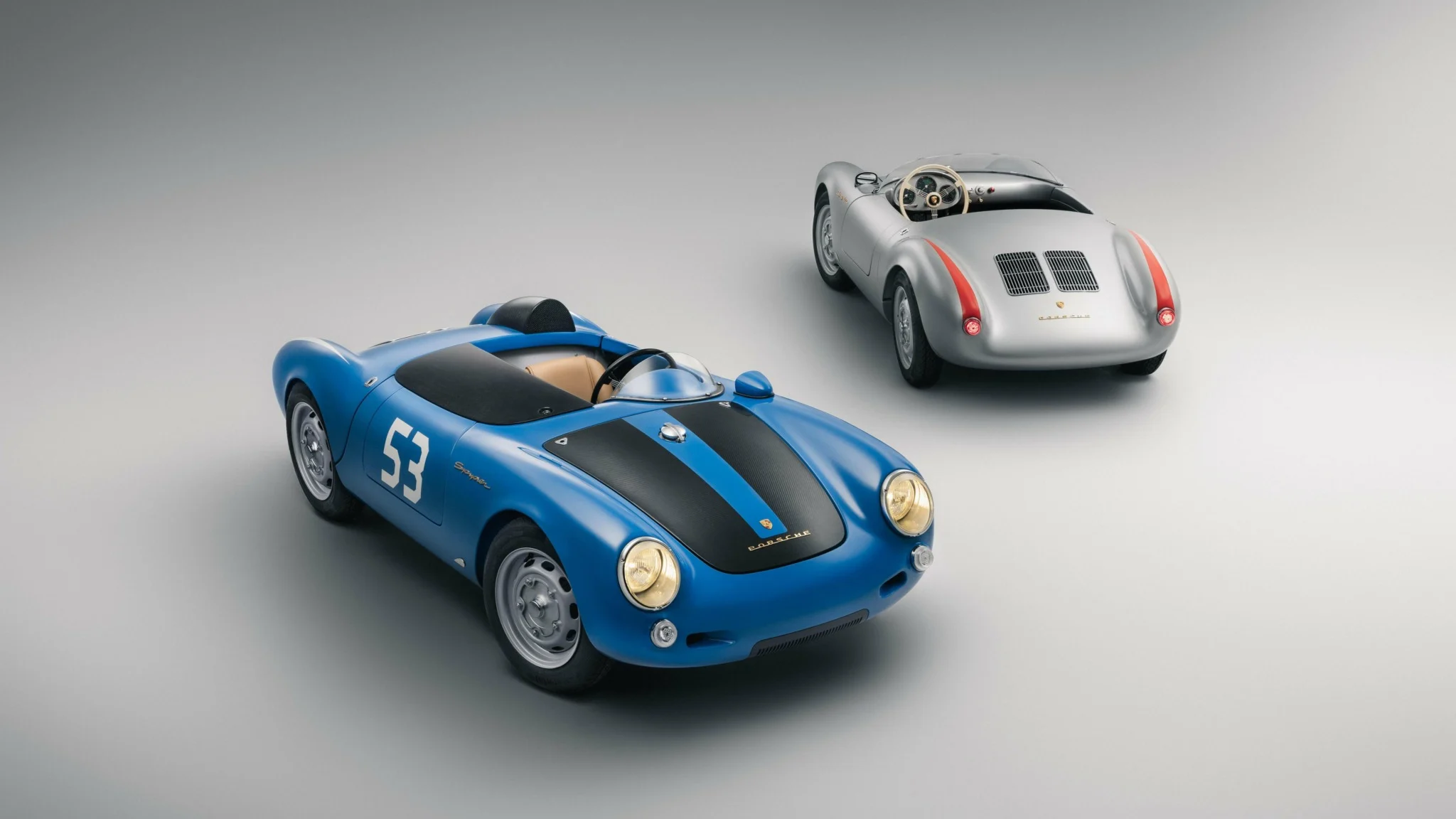
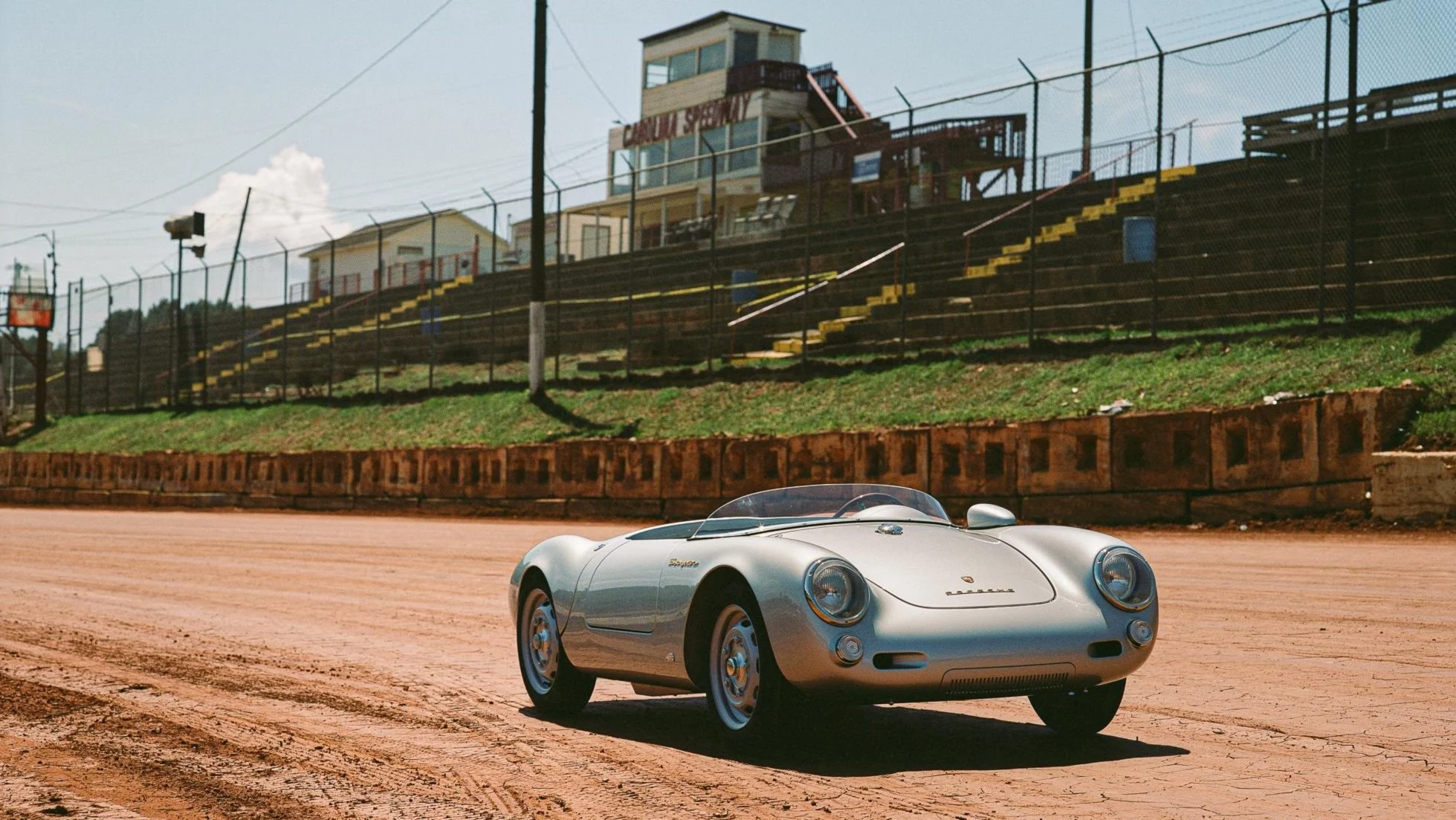
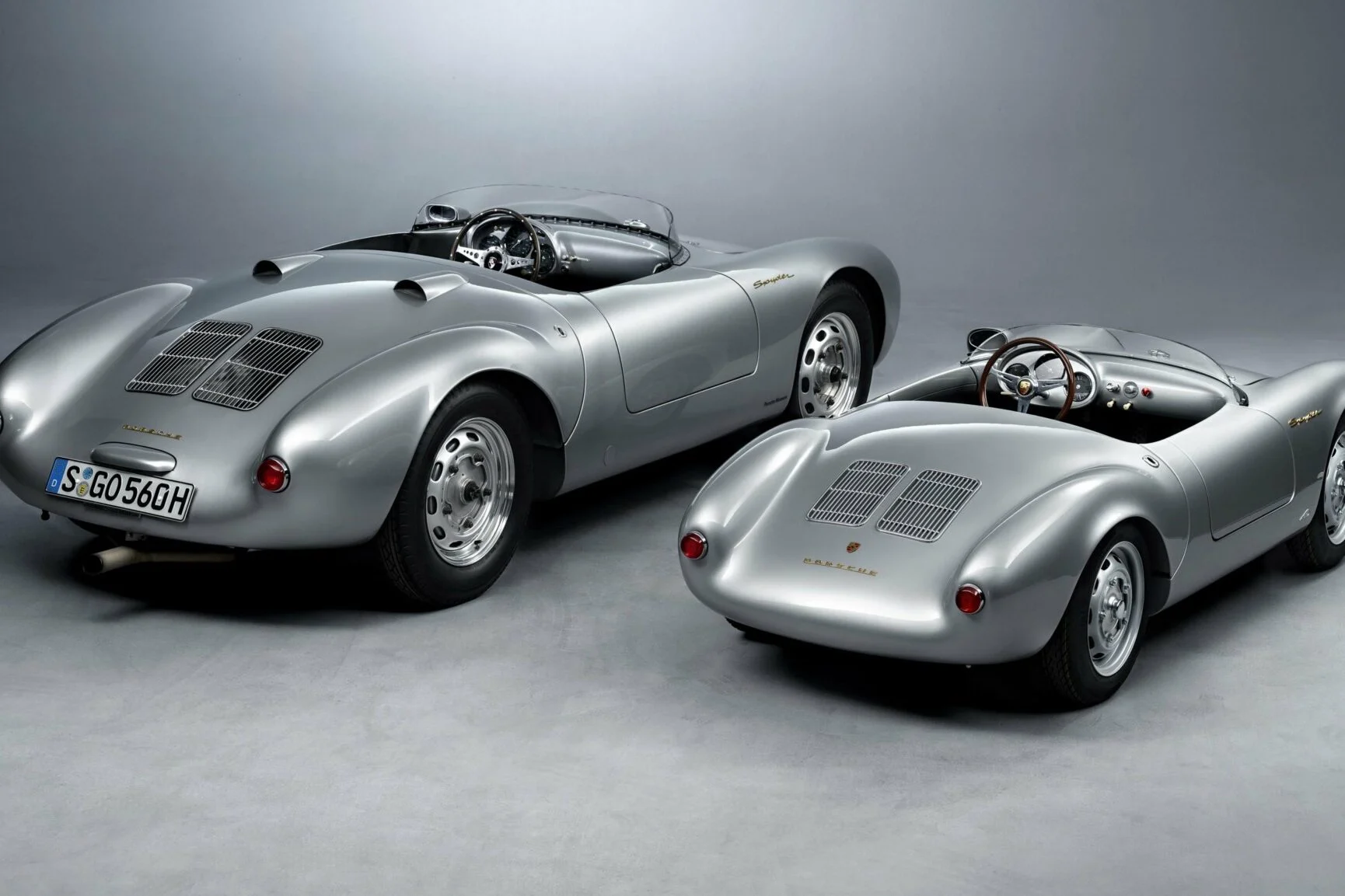
Park it beside an original and the trick only works for a second. The new Porsche 550 J has the same low scuttle, the same rounded tail and the same tight silver skin as the 1950s car next to it, and in a photo with no people for scale it could pass for the real thing seen from a little farther away. Then someone stands beside it. At 2.9 metres long and 1.2 metres wide, this is a racing Porsche reduced by a fifth in every direction, and there is no engine under that carbon fibre body at all.
View this post on Instagram
Porsche unveiled the car on September 15, 2026, as part of a year spent marking 75 years of its motorsport history. It was built by Hedley Studios, the company in Bicester, England, previously known as The Little Car Company, which makes licensed, scaled down electric versions of famous cars for collectors. The J stands for Junior.
Signal. What happened: Porsche and Hedley Studios revealed the Porsche 550 J, an officially licensed, 80 percent scale electric reinterpretation of the 550 Spyder, the first Porsche developed specifically for racing. Exact object: Porsche 550 J by Hedley Studios, a two-seater with a steel spaceframe chassis, a carbon fibre body and a 48-volt electric drivetrain making about 8 kW (11 hp) as standard or 16 kW (21 hp) with the optional RS Pack, priced from £69,500 before tax and limited to 250 examples. When and where: Announced September 15, 2026, and available to order now through Hedley Studios, with every car handbuilt in Bicester, UK, and first deliveries reported for spring 2027. Source: The Porsche Newsroom launch release and Porsche’s own interview with founder Ben Hedley. Why it matters: It is Hedley Studios’ first car for Porsche, it turns the brand’s anniversary year from museum exhibits into something people can actually drive, and it arrives only months after the company went through administration.
stir
Porsche counts its racing history from 1951, when a lightweight 356 SL won its class at Le Mans, just three years after the first 356 appeared. Two years later the factory had something built for competition from the ground up. The 550 Spyderwon the Eifel race at the Nürburgring in May 1953, the first race it entered, and coupe versions with removable hardtops took a class win at Le Mans that same year before the open car was shown to the public at the Paris Auto Show.
The formula was weight rather than displacement. Ernst Fuhrmann’s 1.5-litre air-cooled flat four, with four overhead camshafts, sat ahead of the rear axle in a body built as low as Porsche could make it, and the 550 spent its career beating rivals with far larger engines. Ben Hedley, quoted in the launch release, describes the original as a car “capable of competing with and beating the best in the world,” and that underdog record is the part of the story his company set out to reproduce.
The race Porsche keeps returning to is the 1954 Carrera Panamericana. Factory drivers Hans Herrmann and Jaroslav Juhan ran two 550s across the event’s 3,077 kilometres of Mexican road, fought each other for five days and finished third and fourth overall, with Herrmann ahead by 36 seconds and the class win theirs. That result is where the Carrera name on later Porsches comes from.
Around 90 were built between 1953 and 1956, counting prototypes and customer cars. The 550A of 1956 switched to a lighter, stiffer tubular spaceframe and went on to give Porsche its first overall win in a major sports car race, the Targa Florio in Sicily, with Umberto Maglioli driving. The 550 also carries a darker association. James Dean died at the wheel of his own 550 on September 30, 1955, while driving to a race in California, and that story has kept the car’s outline familiar to people who have never followed motorsport.
flow
Shrinking a car sounds like a matter of scaling a drawing. Ben Hedley, the company’s founder, has spent much of the launch explaining why it is not. In Porsche’s interview with him he points out that 80 percent is a linear measurement, which leaves only about half the original’s volume to work with. Into that space go two adult seats, the chassis, the battery pack and the motor. The 550 J is built at a larger scale than two of the company’s earlier cars, which used 75 percent, and it still has to seat two adults side by side in a cockpit that was compact to begin with.
Hedley also resists the word replica. He calls the car a reinterpretation: the shape and the key elements of the original are the starting point, but the brief left room to repurpose details and have some fun with them.
He is clear about what the team refused to build: “We’re not making a go-kart and putting a body on top of it.” The batteries sit where the four-cam engine used to be, behind the seats, which keeps the weight distribution close to the mid-engined original.
The 48-volt drivetrain produces around 8 kW, or 11 hp, in standard form, good for about 40 mph. The RS Pack, named for Porsche’s Rennsport tradition, doubles output to 16 kW (21 hp) and lifts top speed to roughly 50 mph. Top Gear reports that the pack also brings additional batteries, adjustable dampers and drilled brake discs, stretching range from 30 miles to 50, and puts kerb weight at 330 kg in standard form and 350 kg with the upgrade.
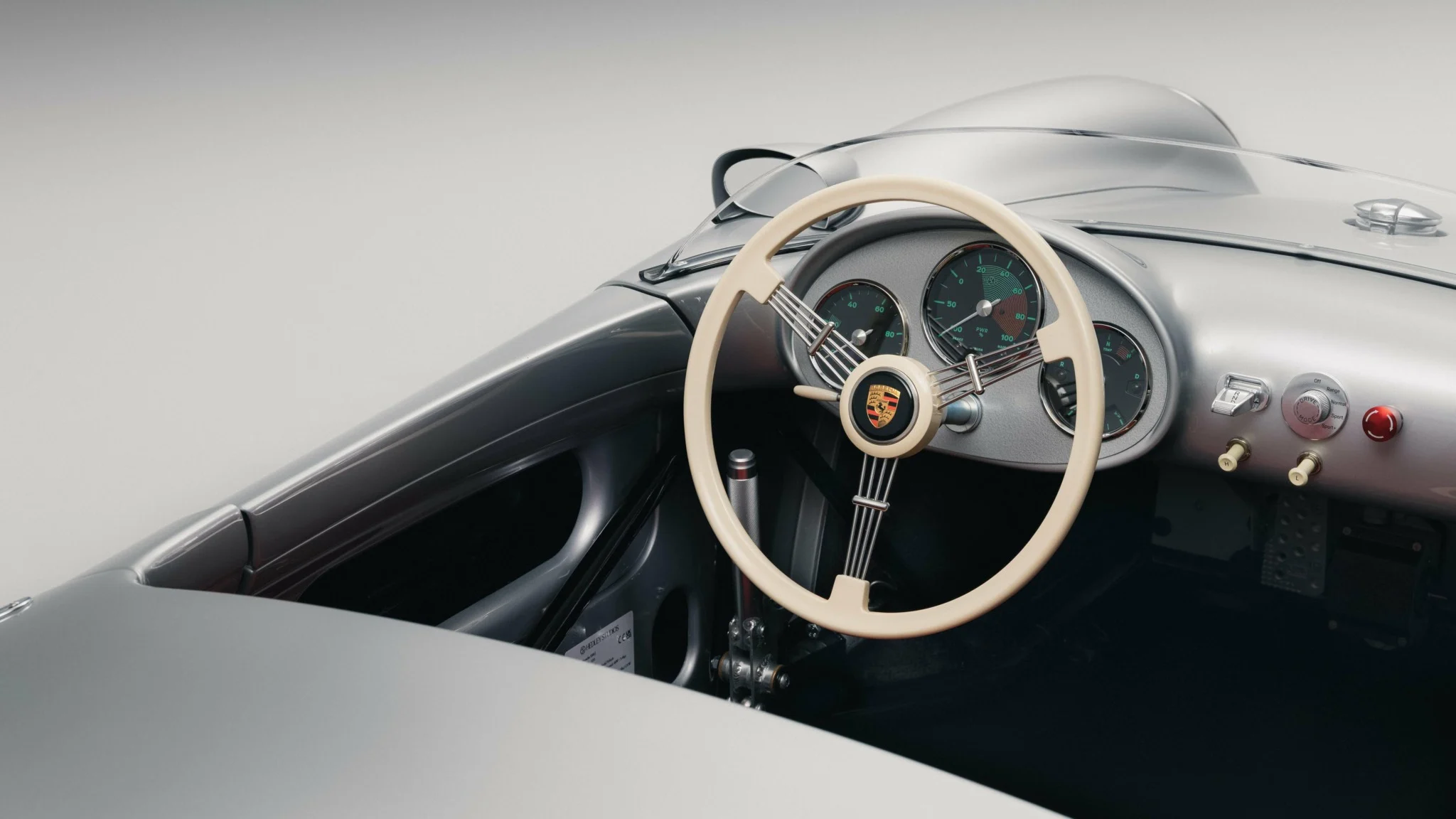
Underneath, the hardware is the real thing. The suspension geometry follows the original car, Hedley sourced calipers and discs for all four corners from Brembo and dampers from Bilstein, and the tubular steel spaceframe borrows from both the 550 and the later 550A, which used different chassis designs. The body panels are hand-formed carbon fibre.
A great deal had to be made from nothing because the parts simply do not exist at four-fifths size. The steering wheel, gauges, bodywork, chassis and wheels were all developed for this car, part of more than 1,300 new components, and the thin banjo-style steering wheel alone took months. One period detail survives with a new job: the old choke lever now selects drive modes.\
in
Research came before engineering. Hedley describes months of repeated visits to the Porsche Museum in Stuttgart before any design work started, with access to original drawings, brochures and period photographs. Porsche also gave the team access to an original car, and the project worked from a 3D scan of a full-size 550, and the two companies met weekly throughout development, in discussions that went as far as the correct angle for the windscreen.
The museum’s expert Jörg Thilow became the final word. If Thilow judged a detail appropriate it went in, Hedley says, and if he did not, the team left it alone. That kind of deference was necessary because there was no single correct 550 to copy. Windscreens and body details changed between cars and between races, so being faithful meant choosing among originals rather than tracing one.
The archive also overturned an assumption. Hedley’s team had expected most 550s to have left the factory in silver, but period photographs showed cars in yellow and blue as well, and those images went straight into the colour options.
On Porsche’s side, Deniz Keskin, director of brand management and partnerships at Porsche AG, described the 550 J in the launch materials as a way of bringing one of the most significant cars in the company’s history back to life in a contemporary form. The car arrives in the same year the museum mounted Raceborn, its exhibition on 75 years of Porsche motorsport.
huh
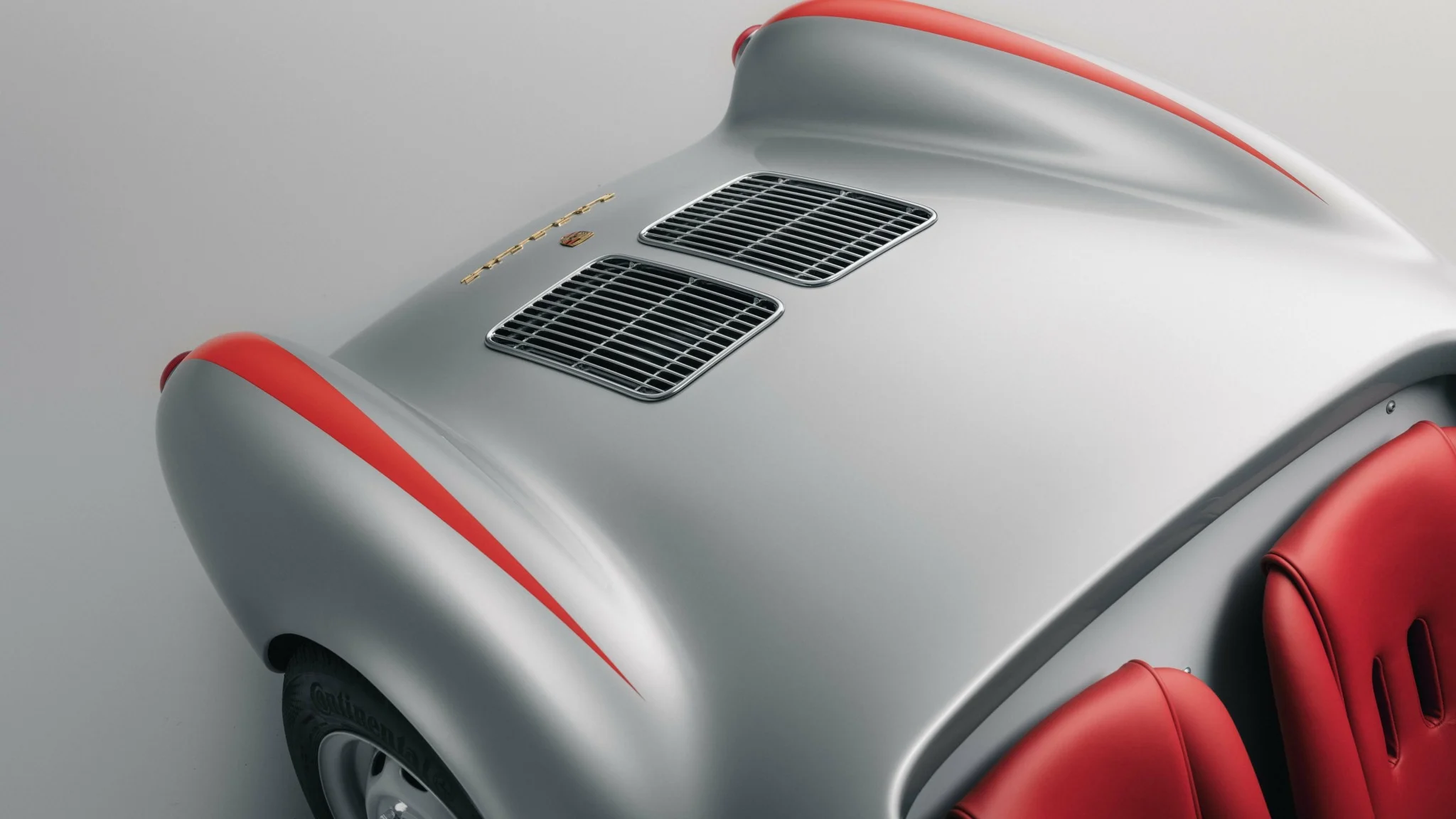
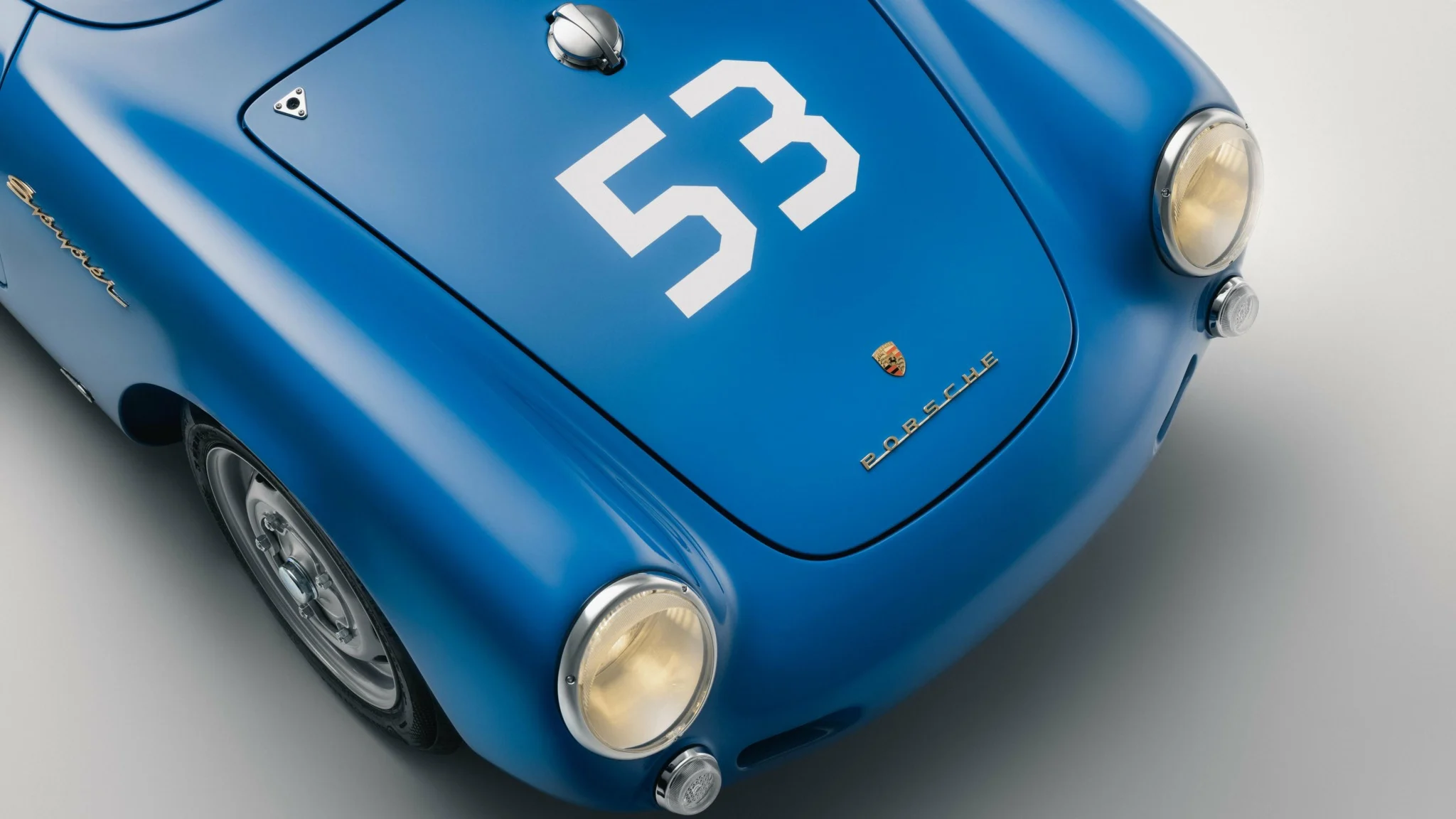
Porsche Silver leads the launch photography, as it should. The colour menu follows what the archive revealed, with options based on original factory shades sitting alongside a selection of contemporary ones. The standard palette adds heritage-inspired blue, white, yellow and red, and Porsche has also allowed Hedley to offer Paint to Sample, the programme that lets a buyer match the car to colours available across the full-size Porsche range.
Inside, buyers pick from shades of leather and faux suede. Outside, as Will Sabel Courtney noted for Design Milk in his write-up of the car, there are liveries modelled on historic racers with matching decals and numbers, and the small cowls and windscreens can be specified or left off. Above all of that sits a Bespoke programme for buyers who want something no one else among the 250 will have.
The base price is £69,500 before tax, or £83,400 including UK VAT, which dollar conversions place in the low $90,000 range. Even with options, that sits far below an original 550 Spyder, which can reach seven figures at auction depending on its racing history.
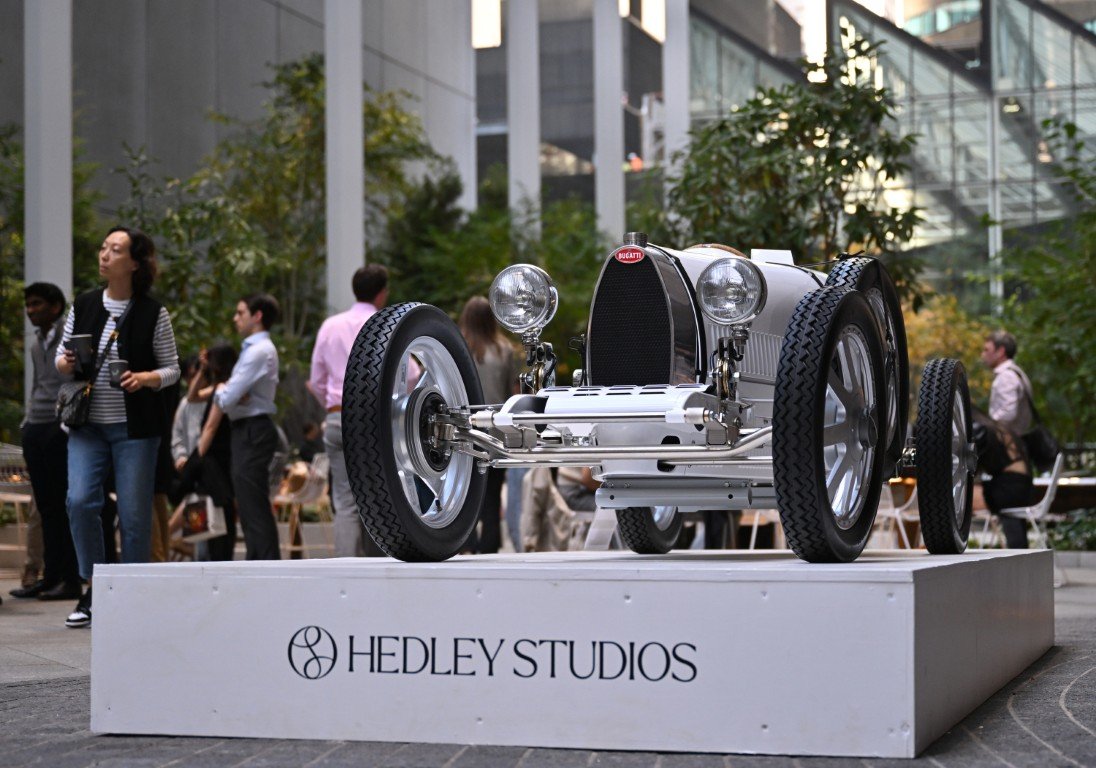
A vintage silver race car displayed on a white pedestal with the “Hedley Studios” logo, in an outdoor urban setting with people gathered around.
extend
Hedley Studios began with a commission from Bugatti. To mark its 110th anniversary, the French marque wanted a modern take on the Bugatti Baby, the half-scale electric Type 35 that Ettore Bugatti built for his youngest son, Roland, in 1926. Ben Hedley’s answer was the Bugatti Baby II, a 75 percent scale electric car developed from a 3D scan of an original Type 35 that raced at the 1924 French Grand Prix, limited to 500 examples.
Other licences followed. A 75 percent Ferrari Testa Rossa J, limited to 299 cars, was developed from original drawings held by Ferrari Classiche. A two-thirds scale Aston Martin DB5 Junior was built in a run of 1,059. The 85 percent Bentley Blower Jnr went further still, since unlike the Porsche it can be registered for road use in the UK.
In August 2024 the company renamed itself after its founder, positioning its cars as collectible automotive art rather than little cars. At the time, Hedley said the business had delivered more than 450 cars to clients in over 50 countries across the previous three years, working from its base on the Bicester Motion estate, a former Second World War RAF airfield now given over to motoring businesses. The period since has been harder. Hedley Studios went through a pre-pack administration in August 2025 and appointed administrators again in early March 2026, with most of its staff made redundant. Top Gear has since reported that the business was bought back by Ben Hedley with a group of private investors, and that the 550 J is the car it returned with.
Hedley’s own Porsche story is more personal. An uncle gave him a die-cast 911 when he was five, and at 30 he bought a 964-generation 911 that he still owns, now past 170,000 miles after a decade as his daily car in London. The 911 and the 356 were both considered for this project before the team settled on the 550, on the reasoning that its clients like racing cars, and racing cars come with more stories.
fin
None of the 250 will wear a number plate. Porsche’s release states plainly that the 550 J is not road legal, so its world is private roads, estates, closed courses and track days. Hedley has done much of the development driving himself on the company’s test track in Bicester, Oxfordshire. In his telling the prototypes are playful rather than precious: the steering is light, the responses are quick, and the battery placement gives the car the mid-engined balance the team was chasing, enough that it can catch out a driver who stops paying attention.
Orders are open now through Hedley Studios directly. Each car is handbuilt in Bicester, and several reports put first deliveries in spring 2027. Hedley expects many of them to end up in collections, and has been just as clear that he would rather owners drive them. His own car, he has already decided, will have the RS Pack.
Related Articles

Messi and the Giants Trades the Biopic for Orbs, Giants and a Realm Called Iko
Lionel Messi’s Disney+ cartoon finally showed its face in Málaga, and it skips Rosario, Barcelona […]