DRIFT AUDIO
Listen to this story
Choose a voice, then press play.
Since 2016, Gray Sorrenti has screenshotted the people she loves mid-call. After a Xerox detour through ICP, the archive is headed for print.
The project began with a minor eye infection. Gray Sorrenti had a stye and FaceTimed a friend named Fisher, who walked her through pressing a hot teabag against her eyelid. Somewhere in that call she took a screenshot. Then she took another on a different call, and another, until the habit had outlived the stye by close to a decade.
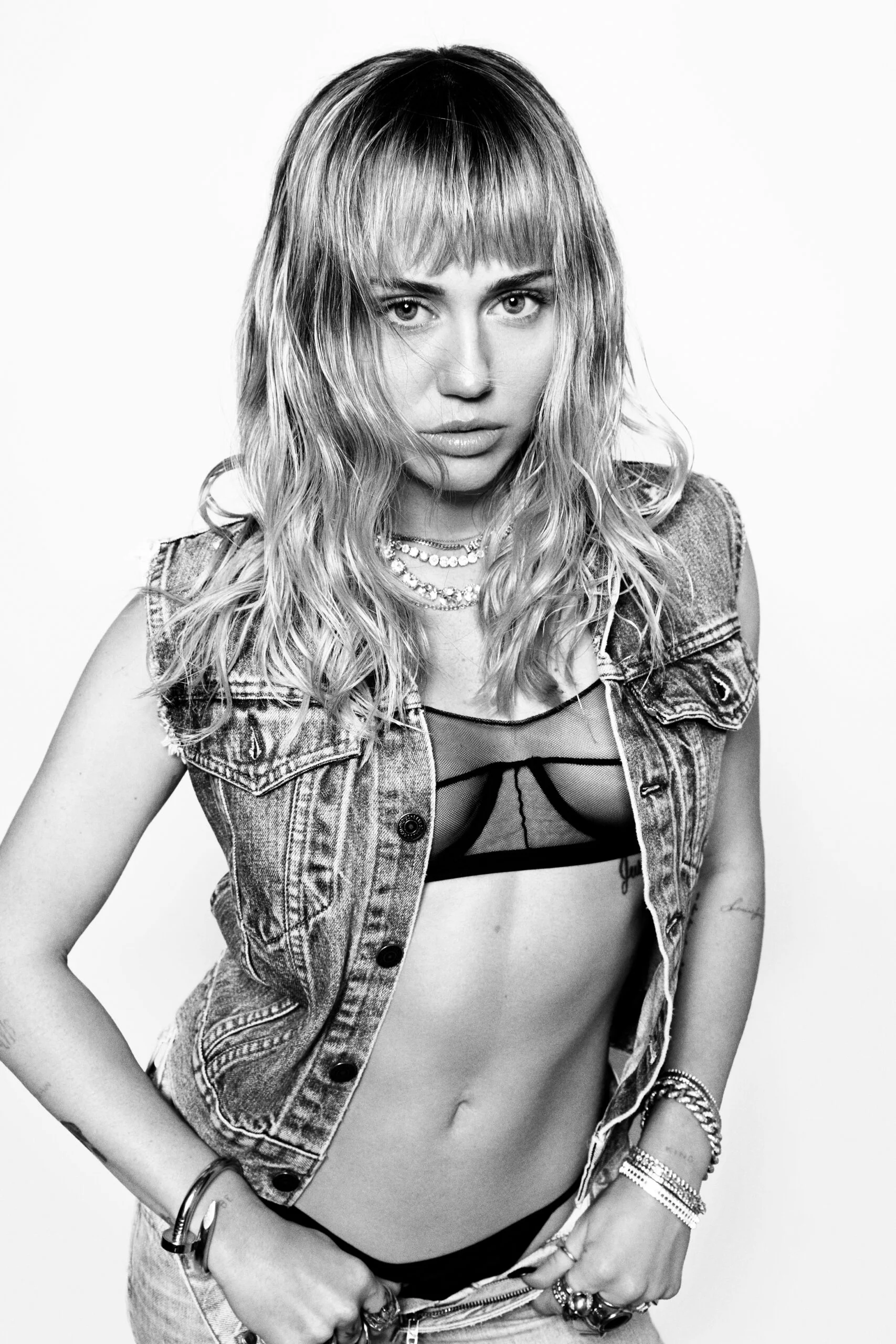
The Denim Vest: A Study in Monochrome Confidence
The result is callmeiloveyou, a body of work made entirely from frozen video calls with friends, family, and partners, dated from 2016 to 2025. On her agency page, Sorrenti describes the practice as “stealing screenshots from the people in my life,” and frames it as a way of recording people without the interruption a camera usually brings: the half second after a yawn, the tremble before someone cries, the face someone makes when they forget they are being looked at. The New York photographer has said the work is heading for a book, with images laid out one at a time rather than in the dense collages she has shown so far. She has also offered a simple warning to anyone who knows her: they are probably somewhere in it, and the fun is in finding themselves.
Signal. What happened: Gray Sorrenti is preparing callmeiloveyou, a book built from nine years of FaceTime screenshots, after previewing the work in HARD COPY NEW YORK at the International Center of Photography earlier this year. Exact object: callmeiloveyou, a photobook of screen-captured portraits made between 2016 and 2025, sequenced as individual images rather than collages. When and where: Sorrenti has said a photobook is due in October 2026; publisher, price, format, and confirmation that the October release is callmeiloveyou have not been announced. Source: Sorrenti’s statement via Art Partner, with the October timing from her Summer 2026 interview. Why it matters: Sorrenti is one of fashion’s most booked young photographers, and this would put her most private archive, rather than a brand commission, at the center of a release.
to
For a long time the screenshots lived only on her phone. The turn toward paper came through a friend’s studio, where Sorrenti began scanning her FaceTimes and feeding them through a Xerox machine, by her own account using up far more ink and paper than she had promised to. The copier suited the material. A photocopy flattens a digital image into grain and contrast, strips out the glossy finish of a phone screen, and makes a private moment look like something pinned to a wall in a practice space or passed around at a show. It is also cheap and repeatable, which suits an archive that runs to thousands of frames.
She kept returning to that machine for years before she found one of her own. It belonged to a retired litigator in New Jersey who also made spiritual music and had no further use for it. Sorrenti and a friend drove out, loaded the heavy copier into the trunk of his car, and brought it back into the city. The machine now lives in that friend’s apartment, and Sorrenti has kept printing on it.
View this post on Instagram
The process matters because it changes what the pictures are. A FaceTime screenshot is almost never made as a photograph. Nobody poses for it, nobody checks the light, and the person on the other end usually doesn’t know it has happened. Run through a copier and scaled up, those frames stop reading as phone detritus and start reading as portraiture, closer to the photo booth strip or the contact sheet than to anything shot for a campaign.
scope
The first public look at the project came through HARD COPY NEW YORK, which ran at the International Center of Photography from January 29 to May 4, 2026. Co-curated by David Campany and Aaron Stern, the show asked photographers from several generations to reinterpret their own work as photocopies, a format that made the images cheap, tactile, and immediate. The curatorial pitch was that a photocopy returns photography to something democratic, an object anyone can handle and reproduce, rather than a precious print behind glass. For a project born on a phone screen, that framing fit almost too well. Sorrenti hung alongside Stephen Shore, Ryan McGinley, Collier Schorr, Thomas Ruff, Ari Marcopoulos, Asako Narahashi, Jerry Hsu, Shaniqwa Jarvis, John Divola, David Black, Daniel Arnold, and Andre D. Wagner.
Her contribution was CallMeILoveYou Excerpt, #002 (2025), a large collage of Xeroxed screenshots. The Brooklyn Rail’s review picked out New York itself as the show’s shh subject, with the city filling roughly half the walls, and singled out the pairing of Sorrenti with Shore. His early pictures from 1965 to 1967 show Andy Warhol’s Factory, including Lou Reed, Edie Sedgwick, and Warhol himself. Hers show her own downtown circle. Both are portraits of the coolest people in the city at a given moment, made by someone who belonged to the scene rather than someone visiting it, and they sit roughly fifty years apart.
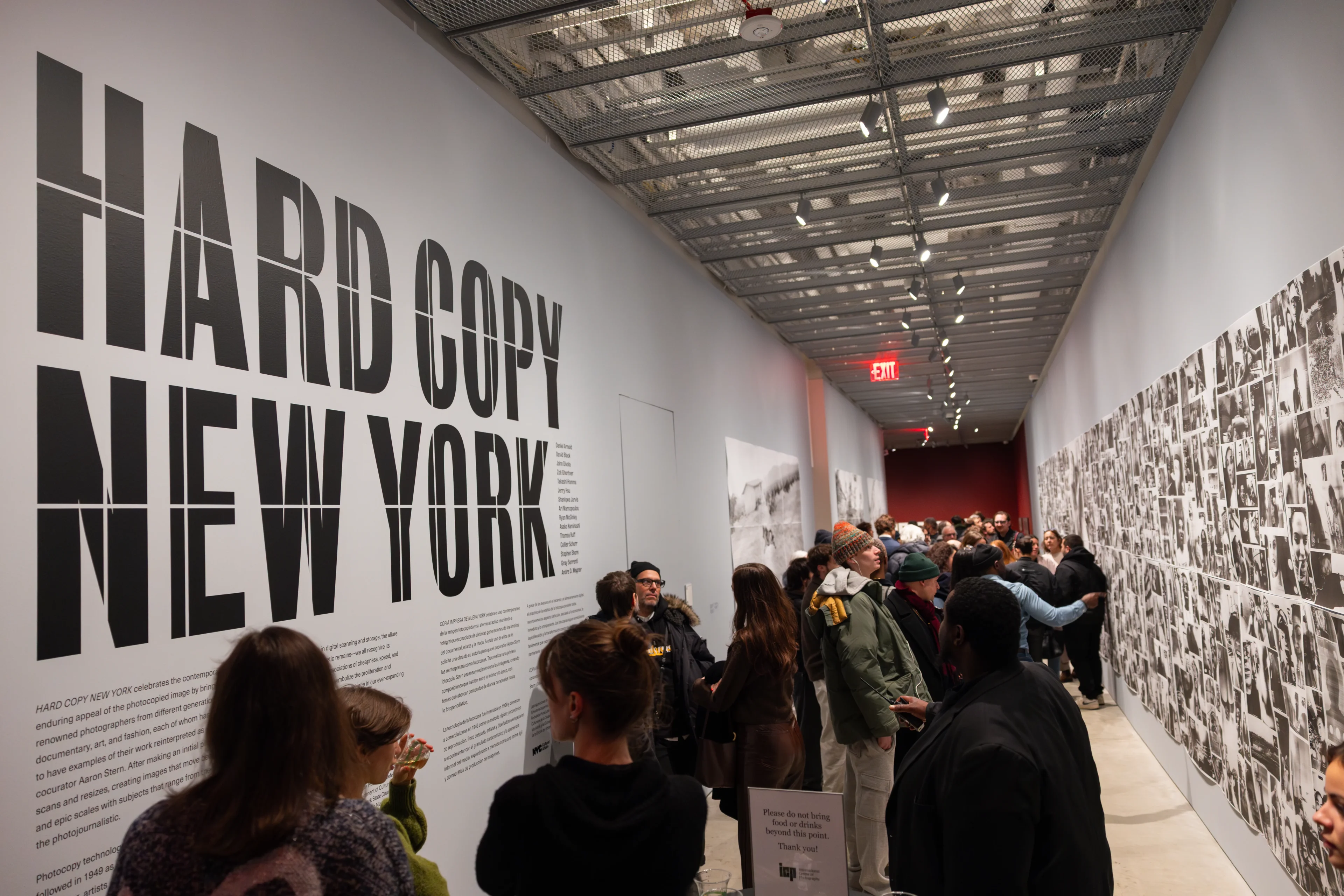
The Typographic Corridor: A Study in Public Attention
Sorrenti has described HARD COPY as the first preview of the book. The move from collage to single images is a meaningful edit. On a wall, hundreds of faces blur into a portrait of a social world. On a page, each face gets its own moment, which is closer to how the screenshots were made in the first place: one call, one person, one frame.
The timing sits well inside ICP’s own year. Campany went on to co-curate Photobooks USA 2000 to 25 at the same institution, running June 11 to September 28, 2026, a survey of a quarter century of American photobook making. Sorrenti’s book, if it lands in October, will arrive just after that show closes, into a city that has spent the summer looking hard at the form.
prim
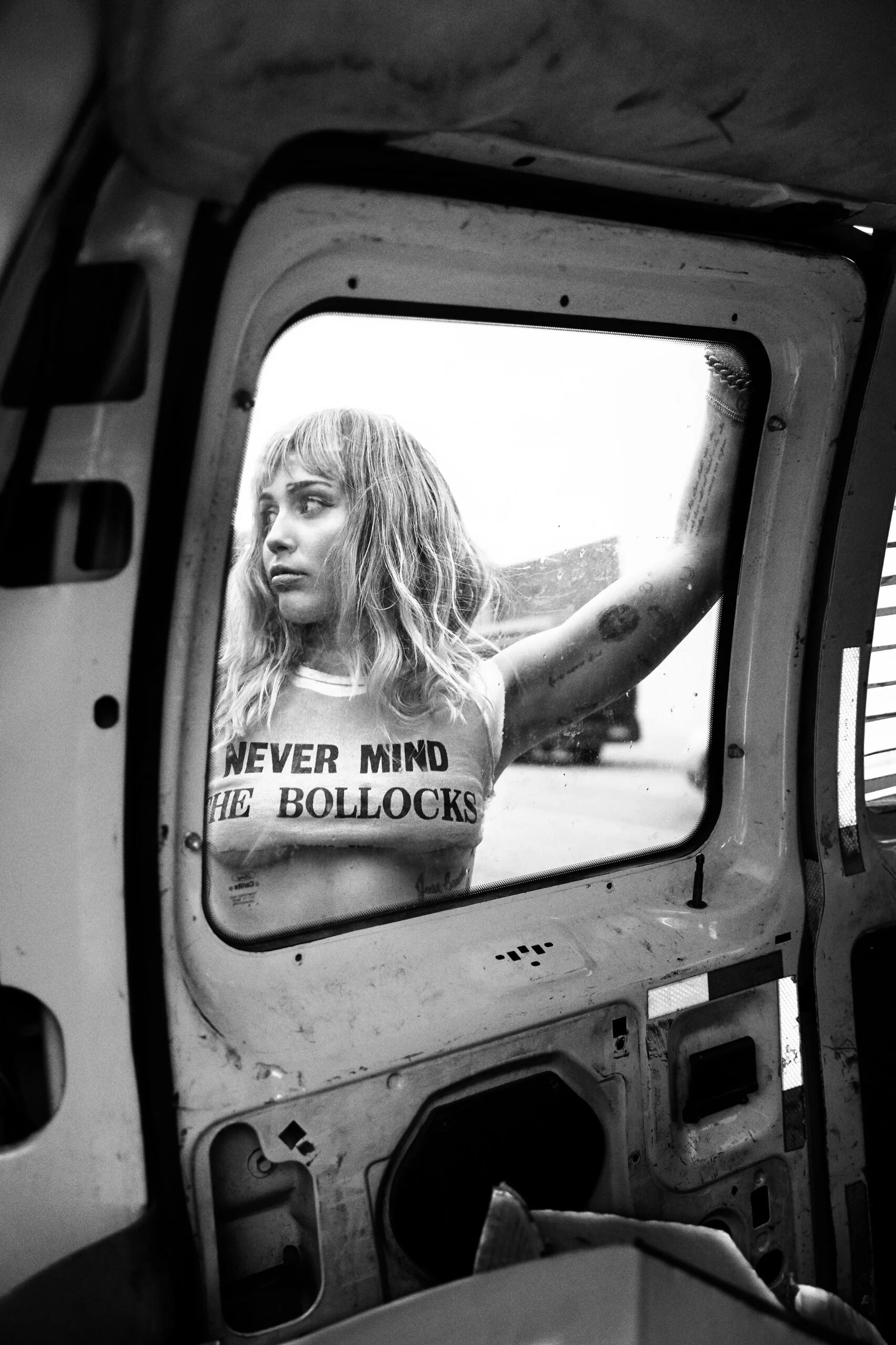
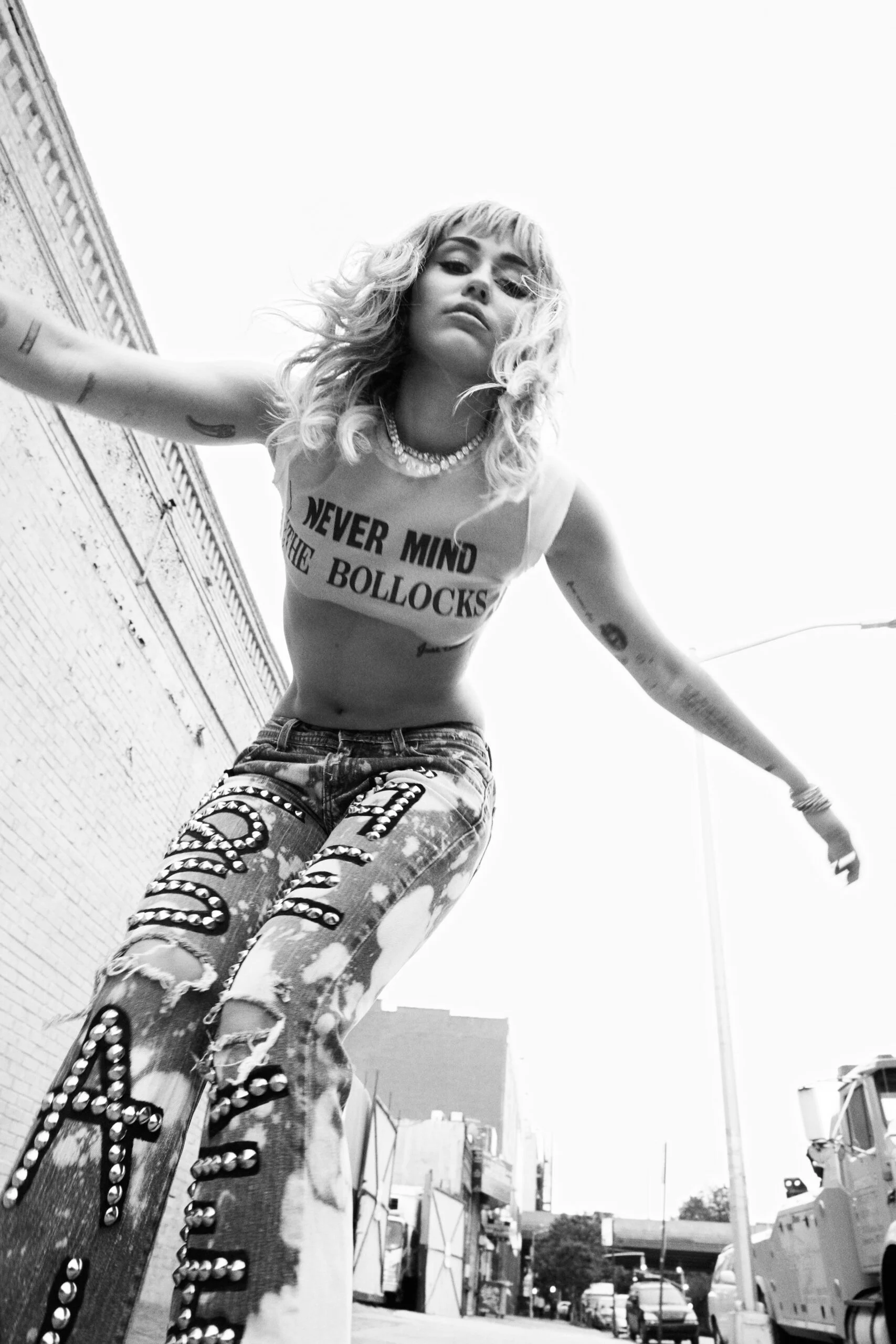
Long before callmeiloveyou had a name, the photograph most people associate with Sorrenti was a pop record cover. In 2019 she shot the artwork for Miley Cyrus‘s She Is Coming, released May 31 of that year. It was Cyrus’s first EP since 2009’s The Time of Our Lives, announced as the first of three planned installments, a rollout that did not play out as described. The black and white cover shows Cyrus standing over the lens with her arms wide, wearing a top that references the Sex Pistols’ 1977 album Never Mind the Bollocks. Sorrenti also shot imagery and a teaser for the release.
The pictures came back around this summer. For a guest-edited Summer 2026 issue, Cyrus ran two sets of covers: one shot by Mario Sorrenti and styled by Alastair McKimm, the other by Gray, presented as Miley by Gray and drawing on the pair’s archive. Inside, Cyrus brought in Dolly Parton, Noah Cyrus, Daryl Hannah, Lykke Li, Sky Ferreira, and Suzanne Vega. The issue arrived the same week Cyrus signed with Atlantic Records, with a ten-track tenth album on the way. Cyrus has not headlined her own tour since the Bangerz run of 2014, which leaves photographs, covers, and books doing much of the work of keeping her image in circulation. A Sorrenti book that draws on seven years of friendship and screens is a natural place for some of that work to land.
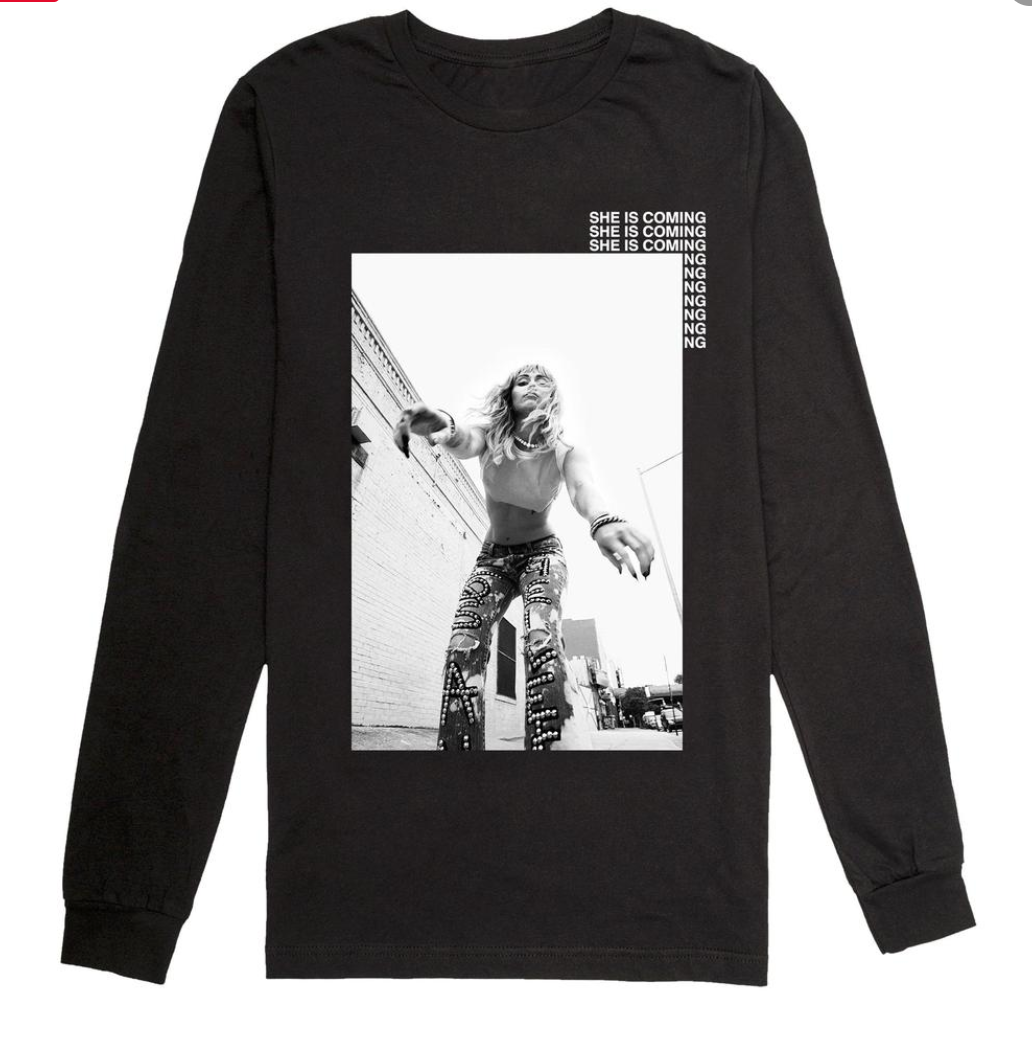
The Prophetic Tee: A Study in Graphic Repetition
a gen
Sorrenti was born into photography, and she has spent years insisting that the camera was never the plan. Her father, Mario Sorrenti, was born in Naples in 1971, moved to New York at ten, and made Kate Moss’s 1993 Calvin Klein Obsession images. Her grandmother, Francesca Sorrenti, started out downtown in the Max’s Kansas City era, in the orbit of Jimi Hendrix and Andy Warhol. Her uncle, Davide Sorrenti, died in February 1997 from a kidney ailment, and his pictures remain a touchstone for fashion photography of that decade. Her mother is the artist Mary Frey, and her brother Arsun is a musician.
A System Magazine conversation brought three generations of the family together, and it reads as a record of how completely the work and the household overlap. Mario’s 2013 book Draw Blood for Proof includes pictures of him and Davide among family and friends; by the time of that conversation three books of Davide’s work had been published, with a fourth, drawn from his journals, on the way. Within the Sorrentis, the photobook is less a career milestone than a family format.
Early profiles tracked that closeness. Dazed’s 100 list described her photographing her skater brother Arsun and their friends once the school day ended, in contrast-heavy pictures driven more by intuition than technique. W Magazine noted her magazine editorial debut in the print-only title Moodboard, built around the same crew of friends and styled with Twizzlers, toy alligators, and a touch of Chanel, and named Mary Ellen Mark and Larry Clark among her influences.
show
The professional side moved fast. Art Partner says Sorrenti shot her first fashion campaign at sixteen. A year before that Dazed interview, she was documenting New York’s youth scene for the spring 2017 issue of Dazed. At seventeen she photographed Loewe‘s collaboration with the Ibiza boutique Paula’s, taking a small group of friends to New Orleans, the city where her mother grew up and which she named as her favorite place in the world. She also wrote the opening text for that brand photobook. A later Loewe x Paula’s book, shot by Sorrenti in the Dominican Republic, was printed in a limited run of 1,200 copies.
Her Spring 2020 campaign for Saint Laurent under Anthony Vaccarello became its own book, published by SLRD éditions for Saint Laurent Rive Droite and designed by Vaccarello, with lyrics from her brother Arsun’s song “Send Her My Way” calligraphed on special paper between the images. Recent credits listed by her agents include Calvin Klein and Loewe in 2025, Saint Laurent again in September 2025, and Dior in June 2026, alongside editorial for Re-Edition, Beyond Noise, and Playboy. Art Partner also lists a Dolce & Gabbana x Ray-Ban project in 2026 and a Vans x Curren campaign for Spring 2025. Her subjects have included Rihanna, though her agency’s own description stresses that she approaches a group of skaters with the same closeness she brings to a star.
Film is the next front. Her agency profile lists her as directing a feature-length documentary on New York’s urban dirt bike culture, the Harlem bike life scene the System conversation found her photographing. It extends the same method into moving image: embed with a community, stay long enough that the camera stops registering, and keep what happens in between.
For now, callmeiloveyou is the project closest to finished. Its nine years of calls end in 2025, a date Sorrenti set herself, which makes the archive a closed period rather than an ongoing feed. The copier that printed much of it is still sitting in a friend’s apartment in the city.