DRIFT AUDIO
Listen to this story
Choose a voice, then press play.
In an age of algorithmic playlists, voice assistants, and disposable audio, Swiss manufacturer Geneva Lab is making a quiet but deliberate statement: sound should be experienced, not managed.
With the launch of two new speaker systems — the portable Duo and the architecturally integrated DeCon/XL — Geneva Lab isn’t simply re-entering the premium audio market. It is redefining what high-fidelity can mean in a world that has, in many ways, forgotten how to listen.
This is not a conjure for mass adoption. There is no app to download, no voice assistant to enable, no glowing logo to announce its presence. Instead, Geneva Lab offers something increasingly rare: a speaker that asks for attention, not just occupancy.
stir
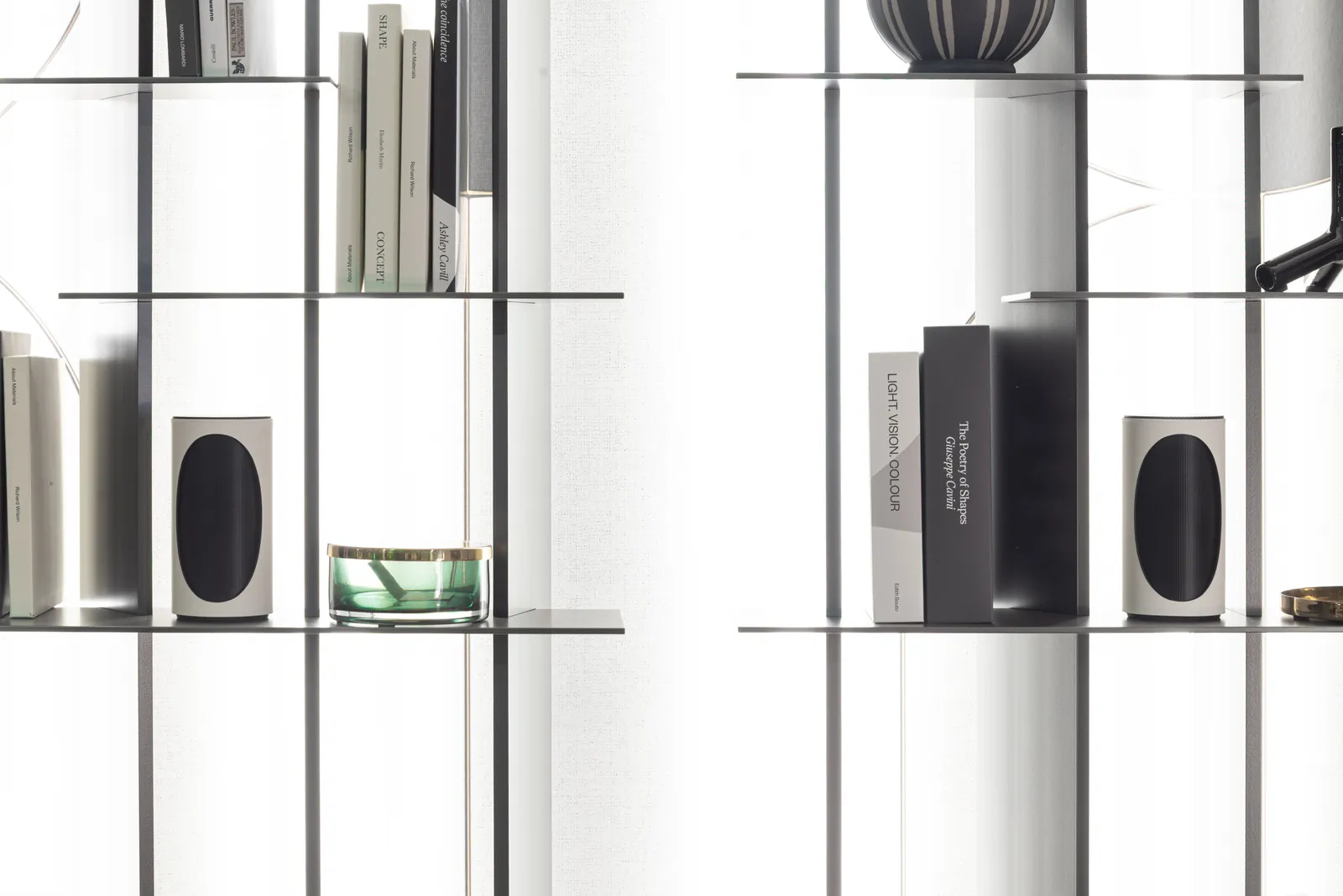
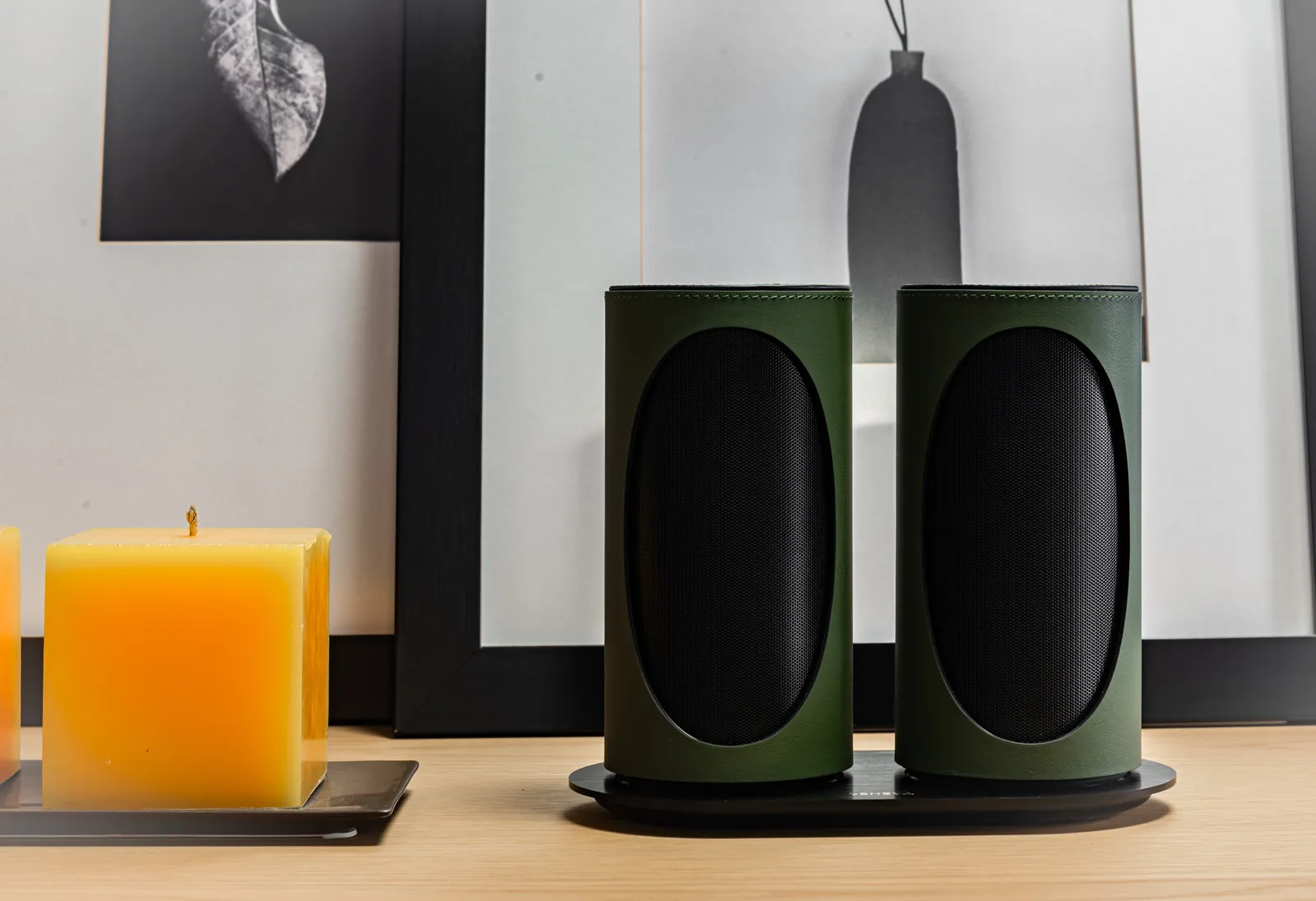
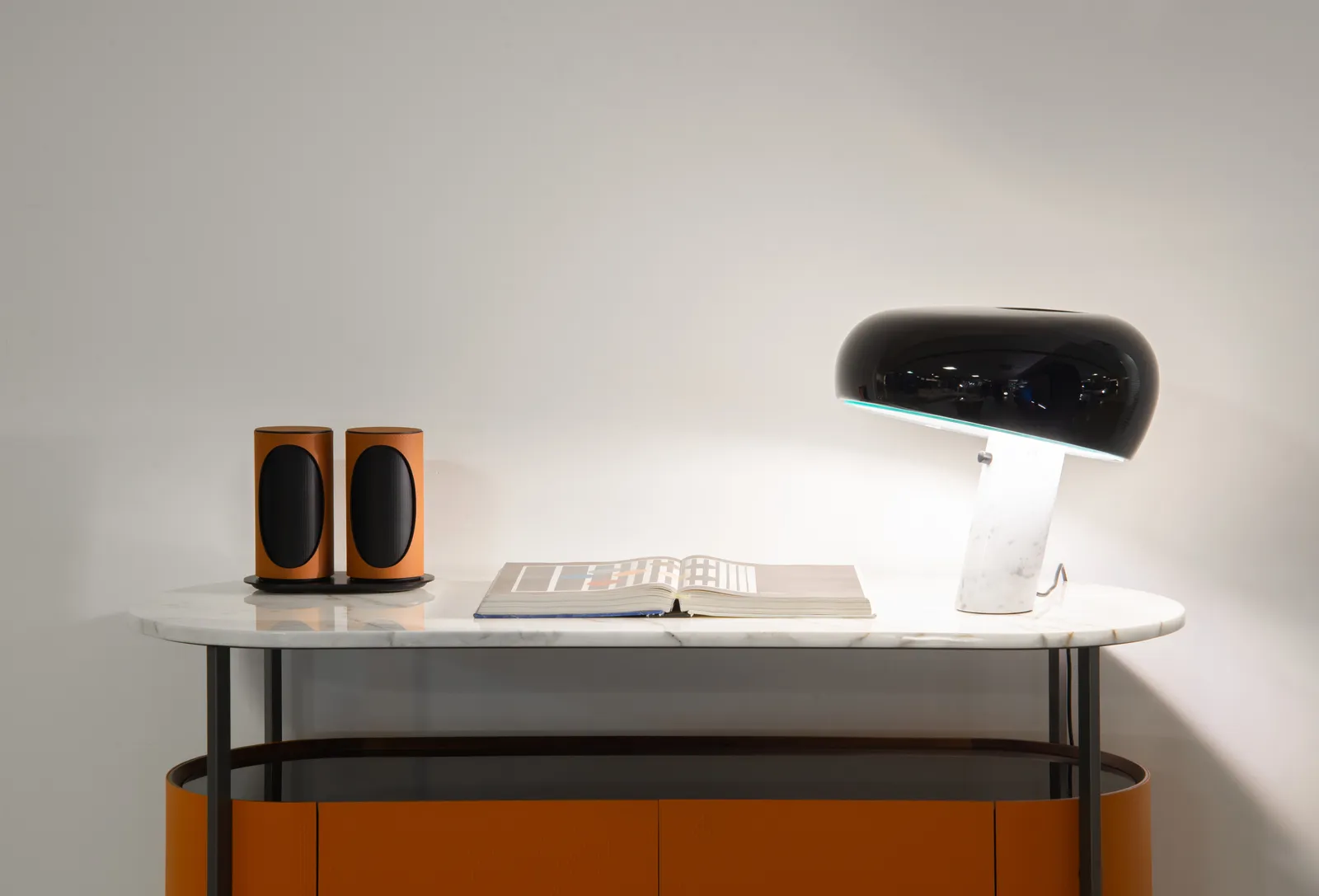
The Duo is a compact, battery-powered speaker designed for mobility without compromise. Measuring 8.5 inches tall and 3.2 inches in diameter, it features a precision-machined aluminum housing, an IP54 rating for dust and splash resistance, and a 12-hour battery life. It supports Bluetooth 5.3 and delivers 360° sound with a balanced frequency response — crisp highs, a neutral midrange, and a surprising amount of bass for its size, thanks to a passive radiator tuned to minimize distortion.
Available in matte black, silver, and deep navy, the Duo is priced at $299, positioning it as a design-forward alternative to products like the Sonos Roam or Bose SoundLink Revolve. But where those models lean into smart features and ecosystem integration, the Duo removes everything non-essential. No Wi-Fi. No app. No voice control. Just a tactile dial for volume, a physical power button, and a USB-C port for charging.
It is a speaker built for the listener who values portability but refuses sonic compromise — the kind of person who carries it from apartment to park to café, not simply because it is convenient, but because it belongs in those spaces.
show
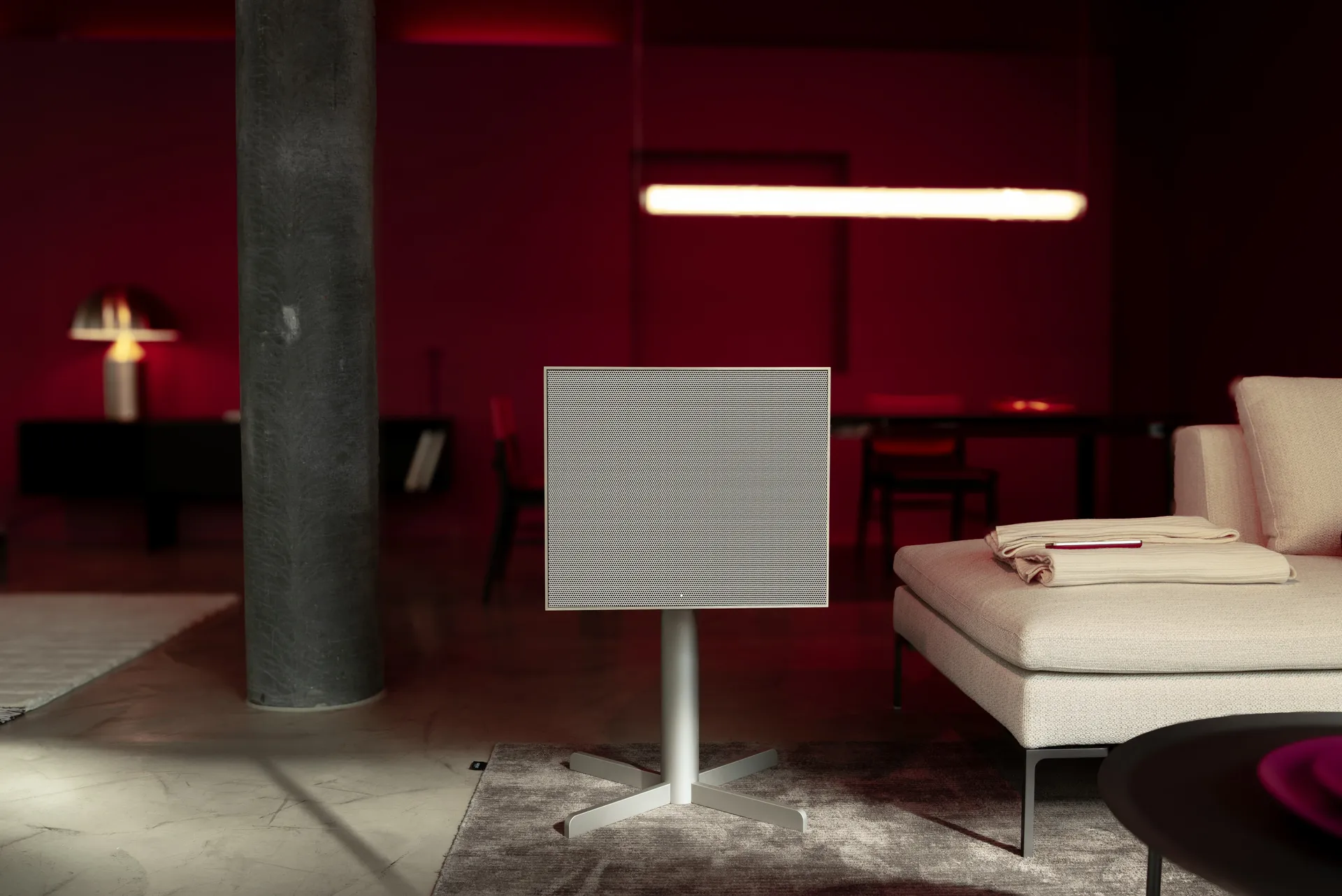
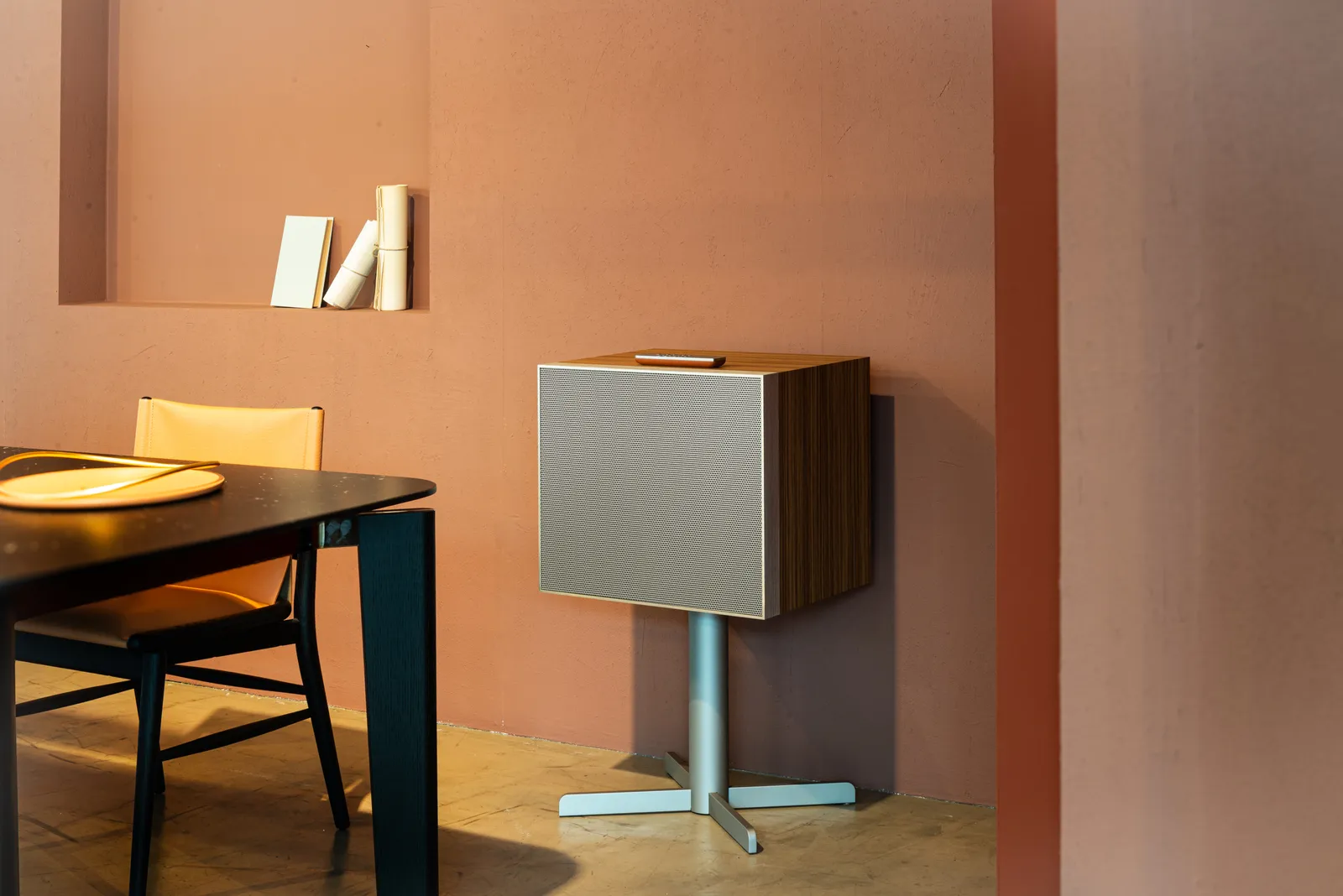
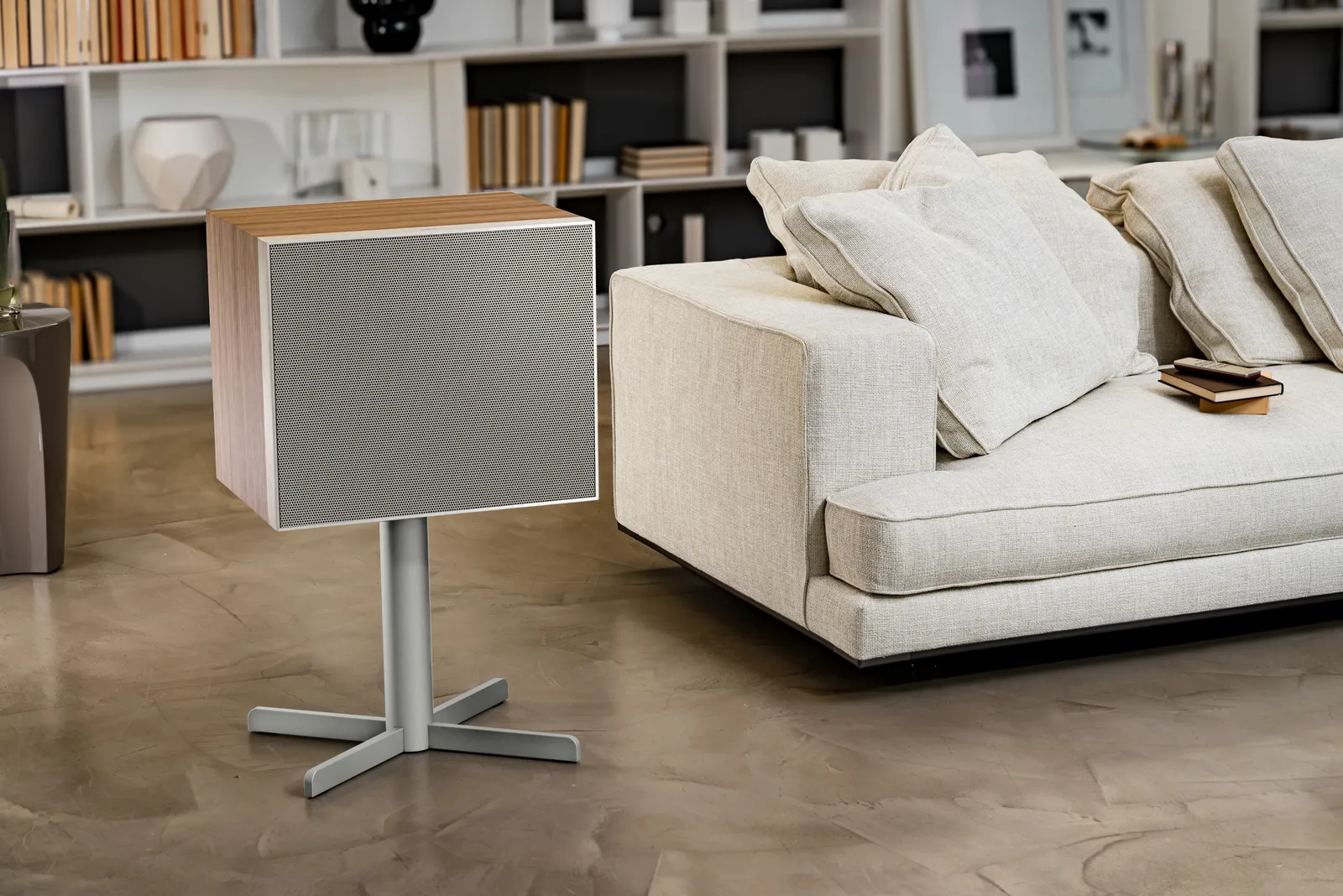
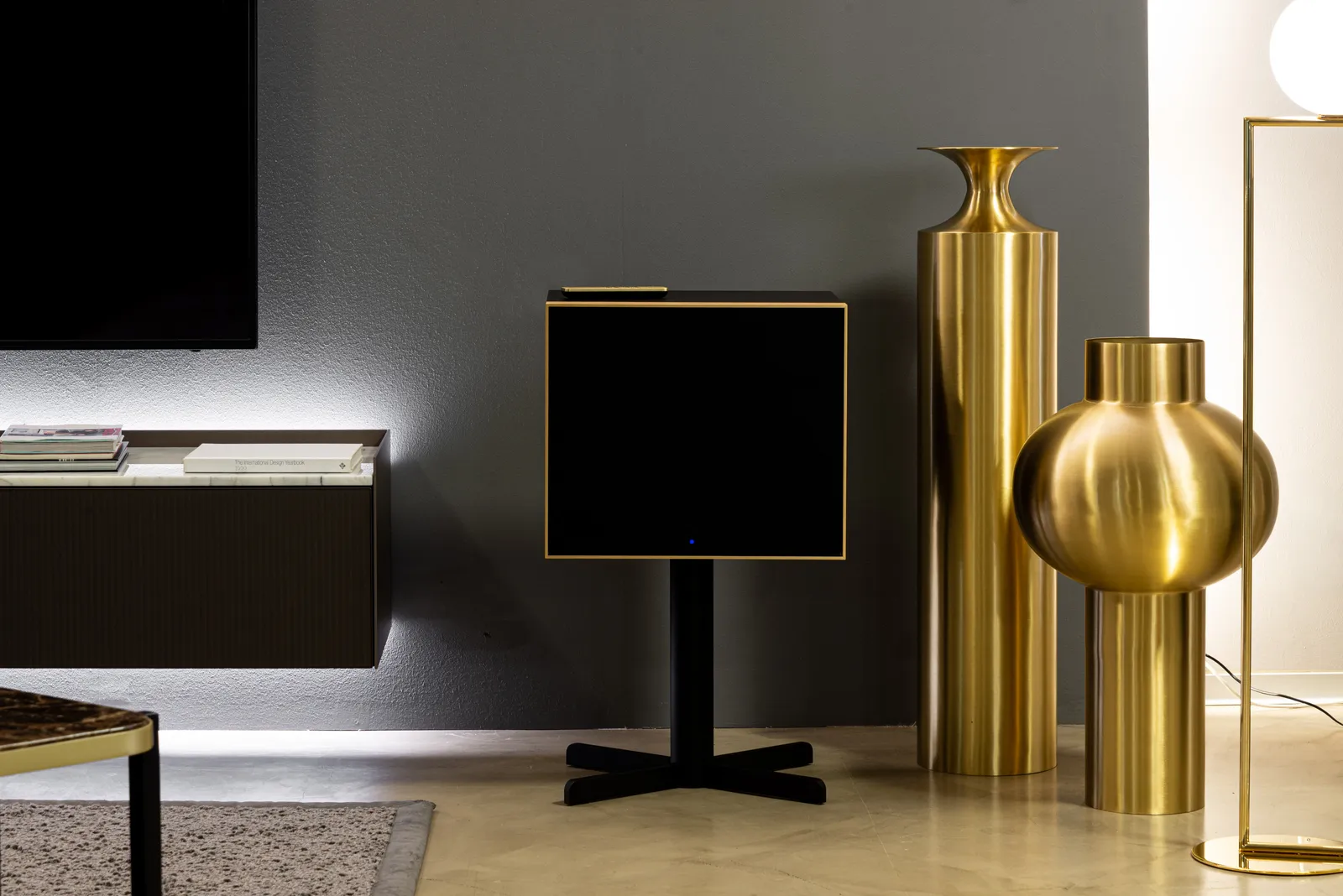
But it is the DeCon/XL that signals Geneva Lab’s deeper ambition. This is not a speaker meant to disappear into the background. It is a statement piece — modular, stackable, and available in wood-veneer finishes with brushed steel grilles. Designed to be wall-mounted or placed as a freestanding unit, the DeCon/XL draws from modernist architectural principles, treating sound as spatial rather than ambient.
At 24 inches tall and 6 inches wide, the DeCon/XL has presence. Its form is clean, its lines exact. The front grille is perforated steel, while the back panel houses analog inputs and a power terminal block — a subtle nod to professional audio systems. It supports Wi-Fi, AirPlay 2, and Spotify Connect, with a dual-driver setup and passive radiator for enhanced bass response. The sound is room-filling but never overwhelming — directional enough to preserve clarity, diffuse enough to avoid hotspots.
Priced at $899 per unit, or $1,798 for a stereo pair, it competes in the same tier as Devialet Phantom and Bang & Olufsen’s Beosound series, but with a quieter, more restrained aesthetic. There is no glowing orb, no curved glass, no dramatic silhouette. The DeCon/XL does not demand to be seen. It simply is.
tactile
Both models reflect Geneva Lab’s Swiss engineering heritage: clean lines, intuitive analog controls, and a rejection of unnecessary digital layers. The interface is tactile — dials, buttons, physical feedback. There is no voice assistant, no app required, no glowing branding. The only light is a small, recessed LED on the base — white when powered, amber when charging.
This is not minimalism as reduction. It is minimalism as conclusion — a design language that has already answered its own questions.
show
Geneva Lab is not new to this approach. Founded in the early 2000s, the company earned a cult following for its Geneva Sound System — a sleek tabletop speaker that paired high-quality audio with mid-century modern design. It became a fixture in design-forward homes, boutique hotels, and art galleries. But as the market shifted toward smart speakers and ecosystem lock-in, Geneva Lab faded from view — not because it failed, but because it refused to follow.
Now, with the Duo and DeCon/XL, the brand is returning not as a nostalgia exercise, but as a counterpoint. In a market where audio is increasingly invisible through earbuds, ambient through smart assistants, or performative through branding-heavy hardware, Geneva Lab is building speakers that are view, intentional, and enduring.
why
The timing is significant. Consumer behavior is shifting. A growing number of buyers are beginning to prioritize longevity, privacy, and material quality over layers of smart functionality. Geneva Lab is speaking directly to that change. These are not speakers for the always-on listener. They are for the selective listener — the person who chooses when to conjure music, what to excite, and how to experience it.
That distinction matters. In a category shaped by convenience, Geneva Lab is making a case for involvement. Its products do not seek to anticipate desire. They ask the user to act.
idea
The DeCon/XL in particular reflects a broader movement within interior design: the integration of audio as furniture, not technology. Architects and designers are increasingly treating speakers as sculptural elements — objects that contribute to the atmosphere of a room rather than disrupt it. The DeCon/XL’s modular form allows for stacking, asymmetrical placement, or wall mounting, making it adaptable to a range of spatial configurations.
It is not hidden behind a curtain or tucked into a cabinet. It becomes part of the composition.
This presents a direct challenge to the dominant paradigm. Smart speakers, by design, are meant to be everywhere and nowhere — always listening, always ready, but never truly present. They thrive on invisibility. Geneva Lab, by contrast, argues that sound should have form, weight, and permanence.
extent
The company is also placing clear emphasis on sustainability, an increasingly urgent concern in the audio market. Both the Duo and DeCon/XL are built with repairable components and modular internals. The DeCon/XL, for instance, can be serviced without replacing the entire unit — a rarity in today’s disposable tech landscape. Drivers, power supplies, and circuit boards are replaceable, and Geneva Lab offers a three-year warranty alongside access to a modular repair program.
This is not merely a marketing angle. It is a structural commitment. In an industry where many speakers are sealed, unopenable, and ultimately destined for e-waste, Geneva Lab is designing for longevity. The DeCon/XL’s wood veneer will age, the aluminum housing will develop a patina, and the steel grille will show wear. These are not flaws. They are evidence of use, of time, of life.
rel
Availability begins May 15, 2026, through select design retailers in North America and Europe. The company is intentionally avoiding mass-market channels, instead partnering with high-end furniture stores, architecture firms, and boutique audio shops. This is not a product meant to be impulse-bought. It is meant to be chosen.
The pricing reflects that strategy. At $299, the Duo is premium but accessible. At $899, the DeCon/XL is a commitment — not just financially, but philosophically. It is for the listener who treats audio as an extension of the environment, not merely a utility.
theory
And in that, Geneva Lab is doing something quietly radical: it is asking us to slow down.
In a culture of infinite scroll, relentless notifications, and algorithmic curation, the act of listening has become passive. We do not choose music so much as it is chosen for us. Playlists autoplay. Recommendations autoplay. Even silence is interrupted by prompts and commands.
The Duo and DeCon/XL reject that model. They require intention. You must press play. You must choose the source. You must engage.
This is not about nostalgia for analog. It is about agency — the right to decide when, how, and what we listen to.
fin
And in that sense, Geneva Lab is not just selling speakers. It is offering a counter-culture.
The brand is not chasing the mass market. It is not trying to become the speaker in every room. Instead, it is building for the listener who treats audio like furniture — something that belongs, not just functions.
In a world of noise, sometimes the most radical thing a product can do is respect the silence between the notes.
The Duo and DeCon/XL are not loud. They do not need to be. They are not here to dominate. They are here to endure.
And in that quiet persistence, they may prove to be among the most subversive speakers of the decade.
Related Articles

BEAMS Fiftieth Year
BE@RBRICK x BEAMS 50th. 100 percent and 400 percent. Late October 2026. Medicom block. Print […]