DRIFT AUDIO
Listen to this story
Choose a voice, then press play.
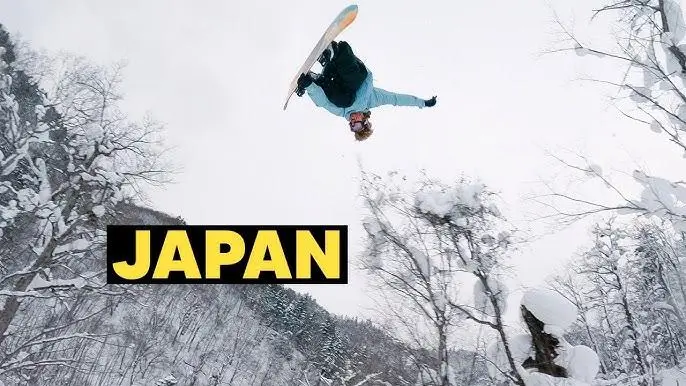
Some videos feel like postcards. Others feel like proof of life. “Gimbal God – Snowboarding Every Backcountry Feature Japan Has To Offer” lands in the second category: not a tourism pitch, not a highlight reel stitched together for easy applause, but a kind of moving-field report from deep snow and deeper terrain. The framing is the giveaway. This isn’t just about riding “good pow.” It’s about pushing into the backcountry with a mindset that treats features like a language—pillows, rollovers, windlips, spines, drops—each one something to be read, answered, and survived with style intact.
Frank151’s write-up captures the vibe in a sentence: Japan’s backcountry “doesn’t care about your comfort zone,” and the whole piece is positioned as a drop-in to “pillow lines the size of small buildings” and “sketchy drops” that force decisions mid-air. That tone matters, because it’s the honest truth behind the soft-focus mythology of “Japow.” The snow can be forgiving; the mountains aren’t obligated to be.
And then there’s the name itself: Gimbal God—less a nickname now than a descriptor for a very specific visual era in snowboarding, where the filmer is moving as fast as the rider, and the camera is not an observer but a participant.
who
On paper, it’s simple. Spencer Whiting—known widely as @gimbalgod—is a snowboarder and filmmaker best recognized for dynamic follow-cam cinematography. In practice, that’s a small revolution. Traditional snowboard filming often emphasizes the “hero” angle: long-lens shots from across the valley, helicopters orbiting a face, drones revealing scale. Follow-cam flips the hierarchy. It puts the audience inside the line, close enough to hear edge changes, close enough to feel the speed, close enough to understand that the rider isn’t floating—they’re working.
Boardriding’s profile points out that Whiting “found a niche… the follow cam,” highlighting how he helped carve out a lane that wasn’t being filled the same way in the industry. The gimbal isn’t just stabilization; it’s permission to move aggressively, to film while riding hard, to track a friend through trees without turning the footage into a seasick blur.
That technique pairs perfectly with Japan’s signature backcountry aesthetics: tight terrain, deep snow, playful natural features, and lines that look like they were sculpted for the exact speed where control and chaos overlap.
japan
“Japan backcountry” gets flattened online into a single image: chest-deep blower, birch trees, someone laughing with a snorkel mask of snow stuck to their face. That’s real, but it’s only one register.
The way this project is framed—“every backcountry feature Japan has to offer”—suggests an approach that’s less about a single perfect run and more about collecting a vocabulary of terrain. Pillows are the headline, sure: those stacked, soft, compressible shapes that beg to be popped, bonked, and threaded like a slalom course designed by gravity. But Japan’s off-piste personality is also defined by transitions: short faces that demand quick decisions, hidden compressions that either boost you or buck you, and landings that look plush until you realize they’re sitting on top of a terrain trap.
What makes this kind of mission compelling is that it refuses the “one trick” edit. You start to watch not for the single banger, but for the variety: the way a rider changes cadence when features tighten up; the way speed management becomes the real flex; the way style shows up in micro-movements—an early grab, a late tweak, a deliberate slash that says, “I’m not rushing this mountain, I’m speaking with it.”
follow
Follow-cam footage often gets reduced to gear talk—what gimbal, what GoPro settings, what mount. But the bigger point is athletic. To film like this, the filmer has to ride at a level where keeping someone in frame doesn’t cost them their own safety margin.
That’s why Gimbal God’s presence is felt even when you aren’t thinking about him. The camera stays close enough to make speed legible. It tracks through snow that would normally eat momentum. It holds a line through trees without turning every trunk into a jump scare. The result is intimacy: you feel the rider’s timing, not just their outcome.
Whiting’s own platform emphasizes this intersection—he’s “best known for his follow cam cinematography and dynamic filmmaking,” positioning the craft as something teachable, systematic, and intentionally developed. That matters because snowboarding media has always had a tension between art and access. The old model made filmmaking feel like a gated world—expensive cameras, huge crews, heli budgets. Follow-cam, action cameras, and modern stabilization lowered the barrier, but they also raised expectations. Now the audience doesn’t just want proof you rode something; they want to feel like they rode it too.
why
There’s a subtle but important difference between a “big-mountain” narrative and a “feature” narrative. Big-mountain language can drift toward conquest: first descents, massive faces, domination vibes. Feature language leans into play: interaction, creativity, improvisation.
Japan is uniquely suited to that second story. When the snow stacks, the mountain turns into a playground of three-dimensional shapes. The most stylish riders often look less like they’re “charging” and more like they’re dancing—using speed to stitch together hits that weren’t built by humans but feel engineered for a board.
This is where the “Gimbal God” approach becomes more than a filming style. It’s a philosophy of attention. The camera doesn’t just chase the rider; it celebrates the terrain. It frames pillows as architecture. It turns small hits into punctuation marks. It makes you notice the negative space between features—the lines you can’t see until someone threads them.
idea
A lot of snow edits still rely on music as the emotional engine. But a growing corner of snow media leans into raw audio—wind, edges, muffled landings, breath. That approach has been noted in coverage of Gimbal God’s style, emphasizing how the “raw sounds of shredding through the snow” can be part of the appeal.
That choice shifts the mood. It makes the riding feel less like performance and more like presence. When you hear the board bite, you understand the slope angle. When you hear a landing compress, you understand how deep the snow is. When a moment goes quiet, you feel the exposure.
In Japan’s backcountry, that kind of sound design becomes almost documentary. It pulls the viewer away from fantasy and back into conditions—where even the most playful pillow line is still a backcountry line, with consequences if you treat it like a resort side-hit session.
fwd
Any edit that makes Japan look effortless is lying by omission. Even the dream zones come with homework.
There’s route finding in dense forests where everything looks the same. There’s weather that can swing quickly. There’s avalanche risk that gets misunderstood because people associate trees with safety. There’s the reality that access is often a mix of touring, local knowledge, and respect for places that are not “content farms,” but living landscapes.
The best backcountry storytelling carries that respect in its tone. Not by preaching, but by showing restraint: not lingering on clearly unsafe decisions, not glamorizing sketch for its own sake, not framing risk as personality.
Frank151’s description nods to that edge—drops that “ask questions mid-air.” The line between “question” and “mistake” is thin in deep terrain. The reason these videos hit is that you can feel the riders answering those questions with experience, not luck.
why
We’re in a moment where everyone can film, but not everyone can tell a story. Snowboarding feeds are packed with quick clips: one pillow pop, one slow-mo slash, one selfie on a skin track. That’s fun, but it’s not immersive.
A project like “Every Backcountry Feature Japan Has To Offer” scratches a different itch. It’s longer-form in spirit, even if the runtime isn’t a full feature film. It says: stay with this, move through a place, understand the rhythm of a day in the mountains. That’s increasingly valuable in a culture trained to scroll.
And the follow-cam format is perfectly tuned for that shift. It’s less about the “one perfect frame” and more about continuity—movement that holds together long enough for you to feel the terrain unfold.
tech
What Gimbal God represents isn’t just a person—it’s a new baseline for how snowboarding gets communicated. The gimbal follow-cam look has become a cultural artifact: a way of seeing that privileges closeness, speed, and shared experience.
In Japan, that lens becomes especially powerful because the terrain itself is intimate. The features are close together. The trees compress the space. The snow softens the edges, visually and physically. A distant heli shot can make Japan look small; follow-cam makes it feel infinite, because every pillow becomes its own world.
And for the rider, that changes how style reads. When the camera is near, you see the subtleties: the patience before a takeoff, the calm shoulders, the way a slash is timed to spray the lens without blinding it. You see the friendship too—the trust it takes to ride tight lines with someone glued behind you on a camera, both of you committing to terrain that doesn’t offer easy resets.
where
If you want the source energy around the release and whatever comes next, Gimbal God’s Instagram is the cleanest hub for updates and clips. His YouTube channel also functions like an archive of the follow-cam era, with multiple snow projects and rider collaborations.
Related Articles
Le Labo Writes Memory Into Wax With PAPYRUS 20
Cypriol, the root oil kin to the reed that carried ancient writing, anchors Le Labo's first new classic candle in two years.