DRIFT AUDIO
Listen to this story
Choose a voice, then press play.
At the 2026 opening gala, CHANEL’s costumes connect a new ballet with a longer commitment to dancers, craft and the spaces that sustain them.
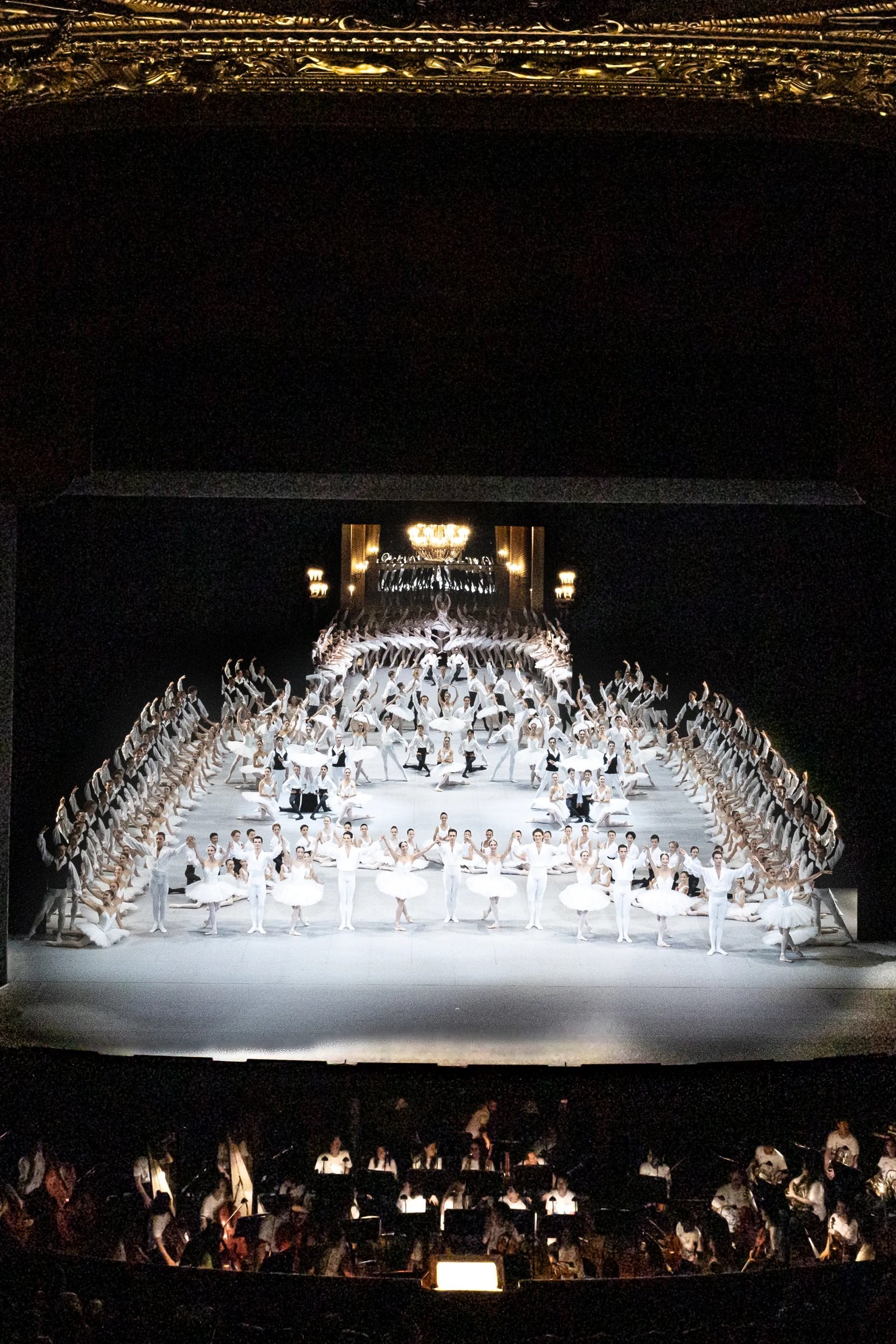
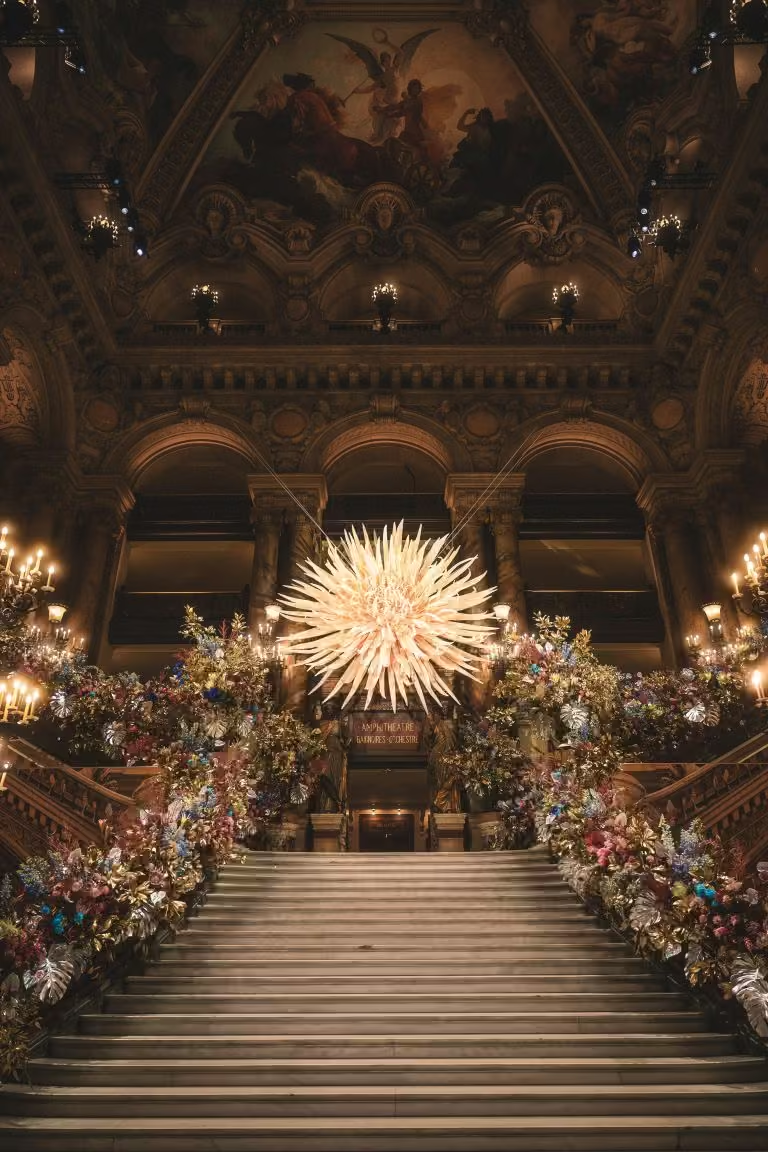
A procession came before the new choreography. At the Palais Garnier on October 10, the Paris Opera’s opening gala brought Ballet School pupils, Junior Ballet dancers and the company’s established performers onto the same stage. In the official programme, Opéra national de Paris the Défilé du Ballet introduces the evening, with music from Berlioz’s Les Troyens. The arrangement makes a season opening an introduction to the people who will carry it, not only to the works they will perform.
View this post on Instagram
For CHANEL, the evening joined two kinds of involvement: making clothes for the stage and helping sustain the institution around it. The house’s 2026 gala announcement CHANEL confirms its costumes for Rings of Saturn alongside the tutus and tiaras associated with the ceremonial procession. The distinction gives this particular night its focus. One contribution accompanies a returning ritual; another helps establish the appearance of a new work.
Signal. What happened: CHANEL supported the Paris Opera’s opening gala and supplied costumes for a new ballet. Exact object: The 2026 to 2027 dance-season gala, including Rings of Saturn and the Défilé du Ballet. When and where: October 10, 2026, at the Palais Garnier in Paris. Source: CHANEL’s announcement and the Opera’s programme, CHANEL which document the partnership and creative credits. Why it matters: Costume design sits within a longer commitment to emerging dancers, specialist craft and the institution’s working spaces.
flow
The gala marked the opening of the 2026 to 2027 dance season, but CHANEL’s support did not begin with this edition. As the supplied announcement explains, the house has been a Patron of the Gala since 2018, a Major Patron of the Paris Opera since 2023 and an Exceptional Patron of its Renovation since 2025. Those dates describe expanding commitments, not three interchangeable names for sponsoring one evening.
The clothes worn during the procession carry their own chronology. CHANEL’s account of its 2021 collaboration CHANEL credits the Opera’s ateliers and embroiderer Lesage with helping create ten costumes intended to accompany the étoiles at successive season openings. Their recurring use is an important detail. These garments were conceived for a ceremony that returns, rather than as pieces whose purpose ended after their first photographs appeared.
That continuity changes how the craftsmanship can be understood. A returning costume becomes part of an institution’s visual memory, recognized through repeated appearances. Its value is not confined to novelty. Dressing an annual procession asks a different question from dressing a premiere: how can clothing support recognition, while leaving attention on the performers who bring the ceremony back to life?
The musical credits give the ceremony another connection to training. For the procession, the Opera Opéra national de Paris names its ADO Youth Orchestra and conductor Alizé Léhon, while the subsequent ballets are listed with recorded music. The distinction is easy to lose in a summary of an evening at the Opera. Here, younger musicians participate in the introduction, and the programme changes its means of accompaniment as it moves into the choreographed works. The institution is presenting several kinds of participation, not a single uninterrupted format.
After the procession, the programme placed Juliano Nunes’ Rings of Saturn beside Vers un pays sage and Busk. The Opera’s credits AROP identify the first as a creation with CHANEL costumes, while Jean-Christophe Maillot’s and Aszure Barton’s works entered the company’s repertoire. Maillot receives the costume credit for his ballet; Michelle Jank receives it for Busk. Supporting the evening does not make CHANEL the designer of every garment on its stage.
move
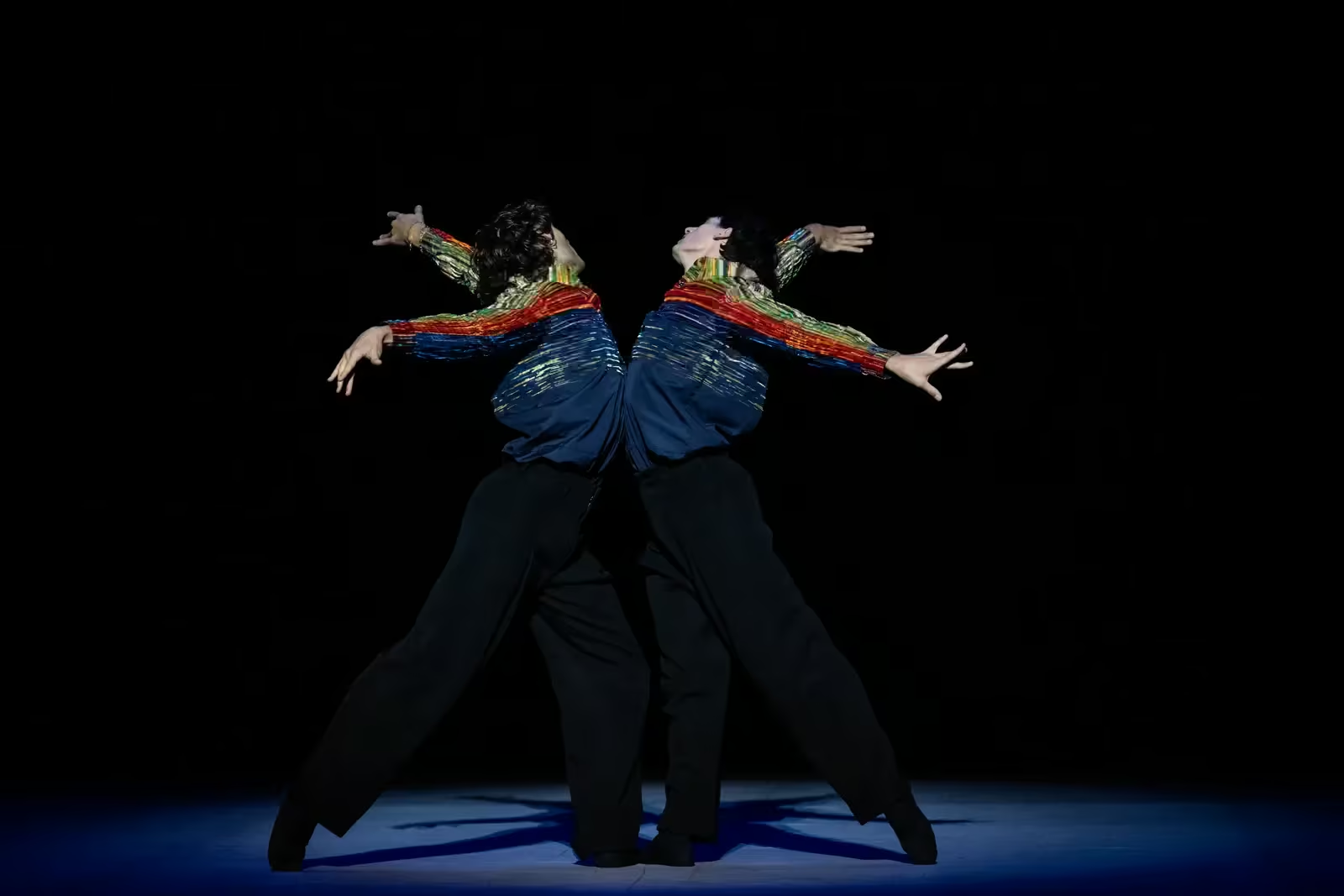
CHANEL’s photo give the new costumes a more specific identity than the broad language of a fashion and ballet partnership. In an official close view from behind, CHANEL narrow bands of green, cream, red, orange and blue cross the upper back and continue into the sleeves. The stripes are uneven and textured, breaking up the surface rather than forming a perfectly flat graphic.
The garment’s construction is not fully explained by its surface. The official close view CHANEL reveals a collar above the colored bands and a darker field lower down the back. Those familiar shirt elements give the eye a recognizable starting point before the texture draws it closer. They also keep the design connected to dressed people rather than an anonymous covering. The dancers retain a clothing sil even as their poses turn it into part of a larger composition. The pattern therefore has to be considered across bodies, not just fabric.
View this post on Instagram
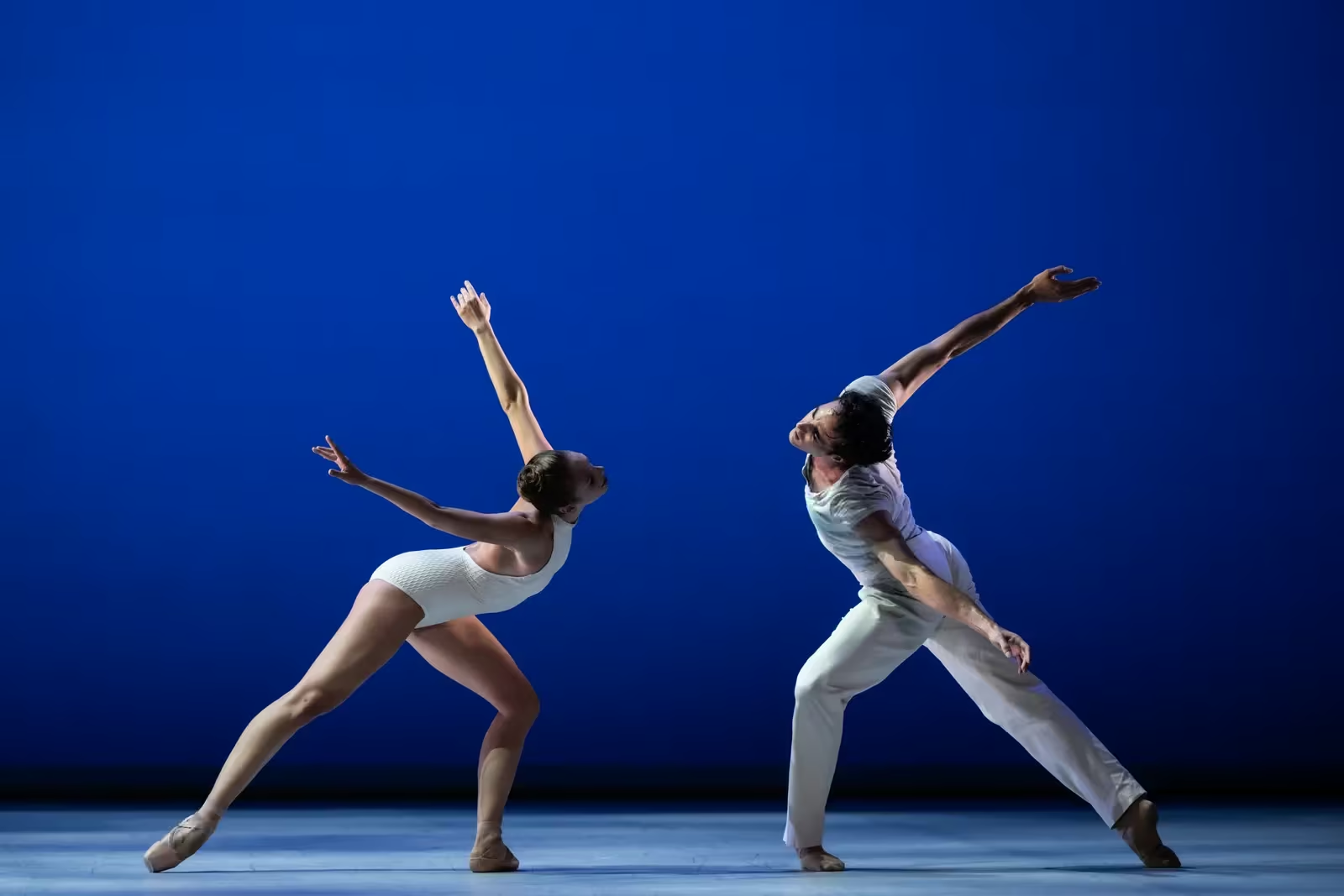
Another image on a pale background CHANEL shows two dancers bending in opposing directions, their arms making related curves while dark, wide-legged trousers establish a shh lower half. Hue follows the upper body. The result is not simply two striking shirts placed beside one another: the arrangement of the dancers makes their similarities and differences visible at the same time.
The stage photograph CHANEL changes the relationship again. Against darkness, the same bright bands remain prominent across shoulders and sleeves as the dancers extend their arms away from one another. The contrast offers a useful observation about costume: its appear depends on the space around it and the position of the person inside it, not only on the garment viewed alone.
Vogue’s account of the gala Vogue attributes the new costumes to Matthieu Blazy for CHANEL. That places the project within a contemporary design practice, even while the ceremony recalls earlier collaborations. It is not necessary to turn the ballet into a runway extension to recognize the designer’s contribution. The relevant encounter happens when a fashion proposal becomes clothing for somebody else’s choreographic work.
That does not turn a still image into a full account of a show. What the photographs do show is a design that remains legible across different poses and backgrounds. The dark trousers leave the colored upper sections prominent without making the legs disappear as lines. It is possible to examine that view relation without pretending to have measured the costume’s weight or watched every passage of the choreography.
CHANEL’s phrase “freedom of movement” becomes a practical design question here. Where does the eye travel when an arm lifts? Does a change in posture reveal another part of the pattern? How do two dressed bodies relate when they draw apart? These questions belong to clothing in action. The costume is not separate from the image of the dance; it helps the audience read it.
stage
The historical connection is equally concrete. In its account of Le Train Bleu, English National Ballet English National Ballet describes Gabrielle Chanel’s costumes for the Ballets Russes production first staged in 1924. Striped tops, sleeveless sweaters and jersey swimsuits carried the appearance of Riviera leisure onto the stage. The reference was contemporary life, not a wardrobe assembled solely from conventional ballet dress.
The production joined choreography by Bronislava Nijinska, music by Darius Milhaud and a scenario by Jean Cocteau. As the same institutional account records, English National Ballet scenes drew on activities including golf, swimming and sunbathing. Clothing participated in establishing that world. A tennis skirt or bathing costume did not merely cover a dancer; it helped describe the kind of person and social setting being portrayed.
The surviving objects keep this history from becoming only a story about famous convincers. A Victoria and Albert Museum image record Vandaimages identifies wool jersey and cotton tape in a 1924 costume designed by Chanel for a male role in Le Train Bleu. Those material details bring the discussion back to something made and worn, rather than an abstract claim that fashion and dance have always belonged together.
The relationship should not be flattened into a century of uninterrupted sponsorship of one institution. Gabrielle Chanel’s work with the Ballets Russes and the present house’s formal roles at the Paris Opera belong to different organizations and periods. Their relevance lies in the recurring encounter between a designer and a moving body, not in inventing an unbroken administrative arrangement.
Nor does the precedent require a modern costume to imitate a 1920s swimsuit. It offers another way to understand continuity: a designer can respond to the performers and view lang of the present while drawing confidence from an earlier willingness to cross disciplines. The useful inheritance is an approach to working with dance, rather than a fixed collection of motifs that must reappear.
gen
The Junior Ballet makes the commitment to future performers view within the institution itself. The Opera’s description of the company Opéra national de Paris dates its creation to May 2024 and identifies CHANEL as its Founding Patron. Young dancers join on two-year professional training contracts, combining development of their technique with experience performing classical and contemporary repertoire.
The same account Opéra national de Paris places touring and public outreach beside training, while opening the company to dancers from different backgrounds and to Ballet School students completing their preparation. That matters to the meaning of patronage. Supporting a gala can give established talent a prominent evening; supporting a training company addresses how less experienced artists gain opportunities before reaching that level.
Costumes connect those two settings without making them identical. In CHANEL’s separate account of the 2025 gala, CHANEL the house credits Lemarié with feather and flower ornaments for the costumes of twelve women in the Junior Ballet. This is an earlier, documented collaboration, not a claim that every decorative detail was remade for 2026. It extends the craft relationship beyond the company’s most senior dancers.
There is a revealing parallel between a rehearsal room and a workroom. In both, an apparent ease can depend on decisions repeated and adjusted until they become reliable. That comparison does not make the two professions interchangeable. It helps explain why a partnership concerned with passing on skills has more substance when it includes both the people making costumes and the people learning to perform in them.
The Junior Ballet’s place in the opening procession also gives the institution’s future a present-tense form. The younger company is not represented solely by a promise in a sponsorship announcement. It appears within the same ceremony as the established ranks. The arrangement allows continuity to be seen as a relationship among generations, rather than as a series of celebrated names replacing one another.
extend
The renovation commitment reaches further than the building hosting the gala. The Opera’s September 2025 project announcement Opéra national de Paris identifies four sites: Palais Garnier, Opéra Bastille, the Berthier workshops and the Ballet School in Nanterre. It describes stage equipment, rehearsal facilities, working conditions and public access among the concerns. This is not simply a plan to refresh the decorative rooms most likely to appear in event photographs.
A more recent September 2026 announcement Opéra national de Paris names Nieto Sobejano Arquitectos as the winner of the competition to redesign nearly 5,000 square meters of public space at Bastille. The proposal emphasizes daytime access, clearer connections to the city and flexible areas for encounters with the arts. The Opera again identifies CHANEL among the project’s foundational supporters.
These plans give a different scale to the word support. A costume concerns a body in a particular performance. A rehearsal space serves the preparation that precedes it. A welcoming public area affects how someone encounters the institution even without attending a gala. The tasks differ, but they belong to the same question of keeping an arts organization usable rather than merely admired.
The published commitments do not itemize CHANEL’s contribution to each room, project or production. Treating the entire renovation as a gift from one fashion house would therefore overstate the available record. What is documented is participation in a broader effort. That distinction leaves the partnership substantial without erasing the other supporters, public responsibilities or specialist teams involved.
A night at the Opera can make preservation look like protecting an atmosphere. The building plans suggest a more demanding task: keeping spaces capable of accommodating changing work. Heritage needs maintenance, but it also needs a reason for people to return. The gala and the renovation address those needs on different schedules, one through a concentrated evening and the other through decisions whose consequences will unfold over years.
fin
The social part of the gala was built into the event rather than added as an afterthought. AROP, the Friends of the Paris Opera, AROP published a schedule including interval cocktails, supper and an after-party alongside the performance. Those gatherings belong to the occasion, but they are not a substitute for identifying the work, makers and institutional commitments being celebrated.
There is already a next destination for one of the evening’s creations. New York City Center’s announced programme NY City Center includes the US premiere of Rings of Saturn during the Paris Opera Ballet’s May 12 to 16, 2027 engagement. Casting and programming remain subject to change. The listing gives the new ballet a life beyond its opening gala, with another audience scheduled to encounter it.
Related Articles
Gracie Abrams Just Shh Chanel’s Newest Instinct
The singer-songwriter is the new face of Coco Mademoiselle Crush Absolu, a fragrance built around […]