DRIFT AUDIO
Listen to this story
Choose a voice, then press play.
On October 10, HOMEGAME releases three New Era 59FIFTYs with crowns cut from cloth built on centuries-old Japanese patterns, and no two caps land quite alike.
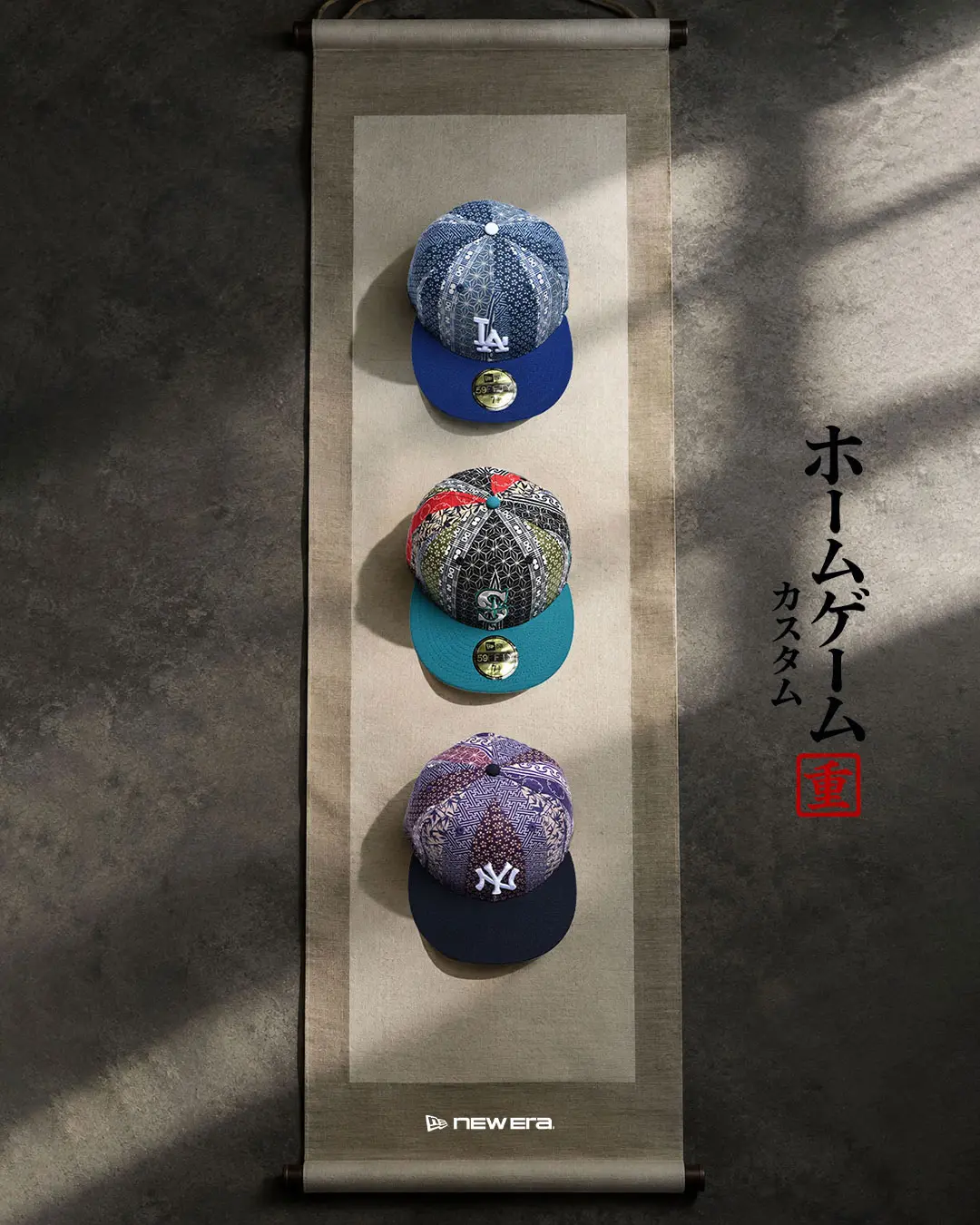
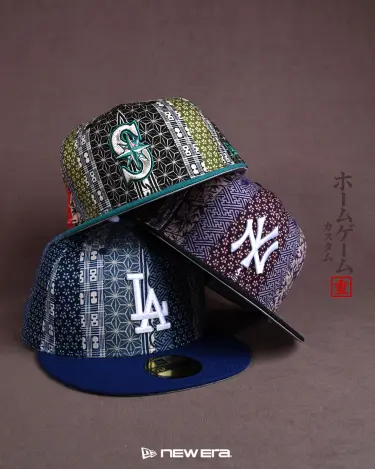
The 59FIFTY has worn almost everything since Harold Koch redesigned New Era’s fitted baseball cap in 1954: wool, polyester, camo, chrome, suede. On Saturday, October 10, it takes on something considerably older. The Kasane Pack, the latest release from Harajuku cap specialist HOMEGAME under its HOMEGAME CUSTOM banner, cuts the crowns of three MLB caps from fabric that combines several traditional Japanese patterns, then finishes each one with a solid visor in team color and the club’s logo in raised embroidery. The Los Angeles Dodgers, the Seattle Mariners and the New York Yankees are the three clubs on the receiving end. HOMEGAME’s own tagline for the project translates roughly as “the memory of Japan, carried into a modern silhouette.”
Signal. What happened: HOMEGAME has announced the Kasane Pack, a three-cap HOMEGAME CUSTOM run of New Era 59FIFTYs whose crowns are made from fabric combining traditional Japanese patterns and plant motifs, set against MLB team-color visors and logos. Exact object: New Era Los Angeles Dodgers CO 59FIFTY Multi/Blue “Aika” (15354617), Seattle Mariners CO 59FIFTY Multi/Northwest Green “Suima” (15354596) and New York Yankees CO 59FIFTY Multi/Purple Navy “Shichiku” (15354603). When and where: Saturday, October 10, 2026, at HOMEGAME’s stores and on its online shop, where sales open at 12:00 Japan time; HOMEGAME had not published a price at the time of writing. Source: HOMEGAME’s own Kasane Pack announcement, cross-checked against a Japan market rel notice. Why it matters: HOMEGAME has spent the past few seasons reworking team caps through fabric, color and lettering, and this is its most direct attempt yet to bring Japanese textile tradition onto the 59FIFTY, with pattern placement that changes from cap to cap.
stir
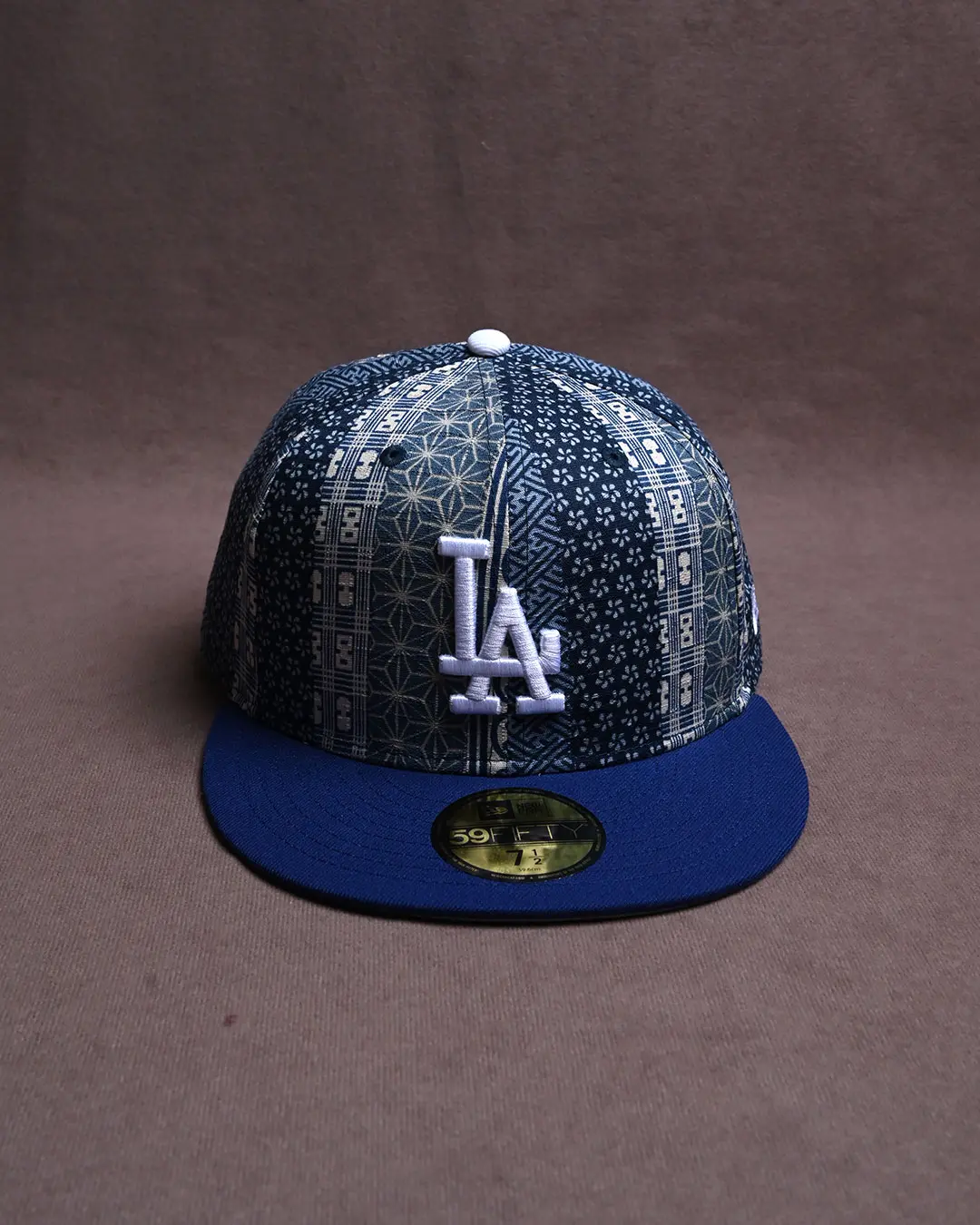
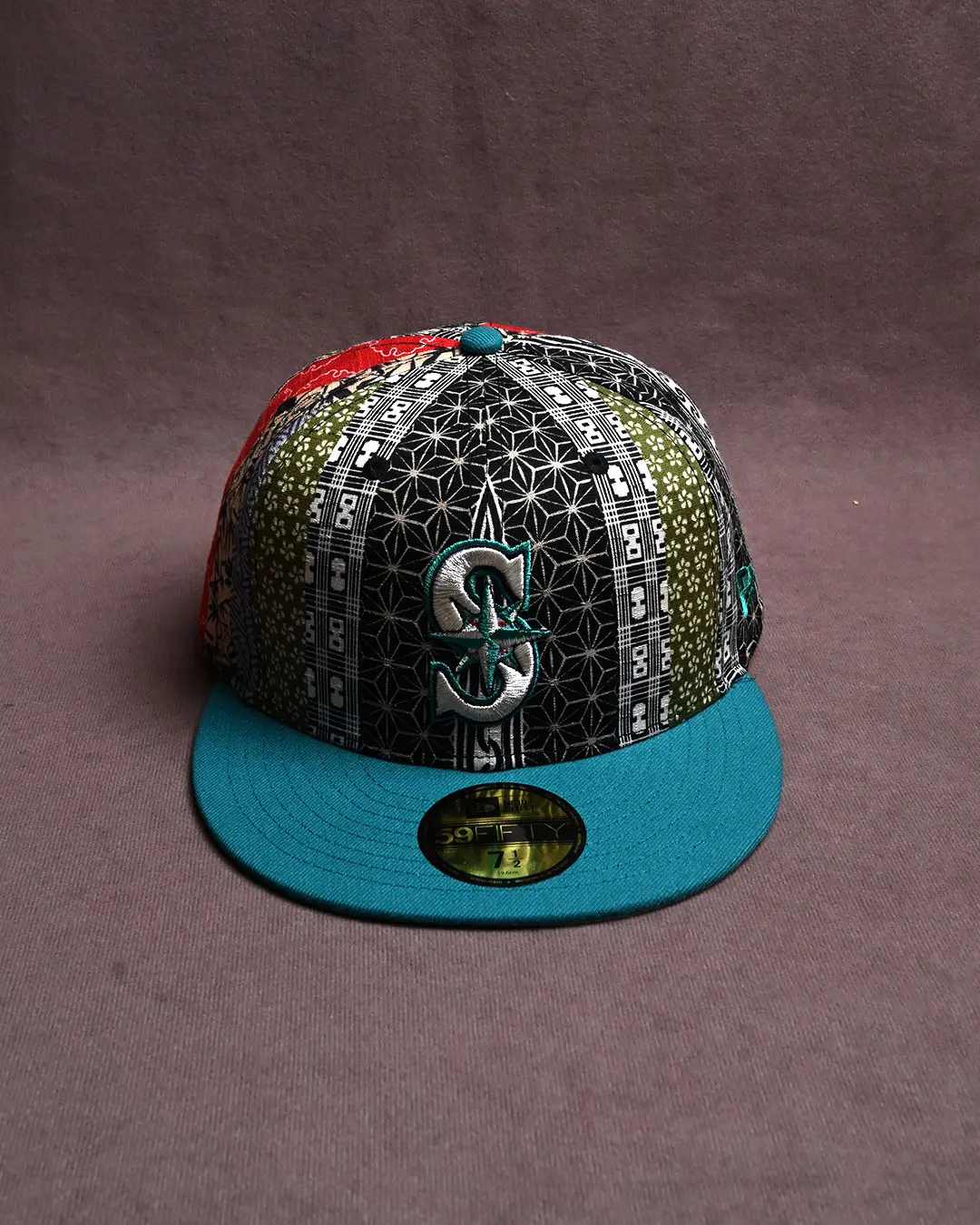
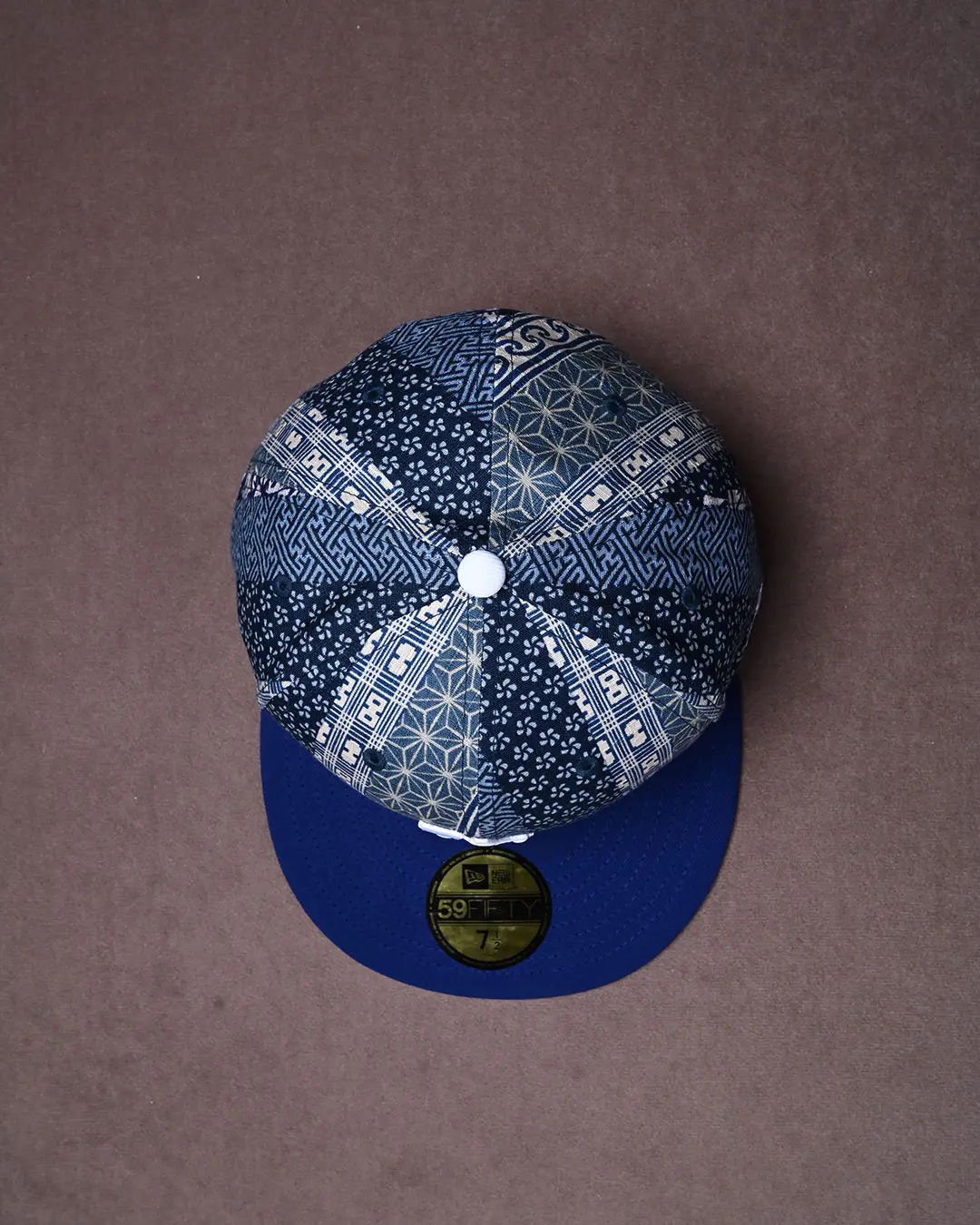
Each cap carries a two-character name, and read literally, the names point toward the motif that leads each crown. The Dodgers model is Aika, written 藍花, “indigo flower.” Its crown is built from blue-toned wagara, the umbrella term for traditional Japanese patterns, and it sits above a solid blue visor with the interlocking LA raised on the front. The Mariners model is Suima, 翠麻, which pairs a character for a deep jade green with the one for hemp. Its crown runs in greens, finished with a visor in the club’s Northwest Green and the club’s S logo in raised embroidery.
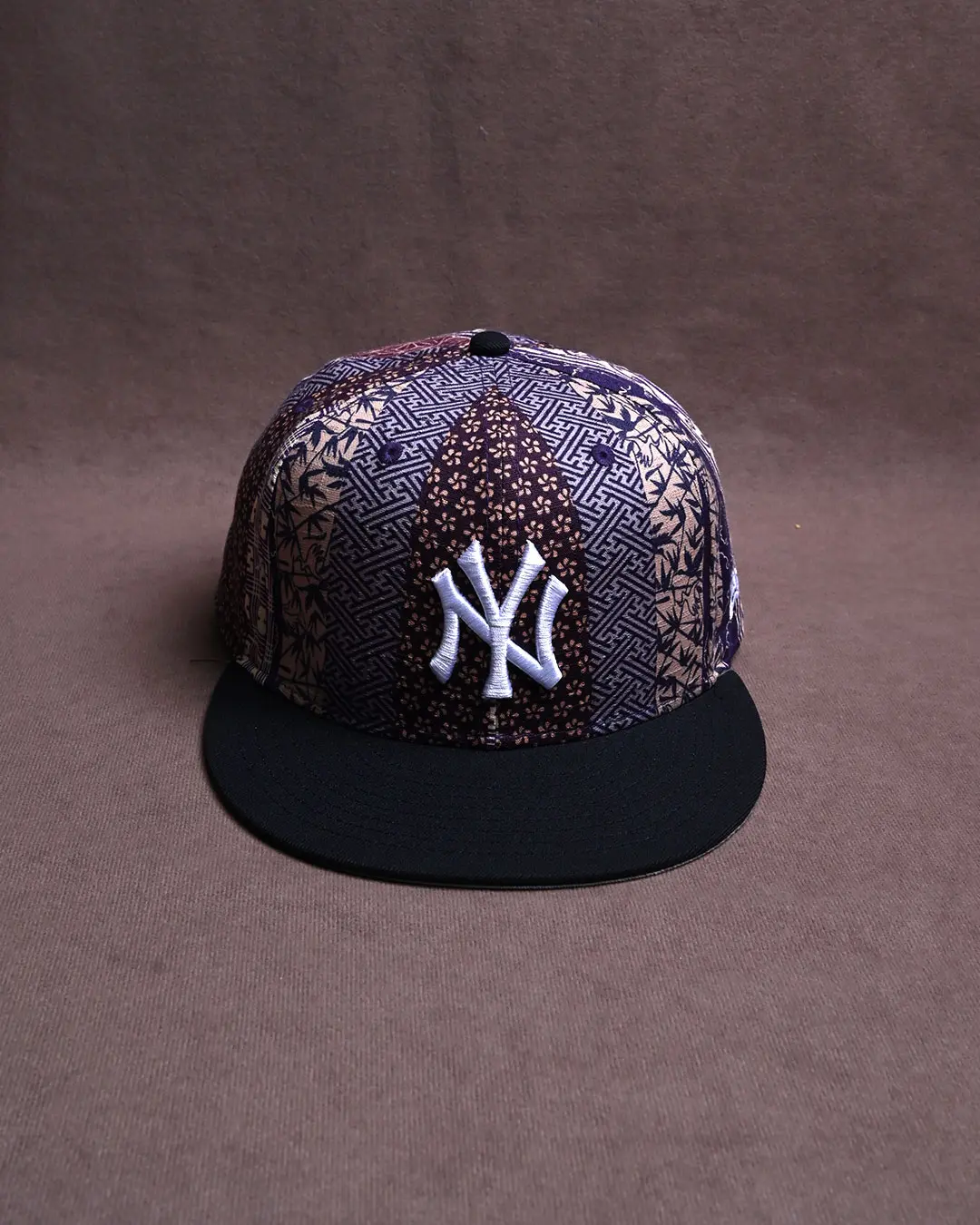
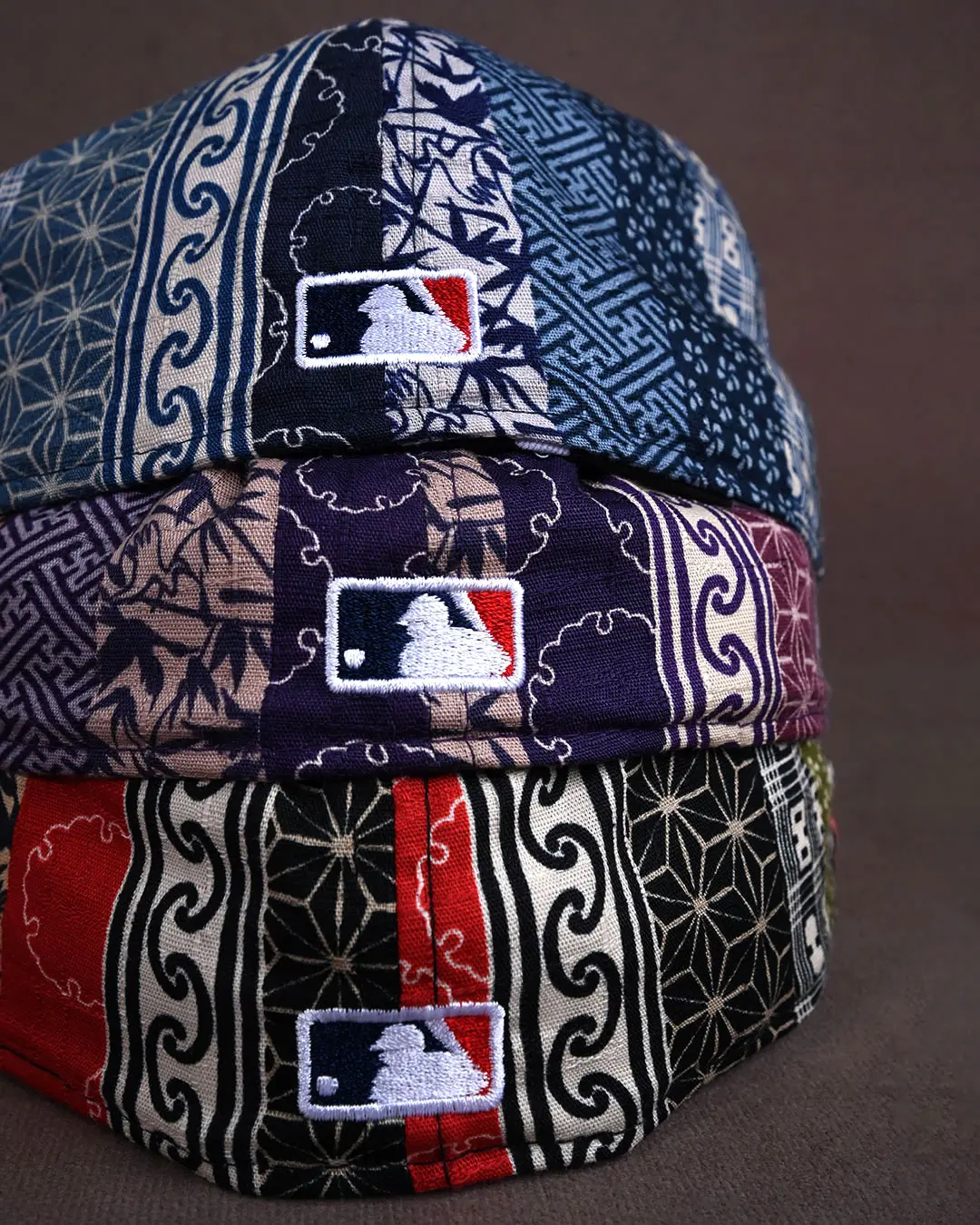
The Yankees model is Shichiku, 紫竹, “purple bamboo.” Here the crown works through purple tones against a navy visor, with the NY stitched in relief on the front. All three share the same finishing details, laid out in HOMEGAME’s announcement for the pack: the MLB Batterman logo on the back, a white sweatband and a grey undervisor. That last detail is now so standard it is easy to forget it was once a choice. Major league undervisors were green until the 1980s, on the theory that the color cut glare.
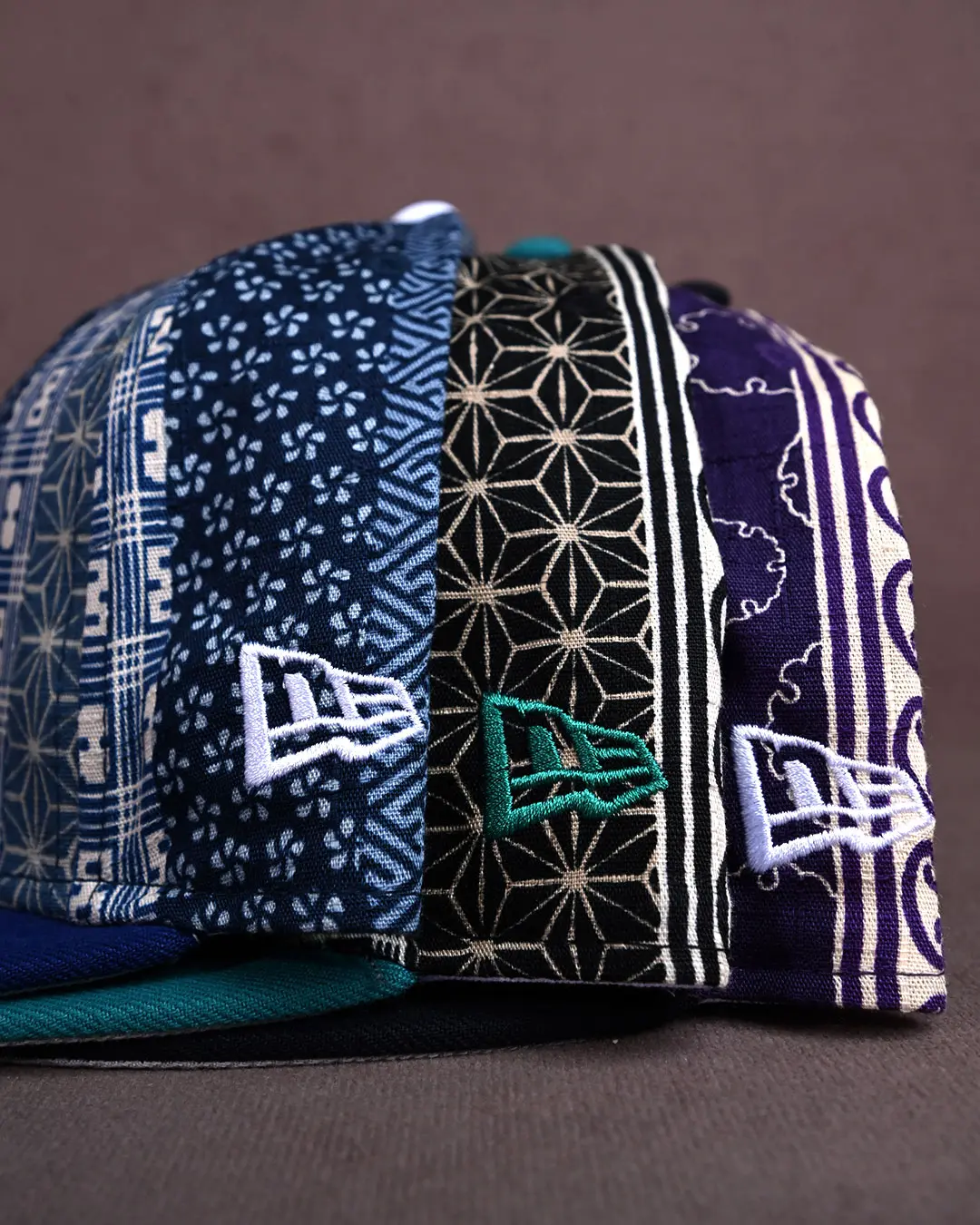
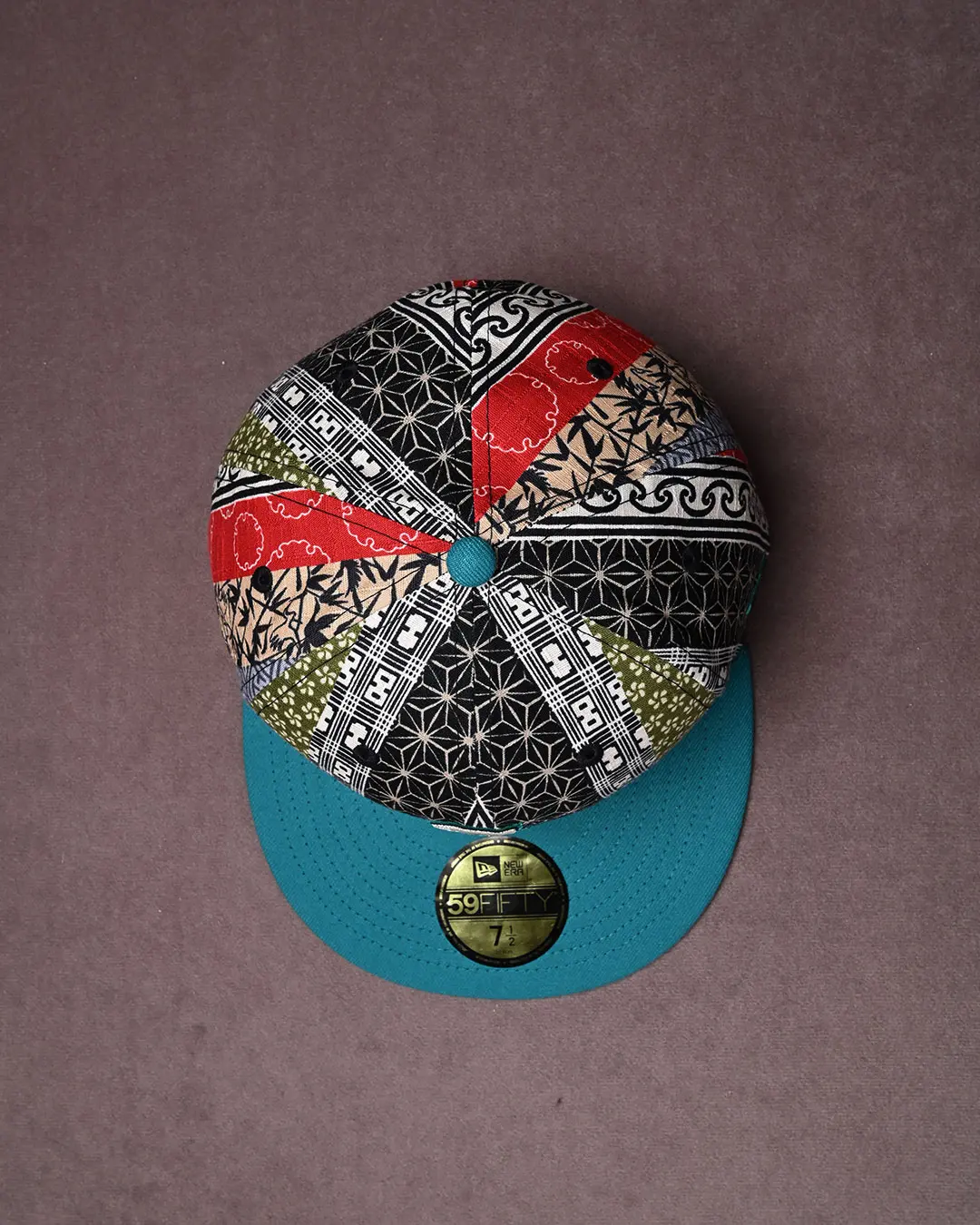
HOMEGAME lists the motifs threaded through the fabric as geometric asanoha (hemp leaf), delicate small flowers and upright bamboo, and says the project was handled with care from the selection of the cloth through to how it was put onto the cap. The most practical line in the announcement concerns variation. Because each crown is cut from a continuous patterned fabric across the 59FIFTY’s six panels, the way the motifs fall shifts from cap to cap, and HOMEGAME presents each one as a one-off for exactly that reason. Two people buying the same Yankees cap on the same morning will not end up with identical crowns.
flow
The pack’s name, written with the character 重, means layering or piling one thing on another, and in Japanese dress the word carries centuries of weight. In the Heian period, court women wore unlined silk robes stacked one over another, and the color combinations visible at the sleeves and collar followed a code known as kasane no irome. As the Japanese government’s Highlighting Japan feature on the practice explains, those charts listed more than 100 combinations named for the seasons, and wearing the right one for the time of year was expected knowledge at court. The most formal expression was the jūnihitoe, the multilayered ceremonial dress still seen at imperial ceremonies, in which five colored robes known as itsutsuginu were layered over a hitoe undergarment. Most of the effect lived at the edges, in thin bands of color stacked one above the next.
HOMEGAME doesn’t spell out that reference, and the Kasane Pack is not a seasonal color code. The logic rhymes, though: a single fabric stacks several motifs on top of one another, and then the whole thing is set under a visor in a contrasting solid, so the cap reads as layers rather than as a print.
The motifs themselves come with their own histories. Asanoha arranges six diamond shapes into a star that reads as clustered hemp leaves, and it appears on Buddhist statuary going back to the Nara and Heian periods. Hemp grows quickly and straight toward the sky, which is why, as Kateigaho International’s pattern guide notes, the pattern became common on clothing for newborns and young children after it caught on with women in the Edo period, a quiet wish for healthy growth stitched into the fabric. It remains one of the most recognizable Japanese patterns anywhere, a status recent anime has only reinforced.
Bamboo carries a different message. It bends in wind without snapping, and it sits alongside pine and plum in the shochikubai trio that still decorates New Year celebrations and auspicious occasions. Small flowers are the gentlest of the three motifs, the kind of repeating floral that softens a denser geometric ground. Put together on one crown, they give each cap a busier surface than any team color could on its own.
three
HOMEGAME doesn’t explain the selection, though its product copy does dwell on each team’s origins. It notes that the Dodgers were founded in Brooklyn in 1883 and took their name from pedestrians dodging the city’s trolleys, and that the Mariners, founded in 1977, are named for Seattle’s standing as the largest port city of the Pacific Northwest.
Read from Japan, the trio also traces a familiar line through the history of Japanese players in the major leagues. Ichiro Suzuki arrived in Seattle in 2001 and became the first Japanese-born player inducted into the National Baseball Hall of Fame in 2025. Hideki Matsui was named World Series MVP with the Yankees in 2009. Shohei Ohtani has played for the Dodgers since 2024. Whether or not that history drove the choice, these are three of the most worn team caps in Japan, and HOMEGAME has returned to the Dodgers and Yankees in particular again and again.
show
HOMEGAME opened in Harajuku in January 2023 as a concept shop built around New Era caps that had never been released in Japan, with a strong hip-hop accent to the selection. It has since grown to stores in Harajuku, Shinjuku, Yokohama, Osaka and New York, according to the brand’s own description of itself, and its HOMEGAME CUSTOM line of New Era special orders has become the shop’s calling card. The brand describes the line as built on proposals from its own staff and from well-known figures in its orbit.
The Kasane Pack reads most clearly against the packs that came before it. In September 2024, the NEW TOKYO PACKgave HOMEGAME its first NPB custom, three Yomiuri Giants caps in suede with color suggestions from producer Shu Asaoka. The stated aim was to turn Japanese team caps into fashion pieces, with pale suede chosen to sit easily against the city rather than shout over it. Weeks later, the Lux Fabric Pack put a Yankees World Series 75th and a Dodgers 1963 World Series cap into crisp specialty fabric at ¥9,350 each, under a stated goal of crossing tradition with innovation. The Dodgers cap came in a pale pink with a touch of light blue, while the Yankees cap stayed in a classic two-tone built to go with shirts and jackets. This September, the brand’s REAL DYNASTY release revived a late-1990s and early-2000s idea by spelling out the Yankees’ NY in kanji, with Taiwan’s zhuyin phonetic symbols worked in, on the Yankees CO KANJI 59FIFTY that HOMEGAME announced on September 3. Fabric as the main event, Asian scripts and craft as the hook: the Kasane Pack pulls both threads together.
View this post on Instagram
There is a longer lineage behind all of this. Ehrhardt Koch founded the company in Buffalo, New York, in 1920, and it turned out 60,000 caps in its first year, most of them for fashion rather than sport. New Era has been the exclusive supplier of on-field caps to MLB since 1993, and for a while that exclusivity meant fans could only buy what the players wore. That changed in 1996, when Spike Lee called New Era’s Chris Koch and asked for a Yankees cap in red, a request the National Baseball Hall of Fame credits with reshaping the headwear business. Thirty years on, a shop in Harajuku can dress the same Yankees logo in purple bamboo, and nobody blinks.
fin
The Kasane Pack goes on sale on Saturday, October 10, at HOMEGAME’s stores and on its online shop, with online sales opening at noon Japan time. HOMEGAME had not published a price at the time of writing. For context only, the shop’s most recent HOMEGAME CUSTOM 59FIFTYs, including the Yankees KANJI and a Mariners compass model, are listed at ¥8,580, and the fabric-led Lux Fabric Pack sold at ¥9,350.
Sizing has not been detailed for this release either. As a true fitted cap, the 59FIFTY comes in fixed sizes rather than an adjustable strap, and HOMEGAME’s standard product copy describes the range as running in steps of roughly one centimeter. Whatever the final price, each of the three caps carries the same Batterman logo on the back as any on-field 59FIFTY. Everything in front of it has been rewritten in a much older language.
Related Articles
Moncler Re/Icons Takes On Four Archive Jackets at Once, and Isetan Shinjuku Gets Them First
Moncler’s 2026 Re/Icons chapter reworks four archive down styles dating from 1954 to 2009, and […]