DRIFT AUDIO
Listen to this story
Choose a voice, then press play.
Pixar has spent nearly three decades defining what modern animated storytelling can be. From the emotional wonder of Toy Story to the philosophical brilliance of Inside Out, the studio built a reputation as Hollywood’s most reliable dream factory for original stories. But the industry landscape has shifted dramatically. Streaming platforms, pandemic-era release disruptions, and shifting audience habits have complicated what used to be a near-guaranteed formula for success.
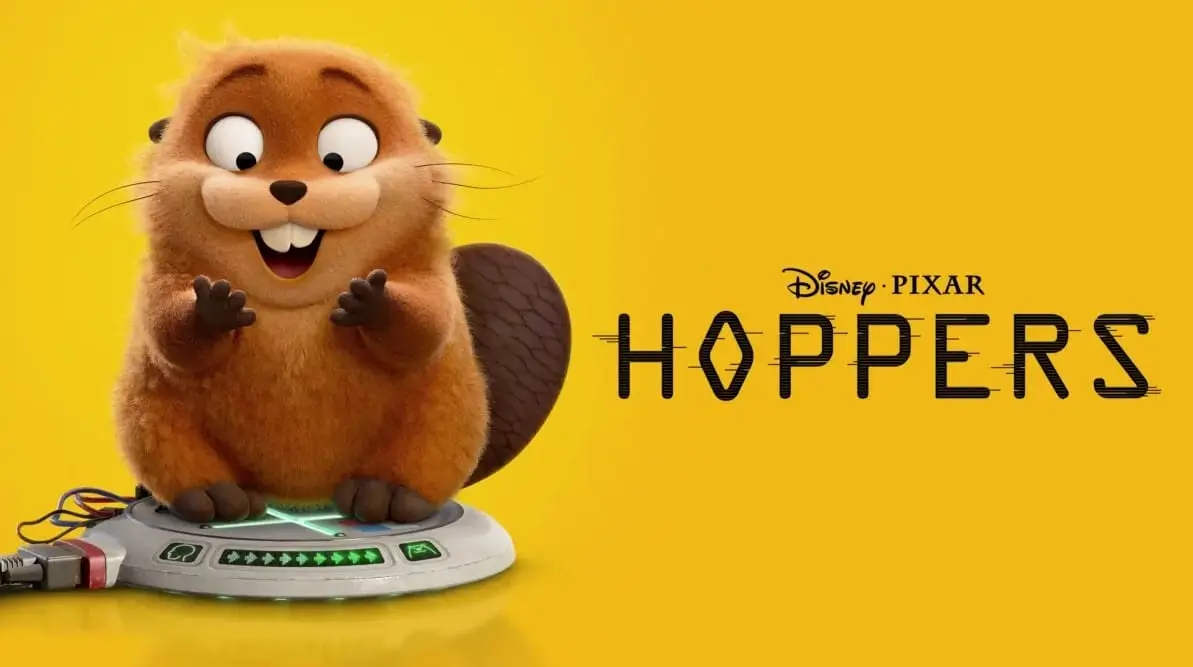
That context makes the success of Hoppers, Pixar’s newest animated feature, particularly notable. The film, which follows a young girl who transfers her consciousness into an animatronic beaver to protect wildlife, debuted at No. 1 at the domestic box office with $46 million in its opening weekend.
For Pixar, the film represents a welcome win—but not necessarily a return to the studio’s former dominance. Behind the impressive debut lies a broader question that has been haunting the animation giant for years: Can Pixar still turn original ideas into blockbuster hits?
stir
The premise of Hoppers fits squarely within Pixar’s tradition of imaginative storytelling. The film centers on a tech-savvy young girl who uses experimental technology to upload her consciousness into a robotic beaver body. Her goal is simple but ambitious: to infiltrate animal habitats and prevent environmental destruction.
Through this unusual perspective, the film blends ecological themes with Pixar’s trademark humor and emotional storytelling. The protagonist experiences life in the wild firsthand—interacting with animals, navigating predators, and confronting the complex relationship between humans and nature.
It’s a concept that echoes Pixar’s longstanding fascination with perspective shifts. Earlier films asked audiences to see the world through the eyes of toys, monsters, emotions, and robots. Hoppers continues that tradition, inviting viewers to imagine what it might feel like to experience the world as wildlife itself.
The film’s visual design reinforces this concept. Forest ecosystems are rendered with intricate detail, while the animatronic beaver—part animal, part machine—serves as the narrative’s quirky centerpiece.
The result is a film that feels both whimsical and topical, tapping into environmental concerns while maintaining the studio’s play tone.
wknd
A $46 million domestic opening is a solid performance for an animated film built on an entirely new concept. In an era where franchises dominate the box office, launching an unfamiliar story remains one of Hollywood’s toughest challenges.
Family films often rely on recognizable characters or established brands to attract audiences. Pixar itself has leaned heavily on sequels in recent years, producing follow-ups to Toy Story, Finding Nemo, and Inside Out. Those films benefit from built-in fanbases and multi-generational appeal.
By contrast, Hoppers had to introduce everything from scratch: characters, world-building, and narrative stakes. The fact that audiences showed up suggests that Pixar’s brand still carries weight—even when the story is unfamiliar.
But the studio’s recent history demonstrates that a strong opening doesn’t necessarily guarantee long-term success.
issue
Despite the promising debut of Hoppers, Pixar’s struggles with original films remain a central issue for the studio.
During the 2000s and early 2010s, Pixar built its reputation on fresh ideas that consistently became cultural landmarks. Films like Up, Ratatouille, and Wall-E were not only critically acclaimed but also major box-office successes.
In recent years, however, original Pixar films have faced an increasingly unpredictable reception.
The turning point came during the pandemic, when several major Pixar releases skipped theaters entirely. Films such as Luca and Turning Red were sent directly to streaming platforms, limiting their theatrical potential and reshaping audience expectations.
While those films were widely praised by critics and fans, the lack of a theatrical run meant they never had the opportunity to become box-office phenomena.
Then came a string of theatrical experiments with mixed results.
role
The studio’s creative direction has also been shaped by leadership changes.
Since 2018, Pixar’s creative decisions have been guided by Pete Docter, one of the studio’s most respected filmmakers. Docter directed several of Pixar’s most beloved films, including Monsters, Inc., Up, and Inside Out.
But transitioning from filmmaker to studio executive brought a different set of challenges.
In a candid interview with The Wall Street Journal, Docter acknowledged that early in his tenure he may have leaned too heavily into Pixar’s creative freedom.
“I probably overindexed on, ‘Do whatever you want,’” he admitted.
Pixar has long prided itself on being a filmmaker-driven studio. Directors are encouraged to experiment, take risks, and push storytelling boundaries. That culture produced some of the most innovative animated films ever made.
But creative freedom can also create unpredictability—especially when the commercial stakes are high.
lasseter
Before Docter stepped into the leadership role, Pixar’s creative direction was heavily influenced by John Lasseter, the director behind the original Toy Story.
Lasseter was widely seen as Pixar’s central tastemaker, guiding the studio’s projects and maintaining a consistent creative identity.
However, his tenure ended abruptly in 2018 following an internal misconduct investigation that led to his resignation from the company.
The departure left Pixar without the singular creative voice that had helped shape its identity for decades.
Docter inherited a studio in transition—one trying to maintain its creative spirit while adapting to an industry that had changed dramatically.
the pandem
The timing of that leadership transition could hardly have been worse.
Shortly after Docter assumed the role, the global pandemic reshaped the entire film industry. Movie theaters shut down for months, and studios scrambled to determine how to release their films.
Pixar’s response was particularly controversial.
Two of its most promising projects—Luca and Turning Red—were released directly on streaming rather than in theaters. While the move helped strengthen Disney’s streaming platform, it also sparked frustration among Pixar staff who felt their work deserved a big-screen debut.
The decision may have also influenced audience perception. When animated films become associated with home streaming, convincing families to return to theaters becomes harder.
the huh
Pixar’s challenge reflects broader trends across Hollywood.
The modern box office is increasingly dominated by franchises and recognizable intellectual property. Superhero universes, nostalgic reboots, and sequel-heavy franchises dominate theatrical calendars.
Original films face a steeper uphill battle for attention.
Family audiences, in particular, have become more selective about theater visits. With high-quality animated content readily available on streaming services, the incentive to buy theater tickets often depends on recognizable brands.
This shift puts studios like Pixar in a complicated position.
On one hand, the studio built its legacy on originality. On the other, financial pressures increasingly push Hollywood toward safer bets.
strat
That tension explains why Pixar has leaned more heavily on sequels in recent years.
Upcoming releases include the highly anticipated Toy Story 5, scheduled to arrive in theaters in June.
The Toy Story franchise remains one of the most beloved and commercially successful animated series in history. Each installment has delivered strong box-office results and massive merchandising opportunities.
Sequels provide financial stability, but they also raise questions about Pixar’s identity.
Is the studio still the champion of bold original storytelling, or has it become another franchise-driven Hollywood machine?
fwd
Pixar now stands at a fascinating crossroads.
The studio remains one of the most respected animation houses in the world, with a legacy that few competitors can match. Its storytelling craft, visual artistry, and emotional depth continue to set industry standards.
But maintaining that legacy requires navigating a dramatically different entertainment landscape.
Streaming services compete with theatrical releases. Franchise fatigue competes with nostalgia. And audiences are inundated with content choices.
For Pixar, the challenge isn’t simply making great films—it’s convincing audiences that original stories are still worth leaving the house for.
end
The next few years will be critical for Pixar’s future.
If Hoppers proves to have strong legs at the box office, it may reinforce the idea that originality still has commercial potential. But even a successful run won’t completely solve the studio’s long-term challenges.
Pixar must balance creative experimentation with commercial viability—a delicate equation that has become increasingly difficult in the modern film industry.
For now, Hoppers offers a hopeful sign: audiences are still willing to take a chance on something new.
And for a studio built on imagination, that might be the most important victory of all.
From the DRIFT archive: Jay Kelley Review: Noah Baumbach’s Hollywood Drama Follows a Fading Actor Facing His Own Reflection · Inside the World’s Most Iconic Ski Experiences
Related Articles
Tom Cruise Spent a Decade Saving the World x Digger
Under Kazu Hiro’s prosthetics and Emmanuel Lubezki’s drained VistaVision frames, Iñárritu stages the apocalypse as […]