DRIFT AUDIO
Listen to this story
Choose a voice, then press play.
In a world where fashion collisions often feel like calculated marketing exercises, few manage to transcend the noise and speak with genuine emotional resonance. The second drop of PUMA x Ahluwalia is one of those rare exceptions—a collection that doesn’t simply wear its inspiration on its sleeve, but lives and breathes it.
This time, British designer Priya Ahluwalia, of Indian-Nigerian heritage, turns her lens toward African football culture, crafting a capsule that feels less like a product line and more like a cultural document—a visual poem, and above all, a love letter to the communities that sustain the soul of the game.
stir
Football, in its purest form, is rarely confined to stadiums. It exists in dusty lots, on cracked concrete, and across sun-bleached streets where children kick makeshift balls and fans paint their faces with pride. It lives in handmade jerseys, hand-painted banners, and chants that rise like a chorus of unity.
It is in the transformation of matchday into a festival—a moment of collective identity. And it is precisely this spirit—raw, unfiltered, and deeply human—that Ahluwalia captures in her latest collaboration with PUMA.
from
This is not Ahluwalia’s first connection with the German sportswear house. The initial release in late 2025 reimagined the PUMA Suede through the lens of craft, sustainability, and personal narrative.
Where that collection felt introspective, this second chapter opens outward—expansive, celebratory, and communal. The shift feels both natural and necessary, particularly as global attention turns toward the 2026 FIFA World Cup.
In a landscape where global brands often tokenize culture, PUMA and Ahluwalia take a different approach—grounded in authentic engagement, research, and mutual respect.
imbue
Ahluwalia’s creative process for this collection is grounded in lived experience. Traveling to Morocco and Nigeria—two nations with deeply rooted football traditions—she observed, listened, and documented.
She spent time within local communities, visiting fan clubs and witnessing firsthand how supporters express loyalty—not through mass-produced merchandise, but through DIY ingenuity. Jerseys adorned with hand-stitched patches, scarves dyed in team colors, and banners painted with pride and defiance all informed the collection’s design language.
These were not mere stylistic references; they were acts of belonging. And it is this authenticity that gives the collection its depth.
diy
This DIY ethos runs through every piece. The garments feel less manufactured and more discovered—objects shaped by the hands of fans who embed emotion into every stitch.
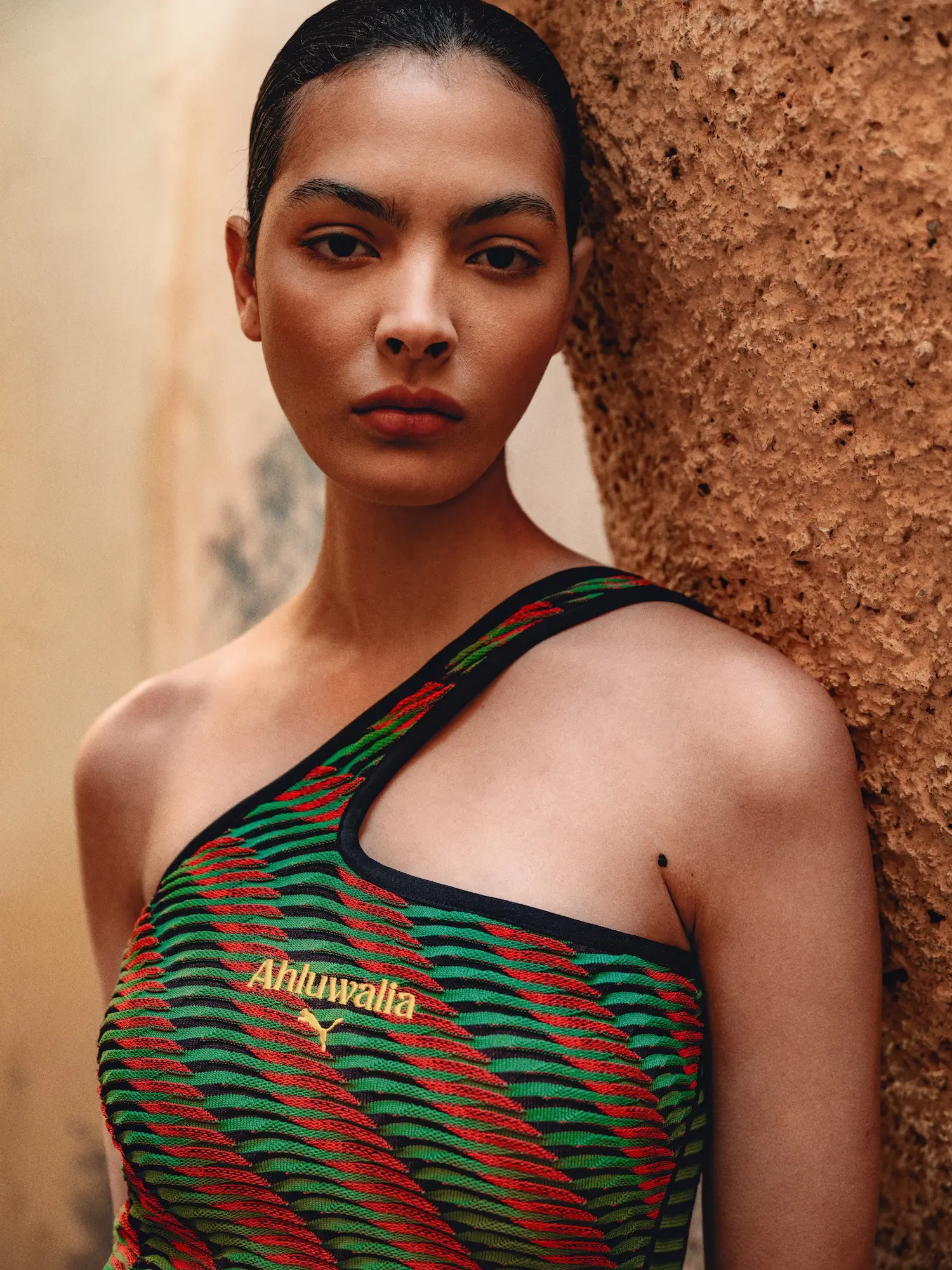
The result is a collection that is bold, textured, and symbolic. It does not imitate culture; it reflects it. It echoes the energy that pulses through African football spaces—dynamic, expressive, and rooted in identity.
reworked
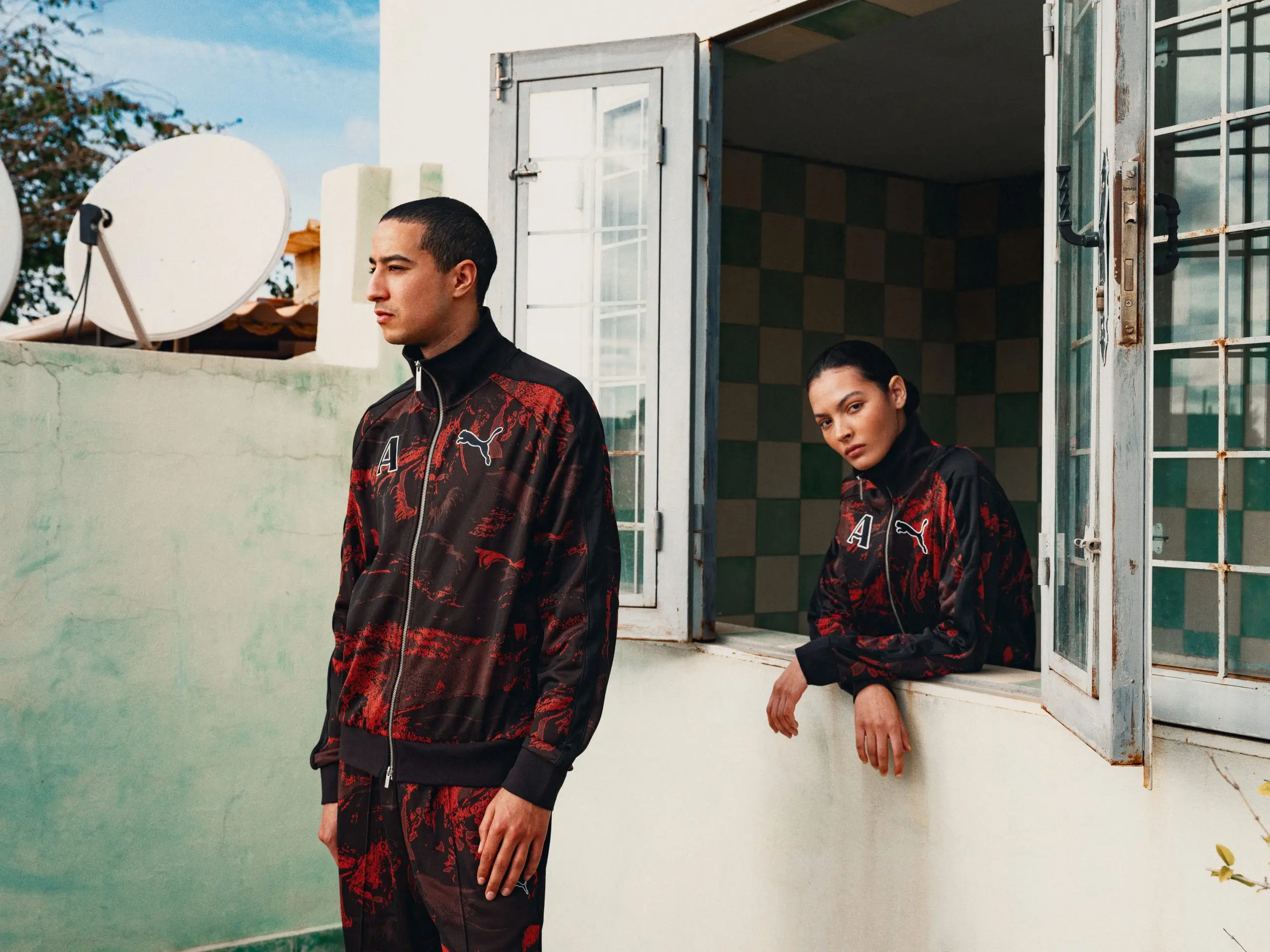
At the core of the collection are two of PUMA’s most recognizable silhouettes: the V-S1 and the T7 tracksuit. Both are reinterpreted with a balance of designer sensibility and fan authenticity.
The V-S1—an evolution of the classic Suede—features textured suede and recycled canvas uppers, creating a tactile, almost artisanal finish. Its palette draws from pan-African colors—red, yellow, and green—symbolizing unity, resilience, and vitality. These hues are applied with intention, appearing in bold blocks, tonal stitching, and subtle accents.
For those drawn to restraint, an all-black version offers a more understated expression, defined by tonal branding and quiet detailing.
uniform
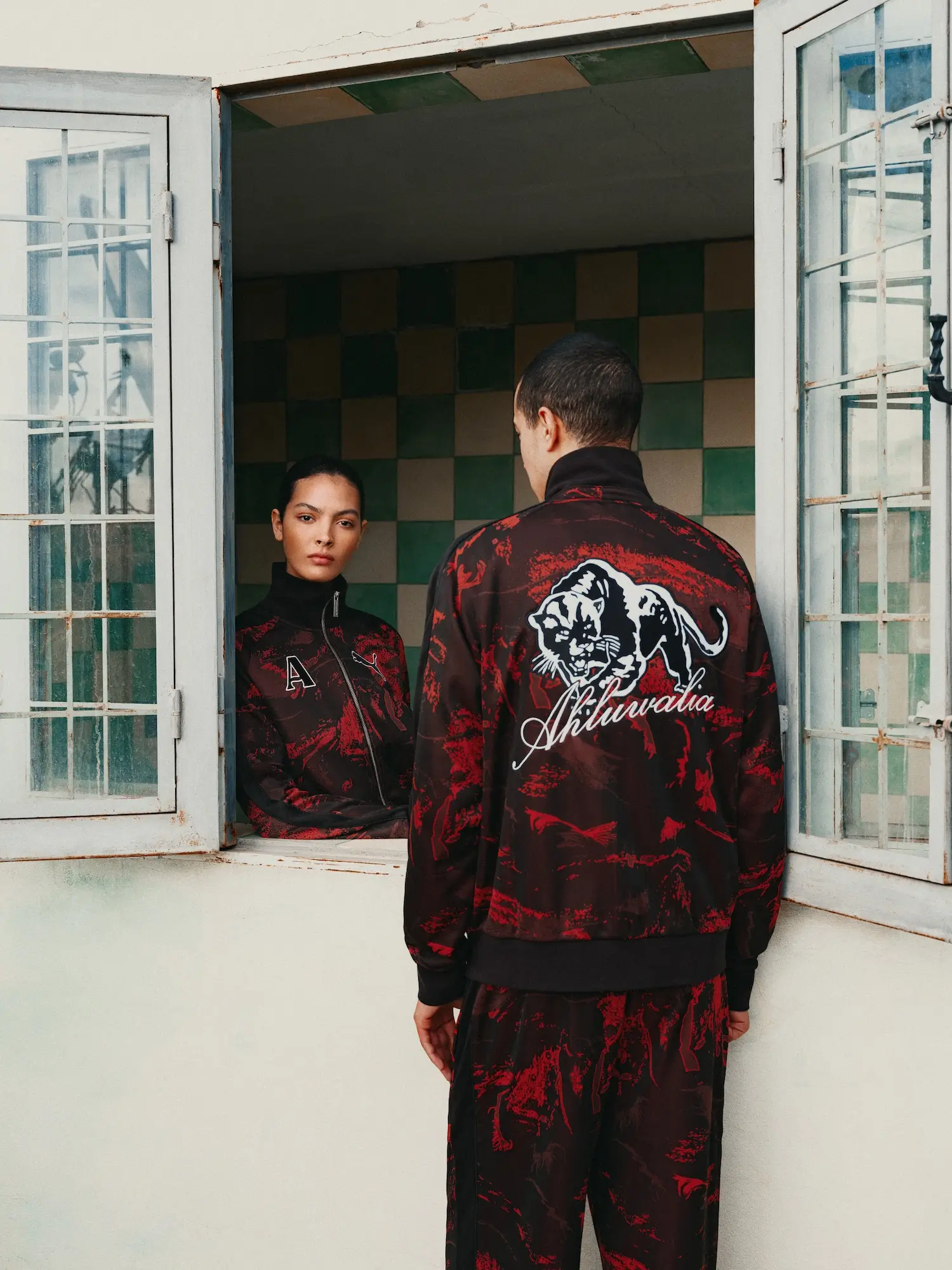
The T7 tracksuit undergoes a similar transformation. Its signature side stripes are reimagined in the collection’s core color palette, extending across sleeves and legs like a moving banner of pride.
Constructed from lightweight, breathable recycled polyester, the garment balances comfort with sustainability. Details such as custom zipper pulls, debossed logos, and clean welt pockets elevate the piece without compromising its utilitarian roots.
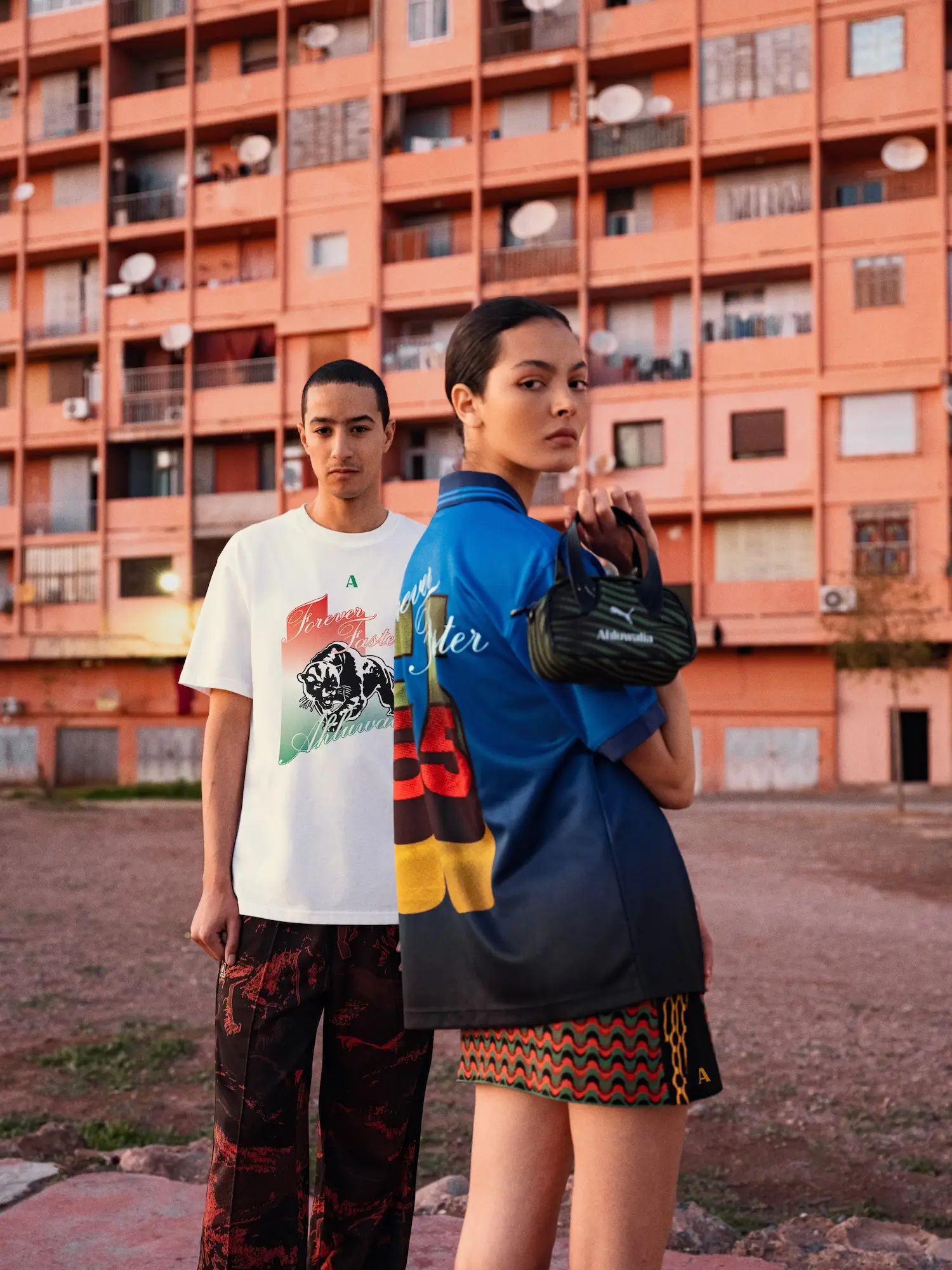
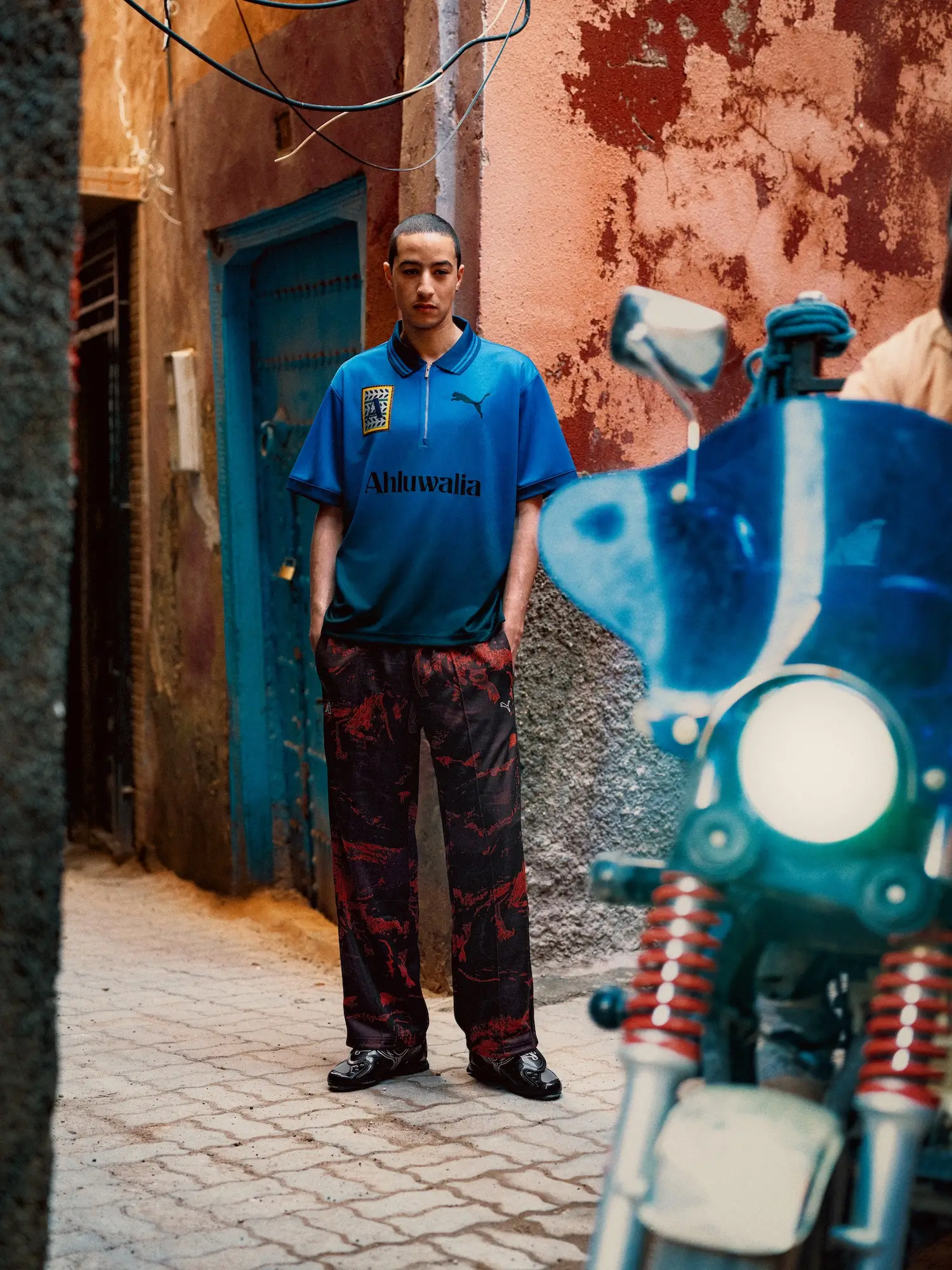
Beyond the tracksuit, the collection expands into jerseys, oversized tees, and layered outerwear—each piece contributing to a cohesive visual language defined by color, texture, and community.
access
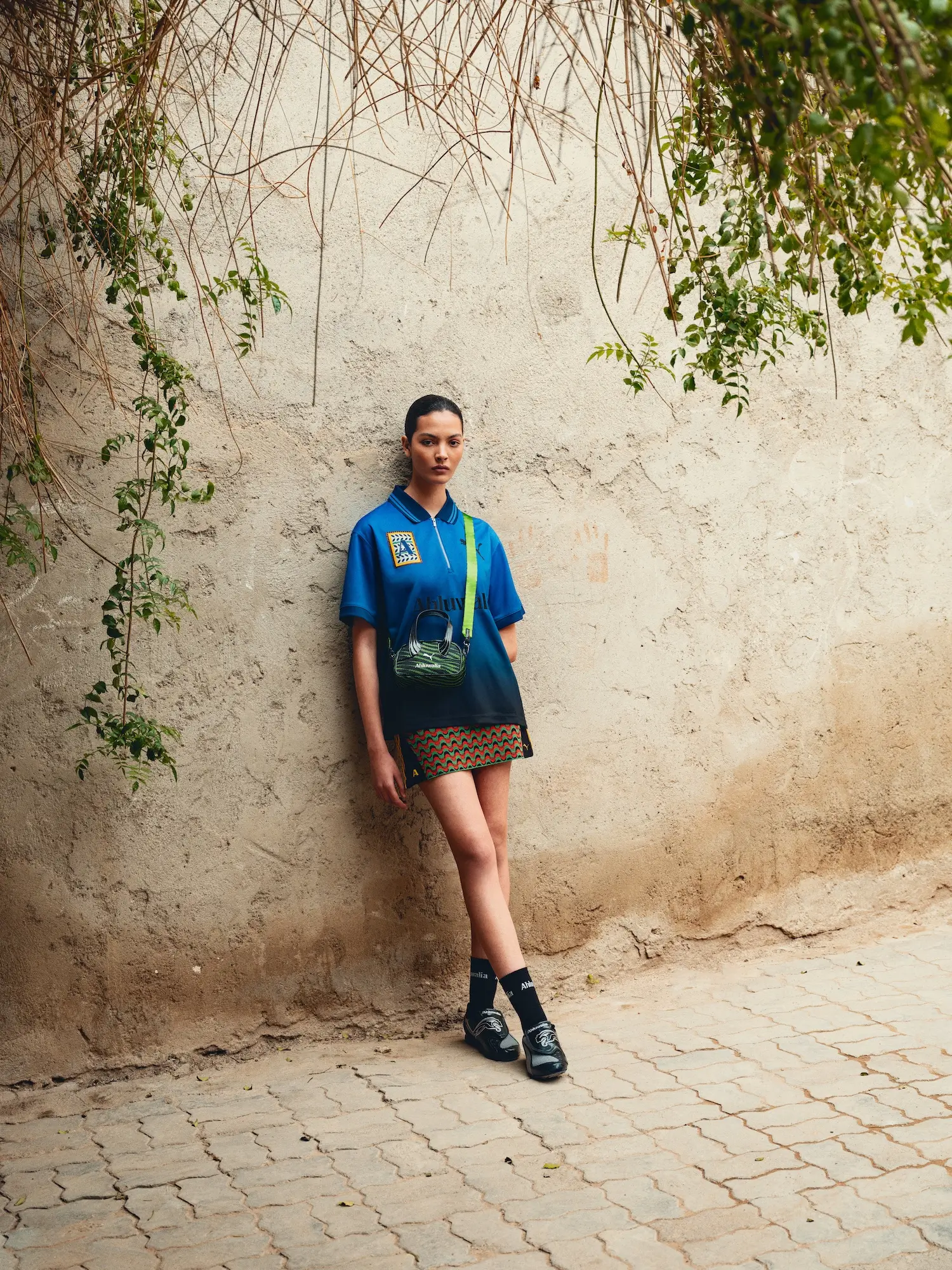
The collection extends beyond apparel into accessories that encourage personalization. Bucket hats and scarves feature abstract, campaign-inspired prints reminiscent of fan art and graffiti. Tote bags, constructed from recycled materials, function both practically and symbolically.
Perhaps most significant are the custom laces and patches—elements that invite wearers to adapt and transform their garments. This is fashion not as a fixed object, but as an evolving expression, mirroring the fluid nature of football culture itself.
show
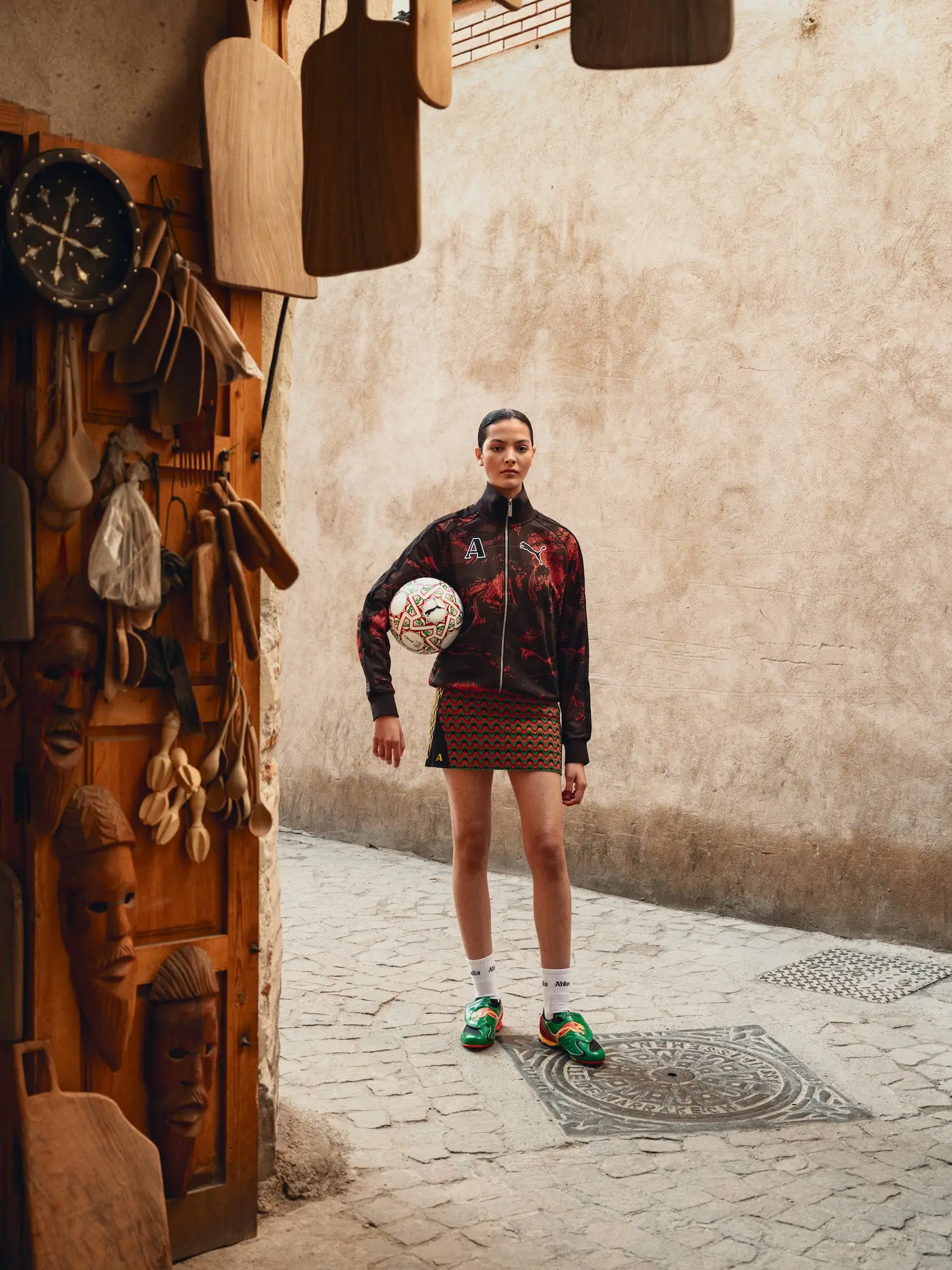
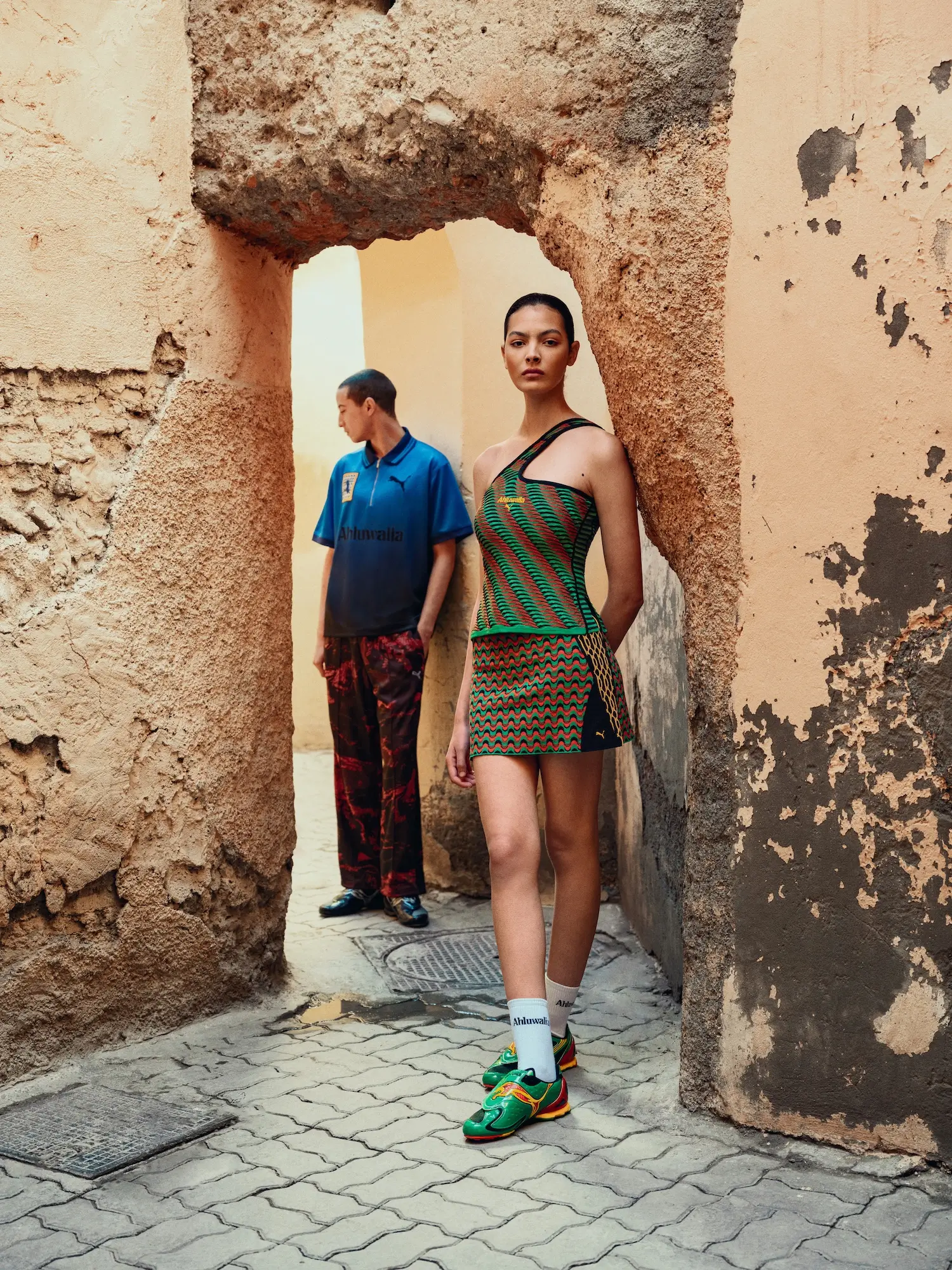
The campaign, shot in Morocco, is rooted in documentary realism. Blending still imagery with film, it captures the everyday rhythms of football culture without staging or spectacle.
There are no celebrity cameos—only real people. Children playing barefoot, fans painting their faces, elders observing quietly from the sidelines. The environments—sun-bleached streets, worn pitches—speak to resilience and ingenuity.
The campaign does not narrate; it observes. It does not explain; it invites feeling. In doing so, it reframes football as a shared language that transcends borders and generations.
move
Ahluwalia has described the project as a love letter to African football, and that sentiment resonates throughout. It is a tribute to optimism, to escapism, and to the collective pride that defines fandom.
It honors the craftsmanship of fan-made culture and the ingenuity of communities that transform limitation into expression. And it looks forward—to the next generation who will inherit and evolve this narrative.
sustain
Sustainability is embedded within the collection’s core. Recycled fibers are used across multiple pieces, reflecting both Ahluwalia’s design ethos and PUMA’s broader environmental commitments.
Experimentation with new fabrication techniques further pushes the boundaries of eco-conscious sportswear, while minimal, recyclable packaging reinforces the collection’s responsibility beyond the garment itself.
significance
Culturally, the collection elevates African football identity on a global stage. By focusing on Morocco and Nigeria, it acknowledges both diversity and shared experience within the continent’s football culture.
It also aligns with PUMA’s broader community-driven initiatives, including its 2026 World Cup activation in Brooklyn—where the brand chose public space and community presence over traditional launch formats.
rel
The collection is expected to release in late spring 2026, aligning with the lead-up to the World Cup. It will be available through PUMA’s official channels, Ahluwalia’s platform, and select global retailers.
Positioned within the premium streetwear segment, the pricing reflects the collection’s material quality, cultural depth, and design intent. Demand is expected to be high, particularly for the V-S1 and T7 pieces.
fin
What defines this collection is not its product, but its purpose. In a fashion landscape often detached from lived experience, this collection restores meaning.
It tells stories. It honors communities. It challenges the industry to engage more deeply and more respectfully.
Football, at its core, is about unity. And fashion, at its best, can reflect that same spirit—serving as a uniform of belonging, a declaration of presence. This collection becomes that uniform. A shared spirit, worn outwardly and carried inwardly.
As the 2026 World Cup approaches, with all its spectacle and anticipation, it is easy to forget the origins of the game—the streets, the pitches, the people.
But PUMA and Ahluwalia have not forgotten. They have returned to those roots, honored them, and transformed them into something enduring: a legacy of pride, connection, and cultural truth.
Read Drift’s related feature, Ahluwalia Reaches First Milestone With PUMA.
n
From the DRIFT archive: Wizdom 2025 at Cipriani Wall Street: An Experiential Moment in Cloud Culture · The Rockefeller Center Christmas Tree 2025: A Tradition Rooted in Memory and Monumentality
Related Articles

Nathan Fielder’s Secret Elizabeth Holmes Documentary Finally Reveals Itself
A24 confiscated phones for the Telluride premiere of a three-year film Fielder still can’t fully […]