DRIFT AUDIO
Listen to this story
Choose a voice, then press play.
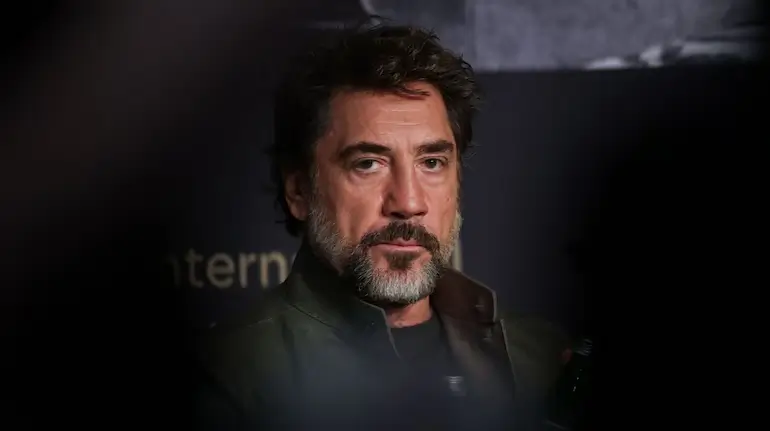
Javier Bardem has built a career on duality. He can embody tender fathers, passionate lovers, and haunted everymen with equal conviction. Yet audiences and critics often remember him most vividly when he slips into the silhouettes—when the charm curdles and something primal emerges. In 2026’s Apple TV+ limited series Cape Fear, debuting June 5, Bardem returns to that dark territory as Max Cady, the vengeful ex-con who terrorizes a seemingly perfect family. It marks his first major villainous role in nearly a decade, and one that invites inevitable comparisons to two legendary performances: Robert Mitchum’s sleazy, predatory Cady in the 1962 original and Robert De Niro’s tattooed, Bible-quoting monster in Martin Scorsese’s 1991 remake.
The new series, created by Nick Antosca and executive produced by Scorsese and Steven Spielberg, expands the story from John D. MacDonald’s 1957 novel The Executioners into a ten-episode psychological thriller. Amy Adams and Patrick Wilson star as Anna and Tom Bowden, married attorneys whose past decision to help imprison Cady comes back to haunt them when he is released. Where the films focused on immediate physical menace, the series delves deeper into obsession, gaslighting, true-crime culture, and the fragility of modern domesticity. For Bardem, it was an opportunity to explore a character who is not just a force of chaos, but a wounded, patient predator.
allure
In conversation, Bardem laughs easily when asked why audiences are drawn to such figures. “No, we all like Max Cady!” he says. “It’s this attraction for that kind of figure that breaks boundaries in ways that we fear and are scared of. We are not going to do that, or we prefer not to, but we are very curious and attracted to those who do.”
This fascination has deep roots. Psychopaths on screen—from Hannibal Lecter to Anton Chigurh—offer a safe thrill. They externalize our darkest impulses without consequence. Cady, in all iterations, weaponizes charisma. He doesn’t burst through the door with a chainsaw; he smiles, tells jokes, wins over neighbors, and makes his targets question their own sanity. Bardem leans into this. His Cady is charming in a disarming, almost seductive way—until the mask slips.
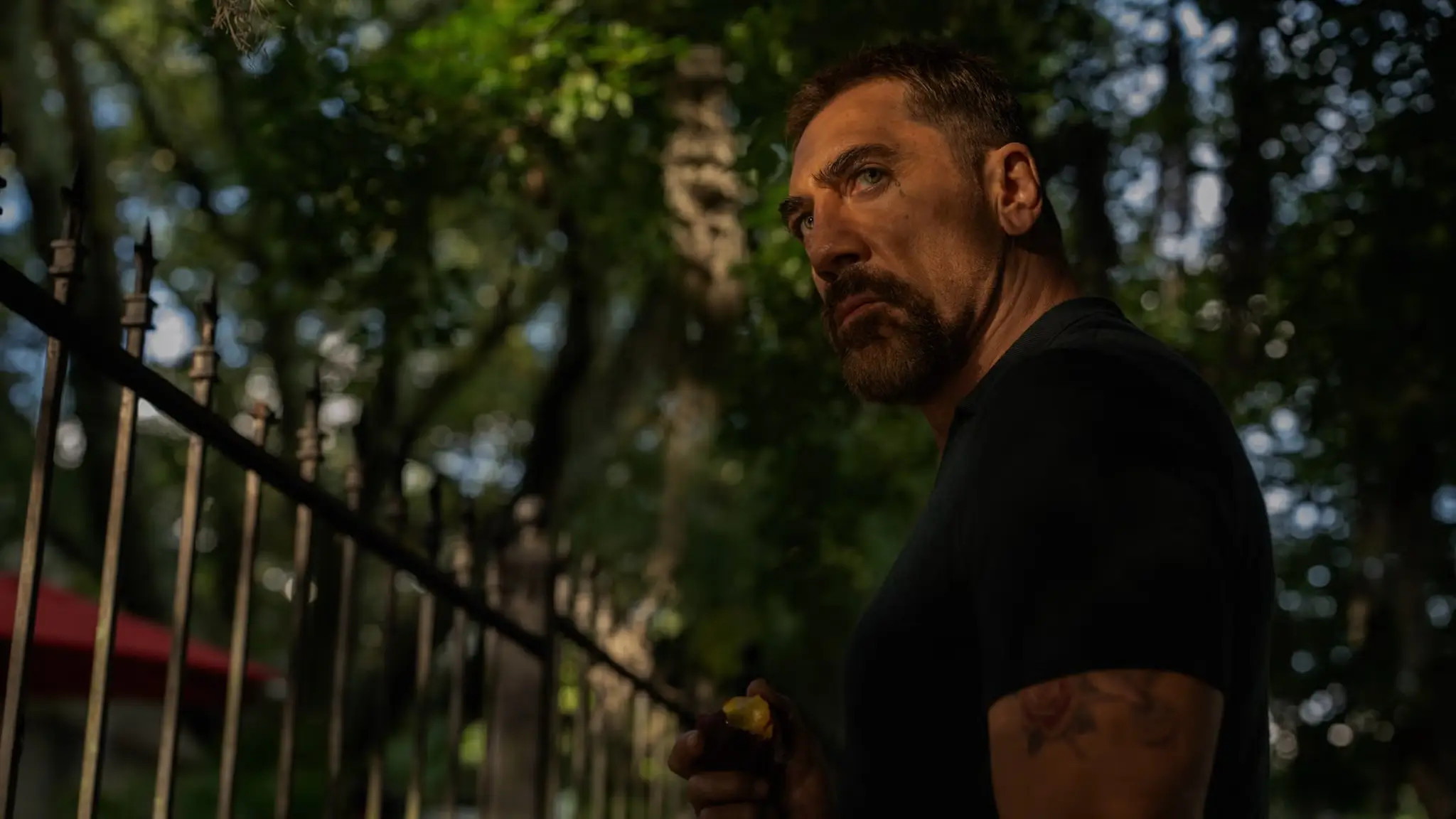
The actor drew inspiration from the natural world during filming in Savannah, Georgia. “I was watching this Spanish moss hanging from the trees,” he recalls. “It gives you a sense of fascination… It has all the time in the world to grow and grow and grow. And I thought, ‘Yeah, that’s Max Cady.’” Spanish moss can look beautiful and harmless, yet it weighs down and eventually breaks the branches it clings to. That slow, inevitable destruction mirrors Cady’s strategy: patient, insidious, and ultimately devastating.
flow
Bardem is quick to praise his predecessors. Mitchum’s 1962 performance is a masterclass in sleazy menace—a degenerate ex-con who oozes threat even when smiling. De Niro’s take, amplified by Scorsese’s intensity, is more unhinged: a physically imposing, religiously warped avenger with tattoos and a Southern drawl. Both actors made Cady an “attractive, uncomfortable presence,” Bardem notes. “That has to do with the way they were moving, their physicality… How aware he is of that, and how much he wants to play with it.”
In the series, Bardem doesn’t imitate. He builds on the foundation. His Cady has a backstory that humanizes him without excusing him. We see glimpses of loss and pain that fuel his vendetta. “We were aiming to create more of a specific backstory around Max Cady, where we understand where he’s coming from and what he has lost,” Bardem explains. “He should be someone that we are not able to frame, even though we know who he is.”
Humor is key to this version. Prison has taught Cady survival skills, including the ability to disarm with wit. “The humor is a must for the character,” Bardem says. “This is a person who has survived decades in prison. Before that, he was running a restaurant. So he has social skills… not giving himself too much importance, even though he feels very deeply the pain.” This levity makes the menace sharper; laughter disarms the audience just as it does the Bowdens.
Visually, Bardem’s Cady evokes a Florida panther—elegant, wild, and lethal. Light brown hair and a goatee mimic the animal’s coloring. An accidental choice during camera tests—mismatched contact lenses creating asymmetrical eyes with different pupil sizes—became a deliberate feature. It suggests past prison violence that damaged his skull and hearing. “It was my fault. It was an accident,” Bardem admits, “but it happened to be a very realistic outcome.” The result is subtly unsettling: one eye draws you in while the other feels off, like a predator sizing you up unevenly.
compare
Any discussion of Bardem’s villains inevitably circles back to Anton Chigurh in the Coen brothers’ No Country for Old Men (2007). That performance earned him an Oscar and cemented his status as one of cinema’s greatest screen psychopaths. Forensic psychiatrists have even called it one of the most clinically accurate depictions of psychopathy—cold, emotionless, methodical, devoid of remorse. Chigurh operates on a twisted moral code (the coin toss) but feels nothing. He is “a violent act of fate.”
Bardem sees clear daylight between the two. “The differentiation is that Max Cady has a goal and Anton Chigurh does not have any goal,” he explains. Chigurh needs no justification; violence is his nature. Cady is “a broken human being” driven by revenge. “One is human… which is Max Cady. Another one is just a violent act of fate.”
For Chigurh, Bardem had to empty his eyes of feeling. “I had to go to a place where my eyes won’t feel anything.” For Cady, even behind the lenses, there is pain. “There are things that hurt for Max Cady. That’s why he’s alive—and he doesn’t want to die yet.” This emotional undercurrent makes Cady more complex and, in some ways, more disturbing. Viewers might catch themselves empathizing with his sense of betrayal before remembering the horror he unleashes.
Bardem’s preparation for Chigurh involved isolation. He felt “taken to the middle of America to play this very dark role,” and the infamous bowl haircut reportedly left him depressed. For Cape Fear, the process was collaborative and expansive. Ten episodes allowed time to layer the character—backstory, humor, physicality, and slow-burn menace. Co-stars Adams and Wilson have praised Bardem’s natural charisma and vulnerability. Adams noted he brings “a lot of vulnerability, and there’s so much devastation in this betrayal.”
culture
The timing of this Cape Fear feels prescient. In an era of true-crime podcasts, social media sleuthing, and eroded trust in institutions, the story hits differently. Cady can pose as a wronged man seeking justice. He exploits skepticism toward “elites” like the Bowdens—successful lawyers with a seemingly perfect life. The series examines how easily public opinion can turn, how doubt can be sown, and how vengeance can masquerade as righteousness.
Bardem’s Spanish heritage adds another layer. His Cady has an American father and Spanish mother, blending cultures in a role traditionally played as pure Southern gothic. This hybridity enriches the character, making him an outsider who masters the art of fitting in—until he chooses not to.
fin
Bardem’s ability to humanize the inhuman sets him apart. He doesn’t play evil as cartoonish; he finds the logic, the pain, the charisma. In No Country, Chigurh’s calmness terrified because it felt real. In Cape Fear, Cady’s warmth will unsettle because we want to believe it—right up until we can’t.
As production wrapped, Bardem reflected on the responsibility of stepping into iconic shoes. He isn’t trying to outdo Mitchum or De Niro; he’s continuing a conversation across decades. Each version of Cape Fear reflects its time: the sexual repression and moral panic of the 1960s, the excess and moral ambiguity of the 1990s, and now the anxiety of fractured truth in the 2020s.
Max Cady will kill you with kindness—or the illusion of it. Bardem makes you enjoy the seduction before the strike. That’s the power of a great villain actor: he makes you root for the monster, even as you know better. In a crowded streaming landscape, Cape Fear promises to linger like Spanish moss—beautiful at first glance, but heavy enough to break what it touches.
Bardem has said he was drawn to the role because it allowed him to “tap back into his villainous side.” After years of more grounded characters, the return feels invigorating. For audiences, it’s a reminder of why we keep telling stories about the darkness: to understand it, to fear it, and yes—to be fascinated by it. As the series unfolds, one thing is certain: Javier Bardem’s Max Cady will haunt more than just the Bowden family. He’ll haunt viewers long after the credits roll.
From the DRIFT archive: Martha Stewart’s Entertaining Returns: The 1982 Classic That Defined Modern Lifestyle Culture
Related Articles

Under Rue de Castiglione, Liaigre Gives Hôtel Costes a Spa With No Hard Corners
A 20-meter lap pool, eight treatment rooms and not one sharp angle: Studio Liaigre’s spa […]