DRIFT AUDIO
Listen to this story
Choose a voice, then press play.
A ¥19,800 boxy corduroy jacket with metal snaps and faded hue lands in Journal Standard stores in mid-October, built to look like it has done a few winters already.
Nineteen thousand eight hundred yen buys a lot of jacket at JOURNAL STANDARD this fall. The Tokyo label’s new Vintage Corduroy Work Jacket, listed in Japanese as ヴィンテージ コーデュロイ ワーク ジャケット, is already taking pre-orders through the BAYCREW’S STORE ahead of a mid-October delivery window. It is not a collaboration, a limited drop, or a heritage reissue. It is a house-made jacket in thick corduroy, and that plainness is most of the point.
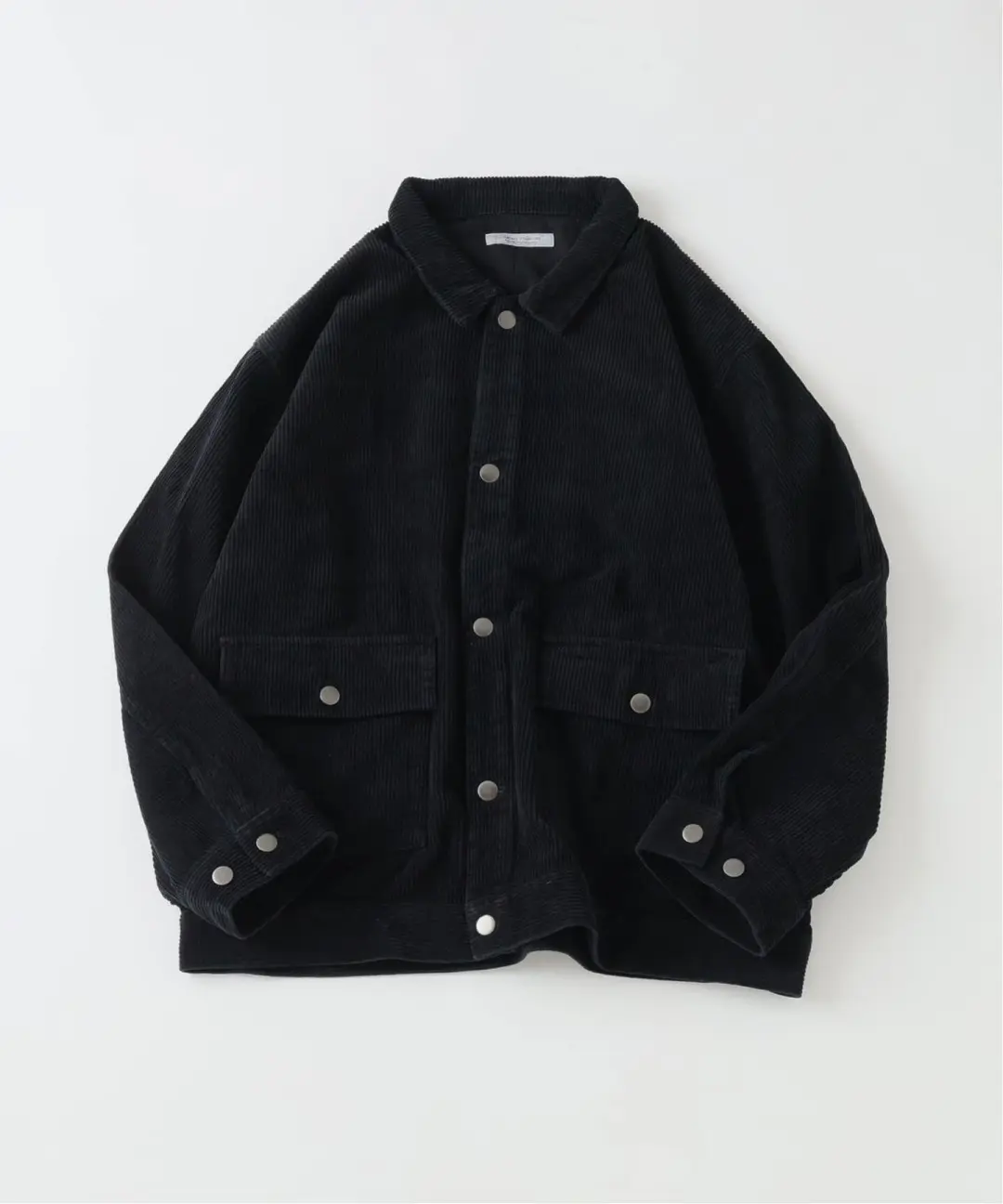
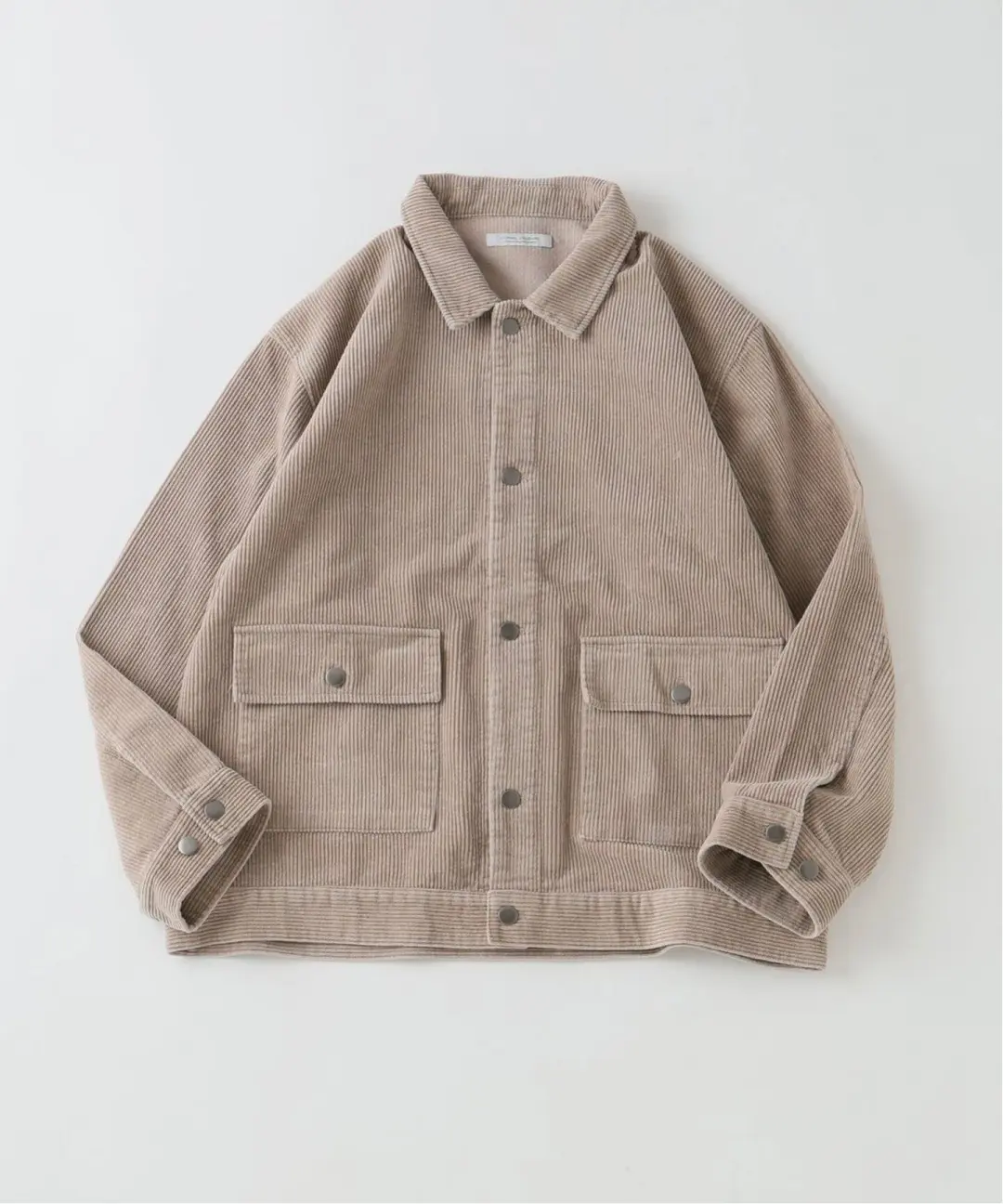
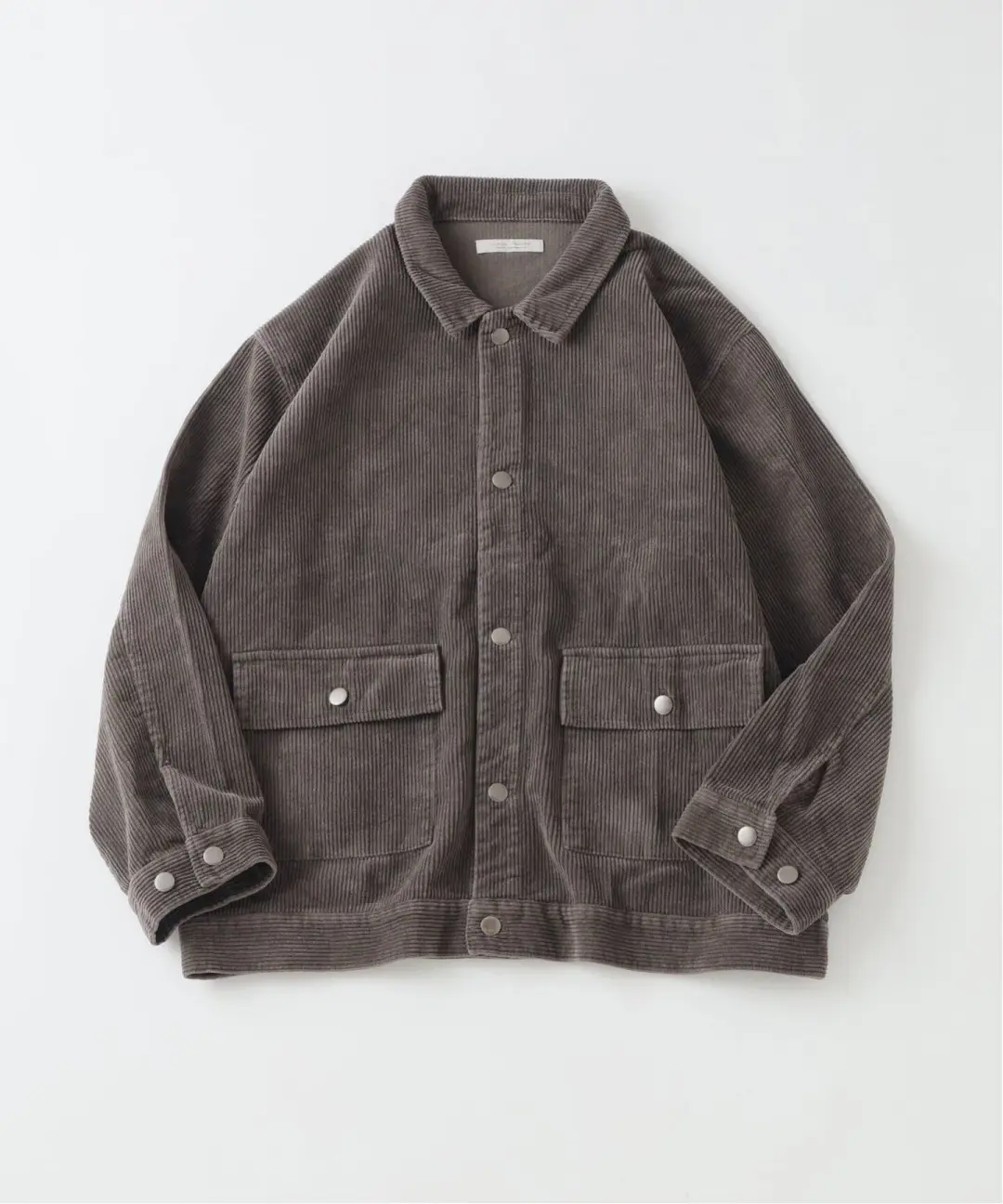
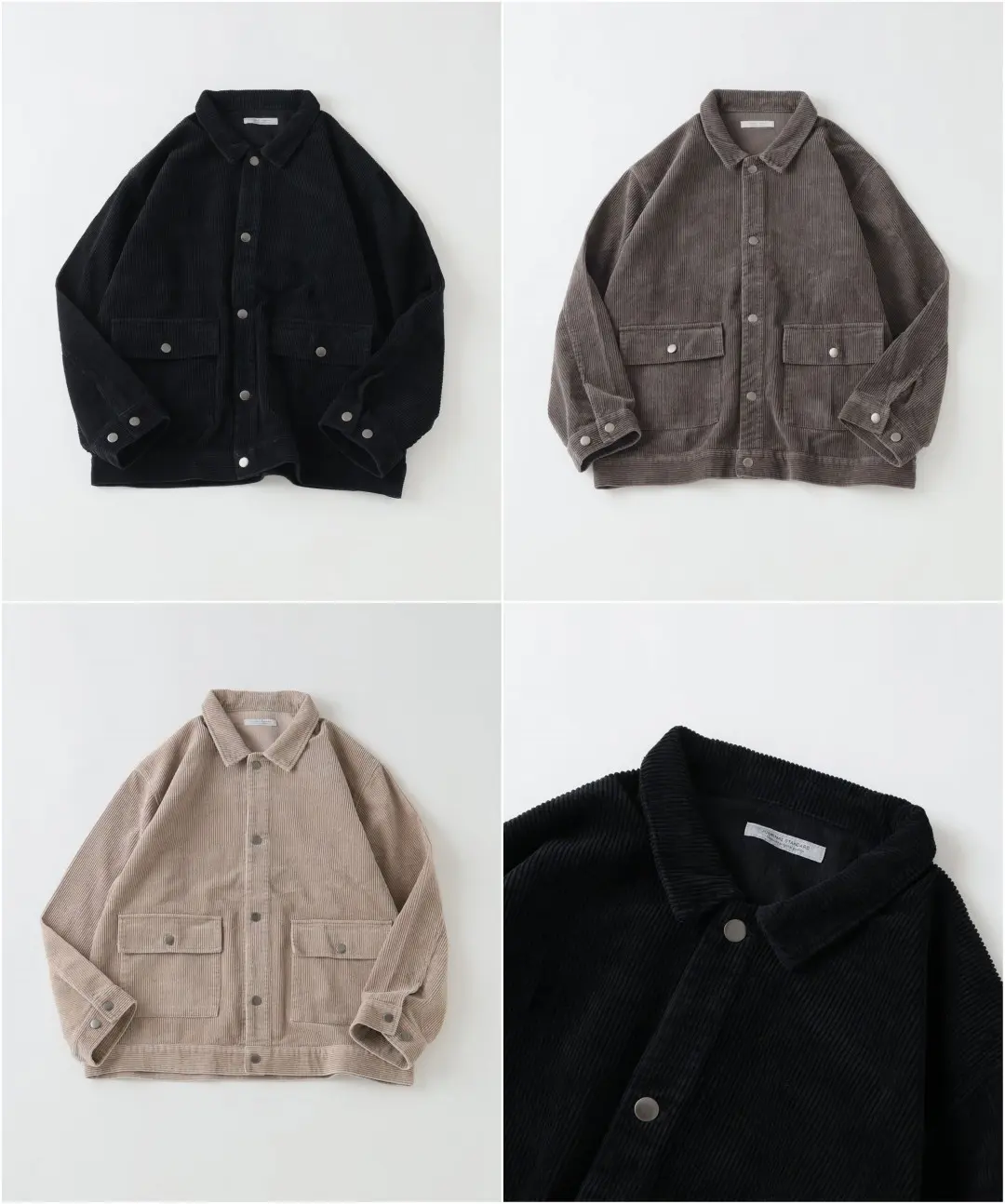
Signal. What happened: JOURNAL STANDARD opened pre-orders for its in-house Vintage Corduroy Work Jacket as part of its 2026 fall and winter menswear range. Exact object: the Vintage Corduroy Work Jacket, product number 26011600911030, 100 percent cotton wide wale corduroy, in Black, Gray, and Beige, sizes M and L. When and where: pre-order now via BAYCREW’S STORE, with delivery scheduled for mid-October 2026, subject to factory production timing. Source: the brand’s own product list on BAYCREW’S STORE, with the release time also carried by a Japan market release notice. Why it matters: at ¥19,800, it sits well below the label’s collision outerwear this season, which runs from roughly ¥60,000 to ¥132,000, making it the entry point into a fall range where corduroy shows up almost everywhere. Earlier: this follows DRIFT’s coverage of the Barbour x BEAVER NO WAX OS TRANSPORT, another Japan-market jacket reworking a heritage outerwear shape for the same October window.
The listicle own copy frame the jacket as a vintage work jacket translated into a modern balance. That phrase does a lot of work in Japanese menswear, and here it points at three concrete decisions: a thick wale fabric, a wider box-shaped body, and a colorway treatment meant to skip the stiff, new-garment stage entirely.
read
Start with the fabric. The listing specifies 太畝, a thick wale corduroy, in 100 percent cotton. Wide wale cloth has fewer, fatter ridges per inch than the fine pinwale used for shirts, and it reads more like upholstery or old workwear than a dress trouser. The brand’s description leans on that texture directly, calling out the raised, brushed surface and the dimensional look that only corduroy produces as light hits the ridges.
Then the tincture. All three shades, Black, Gray, and Beige, are described as calm and slightly faded, as if sun and washing had already done some of their work. The copy says the jacket is meant to feel settled from the first wear. That is a deliberate choice in a category where most brands sell deep, saturated cord and let the wearer do the fading over several years.
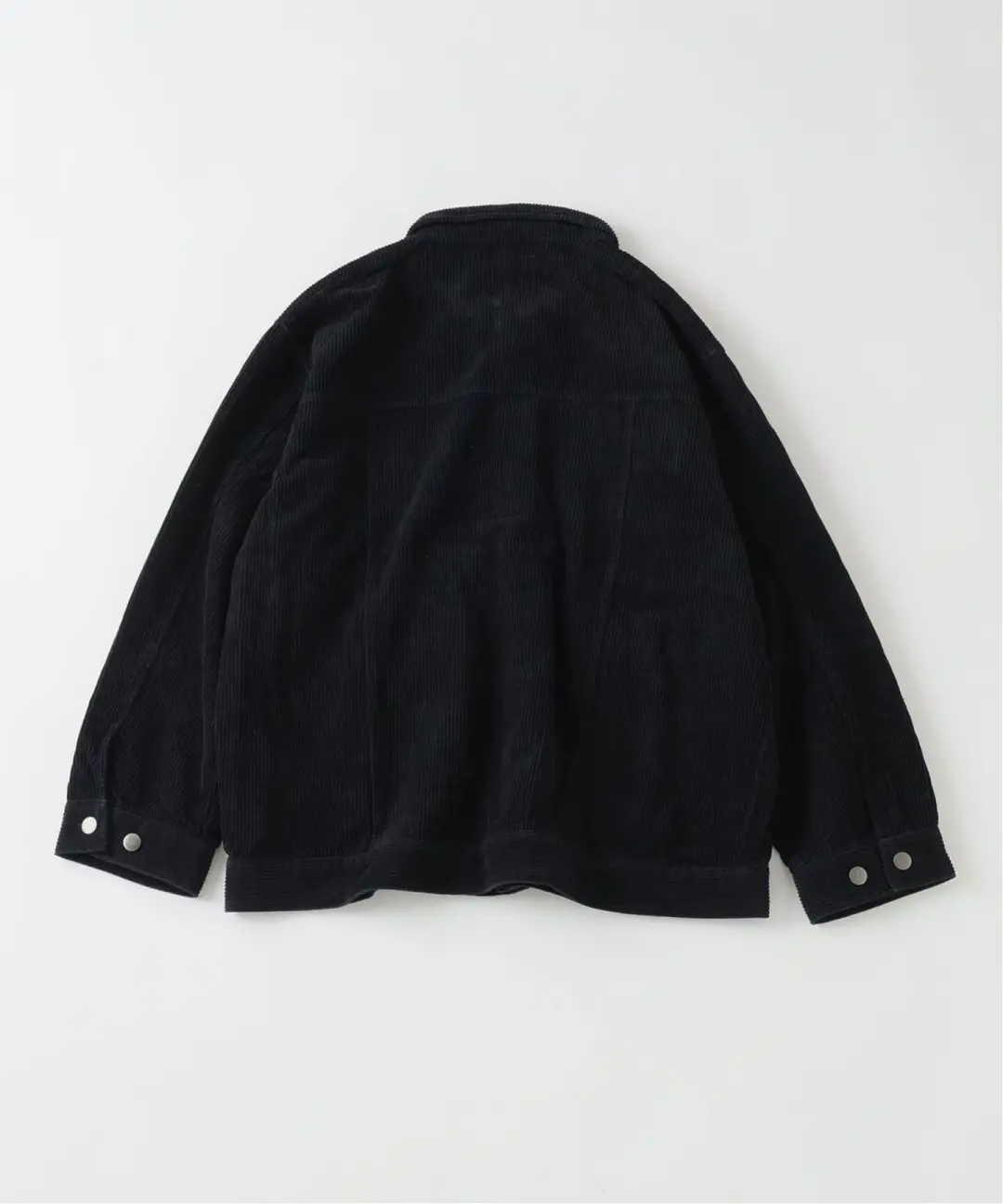
The silhouette is a box. The listing describes a body with extra room across the chest, and the published measurements support it: a size M measures 62 centimeters across the chest laid flat against a 70 centimeter length, which is a wide, relatively short proportion. The shoulder on the M sits at 50 centimeters, broad enough that it will sit dropped on most frames.
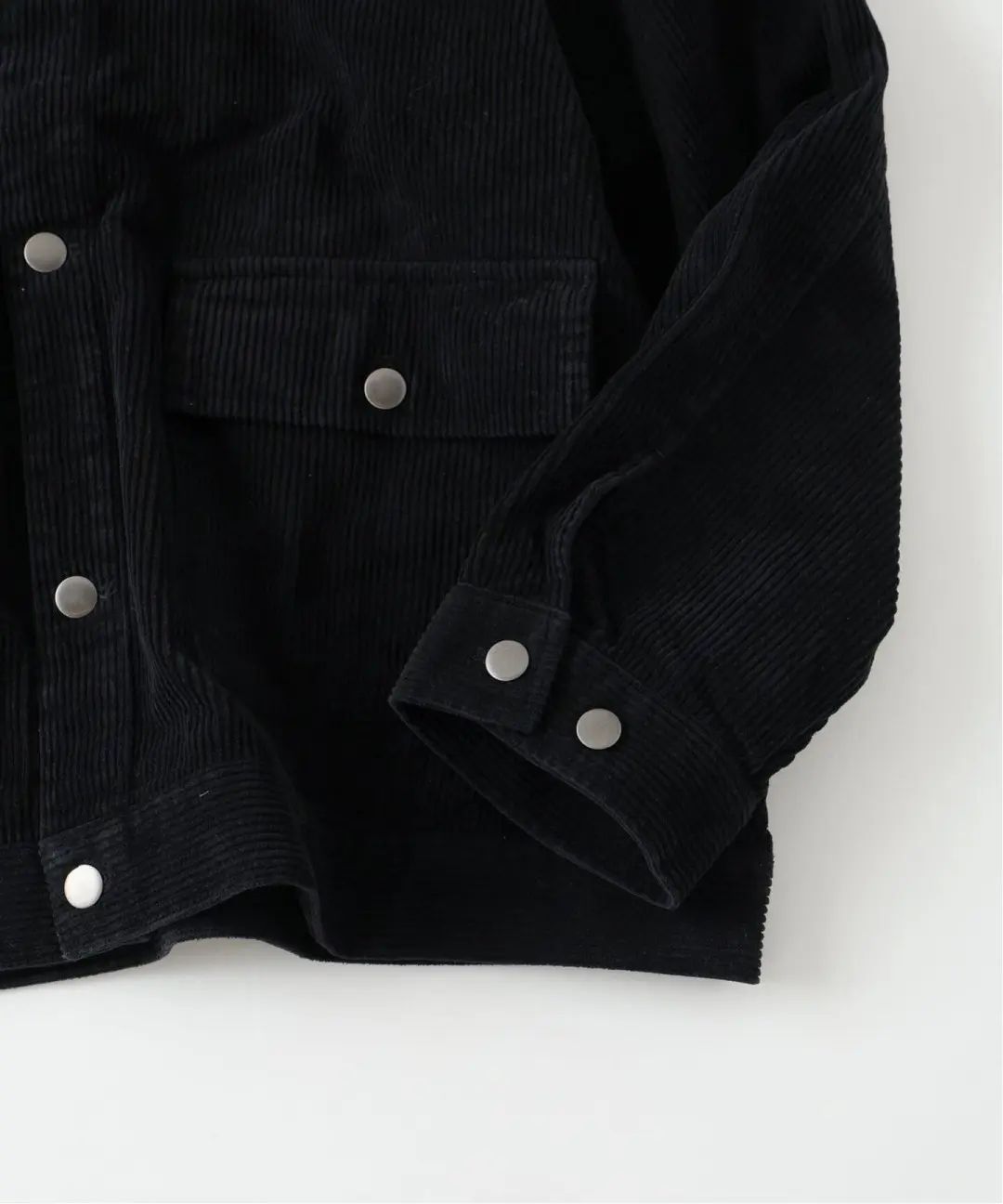
On the front, two large flap pockets carry most of the visual weight. They close with metal snap buttons rather than sewn buttons, which the brand frames as a nod to workwear roughness. The collar is a simple, standard point shape, and the description stresses that the design is kept plain enough to go with almost anything. There is no mention of lining in the listing, and the material line covers only the cotton shell, which suggests an unlined jacket built for layering over knitwear or under a heavier coat once the temperature drops.
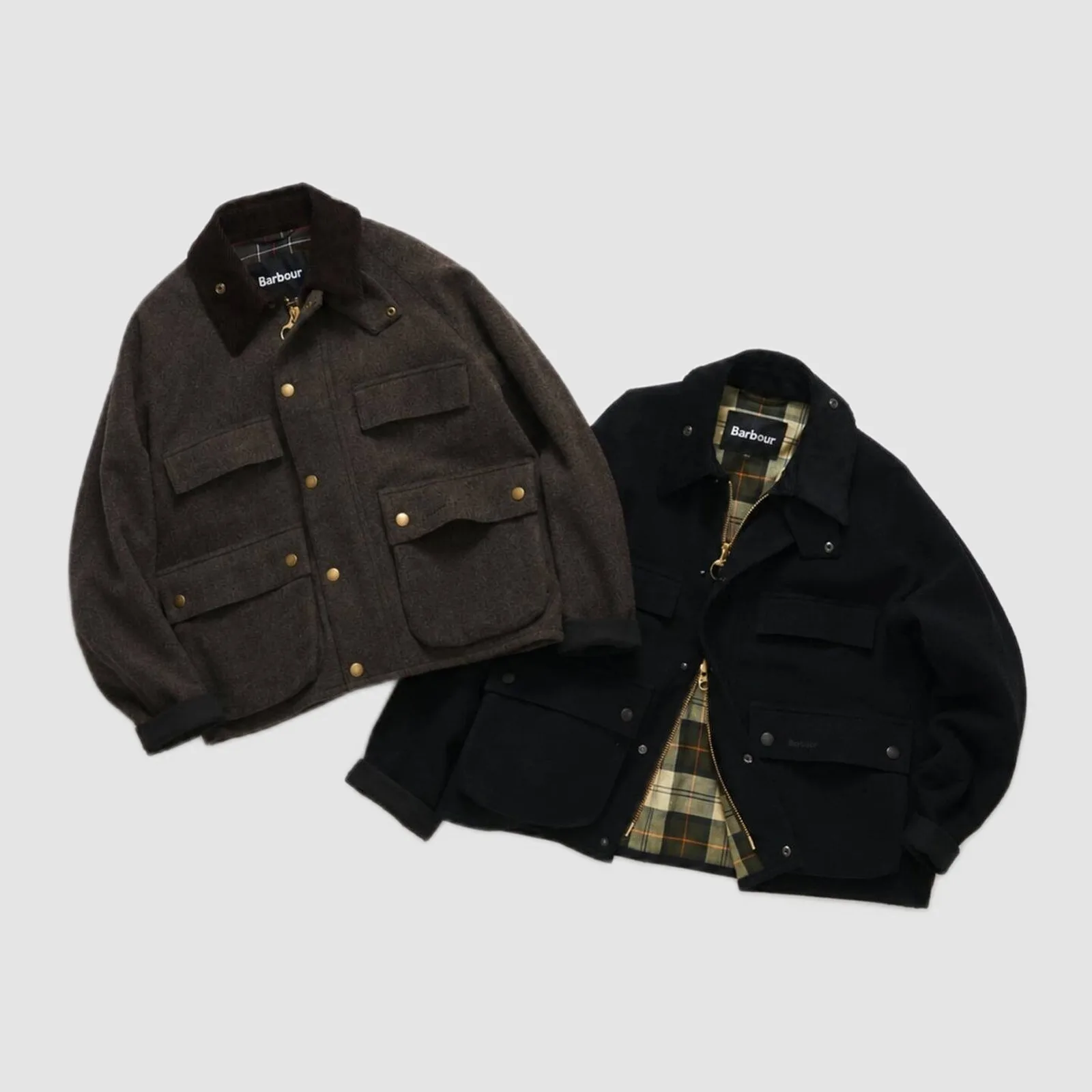
Two Barbour wool jackets displayed on a plain background: a brown jacket with gold snap buttons on the left and a black jacket with a plaid lining on the right.
retro
The jacket’s reference point is older than the brand by a long way. Corduroy grew out of fustian, the same family of heavy cut-pile cotton cloths that produced velveteen, and it was used across Europe from the 18th century as a hard-wearing fabric for trousers, jackets, and shirts. Its early wearers were townspeople in industrial areas, not the country gentry it later became associated with in Britain.
The popular story that the name comes from the French “corde du roi,” the king’s cord, is exactly that: a story. There is no written record supporting it, and the true origin of the word is still unknown. The fabric’s real pedigree is closer to the factory floor than the palace, which is why a work jacket is such a natural shape for it.
Wale count, the number of ridges per inch, is what separates one corduroy from another. The range runs from about 1.5 to 21, with 10 to 12 considered the traditional standard. Lower numbers mean thicker ridges. Wide wale historically went into trousers and upholstery, while finer cords were used above the waist. JOURNAL STANDARD’s jacket flips that convention by putting thick cord on the upper body, the kind of move that has defined corduroy outerwear in Japanese vintage shops for decades.
The listing does not publish an exact wale count for this jacket. For comparison, the label’s Brooks Brothers corduroy blazer this season is specified at 9 wale, so a jacket described as thick wale likely sits at or below that figure, but that is an inference, not a stated spec.
stance
Corduroy is almost a running theme across JOURNAL STANDARD’s fall and winter 2026 menswear. A search of the label’s own store for the fabric turns up dozens of results, from tricot corduroy cardigan jackets and easy pants to faded modern cord trousers.
The in-house pieces cluster tightly around the work jacket’s price. A Tricot Corduroy Cardigan Jacket is also listed at ¥19,800, with matching Tricot Corduroy Over Pants at ¥16,500 and a Tricot Corduroy 2-Tack Easy Pant at ¥15,400. Faded Modern Corduroy Pants, at ¥15,400, share the work jacket’s pre-worn color language, and could plausibly be worn with it as a loose, tonal cord-on-cord outfit for well under ¥40,000 in total.
Further up, the store carries outside labels working in the same cloth. FOLL’s Faded Corduroy Wardrobe Jeans sell for ¥36,300 and its First-Class Corduroy Wardrobe Trouser for ¥38,500, while a Save Khaki United Corduroy Easy Jacket sits at ¥31,900. Those are the closest direct alternatives to the work jacket on the same shelves, and each costs roughly half again as much or more.
The collide carry the high end of the range. The Brooks Brothers exclusive corduroy jacket, listed at ¥88,000, is a three-button traditional fit blazer cut in Japanese corduroy from Shizuoka’s Enshu region, a 9 wale cloth weighing 360 grams per square meter, lined in cupro and offered in Black and Gray. A matching two-tuck corduroy trouser completes that set.
NANGA, the Shiga-based down specialist, contributes the Vintage Ridge Corduroy Down Jacket at ¥60,500, a derby-style jacket in a stretch corduroy made with Solotex fiber and filled with 90 grams of 760 fill power down. Like the work jacket, it is slated for October delivery.
THE NORTH FACE PURPLE LABEL also worked corduroy into a JOURNAL STANDARD exclusive this season with the Cord Field Berkeley Jacket and matching wide tapered field pants, a set that went on pre-order ahead of a September domestic release.
The label’s September outerwear roundup on BAYCREW’S STORE adds even more context. It features a Barbour Spey jacket at ¥73,700, a pair of Lee goat leather jackets at ¥121,000 and ¥132,000, an Alpha Industries CWU blouson with a corduroy collar at ¥66,000, and multiple NANGA down pieces. Against that list, the Vintage Corduroy Work Jacket at ¥19,800 is roughly a third of the cheapest collaboration coat.
It also has a clear sibling. Back in March, the label’s menswear blog featured a Vintage Twill Work Jacket in 100 percent cotton twill at ¥12,320, offered in black, brown, and purple, with a similarly relaxed cut and the same pitch about a fabric that softens and ages with wear. The corduroy version reads as the cold-weather follow-up, trading flat twill for a heavier, pile-faced cloth. The price step between the two is ¥7,480. The twill version was pitched as a light layer for the change of seasons; the corduroy one arrives as the weather turns properly cold in Tokyo, a timing that places it as the label’s autumn workhorse rather than a spring transition piece.
The broader Japanese market has been doing something similar with heritage outerwear this season. DRIFT’s earlier look at the Barbour x BEAVER NO WAX OS TRANSPORT tracked the same instinct from a different direction: take a recognized working jacket shape, keep its bones, and change the fabric or finish so it fits a looser, more everyday wardrobe. JOURNAL STANDARD’s version skips the licensed name and keeps only the shape.
to
JOURNAL STANDARD belongs to BAYCREW’S, the Shibuya-headquartered group that started in 1977 as an apparel wholesaler. The company moved into running its own brands in 1984, added IENA in 1991 and EDIFICE in 1994, and opened JOURNAL STANDARD in 1997. Group leadership has described it as the flagship label that drove the company’s growth. BAYCREW’S now runs dozens of brands across fashion, food, furniture, and fitness, and began selling online in 2007.
From the start, JOURNAL STANDARD’s model has mixed basic, standard in-house product with a curated edit of outside brands, which is exactly the split view this fall. The label has also spun off a string of sub-lines over the years, including journal standard luxe in 2001, JOURNAL STANDARD FURNITURE and L’ESSAGE in 2007, JOURNAL STANDARD relume in 2009, and the vintage-leaning Oriens JOURNAL STANDARD in 2020.
The Vintage Corduroy Work Jacket belongs to the main line, not relume or Oriens. That matters for how it is position: it is one of the house basics that sit alongside the collaboration pieces on the rack, rather than a youth-line experiment or a luxury extension.
Related Articles
Fragment and Mammut Bring the Barryvox Back in Glacier Blue
Hiroshi Fujiwara’s second Mammut avalanche beacon leaves the Barryvox S2’s rescue brain untouched and changes […]