DRIFT AUDIO
Listen to this story
Choose a voice, then press play.
A Tokyo boutique reworks a soccer classic in two tonal takes on black, white, and gum, out July 18.
In This Story
- A Familiar Shape, a New Custodian
- Two Colorways, One Idea
- Where the Craft Shows Up
- Release Details
- Why a Reissue Still Matters
There is a certain confidence required to touch the Samba and change almost nothing. The shoe has been around since 1949, born as an indoor soccer boot built to grip frozen pitches, and it has spent the decades since drifting further from the sport that made it, first into skate parks and music scenes in the 1990s, then into the kind of universal rotation staple that shows up on runways and school runs with equal ease. Any brand touching that history risks flattening it. Kicks Lab., the Harajuku sneaker boutique that has built a reputation on exclusives with adidas, Reebok, New Balance, and a rotating cast of heritage names, has instead chosen restraint. Its new Samba OG exclusive, arriving July 18, keeps the original silhouette entirely intact and lets small material choices carry the weight.
View this post on Instagram
The project sits inside a familiar Kicks Lab. formula, one that has worked for the shop for years: take a shoe everyone already knows, then use fabric, stitching, and lining rather than shape to make a case for owning it again. It is a strategy built on trust in the source material. Kicks Lab. did not need to add a chunky sole unit or a translucent overlay to get attention here, because the Samba’s sil has already survived seventy five years of trend cycles without one, and the shop clearly understands that its job is curation rather than reinvention.
That restraint also reflects where Kicks Lab. sits in Tokyo’s shoe landscape. The Harajuku shop has spent years building relationships with adidas, Reebok, and New Balance that let it commission small, tightly controlled production runs rather than chase the volume of a mainline release. Those runs tend to sell through a specific kind of buyer, someone who already owns a pair of Sambas and is shopping for the version with better leather, a cleaner stitch line, or a detail nobody else bothered to notice.
tincture
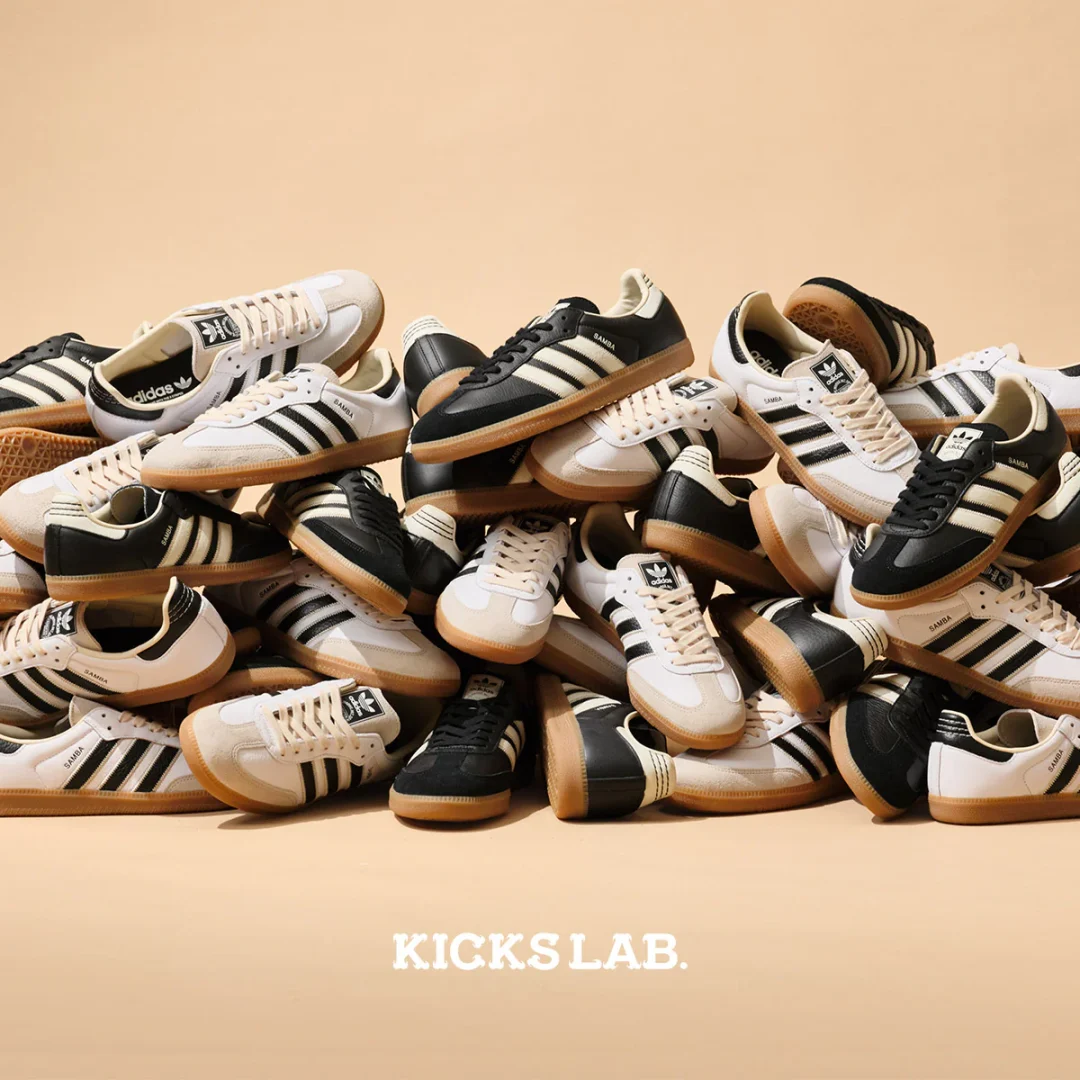
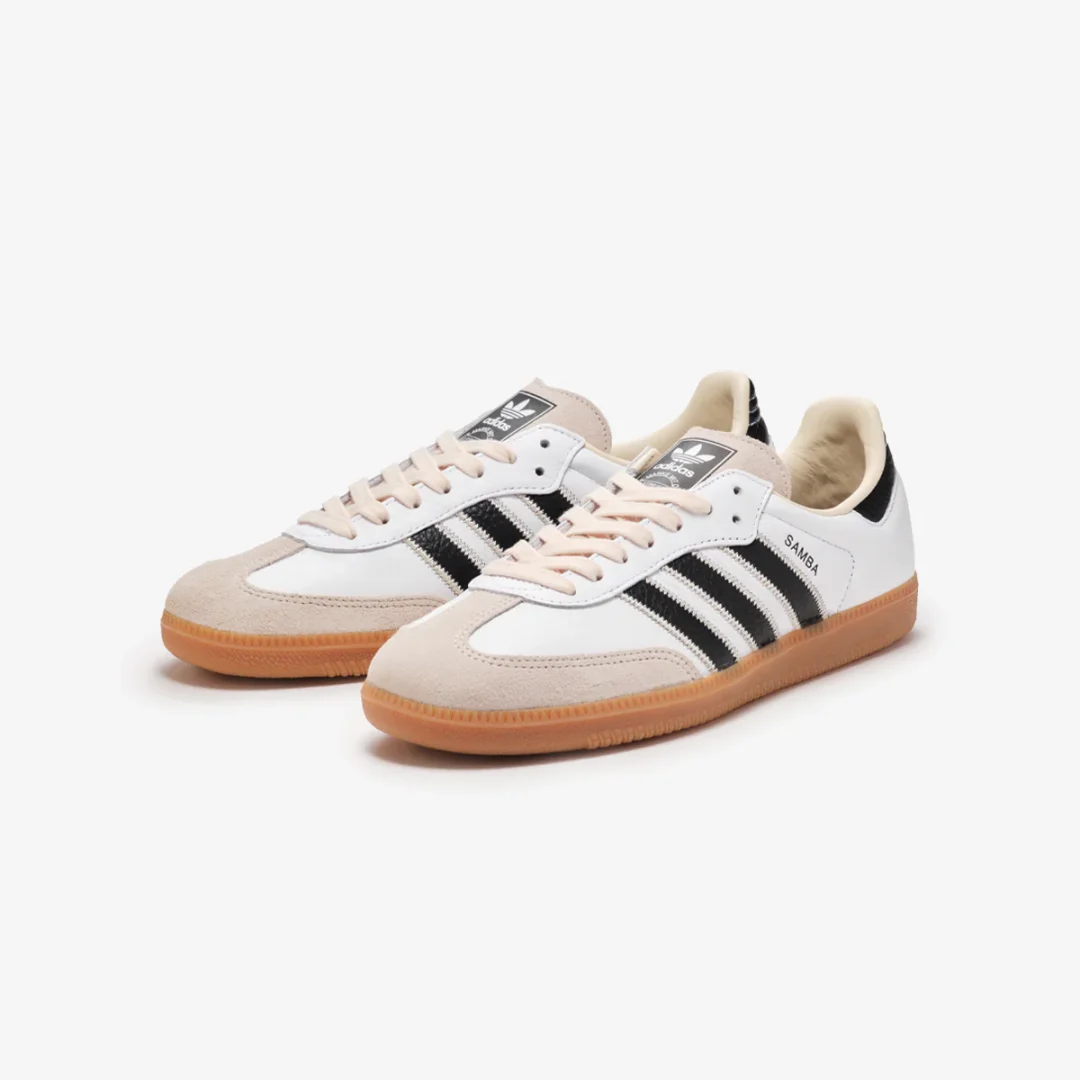
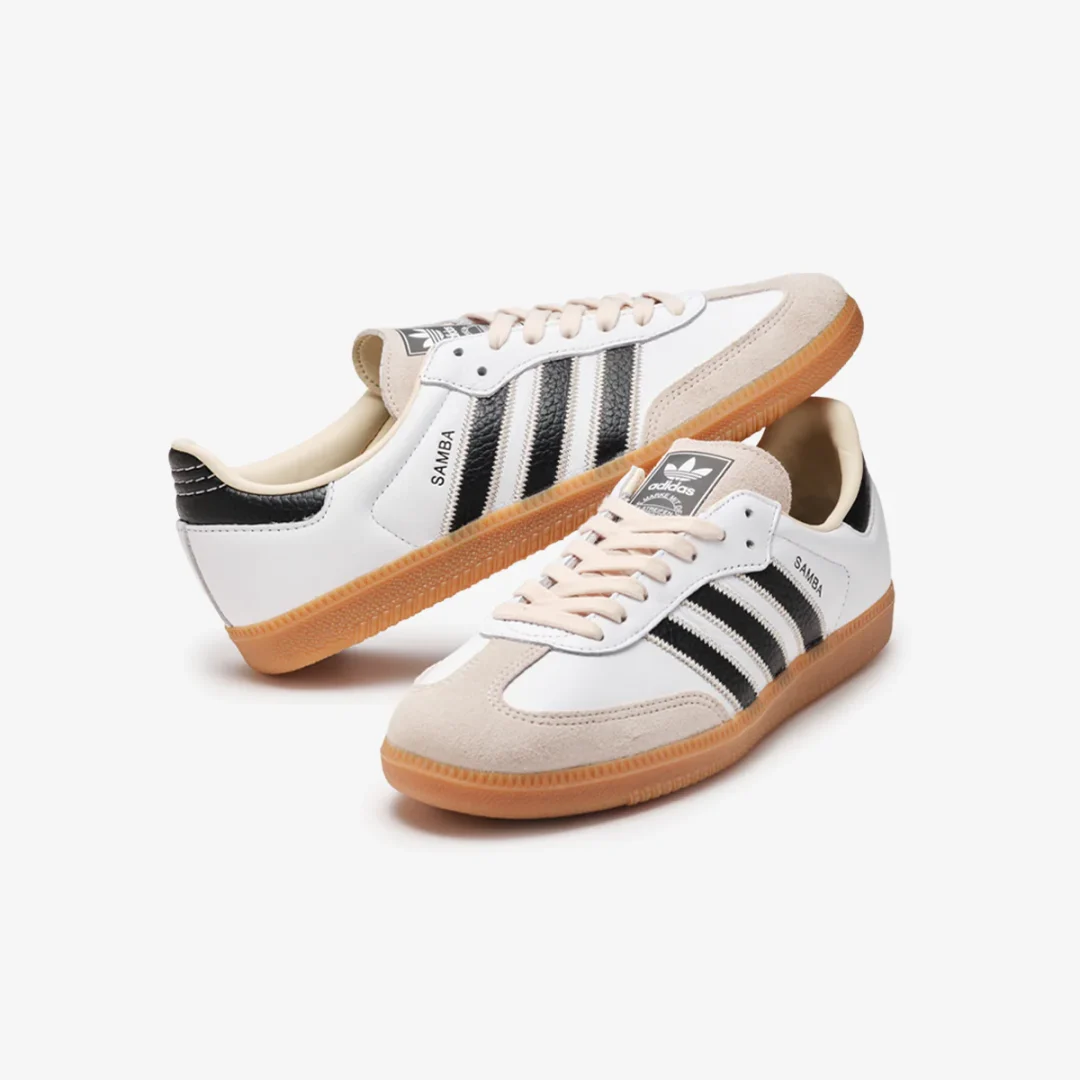
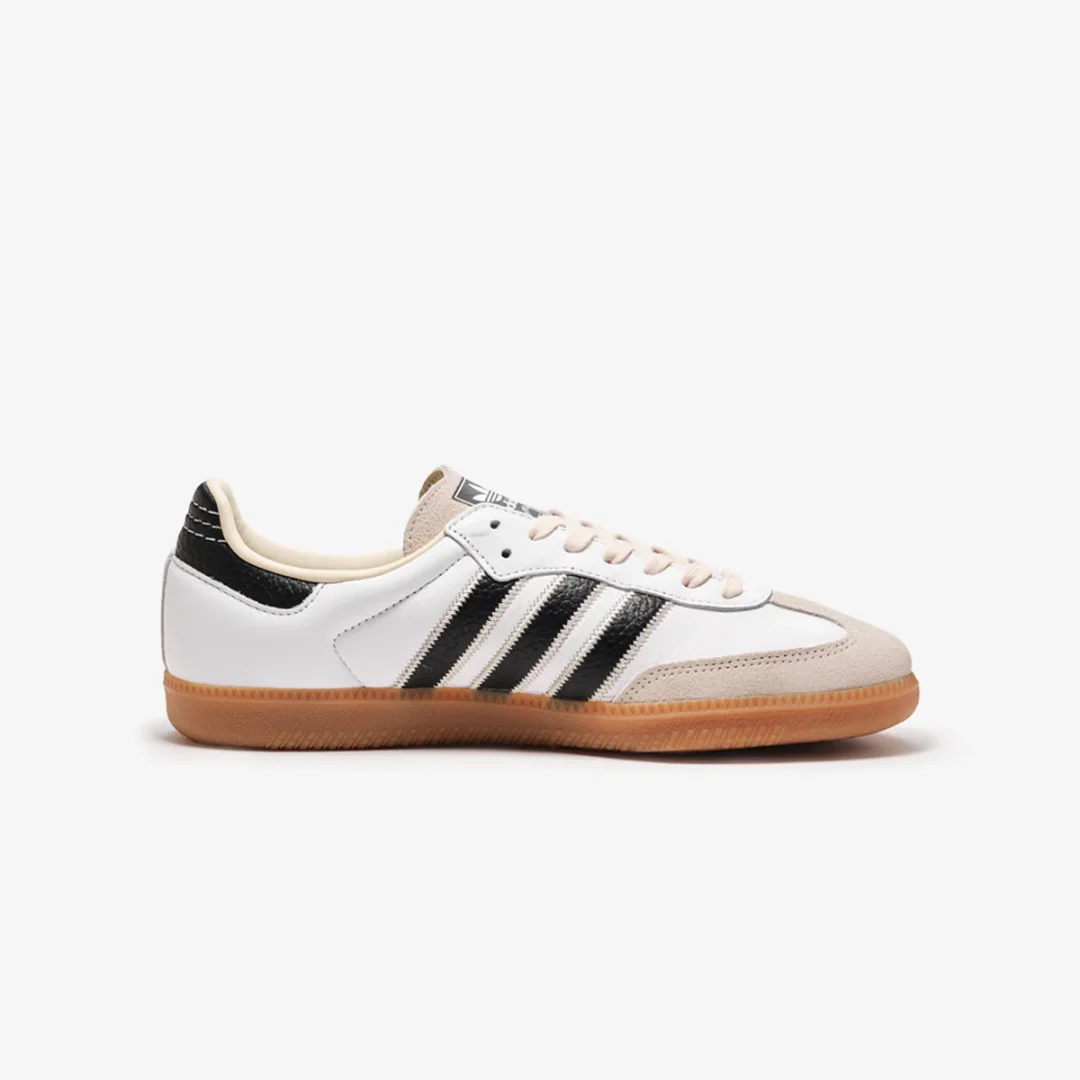
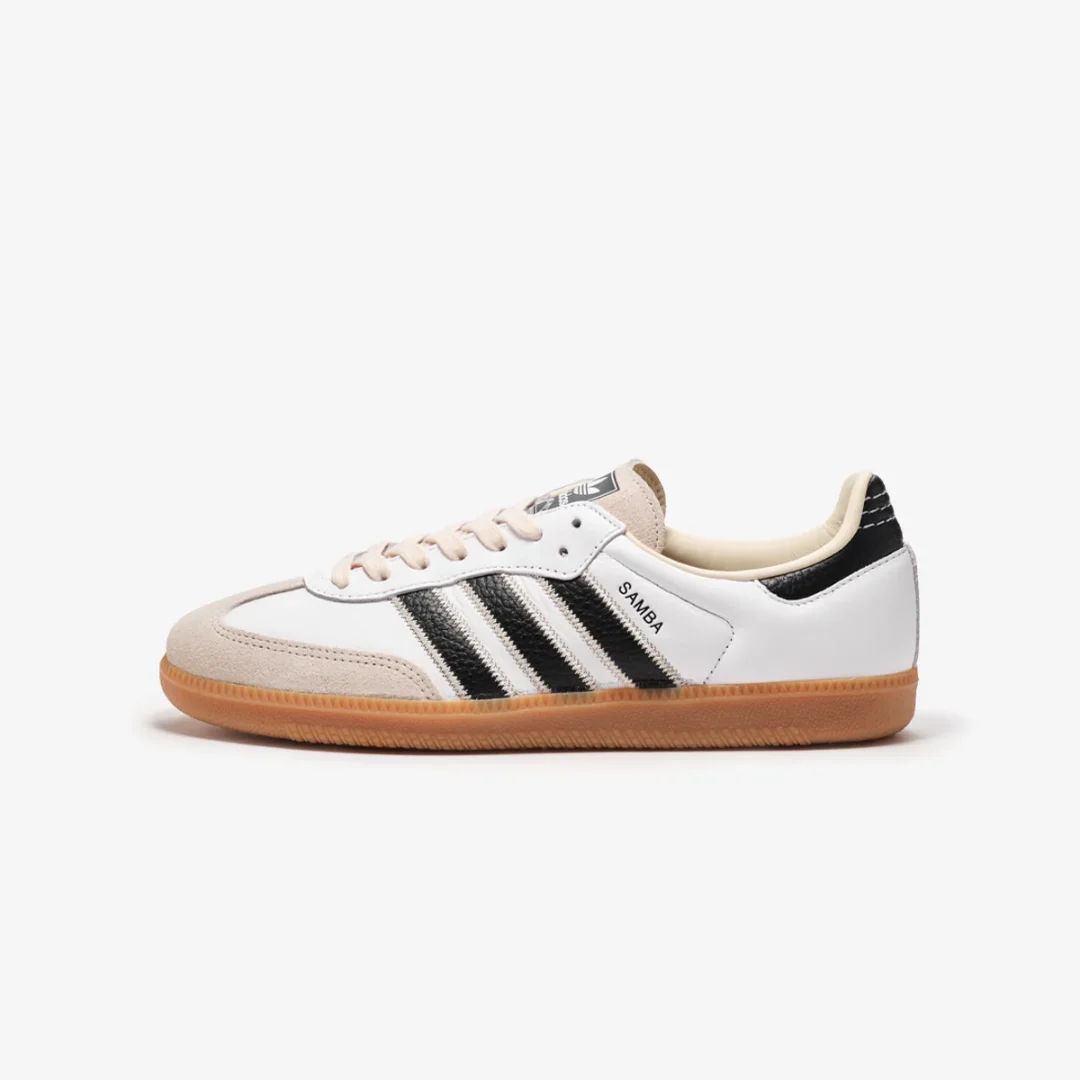
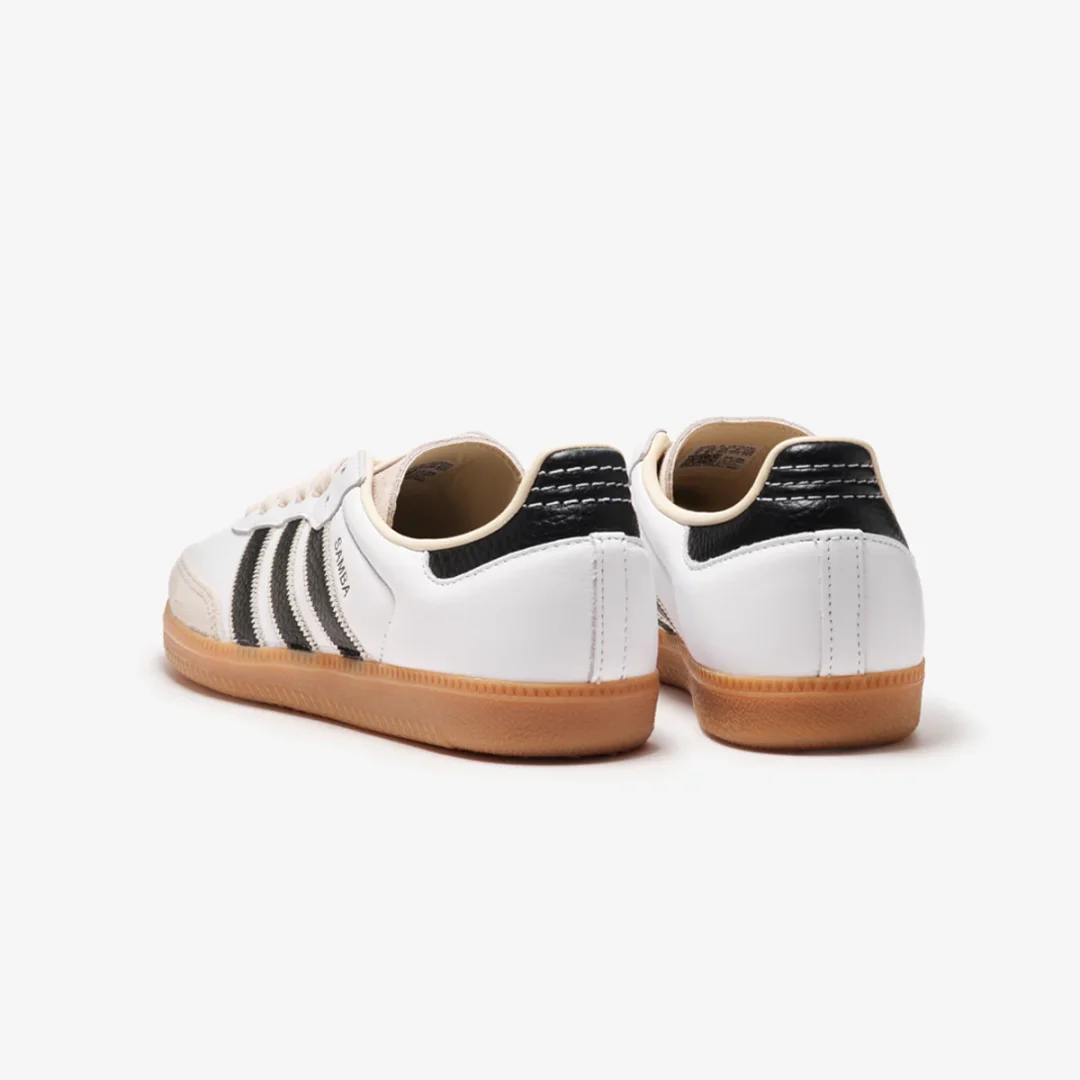
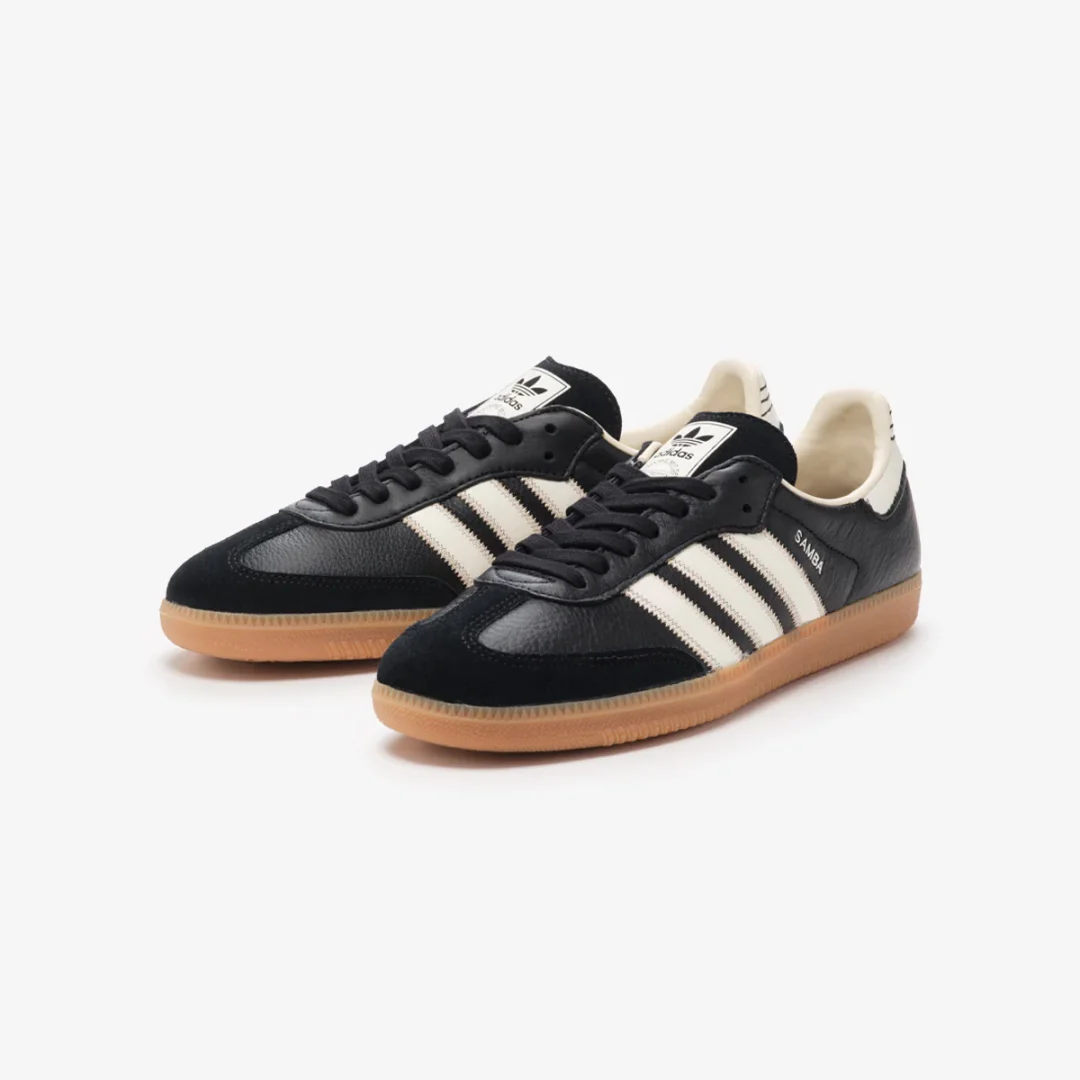
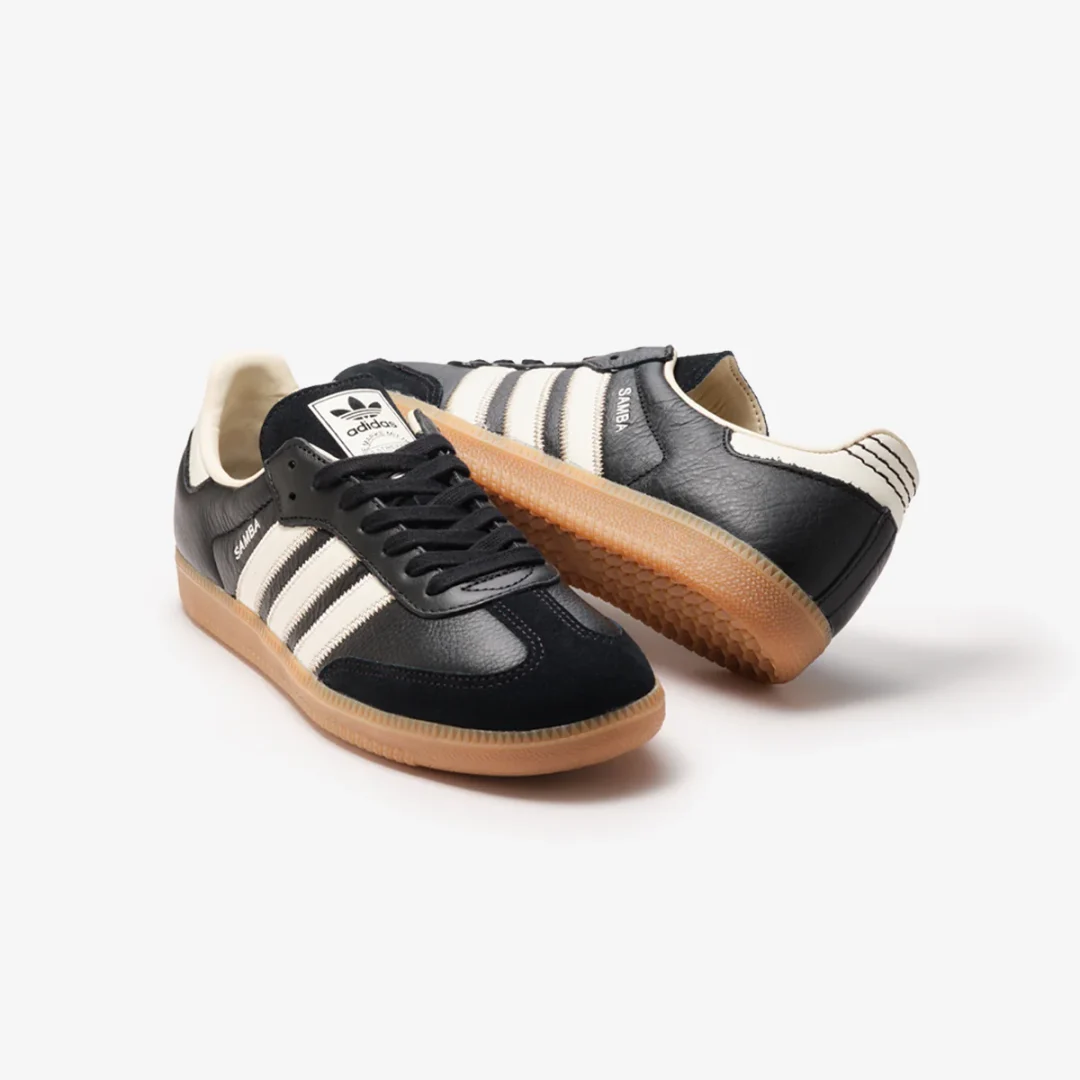
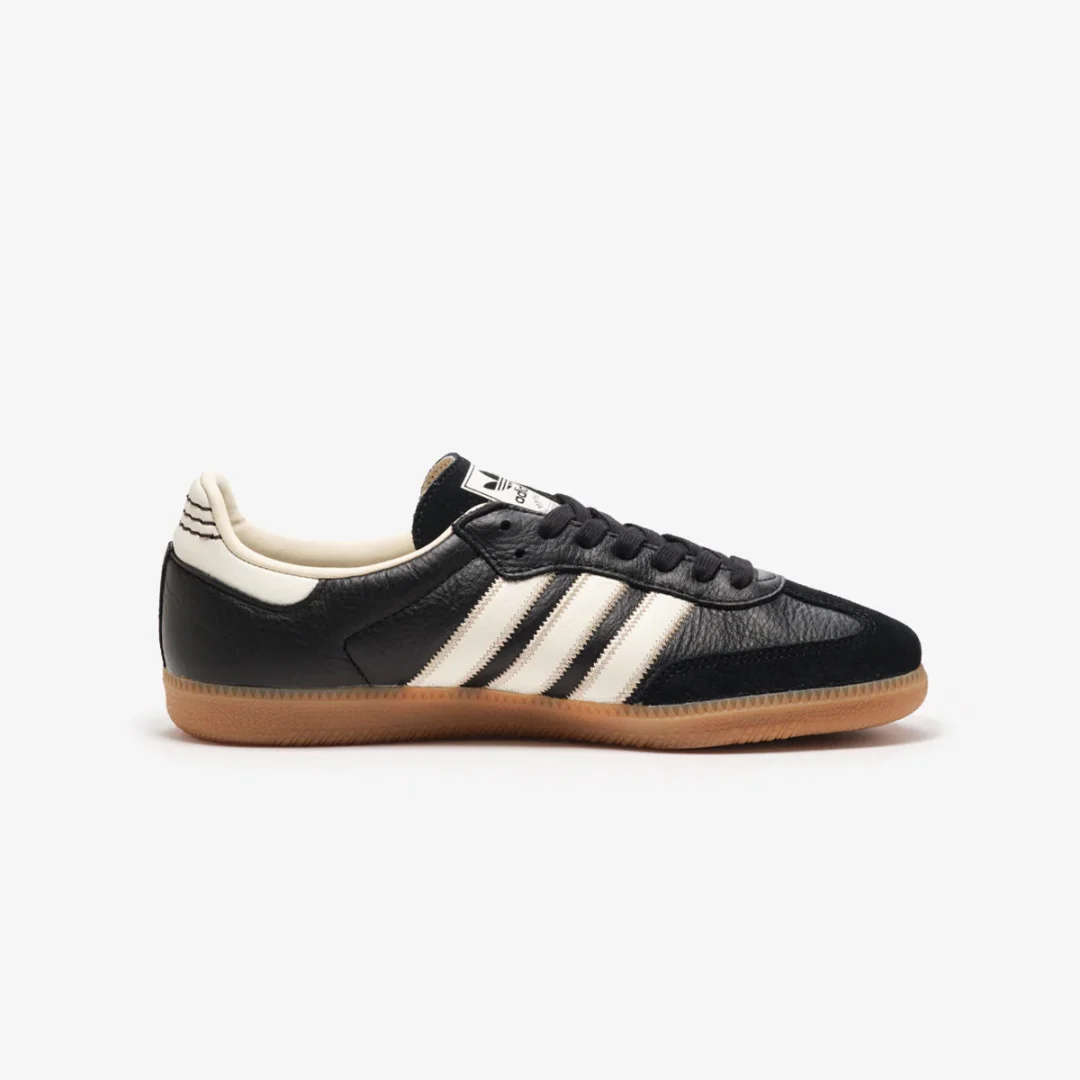
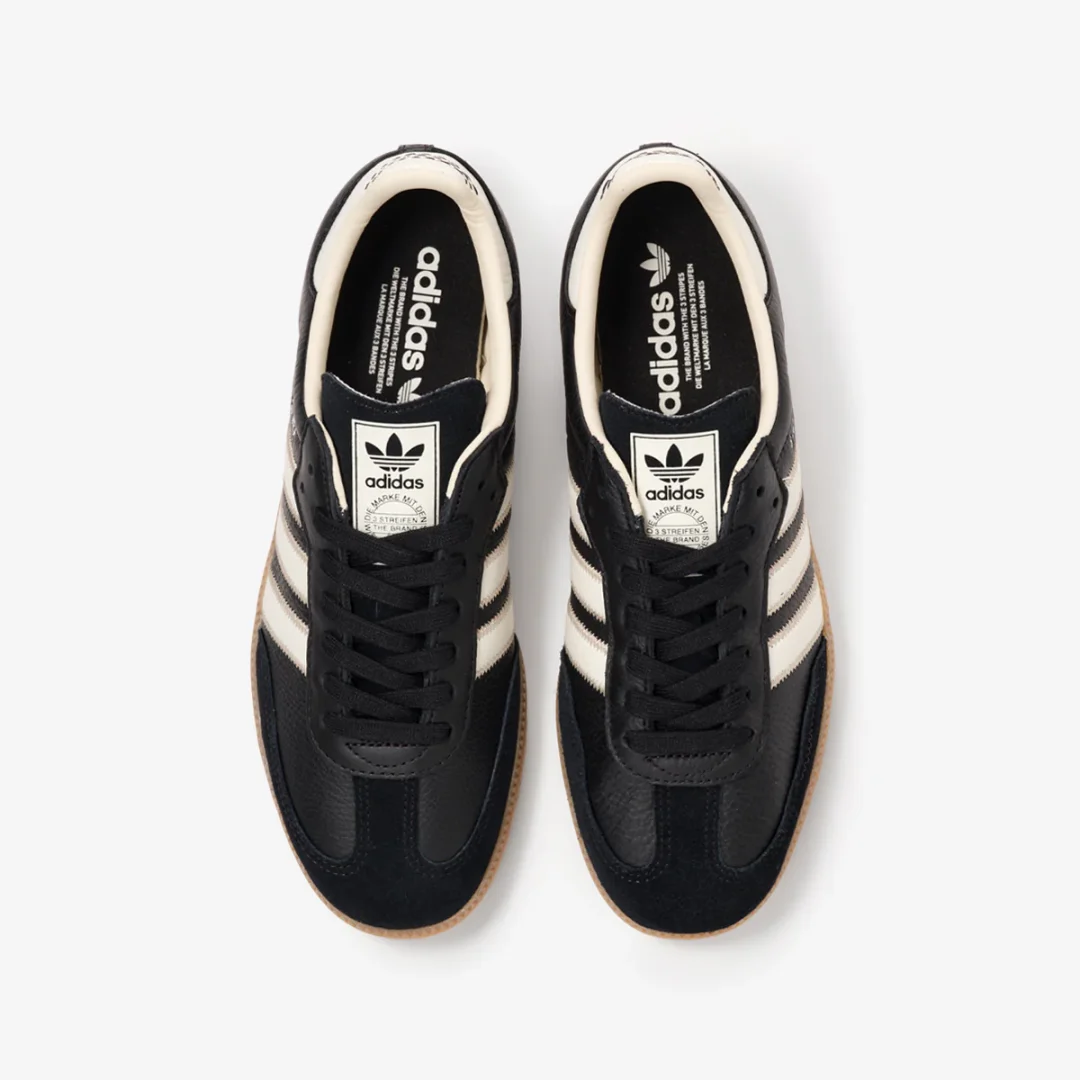
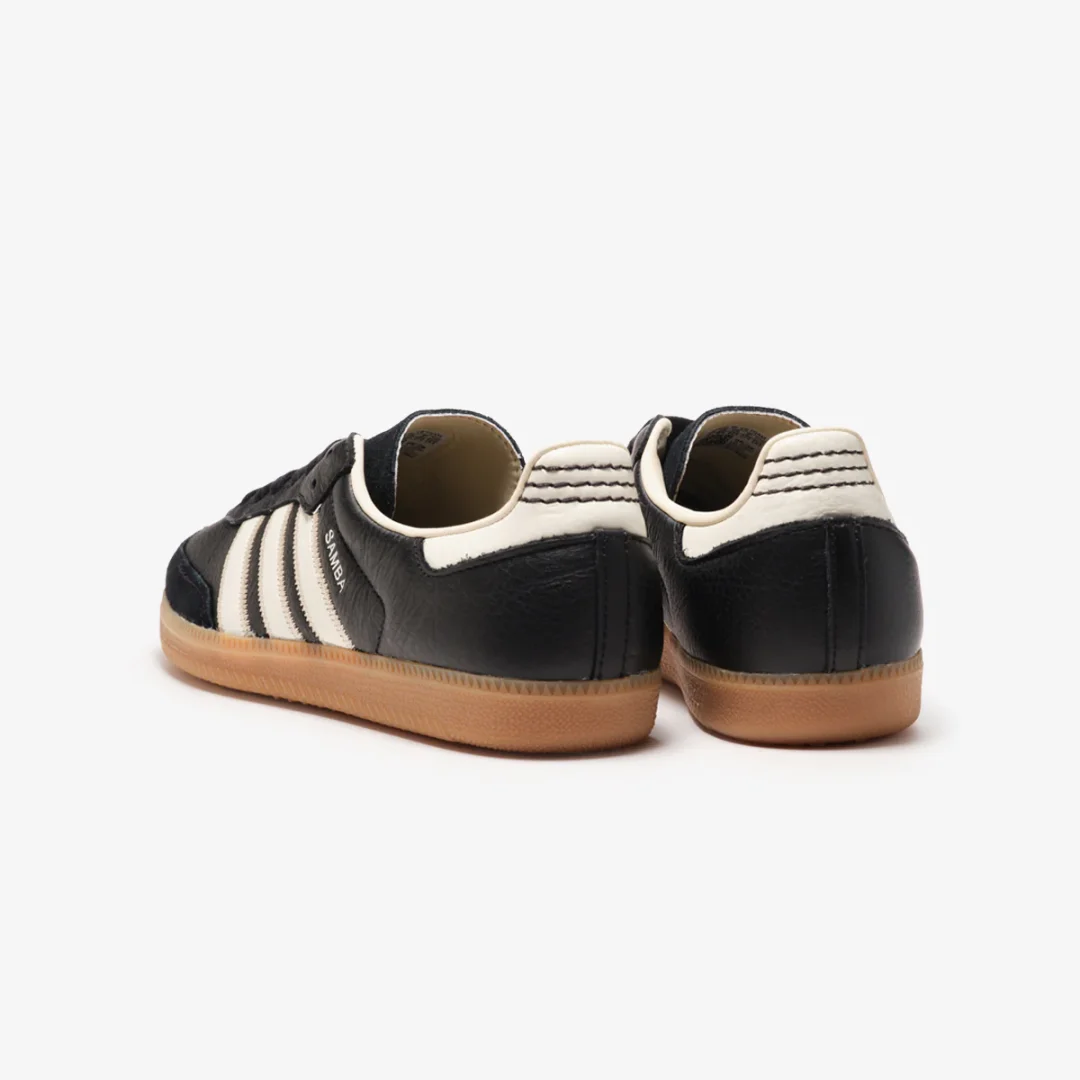
The release splits into two style codes, both priced at fifteen thousand nine hundred fifty yen. KK2275 flips the traditional Samba script into Ftwr White with Core Black striping, while KK2276 runs the more familiar Core Black upper against Off White stripes, both finished with the gum outsole that has defined the model since its soccer days. Kicks Lab. frames the pairing as a study in how far a strictly black and white palette can stretch when the materials underneath start to shift, and having both in hand at once, rather than picking a single hero colorway, seems to be the point.
Both versions carry over the construction that has made the Samba durable for three quarters of a century, a full grain leather and suede upper built for the abuse of hard courts and harder pavement, sitting on that gum rubber sole with its low profile grip pattern.
huh
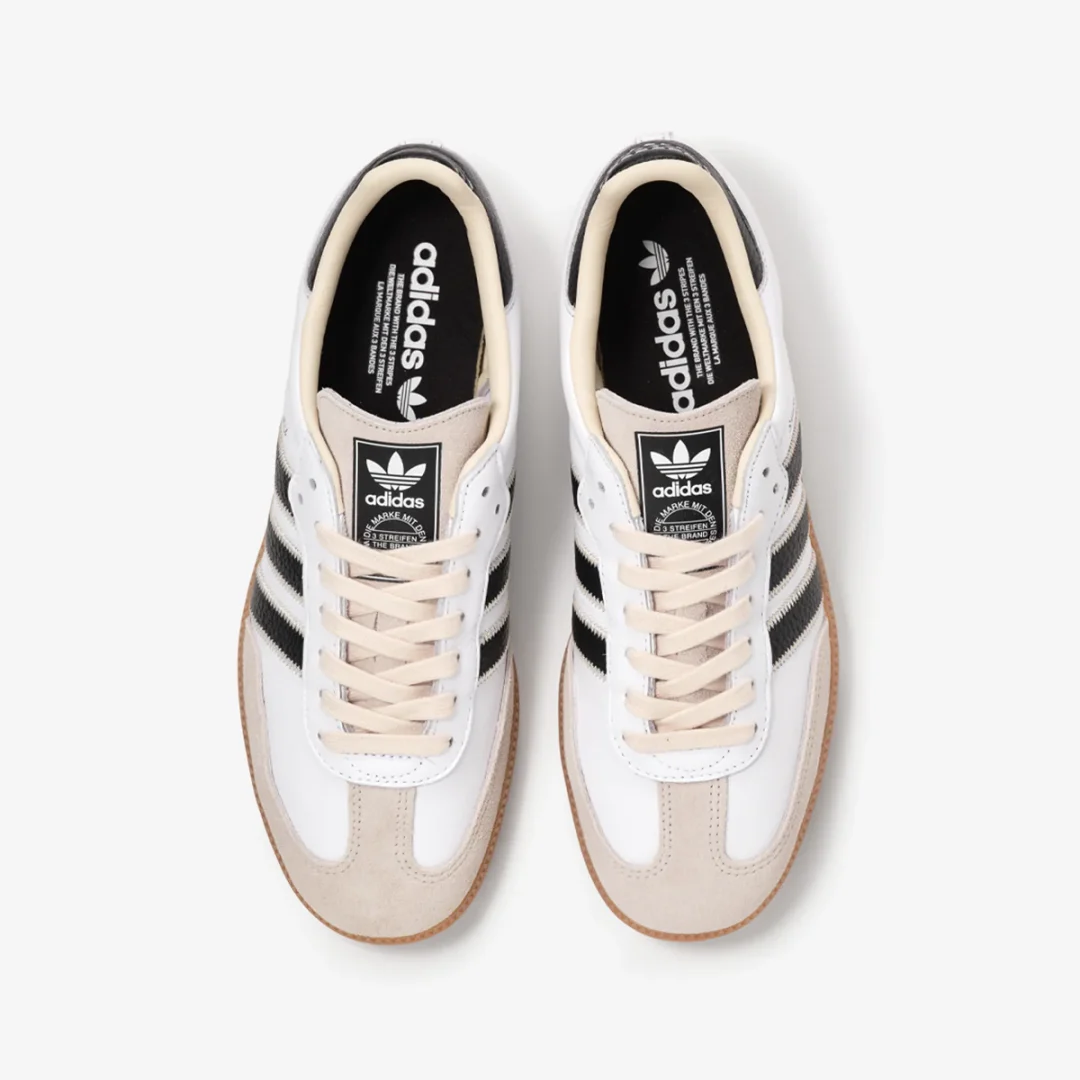
Nothing about the KK2275 and KK2276 pair reinvents the Samba’s outline, and that is deliberate. Instead, Kicks Lab. has gone after the parts of the shoe that rarely get touched in a general release. The three stripes, usually a flat overlay, come embroidered here rather than stitched on as a separate panel, giving the branding a slightly raised, tactile presence against the leather. The tongue, ordinarily smooth leather across most Samba runs, switches to suede, a small swap that changes how the shoe photographs and how it wears in hand. Inside, the lining goes cream rather than the usual white or black, warming up the shoe’s interior in a way that is invisible in a box shot but noticeable the moment someone laces up.
View this post on Instagram
None of this is loud. A shopper glancing at either colorway from across a room would likely clock it as a standard Samba OG. That gap, between what reads at a distance and what rewards a closer look, is where Kicks Lab. has chosen to spend its design budget, and it is a more interesting bet than another bold colorway would have been.
rel
Both KK2275 and KK2276 drop on July 18, 2026, through Kicks Lab.’s Harajuku storefront and its online shop, each priced at fifteen thousand nine hundred fifty yen. The two codes are being sold as a matched pair rather than staggered individually, consistent with how Kicks Lab. has handled its adidas exclusives in the past, giving collectors the choice to buy into either end of the black and white spectrum or both at once.
Sizing and stock allocation details typically post closer to release through Kicks Lab.’s own channels, and given the shop’s exclusive model status, early sellout on at least one colorway would not be a surprise. Kicks Lab. exclusives have historically moved fastest on release morning at the physical Harajuku location, where the shop’s regulars tend to camp out before the online store even goes live, so anyone shopping from outside Japan should expect the web listing to be the more reliable, if less atmospheric, route in.
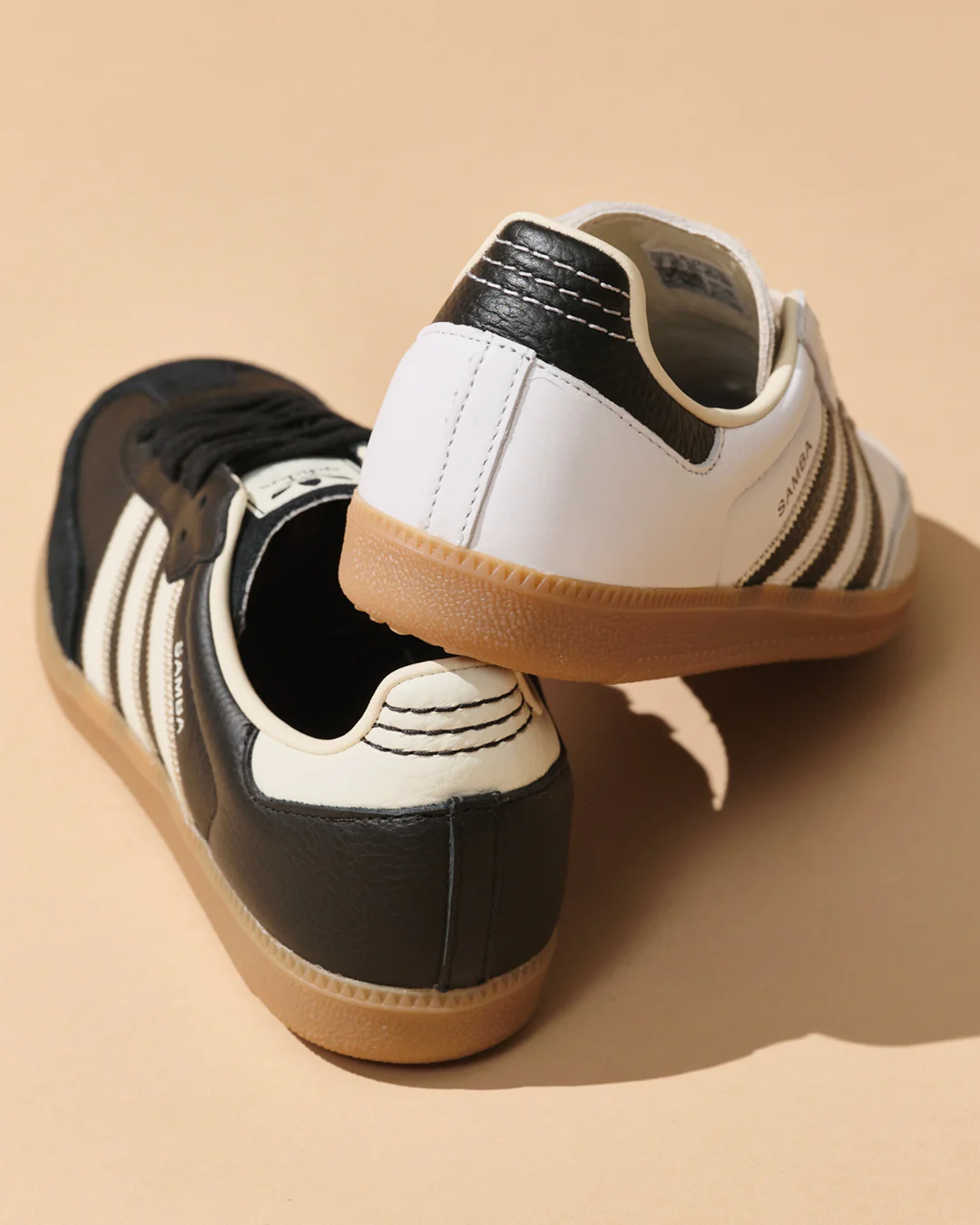
Rear view of the latest adidas Samba colorways showcasing premium leather construction, contrast heel tabs, and signature gum soles.
issuance
It would be easy to wave off another Samba variant as noise in an already crowded release calendar. The shoe has had an unusually long run of relevance, buoyed by everything from European football culture to a broader 2020s streetwear reappraisal of low profile, terrace inspired sils. But the Kicks Lab. version earns its spot by doing the harder thing, working within a design that already sells itself and finding two or three places to add craft rather than spectacle. For a shop built on exactly that kind of editing, the Samba OG in Black, White, and Gum is a quiet but confident addition to its exclusive lineup, and a reminder that the best reworkings of an icon are sometimes the ones you have to look twice to notice.
Related Articles
adidas Originals Lines Up a Velour Zip-Up in Black, Navy and Burgundy
Three colors, one plush knit and no date yet. A velour zip-up sweatshirt is heading […]