DRIFT AUDIO
Listen to this story
Choose a voice, then press play.
In 1923 a downpour flooded René Lacoste’s Davis Cup court in Deauville. Mackintosh’s Scottish workshops have now cut that rain delay into twelve pieces.
On July 31, 1923, René Lacoste walked onto a grass court in Deauville for a Davis Cup rubber against Spain’s Manuel de Gomar, and the sky opened. In Lacoste’s own retelling of the day, the court flooded so badly that spectators threw newspapers onto the grass to soak up the water, while the crowd waited it out under umbrellas, in trench coats, ponchos, slickers and rubber boots. The rain pushed the match into a second day. Lacoste won in four sets, France advanced to the finals, and a young player took his first real step toward a world title.
That washed-out afternoon became the starting point for Lacoste‘s Fall/Winter 2026 collection, which creative director Pelagia Kolotouros staged on Court Philippe-Chatrier at Roland-Garros in March. Tucked inside the full collection was a smaller and sharper idea: a capsule built with Mackintosh, the Scottish rainwear house whose name has doubled as the word for a raincoat for close to two centuries. Twelve garments, every one of them cut from Mackintosh’s rubberised bonded cotton, went on sale online and in selected stores on September 24.
Signal. What happened: Lacoste and Mackintosh rel their first joint collection, a twelve-garment capsule plus accessory that debut at Lacoste’s Fall/Winter 2026 runway show at Roland-Garros. Exact object: the Lacoste x Mackintosh capsule (list as Mackintosh x Lacoste on the Scottish side), made entirely in Mackintosh’s hand-taped bonded cotton, including a double-breasted Waterproof Trench Coat (style code RO7080, Fawn) at $2,650 and an Oversized Waterproof Polo Shirt at $1,150. When and where: September 24, 2026, through lacoste.com, mackintosh.com and selected stores, with Japanese stock at Dover Street Market Ginza and Mackintosh’s GINZA SIX and Roppongi Hills shops. Source: Lacoste’s collision page and Mackintosh’s own US product listicle, with Japanese pricing report by a vary rely other. Why it matters: it places Lacoste’s tennis codes inside a manufacturing process that has barely changed since the 19th century, at price points far above the brand’s usual register.
View this post on Instagram
two
The pairing reads neatly on paper because both companies began with a founder solving a practical problem. René Lacoste and André Gillier founded Lacoste in 1933, building the business around the short-sleeved piqué shirt Lacoste had worn on court, a garment the brand still frames as the invention of the polo shirt. The crocodile came from a nickname earned through his dogged style of play.
A century earlier in Glasgow, the chemist Charles Macintosh found a way to sandwich rubber dissolved in naphtha between two layers of cloth, produce a fabric that kept rain out. He patented the process in 1823, and the house that grew from it dates its founding to 1824. At some point the brand name picked up a “k” its founder never used.
What makes Mackintosh an unusual partner for a company of Lacoste’s scale is how little its method has moved on. The garments are still hand-glued and hand-taped, the waterproofed cotton colour-matched to its seam tape, using techniques that have been passed down since the 1800s. Lacoste files the project under what it calls a Roots Collaboration, a label that signals the capsule is about shared origins rather than a logo swap.
The show notes lean on a phrase Lacoste has adopted for this era of the brand, “tech-heritage,” meaning archival sportswear rebuilt with performance materials. The same collection put transparent nylon and wet-look finishes next to plush velvet and the soft tailoring of the house’s René blazer, and placed cable-knit sweaters beside high-performance nylons. Lacoste calls the result Neo-Tennis: clothes that carry the energy of the sport without being defined by it.
Kolotouros has spent several seasons pulling outerwear toward the centre of the Lacoste offer. In the house’s own framing of the Fall/Winter 2026 show, the trench serves as the foundation, the poncho becomes an evolved polo, and bonded tech wool works as a shield against the elements. The Mackintosh capsule is where that thinking gets its most literal expression.
actual
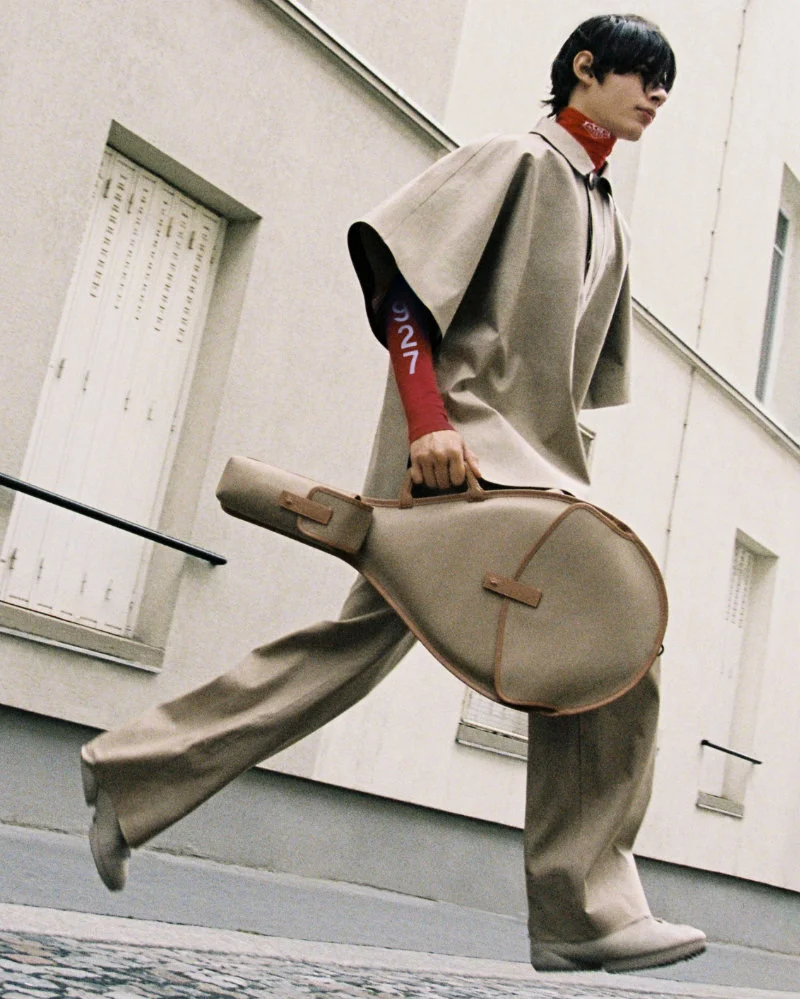
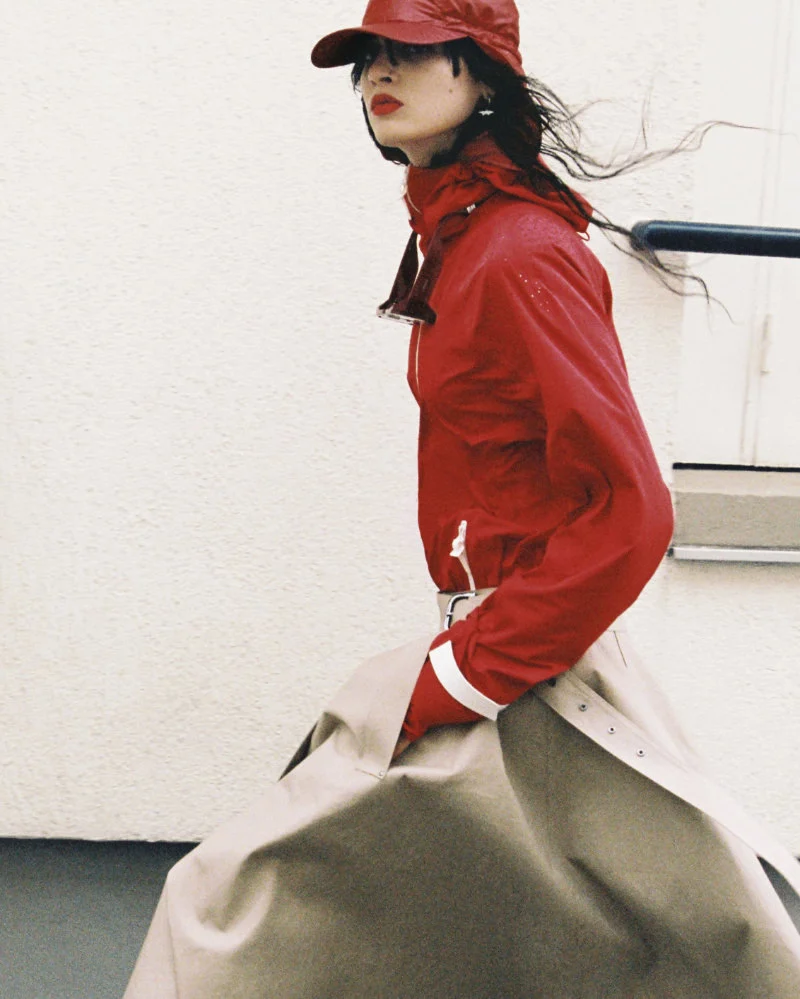
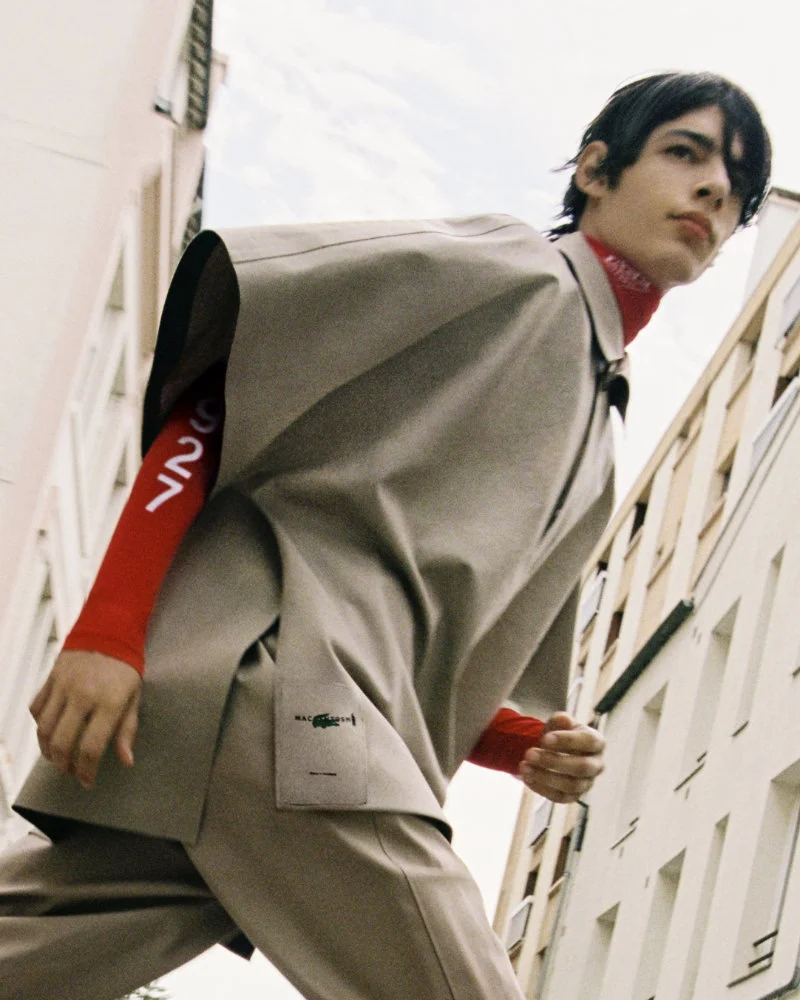
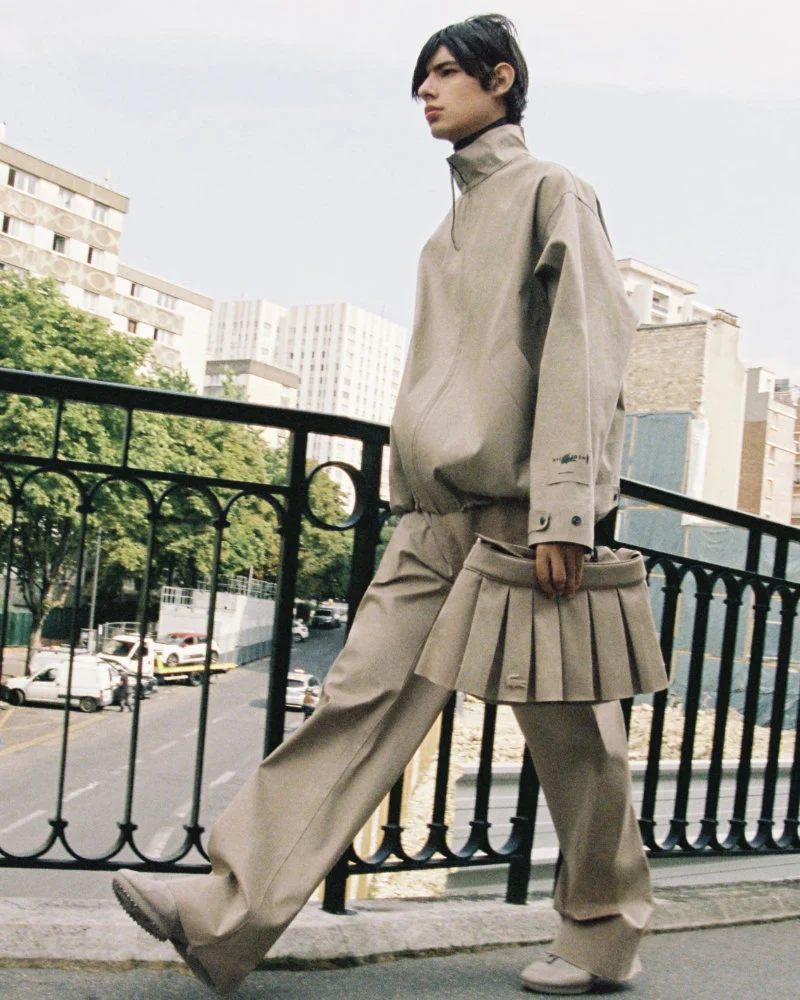
The twelve garments lean on the two houses’ most recognisable shapes and then fold them into one another. The lineup includes a polo poncho, a trench dress, a tracksuit shirt, a belted pleated skirt, a minimal coat, a dropped-waist trench and a blouson with adjustable cuffs. Lacoste’s own shorthand for the key sil is a poncho polo, a rain-proof tracksuit, a pleated trench skirt and a hybrid track jacket shirt, and the house describes the collection as largely gender-fluid.
The show itself opened on one of these pieces. WWD’s runway review singled out the first look, a raincoat that crossed a track jacket with a tennis skirt, as one of several items belonging to the Mackintosh project. That hybrid logic runs through the capsule. The proportions are oversized, the sleeves generous, and the shapes swing between track-inspired layers and classic rainwear instead of settling into anything resembling a conventional tennis kit.
View this post on Instagram
Mackintosh’s US store lists nine of the styles, all in a single shade, Fawn. The Oversized Waterproof Polo Shirt is the entry point at $1,150, followed by a Waterproof Popover Jacket at $1,250 and a Waterproof Cotton Jacket at $1,550. A Waterproof Car Coat, offered in both men’s and women’s cuts, sits at $1,690. The Waterproof Trench Dress is $2,350, the Waterproof Trench Coat (again in men’s and women’s versions) is $2,650, and the Waterproof Wrap Skirt tops the list at $2,750.
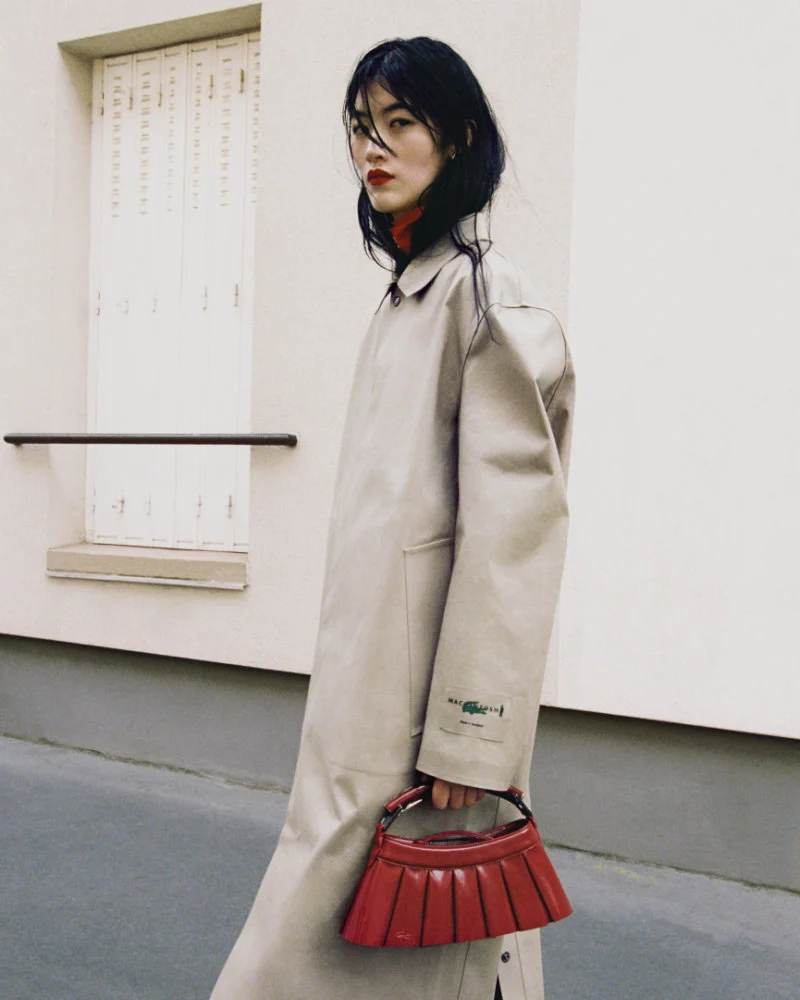
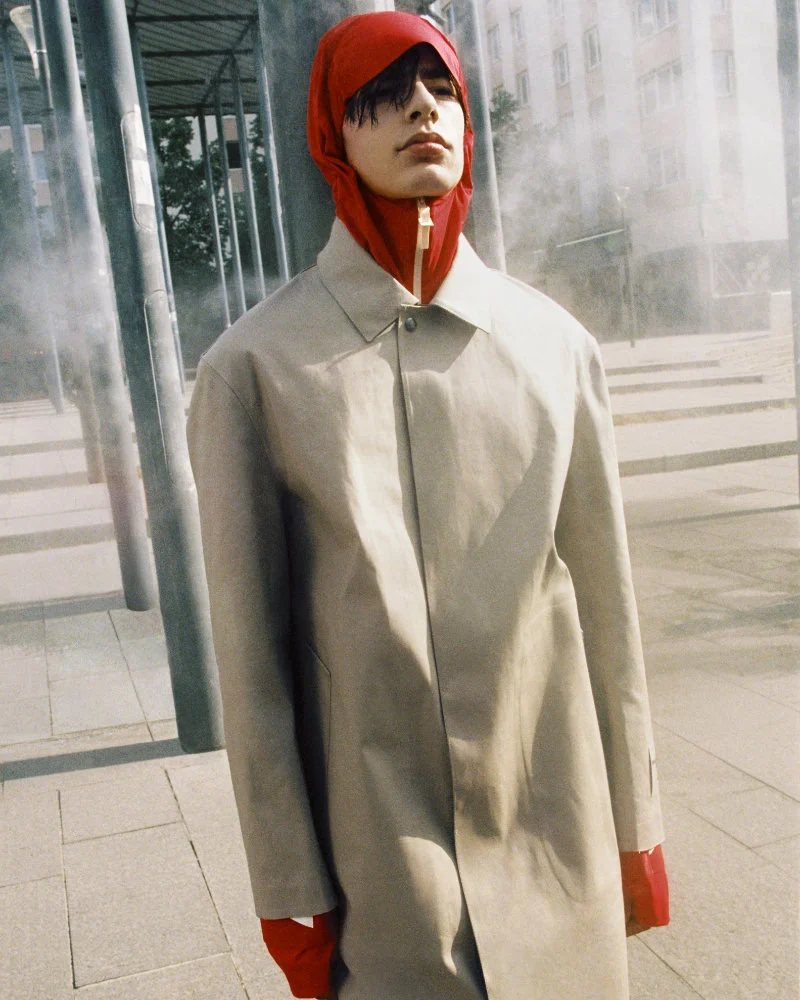
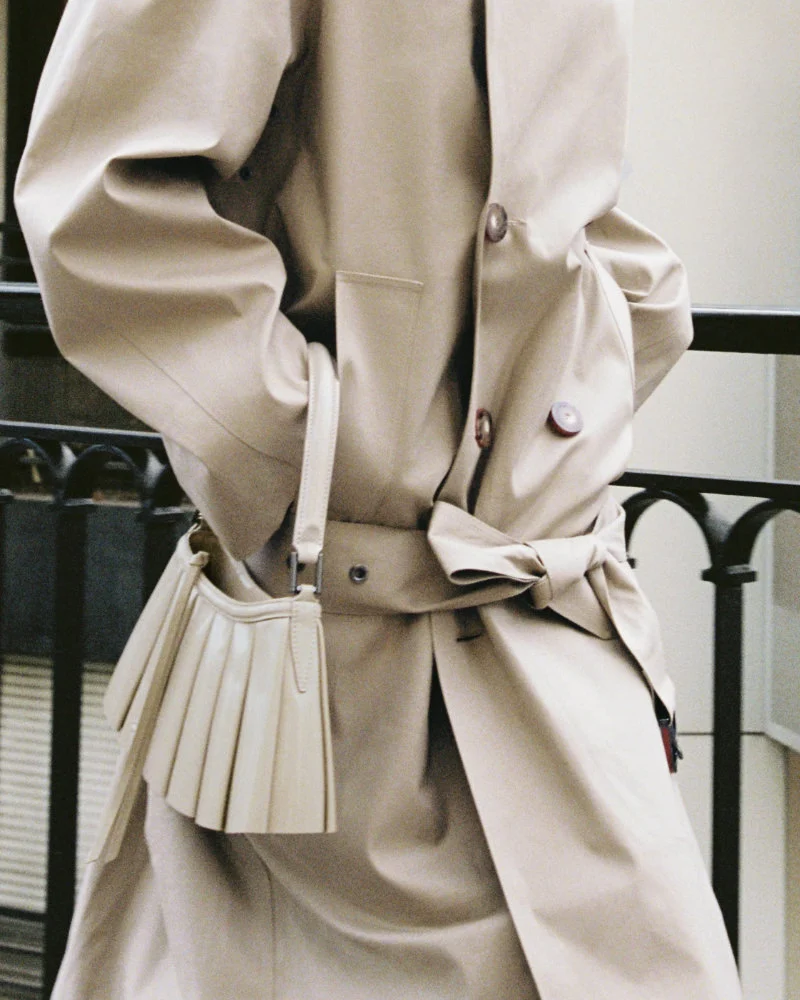
The trench gives the clearest view of how the two sets of codes meet. It is double-breasted, with wide notched lapels and an adjustable waist belt, cut in a relaxed fit and finished with a tonal crocodile rather than the familiar green one. It is handmade in Scotland from 100 percent bonded cotton, comes in just two combined sizes (XS/S and M/L), and carries care instructions that belong entirely to Mackintosh: spot clean only, never machine wash, never dry clean, and remove small marks with soap and a soft brush.
Tape Where the Baselines Go
Bonded cotton behaves nothing like the nylon and polyester that fill most technical rainwear. The rubber layer makes the cloth fully waterproof and windproof, but it also makes the construction slow and unforgiving, because every seam has to be sealed by hand once the panels are joined. According to Footwear Magazine’s report on the release, the garments are cut and assembled in Mackintosh’s Scottish workshops, and the house’s waterproof taping has been worked into the design itself, running across the fabric in a way that echoes the white lines of a tennis court.
That single detail is the most convincing argument for the collaboration. Tape is usually hidden, a technical necessity tucked inside a garment. Here it becomes the drawing on the surface, a way to put a court on the body without printing one.
more
The capsule does not stop at outerwear. Two versions of the Lenglen bag, named for the French tennis great Suzanne Lenglen and built around pleats borrowed from a tennis skirt, come in the same rubberised material. On the runway, Lacoste also showed a racquet cover and a tennis ball clutch made in Mackintosh technical fabrics.
The accessories sit inside a wider push around the Lenglen, which returned this season in new proportions with a silicone grip handle. The racquet cover is the one item with a question mark over it in Japan, where local availability had not been decided when the Japanese lineup was first announced.
get
Japan received one of the more detailed rollouts. The collection is stocked at Dover Street Market Ginza and at Mackintosh’s own stores in GINZA SIX and Roppongi Hills, and the Japanese price list names several pieces differently from the US store.
The polo-shaped poncho is ¥198,000, the anorak-style pullover ¥213,000, and a balmacaan coat ¥286,000. The most striking item, a coat that reads as a track jacket fused with a pleated skirt, is ¥398,000, and the trench tops the Japanese list at ¥452,000. The balmacaan appears to correspond to the car coat sold in the US, and the anorak to the popover jacket, though the two stores do not cross-reference their product names.
Japan is familiar territory for Mackintosh. It runs its own stores in Tokyo’s major shopping complexes, including the two carrying this capsule, and it has collaborated with Japanese labels such as Junya Watanabe Man and BATONER, both of which still have dedicated pages on its site.
and
For Kolotouros, the capsule caps a show that WWD counted as her fifth for Lacoste. The wider collection blended the 1920s of René Lacoste’s play days with 1980s sportswear, and its palette was built from colours after rain: cool greys and inky heathers, an Agave Green meant to evoke wet grass, and a Rusty Red nodding to the clay at Roland-Garros hastily covered against a shower. Elsewhere on the runway, weathered trophy pins, Grand Slam T-shirts, the tracksuit and a digital watch on a stretch bracelet filled in the fan-culture side of the story.
Mackintosh, for its part, has long treated collaboration as a core part of how it works. Beyond the Japanese projects, its site currently carries dedicated collections with C.P. Company, Barrie, Viktor&Rolf and Victoria Beckham. In 2017 the house appointed Kiko Kostadinov to lead its fashion line Mackintosh 0001, an early sign that its rubberised cotton could travel well beyond the classic raincoat.
Lacoste has its own collide history, though it tends to run in a different direction. Under former creative director Felipe Oliveira Baptista, who led the house from 2010 to 2018, it brought in partners such as Supreme, the embroider atelier Maison Lesage and the image-maker Jean-Paul Goude to reinterpret its archive. More recently it built a Spring/Summer capsule with Netflix that redrew the crocodile for eight of the platform’s series. Most of those projects put the crocodile on someone else’s canvas. The Mackintosh capsule works the other way, sending Lacoste’s shapes into another company’s factory and accepting that factory’s rules.
Distribution has been kept tight. Beyond Lacoste’s and Mackintosh’s own sites and stores, the capsule has turned up at a handful of select retailers, among them The Clothette, which announced it as an exclusive it would carry back in March, days after the runway show. There is no sign of a wide wholesale push, and the two-size run on pieces like the trench keeps production volumes naturally small for a garment that has to be sealed by hand.
Lacoste, meanwhile, describes the capsule on its own site as a series of ultra-limited pieces. The first dozen garments shown on a clay court in March now hang in Ginza, in Roppongi and on two websites, all of them in the same shade of Fawn.