Madison Booker: Getting the Cool Out – The Evolution of a Complete Basketball Player

May 15, 2026
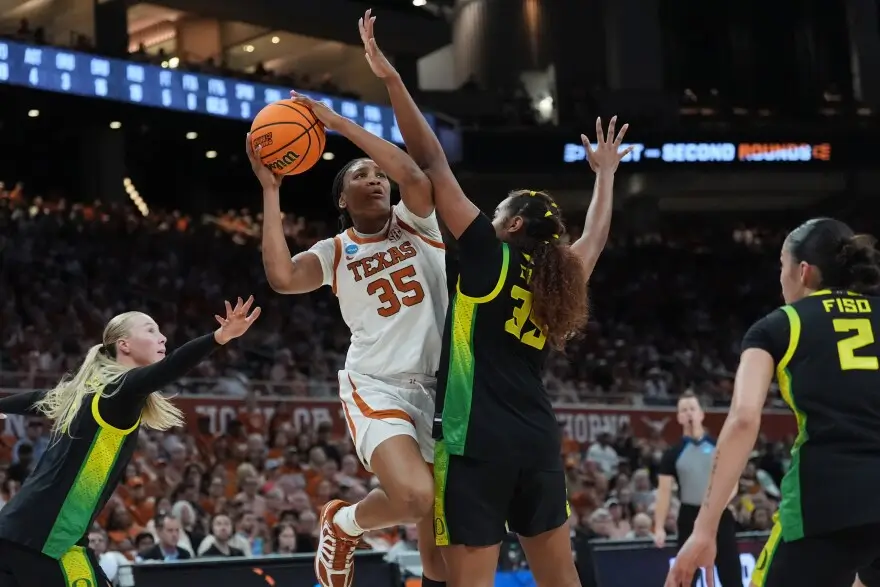
It was an early September afternoon in Austin, Texas. Madison Booker, then a freshman forward still adjusting to the speed and physicality of Division I basketball, found herself in an unfamiliar role. With starting point guard Rori Harmon sidelined by injury, the 6’1” Booker was asked to run the show. She moved between guard-specific drills and traditional post work, the mental chess required feeling like multitasking at the highest level. Turnovers mounted under pressure. Doubt crept in. You’re not cut out for this.
That’s when Texas head coach Vic Schaefer delivered a message that still echoes for Booker as she enters her junior season leading the Longhorns in their quest for a first national championship in three decades.
“This is not the place for cool basketball,” Schaefer told her. “Get that cool out of your system.”
The “cool” wasn’t about her smooth playing style. It was about mentality — a patient, almost passive approach that had served her well in high school but wouldn’t survive the demands of elite college basketball. To win at this level, she needed to become the aggressor.
stir
Today, that transformation is complete. A three-time All-American, Booker has developed into one of the most complete players in women’s college basketball. She scores at all three levels with remarkable efficiency, anchors the defense with versatility, and leads with quiet intensity. Her midrange game — smooth, cold, and devastating — is arguably the purest in the country. And she does it all while maintaining the effortless cool that first defined her, now channeled into purposeful dominance.
This is the story of how Madison Booker became the player she was always meant to be.
retro
Booker’s love for basketball began in the most ordinary of settings: the family driveway in Ridgeland, Mississippi. As an elementary schooler, she would wake up early, grab a ball, and play out elaborate scenarios — clock winding down, game on the line, heroics in her hands. Her mother would scold her for heading to school sweaty, but nothing could deter the young Madison. The game already lived inside her.
Her father, a former Southern Mississippi player who competed overseas, became her first and most important coach. After work, he would find his daughter waiting at the front door, ready for one-on-one battles in the driveway. Those sessions were sacred.
“He played for Southern Mississippi in college,” Booker recalls. “As he got older, he’d play competitive pickup. Whenever he wrapped up a game, he always took the time to train me.”
That consistent, high-level presence made a profound difference. While many young athletes navigate the game through trial and error, Booker had a guide who could simplify what it truly meant to be a basketball player.
versa
“I was a big Boston Celtics fan growing up,” she says. “My favorite player was Rajon Rondo. That’s what I wanted to be — a point guard. And I remember my dad saying to me, ‘You’re not going to be a point guard. You’re going to be a basketball player.’”
It was the single most important early lesson. Position labels were irrelevant. What mattered was doing whatever the team needed — posting up, rebounding, scoring, passing, defending. That versatility would become the foundation of her game and her philosophy when mentoring younger players.
carry
At Germantown High School, Booker emerged as a three-time All-State standout. Her mother, a teacher at the school, ensured academics always came first — there would be no special treatment. Yet as Booker’s talent blossomed, her mother encouraged her to consider leaving the state for stronger competition. Booker refused.
“I loved my community,” she explains. “I wanted to put the state on my back. We have some dogs here in Mississippi for girls’ basketball. I wanted to prove to people what we were capable of.”
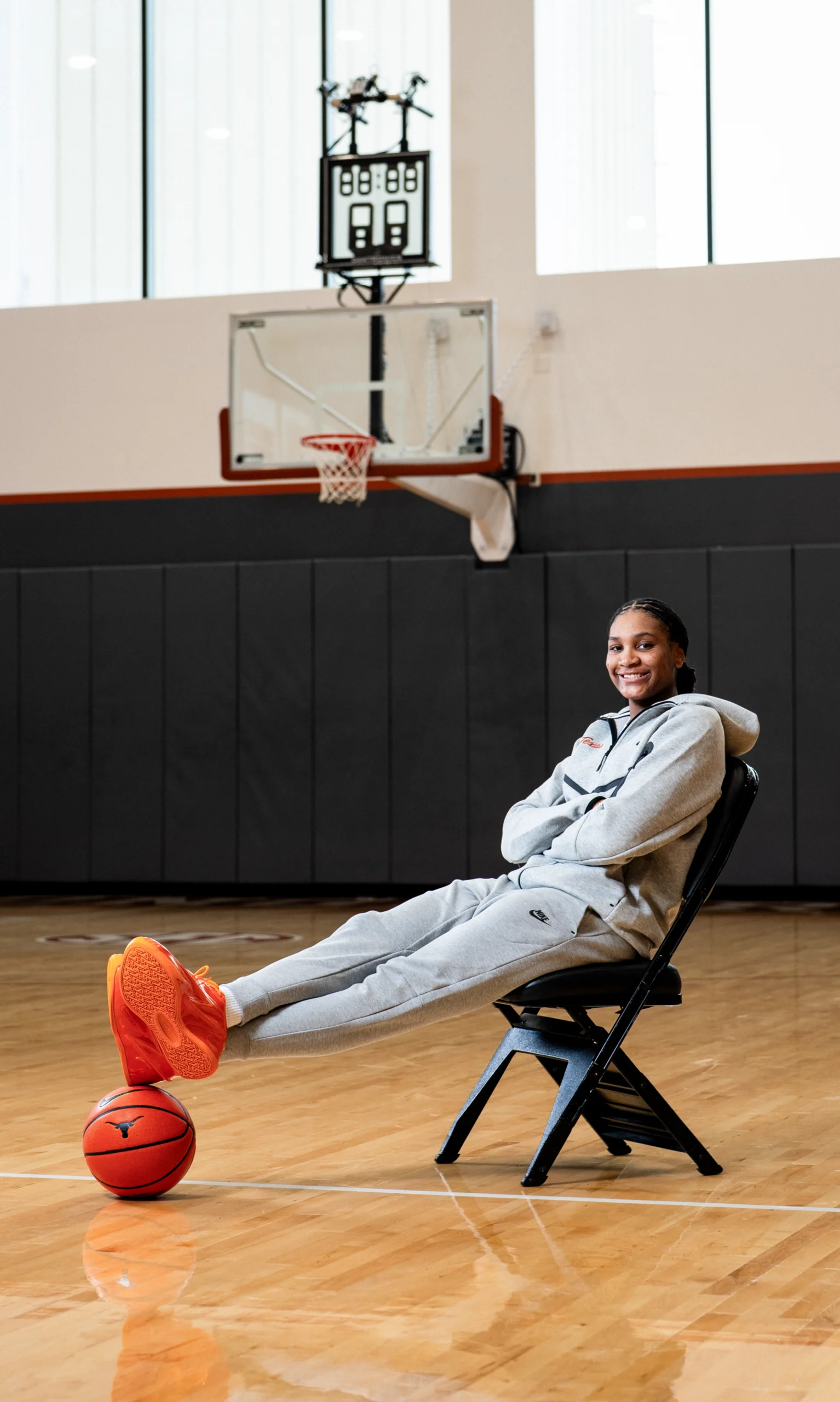
Her loyalty paid off. As a senior, she led Germantown to a state championship. In that run, she discovered “takeover mode” — a complete belief that her team simply would not lose. It was the first glimpse of the alpha mentality Coach Schaefer would later demand.
freshman breaking point
Despite high school success, Booker arrived at Texas feeling unprepared. She describes herself as clumsy and uncertain through much of her AAU and high school career, lacking the physical assertiveness her game now radiates.
“I actually thought I was complete trash until I got to college,” she admits with striking honesty.
The freshman year transition exposed those gaps. Playing point guard in practice while still developing her forward skills created overload. Turnovers and self-doubt followed. Schaefer’s tough love — demanding she shed the “cool” mentality — became the catalyst.
discovery
That shift didn’t happen overnight. A pivotal moment came during the 2021 EYBL season in Augusta, shortly after COVID restrictions eased. For the first time, men’s and women’s teams shared the same facility. Booker felt no hesitation. She attacked, scored, passed, and defended with clarity and dominance. The assertiveness she had been searching for finally surfaced.
Her midrange game, now her signature, also evolved later than many realize. What looks effortless and innate today was honed through college reps and relentless work. “You don’t end your college career as the same player you were in high school,” she notes. “The change over time in how you perceive yourself is a good thing.”
scope
Now in her junior year, Booker embodies the complete player her father envisioned. She impression the game on both ends with poise and ferocity. Her scoring versatility — attacking the rim, pulling up from midrange, and stretching the floor — makes her a nightmare matchup. Defensively, her length and basketball IQ allow her to guard multiple positions.
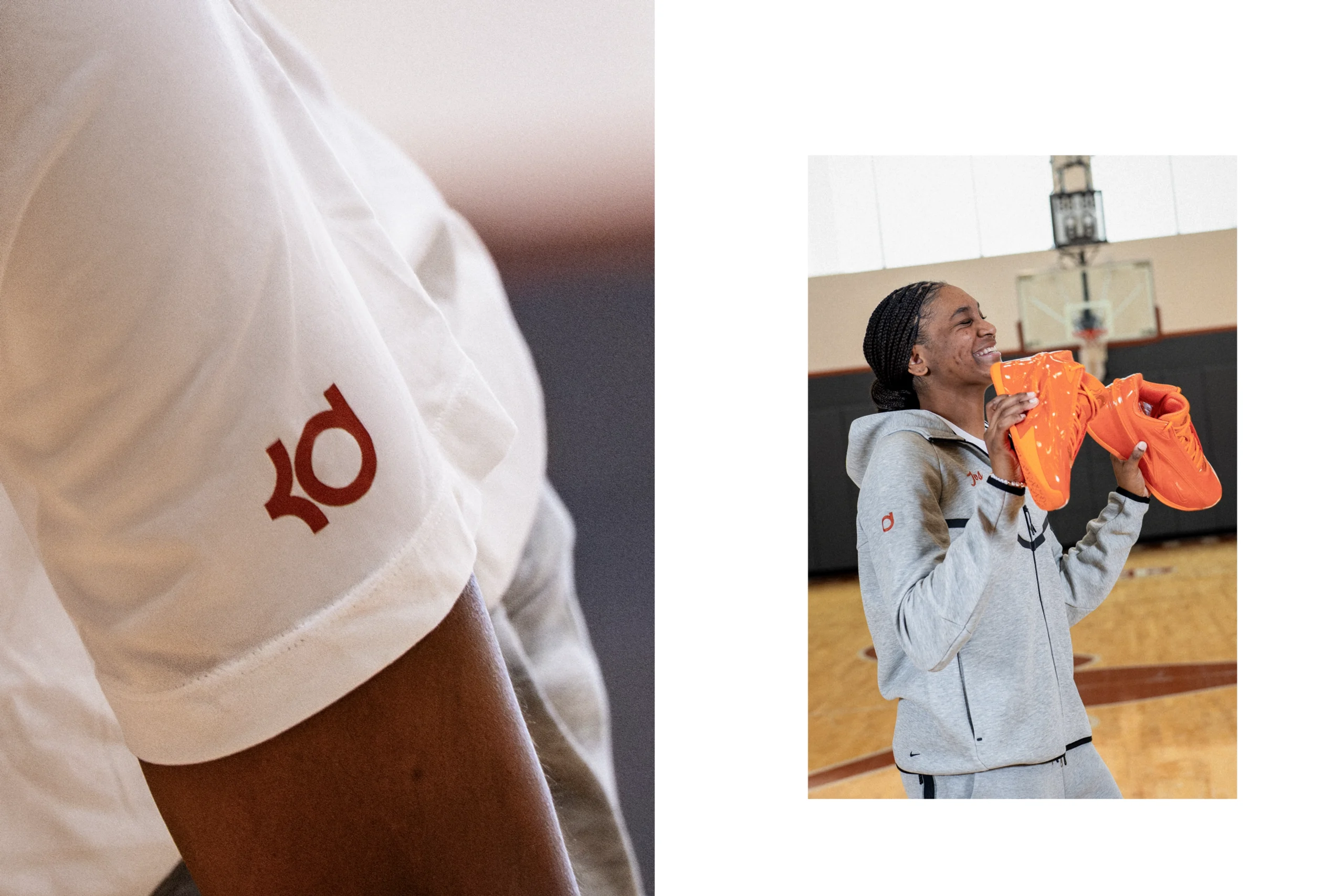
This balance of smoothness and aggression mirrors her favorite player, Kevin Durant. In a landmark NIL deal, Durant personally selected Booker as the first athlete to represent his KD brand. The partnership feels natural.
“His game is so complete,” she says. “Of course, he’s a nonchalant guy, but in his game, there are no gaps. His accomplishments are driven by a pure love for basketball… Whenever I talk with him, I can just tell he studies the game. He lives it. I want to honor a love for the game in the same way he has.”
That shared love — the childhood joy of playing out scenarios in the driveway — remains at Booker’s core. It fuels her daily work and her leadership style.
tx
For Booker, legacy at Texas is straightforward: deliver the program’s first national title in 30 years. She speaks with gratitude about the investment the university and coaching staff have made in her development.
“When I think of an accomplishment, it’s bringing UT a national championship,” she says. “I want to give as much as possible back to this program after all they’ve invested in me.”
Her journey reflects broader themes in women’s basketball. The sport continues to grow in visibility and professionalism. Players like Booker — versatile, skilled, mentally tough, and culturally engaged — represent its future. Her NIL partnership with Durant also highlights how the landscape has shifted, allowing top talents to align with icons they admire while building their own brands.
Booker’s story offers lessons for young athletes. Stay loyal to your roots when it matters. Embrace discomfort and coaching that challenges your comfort zone. Understand that growth is continuous — the player you are in high school is not the finished product.
She has already evolved from the passive, “cool” freshman into a confident leader who can take over games while staying true to her measured demeanor. The aggression is there when needed; the smoothness remains her weapon.
fin
As Texas battles for supremacy in one of the deepest NCAA seasons in recent memory, Booker carries both the lessons of her driveway sessions in Mississippi and the fire instilled in Austin. She plays with the joy of a child imagining game-winning shots and the maturity of a player who has internalized what it takes to win at the highest level.
The cool is still there. But now it’s backed by championship intent.
In Madison Booker, women’s basketball sees a player who understands that true greatness isn’t about fitting a position or maintaining appearances. It’s about becoming the most complete version of yourself — willing to do whatever the moment, the team, and the game demands.
And in that completeness lies her greatest strength.
Related Articles

AJ Dybantsa’s Rookie Summer: Inside the No. 1 Pick’s First Weeks in Washington
Basketball’s most-watched teenager is now a Wizard, a Nike cornerstone, and a Summer League headliner […]