DRIFT AUDIO
Listen to this story
Choose a voice, then press play.
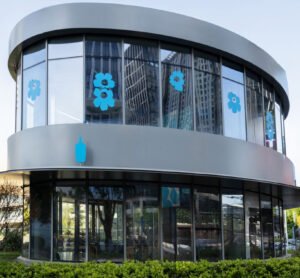
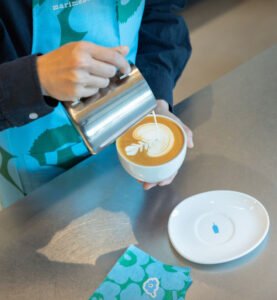
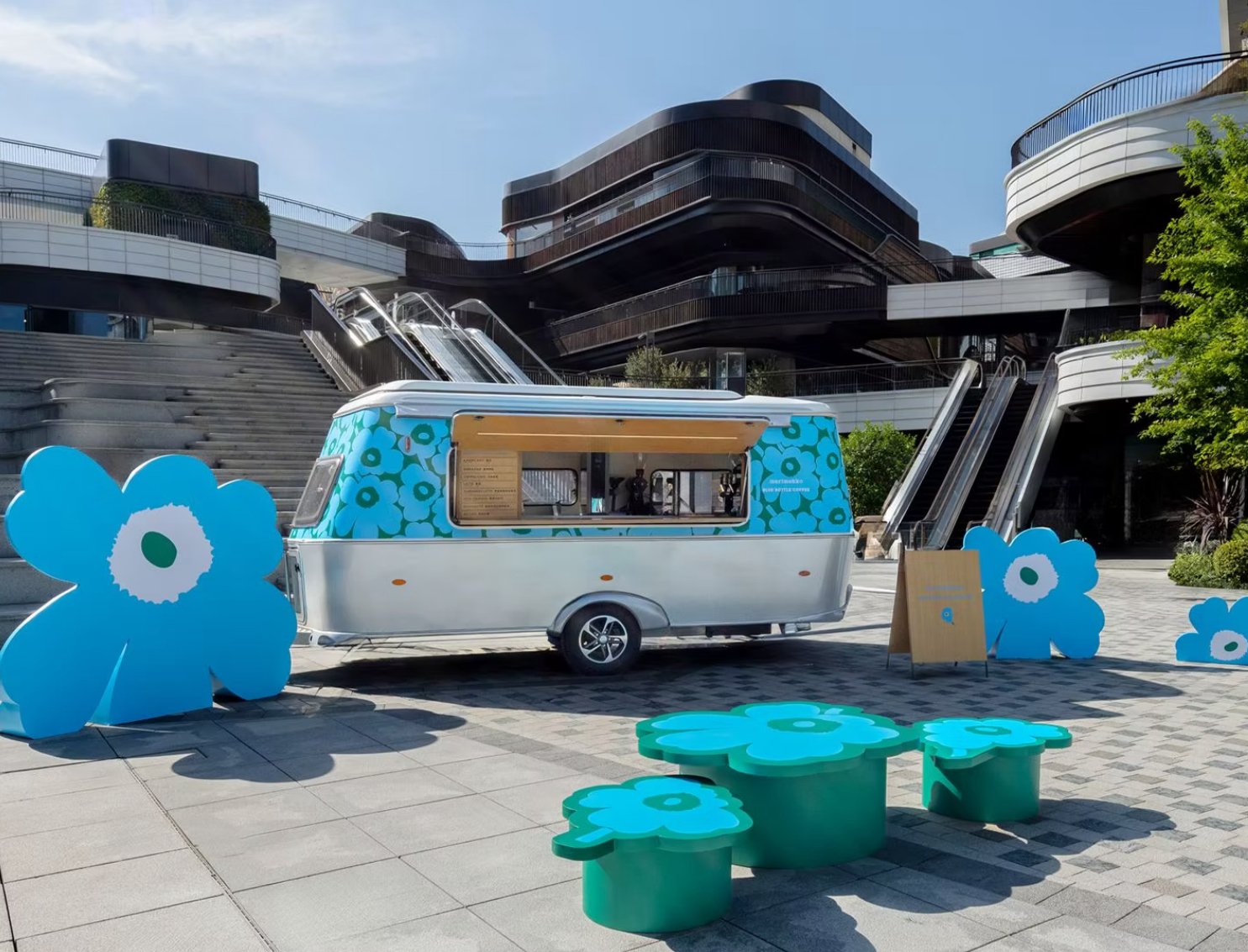
In the heart of Shanghai’s affluent Pudong district, beneath the glistening angles of Taikoo Li Qiantan—a shopping precinct known for its architectural minimalism and cultural refinement—a pop-up truck recently parked with more than just caffeine on its mind. Draped in an ebullient coat of Marimekko’s signature prints and armed with the artisanal prestige of Blue Bottle Coffee, this temporary installation wasn’t merely a stop for flat whites and lattes. It was a mobile spectacle—a cultural crossover served steaming hot, blending Nordic optimism with Californian cool in a distinctly East Asian urban setting.
For two globally influential brands—Marimekko, the Finnish design house known for bold prints and empowering aesthetics, and Blue Bottle Coffee, the Oakland-born purveyor of third-wave coffee minimalism—the collaboration signifies more than a co-branded novelty. It reflects a converging philosophy: one that honors craftsmanship, conscious living, and a design language that transcends geographic boundaries. In this editorial, we unpack the visual grammar, cultural chemistry, and strategic implications behind the Marimekko x Blue Bottle Coffee pop-up in Shanghai—a case study in how ephemeral retail can become a vehicle for enduring resonance.
The Truck as Canvas: Mobile Manifestations of Design Ideology
The coffee truck, stationed strategically at Taikoo Li Qiantan, functions not just as a service point but as an interactive design object. Wrapped in Marimekko’s iconic Unikko (poppy) print in vibrant reds, deep navies, and stark whites, the vehicle reinvents the archetypal café experience into a rolling design installation. The pattern, originally conceived in 1964 by Maija Isola as a rebellion against Marimekko’s founder’s dislike of floral motifs, is by now a global symbol of joyful resistance and creative integrity.
Set against the steel-and-glass backdrop of the Shanghai skyline, the saturated patterning of the truck disrupts the visual landscape. It brings softness and whimsy into a highly structured commercial plaza. But it also inserts an unmistakably Scandinavian aesthetic into a Chinese cultural matrix, reminding passersby of the emotional possibilities of design.
Customers are not merely ordering coffee; they are stepping into a curated chromatic universe. From branded paper cups to limited-edition canvas totes and co-branded merchandise—mugs, t-shirts, aprons—every element of the experience is drenched in visual storytelling. The collision of Marimekko’s maximalist, print-forward approach with Blue Bottle’s stark, Bauhaus-influenced identity creates a tension that feels neither forced nor superficial. Instead, it signals the possibility of stylistic harmony between divergent cultural lineages.
Strategic Alignment: The Art of Slow Living in Fast Cities
The pop-up, though mobile and temporary, underscores a deeper shift in consumer values within hyper-urban environments. Both Marimekko and Blue Bottle have positioned themselves as antidotes to the disposable speed of modern life. Blue Bottle’s devotion to single-origin sourcing, pour-over brewing, and zero-waste commitments echoes Marimekko’s sustainable textile production and its long-standing belief in “everyday art.”
In a city like Shanghai—where time is often sliced into high-speed transactions and social performance—the pop-up embodies a resistance to acceleration. By encouraging customers to wait patiently for a hand-brewed cup, to browse deliberately through limited-edition wares, or to sit momentarily and savor, the brands orchestrate a deceleration of time. The act of drinking coffee becomes a ceremony, and the truck itself a temple.
This fits neatly into the broader trend of “experiential retail,” in which the act of consumption is accompanied by sensory engagement and emotional narrative. The truck, with its hybrid identity, is not about pushing volume but about establishing memory. It captures a demographic that values curation over clutter, intimacy over scale. For Marimekko, it’s a chance to reaffirm its relevance among younger, Asia-based consumers. For Blue Bottle, it solidifies their foothold in one of the most dynamic coffee markets outside of Japan and the U.S.
Taikoo Li Qiantan: Setting the Stage for Hybrid Identities
Taikoo Li Qiantan isn’t merely a shopping center—it’s an urban theater for global luxury, progressive retail, and architectural experimentation. The decision to situate the pop-up there is no accident. Developed by Swire Properties, the mall balances nature, wellness, and design—principles that both Marimekko and Blue Bottle fold into their respective brand DNA.
Amid flagship boutiques from Balenciaga to Thom Browne, the coffee truck becomes a soft-spoken gesture—a boutique within the boutique. Its presence animates the outdoor square with approachable charm, a playful foil to the seriousness of adjacent retail façades. More critically, it introduces a kind of design diplomacy: Scandinavian prints greet Chinese consumers via a West Coast brewing method, creating a triangulated dialogue that feels organic rather than imposed.
Shanghai, as a city of multiplicities, is perhaps the ideal host for such an installation. Its residents are already fluent in hybrid experiences. They drink artisanal matcha one moment and shop Hermès the next. They balance traditional wellness with biotech skincare. They want their coffee with a side of cultural significance—and the Marimekko x Blue Bottle truck delivers just that.
The Ephemerality Advantage: Scarcity, Memory, and Shareability
While some retail concepts aim for permanence, the fleeting nature of this pop-up is part of its allure. Ephemeral retail installations, particularly those with strong visual identity, are built for social media virality. In Shanghai’s content-driven consumer economy, visibility translates to value. From influencer-driven foot traffic to Instagrammable moments, the truck’s design is calibrated for shareability.
Marimekko, with its roots in textile printing and fashion, has always understood the power of the image. Blue Bottle, with its clean aesthetics and cultish brewing rituals, brings the discipline of minimalism. Together, the two create a spatial brand moment that is easy to photograph, easy to remember, and impossible to replicate in traditional store environments.
There is also an intentional nod to collectible culture. Limited-edition merchandise—totes, pins, postcards—creates urgency and incentive. Consumers are invited to purchase not just coffee, but a slice of a moment that will soon disappear. This built-in scarcity mirrors the emotional logic of modern hype cycles, where even slow brands must occasionally speed up to maintain cultural capital.
Cross-Cultural Symbiosis: Finland, California, and the Chinese Middle Class
What makes this collaboration so resonant is its layering of geographic and emotional geographies. Marimekko’s Finland—stoic, design-centric, nature-obsessed—meets Blue Bottle’s California—experimental, tech-adjacent, ritualistic. Both meet Shanghai’s young, upwardly mobile class who now defines taste not by logos but by ethos.
This consumer demographic no longer chases Western validation—they chase authenticity, craftsmanship, and narrative integrity. They grew up with iPhones and Instagram, but they also engage with zines, niche ceramics, and local tea ceremonies. They don’t want brands to shout; they want brands to harmonize.
For them, the Marimekko x Blue Bottle pop-up functions like a haiku in spatial form—brief, intense, deliberate. The design encourages mindfulness without preaching. The coffee invites pause without pretension. And the interaction becomes less about transaction and more about transmission—a brief but potent transfer of values.
Future Gazing: Lessons from a Truck
As luxury and design brands continue to rethink engagement strategies in post-pandemic economies, the Marimekko x Blue Bottle Coffee pop-up offers several valuable lessons. First, that scale is not always the marker of success; intimacy can be more powerful. Second, that collaborations should reflect shared values, not just aesthetic synergies. And finally, that ephemeral experiences can have enduring influence if they’re rooted in emotional clarity.
This is especially crucial in China, where the consumer psyche is shifting rapidly. Traditional retail is no longer enough. Static storefronts must compete with mobile narratives. The pop-up becomes not just a trend, but a tactic—a way of telling a brand story with spatial, sensory, and social fluency.
For Marimekko, this means continuing to extend beyond home décor and apparel into lifestyle ecosystems. For Blue Bottle, it affirms the potential of Asia as not just a market, but a canvas. And for the consumers, it offers a brief but resonant experience—a reminder that design can delight, coffee can comfort, and moments can be artfully composed in transit.
Impression
In the end, the Marimekko x Blue Bottle Coffee pop-up truck is more than a pop-up. It is a poetic proposition—a mobile fusion of joy, craft, and cultural cross-pollination. It shows how two brands, despite their distant origins, can align around a single idea: that the ordinary can be extraordinary, that design and caffeine alike can nourish the soul, and that a truck in Shanghai can carry not just coffee, but connection.
As it moves on or fades away, what remains is not just the taste of a perfectly brewed pour-over, nor the print of a bright canvas tote. What remains is a memory—a brief, beautiful interruption in the noise of the everyday. A bloom of poppies in the heart of the city. A slow moment on fast streets. A gesture, fleeting but full.
Related Articles
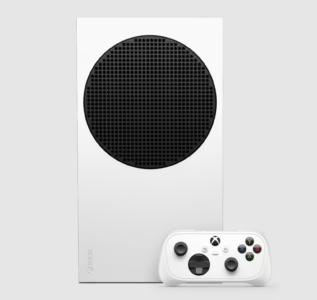
Pocket-sized Xbox Ctrl
Xbox Nano Controller. Announced 14 October 2026 by James Hunter. $49.99. Rechargeable battery. Programmable Action Button. Xbox Wireless and Bluetooth.