DRIFT AUDIO
Listen to this story
Choose a voice, then press play.
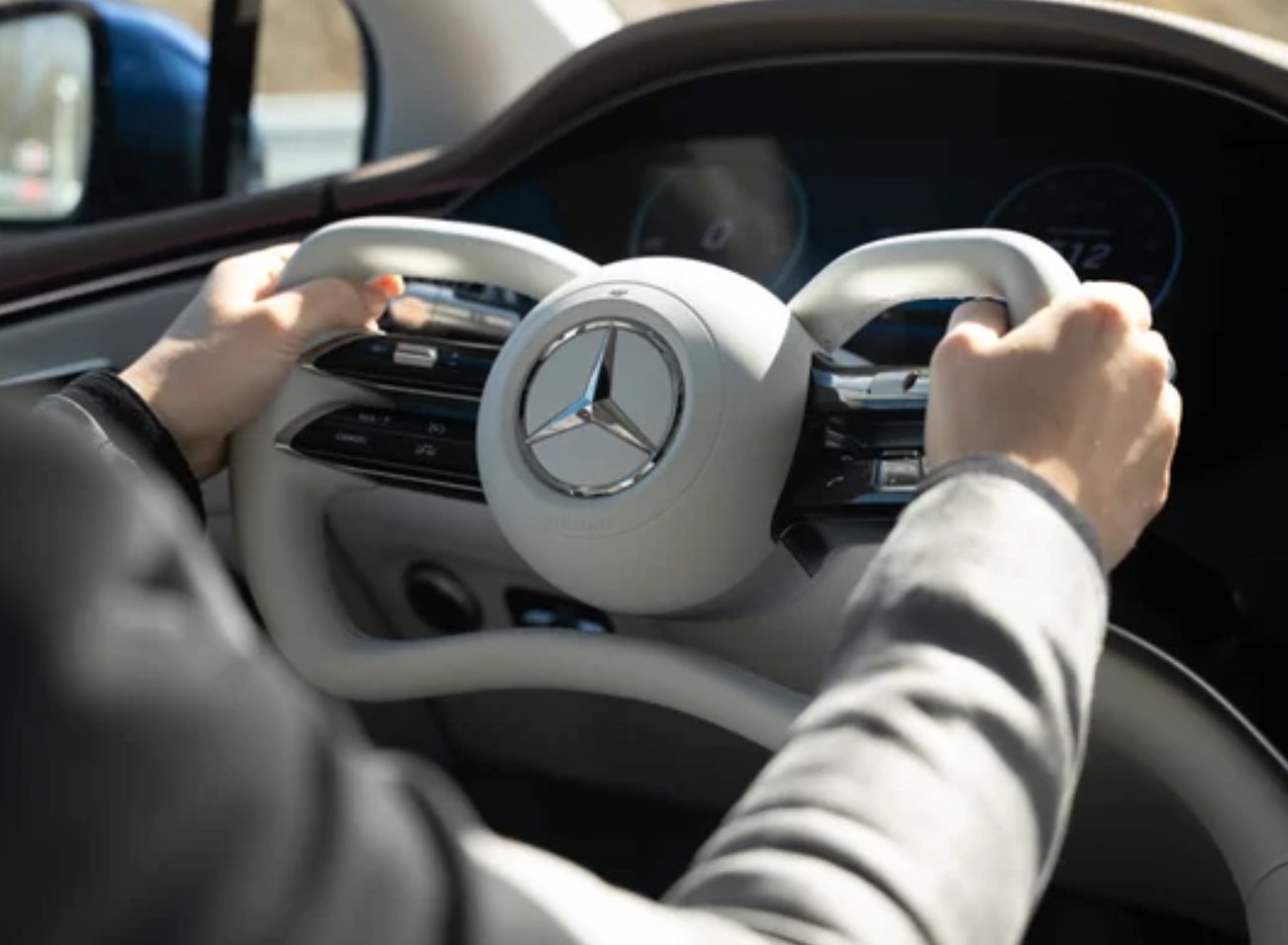
In a move that signals a seismic shift in automotive interior design philosophy, Mercedes-Benz has revealed a radical yoke-style steering wheel, marking its most significant departure from traditional vehicular control systems in over a century. Known for blending luxury with engineering innovation, Mercedes’ new yoke doesn’t simply echo experiments from Tesla or Lexus—it reinvents the relationship between driver and machine.
From Function to Form: The Evolution of Steering Controls
Since Karl Benz’s 1886 Patent-Motorwagen, the basic premise of the circular steering wheel has remained largely unchanged. From wooden spindles to leather-wrapped power steering units, the wheel evolved in materials and assistance—but rarely in form.
Mercedes’ yoke steering wheel is an intentional rebuke of that stagnation.
Key design features include:
- A flat-top and flat-bottom profile, offering a panoramic, unobstructed view of digital dashboards.
- Reduced rotational range (approximately 180 degrees), replacing hand-over-hand turning with minimal wrist movement.
- 32 individual haptic zones for touch-based control instead of traditional stalks and buttons.
- Electrochromic glass panels embedded in the yoke, capable of changing transparency based on ambient light and drive mode.
This is not merely a stylistic choice; it is a deliberate functional evolution anticipating an autonomous future where hands-on interaction becomes rare, and the cockpit experience is more about monitoring than commanding.
Why Now? The Connection to Autonomy
Mercedes’ decision is tightly linked to its advancement in Level 3 autonomy certification—a system that permits conditional hands-free driving under specific conditions.
This yoke facilitates:
- Easier transitions between autonomous and manual control.
- More space-efficient interiors for next-gen luxury vehicles.
- Reductions in visual clutter, aligning with minimalist, screen-focused dashboards.
“The steering wheel must evolve as the car evolves. We’re designing for the next century of driving, not the last.”
— Gorden Wagener, Chief Design Officer, Mercedes-Benz
Under the Skin: The Technology Making It Work
By-Wire Breakthroughs: From Mechanical to Digital
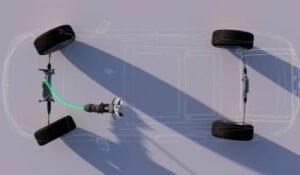
Traditional steering systems rely on mechanical linkages. Mercedes’ yoke introduces a full steer-by-wire architecture that:
- Digitally transmits steering inputs to the front wheels.
- Adapts the steering ratio dynamically based on speed and conditions.
- Includes dual-redundancy mechanical fallback systems for safety.
Notable steer-by-wire advancements:
- Ultra-fast signal transmission ensuring no lag between driver input and wheel response.
- Micro-adjustments by software algorithms, smoothing abrupt driver movements.
- Self-corrective behaviors, helping new users adapt seamlessly.
The Haptic Interface Revolution
One of the standout innovations is the advanced haptic feedback built into the yoke’s surface:
- Touch-sensitive pads confirm every command (e.g., turn signals, windshield wipers) with tactile vibrations.
- Feedback strength varies depending on drive mode—sportier modes yield crisper haptics.
- Directional cues are subtly delivered via tap patterns (e.g., two taps left for a lane-change alert).
Mercedes’ goal: To provide complete tactile communication between vehicle and driver without reliance on visual or auditory cues.
Display Integration and Data Visualization
The upper rim of the yoke houses a micro-LED strip that unobtrusively communicates:
- Drive mode status (Sport, Comfort, Autonomous).
- Remaining battery charge in EVs.
- Real-time autonomous readiness (e.g., when the car is able to take over driving).
This discreet method replaces bulky instrument cluster warnings, creating a cleaner, calmer interior experience.
Competitive Landscape: How Mercedes’ Yoke Compares to Tesla and Lexus
While Mercedes is not the first to market with a yoke, it is arguably the first to perfect the concept for luxury vehicles.
Key Differentiators:
- Mercedes: Most sophisticated with full haptic integration and steer-by-wire.
- Tesla: Prioritized minimalism, but with mixed real-world driver reviews.
- Lexus: Safer, more conservative approach tailored for ease-of-use.
Mercedes’ yoke is thus positioned to appeal to both tech aficionados and traditional luxury customers seeking innovation without sacrificing refinement.
Safety Concerns and Regulatory Hurdles
Primary Concerns Raised by Safety Experts:
- Reduced emergency maneuverability: Full wheel rotation is still instinctual for many drivers.
- Learning curve: Especially among older demographics used to traditional wheels.
- Risk of overreliance on driver assistance systems, leading to complacency.
Mercedes’ Mitigations:
- AI-driven assistance: The system automatically corrects oversteering or understeering errors.
- Emergency override: The yoke can rotate automatically in critical situations to perform evasive maneuvers.
- Training mode: Early models feature a learning phase that gradually adjusts steering resistance as the driver acclimates.
Mercedes is working closely with the NHTSA, UNECE, and other regulatory bodies to gather real-world testing data necessary for widespread legal adoption.
Currently, the yoke is certified for use in:
- Germany
- United States (California, Nevada, pending broader approval)
- Japan (for limited autonomous fleets)
The Bigger Picture: The Future of Automotive Interior Design
A Paradigm Shift in Cockpit Philosophy
The yoke is merely the tip of the iceberg in Mercedes’ broader vision for future interiors. Key trends accelerated by this design choice include:
- Screen-First Architectures:
With the yoke obstructing less dashboard real estate, massive OLED displays (like the MBUX Hyperscreen) become more practical and immersive. - De-emphasis of Manual Controls:
As cars approach full autonomy, traditional driver inputs become less critical. Minimalistic control designs encourage smoother transitions between manual and automated operation. - Biometric Customization:
Mercedes’ biometric sensors embedded in the yoke grips can automatically adjust seat settings, climate control, and driving preferences based on driver identification.
Models Confirmed to Feature the Yoke:
- 2025 Mercedes-AMG EQE:
High-performance electric sedan. - 2026 Maybach EQS SUV:
Ultra-luxury autonomous-ready crossover. - 2027 S-Class Facelift:
Flagship traditional sedan integrating autonomy and luxury.
However, Mercedes insists that round wheels will remain available on certain models for customers preferring traditional interfaces.
Impression
The unveiling of the Mercedes yoke steering wheel is not just a novel experiment—it is a philosophical statement. It challenges assumptions about how humans interact with machines in an increasingly autonomous world.
Whether this radical reimagining will gain mainstream acceptance remains to be seen. Early adopter luxury buyers, performance enthusiasts, and tech lovers may embrace it wholeheartedly. Others may remain skeptical until years of reliability and safety data accumulate.
Regardless of short-term outcomes, one thing is clear:
Mercedes-Benz has pushed the automotive industry into a new era, where steering wheels are no longer round, and the future of driving feels closer than ever.
“When the roads drive themselves, what’s left for the driver must be an experience, not a task.”
— Ola Källenius, Chairman of Mercedes-Benz Group AG
Flow
Is the yoke steering wheel a revolutionary innovation or a transitional novelty? Will it redefine the luxury driving experience—or remain a symbol of a fleeting design trend?
As autonomous driving matures and digital cockpits become the new norm, the human touchpoints inside the car will matter more, not less. The Mercedes yoke is a bold reminder that the future of mobility will be shaped as much by tactile emotion as by technological evolution.
Related Articles
Garage Italia’s Electric Spiaggina Puts the Fiat 500’s Riviera Years on Battery Power
Ten kilowatts, rattan seats and a €85,000 starting price: Garage Italia's 500 Spiaggina rebuilds Ghia's 1958 beach car for the yacht crowd.