DRIFT AUDIO
Listen to this story
Choose a voice, then press play.
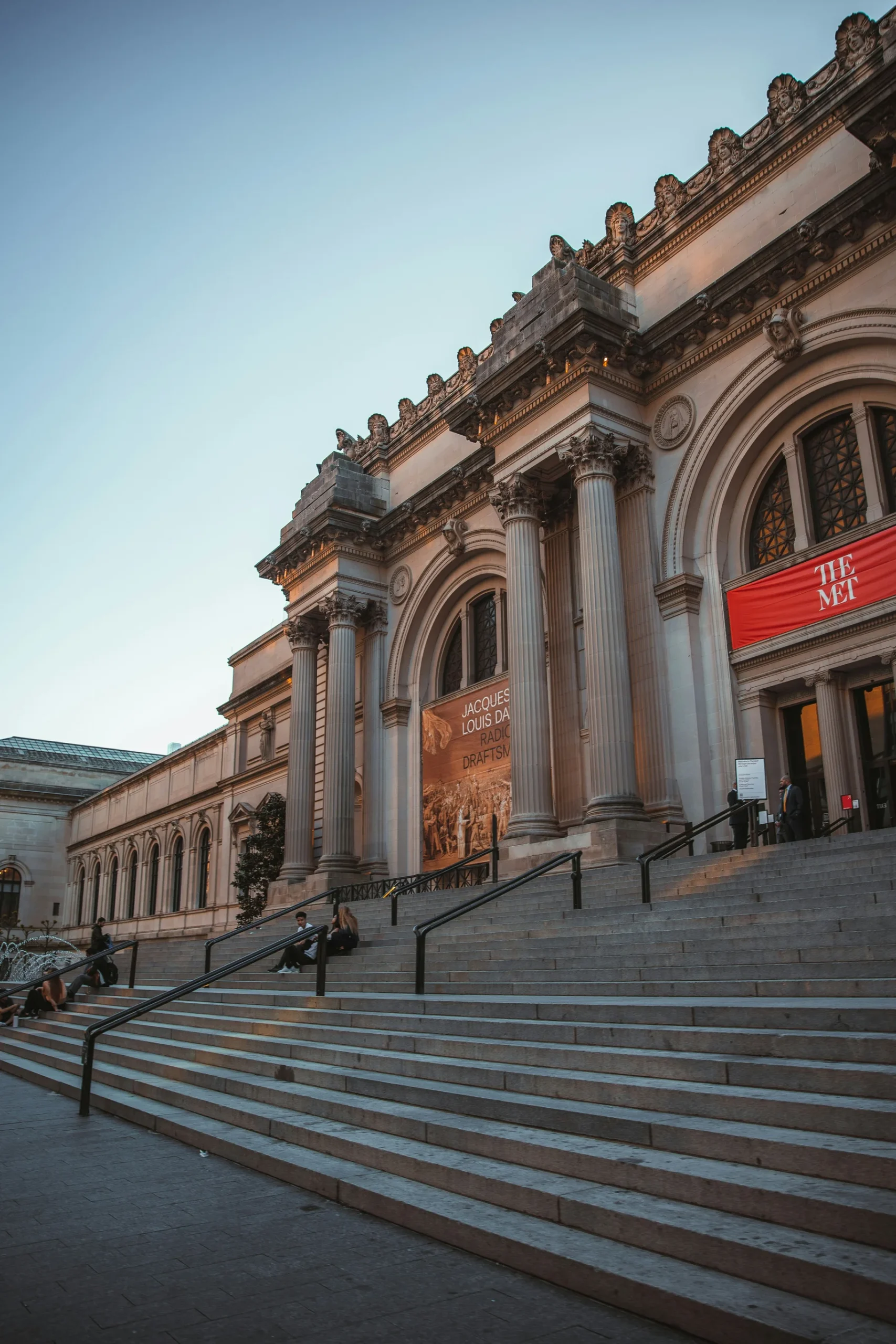
In a move that promises to reshape New York’s culture landscape, the Neue Galerie has announced its merger with The Metropolitan Museum of Art, set to take effect in 2028. The intimate Fifth Avenue institution, renowned for its focused collection of early 20th-century Austrian and German art, will be renamed the Met Ronald S. Lauder Neue Galerie—commonly referred to as the Met Neue Galerie. This union secures the future of a beloved museum and its treasures while expanding the Met’s already encyclopedic holdings.
The announcement, made on May 14, 2026, reflects careful planning to preserve the Neue Galerie’s identity and collection long after its founder, cosmetics heir Ronald S. Lauder, steps away. At 82, Lauder has built one of the world’s premier assemblages of Viennese and German modernism outside Europe. The merger ensures institutional stability, preventing the kind of dispersal or uncertainty that has befallen other private collections after their patrons’ passing.
stir
Lauder founded the Neue Galerie in 2001, naming it after the historic Neue Galerie in Vienna. Housed in the elegant William Starr Miller House—a 1914 Beaux-Arts mansion designed by Carrère & Hastings on the corner of 86th Street and Fifth Avenue—the museum quickly became a destination for aficionados of Klimt, Schiele, Kokoschka, and the Bauhaus. Its intimate scale contrasts sharply with the monumental Met just blocks away, offering visitors a more personal encounter with masterpieces.
The collection draws from three main sources: Lauder’s personal holdings, the estate of co-founder Serge Sabarsky, and acquisitions made by the museum itself. Standout works include Gustav Klimt’s Portrait of Adele Bloch-Bauer I (1907), famously known as Woman in Gold. This shimmering icon, subject of a major restitution battle and a Hollywood film, remains the museum’s crown jewel. Lauder has called it the Neue’s “Mona Lisa,” and a key stipulation of the merger mandates that it stays permanently on view in its current home.
Other highlights feature Egon Schiele’s haunting Town among the Greenery (1917), Max Beckmann’s powerful Self-Portrait with Horn (1938), and pieces by Oskar Kokoschka, Josef Hoffmann, Otto Wagner, and Bauhaus luminaries such as László Moholy-Nagy, Ludwig Mies van der Rohe, and Oskar Schlemmer. The galleries also showcase decorative arts, furniture, and design objects that contextualize the period’s artistic ferment.
ingenuity
To cement the merger’s success, Lauder and his daughter, Aerin Lauder Zinterhofer, have established a roughly $200 million endowment dedicated to the care of the building, collection, and operations. They have additionally donated 13 paintings from their private collection, enriching the combined holdings. Notable additions include Klimt’s Die Tänzerin (The Dancer) (1916–18), Ernst Ludwig Kirchner’s Die Russische Tänzerin Mela (The Russian Dancer Mela) (1911), and Beckmann’s Galleria Umberto (1925).
Met director Max Hollein, who has served on the Neue Galerie’s board for two decades, hailed the partnership. In an interview with The New York Times, he described it as “an enormous opportunity” that allows the Met to steward not just artworks but “a place with profound integrity and beauty and vision.”
The arrangement permits the Met to borrow works for display at its flagship Fifth Avenue building, with the important exception of Woman in Gold. The Neue Galerie’s distinct identity will be maintained: its galleries, Café Sabarsky, and shop will continue to operate as a distinct destination within the Met family, joining The Met Fifth Avenue and The Met Cloisters.
praxis
For the Met, the merger fills a notable gap. While the museum boasts extraordinary breadth, its holdings in early 20th-century Central European modernism have historically been less comprehensive than those in other areas. The Neue’s collection instantly elevates the Met’s standing in this field, complementing existing strengths in European painting and decorative arts.
For the Neue Galerie, the benefits are equally profound. The $200 million endowment provides long-term financial security. The Met’s curatorial expertise, conservation resources, and global reach will support exhibitions, research, and public programming. The historic mansion will undergo necessary infrastructure upgrades, beginning with a planned closure on May 27, 2026.
That closure was already scheduled for renovations to the 1914 building. The museum will reopen in autumn 2026 with a special exhibition celebrating its 25th anniversary. Visitors can look forward to refreshed galleries and continued access to Café Sabarsky, known for its Viennese-inspired fare and elegant atmosphere.
arch
This merger arrives at a time when many culture institutions face challenges: rising costs, shifting audiences, and questions of long-term viability. Private museums founded by wealthy individuals have sometimes struggled after their founders’ deaths. By aligning with the Met—one of the world’s most visited and well-resourced museums—the Neue Galerie avoids that fate while retaining its soul.
The deal also underscores Ronald Lauder’s lifelong commitment to art. A major philanthropist and former chairman of the Museum of Modern Art, Lauder has championed restitution of Nazi-looted art and supported Jewish cultural heritage. His efforts to recover Woman in Gold from the Austrian government in the early 2000s became a landmark case.
Critics and observers have largely welcomed the news. The partnership preserves a beloved small museum experience while integrating it into a larger ecosystem. Some have drawn parallels to other successful integrations, such as the Frick Collection’s relationship with its own expanded campus, though the Neue’s model emphasizes continuity over wholesale absorption.
sum
Full operational details of the merger will be finalized in the coming years, subject to approvals. Ronald Lauder will chair a special advisory board to guide the transition, ensuring the Neue’s vision endures.
For New Yorkers and international visitors alike, the Met Neue Galerie promises to remain a jewel on Museum Mile. One can imagine future exhibitions that dialogue between the Neue’s focused modernism and the Met’s global collections—perhaps placing Klimt alongside ancient Egyptian gold or Schiele next to Renaissance portraits.
In an era when cultural institutions must adapt to survive, this merger stands as a model of thoughtful collaboration. It honors the passion of a dedicated collector, safeguards irreplaceable artworks, and enriches public access to some of the 20th century’s most compelling art. As the doors reopen this fall for the 25th anniversary and prepare for the 2028 transition, anticipation builds for a new chapter in New York’s artistic life.
The union of these two Fifth Avenue neighbors reaffirms the city’s position as a global capital of culture—one where intimate gems and grand institutions can thrive together, ensuring that beauty and history remain accessible for generations to come.
From the DRIFT archive: The Rise of a Masterwork: Klimt’s Portrait and Its Historic $236.4M Sale
Related Articles

Where the Face Should Be, Rafael Silveira Paints Open Sky
A pink shirt, shoulder-length hair, then no face at all: in “Surprise,” Rafael Silveira lets flowers and a clear blue sky stand in for the person.