DRIFT AUDIO
Listen to this story
Choose a voice, then press play.
Twelve new frames pair etched metal with acetate for the first time, and Retrosuperfuture is treating it as a material study rather than a seasonal colorway refresh.
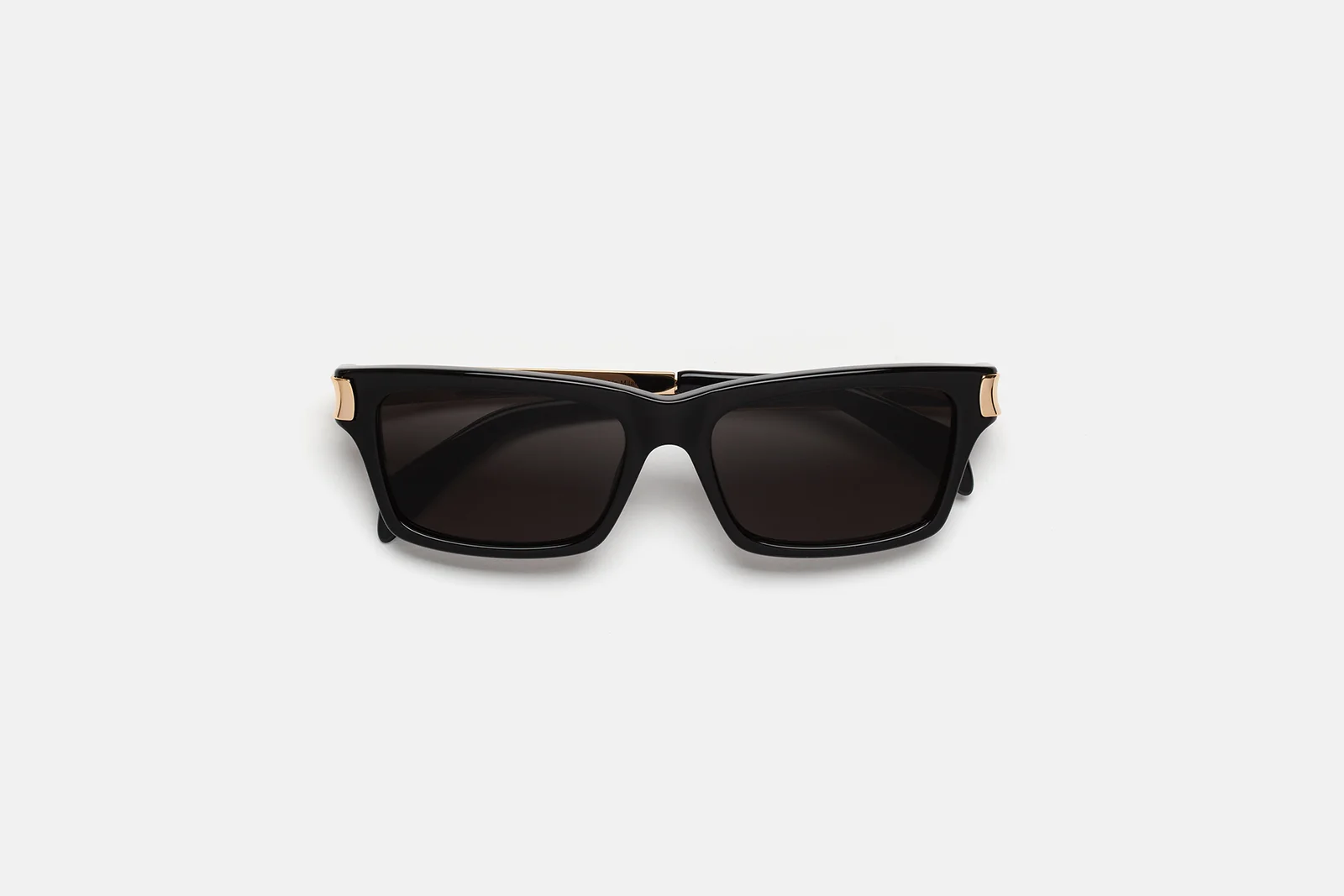
Twelve styles make up Blades Series 2026, and every one of them runs on the same idea: metal is no longer trim, it is structure. Retrosuperfuture has spent nearly two decades building a reputation on saturated acetate, the kind of frame you recognize from across a room before you know the name of the shape. Blades pulls that acetate back to a supporting role and lets machined metal do the framing work instead, in etched gold and silver finishes that run along the brow line and temples. The collection splits cleanly down the middle: six sunglass styles, six optical, priced between 239 and 249 euros depending on the model.
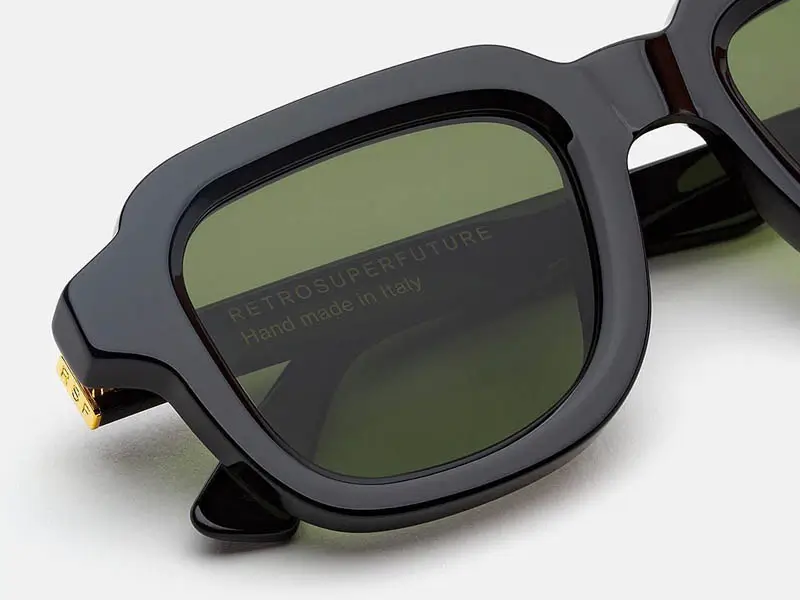
The RSF Blades Series 2026 pairs handcrafted Italian acetate with angular sculpting, premium Zeiss lenses, and signature gold-tone hardware, giving the collection a refined balance of contemporary design and everyday wearability.
That split is not incidental. Retrosuperfuture has always organized its output around a sun and optical mirror image, a habit view across every family on the site, from the newer Caro line to the long running Belli archive. Blades keeps that architecture intact while changing what the frames are actually built from, which is a more difficult trick than it sounds. Metal and acetate expand and contract at different rates, they finish differently, and they photograph differently under a jeweler’s loupe than they do under a showroom light. Getting them to sit together as one coherent object, rather than two materials glued at a hinge, is the shh engineering problem underneath the marketing lang.
stir
Retrosuperfuture’s own copy for the drop is short and almost defensive about its own ambition. The brand describes a broader shift in eyewear where, in its words, material research is taking centre stage, and clarifies that the point is not just which materials get used but how they get shaped. It is a modest way of introducing what amounts to a new manufacturing approach for the label. Read against two decades of output built almost entirely around dyed and layered acetate, a metal forward collection is a genuine pivot, even if the brand is underplaying it in a single paragraph of product copy.
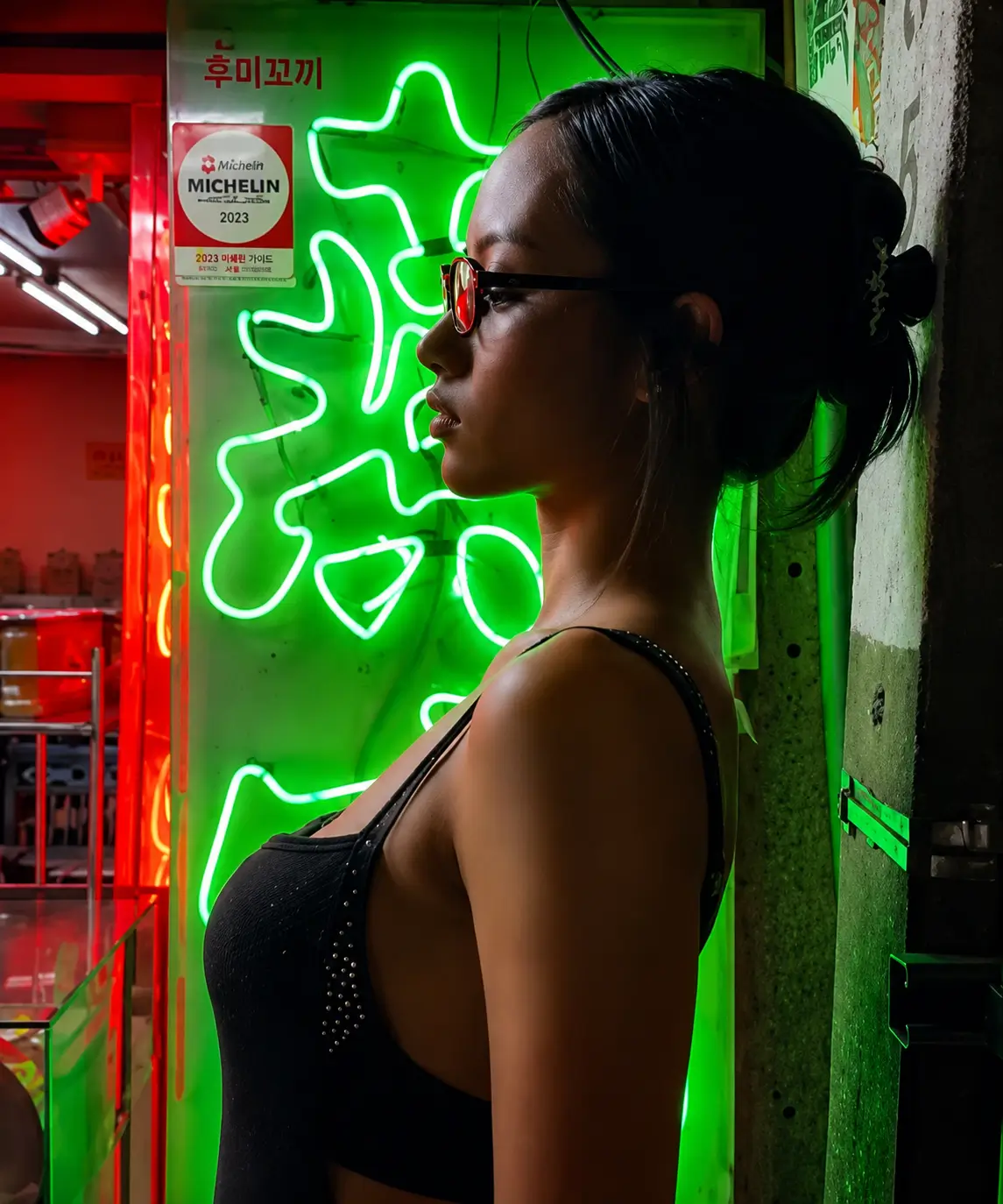
The RSF Blades Series 2026 is presented in a cin neon-lit setting, where sculptureItalian eyewear, glossy acetate construction, and tinted lenses capture the collection’s blend of modern craftsmanship and urban visual culture.
The house line about not needing to yell to be recognizable is doing real work in that copy too. Retrosuperfuture built its name on frames loud enough to spot at distance, from the América to the Ciccio to the Flat Top, shapes that turned into shorthand for a certain era of maximalist streetwear eyewear. Blades trades some of that volume for finish quality: engraved metal edges, tonal gold and silver hardware, and acetate fronts kept compare restrained next to the brand’s back catalogue. It reads as a label testing whether its audience will follow it into quieter, more technically involved territory, without abandoning the personality that got it there.
acuity
Raio is the collection’s cat eye entry, and it comes in three colorways: Black & Gold, Black & Silver, and Azure & Silver, each priced at 239 euros with a 54mm lens width and 135mm temple length. The shape leans into an angular, upswept cat eye sil rather than a softened retro version of one, with the metal brow doing the work of defining that angle instead of an acetate ridge. It is a more architectural read on a shape that eyewear brands frequently round off to make it wearable across a broader face range, and Retrosuperfuture appears to have kept the edge deliberately.
Product photography for Raio shows the metal running as a continuous line from temple to temple, with the gold and silver finishes catching light differently depending on colorway; the Azure & Silver version pairs a blue acetate base with the cooler metal tone, while both Black options use the metal as contrast against a matte or gloss black front. All three ship in regular fit only, which keeps the sizing story simple compared with some of the brand’s older archive shapes that run across multiple width options.
The product code system Retrosuperfuture uses internally, three character alphanumeric strings stamped inside each temple, stays consistent across Raio’s three colorways (9KV, ZAD, and 1O9 respectively), a small piece of production infrastructure that matters more to stockists sorting inventory than to anyone actually wearing the glasses, but it is a sign of a brand still running its own catalogue logic rather than outsourcing that system to a distributor. Each Raio pair also ships in the collection’s own branded box, visible in the fourth product image on every listing, a detail Retrosuperfuture has started applying consistently across its newer drops rather than reserving it for flagship releases only.

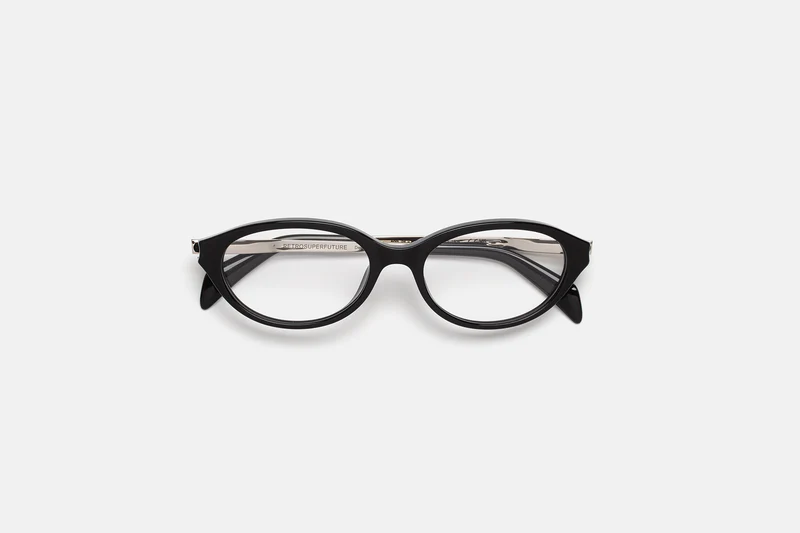
The RSF Blades Series 2026 introduces a refined cat-eye silhouette with handcrafted Italian acetate, softly tinted lenses, and sculpted metal temples, balancing vintage elegance with contemporary eyewear design.
What stands out most on close inspection is how little the metal front actually weighs relative to how substantial it reads in photographs. Etched metal fronts have a tendency to feel heavier than a fully acetate frame of comparable size, and brands moving into metal construction for the first time often oversize the hinge or temple to compensate. Raio does not appear to do that; its 135mm temple length sits in line with Retrosuperfuture’s acetate offerings elsewhere on the site, which suggests the engineering solved for weight distribution rather than simply reinforcing the whole frame to be safe.
ebb
Solazu takes the same construction logic and applies it to a round frame, again across three colorways: Black & Gold, Black & Silver, and Burnt & Gold, at 239 euros with a slightly narrower 53mm lens width and matching 135mm temple. Where Raio pushes toward an angular point, Solazu curves the metal brow into a continuous circular arc, which changes the character of the whole frame considerably even though the underlying construction technique, metal front bonded to an acetate structure, is identical.
The Burnt & Gold colorway is the standout of the three, pairing a warmer, tortoise leaning acetate tone with gold hardware in a combination the brand has not used elsewhere in the current sun catalogue. It is worth noting that Solazu’s product page includes a short video treatment rather than only static images, a format Retrosuperfuture has been using increasingly across newer drops including the Caro family, suggesting the brand is leaning harder into video product presentation across its Shopify storefront generally, not just for this collection specifically.
metal
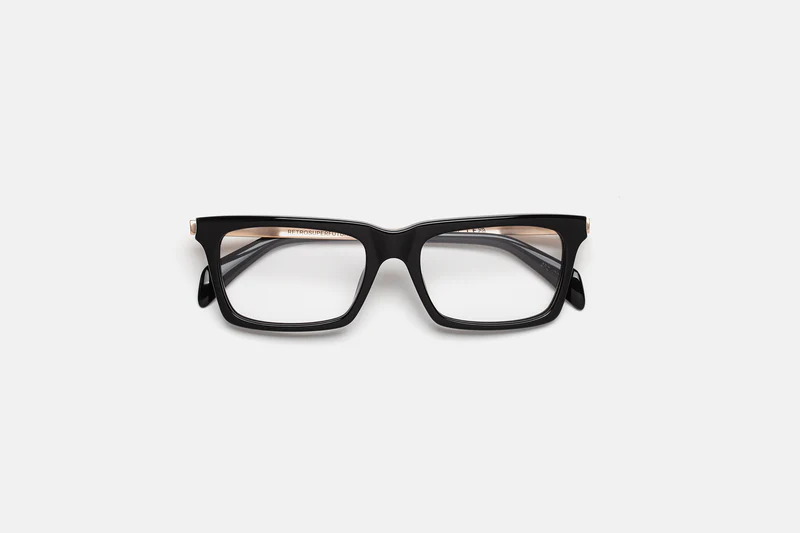
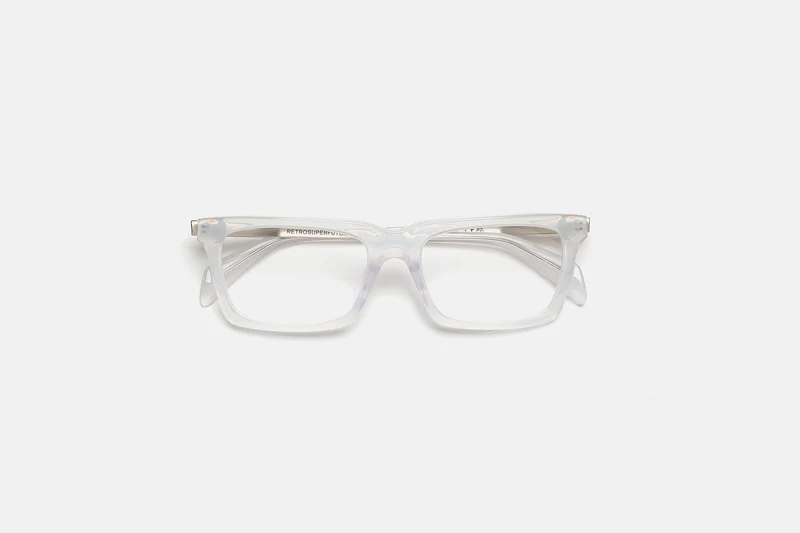
The optical half of Blades Series 2026 belongs to two square sil, Numero 155 and Numero 156, each offered in three colorways at 249 euros and a 54mm lens width. Numero 155 comes in Nero & Oro, Nero & Argento, and Havana & Oro; Numero 156 comes in Nero & Oro, Nero & Argento, and Nebbia & Argento, with a slightly longer 140mm temple than its sibling. Both use the Italian color naming Retrosuperfuture applies across its optical range generally, nero for black, argento for silver, oro for gold, nebbia for a fogged grey, havana for the mottled tortoise pattern that has been part of eyewear vocabulary for decades.
Square frames are a harder needle to thread with a metal front than round or cat eye shapes, since straight lines expose any inconsistency in how the metal meets the acetate at the corners. That the brand chose to run both its optical entries in this exact shape, rather than spreading the square treatment across sun and optical, suggests a degree of confidence in the joinery once the technique was locked for production. The Numero naming itself is new to the current catalogue architecture, distinct from the alphabetic or descriptive names, América, Bird, Boletus, Carino, that populate the rest of the Belli archive, which may signal the brand treating this as its own sub line rather than folding it into the existing shape families.
in
Blades arrives alongside a busy front page for Retrosuperfuture heading into its SS26 push, sitting next to the newer Caro family and the much larger Belli archive of returning shapes. The brand currently splits its output across four labels on one storefront: its own RSF line, a slide with MM6 Maison Margiela, a collaboration with Marni, and its 8000 line, on top of a standing reading glasses range and a rotating specials section for goodies and past collaborations. Blades is filed strictly under the RSF banner rather than any of the connection lines, which places it as an in house design statement rather than a partner project.
The company has also been building out its physical footprint recently, including a new store in Mexico City’s La Condesa neighborhood designed by Paul Cournet’s CLOUD studio, featuring a stainless steel showcase build and a dimmable ceiling lightbox meant to evoke a sunset. It is a small data point, but it fits a pattern: a brand roughly two decades into its life investing simultaneously in new manufacturing techniques for its product and new physical retail formats for showing that product off, rather than coasting on either.

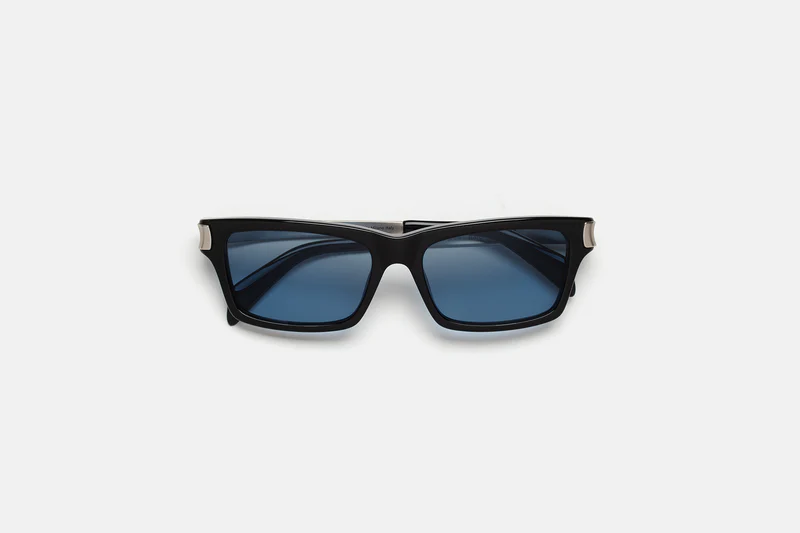
The RSF Blades Series 2026 combines bold Italian acetate construction with cool blue Zeiss lenses, understated RSF branding, and a clean geometric profile that reflects the label’s contemporary approach to handcrafted eyewear.
turn
Retrosuperfuture was founded in Milan in 2007 by Daniel Beckerman, who came to eyewear from publishing rather than optics, starting the label with only three silhouettes before building the catalogue out into the dozens of shapes it carries today. Beckerman has said in past interviews that his favorite word is “to risk,” a line that has followed the brand through nearly every profile written about it since, and one that tracks with a company willing to introduce an entirely new construction method under its own name rather than testing it out through a lower stakes connective line first.
n
From the DRIFT archive: Y-3 Sets the Tone for Its Spring/Summer 2026 Collection · Eastpak Courts Culture: Inside the Brand’s Global With the NBA
Related Articles
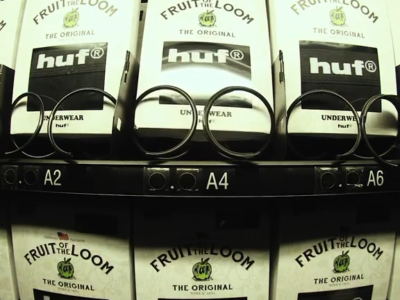
HUF Put The Triple Triangle On Fruit Of The Loom
First collision. Underwear 2P pack. Rib tank 2P pack. ¥4,950 each. Kentucky cotton. Special box. […]