DRIFT AUDIO
Listen to this story
Choose a voice, then press play.
a study
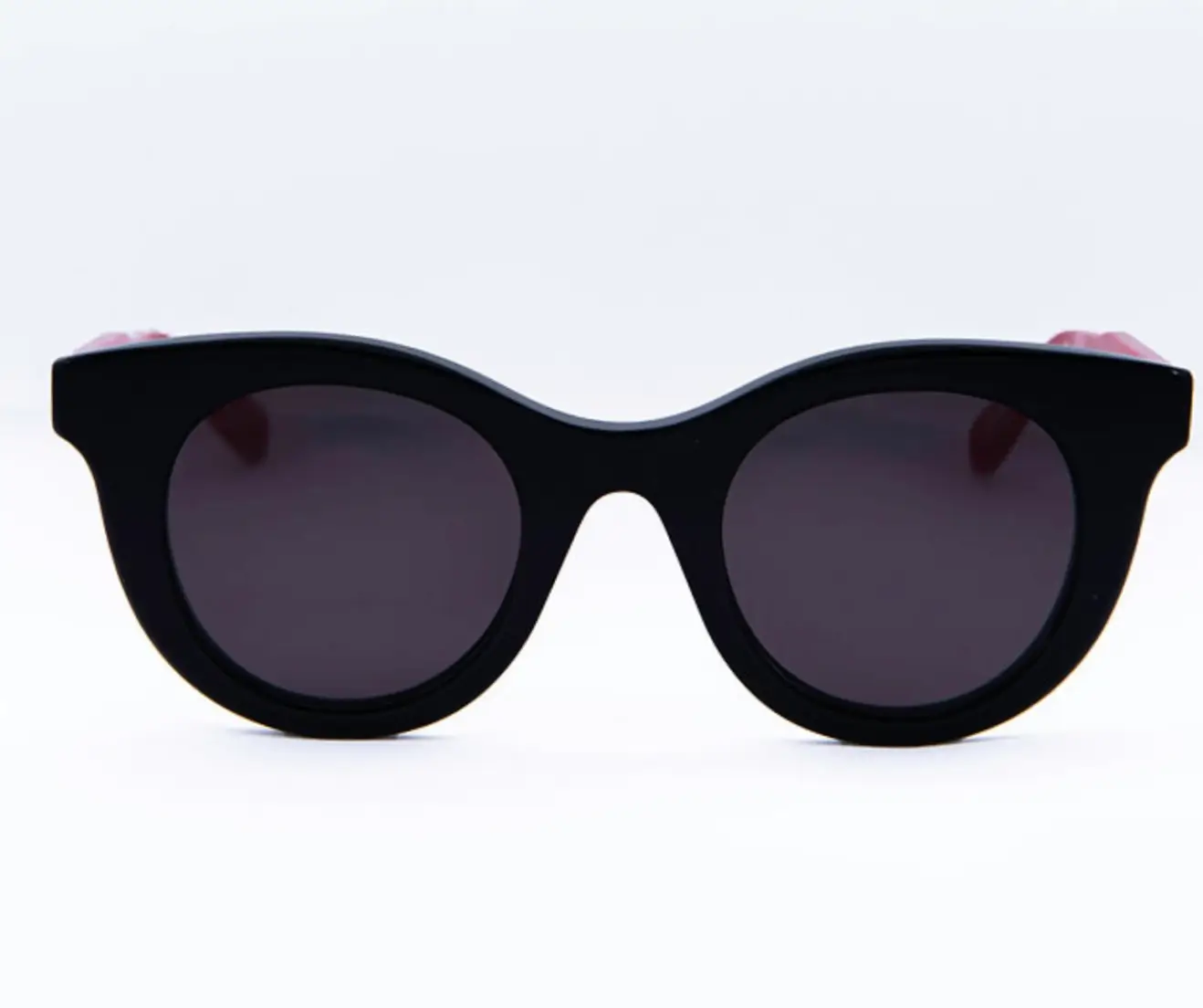
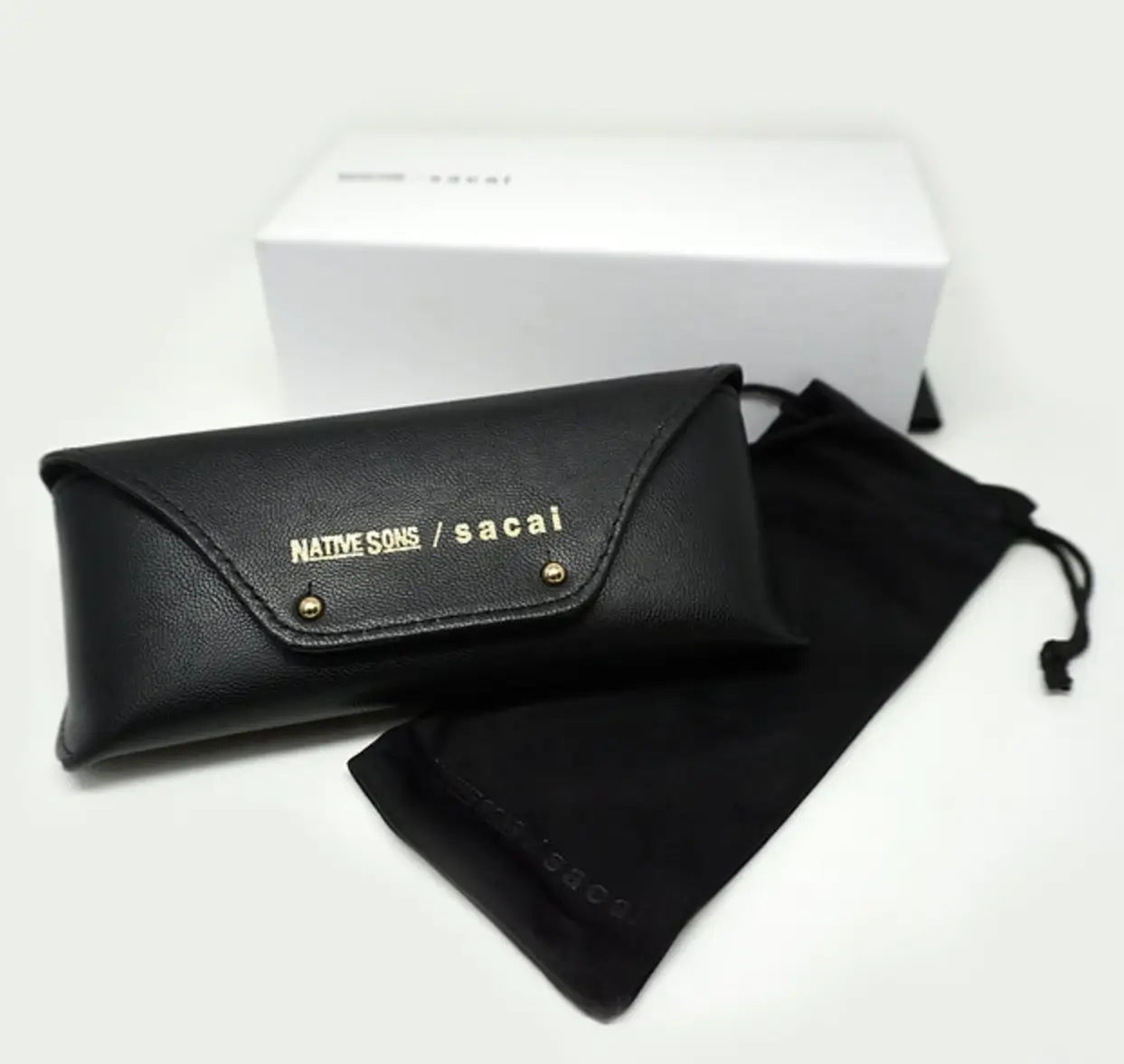
The NATIVE SONS x sacai HUXLEY frames sit at the intersection of craft discipline and conceptual looseness—an aesthetic that sacai’s Chitose Abe has practically architected across the last two decades. Where sacai typically works through hybrid garments, deconstruction, and layered silhouettes, Native Sons brings obsessive precision, microscopic attention to materials, and a distinctly analogue purity to optical design. Together, the HUXLEY frame becomes more than a product. It becomes a design argument. A statement about balance—between hand-built discipline and avant-garde fluidity, between archive-referenced restraint and the futurist sensibility both brands share in their own ways.
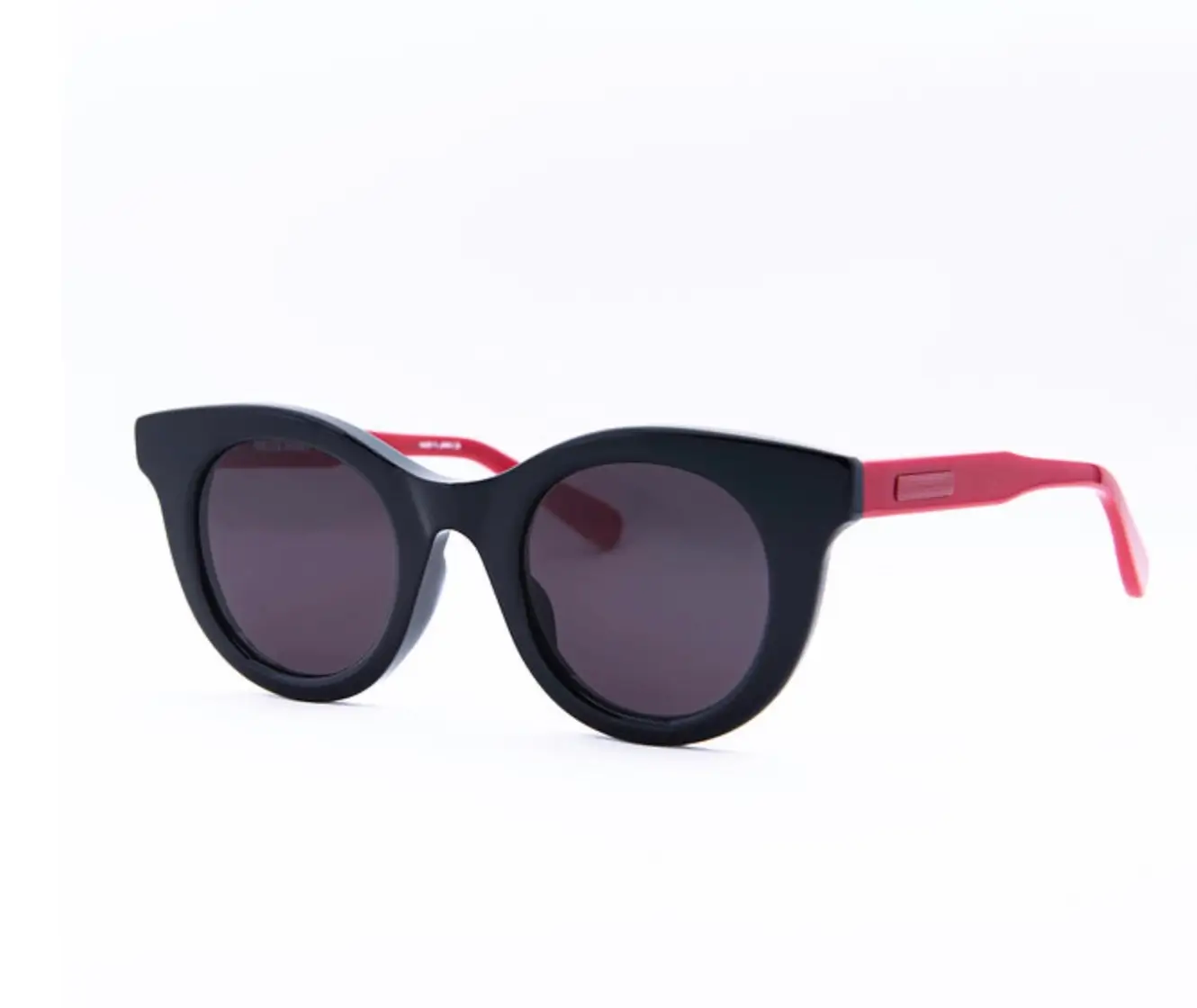
NATIVE SONS, founded by eyewear designer Tommy O’Gara, has long pursued an almost monastic approach to craftsmanship. Its frames are built in workshops where acetate is hand-cut, rivets are polished manually, and shape is treated like sculpture rather than product. sacai, meanwhile, has never been satisfied with the binary nature of categories—neither in garments nor in collaborations. Its partnerships with Nike, Cartier, and A.P.C. always seek a creative midpoint that transforms both parties. The HUXLEY frames are a natural extension of that impulse: classic lines subverted by unexpected structural choices, ultralight titanium cores that feel barely perceptible, temples that show sacai’s affinity for reconstructed geometry, and a silhouette that retains the intellectual rigor of NATIVE SONS’ heritage shapes.
design
The HUXLEY design feels academic without being austere. The rounded-square lens shape recalls mid-century Japanese optical heritage, but the construction performs a more modern gesture—sculpting the acetate into a subtle, tactile curve that invites touch. sacai’s influence reads in the interplay of opposites: the frame is both minimal and intricate, both vintage-coded and sleekly contemporary. The temples often become the site where the sacai narrative unfolds. Their acetate coloration echoes sacai’s textile thinking—shifts in tone, quiet contrasts, translucent layering—and their proportioning creates a gentle architectural rhythm across the side profile.
This tension is precisely what gives the HUXLEY its energy. Without overt branding or loud gestures, the frame feels intelligent and quietly confident. It avoids the maximalist trap and refuses to dilute its craft lineage for commercial visuals. It feels like something you discover rather than something that demands attention. That understatedness, ironically, is exactly what makes it powerful: the intimacy of wearing a design that doesn’t need to perform externally because its interior logic is so strong.
sacai
Eyewear has become a conceptual extension of fashion identity. For sacai, the HUXLEY is an extension of its philosophy rather than a product add-on. Abe has been shaping a new language of hybrid garments—mixing militaria with tailoring, knitwear with nylon, ruffles with tech fabrics—and the frames follow that lineage in miniature. The hybridization is subtle: materials merging with nearly invisible joinery, hinge execution that feels custom-machined, acetate thickness tuned with sculptural restraint. It’s the eyewear equivalent of sacai’s recurrent motif—two worlds fused into one, not through contradiction but conversation.
In recent years, sacai’s accessories have expanded this thesis through partnerships that feel like case studies: Cartier’s Clash calibration that produced expression without overstatement; Nike’s LDWaffle, a sneaker that transformed familiar components into something uncanny and fresh. The HUXLEY feels like a continuation of that logic—taking an iconic Native Sons archetype and performing a kind of sacai-specific remix, one that doesn’t distort the original but reveals new dimensionality within it.
native
What’s most remarkable about the collab is that NATIVE SONS’ fidelity to hand-built optical craft remains untouched. If anything, the sacai partnership amplifies it. The acetate is bio-based, chosen for its depth of color and long-term durability. Rivets are hand-set to ensure tension never falters. Titanium cores are engineered not just for weight distribution but for balance, allowing the frame to sit naturally on the wearer’s face rather than imposing its presence. Every step of production carries the obsessive attention found in ateliers where craft is not merely preserved but studied.
The HUXLEY’s finishing also communicates Native Sons’ historical-research mindset. O’Gara has often referenced the eyewear worn by mid-century Japanese intellectuals, architects, and journalists—designs that prioritized clarity and longevity over spectacle. That intellectual lineage appears subtly across the silhouette. The front profile has near-perfect symmetry. The bridge height is tuned to create a centered expression. Even the hinge screws feel archival in their proportions.
a culture
The release of the NATIVE SONS x sacai HUXLEY arrives at a cultural moment where the market oscillates between tech-driven hyper-speed and craft-driven intentionality. Consumers are increasingly sensitive to the difference between objects built for trend cycles and objects built for actual use. Eyewear, as an intimate and highly functional item, demands truth. A frame has to survive years of wear, resist environmental shifts, maintain comfort, and avoid the ephemeral quality that plagues fast-fashion accessories.
The HUXLEY stands firmly in the slow-design camp. It is built to last, built to age, built to evolve with the wearer. It doesn’t feel seasonal. It feels permanent. That quality aligns with both Native Sons’ legacy and sacai’s enduring ambition to craft pieces that remain resonant long after the runway moment fades.
where
There’s a particular kind of person drawn to eyewear like the HUXLEY. Someone who appreciates understatement, but not simplicity. Someone who values the interior world of design—the shape, the hinge, the proportion—more than the loud iconography of trend. The collaboration is, in that sense, a self-selecting object. It attracts a wearer who sees craftsmanship as identity, who reads design the way others read literature, who perceives nuance as depth rather than decoration.
The beauty of the HUXLEY is that it doesn’t broadcast its collaboration. There is no oversized logo, no marketing-driven embellishment, no spectacle of branding. The frame communicates through proportion and material alone. And for the right wearer, that is the highest form of luxury—design that is confident enough to be quiet.
impression
The NATIVE SONS x sacai HUXLEY collaboration succeeds because it does not compromise either brand’s DNA. It lets sacai’s hybrid sensibility breathe through NATIVE SONS’ craft discipline, producing eyewear that is intellectually grounded, aesthetically precise, and emotionally resonant. It carries the clarity of a considered object—one that doesn’t seek mass approval but rewards those who engage deeply with its form.
Related Articles
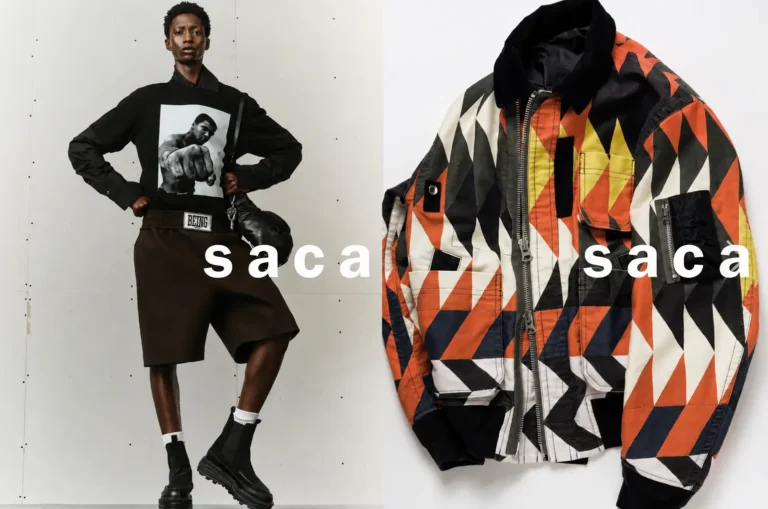
Chitose Abe Puts Muhammad Ali Front and Center as sacai’s Second Autumn Delivery Lands
sacai’s second 2026 autumn winter delivery pairs a Muhammad Ali graphic tee with a third […]