DRIFT AUDIO
Listen to this story
Choose a voice, then press play.
From pattern engineers, cobblers, shoemakers, or stitchers, these are only a handful of the specialists who populate the quiet, focused workspaces of Montebelluna and Diamant in northern Italy. Here, in a region long revered as the global capital of high-performance football boot manufacturing, Nike has forged one of its most enduring partnerships. Since arriving in 1996, the American sportswear giant has connected with these Italian craftsmen to blend cutting-edge innovation with generations-old artisanal techniques. The result is the Mercurial — Nike’s flagship speed boot, worn by the world’s fastest and most dynamic footballers.
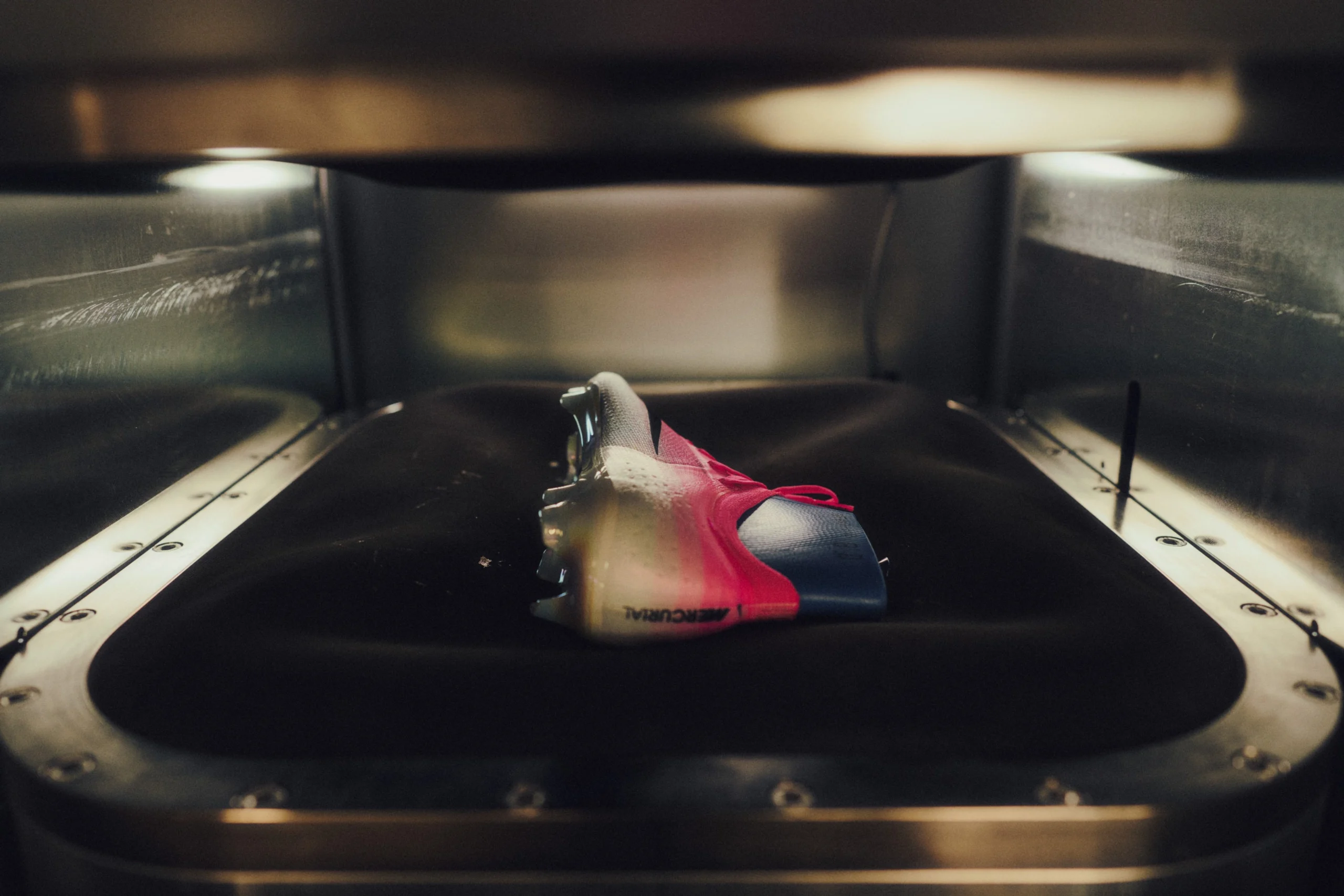
A single Mercurial boot travels through roughly 35 individual manufacturing steps in about three hours, moving from pre-assembly to shaping, stitching, and final construction. Yet this is merely the final stretch of a nearly two-year journey of development, testing, and relentless refinement. What emerges is not just athletic equipment but a precision instrument: lightweight, responsive, and engineered for explosive acceleration on the pitch.
This is the story of how tradition and technology converge in the foothills of the Venetian Alps to create football’s most iconic speed silhouette.
View this post on Instagram
stir
Montebelluna has been synonymous with quality footwear for over a century. Originally a hub for mountaineering and ski boots, the area evolved into a center for football footwear excellence thanks to its concentration of skilled labor, specialized suppliers, and a culture obsession with craftsmanship. Nike recognized this potential in the mid-1990s and embedded itself deeply in the local ecosystem.
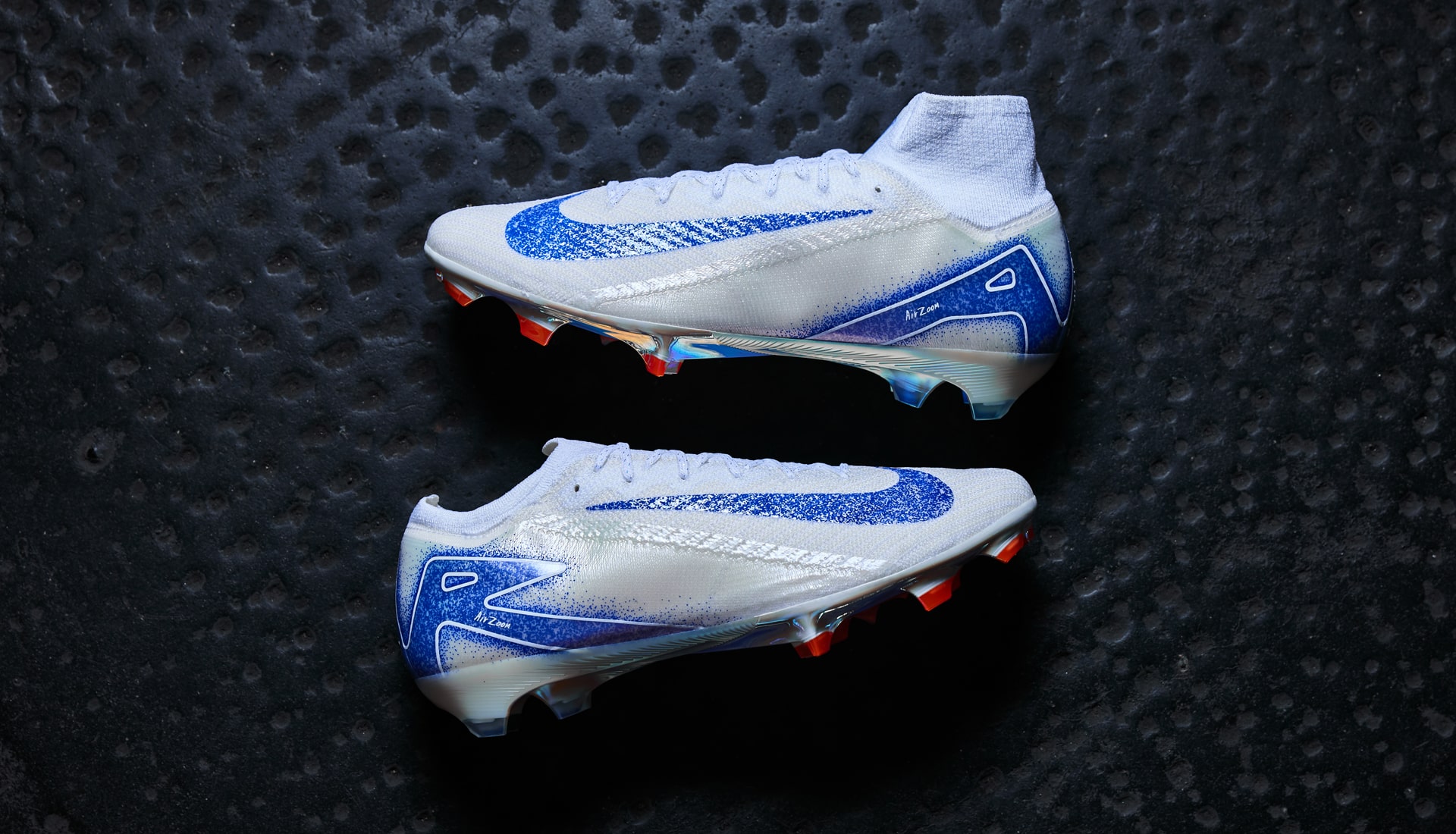
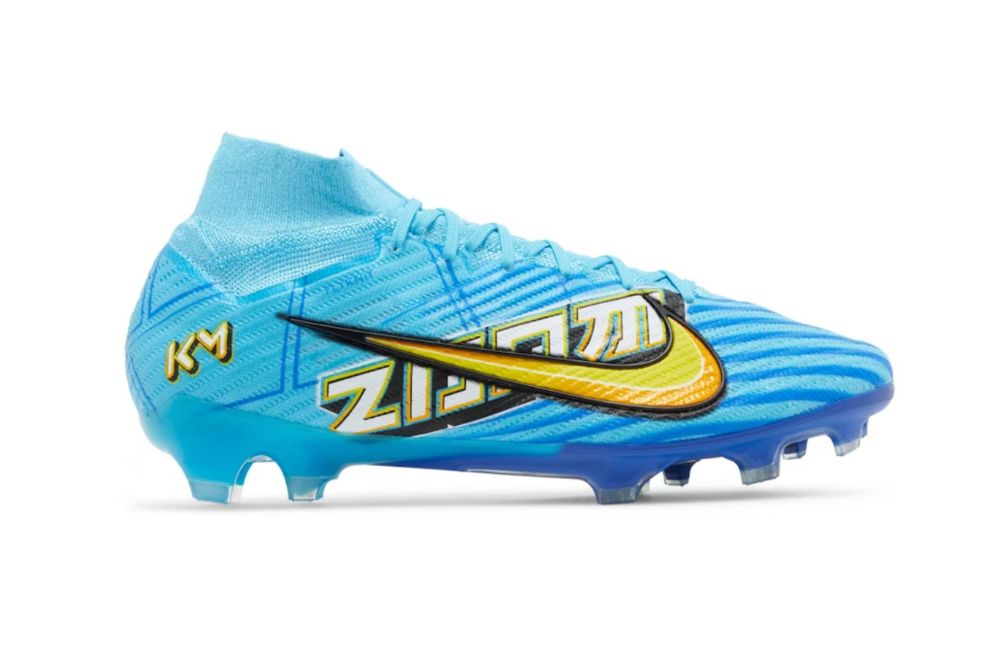
Today, two key facilities anchor Nike’s operations: the Montebelluna sample and elite athlete workshop, and the larger Diamant production factory. While Diamant handles volume manufacturing for global distribution — including the Mercurial Vapor 17 and Mercurial Superfly 11 available to players worldwide — Montebelluna serves as the sanctum for prototypes, custom elite pairs, and the most exacting refinements.
In the Montebelluna sample room, a one-of-a-kind collection of roughly 300 pairs of custom foot lasts lines the walls like a hall of fame. Each last represents an elite athlete who has shaped Nike Football.
Claudio Tessaro, a 20-year veteran and master shoemaker, moves between these lasts with reticent authority. For each elite pair, he oversees a dedicated cart containing every component and specification note.
journey
Creating a new Mercurial iteration is a global endeavor that begins far from Italy. Design teams in Oregon, material scientists in Asia, biomechanics experts, and professional athletes union for nearly 24 months. Concepts are sketched, prototypes 3D-printed, materials stress-tested, and on-pitch trials conducted across continents.
Only when the design reaches a near-final state does it arrive in Montebelluna and Diamant for the critical manufacturing translation. Here, Italian hands and eyes take over.
Michele Galasso, Lead Footwear Product Developer for the Mercurial Vapor, describes the philosophy: “Innovation drives the Mercurial forward, but tradition keeps it grounded. Italian shoemaking is about patience, touch, and responsibility toward quality. When I work with Nike’s most advanced speed systems, I apply the same mindset — every detail matters, because performance is built through care.”
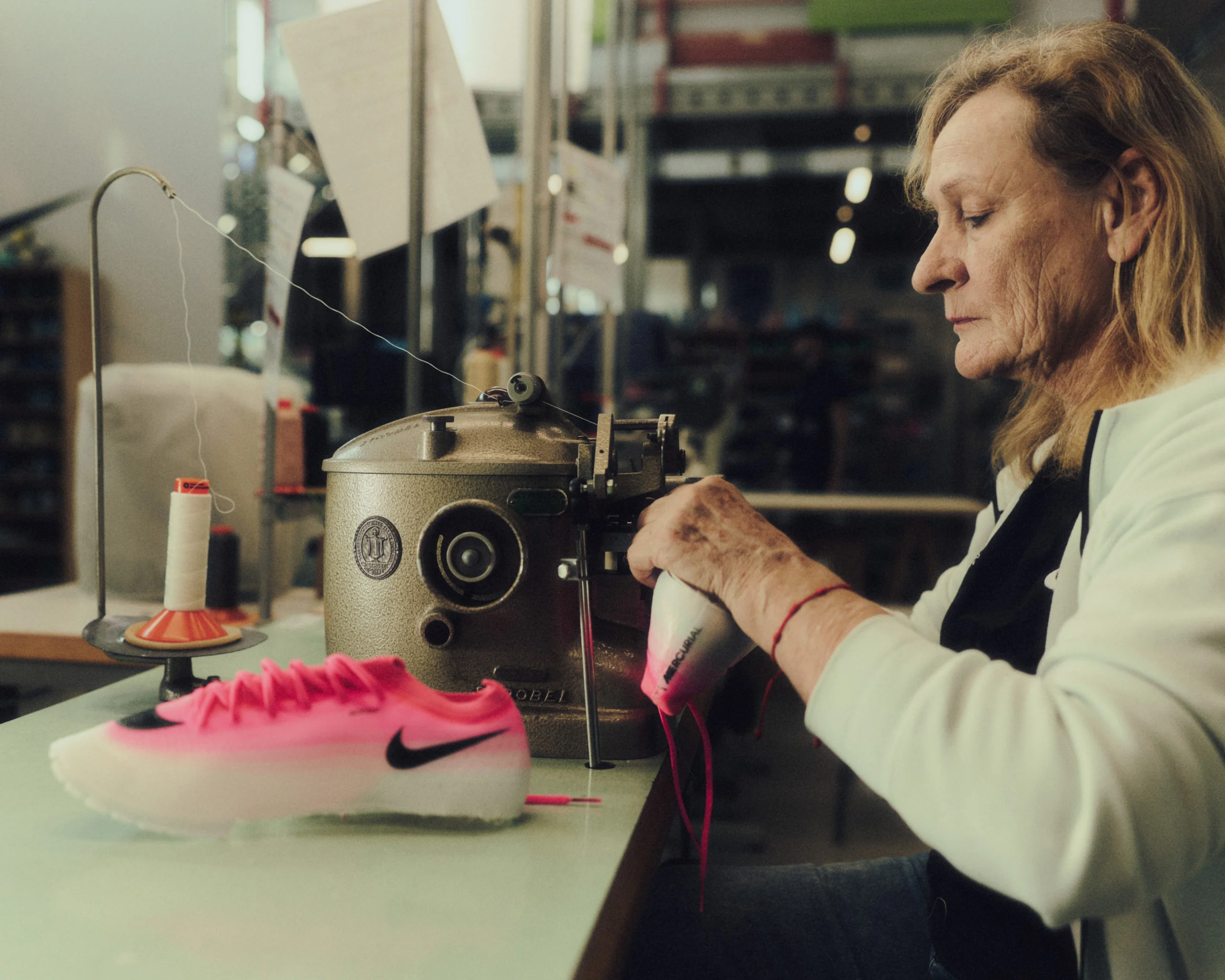
The process begins with the upper. Advanced synthetic materials are precision-cut using laser-guided systems. A critical step follows: the lasting process, where a precision laser aligns the upper onto the foot form.
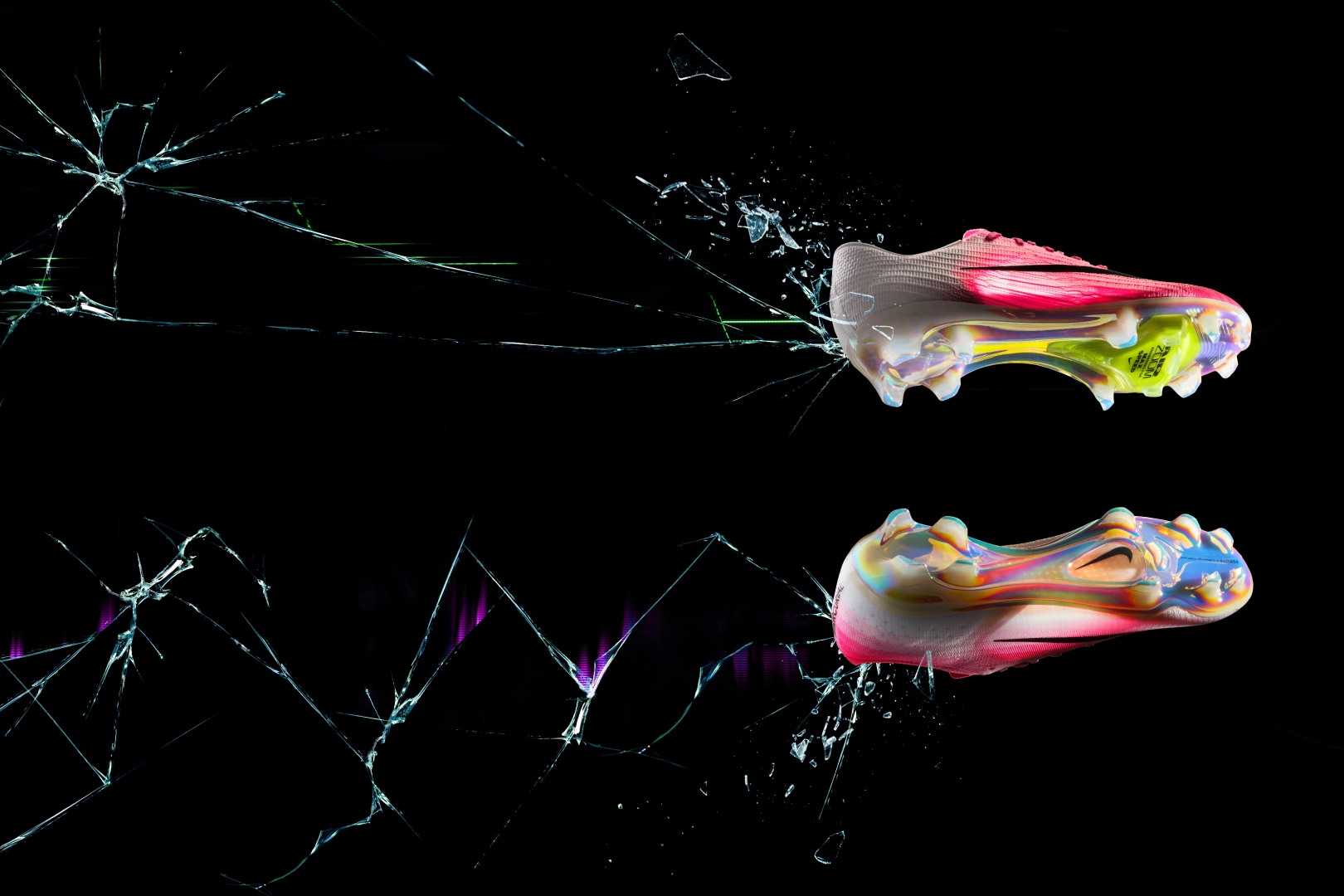
Stitching comes next. Experienced artisans execute complex seam patterns that balance flexibility with structural integrity. Components like the Nike Air Zoom unit (exposed for the first time on the Mercurial Superfly 11) are carefully integrated.
Fabio Marniga, Senior Director of Footwear Product Creation, captures the dual imperative: “It’s the constant search for how to make the best-looking boot and, at the same time, the best-performing one. That’s the DNA of Montebelluna: pushing boundaries but doing it in a craft way, in a ‘made in Italy’ way.”
anat
Walk through the Montebelluna workshop and you witness the anatomy of speed laid bare. On one table: Kylian Mbappé’s Mercurial Superfly 11 components arranged beside a detailed spec sheet. On another: Vinícius Júnior’s Vapor 17 being stitched, each pull of the thread executed with focused attention.
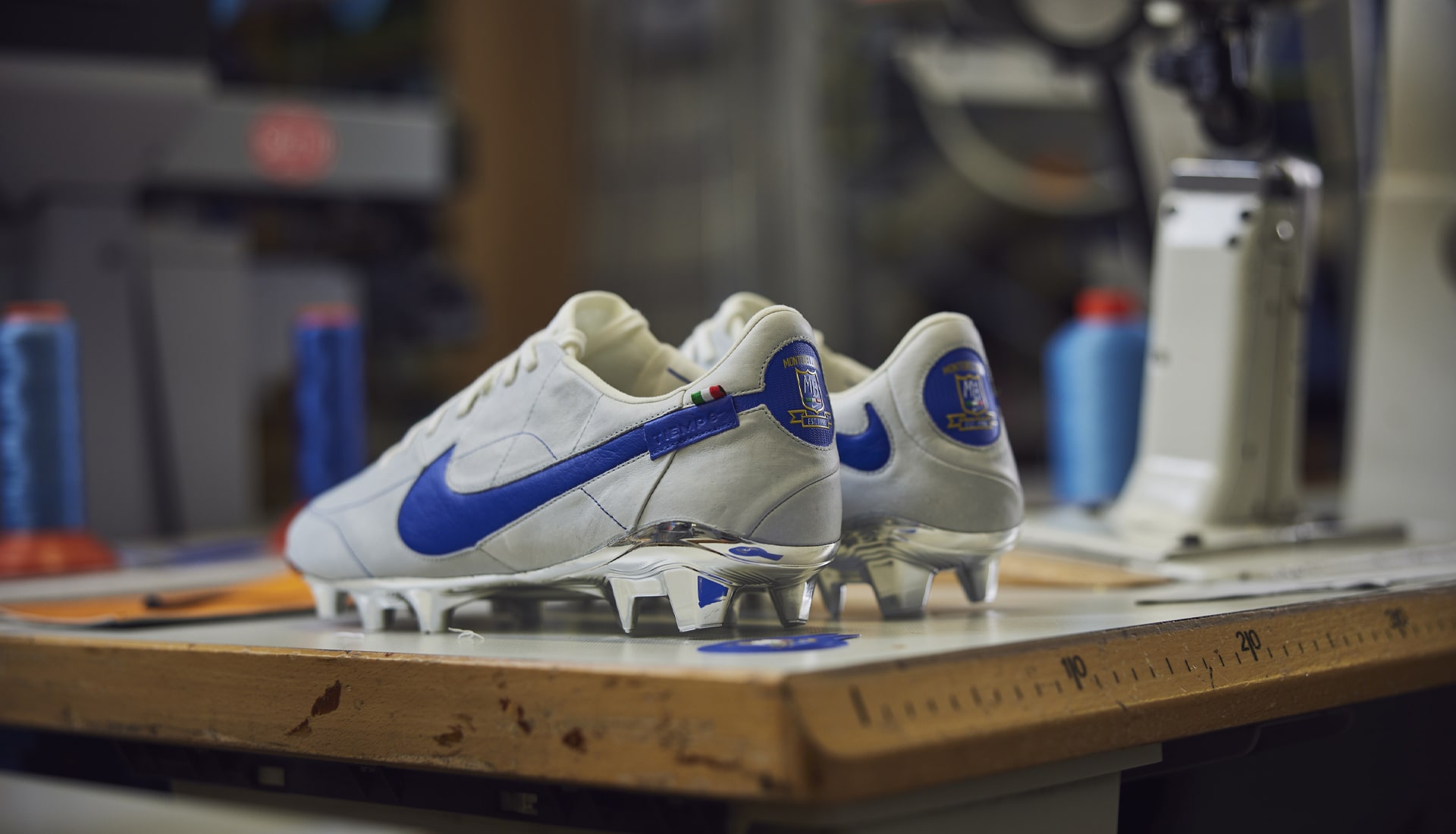
The outsole — a lightweight carbon composite plate — receives equally rigorous treatment. Each finished boot receives custom “MB Athlete Service” insoles printed specifically for the player. Final quality checks are exhaustive.
Marian Dougherty, VP of Nike Global Football Footwear, highlights one innovation on the Superfly 11: “A first for the Mercurial — an exposed Air Zoom unit. It feels like you’re propelling forward — something only Zoom Air can do.”
Sergio Cavaliere reflects: “When I hold a finished Mercurial, I realize that, despite all the technology involved, it still takes a human touch to turn a prototype into a masterpiece. It’s like holding the future of football shaped by the hands of tradition.”
custom
What sets Montebelluna apart is not nostalgia but proven efficacy. In an industry increasingly dominated by automation, Nike has deliberately retained and elevated human craftsmanship for its pinnacle product.
This hybrid approach delivers tangible benefits. The tactile sensitivity of experienced artisans catches subtleties that sensors might miss.
Michele Galasso again: “I’d like the 2026 Mercurial to be remembered for its authenticity. A boot that didn’t try to redefine Mercurial for the sake of change, but instead refined what Mercurial stands for — speed, precision, light weight and confidence — through discipline and attention to detail.”
Marniga adds: “For me, Mercurial is all about the shape. It’s so iconic. When you hold it in your hands, it’s a beautiful object.”
leg
From Diamant’s production lines flow thousands of pairs destined for players worldwide. Yet each carries the DNA refined in Montebelluna’s elite rooms.
As football accelerates, the Mercurial evolves in parallel. The next iterations will likely incorporate even more advanced materials and continued refinement of that signature aerodynamic silhouette.
But the core will remain: Italian hands shaping dreams of speed.
In the workshops of Montebelluna and Diamant, the artisans understand their role transcends manufacturing. They are the final guardians of performance.
The Mercurial doesn’t just represent Nike’s innovation. It embodies a quiet, profound connection between modern athletic ambition and old-world Italian mastery — a partnership now entering its fourth decade.
From the DRIFT archive: Inside the World’s Most Iconic Ski Experiences · Nike Opens Soup Shop in China, Serving Up Comfort for Sports Recovery
Related Articles
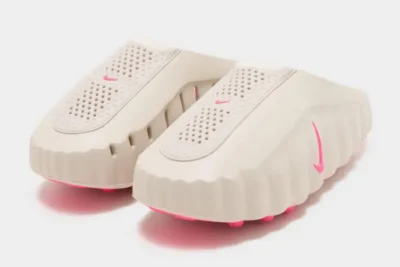
Nike’s Mind 001
A cream shade Nike has used only as a supporting tone on two women's Mind 001 pairs takes over the whole mule in January 2027, with pink nodes underfoot.