DRIFT AUDIO
Listen to this story
Choose a voice, then press play.
Nintendo has announced Pictonico!, a fun and innovative mobile game that turns your photos into rapid-fire comedy microgames. It’s essentially tapping into TikTok culture’s need for quick-fire seconds of fun before swiping for more. In some ways, it feels like Nintendo’s best thing in years, and also one of the most old-fashioned Nintendo games to come along in a while. With that in mind, the other reaction is, why on earth isn’t this a WarioWare game?
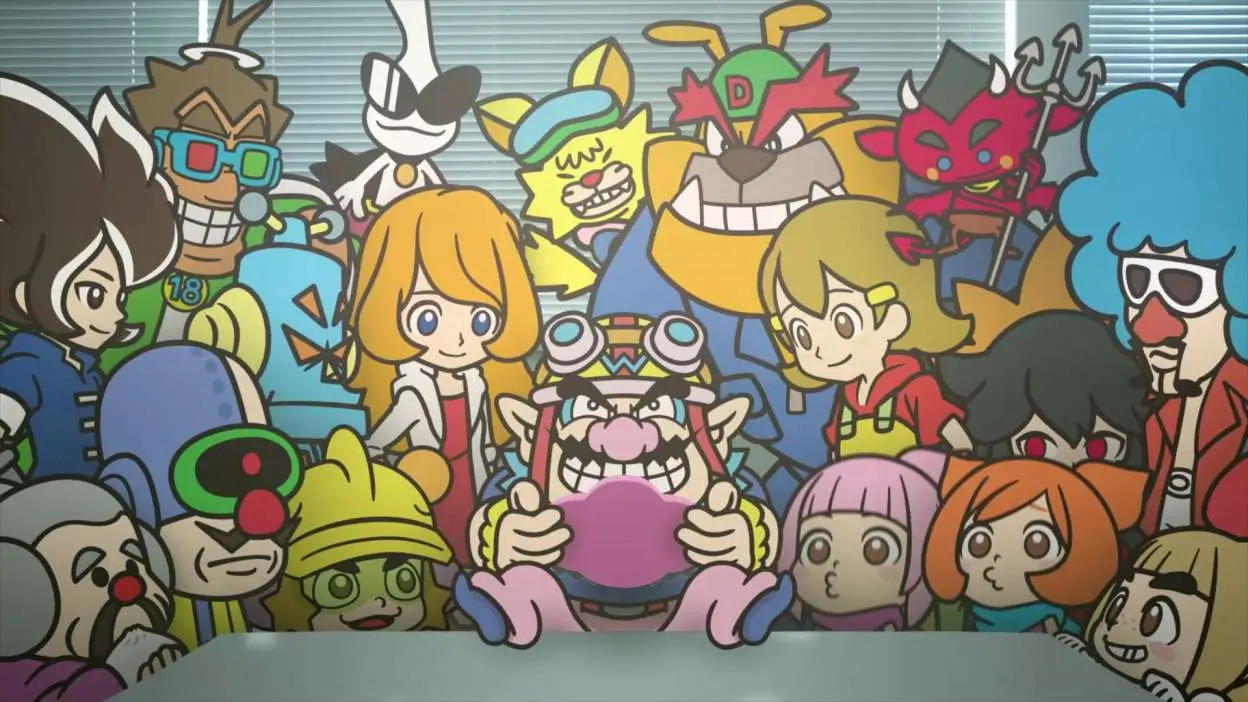
The moment footage started doing the rounds on May 19, 2026, people immediately clocked the feel and design Nintendo is going for. Pictonico! has that exact same scrappy, chaotic energy as the DS-era WarioWare titles—quick-fire nonsense, ugly-funny visual gags, split-second reactions, and a deceptively simple design philosophy that Nintendo mastered during the DS and Wii years. These kinds of games were all the rage at one point: WarioWare, Bishi Bashi Special, even the recently resurrected Point Blank and quirky experiments like the G’AIM’E console. Yet instead of branding this as a new WarioWare for Gen Z, Nintendo has gone with a brand-new name and marketing approach. That’s bold—borderline reckless—when launching a mobile game in 2026 means fighting through an endless scroll of photo filter apps, loot-box-ridden clones, and data-grab concerns.
Nintendo’s Mobile Gamble Reignites With Pictonico: A Playful Return to a Complicated Legacy#Gaming #VideoGames #GamesNews 🕹 🎮 https://t.co/p0hVAumYRp
— GeeZus 🎮 (@GeeZusGG) May 20, 2026
flow
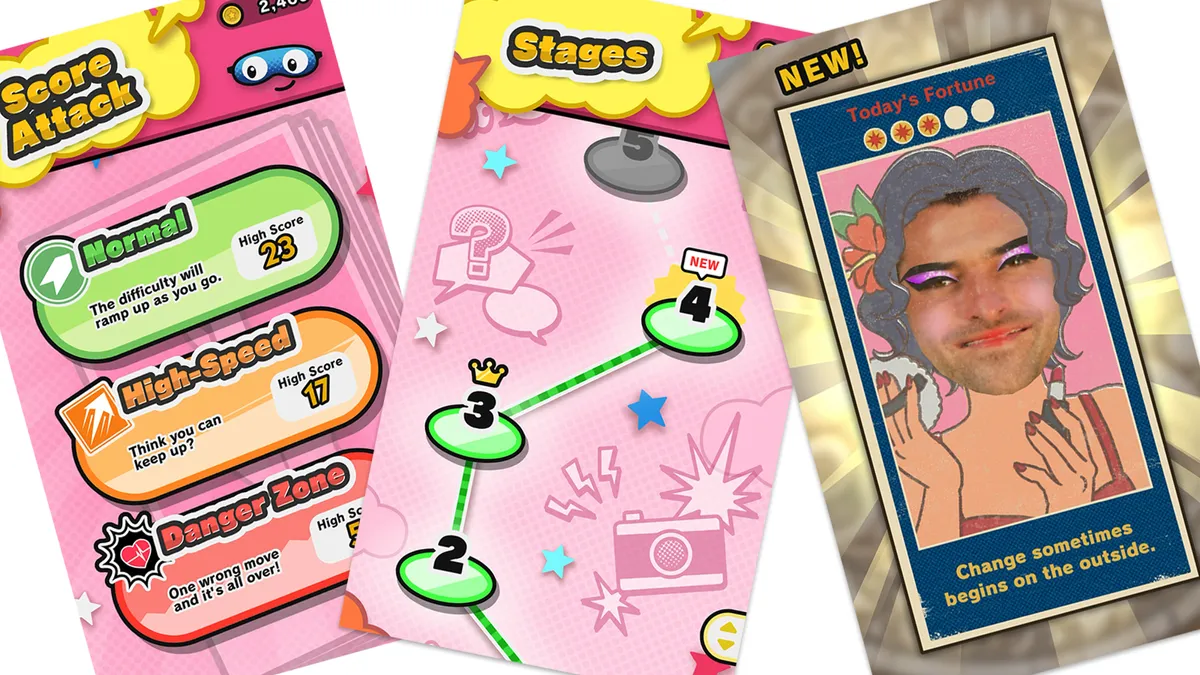
Let’s be clear: Pictonico! is WarioWare in all but name. Developed by Intelligent Systems—the same studio behind the WarioWare series, Fire Emblem, and Paper Mario—it features around 80 touch-based microgames that hijack your phone’s photo library. Upload a selfie or snap your friends and family, and suddenly their faces are licking lollipops, summoning genies, defending against zombies, rolling out red carpets for weddings, or peeling off facemasks in absurd scenarios. It’s pure chaotic whimsy, delivered in 3-5 second bursts perfect for vertical mobile play.
This mirrors classic WarioWare microgames: simple controls (tap, swipe, tilt), escalating speed, and escalating absurdity. Remember WarioWare, Inc. on Game Boy Advance, where you might flick a light switch or dodge a bullet in a split second? Or DS entries like WarioWare: Touched! and Snapped!, which already experimented with cameras and touchscreens? Pictonico! feels like the logical evolution—WarioWare: Snapped! 2.0 for the smartphone era. Fans on Reddit and X were quick to point out the parallels, with some calling it “mobile WarioWare with Face Raiders vibes.”
So why the new IP? Nintendo could have slapped the Wario hat on it, added some mustache-twirling voice lines, and ridden the existing fanbase. Instead, they chose a fresh slate. This decision reveals deeper thinking about brand strategy, audience expansion, and the realities of mobile gaming in 2026.
evolve
Nintendo’s mobile history has been cautious. After the Wii U’s struggles, they dipped toes with Miitomo, Super Mario Run, Fire Emblem Heroes, and Animal Crossing: Pocket Camp. Some succeeded modestly; others faded. Mario Kart Tour and Dragons: Legend of the Nine Realms showed they could monetize, but the company has always feared diluting its premium console image.
- Pictonico! marks a shift. It’s “free-to-start,” with a demo available via pre-registration and optional volume packs ($5.99–$7.99) to unlock more microgames. No heavy microtransactions or battle passes—just bite-sized fun with your real-life photos. This low-friction model aligns with TikTok/Reels attention spans while avoiding the aggressive monetization that turns players off. Launching May 28, 2026, just weeks after announcement, shows confidence in quick virality.
By avoiding the WarioWare name, Nintendo sidesteps expectations. WarioWare carries baggage: it’s seen as a handheld party game for kids and nostalgic adults. A new brand lets Pictonico! target broader demographics—parents sharing family photos, Gen Z creating meme content, even older players reminiscing about party games without the “gamer” label. It positions the game as a social, creative tool first (“Turn your photos into silly minigames starring you and your loved ones”) and a game second. This echoes Tomodachi Life’s quirky life-sim appeal or Miitomo’s social experiments, but with higher replayability through user-generated absurdity.
The old-fashioned aspect shines here. While modern mobile games chase endless progression, battle royales, or idle clicks, Pictonico! doubles down on pure, unadorned fun. No complex tutorials, no seasons—just point your camera, laugh at your uncle dodging zombies, and share the clip. It recalls the Wii’s motion-controlled accessibility and DS’s touch innovation. In an era of hyper-polished AAA titles and algorithmic dopamine loops, Nintendo is betting that scrappy, personal chaos still wins.
stir
TikTok culture thrives on seconds-long dopamine hits: dances, transitions, fails. Pictonico! is engineered for this. Each microgame ends with a capturable photo or video of the hilarious result—your mom’s face on a genie body, your dog “eating” spaghetti. Share it instantly, and it becomes organic marketing. Nintendo knows virality beats traditional ads in 2026.
This isn’t new for them. WarioWare always had that viral potential with its shareable micro-moments. But tying it to personal photos makes it infinitely more shareable than generic cartoon chaos. Imagine group chats exploding with custom challenges: “Put your boss in the zombie level.” It turns passive scrolling into active creation, blending Nintendo’s whimsy with user-generated content trends that power apps like Snapchat or CapCut.
Critics might worry about privacy—uploading family photos to a Nintendo server. The company has a strong track record, but in a post-Miitomo world, transparency will be key. Early trailers emphasize local fun and optional sharing, which helps.
compare
The big question remains: why not WarioWare? Several theories:
- Brand Protection: WarioWare has a specific tone—greedy, irreverent, with recurring characters. Pictonico! is gentler, more wholesome family photo fodder. Forcing Wario in might feel mismatched, like putting Mario in a horror game.
- Audience Expansion: Existing WarioWare fans will find it anyway (Intelligent Systems credit ensures that). A new name attracts newcomers who might skip a “Wario” title thinking it’s kid-only or too niche.
- Mobile Experimentation: Nintendo tests the waters with a fresh IP. Success could spawn sequels or even a full WarioWare mobile revival. Failure stays contained.
- Intellectual Property Freshness: After multiple WarioWare entries (Get It Together!, Move It! on Switch), a reset prevents fatigue. New branding refreshes the microgame formula.
Counterpoint: branding as WarioWare: Pictonico could have leveraged instant recognition. The series already experimented with cameras (Snapped!) and multiplayer chaos. Fans feel a missed marketing slam-dunk. Yet Nintendo’s history shows patience—Breath of the Wild redefined Zelda by breaking conventions. Maybe Pictonico! redefines their mobile presence the same way.
shh
What makes Pictonico! feel like “Nintendo’s best in years” is its confidence in simplicity. Modern gaming often overcomplicates: open worlds, loot, narratives. Here, it’s back to basics—core loop of surprise and laughter. The “ugly-funny” aesthetic (distorted faces, crude animations) rejects hyper-realism for personality, much like early Mario or Kirby.
It also revives party-game energy in solo/mobile form. Play alone for high scores, or pass the phone for group hilarity. This bridges console nostalgia with always-on mobile life. In 2026, with Switch 2 hype building, a lightweight mobile title keeps Nintendo in pockets year-round, feeding into the ecosystem.
Comparisons to Face Raiders (3DS) or even AR experiments highlight continuity. Nintendo has long played with cameras: DS, 3DS, Wii. Pictonico! finally realizes that potential on the device everyone carries.
challenge
Success isn’t guaranteed. Mobile is brutal—discovery depends on App Store algorithms, TikTok trends, and word-of-mouth. If microgames feel repetitive after 20-30, retention drops. Monetization via volumes feels fair but could frustrate completionists. Privacy concerns or technical issues (photo processing on low-end devices) could sour launches.
Yet positives abound. Low price point for volumes encourages impulse buys. Regular content drops could sustain it. Cross-promotion with Switch titles (unlockables? Mii integration?) might link platforms.
Long-term, Pictonico! could evolve: more themes, multiplayer modes, even creator tools for custom microgames. It positions Intelligent Systems as Nintendo’s mobile MVPs, potentially leading to bolder experiments.
fin
In many ways, Pictonico! embodies Nintendo’s philosophy: innovate by returning to roots. They could chase trends—metaverses, NFTs, live-service grindfests—but instead deliver personal, joyful chaos. It’s old-fashioned in its rejection of complexity, revolutionary in leveraging smartphone ubiquity and social sharing.
Whether it becomes a hit or cult favorite, it signals Nintendo isn’t afraid to surprise. In a crowded 2026 market, standing out with sincerity and silliness is radical. Fans debating the WarioWare question miss the point: this is their spirit, rebranded for new eyes.
As launch day approaches (May 28), pre-register and prepare your funniest faces. Nintendo is betting you’ll laugh, share, and come back for more. In a swipe-weary world, that scrappy energy might just be the refresh we need. It’s not just a game—it’s Nintendo reminding us why we fell in love with them: pure, unfiltered fun made personal.
From the DRIFT archive: PANTONE’s 2026 Color of the Year Takes Shape With Play-Doh and Post-It Editions
Related Articles

Under Rue de Castiglione, Liaigre Gives Hôtel Costes a Spa With No Hard Corners
A 20-meter lap pool, eight treatment rooms and not one sharp angle: Studio Liaigre’s spa […]