No Saints, No Sinners — Just the Truth: Inside The Mind of a Serial Killer: The Experience

April 17, 2026
threshold
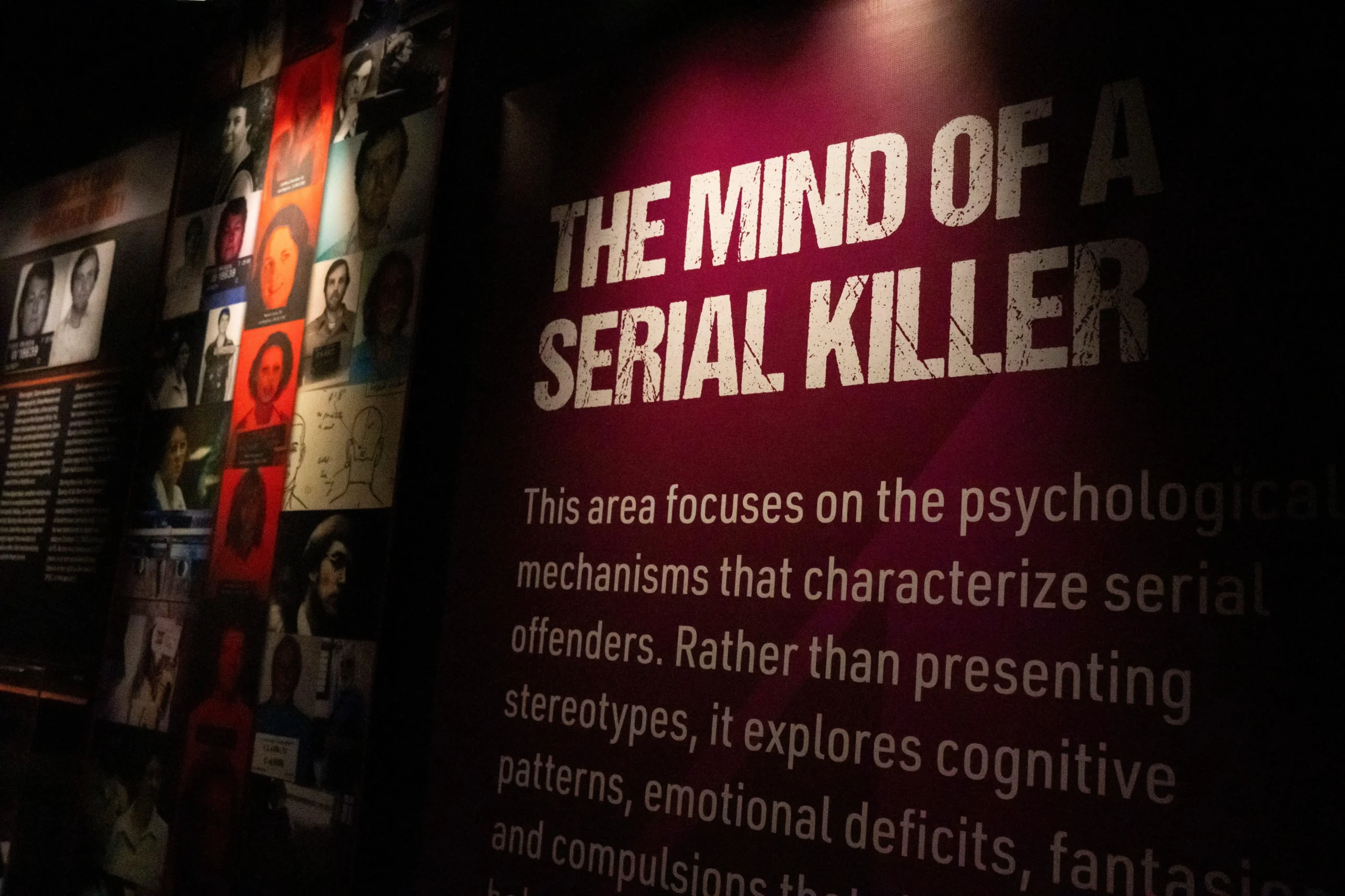
The air shifts before you even step inside. Not dramatically — nothing theatrical, nothing exaggerated — but perceptibly. The Mind of a Serial Killer: The Experience does not announce itself with spectacle. It withholds. It compresses. It narrows your field of vision before you’re fully aware of it happening.
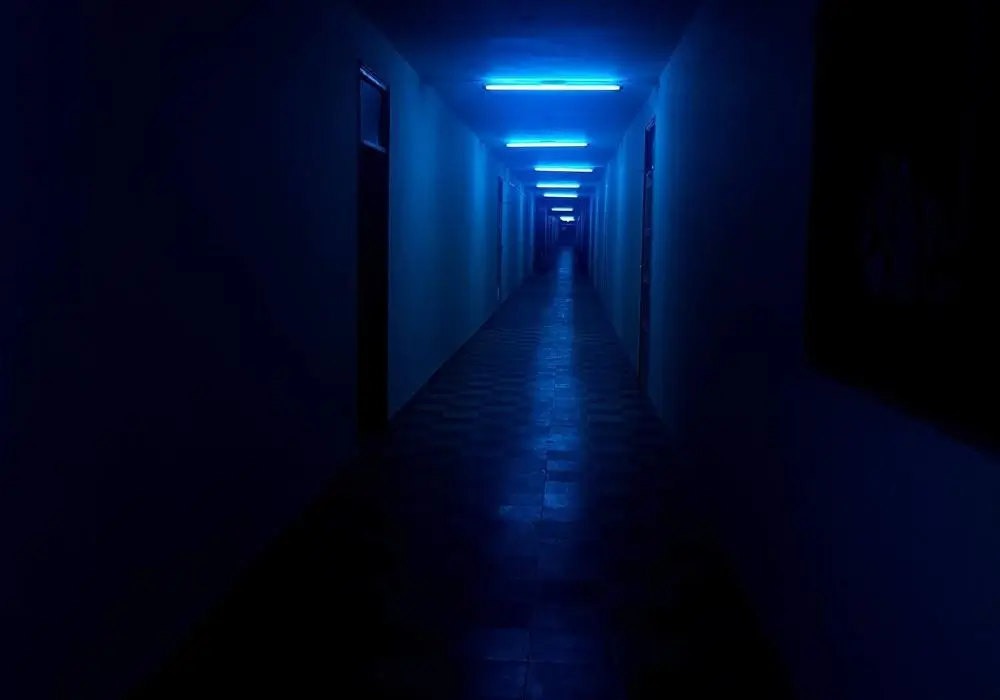
A dim corridor stretches forward. A flickering monitor hums with low static. Then a voice — calm, clinical, almost disarming in its neutrality — asks: What turns a person into a monster?
The question lands without emphasis. No crescendo. No insistence. It simply exists, suspended in the space like something waiting to be completed.
This is not entertainment in any conventional sense. It is not even education in the didactic, museum-grade format audiences are accustomed to. It is closer to excavation — psychological, spatial, and deeply personal.
From the first step, the exhibition makes one thing clear: you are not here as a passive observer. You are not protected by distance or narrative framing. You are a witness. And more than that, you are positioned inside the structure of the story itself.
The experience refuses to center violence as spectacle. Instead, it isolates the moment before it — the breath, the pause, the internal recalibration that precedes action. That is where it lingers. That is where it insists you remain.
Because the real horror is not in what happened. It is in the moment when it almost didn’t — and then did.
stir
The exhibition dismantles chronology almost immediately. There is no linear progression, no sequence of escalation, no comforting arc that allows the mind to organize events into cause and effect.
Instead, it follows something far less stable: a pattern of thought.
You move through fragments — childhood photographs, partial transcripts of police interviews, journal entries that feel less like confessions and more like unfinished equations. Each element is presented without overt explanation, layered like evidence pinned to an invisible wall.
There is no narrator to guide interpretation. No moral voice framing what you see. The absence is intentional. It forces you into a position of active assembly, where meaning is not delivered but constructed — and often, left incomplete.
This is storytelling stripped down to its most essential question: not what was done, but how it was rationalized.
The brilliance lies in restraint. Silence becomes a structural tool. The pauses between audio fragments stretch longer than expected. Entire rooms remain empty, save for a single object placed with near-religious precision.
A bloodstained shirt, suspended under controlled light, is not presented as evidence of violence. It is presented as residue — something that exists after meaning has already fractured.
This is not true crime designed for curiosity or consumption. It is an encounter designed to destabilize. It asks you not to follow a story, but to inhabit a mindset — however briefly, however uncomfortably.
View this post on Instagram
discip
Where most exhibitions rely on accumulation — more images, more data, more narrative — this one reduces. It subtracts until what remains feels almost too quiet.
In one room, a bedroom is reconstructed with meticulous accuracy. The details are unremarkable at first glance: a bed with slightly rumpled sheets, a desk scattered with textbooks, a Polaroid pinned loosely to the wall.
Nothing signals danger. Nothing signals urgency.
And then the audio begins.
A voice, steady and unhurried, speaks about control. About order. About the need for systems that impose clarity onto an otherwise chaotic world. The language is precise, almost philosophical in tone.
It reframes the room entirely.
The coffee cup is no longer incidental — it is always placed to the left.
The drawer is not simply organized — it is obsessively aligned.
The bed is not casually made — it is calibrated.
These are not clues meant to be decoded. They are habits. Rituals. Extensions of a logic that prioritizes structure above all else.
This is where the exhibition shifts from documentation into something closer to installation art. It does not present violence as an act. It presents it as a system — one built gradually, reinforced quietly, and rarely interrupted.
You are not solving a case. You are observing a framework being revealed piece by piece.
flow
The exhibition control is unmistakably deliberate. Every object is framed with an attention that borders on reverence.
A trench coat hangs alone, perfectly centered.
A knife rests on velvet, its placement exact.
A photograph lies face down, denying access while insisting on presence.
There is no chaos in these arrangements. No sense of disorder. Everything is controlled, symmetrical, resolved.
The influence of cinematic precision is impossible to ignore — particularly the restrained, psychologically charged compositions associated with David Fincher. But here, the aesthetic is not homage. It is functional.
By removing excess, the exhibition amplifies intention.
It begins to resemble something unexpected: high fashion. Not in surface-level styling, but in its discipline. Minimalism as a method. Precision as a form of storytelling.
Lighting is treated as material. Each object exists within its own calibrated field, isolated yet interconnected. The pacing mirrors a runway — measured reveals, controlled transitions, no unnecessary movement.
This is not about shock value. It is about control.
And in that control, something unsettling emerges. The exhibition does not depict chaos. It reflects calculation.
show
What becomes increasingly clear is that the exhibition refuses spectacle at every turn. There is no reliance on graphic imagery, no attempt to overwhelm through sensory overload.
Instead, it engages the viewer through absence. Through what is not shown.
This absence becomes a form of tension.
Without explicit violence, the mind begins to fill gaps. It projects. It constructs its own imagery based on suggestion rather than exposure.
This is where the experience becomes participatory in a deeper sense. Not through interaction, but through imply. The viewer is not simply receiving information — they are generating it internally.
The restraint forces a confrontation not with what is presented, but with what is imagined.
And that shift is where the exhibition finds its power.
imply
Toward the end, the structure tightens. The rooms grow quieter. The intervals between stimuli lengthen.
Then, a single question appears: Would you have seen the signs?
There is no interface. No mechanism for response. No resolution.
The question exists without closure.
It redirects the entire experience inward. What was once external — an examination of someone else’s mind — becomes internal. A reflection of perception, awareness, and assumption.
The exhibition does not accuse. It does not moralize. It simply removes distance.
And in doing so, it reveals something difficult to ignore: the boundary between observer and subject is more permeable than we prefer to believe.
mere
What lingers after the question is not fear, but recognition.
The exhibition reframes true crime not as a narrative of justice, but as a structure of fascination. It isolates the viewer’s role within that structure — the act of looking, the desire to understand, the pull toward proximity.
This is where the experience transcends genre entirely. It becomes less about crime and more about attention.
Why we give it.
How long we hold it.
What it says about us when we do.
By presenting its subject matter with the precision of a cut editorial and the pacing of a psychological thriller, the exhibition exposes the mechanics behind that attention.
It reveals that the allure of true crime is not solely rooted in violence, but in the mind that orchestrates it — and the mind that seeks to interpret it.
shh
Leaving the exhibition does not feel like an exit. There is no clear transition back into the external world.
The silence follows.
It settles into the spaces between thoughts, resurfacing in small, unexpected ways. A detail recalled out of sequence. A question that remains unanswered.
There is no catharsis. No definitive conclusion.
Because the experience was never designed to resolve. It was designed to remain.
What it leaves behind is not clarity, but awareness — of how easily perception can be shaped, how quietly systems can form, how close understanding can come to complicity.
fin
In the end, The Mind of a Serial Killer: The Experience does not offer conclusions. It resists them.
It does not attempt to explain violence in a way that satisfies. It does not package its subject into something consumable or resolved.
Instead, it presents a structure — precise, controlled, and deeply unsettling — and invites you to move through it without guidance.
And when you leave, what remains is not the story of the killer.
It is the awareness of your own position within it.
Because this was never about justice.
It was about why we look.
And why, even now, we find it so difficult to look away.
Related Articles

France Just Banned Social Media for Kids Under 15, and the Fight Over Anonymity Is Only Getting Started
France becomes the first EU nation to bar under 15s from social platforms, and critics […]