Top Gun 3: The Sky Isn’t the Limit—It’s the Beginning

April 17, 2026
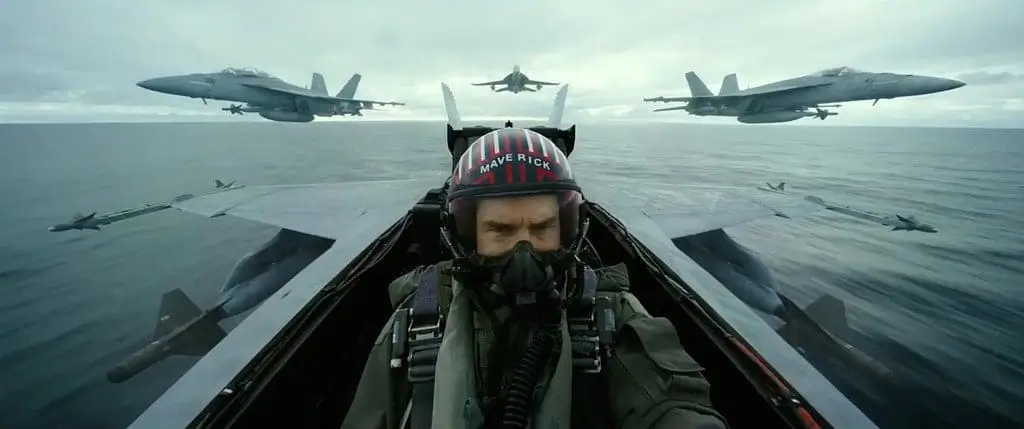
The confirmation of Top Gun 3 did not arrive as a surprise, but it also didn’t feel automatic. That distinction matters. In an industry where sequels are often pre-loaded into release calendars before a film even premieres, the Top Gun franchise has operated with unusual restraint.
At CinemaCon 2026, when executives confirmed the project’s active development—with Ehren Kruger returning to script and Jerry Bruckheimer producing—the tone wasn’t transactional. It was deliberate. The absence of a release date, the lack of a fully revealed cast beyond Cruise—these are not gaps, but signals. The film is being built, not assembled.
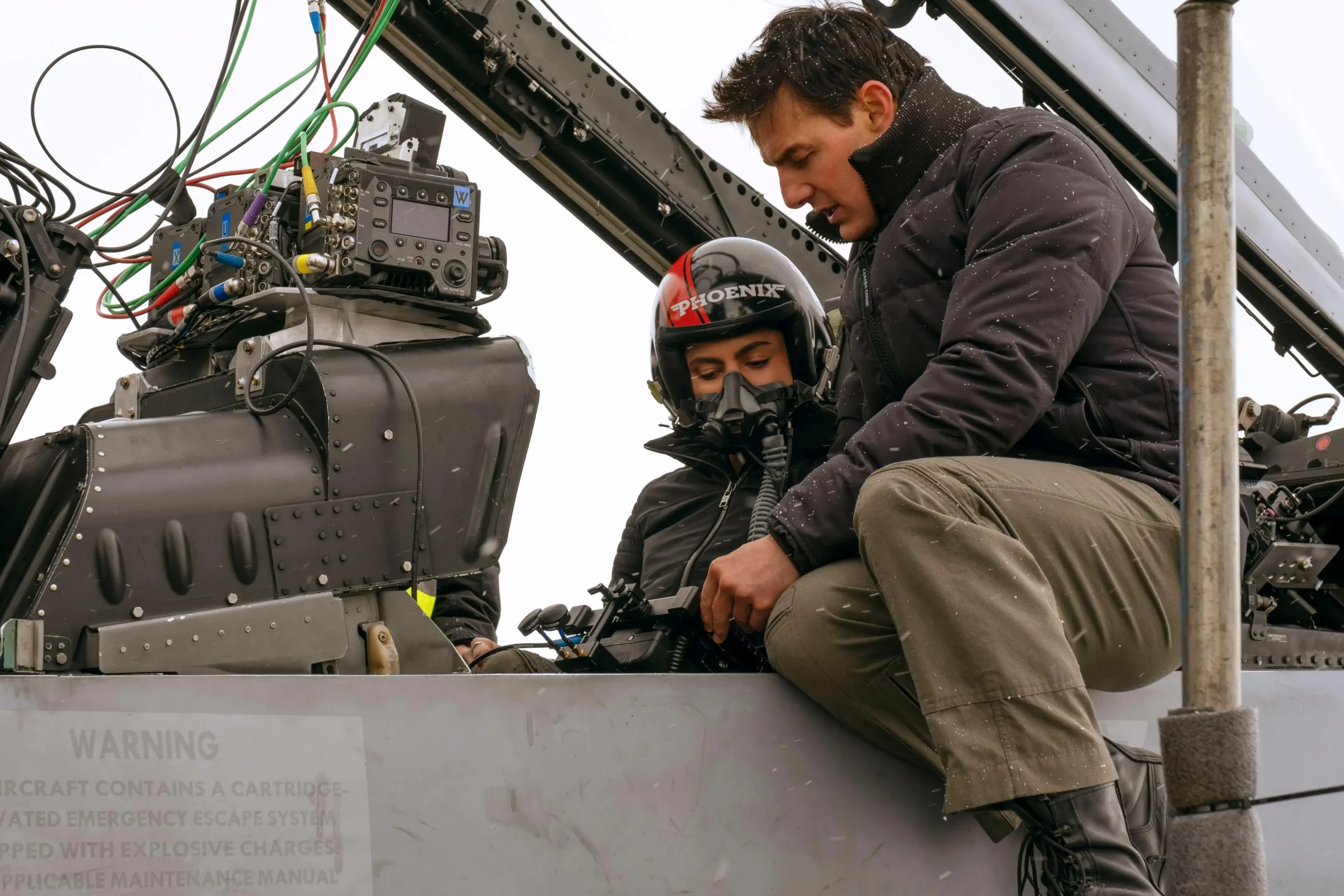
That patience aligns with what made Maverick resonate in the first place. It was not rushed to meet a cycle. It waited—thirty-six years, in fact—until it had something to say.
Now, the question is not either Maverick returns. It’s what his return represents.
stir
Pete “Maverick” Mitchell has always existed somewhere between character and construct. In the original film, he embodied instinct—speed, defiance, risk. In Maverick, that instinct was tempered by time, loss, and responsibility. He became less about rebellion and more about transmission—what it means to carry knowledge forward without losing its human core.
The ending of Maverick is not explosive, but quiet. Rooster takes flight. Maverick chooses connection. The story resolves not through conquest, but through alignment.
That resolution creates narrative space. And Top Gun 3 must decide how to inhabit it.
Does Maverick remain central, navigating a world that increasingly renders his skillset obsolete? Or does he step back, allowing Rooster—and a new generation—to define flight on their own terms? The answer likely lies somewhere in between. Not a handoff, but a tension.
Because what Maverick represents isn’t just experience. It’s resistance—to automation, to detachment, to the erosion of presence.
quest
If Top Gun was about instinct, and Maverick was about legacy, then Top Gun 3 inevitably becomes about displacement.
The modern battlefield—and by extension, modern aviation—is shifting rapidly. Autonomous drones, AI-assisted targeting, and unmanned systems are no longer speculative—they are operational. The human pilot, once the centerpiece of aerial warfare, is increasingly positioned as a variable rather than a constant.
Imagine a narrative where Maverick is no longer the best pilot in the sky, but the last of a disappearing kind. Where dogfights are simulated before they are flown. Where decisions are calculated before they are felt.
The conflict, then, is not simply external. It is philosophical.
What is lost when flight becomes algorithmic? What happens to risk when it is redistributed across systems rather than bodies? And most critically—what remains uniquely human in a space increasingly defined by machines?
Cruise’s filmography has circled this question for decades. From Edge of Tomorrow to Mission: Impossible, there is a recurring tension between human agency and technological mediation. Top Gun 3 is positioned to bring that tension into its most literal form.
idea
One of the defining achievements of Top Gun: Maverick was its commitment to physicality. Real jets. Real G-forces. Real consequences.
In an era where digital simulation dominates, this choice was not just aesthetic—it was ideological. It asserted that realism still has value. That audiences can feel the difference between constructed spectacle and lived experience.
But realism does not mean stagnation. The challenge is to evolve the methodology without compromising its integrity. Hypersonic aircraft, experimental flight systems, even near-space environments—these are all real-world frontiers currently being explored. Integrating them into the film allows it to remain grounded while still expanding its scope.
The result is a rare hybrid: a film that feels both immediate and forward-looking. Not science fiction, but speculative realism.
scope
Maverick was not just a domestic success—it was a global phenomenon. Its appeal transcended language, culture, and geography because its core themes—risk, mentorship, redemption—are universally legible.
Top Gun 3 has the opportunity to expand this global dimension further.
Joint training exercises. International pilots. Cross-border connection. These elements are not only realistic but narratively rich. They allow the film to explore trust and tension on a broader scale, without reducing itself to a conventional war narrative.
Because Top Gun has never been about war in the traditional sense. It is about individuals operating within systems—testing the limits of those systems, and occasionally redefining them.
View this post on Instagram
tom
It is impossible to discuss Top Gun 3 without addressing Cruise—not just as an actor, but as a force within the industry.
At 60+, his continued commitment to practical stunts is not novelty—it is defiance. In a landscape increasingly shaped by digital shortcuts and algorithmic efficiencies, Cruise represents a counter-model. One built on effort, risk, and control.
This matters because Top Gun 3 is not just another film in his career. It is an extension of a philosophy. That cinema should feel earned. That spectacle should be experienced, not rendered.
legacy
Perhaps the most delicate balance Top Gun 3 must strike is between honoring its past and avoiding dependence on it.
Nostalgia is powerful, but it is also limiting. Maverick succeeded because it used nostalgia as a foundation, not a destination. It acknowledged the original film, but it did not replicate it.
The third installment must go further. It must justify its existence not through memory, but through necessity..
A mission implies purpose. Direction. Risk.
position
In a media environment saturated with interconnected universes, serialized storytelling, and data-driven production, Top Gun 3 occupies a rare position.
It is not part of a larger narrative machine. It does not rely on crossovers or multiversal logic. Its continuation is not preordained—it is chosen.
That distinction gives it cultural weight. It becomes an example of what cinema can still be when it prioritizes view over volume.
And that, ultimately, is why it matters.
fin
Top Gun 3 must navigate multiple trajectories at once: legacy and innovation, realism and expansion, human and machine. It must honor what came before while defining what comes next.
If it succeeds, it will not simply extend a franchise. It will reaffirm a belief—that cinema, at its best, is still capable of flight. Not simulated, not approximated, but real.
And in a landscape increasingly defined by the artificial, that kind of flight feels less like entertainment and more like necessity.
The sky, as your title suggests, is no longer the limit.
It’s the beginning.
Related Articles

France Just Banned Social Media for Kids Under 15, and the Fight Over Anonymity Is Only Getting Started
France becomes the first EU nation to bar under 15s from social platforms, and critics […]