DRIFT AUDIO
Listen to this story
Choose a voice, then press play.
Ed Logg’s pencil outlines of Asteroids rocks sit alongside creator accounts of 120 coin-ops in Paul Drury’s new hardback, which Bitmap Books lists as shipping from October 7.
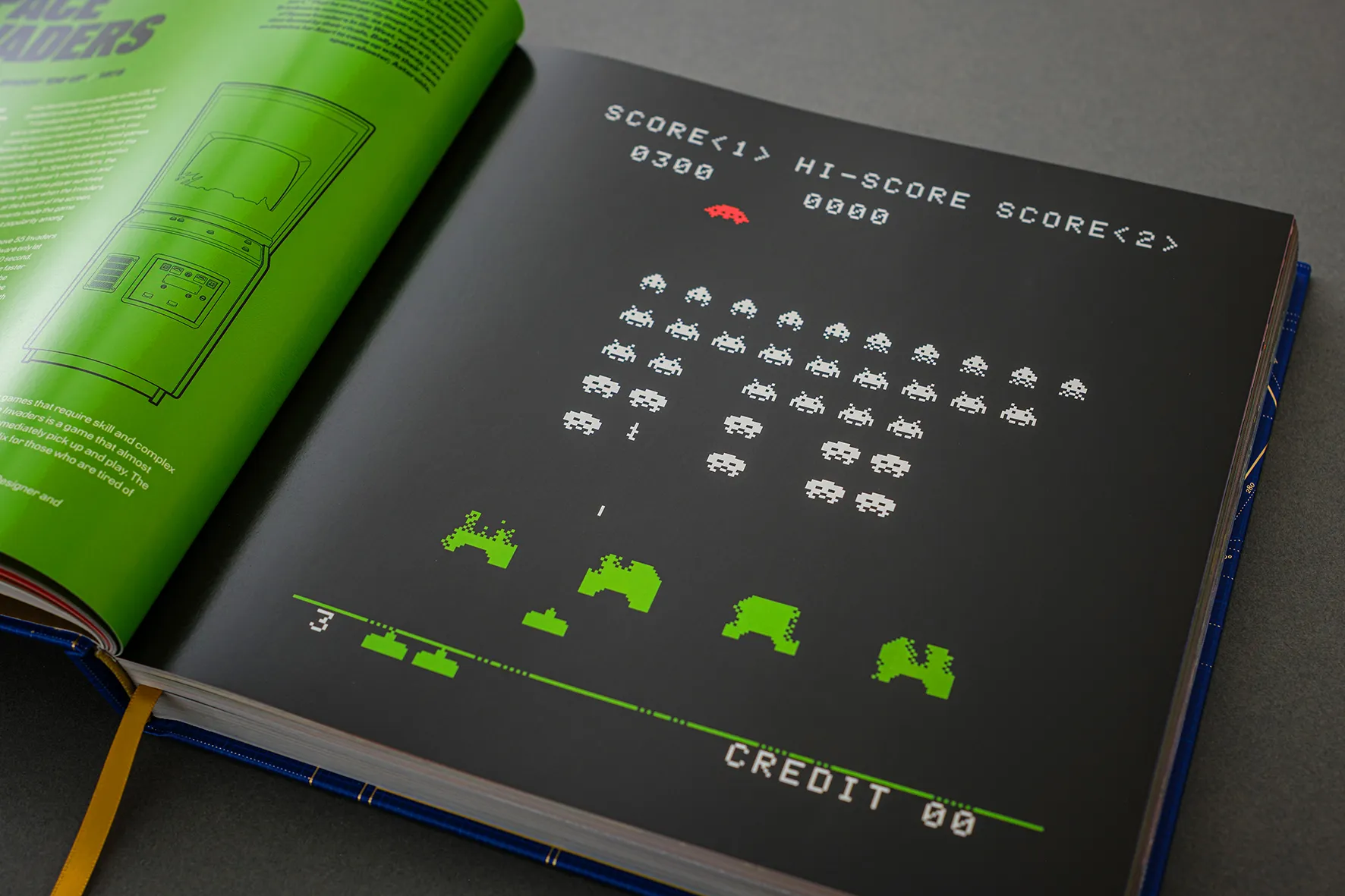
Somewhere inside the 408 pages of Paul Drury’s The Arcade 1971-1999 sit Ed Logg‘s pencil outlines for the rocks in Asteroids, the game he co-created. It is one of a run of working papers that Bitmap Books has placed alongside first-person interviews with the people who built the machines, among them the original handwritten proposal for Sinistar and early sketches for several Killer Instinct fighters. That pairing of memory and paper is the premise of the whole book.
View this post on Instagram
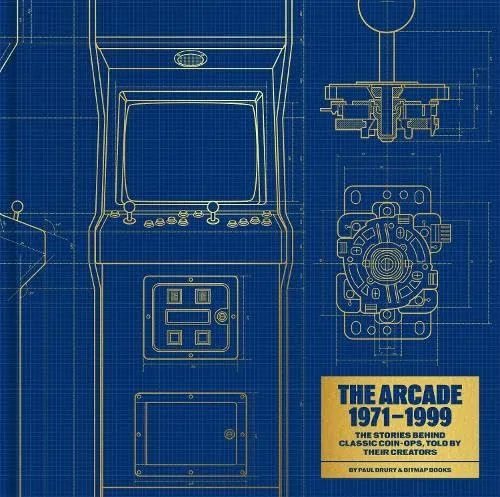
Signal. What happened: Bitmap Books is taking orders for Paul Drury’s The Arcade 1971-1999, with copies shipping from October 7, 2026, against the September 22 date given when the book was announced in August. Exact object: a 408-page, 250mm by 250mm hardback with a gold foil cover, a sewn binding that lies flat for double-page images, and a free PDF, covering 120 coin-operated games from 1971 to 1999. When and where: sold direct from Bitmap Books at £34.99 on its UK storefront, with worldwide tracked shipping offered. Source: Bitmap Books’ own product page and its listed specifications. Why it matters: every game in the book was chosen because Drury could reach at least one of its original creators, so each entry rests on a firsthand account rather than a retrospective summary.
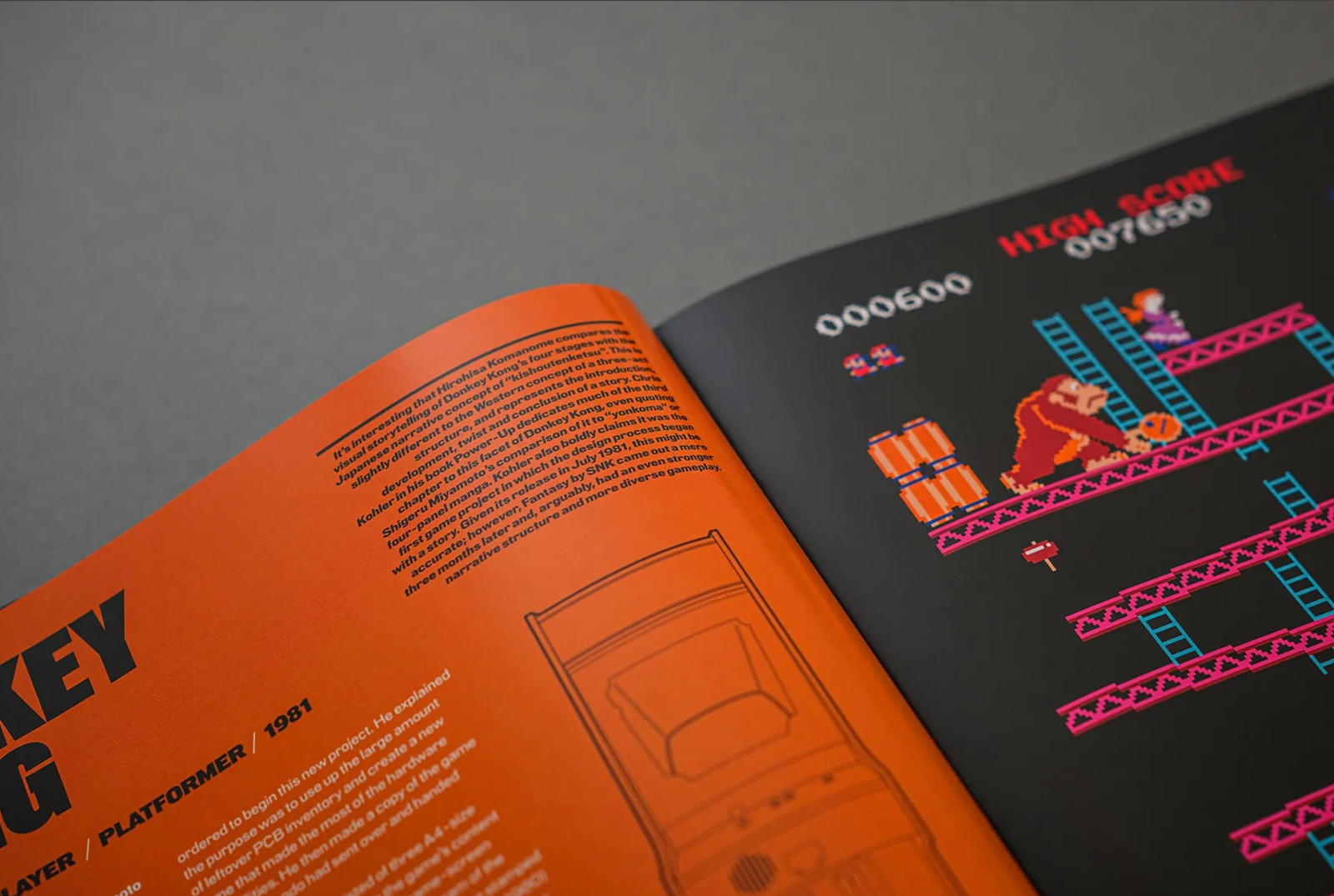
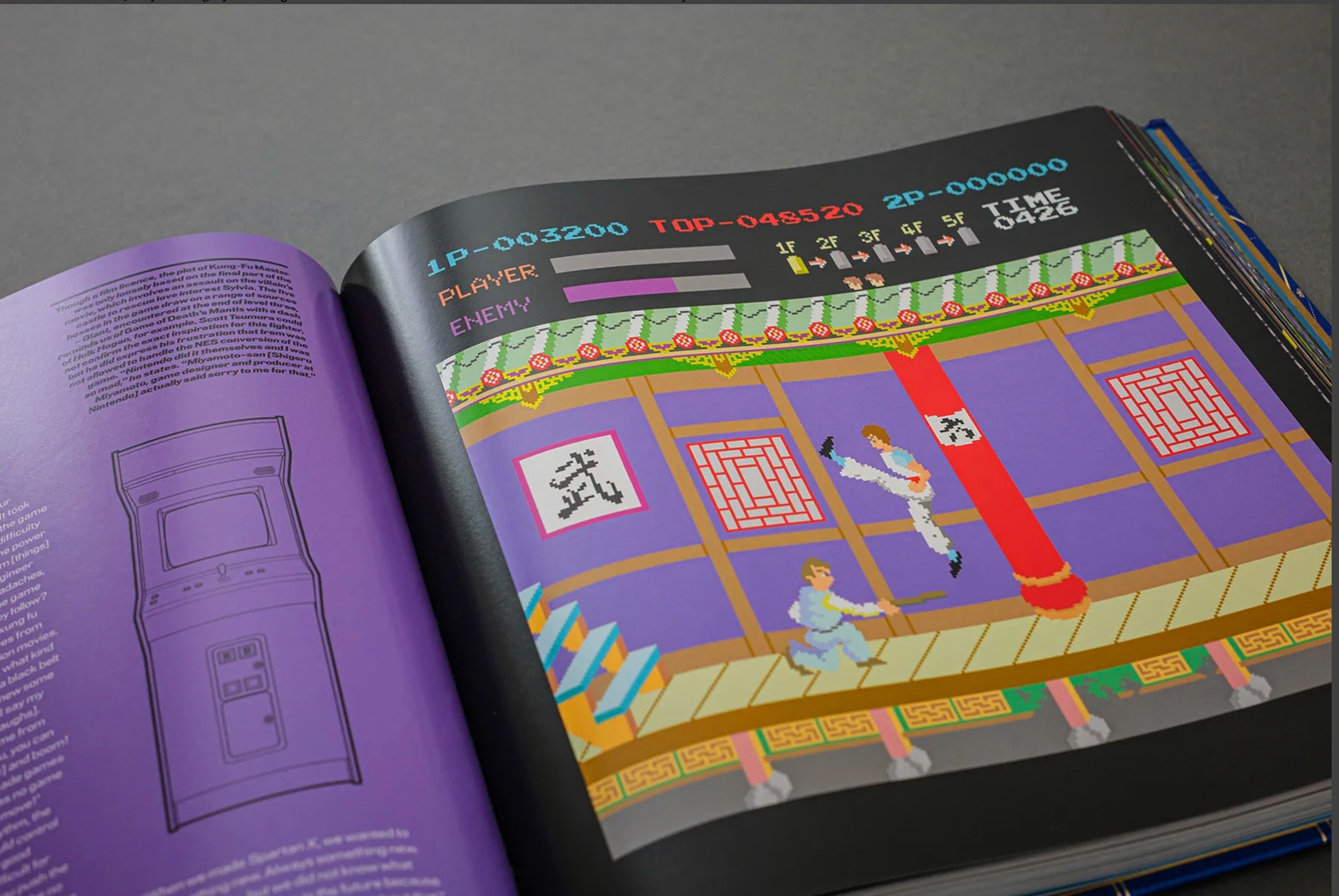
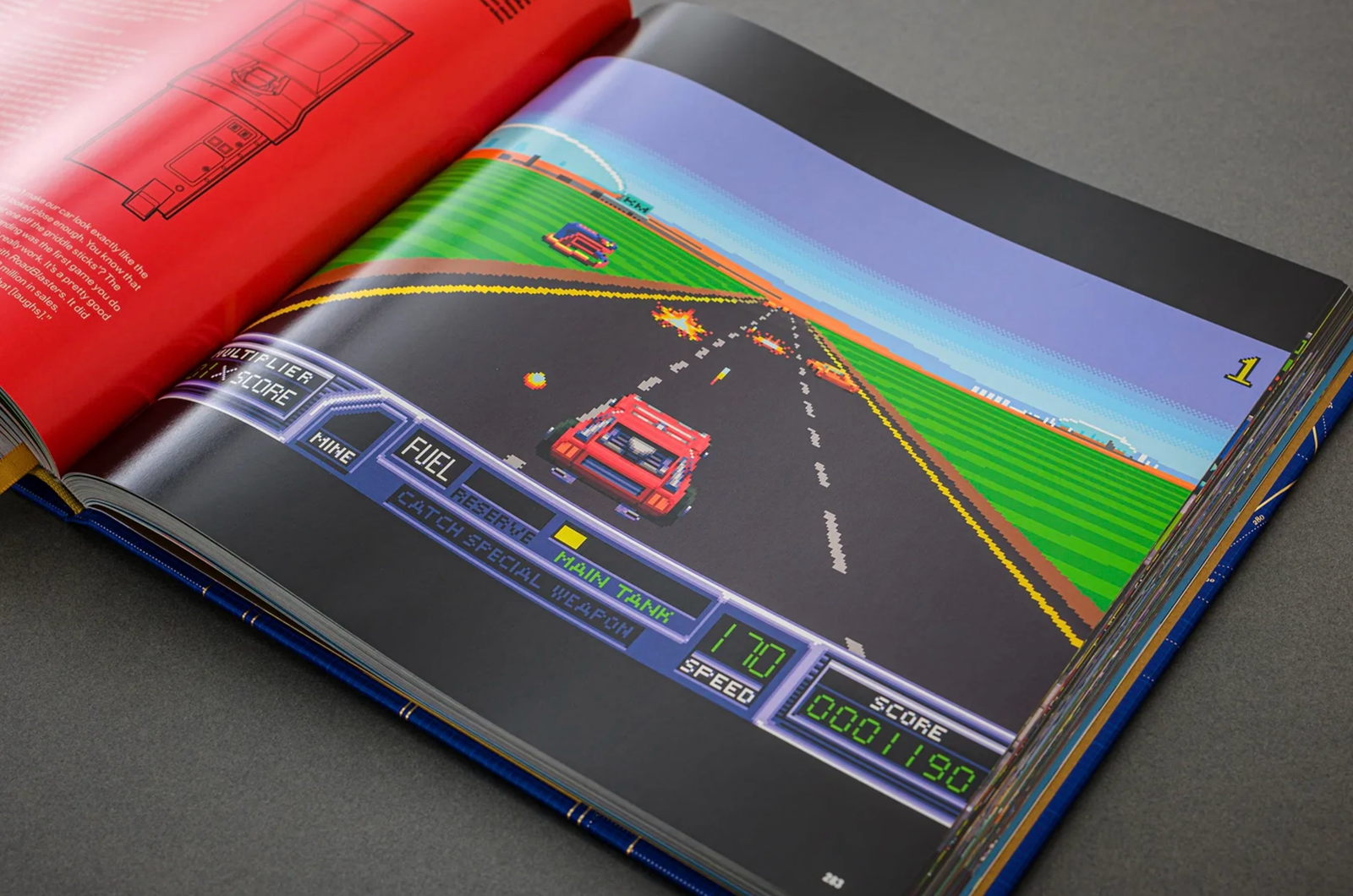
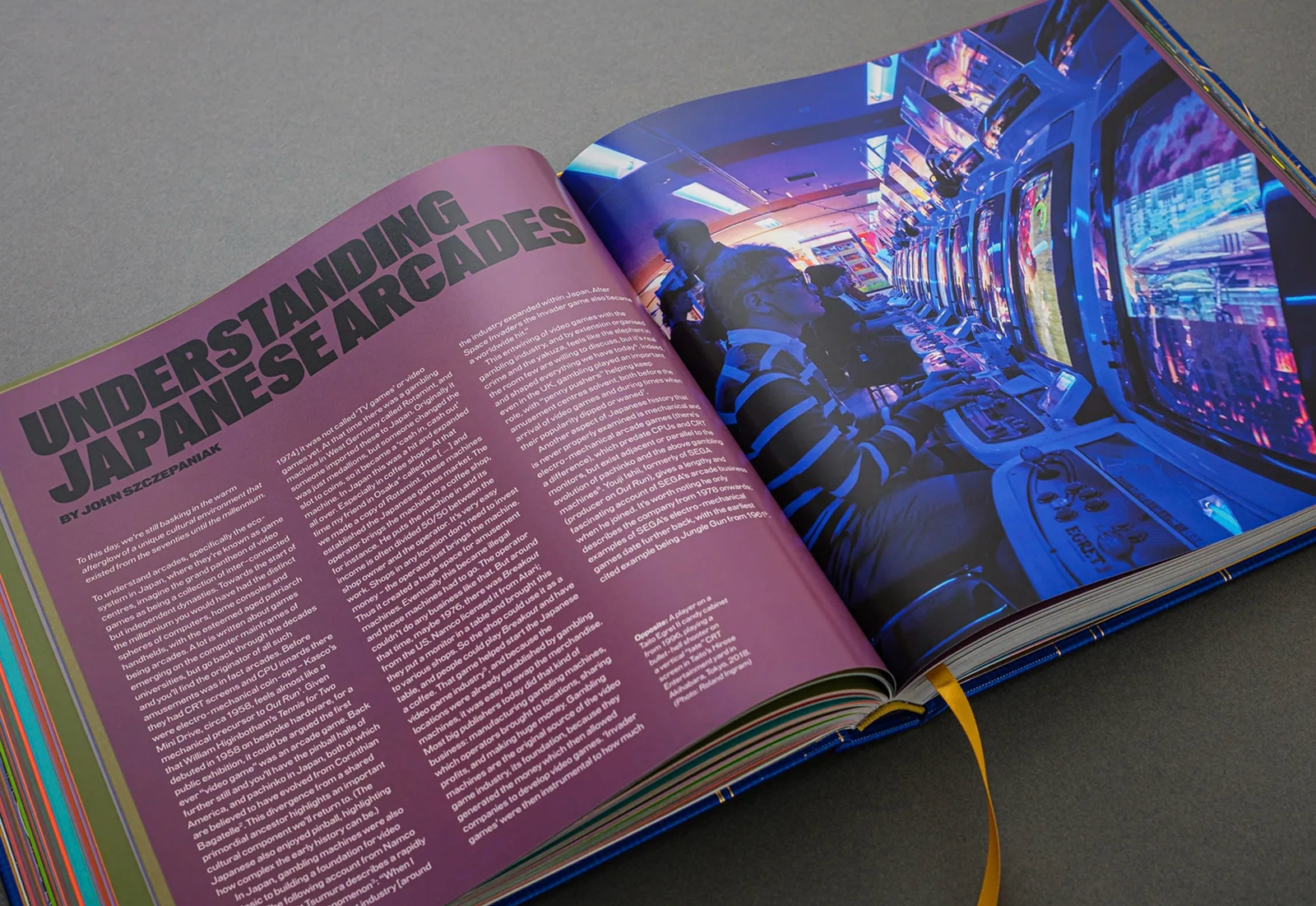
The physical choices follow the premise. Bitmap specifies a sewn binding so the book opens flat, a practical detail for a title built around reproduced paper such as sketches, scribbles on graph paper and design notes. The cover carries a foil-blocked show, and a series of arcade cabinet drawings inside come from Adam Rufino, the Mexican artist whose line drawings also fill Bitmap’s recent console guide. Bitmap also lists edge-to-edge lithographic printing, shrink-wrapped copies and a volumetric weight of 2.5 kilograms. The publisher itself began in 2014 with a Commodore 64 Kickstarter run by graphic designer Sam Dyer, and has since built a catalogue of view led retro gaming titles. This is not its first arcade book: ARTCADE collected restored marquee, side panel and cabinet art, and The Arcade 1971-1999 swaps images of the finish machines for the documents and testimony behind them.
stir
Drury has said that many coin-op books lean on nostalgia and photographs of cabinets, and that he wanted the opposite: the challenges, accidents and eureka moments behind each game, since “each one began as a vague idea in someone’s head.” The book is built to deliver that, with each of its 120 entries centred on a creator’s own account. Arcade games were what introduced Drury to video games, and he argues that standing in front of a hulking machine, showing off in public, offers a thrill that home play cannot reproduce.
The range is wide. The entries span Computer Space, from 1971, and games such as Street Fighter II and Mortal Kombat, all the way to Dance Dance Revolution, a rhythm game from the late 1990s. Bitmap’s pitch rests on the idea that arcades once set the pace, with home computer and console games spending decades trying to match the originals.
Drury’s credentials for the job are long. A contributor to Retro Gamer since the magazine launched in 2004, he has also written extensively for Edge, and he is a senior lecturer at Nottingham Trent University alongside his journalism. Bitmap’s contributor list names close to one hundred people, among them the makers of Breakout, Space Invaders and Pac-Man, plus guest writers and researchers. Frank Gasking, who runs the lost-games catalogue Games That Weren’t, is among the guest contributors, and Drury says fellow writers Martyn Carroll, the Retro Gamer features editor, and John Szczepaniak, author of a history of Japanese game developers, handled almost all of the Japanese entries between them.
Not every interview is new. About twenty were first conducted for features in Retro Gamer and Edge and are reused here with permission. Others came from tracking down people Drury had never spoken to, which in turn led him to games he had not previously covered.
The inclusion rule is strict. Bitmap’s FAQ explains that a title appears only if Drury was able to track down and interview at least one of its original creators, which is why plenty of much-loved machines are missing, and why the publisher is already talking about a second volume. Bitmap is explicit that this makes the book more than a collection of the most popular arcade games.
flow
A good share of the paper comes from Rochester, New York, where The Strong National Museum of Play holds the Atari Coin-Op Division corporate records, a collection that runs to 600 linear feet of game design documents, memos, focus group reports, cabinet drawings, schematics and artwork. It covers a division that operated from 1972 to 1999, and the museum also houses the International Center for the History of Electronic Games and the World Video Game Hall of Fame. The Strong acquired the records in June 2014 from a collector, Scott Evans, and its catalogue notes dozens of binders chronicling the production of virtually every Atari coin-operated game in that span.
The museum also holds a separate set of Atari design concept sketches, acquired in August 2012, which run from 1973 to 1991 with most drawings dated 1973, 1985 and 1987. The corporate records document the division behind Missile Command, Centipede and Tempest, the early-1980s hits that, in the museum’s account, established Atari’s coin-op arm as the premier arcade manufacturer. All three are among the book’s 120 entries.
Bitmap licensed some of that material for the book. Drury says it includes early designs for the Gauntlet cabinet, hand-coloured concept art for Paperboy, and the original storyboard Atari produced for Star Wars while it negotiated the rights with Lucasfilm, all licensed from the museum. Alongside it, Drury says, is material from the games’ own makers: concept art, hand-drawn sketches, photographs from the period and design notes, often supplied by the creators themselves.
to
The archive’s dates begin in 1972, the year Atari came into being. The book starts a year earlier, with a machine its founders built for someone else. Computer Space, designed by Nolan Bushnell and Ted Dabney and manufactured by Nutting Associates, was released in 1971 and is generally credited as the first commercially available arcade video game. A similar machine, Galaxy Game, appeared around the same time at Stanford University but was never sold commercially, which is the distinction behind that billing. The game proved the idea without becoming the runaway success Nutting had hoped for, selling more than 1,000 cabinets by mid-1972 and roughly 1,300 to 1,500 in all. The pair left Nutting in June 1972 and incorporated their partnership as Atari.
Their next arcade game, Pong, began as a training exercise: Bushnell gave the job to a young engineer, Al Alcorn, partly to get him up to speed on video game design. Alcorn has said he built it in about three months, using analog circuitry since microprocessors were not yet an option. The prototype was a wooden cube covered in faux woodgrain plastic, with a screen, two knobs and a coin box. It went into Andy Capp’s Tavern in Sunnyvale, California, in 1972, a bar where Bushnell already had contacts, and the original prototype survives in the permanent collection of the Computer History Museum. After about a day, the bar’s manager called to say the machine had broken. Alcorn opened it up and found the coin box so full of quarters that it could not take any more. Bitmap’s description promises Drury’s account of what really happened on that night, one of the headline teasers it uses to sell the book.
Bushnell wrote the foreword and also offers a blurb: “Hearing the OG story is always fun.” The afterword comes from Eugene Jarvis, co-designer of Defender and Robotron: 2084 and head of Raw Thrills, the studio, founded in 2001 after the Midway shutdown, that Drury credits with keeping the coin-operated video game alive almost single-handedly for the past 25 years. Jarvis’s own path ran through Williams Electronics, where he made Defender, and then through Vid Kidz, the independent studio he formed in 1981 with Larry DeMar, his Defender co-designer. Its first game was Stargate, an enhanced Defender sequel sold back to Williams, and its next hit was Robotron: 2084. Al Alcorn and Ed Logg also contributed endorsements.
show
Ms. Pac-Man was once a man named Otto, as the book’s description teases, and the outline of that story is well documented. General Computer Corporation, a company that sold modification kits for existing arcade games, built Crazy Otto as an unauthorized enhancement kit for Pac-Man, then pitched the finished game to Midway, the American distributor of the original. While the game was in development, the company settled a lawsuit with Atari, which had objected to its earlier enhancement kit for Missile Command, and in October 1981 it agreed to hand the rights to Midway in exchange for royalties. Midway then worked with the Japanese offices of Namco to rework the game and, after a rapid run of renamings, released it as Ms. Pac-Man, the name that stuck. One of its programmers has recalled the title shifting from Crazy Otto to Super Pac-Man to Miss Pac-Man in the span of two weeks.
Q*bert has an origin story of its own. The character became known for “swearing,” an incoherent burst of synthesized speech from the machine’s sound chip, paired with a speech balloon of nonsense symbols that appears whenever he collides with an enemy. In one telling, the game began as a pyramid of cubes drawn by its artist, Jeff Lee, which a programmer hired to work on a different game asked to borrow so he could practise coding randomness and gravity. It became Gottlieb‘s most successful video game, though because Columbia Pictures owned the company at the time, the rights stayed with Columbia after it divested Gottlieb’s assets in 1984. How the character learned to swear is another of the promises Bitmap makes on the book’s behalf.
Drury points to smaller details too, the kind that only a firsthand interview surfaces. Steve Mayer, who made Atari’s Gran Trak 10, told him he knew the skid sound was right when his dog jumped up and ran to the window looking for a car. Dave Theurer, designer of I, Robot, the first commercial game with filled 3D polygon graphics, described walking through Yosemite National Park after he got his 3D engine working and realising he could now simulate a waterfall, a mountain, anything. Scott Tsumura, producer of Kung-Fu Master, mentioned in passing that he was a karate black belt and sent a photo of himself in a pose that matched the game’s hero.
fin
Time is the other pressure behind the project. Half a dozen of the people Drury interviewed for the book have already died, he says, and he warns that half of its subjects may be gone within ten years and hardly any within twenty. He has been able to return to recordings of the late Atari co-founder Ted Dabney, and the podcast he co-hosts, The Ted Dabney Experience, carries Dabney’s name and supplied further interview material. One interviewee who made early games for the arcade company Exidy died earlier this year, after speaking to Drury for the book.
Bitmap’s FAQ says a second volume is planned if the first sells well, covering more games from the same 1971 to 1999 window. Drury has named Omega Race, Splatterhouse and Jump Bug among the overlooked titles he would like it to cover, the last of them his own favourite arcade game.