Rewriting Hollywood: Artists Equity and Sony Forge a New Path for Creative Freedom

July 2, 2025
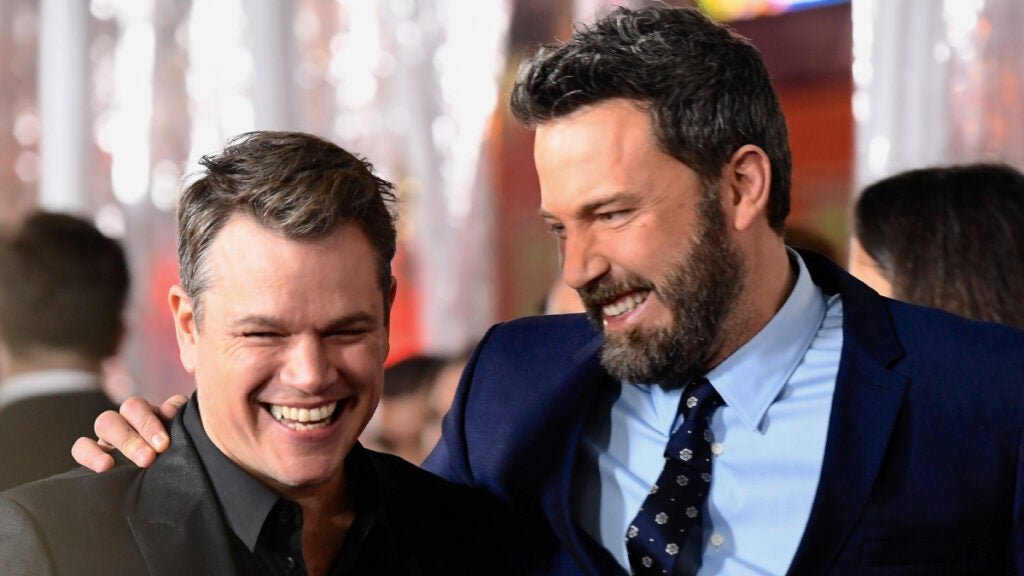
Ben Affleck and Matt Damon’s Artists Equity has made headlines again, this time for striking a significant three-year theatrical deal with Sony Pictures. Under this landmark agreement, Sony will finance and globally distribute all theatrical films developed and produced by Artists Equity. While industry insiders immediately recognized the commercial implications, the deeper significance of this deal lies in its cultural, artistic, and symbolic resonance for Hollywood at large. It represents not only a strategic business move but also an emblem of evolving creative agency, the redefinition of artist-studio dynamics, and the reawakening of mid-budget cinema.
For Affleck and Damon, this is another chapter in a long and storied partnership. Childhood friends from Cambridge, Massachusetts, the two actors came of age together in the late 1980s and early 1990s, navigating small television roles and bit parts before co-writing Good Will Hunting. Released in 1997, the film became an instant classic and earned them the Academy Award for Best Original Screenplay. Their story quickly became legend: two young, unknown dreamers writing a screenplay in a modest apartment, believing so deeply in their story that they refused to relinquish control despite repeated pressures from established producers. That same defiance and belief in artistic integrity seem to drive Artists Equity today.
After Good Will Hunting, their paths diverged as they built separate careers. Damon became a versatile leading man, balancing thoughtful dramas like The Talented Mr. Ripley with high-octane action franchises such as the Bourne series. Affleck transitioned from heart-throb status to director and auteur, with films like Gone Baby Gone and Argo, the latter winning Best Picture at the 2013 Oscars. Over the years, both experienced professional highs and personal setbacks, but their friendship endured, setting the stage for a future connection that would transcend the typical Hollywood reunion.
Artists Equity was founded in 2022 with a clear mission: to empower creators in an industry increasingly dominated by mega-franchises, risk-averse content, and algorithm-driven green-lighting. Backed by Gerry Cardinale’s RedBird Capital, the company was envisioned as a “talent-friendly studio,” emphasizing profit sharing, fair compensation, and giving filmmakers greater creative control. Damon and Affleck have often spoken about their frustrations with traditional studio systems, particularly the ways in which creators are pushed aside in favor of corporate interests. Artists Equity was conceived as a corrective — a place where artists could feel genuinely valued rather than simply instrumental.
Their first major project under this banner, Air, directed by Affleck and starring Damon, chronicled Nike’s courtship of Michael Jordan and the creation of the Air Jordan brand. Released in 2023, the film was both a commercial and critical success, grossing around $90 million worldwide and earning widespread acclaim for its smart script and authentic performances. Air’s success demonstrated that stories grounded in character and nuance could still resonate in a landscape dominated by superhero spectacles and endless reboots.
While Air was distributed in partnership with Amazon Studios, the new deal with Sony signals a deliberate shift toward traditional theatrical experiences. This decision is significant. In an era when many studios have pivoted to streaming-first strategies, Artists Equity and Sony are doubling down on the power of the big screen. The move suggests a confidence in audiences’ enduring appetite for cinema as a communal, immersive event rather than a background distraction on a tablet or smartphone.
Sony, for its part, is one of the few major studios that has resisted launching its own proprietary streaming service, instead focusing on theatrical releases and strategic partnerships. By aligning with Artists Equity, Sony reinforces its commitment to supporting filmmaker-driven projects and diverse storytelling. Tom Rothman, chairman of Sony Pictures, described Damon and Affleck as “two of the best actors and filmmakers of their generation,” emphasizing their integrity, intelligence, and creative courage.
The specifics of the deal allow Artists Equity to co-finance certain projects, retaining creative autonomy while benefiting from Sony’s global marketing and distribution infrastructure. This hybrid model offers a unique middle ground: the creative freedom of independent filmmaking with the reach and resources of a major studio. For an industry in flux, where many mid-budget films struggle to find space between micro-budget indies and tentpole blockbusters, this could serve as a blueprint for sustainable, artist-first production.
The symbolic value of this deal cannot be overstated. It represents a reclamation of creative power in a town historically defined by rigid hierarchies and opaque financial structures. For decades, directors and writers fought to secure final cut privileges or backend profit participation, often losing out to studio executives and boardroom accountants. Artists Equity turns this dynamic on its head by explicitly prioritizing creators at every stage of production. By doing so, it echoes the creative revolutions of previous eras, such as the 1970s New Hollywood movement, when filmmakers like Scorsese, Coppola, and Altman pushed back against studio control to create more personal, risk-taking films.
The commitment to profit sharing is especially noteworthy. Hollywood accounting is infamous for turning profitable films into supposed “losses” on paper, allowing studios to avoid paying artists their fair share. By committing to transparent profit-sharing structures, Artists Equity seeks to dismantle these exploitative practices and set a new industry standard. In this context, the Sony deal is not just a financing agreement — it is a manifesto.
Looking forward, the potential projects under this new partnership offer tantalizing possibilities. With Damon and Affleck’s wide-ranging interests — from taut thrillers and heartfelt dramas to documentaries and genre experiments — the slate is likely to be diverse and daring. Already, Artists Equity has announced several upcoming projects, including The Instigators, a heist comedy starring Damon and Casey Affleck, and Small Things Like These, a 1980s-set Irish drama starring Cillian Murphy. There are also rumors of new sports-themed stories and intimate character studies that continue the thematic legacy of Air.
Beyond narrative films, Artists Equity has invested in documentaries and non-fiction storytelling, an area often overlooked by large studios. Their documentary Kiss the Future, about U2’s 1997 concert in Sarajevo and the Bosnian War, illustrates their commitment to meaningful, socially resonant stories. With Sony’s global distribution reach, such projects can find larger audiences and greater impact, potentially revitalizing the market for serious, issue-driven documentaries.
The timing of this deal aligns with a broader cultural re-evaluation of what audiences want from cinema. After years of pandemic disruptions and an overabundance of mediocre streaming content, many viewers have rediscovered the pleasure of going to a theater, experiencing stories collectively in a darkened room. Recent box office successes of non-franchise films, from Oppenheimer to Everything Everywhere All At Once, suggest that audiences are hungry for original voices and ambitious storytelling. The Artists Equity-Sony partnership stands to meet this demand, offering films that are both artistically compelling and commercially viable.
Nevertheless, challenges remain. As Artists Equity scales up, maintaining its core ethos will require vigilance. The temptation to chase purely commercial projects at the expense of creative risk is ever-present, especially when large budgets and global marketing campaigns come into play. Affleck and Damon’s personal involvement and oversight will be crucial in safeguarding the company’s vision and preventing mission drift.
Moreover, the question of succession and institutional legacy looms. While the company currently thrives on the star power and leadership of its founders, building a sustainable infrastructure that empowers future generations of artists will determine its long-term impression. The hiring of seasoned executives like former Paramount COO Andrew Gumpert as Artists Equity’s president suggests an awareness of these challenges and a proactive approach to addressing them.
From a cultural standpoint, the deal also symbolizes a return to the idea that films can be both art and entertainment — a space where complex characters, moral ambiguity, and real emotional stakes coexist with box office ambitions. In many ways, it feels like a rebuke to the cynicism that has crept into parts of the film industry, where intellectual property franchises and formulaic content often overshadow originality and daring.
The partnership between Artists Equity and Sony invites us to imagine a different Hollywood, one where creators are not just employees but true partners, where stories matter as much as profits, and where art and commerce can coexist without either losing its soul. It is an idealistic vision, to be sure, but one grounded in the lived experiences and hard-won lessons of Affleck and Damon, two artists who have spent decades navigating — and often resisting — Hollywood’s shifting tides.
Their story, from the shared Boston apartment to Oscar triumph, from personal reinvention to founding Artists Equity, embodies the very themes they champion: resilience, authenticity, and creative courage. The Sony deal is not merely another business contract but the latest chapter in a larger narrative arc that speaks to the enduring power of storytelling and the necessity of artistic agency.
In a sense, this new partnership is an extension of the promise made with Good Will Hunting: that it is possible to hold on to your vision, to fight for your story, and to share it with the world on your own terms. Almost three decades later, Affleck and Damon continue to make good on that promise — only now, they are doing so at a scale that might influence the entire industry.
Related Articles

France Just Banned Social Media for Kids Under 15, and the Fight Over Anonymity Is Only Getting Started
France becomes the first EU nation to bar under 15s from social platforms, and critics […]