Mettle vs. Metal: What a Robot’s Record-Breaking Run Means for Human – Beijing

April 20, 2026
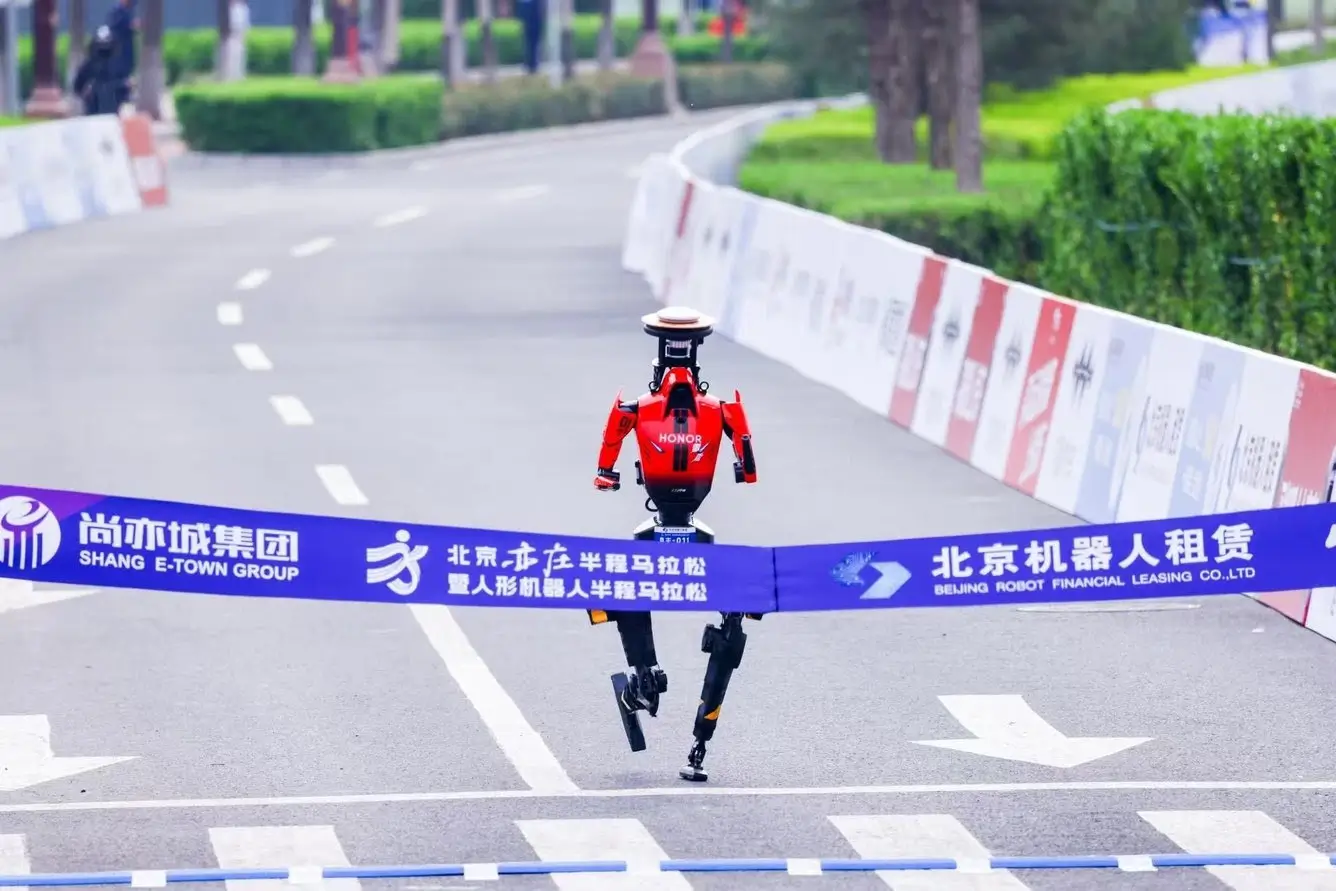
On April 19, 2026, in the industrial expanse of Beijing’s Economic-Technological Development Area, something quietly irreversible took place. There were no theatrics to mark it—no spectacle beyond the steady, mechanical cadence of engineered limbs striking pavement. Yet within that rhythm, a threshold was crossed.
A humanoid robot—Lightning—completed a half-marathon distance in a time that surpassed elite human performance benchmarks. What unfolded was not simply a race. It was a recalibration of what performance itself means.
For generations, distance running has stood as a distilled measure of human capability: endurance, efficiency, discipline, and willpower converging into a single metric—time. Records were more than numbers; they were cultural markers, evidence of the outer edge of human potential. But in Beijing, that edge was not extended. It was bypassed.

flow
To effectively absorb the magnitude of this moment, it helps to recall how recent this progress is. The previous iteration of the same event, held in 2025, functioned less as competition and more as proof of concept. Robots completed the course, but their times lagged far behind human runners, often requiring extensive intervention. Movement was unstable, endurance inconsistent, and autonomy limited.
That version of the race was about possibility.
The 2026 edition was about execution.
Participation expanded dramatically, with dozens of teams fielding humanoid machines designed not just to finish, but to compete. Thousands of human runners shared the same course, collapsing any symbolic divide between organic and engineered performance. The visual result was striking: flesh and circuitry operating within the same spatial and temporal framework, yet governed by entirely different principles.
What changed was not incremental refinement, but systemic advancement. Hardware matured. Software stabilized. And most critically, autonomy improved.
show
Lightning’s performance was not an anomaly—it was the result of deliberate, integrated design.
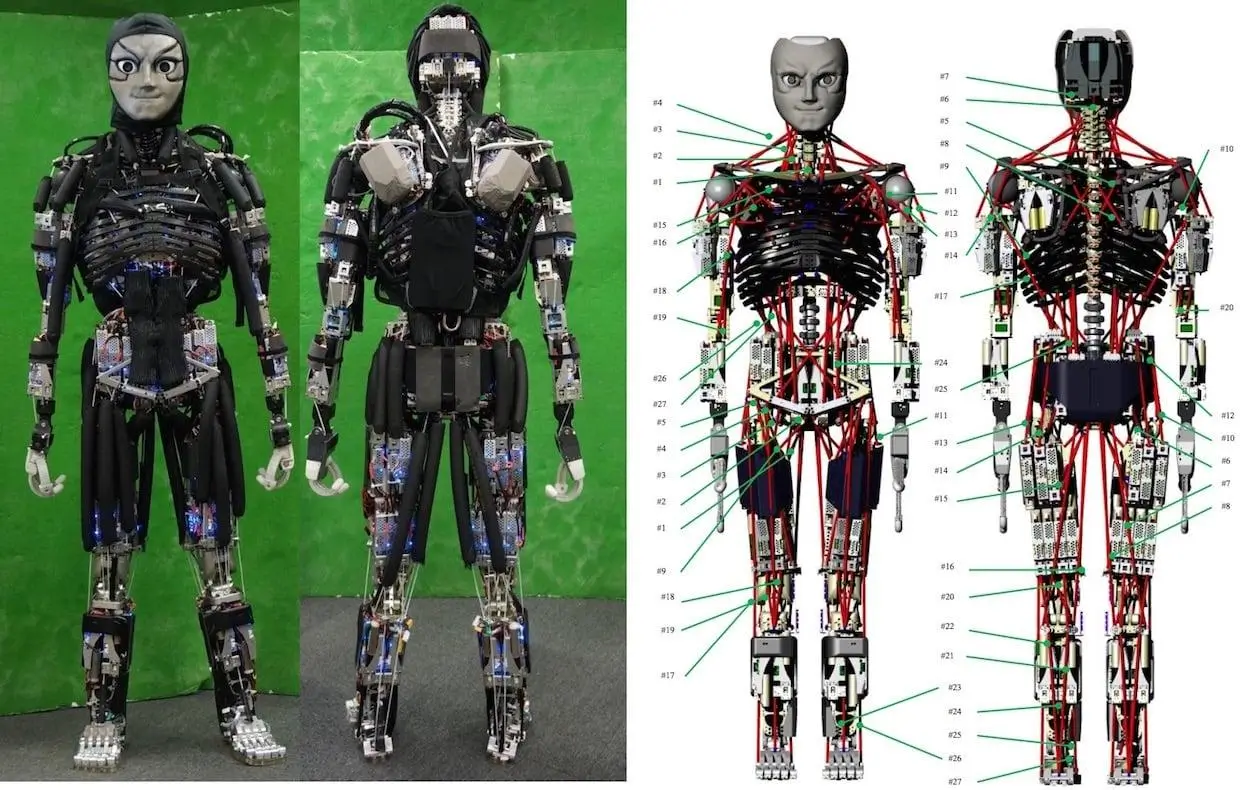
Built to approximate human proportions, the robot’s architecture emphasizes stride efficiency and balance through a network of bionic joints optimized for repetitive motion under sustained stress. Thermal management—long a constraint in robotics—was addressed through internal cooling systems, enabling prolonged high-output activity without degradation.
But the defining breakthrough lies in its operational intelligence.
Lightning does not merely execute pre-programmed steps. It interprets its environment in real time, adjusting stride, balance, and trajectory through a fusion of sensory inputs—visual mapping, spatial awareness, and inertial feedback. These inputs are processed continuously, allowing the system to respond dynamically to changing conditions.
This distinction matters. Speed alone would signal progress. Autonomy signals transformation.
challenge
For decades, athletic records have functioned as stable cultural references—clear indicators of human limitation and achievement. They were universally legible: faster meant better, and better meant human progress.
Lightning complicates that logic.
A machine does not train in the human sense. It does not experience fatigue, doubt, or psychological resistance. Its improvements are not earned through discipline, but engineered through iteration. Yet the outcome—measured purely in time—is directly comparable.
This creates a paradox.
If a robot can outperform a human in a domain defined by physical endurance, what exactly is being measured? And more importantly, what remains uniquely human within that measurement?
The race did not just produce a new record. It destabilized the meaning of records themselves.
issue
Despite the headline achievement, the race itself resisted any narrative of seamless technological dominance.
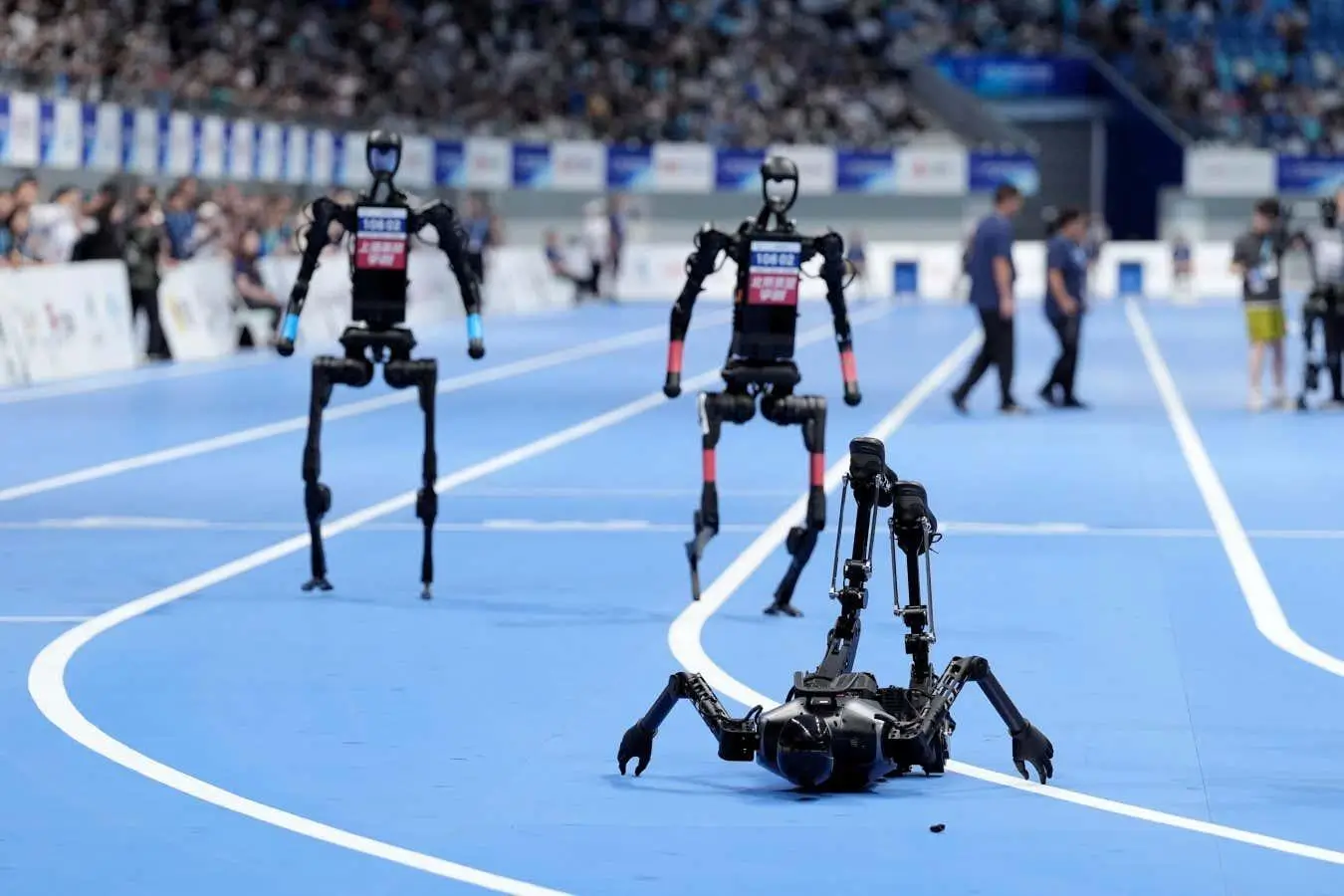
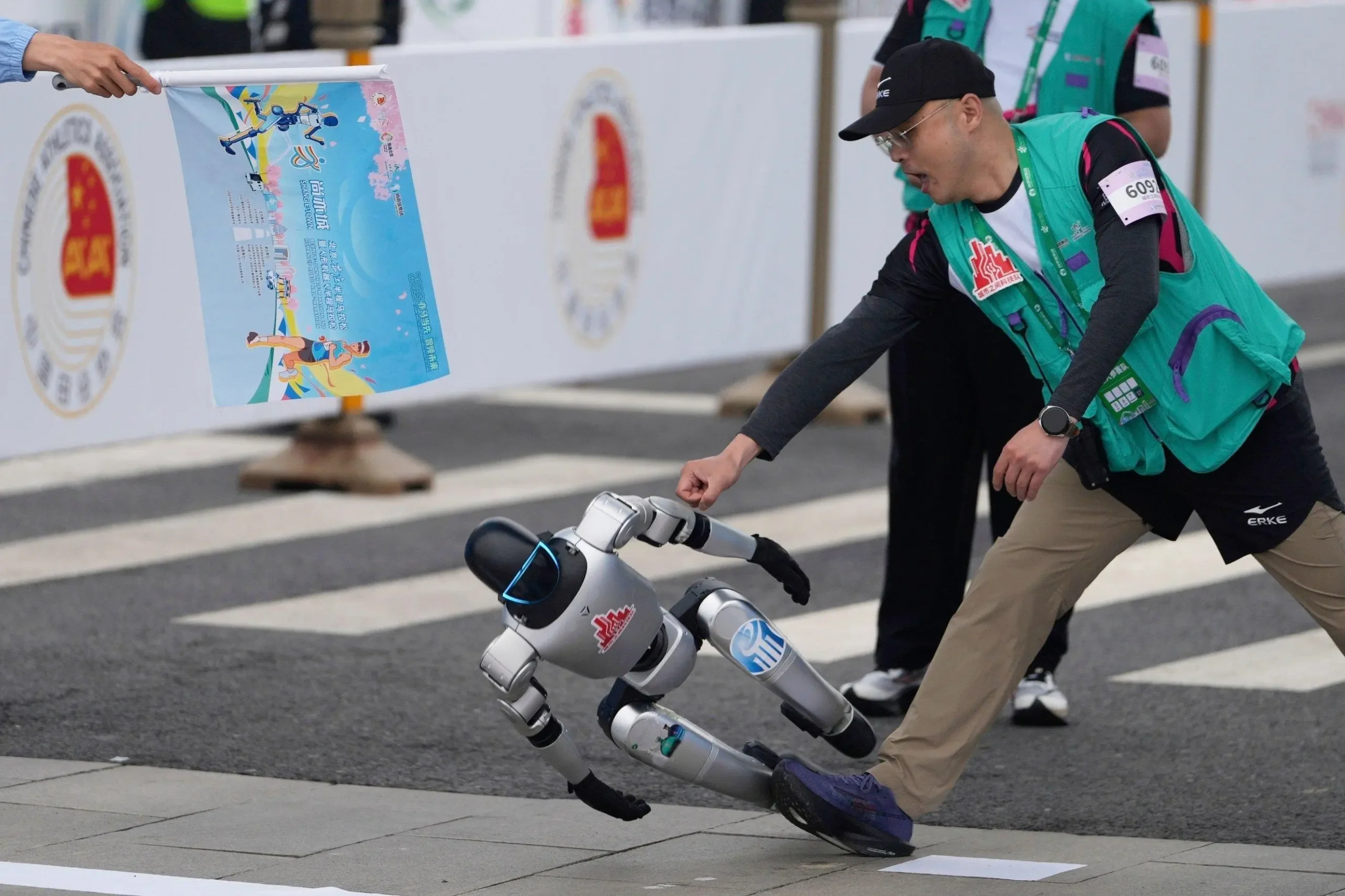
Robots stumbled. Some failed entirely. Others required intervention. Machines veered off course, lost balance, or shut down mid-run. Engineers remained close, ready to assist, recalibrate, or retrieve.
These moments are not incidental—they are essential.
They reveal that progress in robotics remains iterative and dependent. For every fluid stride, there exists a moment of correction. For every successful system, there are dozens that falter. The presence of human oversight—visible and necessary—reminds us that autonomy, while advancing, is still bounded.
What the race demonstrated was not perfection, but direction.
a learn
Lightning is not only a technological achievement; it is an educational framework in motion.
Its construction integrates multiple disciplines: mechanical engineering, artificial intelligence, thermodynamics, and systems design. As such, it functions as a living case study—one that translates theoretical principles into observable outcomes.
Educational institutions are already adapting. Curricula increasingly emphasize embodied intelligence—systems that interact physically with the world rather than exist purely in software. Data generated from events like this race—performance metrics, energy efficiency, failure points—becomes material for analysis, experimentation, and learning.
But technical instruction alone is insufficient.
As machines approach and surpass human capabilities in specific domains, education must also incorporate ethical reasoning. Students must engage with questions of labor displacement, accessibility, and value. Building the system is only part of the task. Understanding its impression is equally critical.
range
The implications of this race extend well beyond athletics.
A machine capable of sustaining a half-marathon pace demonstrates more than speed—it demonstrates endurance, balance, and adaptability. These are not abstract qualities; they are foundational requirements across multiple industries.
Logistics, construction, emergency response, and healthcare all rely on physical consistency under variable conditions. The technologies validated in Beijing—sensor fusion, real-time adjustment, energy management—are directly transferable to these sectors.
In this sense, the race was not a spectacle. It was a proof of readiness.
As humanoid robotics continues to evolve, the conversation shifts from capability to integration. The central question is no longer whether these machines can operate in real environments, but how they will be deployed—and under what social and economic conditions.
a scope
At its core, the Beijing race forces a cultural reassessment.
Do we interpret this moment as competition, or as augmentation?
Sport has historically functioned as a celebration of human limitation—the idea that constraint gives meaning to achievement. Machines disrupt that premise by introducing performance unconstrained by biology.
One response is separation: distinct categories, preserving human competition as a protected space.
Another is integration: hybrid formats where human and machine performance coexist, interact, or even collaborate.
Each approach reflects a broader value system. What we choose will shape not only sport, but our broader relationship with technology.
The 2026 humanoid robot half-marathon is underway in Beijing, and the first robot has already crossed the finish line!🤖
The moment feels a bit unreal, like witnessing the future happening early.
Who do you think will take first place? 🥇 pic.twitter.com/wBrS72Rih3
— CGTN (@CGTNOfficial) April 19, 2026
reflect
There is a qualitative difference between a machine generating text and a machine outperforming a human body.
The latter is immediate. It is view. It is difficult to abstract.
Running is not merely mechanical output—it is lived experience. It involves fatigue, rhythm, breath, and internal negotiation. When a machine surpasses human capability in this space, it challenges more than performance metrics. It challenges identity.
And yet, a boundary remains.
Lightning does not experience its run. It does not attach meaning to its outcome. It does not reflect on its performance.
In that absence, something distinctly human persists—not the ability to perform, but the ability to interpret.
adaptation
The response to technological advancement often oscillates between optimism and concern. But the more productive approach is structural.
Transparency must come first. Data, methods, and findings should be shared openly to ensure that progress remains inclusive rather than concentrated.
Second, connection should replace opposition. Machines are most effective not as replacements, but as extensions—tools that enhance human capability rather than erase it.
Finally, success must be redefined.
A record, in isolation, is no longer sufficient. Context—how that record is achieved, and by whom—matters. Meaning matters.
Lightning’s performance is not just a faster time. It is a catalyst for rethinking what achievement represents in a world where machines can exceed human limits.
close
The image of a robot crossing a finish line ahead of human runners will endure. It is too symbolically potent to fade quickly. But its significance lies not in the image itself, but in what follows.
In classrooms, it becomes a case study. In industry, a benchmark. In society, a question.
Technology has always extended human capability. What feels different now is immediacy. The convergence between human and machine performance is no longer theoretical—it is observable, measurable, and present.
And yet, the central question remains unchanged:
Not what machines can do—but what we choose to become alongside them.
Related Articles

A 1.2 Million Pound Machine Is Making Grown Men Cry, and Nobody Warned the Midwest
Union Pacific’s Big Boy No. 4014 is deep into a coast to coast tour, and […]