DRIFT AUDIO
Listen to this story
Choose a voice, then press play.
At 3,020 metres above sea level, Rolex and Bucherer have turned a decommissioned Alpine telecoms tower into the world’s highest watch boutique.
In This Story
- Perched Atop Mount Titlis
- From Telecoms Mast to Alpine Landmark
- Inside the World’s Highest Rolex Boutique
- Getting There Is Half the Point
- Part of a Bigger Bucherer Strategy
If you’ve ever wanted to take luxury shopping to new heights, Rolex has you covered. The Swiss watchmaker has unveiled the world’s highest watch boutique, perched atop Mount Titlis, where panoramic alpine views come as standard with your next timepiece.
Yes, that’s right: the boutique sits at an altitude of around 3,020 metres (9,908 feet). Operated by Bucherer, which was acquired by Rolex in 2023, the boutique forms part of the redevelopment of the Titlis Tower by renowned architectural firm Herzog & de Meuron. Inside, the space reflects Rolex’s familiar design language, bringing the brand’s refined aesthetic to one of the world’s most extraordinary retail settings.
But there’s another catch: visitors can only reach the boutique via the mountain’s cableway system from Engelberg, including the famous TITLIS Rotair revolving cable car, turning a visit into as much of an alpine experience as it is a luxury shopping trip.
View this post on Instagram
stir
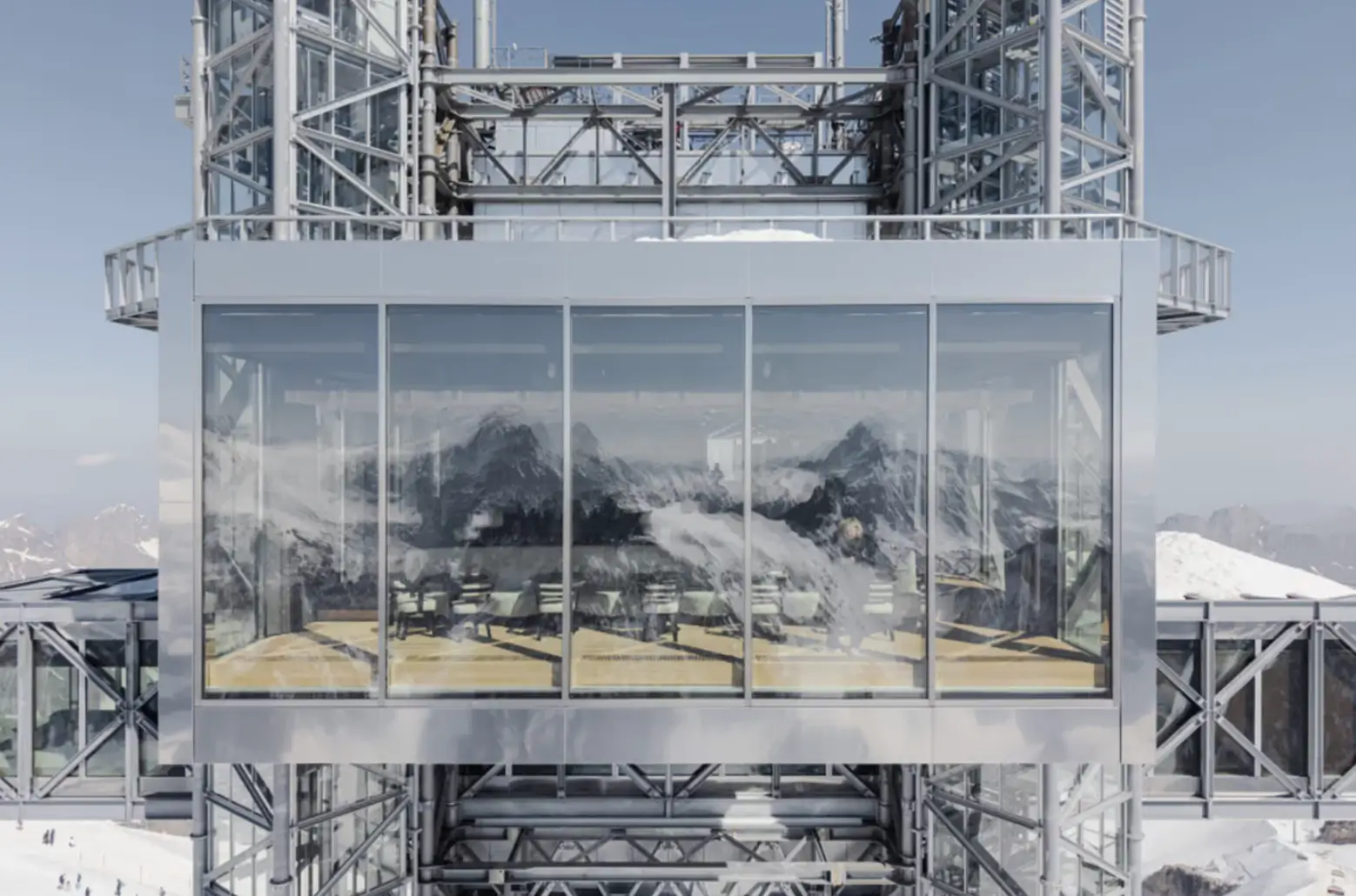
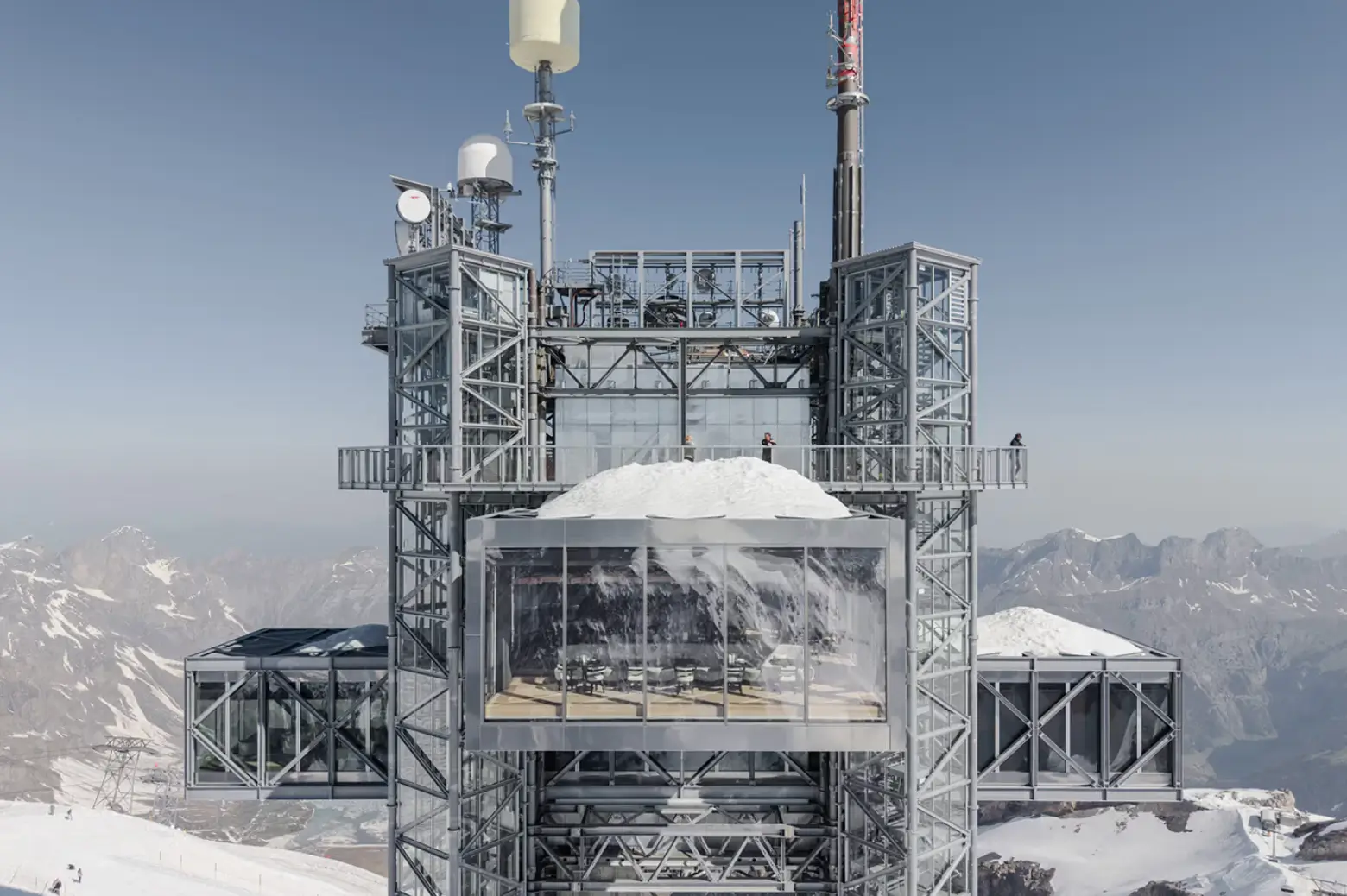
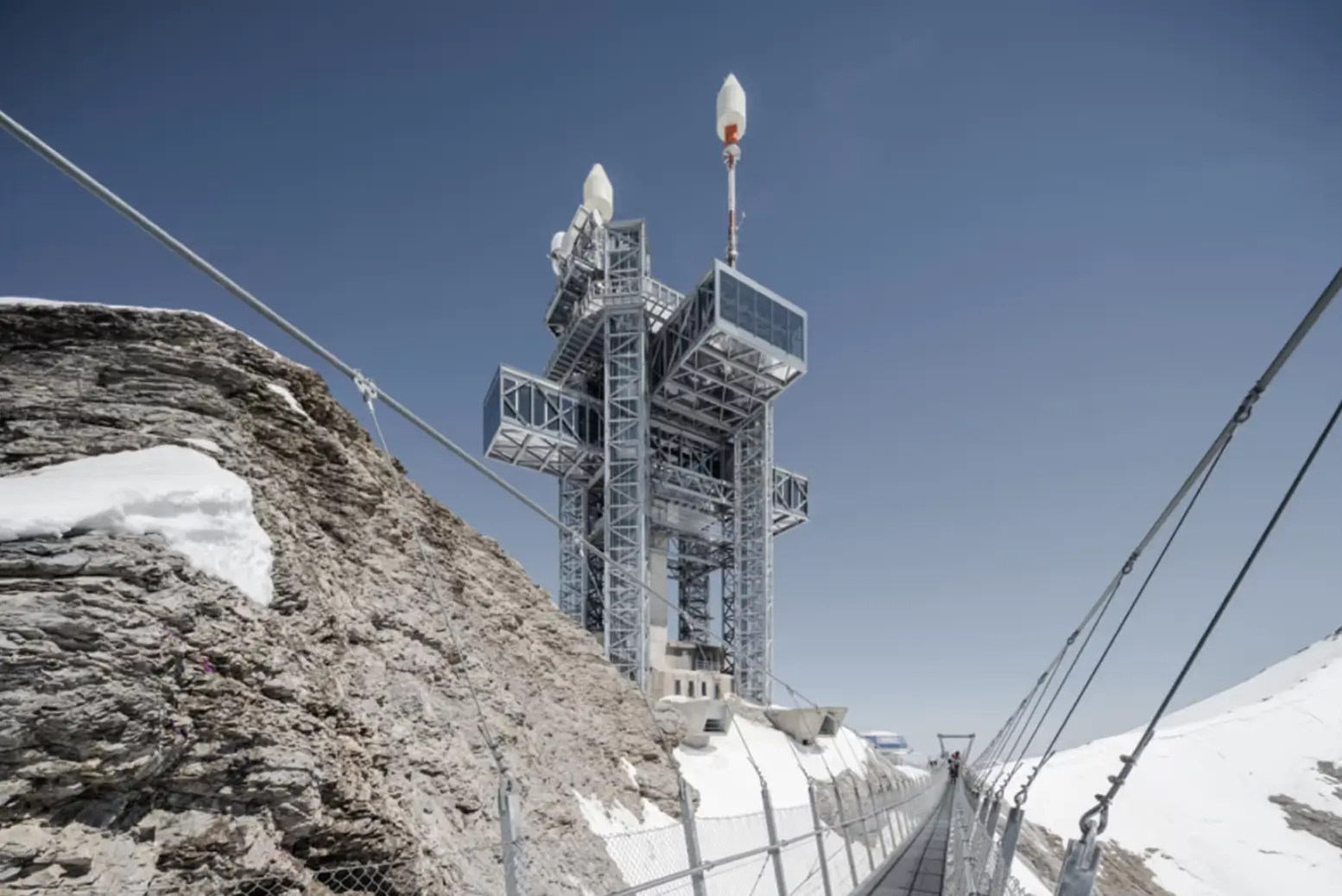
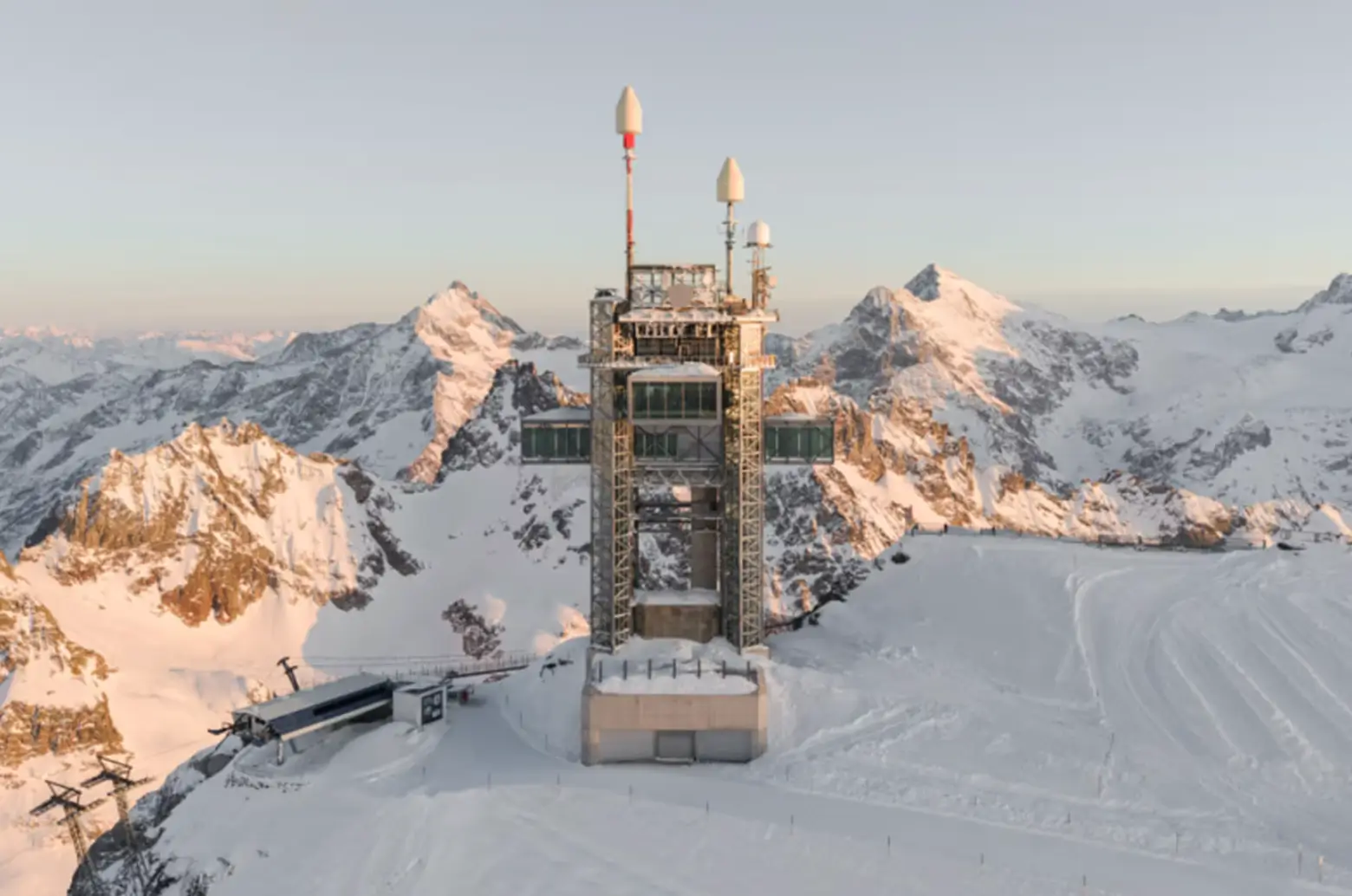
The boutique’s setting is arguably as much the story as the watches themselves. The Titlis Tower began life in the 1980s as a 56-metre telecommunications mast, anchored deep into the mountain’s limestone and built around a steel framework designed to withstand extreme alpine exposure. Rather than demolish it, Herzog & de Meuron — the Pritzker Prize-winning Swiss firm behind London’s Tate Modern, Munich’s Allianz Arena, and Beijing’s “Bird’s Nest” Olympic Stadium — chose to rebuild through it, inserting two horizontal glass-and-steel volumes directly through the existing lattice structure. The result forms a cross shape when viewed from above, an effect co-founder Jacques Herzog has described as reading “more James Bond than mountain hut.” Pierre de Meuron, the firm’s co-founder, has framed the project as marking “a shift from purely functional structures towards a new generation of Alpine architecture.”
The tower opened to the public at the end of May 2026, with restaurants and hospitality facilities — including a roughly 140-seat fine-dining restaurant — following in early June, ahead of the Rolex boutique’s own reveal shortly after. The tower forms the centrepiece of a wider redevelopment of the Titlis summit that will continue through to 2029, when a new Peak Station and the broader Titlis Connect cableway project are expected to be completed, further upgrading access to the mountain. A new viewing platform, the Horizon Deck, sits 55 metres above the glacier and offers sightlines that, on a clear day, reach across the Swiss Plateau toward Italy, Germany, and France.
View this post on Instagram
Structurally, the conversion is a fairly unusual piece of engineering in its own right. Because the original mast’s exposed position more than 3,000 metres above sea level meant it had to withstand extreme wind loading and temperature swings, its steel framework was anchored deep into the surrounding limestone via a concrete base — infrastructure Herzog & de Meuron’s team retained and built around rather than replaced. The two new glass-and-steel volumes were then threaded horizontally through that original lattice, supported by four new vertical circulation cores, producing the cross-shaped silhouette that now defines the summit’s skyline. Seen from the valley below, the tower reads less like a conventional mountain-top building and more like a piece of hovering geometry set against the snowline — an effect the architects appear to have leaned into deliberately, given how central that “floating” quality is to the tower’s marketing as a visitor destination in its own right.
Building at more than 3,000 metres came with its own set of logistical headaches. Dennis Mildenberger, Bucherer’s Global Director of Store Design & Planning, has described the project’s central lesson bluntly: “The mountain sets the rules — and you quickly learn to respect them.” Every delivery to the site, including construction materials, had to be transported by cable car, with the entire boutique build running from November 2025 to May 2026 around narrow weather windows and tightly sequenced installation schedules.
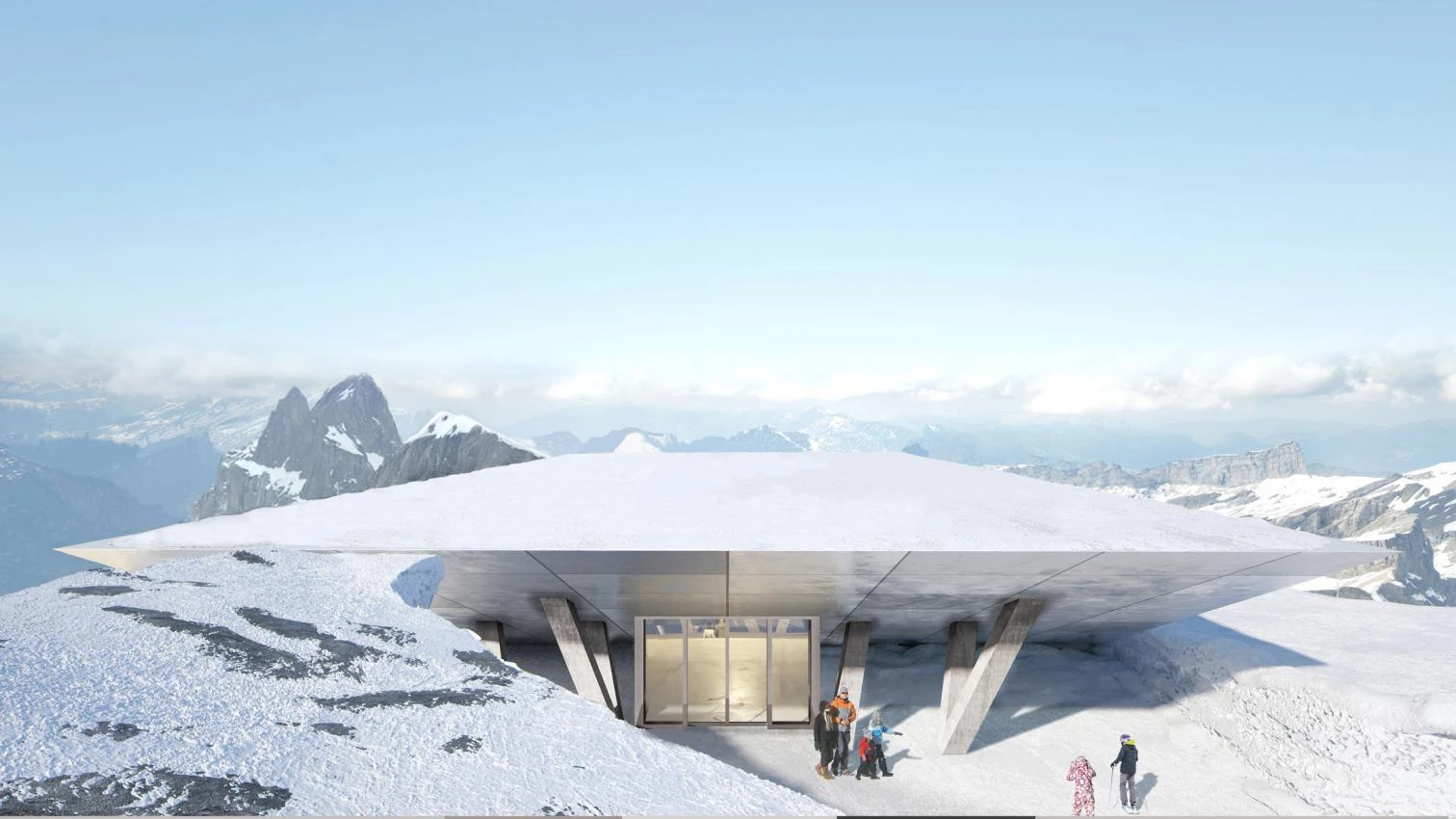
Sleek mountain architecture blends into the snowy alpine landscape, offering a contemporary gateway framed by breathtaking panoramic peaks.
in
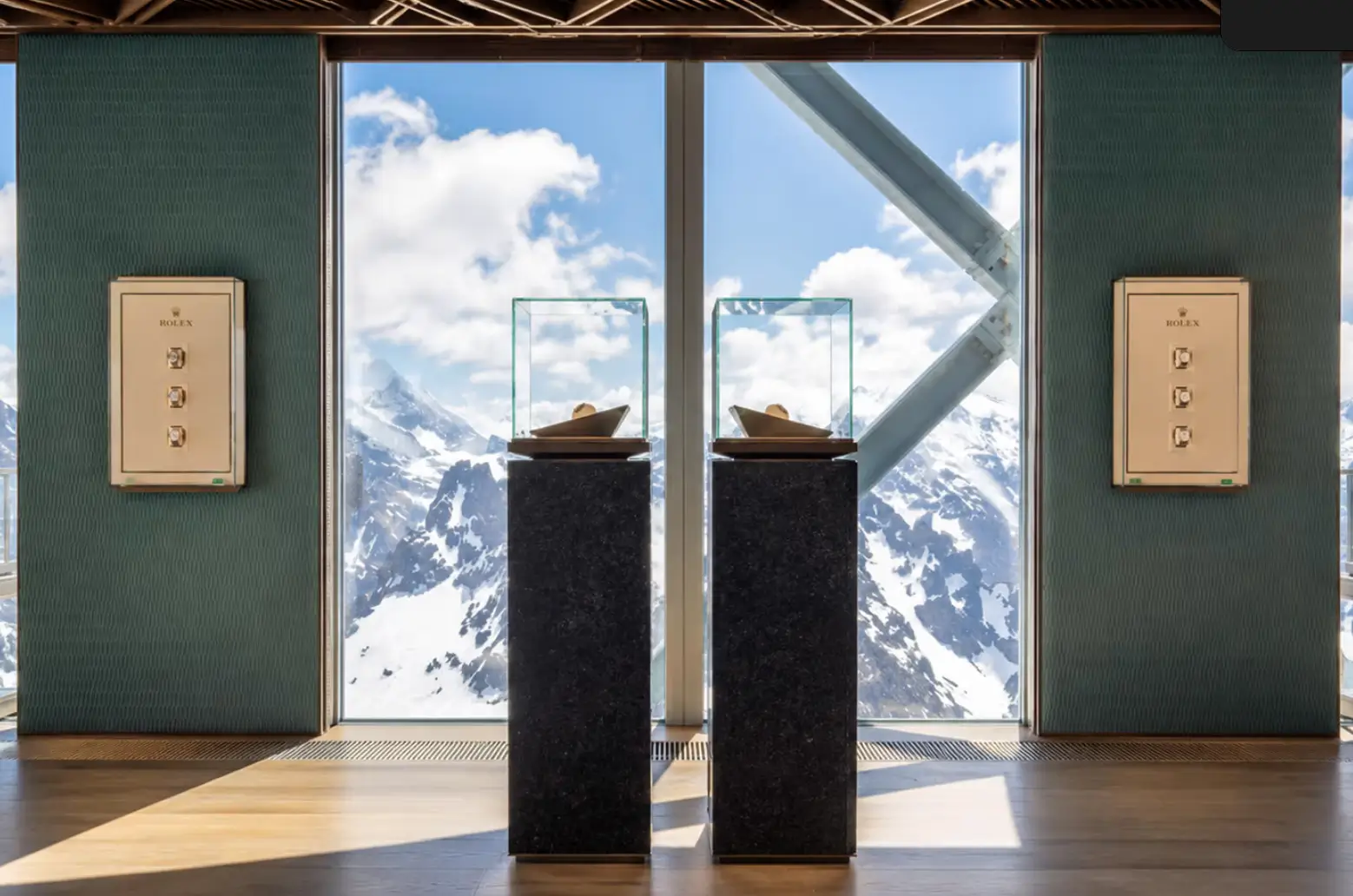
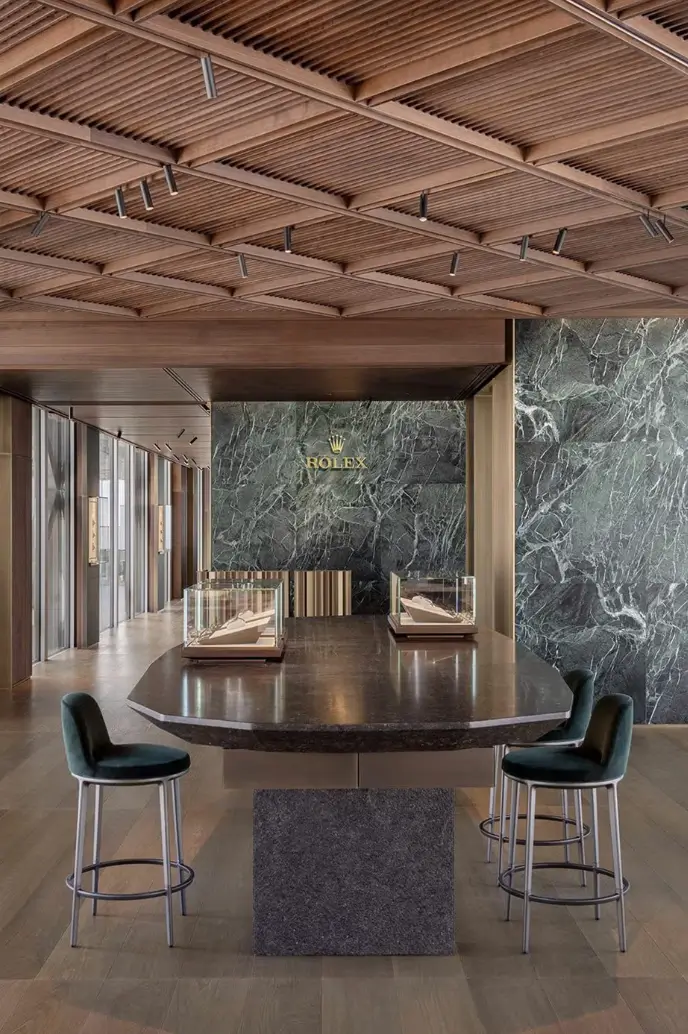
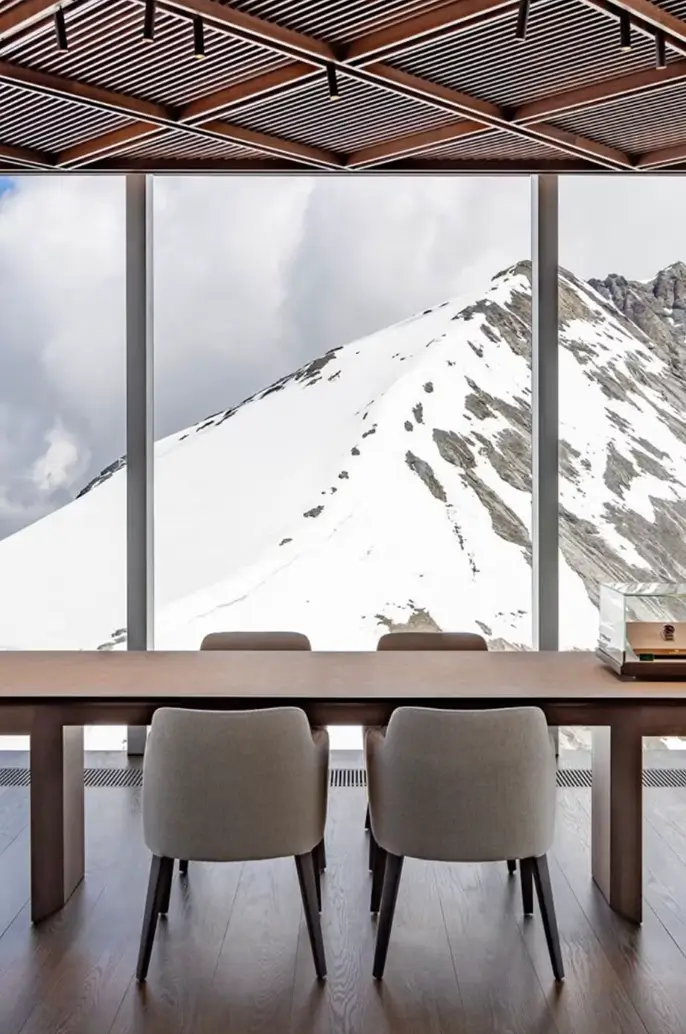
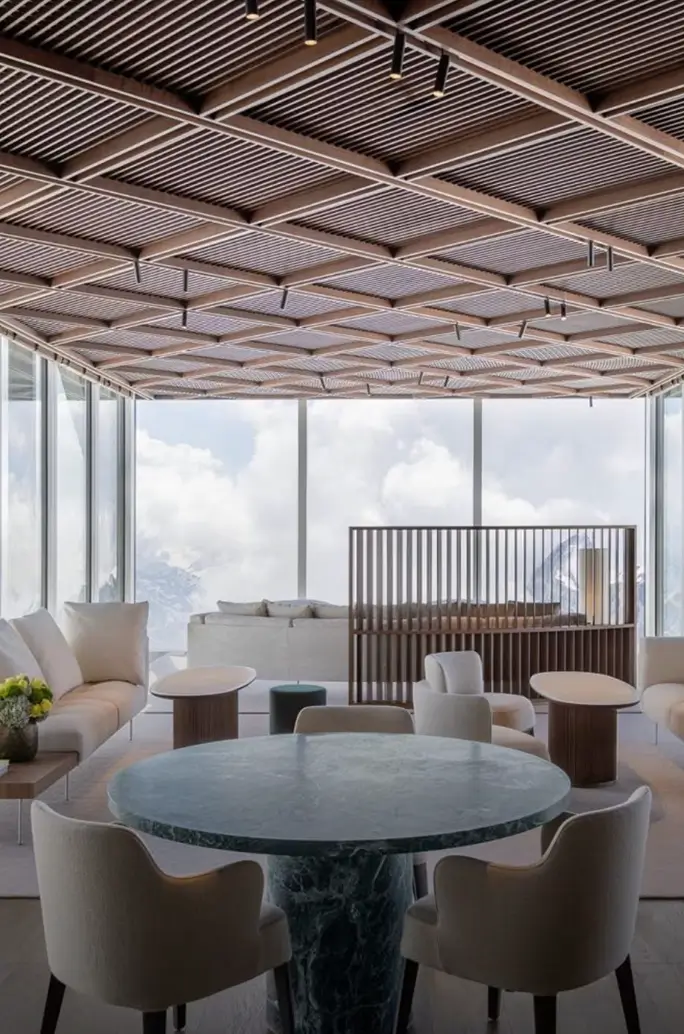
Housed on the tower’s sixth floor, the boutique itself occupies a relatively intimate 200 square metres (roughly 2,150 square feet), designed by Rolex’s in-house architecture team working alongside Bucherer. Floor-to-ceiling glazing dominates the space, with Herzog & de Meuron’s design maximising the alpine panorama on every side — a deliberate choice that keeps the view, rather than the display cases, as the room’s focal point. Product display is kept minimalist by watch-retail standards, with most of the floor space given over to casual seating rather than dense rows of vitrines, encouraging visitors’ attention to drift between the watches on show and the glacier beyond the glass.
The material palette leans into Rolex’s now-familiar boutique language: a Verde Alpi marble wall, its veining lit to evoke movement reminiscent of the ocean and the brand’s diving heritage, paired with American walnut panelling, smoked oak flooring, and seating finished in green velvet, leather, and neutral beige fabric. At the centre of the room sits a hand-sculpted natural stone table, left raw on one side and polished smooth on the other, functioning as much as a sculptural anchor as a functional display surface. Details extend to window surrounds with a fluted motif directly referencing the bezel of classic Rolex models, hand-crafted display-case hardware, and individual walnut presentation boxes for each watch. The boutique showcases a curated selection of Rolex’s Classic and Professional model families, in the same Geneva-conceived retail format used across Bucherer’s other Rolex spaces worldwide — though, notably, popular sports references remain allocation-only here, exactly as they are in Geneva, London, or New York.
That combination of restraint and craftsmanship in the material choices is broadly consistent with the design language Rolex and Bucherer have rolled out at other recent flagship-style openings, but the Titlis setting pushes the formula further than a typical city boutique could. Elsewhere, a Verde Alpi wall or a walnut display case reads as a considered material choice among many; here, with glaciers and snowfields visible through glass on every side, those same materials are doing double duty — grounding the room in Rolex’s familiar vocabulary while still leaving the alpine backdrop as the space’s obvious focal point. It is a retail environment built to be photographed as much as shopped in, and early press coverage of the opening has, almost without exception, led with the view rather than the watches.
The boutique is open daily from 9:30 a.m. to 4:30 p.m., and VIP guests can reportedly access the site directly by helicopter for private visits and events, bypassing the standard cableway route entirely.
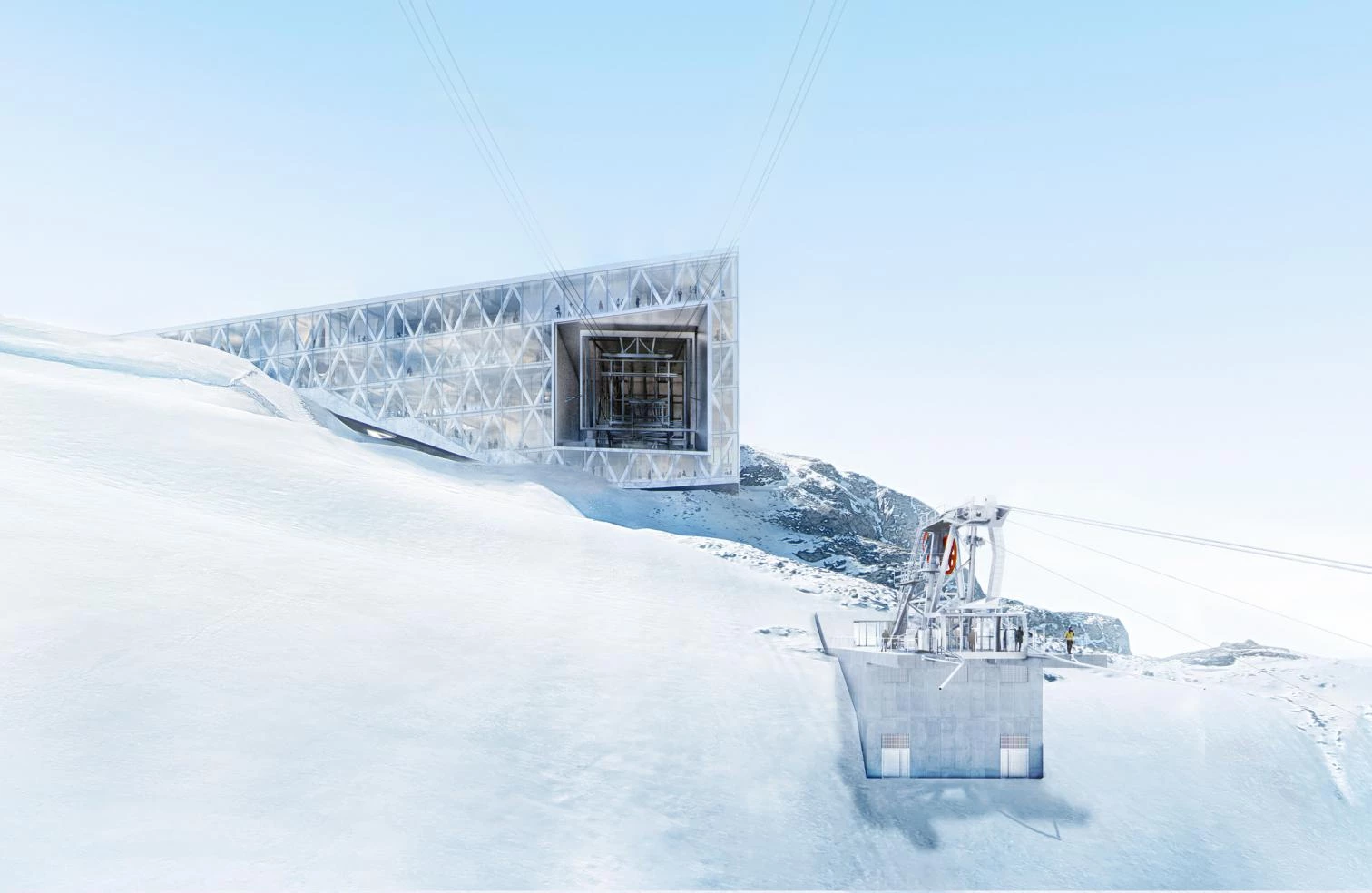
A futuristic mountain station seamlessly integrates modern engineering with the dramatic alpine landscape, serving as a gateway to panoramic summit experiences.
traverse
For most visitors, reaching the boutique means a journey with several distinct stages. From Zurich Airport, the standard route runs by train to Engelberg, an alpine resort town roughly 40 kilometres south of Lucerne — a journey of around two hours. From Engelberg, visitors take the mountain’s cableway system up to the summit, culminating in the TITLIS Rotair, the world’s first revolving cable car, which turns a full 360 degrees during its ascent and passes over a glacier cave estimated at 5,000 years old.
That multi-stage journey is very much treated as part of the experience rather than an inconvenience to be minimised. Mount Titlis already draws around 1.1 to 1.2 million visitors a year, with particularly strong appeal among travellers from Asia, the Middle East, and North America — a built-in international audience that the tower’s developers and Rolex alike are clearly counting on. Framed against that existing tourist infrastructure, a boutique reachable only by cable car turns the practical logistics of altitude into a selling point: arriving becomes an event in its own right, long before a single watch is tried on.
Some coverage of the opening has also noted a separate route into the tower via a tunnel carved directly into the mountain from the summit cable car station, offering an alternative to the exterior approach for visitors arriving in poorer weather. Either way, the fact that there is no road access whatsoever, and no possibility of a casual walk-in customer arriving off a city street, is central to how both Rolex and the Titlis Tower’s developers are framing the new boutique: less a store you happen to pass, and more a destination you deliberately set out to reach.
A futuristic mountain station seamlessly integrates modern engineering with the dramatic alpine landscape, serving as a gateway to panoramic summit experiences.
flow
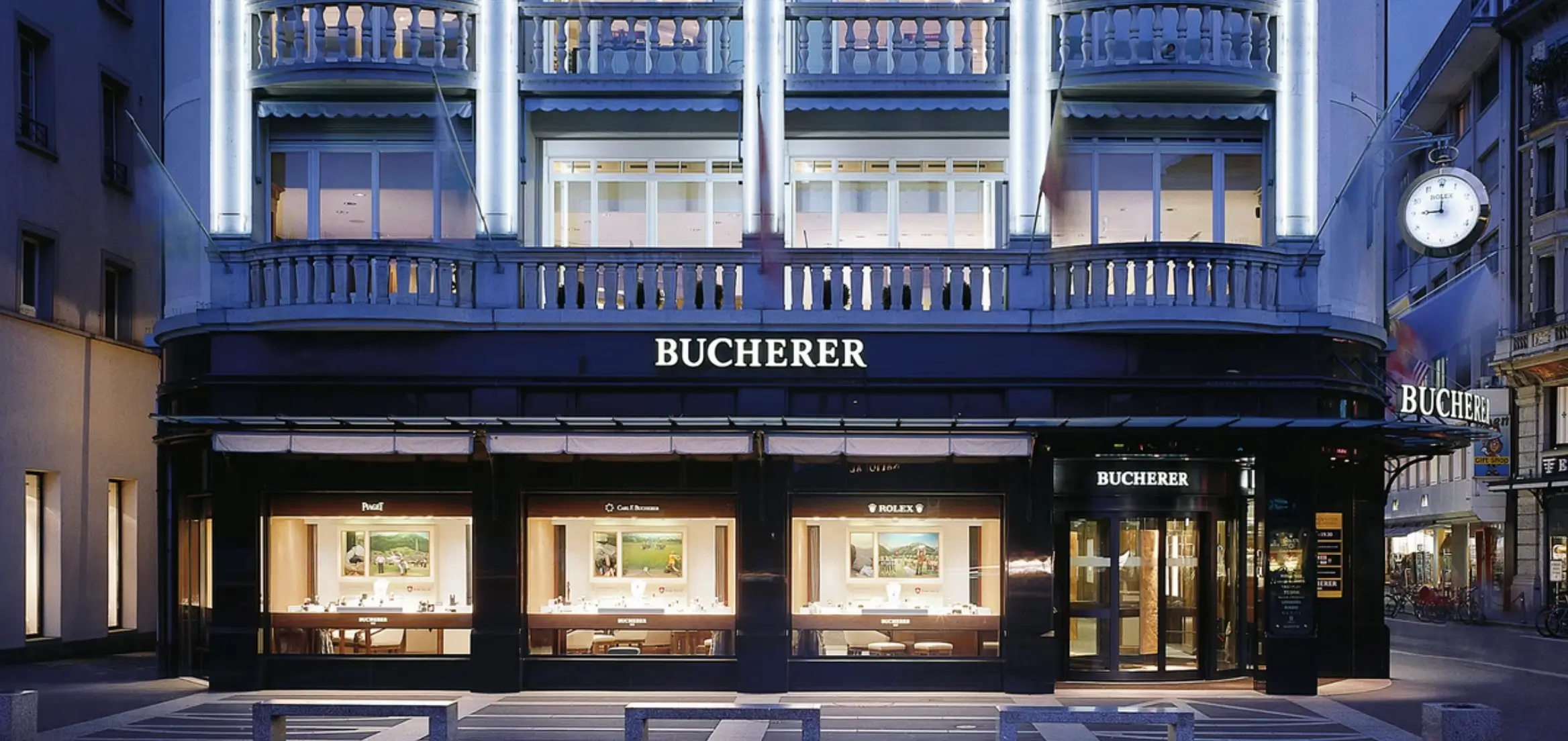
The Titlis boutique lands within a broader shift in how Rolex is using its 2023 acquisition of Bucherer, the world’s largest watch retailer. Founded in Lucerne in 1888, Bucherer built its reputation over more than a century as a multi-brand jeweller and watch specialist, eventually becoming one of the most significant sales channels for Rolex specifically well before the two companies were formally under common ownership. Rolex’s decision to acquire the retailer outright in 2023 was, at the time, read across the watch industry as a signal of the brand’s intent to exert more direct control over how — and where — its watches reach customers, at a moment when demand for popular references has consistently outstripped supply.
Rather than treating Bucherer purely as a sales channel, Rolex appears to be positioning it as a vehicle for a new kind of “destination retail” — showrooms built around brand experience and setting as much as transaction, at a moment when most Rolex references remain difficult to buy off the shelf regardless of which boutique a customer walks into. Bucherer has continued opening additional Rolex-operated boutiques in cities from Stuttgart to Shanghai, and is widely expected to eventually operate Rolex’s long-rumoured Fifth Avenue flagship in New York — a project that would sit, in almost every practical sense, as the polar opposite of the Titlis store: dense urban foot traffic instead of glacier air, a skyscraper street frontage instead of a cable car ride to 3,020 metres.
Rolex has stated publicly that it does not intend to expand Bucherer’s footprint at the expense of its wider network of independent authorised dealers, even as it has ended relationships with some existing partners elsewhere. Read in that context, the Titlis boutique functions as an unusually literal expression of an idea Rolex has cultivated for decades through its long association with exploration, mountaineering, and extreme environments — from Everest expeditions to record ocean depths. That heritage is not incidental marketing colour; Rolex watches accompanied Sir Edmund Hillary and Tenzing Norgay’s 1953 ascent of Everest, and the brand has spent the decades since attaching its name to expeditions, deep-sea dives, and polar crossings as proof points for its watches’ reliability under genuine physical extremes, long before “adventure” became a marketing category any luxury brand could plausibly claim.
Opening a store at 3,020 metres isn’t simply a marketing stunt, then, so much as a continuation of that decades-old brand narrative, now given a genuine retail address to match rather than being confined to sponsorship logos on an expedition team’s kit. Whether it proves to be a template Rolex and Bucherer repeat elsewhere — a ski resort in the Rockies, a research station somewhere colder still — or remains a one-off flagship built specifically around Titlis’s own particular mythology, the Titlis boutique has already done what this kind of destination retail project is designed to do: get people talking about a watch brand’s real estate as much as its watches.
From the DRIFT archive: Inside the World’s Most Iconic Ski Experiences
Related Articles
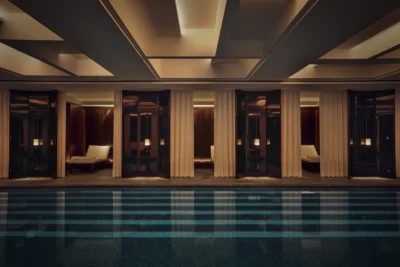
Under Rue de Castiglione, Liaigre Gives Hôtel Costes a Spa With No Hard Corners
A 20-meter lap pool, eight treatment rooms and not one sharp angle: Studio Liaigre’s spa […]