DRIFT AUDIO
Listen to this story
Choose a voice, then press play.
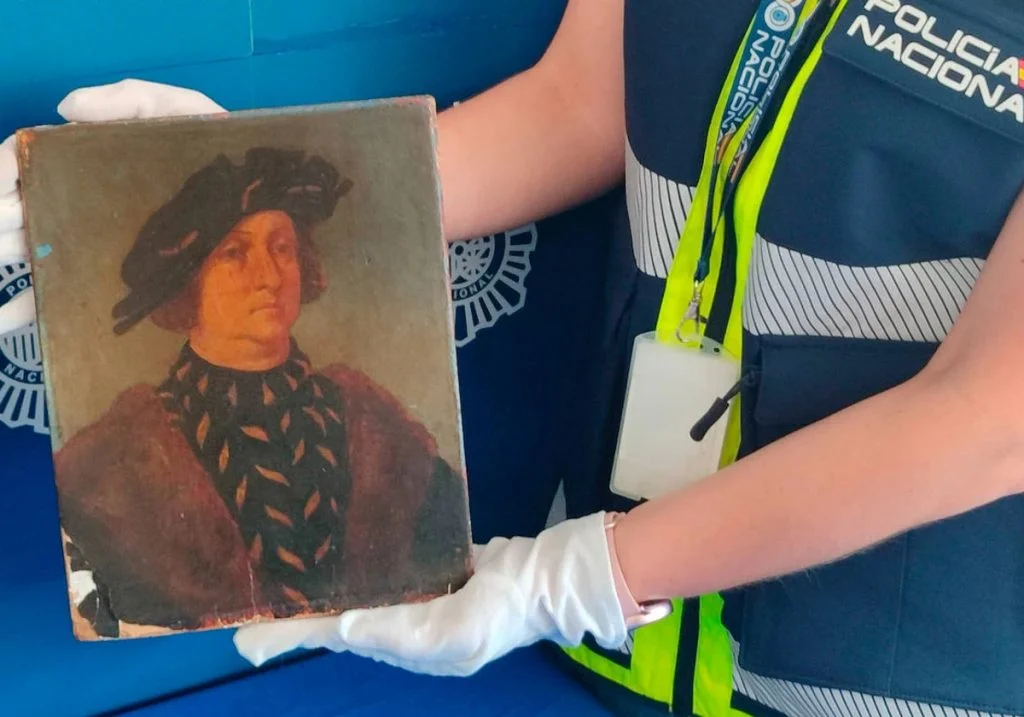
In a dramatic turn of events, Italian customs officers recently thwarted the sale of a forged painting purportedly by the Renaissance master, Leonardo da Vinci. An estimated street value of 3000-5000 USD set to be sold to a collector in Milan for 1.4M as the painting was en route to a private buyer when it was intercepted by authorities, highlighting the ongoing issue of art forgery in the global market.
The painting in question was a depiction of a young woman, executed in a style reminiscent of da Vinci’s delicate and masterful technique. It was reportedly being transported to a buyer who believed they were purchasing an authentic work by one of history’s most celebrated artists. However, Italian customs officers, acting on a tip-off, intercepted the painting in a region near Naples.
Upon closer inspection by experts, it was revealed that the artwork was not an original by Leonardo da Vinci but a skillfully crafted forgery. The painting had been cleverly aged and detailed to mimic the characteristics of a genuine da Vinci, fooling even seasoned art dealers and collectors. This discovery has once again brought to light the challenges faced by the art world in verifying the authenticity of works attributed to great masters.
Art forgery is a centuries-old problem, but it has become increasingly sophisticated with advances in technology. Forgers now have access to materials and methods that allow them to replicate the aging process, create detailed forgeries, and even produce false provenance documents. The high stakes of the art market, where works by artists like Leonardo da Vinci can fetch millions of dollars, make it an attractive target for criminal activity.
The case of this $1.4 million forgery is particularly striking because of the painting’s attributed artist. Leonardo da Vinci’s works are among the rarest and most valuable in the world. With only a handful of confirmed pieces attributed to him, any new discovery immediately attracts significant attention and money. This scarcity has led to a situation where even the faintest possibility of a new da Vinci can lead to a frenzy, making it fertile ground for forgers.
The successful interception of the forged painting underscores the critical role that customs officers and art experts play in protecting cultural heritage. Customs officers are often the first line of defense against the illegal trafficking of art and antiquities. Their vigilance and cooperation with art historians and experts are essential in identifying and stopping the sale of forged or stolen artworks.
In this case, the customs officers’ actions not only prevented a significant financial loss for the buyer but also helped preserve the integrity of Leonardo da Vinci’s legacy. By intercepting the painting before it could enter the market, they prevented it from being mistakenly accepted as a genuine work by the artist, which could have caused lasting damage to the art historical record.
The foiled sale of the $1.4 million forged Leonardo da Vinci painting is a stark reminder of the ongoing battle against art forgery. It highlights the importance of vigilance, expertise, and cooperation among customs officers, art historians, and the global art community. While the allure of owning a piece of history can lead collectors to take risks, this case serves as a cautionary tale about the necessity of thorough provenance checks and the dangers of assuming authenticity based on appearances alone. The art world, while rich with beauty and history, is also fraught with challenges, and this incident is a testament to the continuous efforts needed to protect it.
For related context, see Ken Burns’s PBS Documentary on Leonardo da Vinci: A Masterpiece Exploring the Genius of a Universal Mind.
Explore Lost Leonardo da Vinci Sketch Reveals Secret Tunnels Beneath an Ancient Castle for further context.
Related Articles
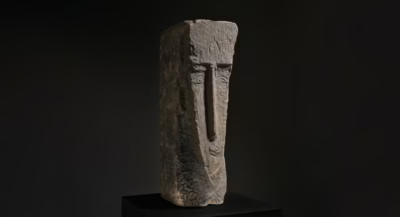
Modigliani’s Limestone ‘Tête’
Carved from a single block of limestone in Montparnasse more than a century ago, one of Modigliani's rare stone heads goes to auction for the first time…