DRIFT AUDIO
Listen to this story
Choose a voice, then press play.
In This Story
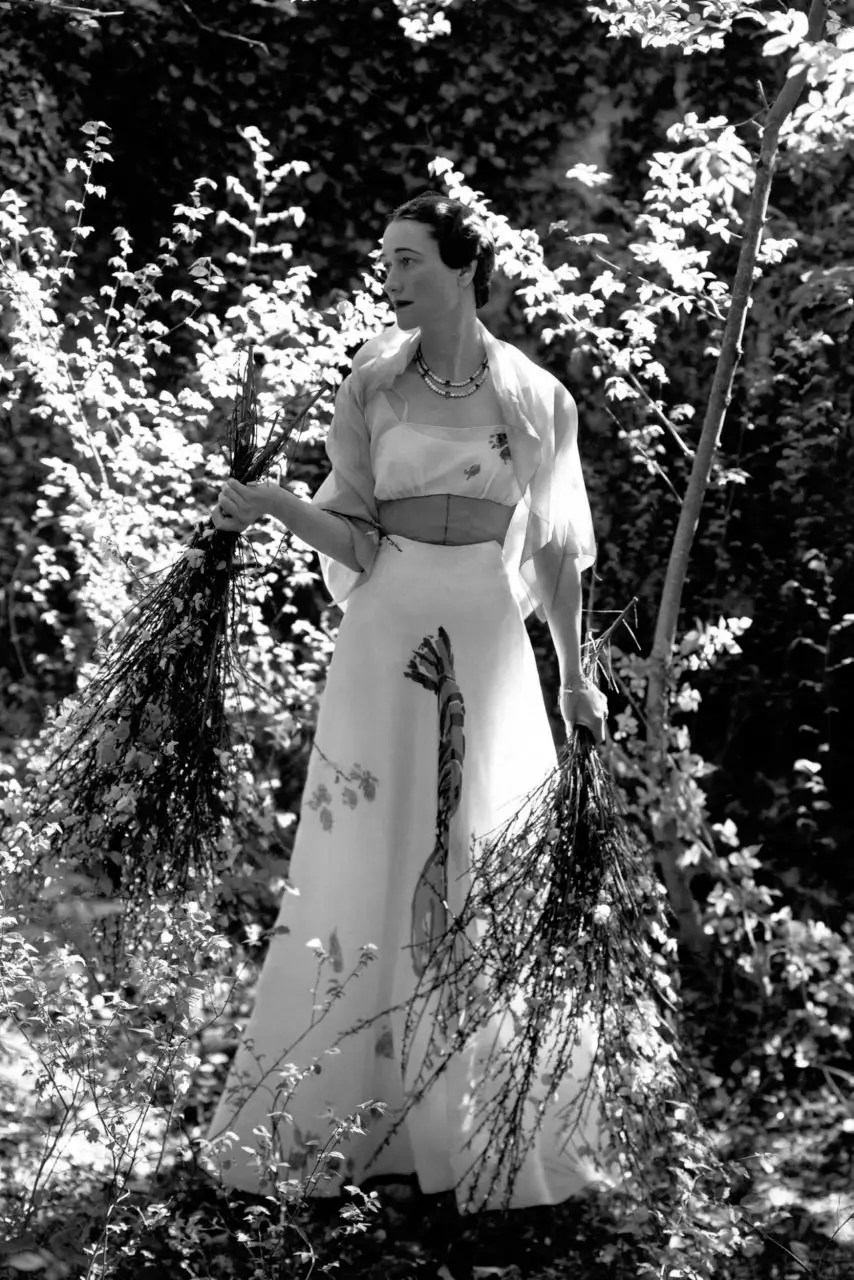
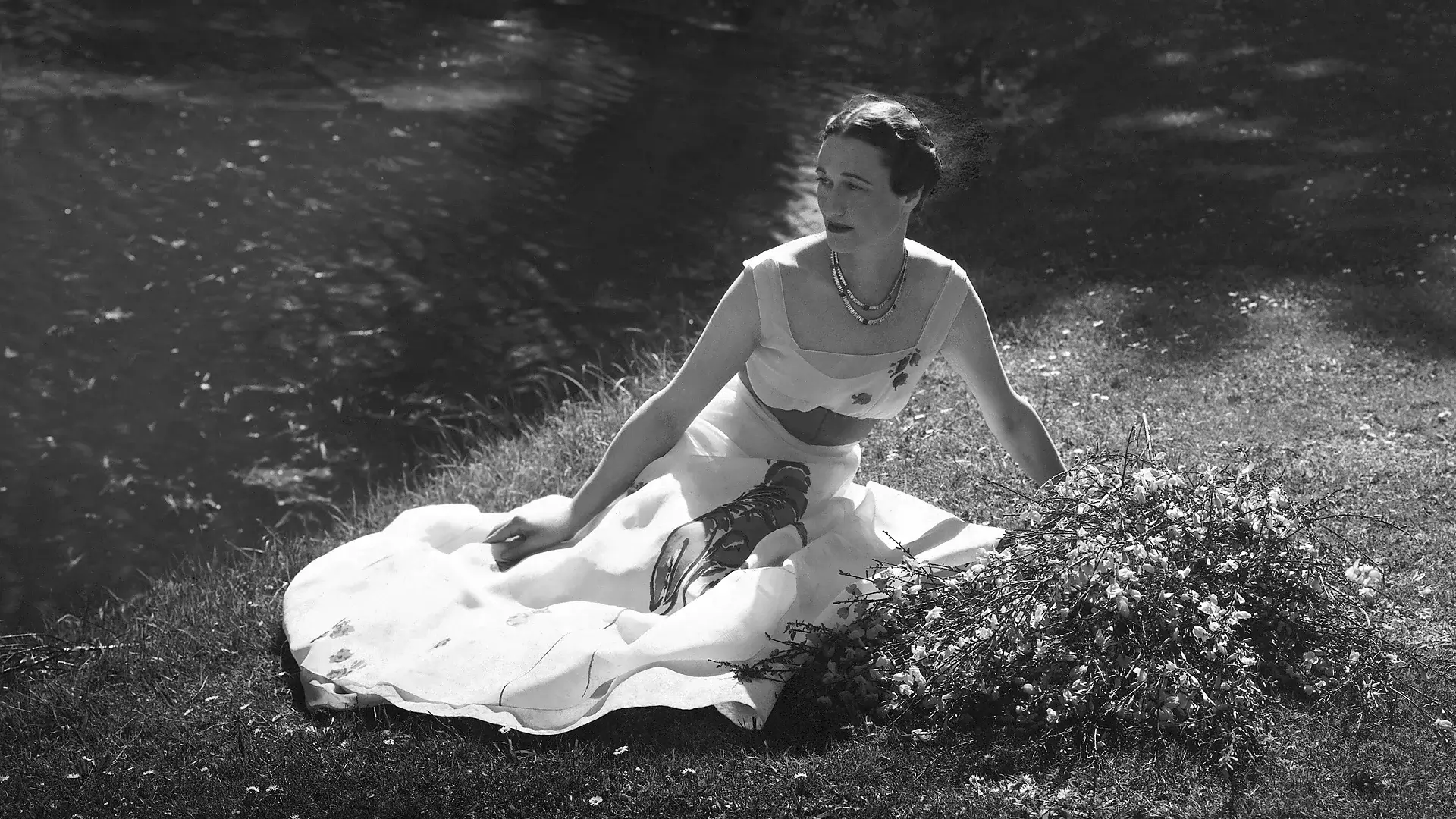
In the golden light of a French château garden in late spring 1937, a woman stood poised for the camera. The air hummed with the weight of recent history. Wallis Simpson, soon to be Duchess of Windsor, wore an ivory silk organza gown that flowed with deceptive simplicity. Across its lower half, a vivid red lobster sprawled boldly, its form rendered with surreal precision by Salvador Dalí and realized through Elsa Schiaparelli’s vision couture. Photographed by Cecil Beaton for Vogue, the image would ripple far beyond the pages of the magazine. It captured not just a dress, but a moment where fashion, scandal, surrealism, and defiance collided.
By 1937, Wallis Simpson was arguably the most-hated woman in England. As an American divorcée twice over, she had become the epicenter of one of the most dramatic constitutional crises in modern royal history. King Edward VIII’s abdication—to marry the woman he loved—shook the monarchy, the British government, the Church of England, and public sentiment to its core. The decision was his, yet Wallis bore the brunt of the blame. Tabloids, society columns, and whispered drawing-room conversations painted her as a scheming adventuress, a foreign interloper who had seduced a king and upended tradition. Her pre-wedding photoshoot at the Château de Candé was an attempt at image crafting amid the storm. Instead, the lobster dress amplified the provocation.
stir
Wallis Warfield Simpson was born Bessie Wallis Warfield in 1896 in Baltimore, Maryland. Her life before Edward was one of calculated social ascent. Two marriages—first to Earl Winfield Spencer Jr., a U.S. Navy aviator, and then to Ernest Aldrich Simpson, a British-American shipping executive—ended in divorce. She moved in elite circles in London and Paris, known for her sharp wit, impeccable style, and magnetic presence rather than conventional beauty. As she famously observed, “I’m not a beautiful woman. I’m nothing to look at, so the only thing I can do is dress better than anyone else.”
Her relationship with Edward VIII, then Prince of Wales, began in the early 1930s. By 1936, after his ascension to the throne, the affair became untenable for the establishment. The Church of England opposed the marriage to a divorcée, and the government feared instability. Edward abdicated on December 11, 1936, famously declaring he could not rule “without the woman I love.” The couple married on June 3, 1937, at the Château de Candé, with Wallis assuming the title Duchess of Windsor (though denied the style “Her Royal Highness”).
In this context, choosing a dress for Beaton’s lens was no casual decision. Wallis understood clothing as armor and statement. Turning to Elsa Schiaparelli, a friend and fellow rule-breaker, was characteristic.
flow
Born in Rome in 1890 to an academic family, Elsa Schiaparelli defied expectations. After a colorful early life—including a stint in New York and marriage—she launched her couture house in Paris in 1927 with little formal training. Her signature “shocking pink” and collection with artists set her apart from the more restrained elegance of contemporaries like Chanel. Schiaparelli embraced surrealism, humor, and theatricality. She draped on the body, experimented with prints and embellishments, and viewed fashion as a platform for ideas.
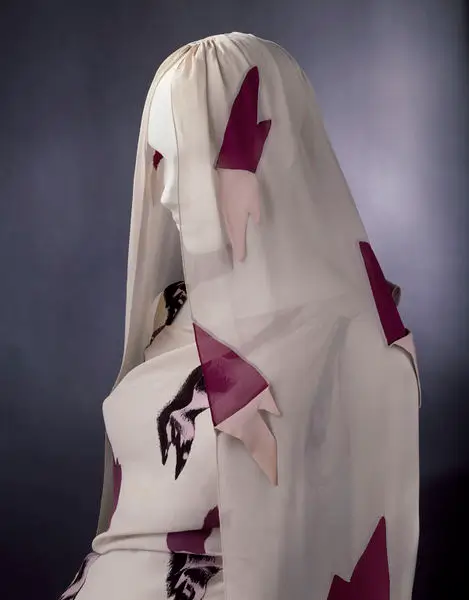
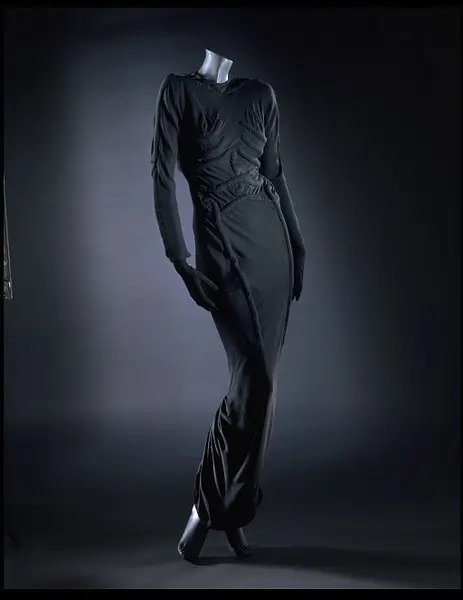
Her partnership with Salvador Dalí was particularly fruitful. The Spanish surrealist, known for his melting clocks, dreamlike imagery, and flamboyant persona, found in Schiaparelli a kindred spirit. Their collide blurred art and wearables: the Shoe Hat (1937–38), the Tears Dress (1938), and the Skeleton Dress (1938). The Lobster Dress, from Schiaparelli’s Summer/Fall 1937 collection, stands as their most iconic.
scope
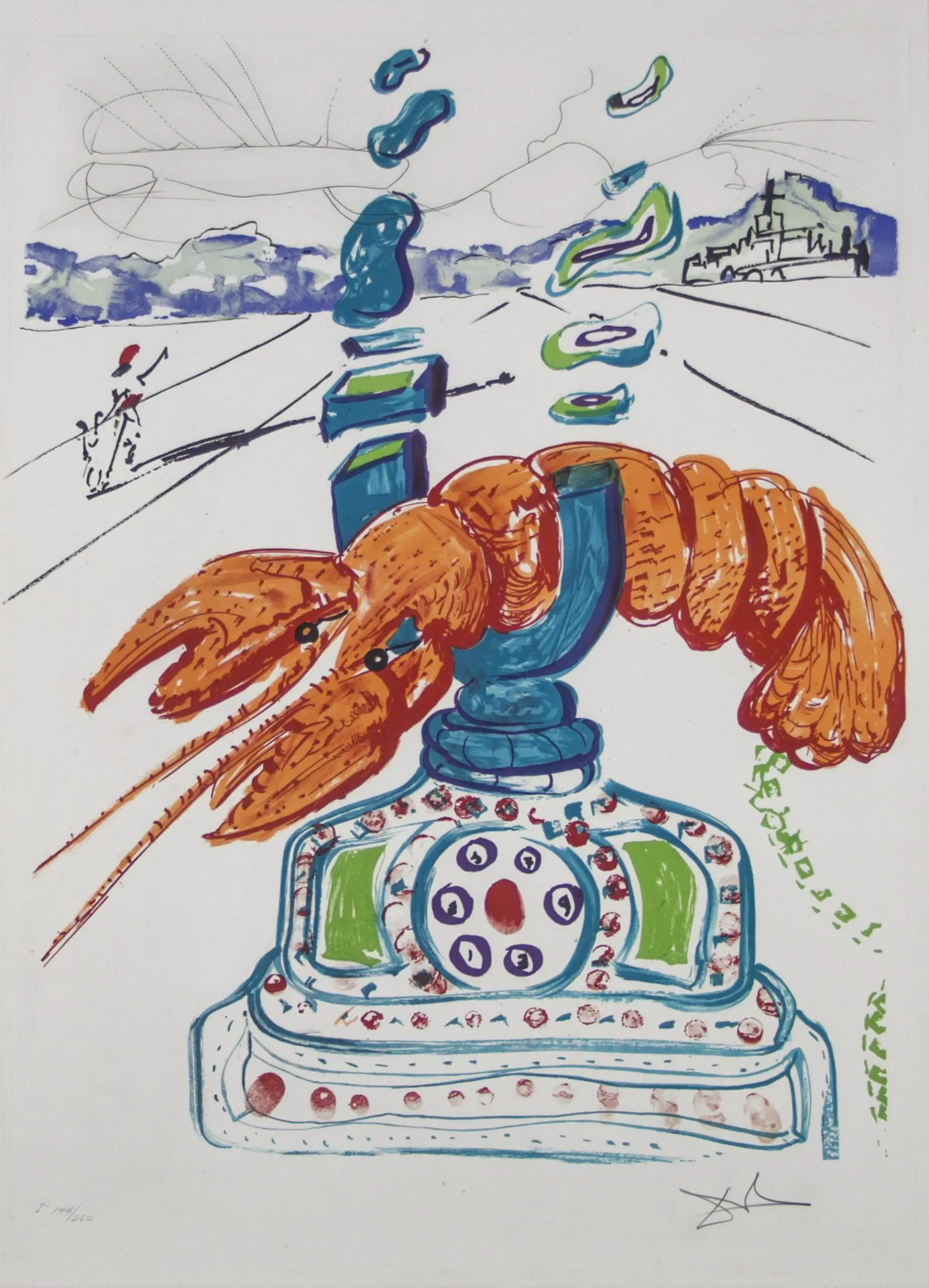
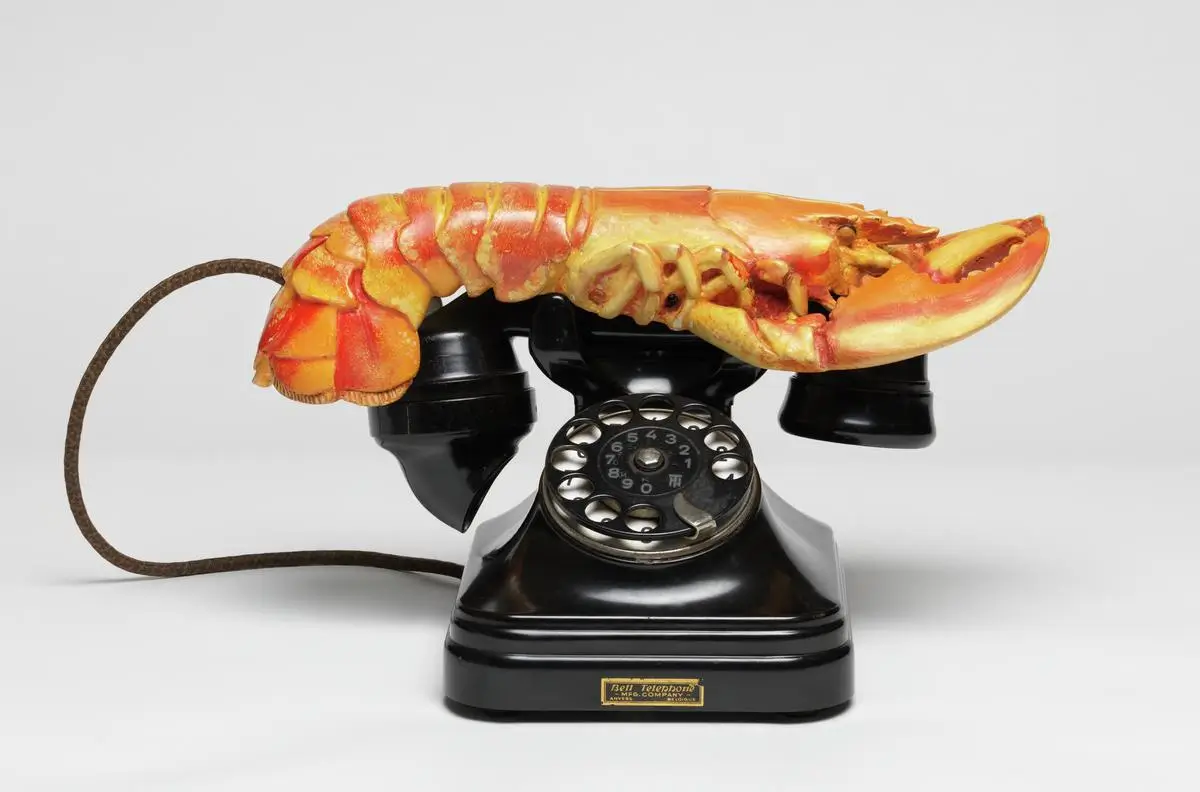
Dalí had fixated on lobsters since the mid-1930s. In 1936, he created Lobster Telephone (also called Aphrodisiac Telephone), a sculpture pairing a rotary phone with a lobster—a juxtaposition of the mundane and the erotic. He described the lobster as “the most erotic of animals,” linking its form to sexuality, the unconscious, and Freudian symbolism. The creature appeared in paintings and objects, often evoking tension between desire and the absurd.
For the dress, Dalí sketched a large lobster motif, printed onto silk organza by master silk designer Sache, accented with sprigs of parsley. The gown itself was an A-line evening or dinner dress in off-white silk, with a crimson waistband and subtle empire-waist detailing via a sheer coral inset. The lobster was positioned provocatively low on the skirt, its tail fanning upward toward the mons veneris and claws toward the calves—impossible to ignore in its erotic charge. Legend holds that Dalí wanted to add real mayonnaise as a finishing touch; Schiaparelli wisely refused.
The dress was not bespoke for Wallis alone but part of the collection. She purchased it as part of her trousseau, selecting several Schiaparelli pieces. Women’s Wear Daily highlighted her choices in May 1937.
cite
At the Château de Candé, Cecil Beaton—society photographer, illustrator, and aesthete—captured nearly a hundred images of Wallis. Vogue devoted an eight-page spread to the results in its June 1, 1937 issue. One page featured Wallis in the lobster dress amid the château gardens, looking composed yet defiant.
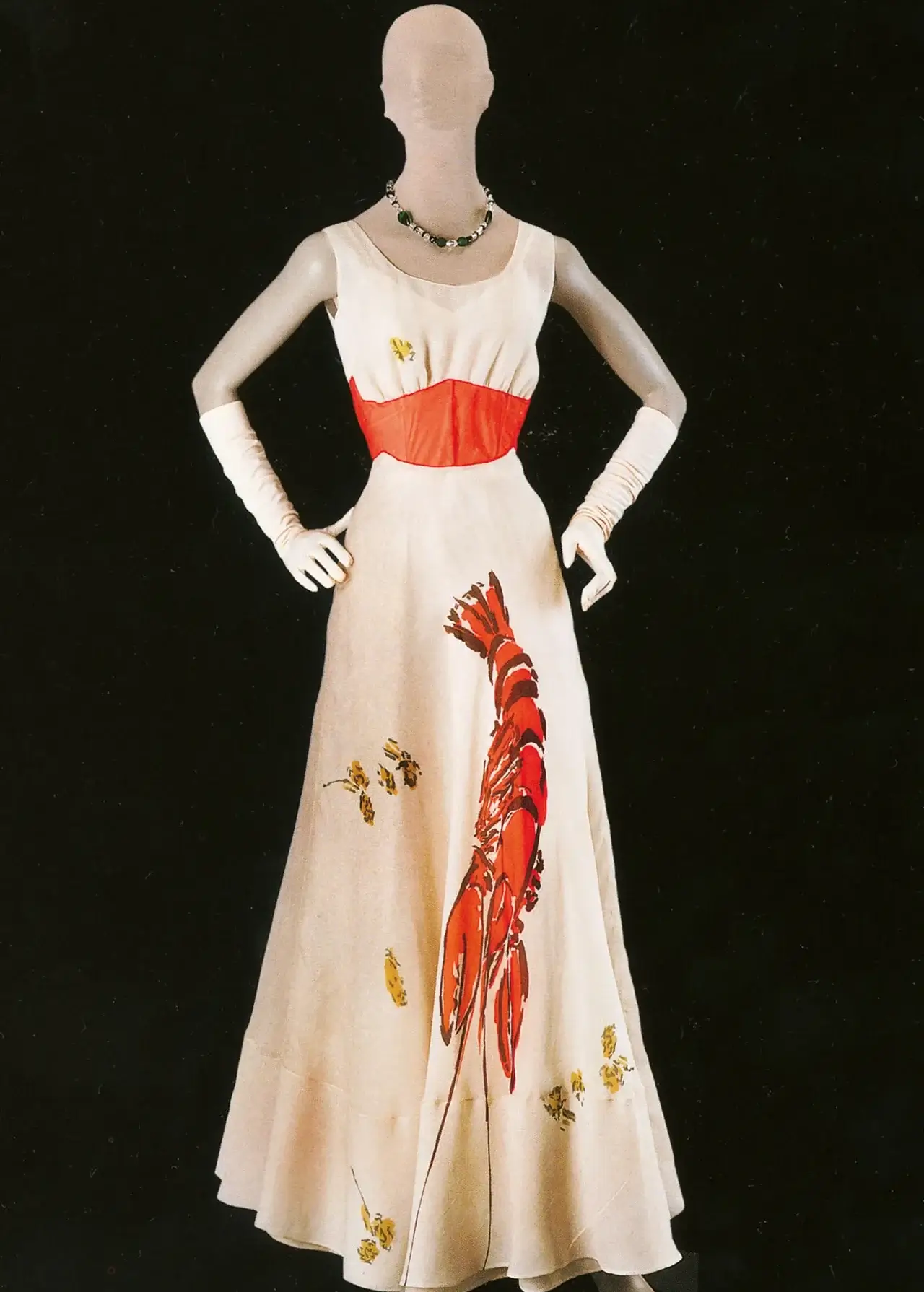
The symbolism landed like a grenade. In black-and-white reproduction, the lobster retained its power, evoking scandal on top of scandal. For a public already enraged by the abdication, this “erotically charged” garment on the woman blamed for it all felt like a taunt. British society saw it as further proof of Wallis’s unsuitability—flippant, foreign, sexually provocative. As writer Ann Shen later noted, it gave the public “even more reason to hate Wallis” while demonstrating “the power of innovation and sexual empowerment.”
Yet for Wallis and Schiaparelli, it was likely intentional. Wallis had nothing left to lose; the dress embraced her notoriety rather than apologizing for it. Schiaparelli thrived on shock. Together with Dalí, they turned personal and political turmoil into enduring art.
extent
The 1930s were a fertile ground for such boundary-pushing. Surrealism, launched by André Breton in 1924, explored the unconscious, dreams, and the irrational amid economic depression, rising fascism, and social upheaval. Fashion, traditionally about elegance and status, became a canvas for subversion.
Schiaparelli’s work exemplified this. Her earlier “Trompe l’Oeil” sweater (1927) with a bow that looked knitted in, and later collaborations, challenged perceptions of beauty and femininity. The lobster dress fit neoclassical trends—ivory columnar silhouettes, bias cuts—but twisted them with bold graphic surrealism. Wide skirts and asymmetry were in vogue, yet few dared this level of provocation.
Dalí and Schiaparelli’s partnership reflected a broader dialogue between art and fashion. Man Ray, Cocteau, and others also contributed to her house. This era’s cross-pollination prefigured today’s designer-artist collaborations, from Louis Vuitton x artists to runway installations.
fin
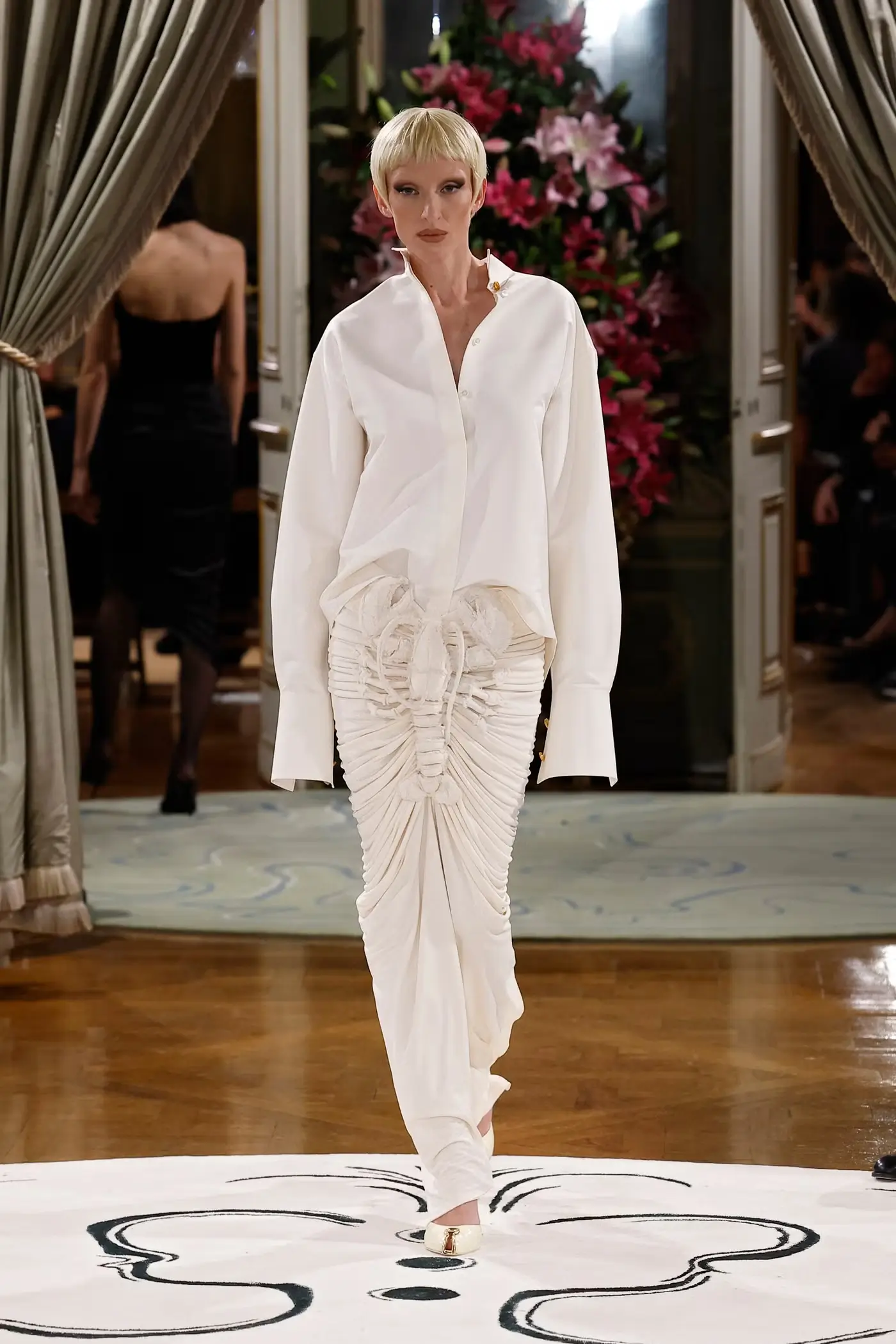
The original dress resides in the Philadelphia Museum of Art, donated by Schiaparelli herself in 1969. Its influence endures. In 2012, Miuccia Prada recreated a version for Anna Wintour at the Met Gala, themed “Schiaparelli and Prada: Impossible Conversations.” In 2017, Schiaparelli’s Bertrand Guyon revisited it for couture, with hand-sewn appliqué lobster taking hundreds of hours.
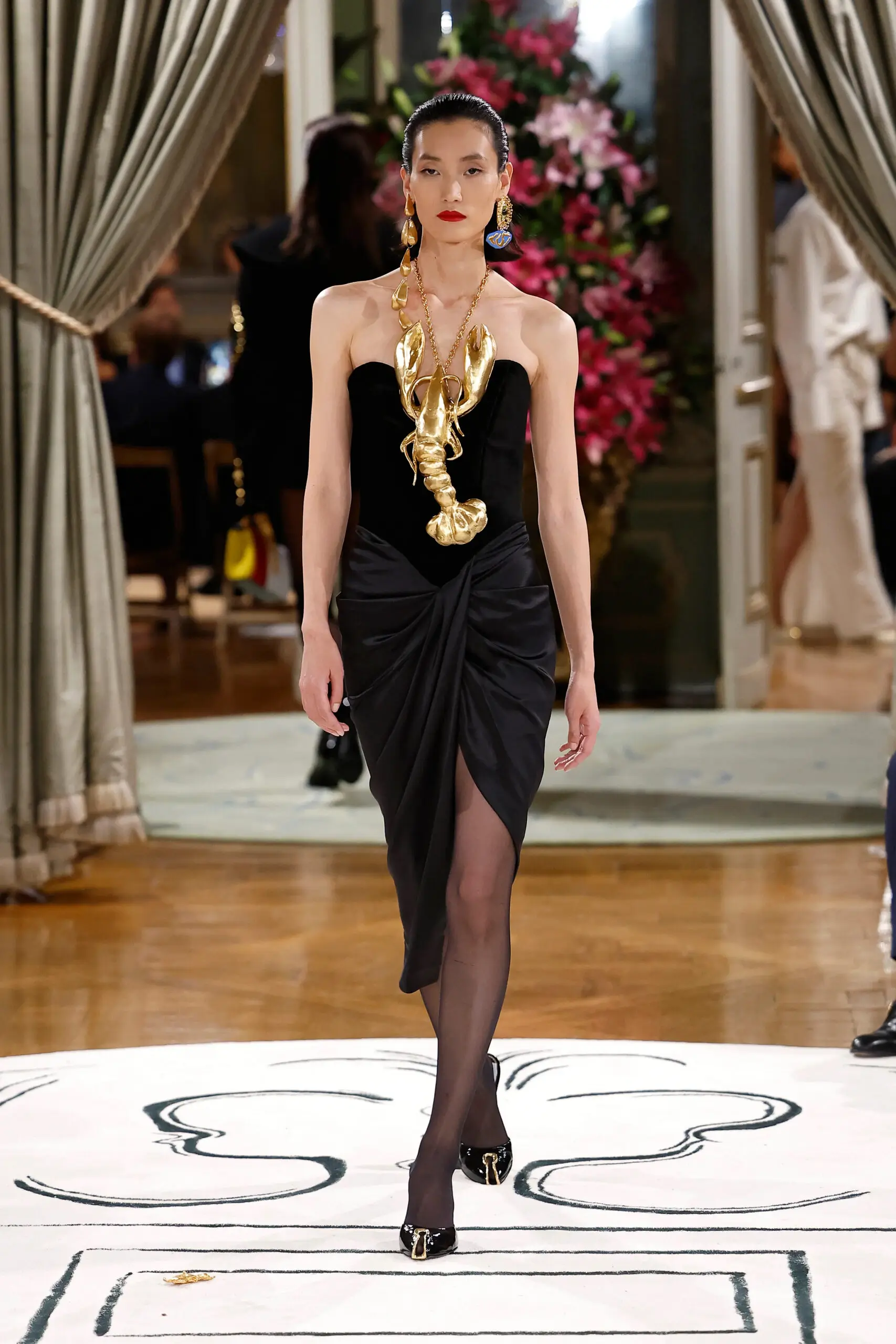
Under Daniel Roseberry, Schiaparelli has revived the motif—sculptural lobsters gripping waists or draping décolletage in recent collections—proving its mythic power. It remains a symbol of fashion’s capacity to provoke, empower, and transcend.
The lobster dress endures because it layers meanings: eroticism and absurdity, personal defiance and cultural rupture, art’s intrusion into daily life. For Wallis Simpson, vilified yet unbowed, it was armor in silk. For Schiaparelli and Dalí, a manifesto. For fashion history, a masterpiece of provocation that still startles nearly 90 years later.
In an age of carefully curated feeds and algorithmic approval, its raw audacity reminds us why certain garments transcend clothing. They become events—scandalous, yes, but undeniably alive. The silk, the crustacean, and the woman who wore it wove a story that fashion continues to retell, each time with fresh shock and admiration.
Related Articles

A Milan Temp Store For Invicta’s 120th Year
1906 England. Turin from 1921. Jolly and Minisac on Heritage. Velba, Wasar, Freeway on Icon. […]