DRIFT AUDIO
Listen to this story
Choose a voice, then press play.
In the quiet hum of Milan’s backstreets, where cobblestones meet concrete curbs, a cultural undercurrent has quietly reshaped how we dress, listen, and move. Skate Muzik — the cult radio show turned merch phenomenon — embodies the precise 2026 convergence of skateboarding’s raw authenticity, music’s rhythmic structure, and high-end fashion’s ongoing search for credible subculture. No longer confined to DIY screen-prints and local skate shops, this ethos has matured into a refined, collectible language that speaks to a wearer who values heritage, sound, and motion as interconnected systems rather than isolated references.
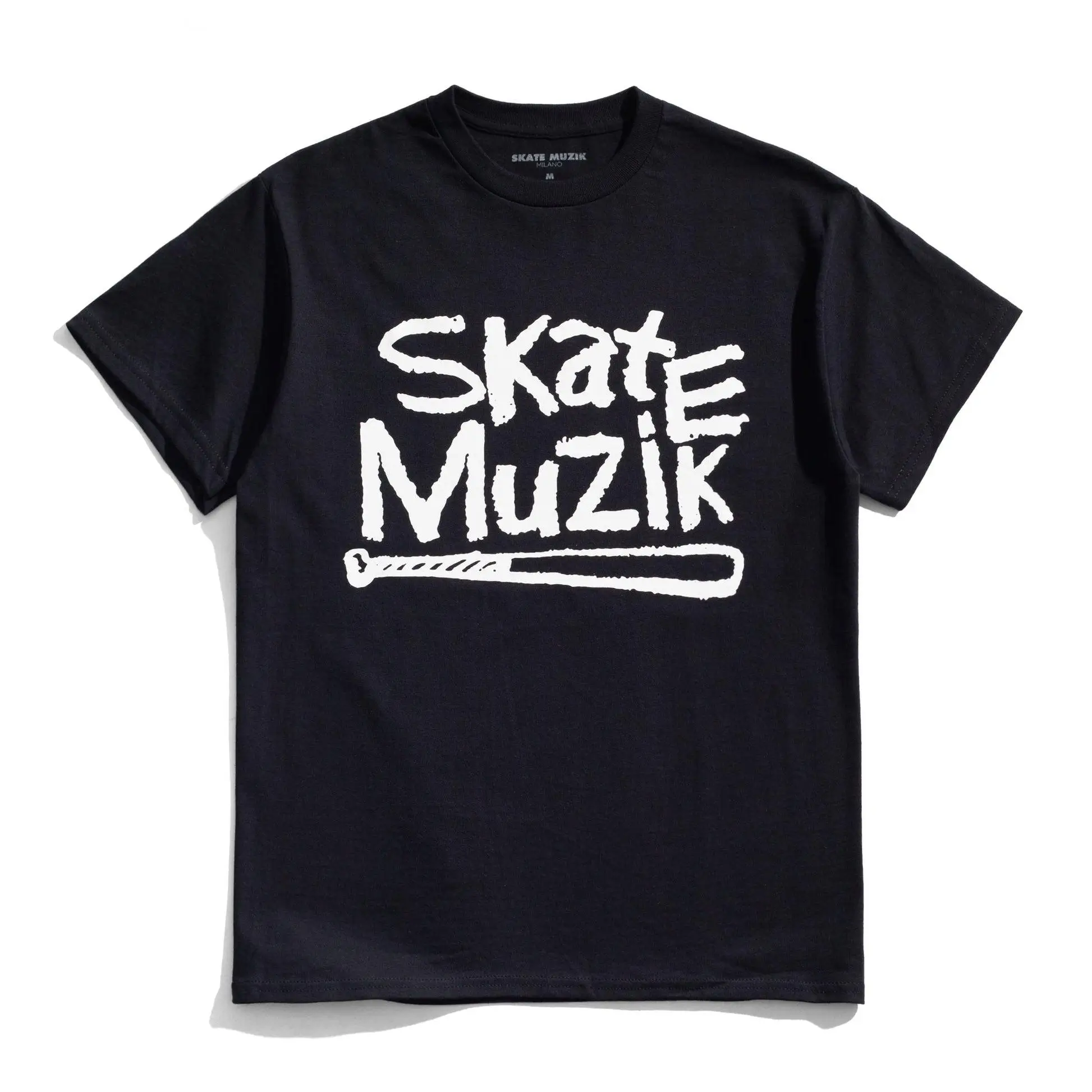
What begins as a Milan-born transmission evolves into something more complex: a framework for understanding culture through sound and then translating that understanding into clothing. Skate Muzik is not simply a brand, nor is it just a radio show. It is a method of archiving movement through music, and then rearticulating that archive through garments. Each piece operates less like apparel and more like a pressed record — limited, intentional, and discovered rather than consumed.
This is where Skate Muzik separates itself. It does not chase relevance. It structures it.
The Curator as Conduit
At the center of this system is G. Quagliano, the Milan-based founder who initiated Skate Muzik as a radio platform dedicated to the soundtracks of skateboarding’s most formative view eras. From the abrasive urgency of 1980s and early ’90s hardcore and thrash to the layered cadence of hip-hop that reshaped skate rhythm in the decades that followed, Quagliano’s selections resist nostalgia in favor of function. These tracks are not revisited for sentiment — they are reintroduced because they still hold structural weight.
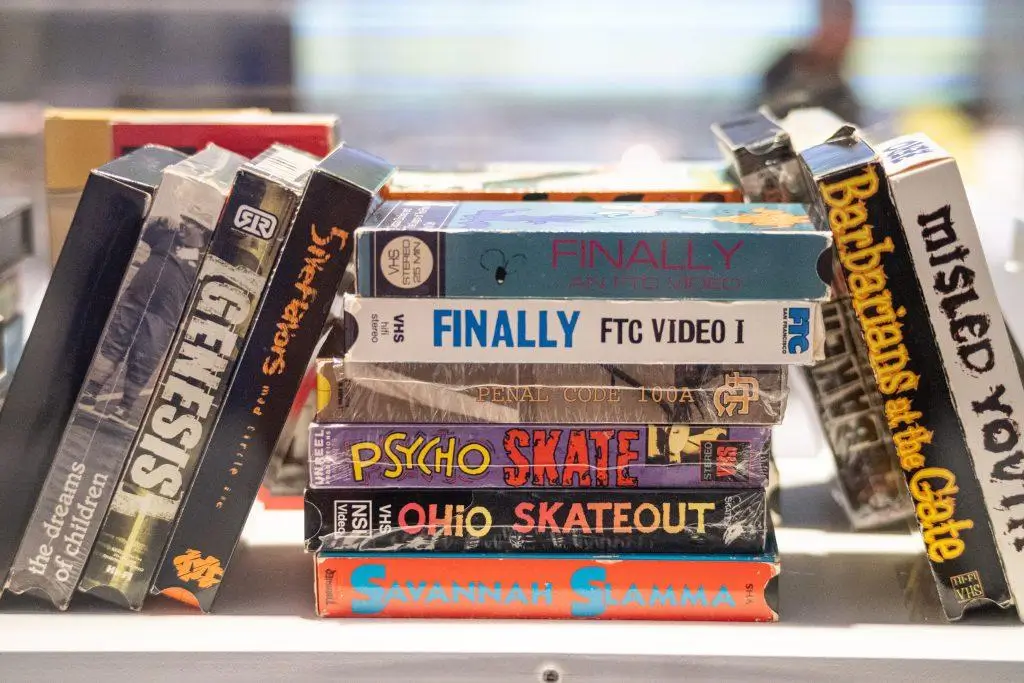
What emerges is a living archive. One that does not preserve the past in static form, but reactivates it continuously. When a track tied to a specific skate part resurfaces through Skate Muzik’s programming, it is no longer bound to its original timeline. It becomes current again, not through trend cycles, but through its inherent durability. This approach reframes how cultural memory operates: not as something that fades and returns, but as something that remains active if properly contextualized.
The transition from radio to merch is therefore not a pivot, but an extension. The clothing does not merely reference the archive — it materializes it. Limited-run tees, hoodies, and accessories produced in small batches become physical entry points into the same sonic world the broadcasts construct.
influ
The Skate Muzik wearer in 2026 is not defined by a single geography or profession. The audience has expanded beyond skateboarding’s traditional boundaries into a network of culturally literate individuals who engage with fashion as a language system. A Tokyo-based creative director layers a Ghost Dog collab tee beneath tailored outerwear. A Los Angeles producer integrates Adventure T-shirts into studio uniform. A European collector approaches each drop as if acquiring a limited art edition.
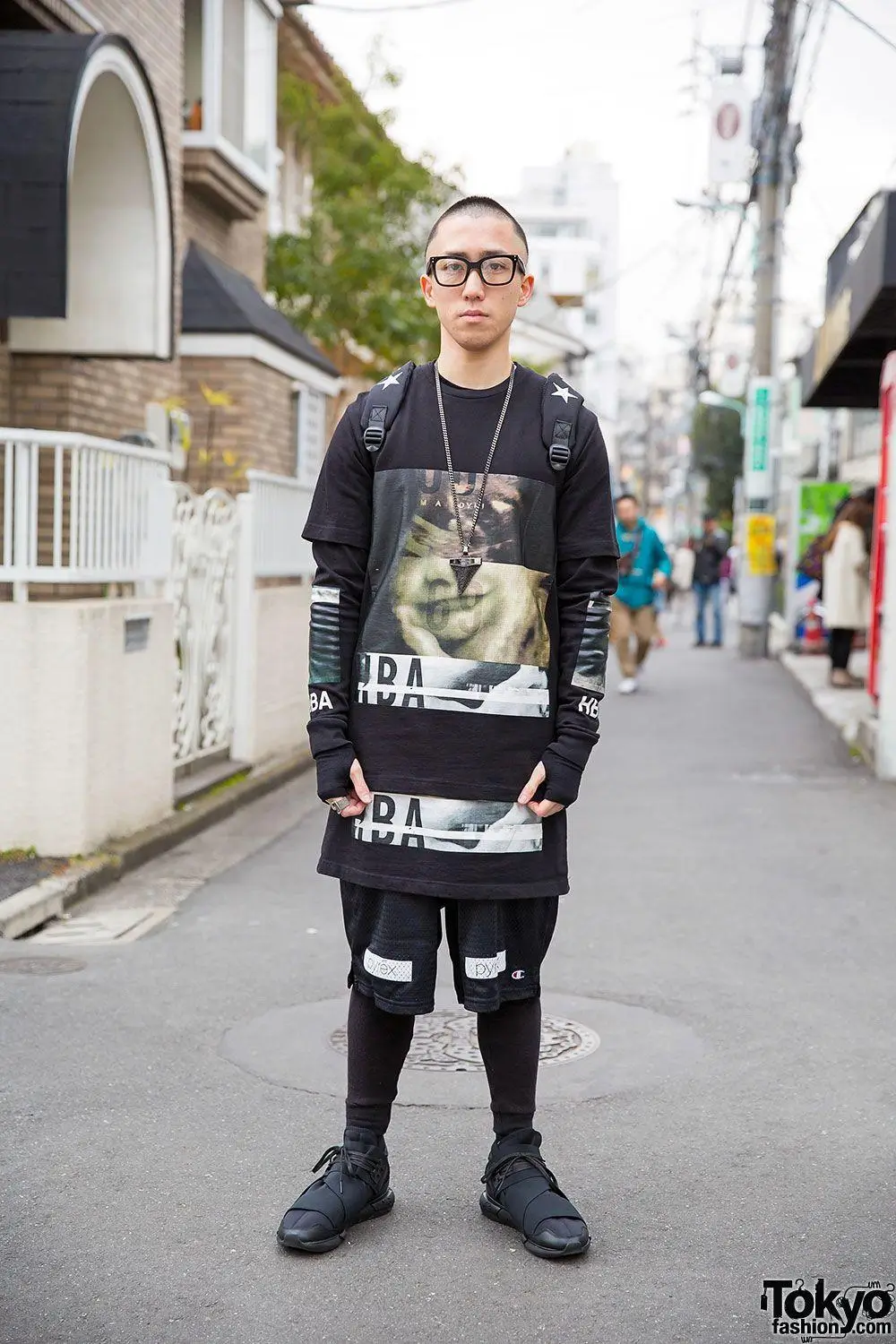
This shift signals a broader transformation within haute itself. Where lux once centered on material value and exclusivity, it now increasingly hinges on comprehension. The ability to recognize a reference, to understand a graphic beyond its surface, to identify the lineage behind a design — these become forms of currency.
Retailers such as Dover Street Market, Slam Jam, and Bonkers operate as key nodes within this ecosystem, reinforcing Skate Muzik’s position as insider language rather than mass product. Their involvement signals not trend adoption, but cultural alignment.
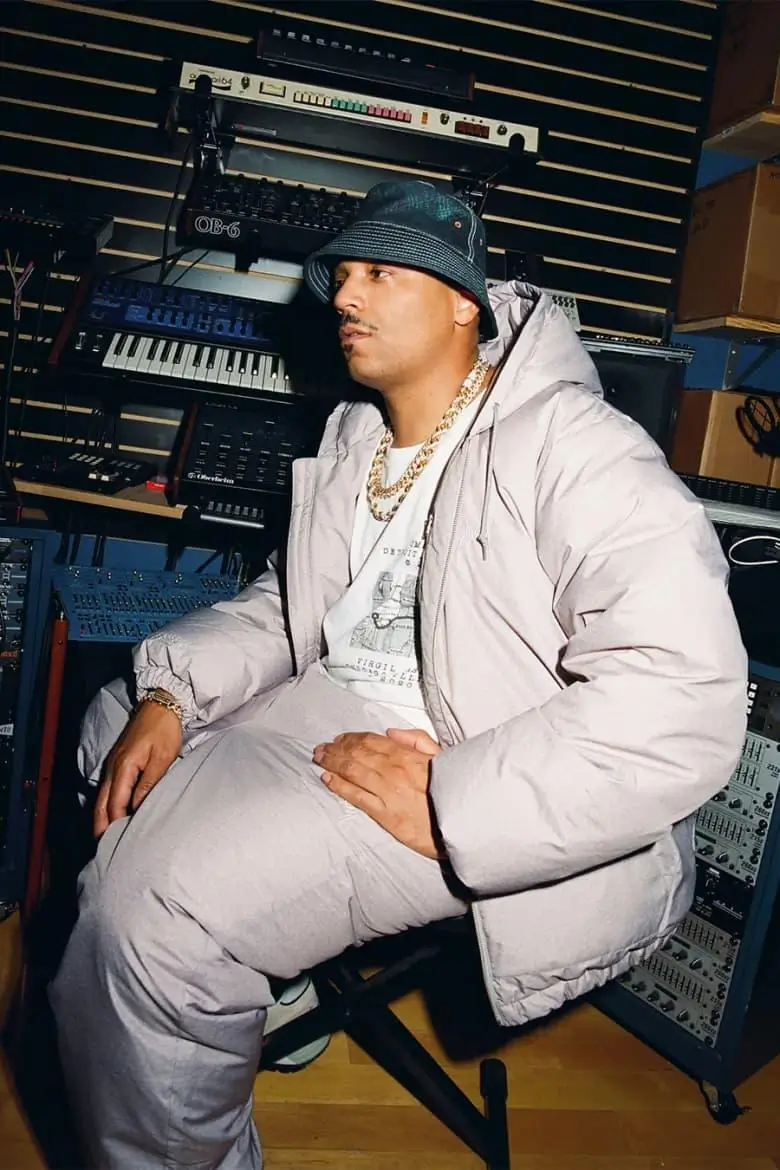
To wear Skate Muzik is to demonstrate fluency. Not loudly, but precisely.
flow
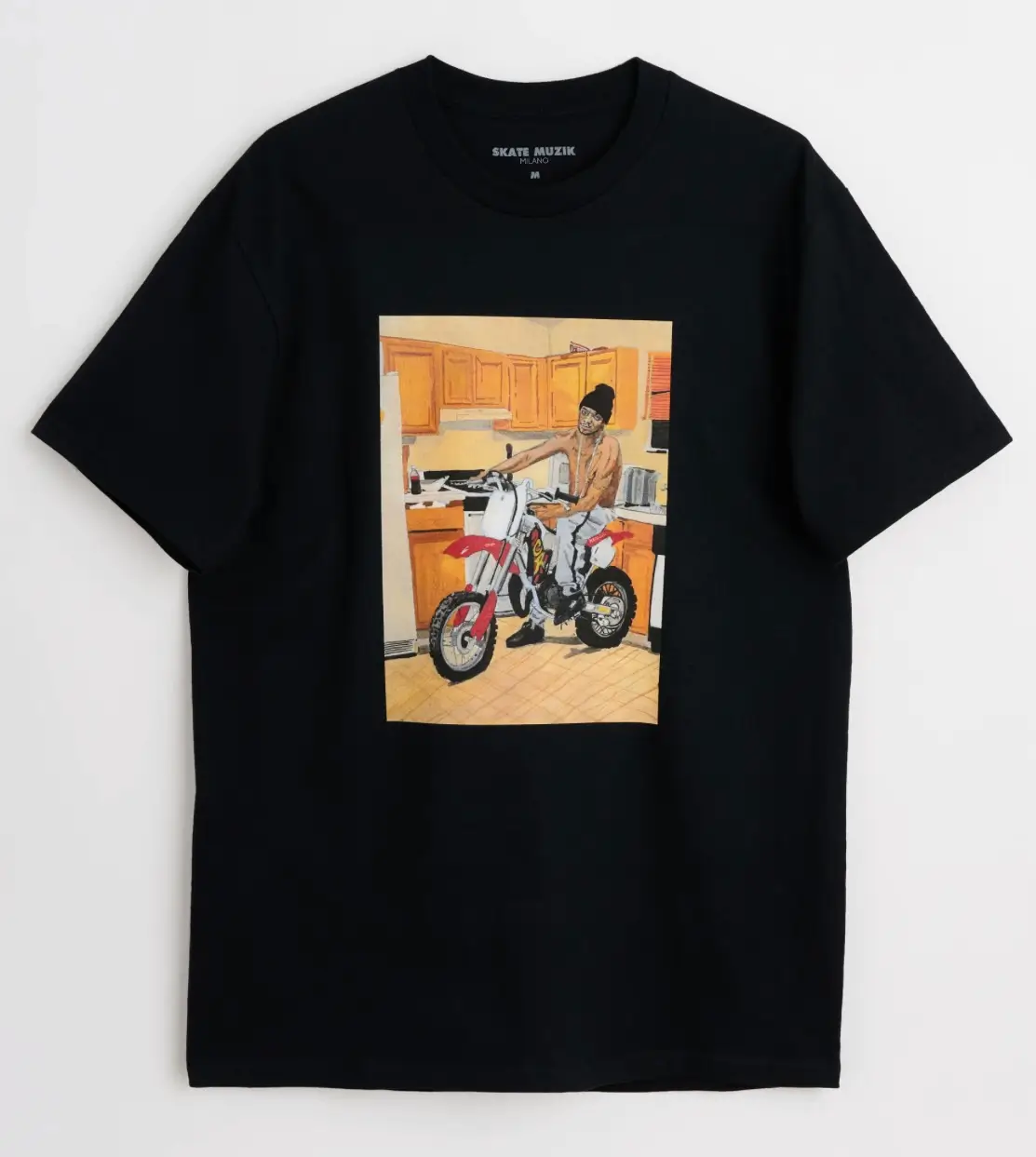
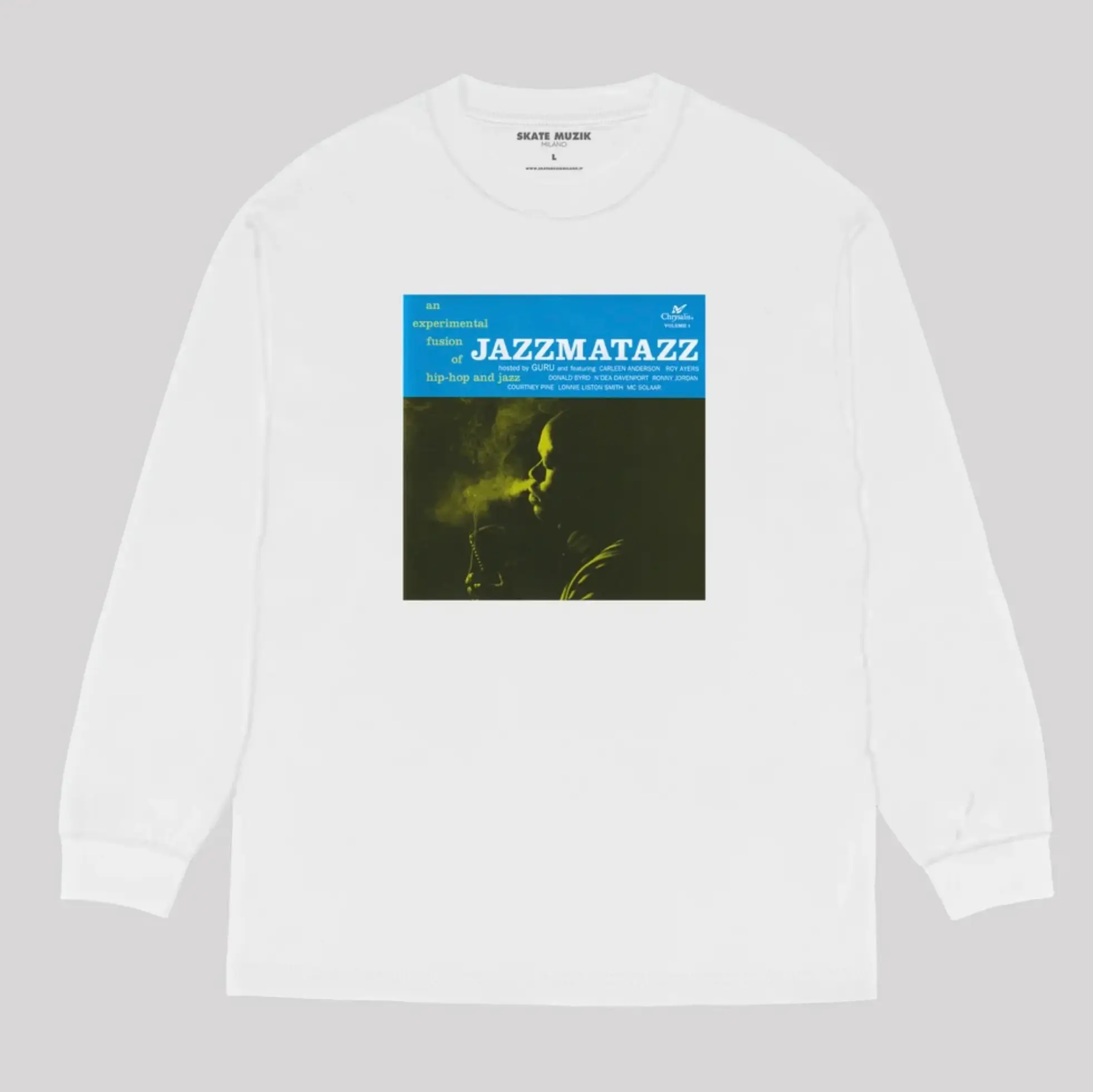
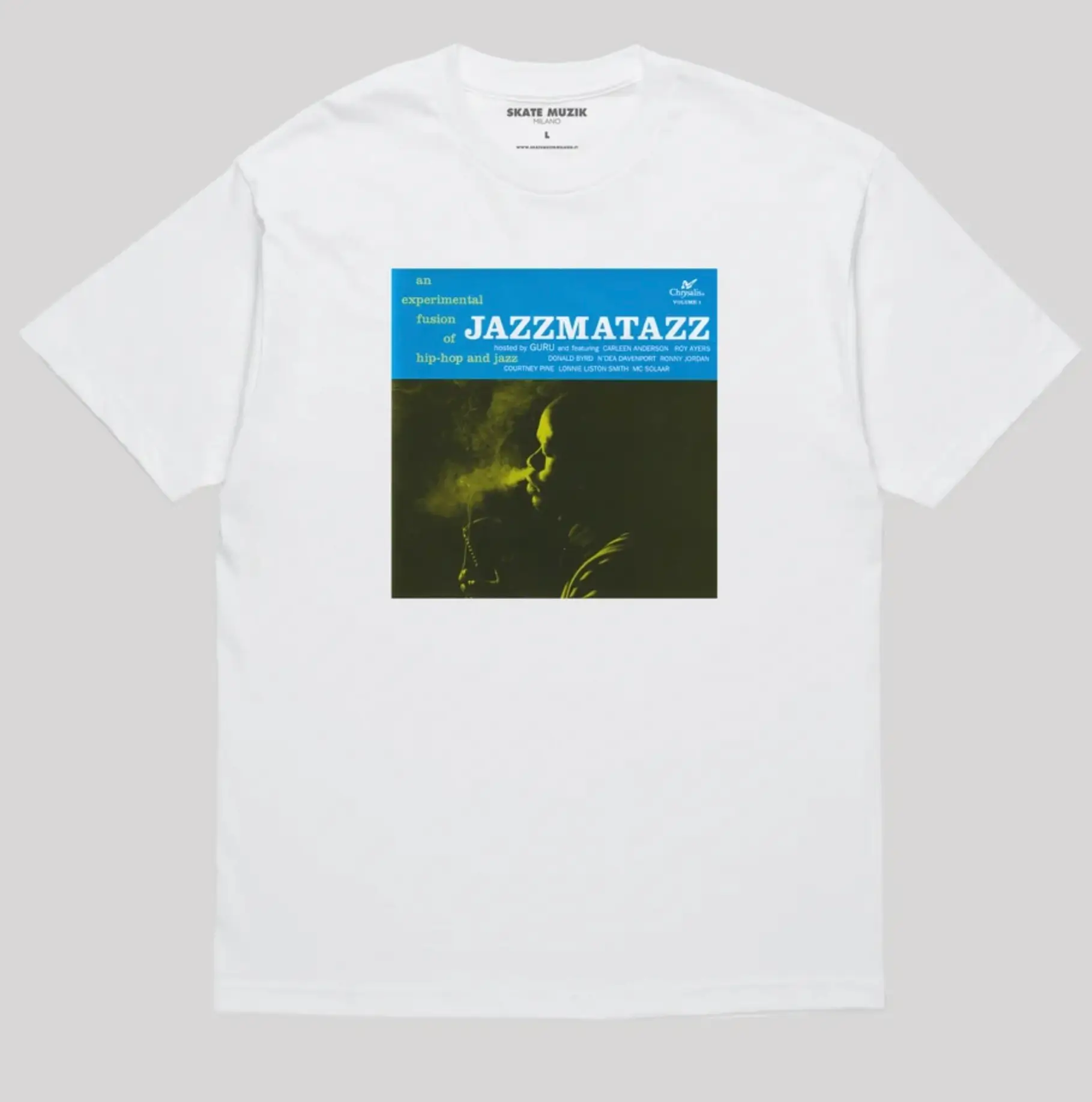
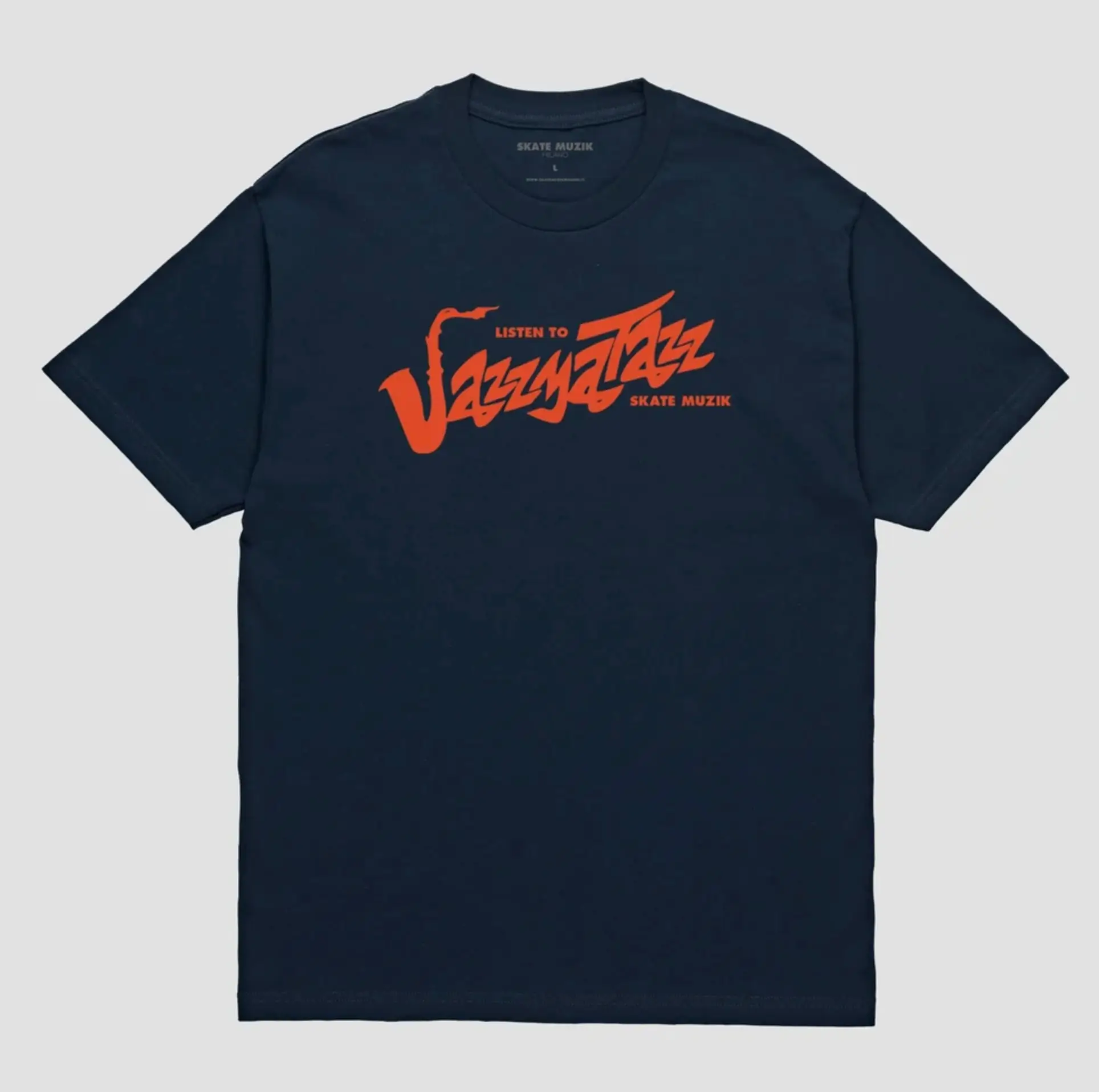
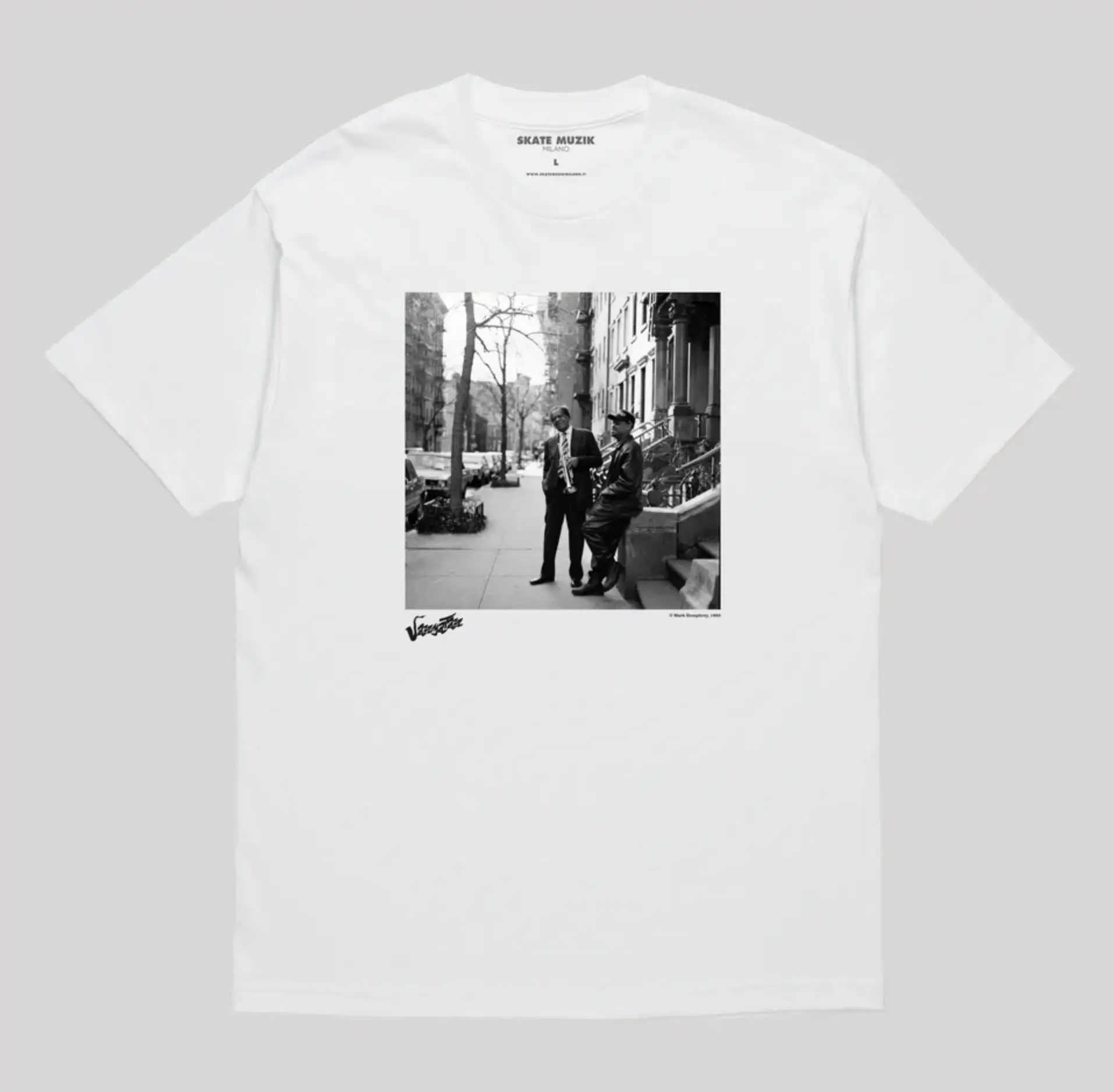
Skate Muzik’s 2026 collections move beyond conventional graphic design into something more layered and referential. Premium mid-weight cloth fabric, ethically sourced materials, and controlled production runs establish a foundation of quality, but it is the detailing that defines the work. Screen prints referencing specific skate video soundtracks, embroidery that rewards close inspection, and graphics that echo analog formats — VHS distortion, cassette labeling, lo-fi degradation — all contribute to a visual language rooted in sound.
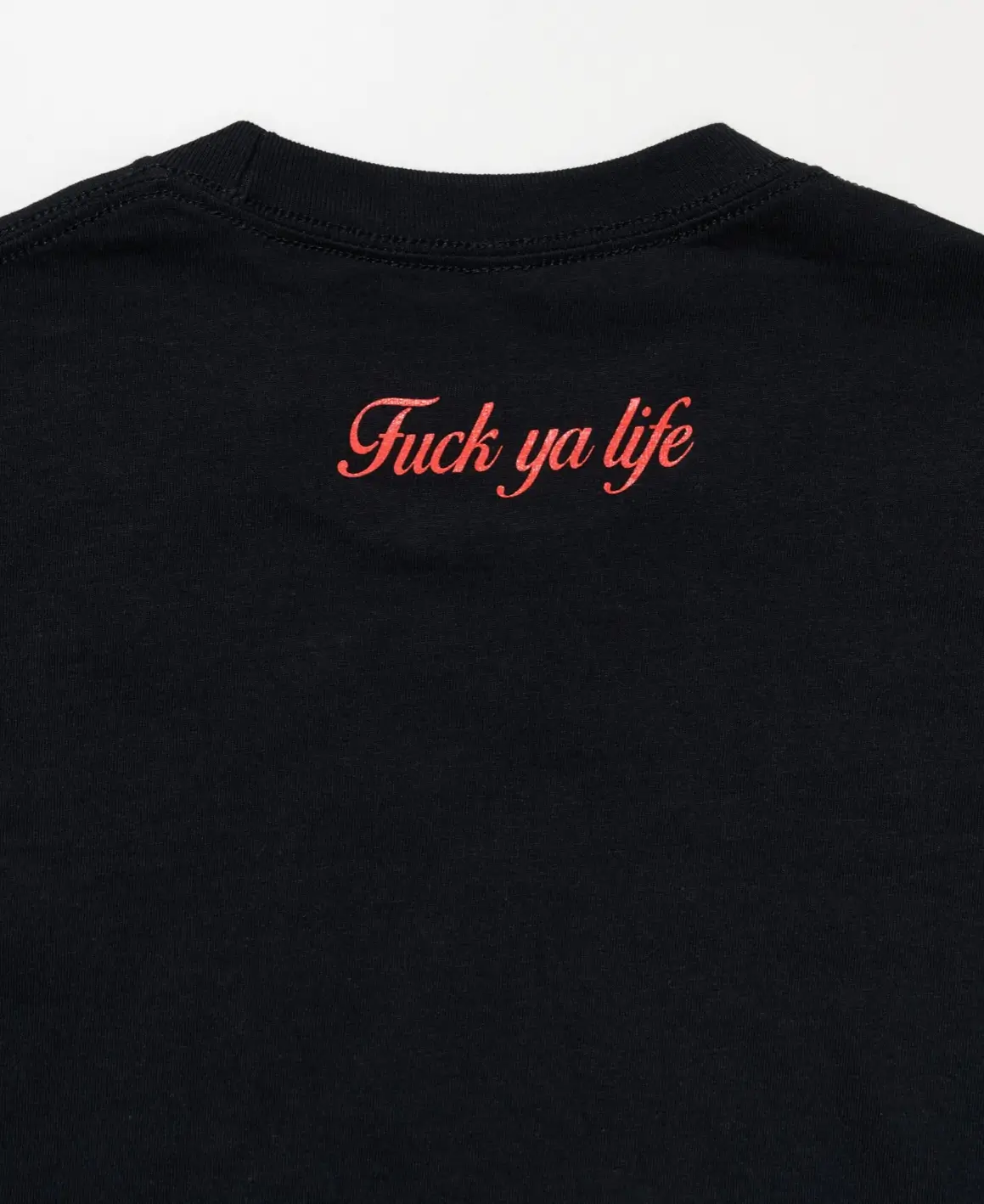
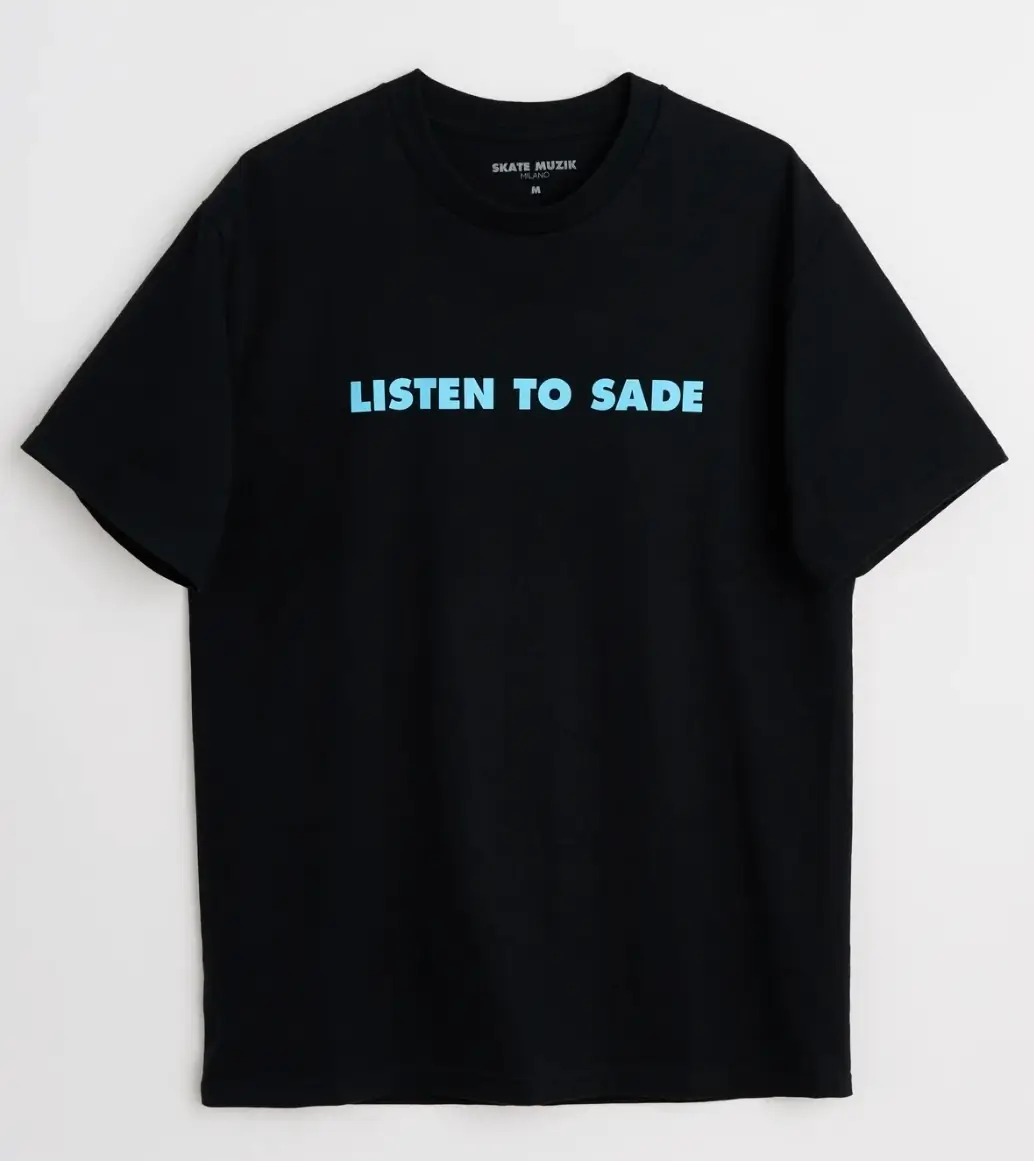
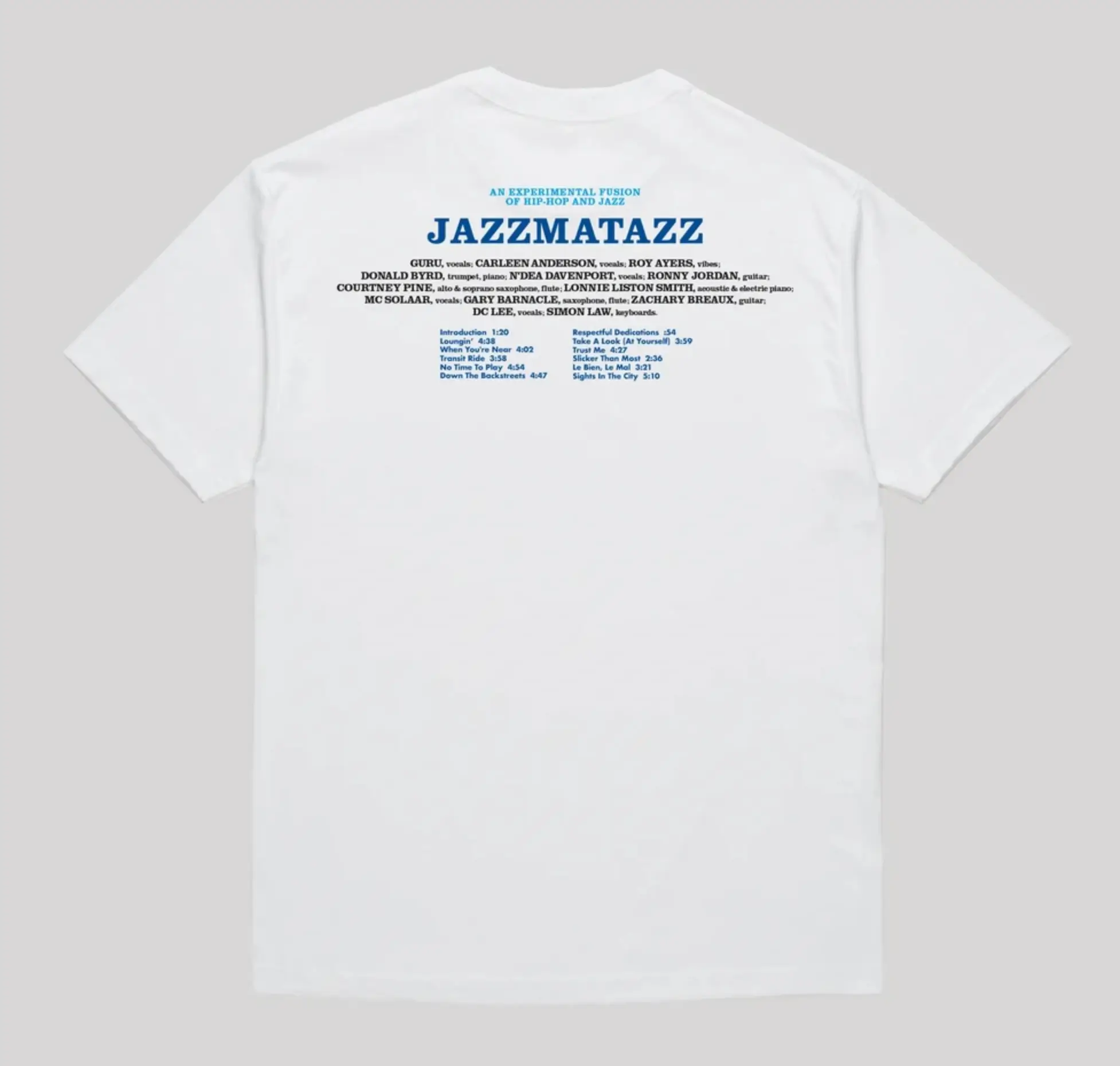
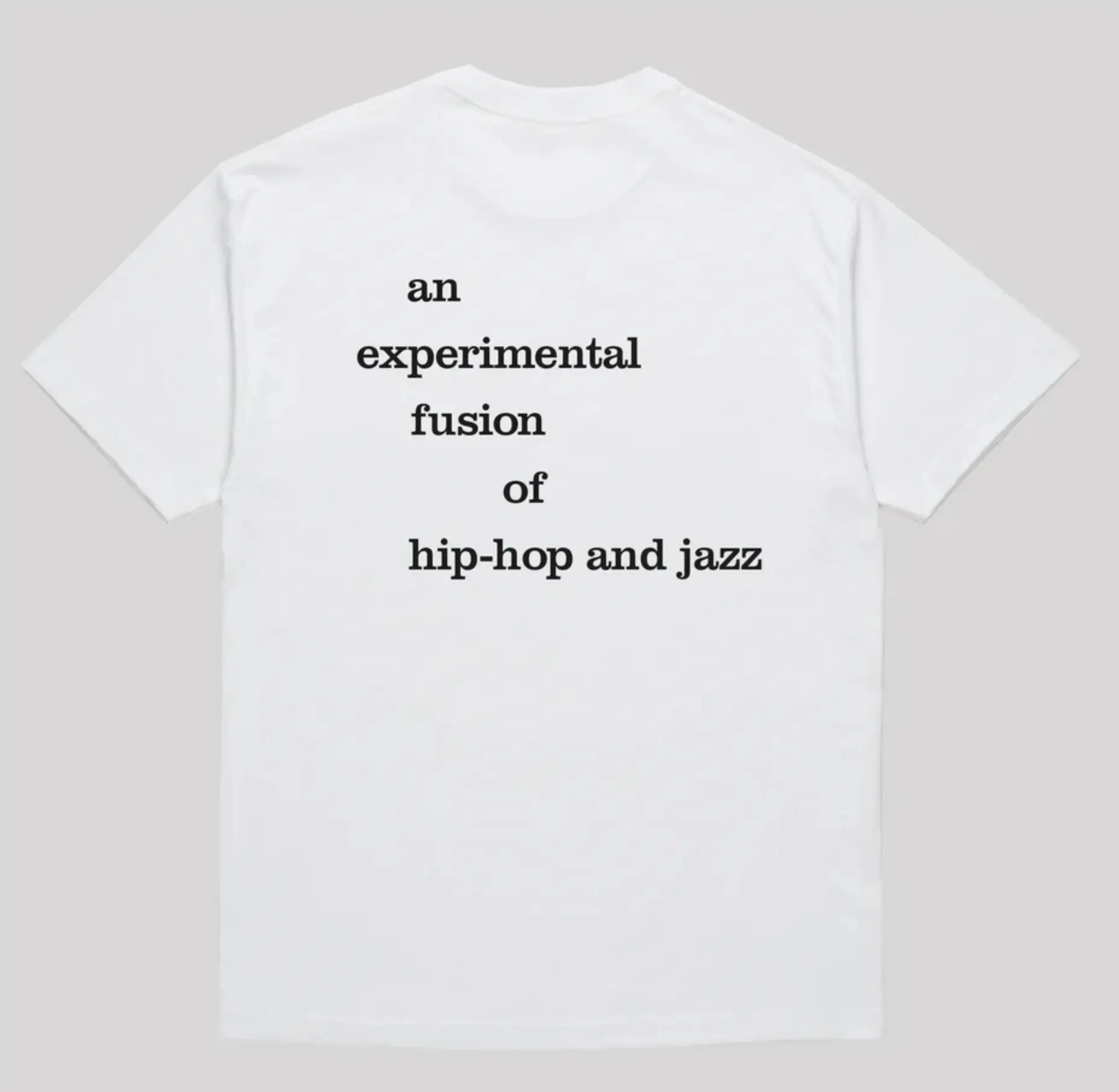
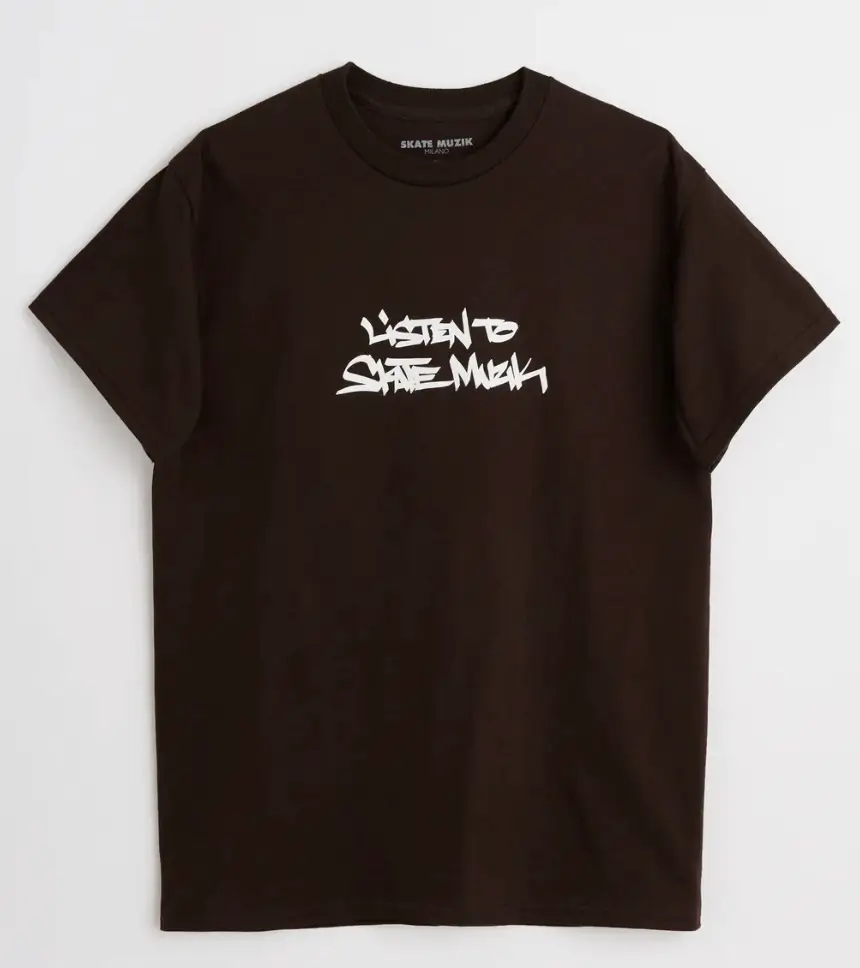
Signature items such as the “Listen to Skate Muzik” navy tee, the royal blue Adventure shirts, and limited Peace designs do not rely on overt branding. Instead, they function as quiet signals. A faded image may recall a specific era of skate media. A sleeve print may mimic the labeling system of mixtapes. A back graphic may quote a track that powered a now-iconic video part.
These are fragments rather than statements. They require assembly by the wearer.
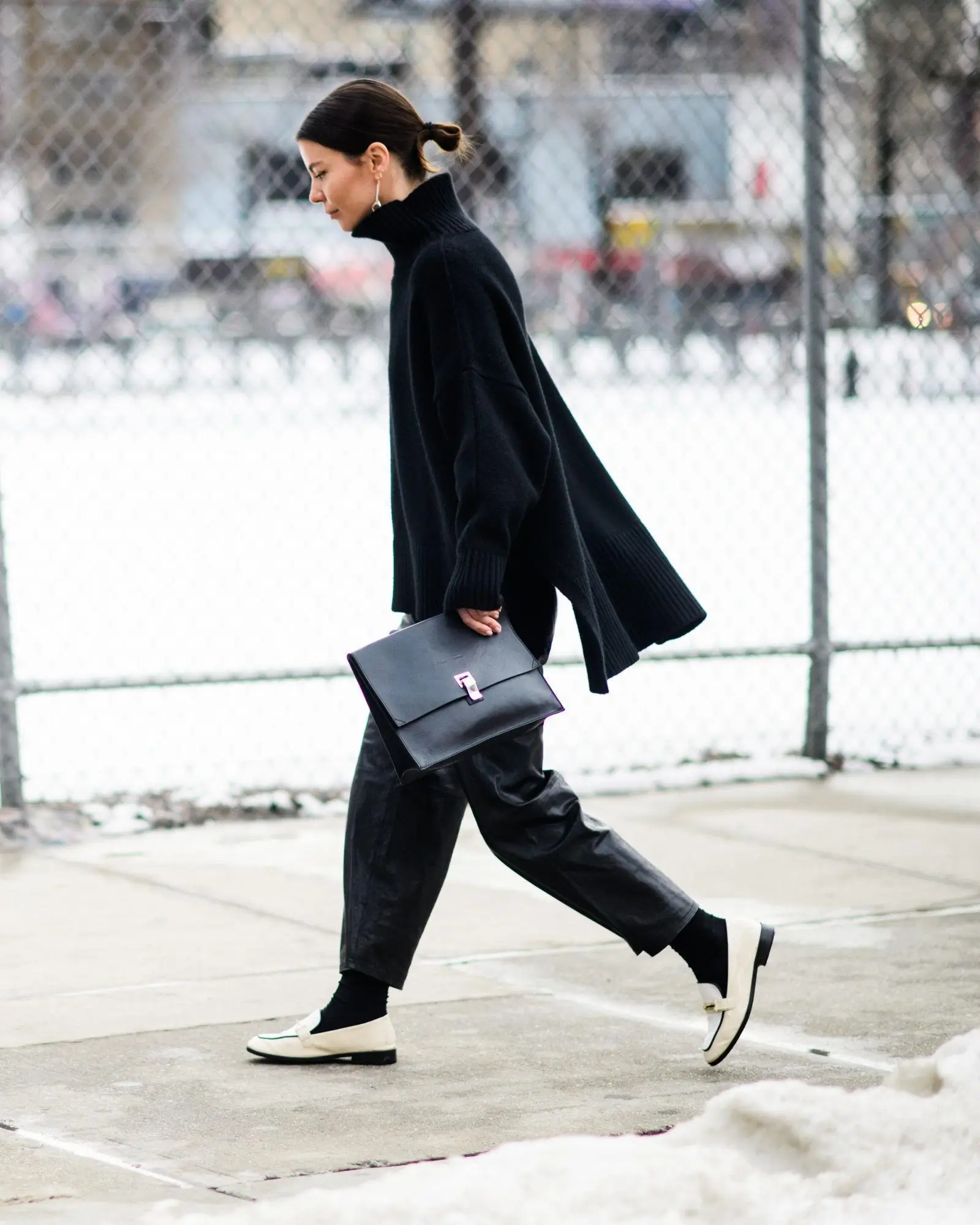
Fit attempts or conjures an equally important role. The silhouettes are relaxed enough to allow movement — a nod to skateboarding’s physical demands — yet refined enough to integrate seamlessly into contemporary high-fashion styling. A hoodie paired with wide-leg trousers and leather loafers does not read as contradiction, but as synthesis.
In this sense, Skate Muzik does not reject luxor aesthetics. It recalibrates them.
geo
Although rooted in Milan, Skate Muzik’s influence operates through a distributed network rather than a fixed location. Limited drops appear in carefully selected retail environments across Tokyo, Melbourne, New York, and Berlin, each reinforcing the brand’s commitment to controlled access and contextual placement.
Physical activations extend this philosophy. Pop-ups in spaces like Emporium Melbourne or intimate listening sessions in Los Angeles warehouses transform retail into experience. These are not transactional environments. They are immersive contexts in which sound, space, and community intersect.
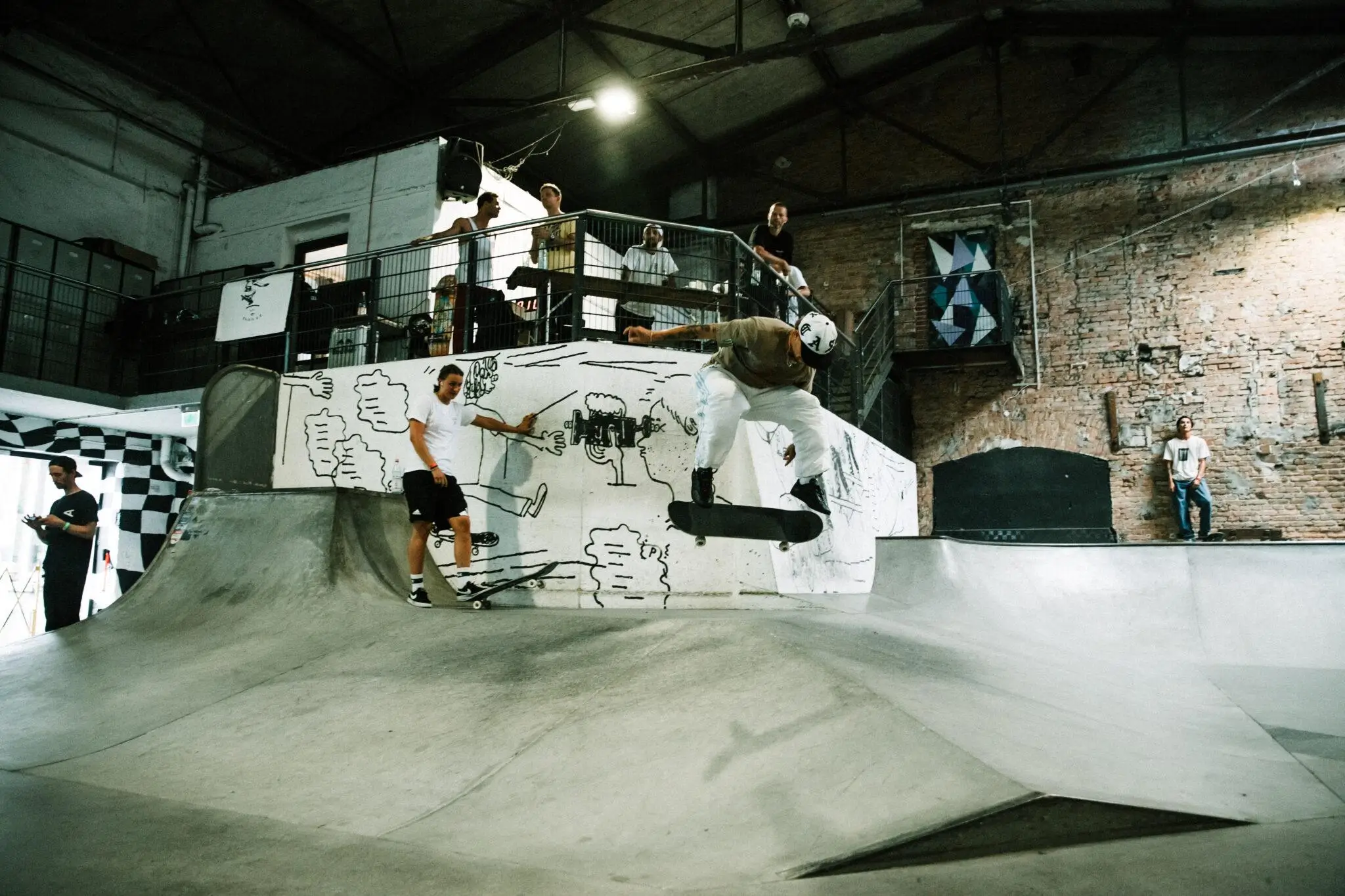
By 2026, the concept of “where” continues to expand. Skate Muzik appears in hybrid spaces — art galleries hosting skate video screenings accompanied by live DJs, flagship stores incorporating dedicated listening booths, and fashion week after-parties where professional skaters and designers share both boards and playlists.
The geography dissolves into networked presence. Milan remains the point of origin, but not the boundary.
endure
Skateboarding and music have always functioned as parallel systems. Early skate culture drew from punk and hardcore’s immediacy, while the 1990s integrated hip-hop’s rhythm and narrative structure. Skate Muzik distills this relationship into a format that feels newly legible in 2026.
In contrast to an era dominated by rapid consumption and visual saturation, Skate Muzik introduces a form of resistance grounded in depth. Each piece carries meaning because it is anchored in an existing cultural moment that continues to resonate. This is not about retro aesthetics or revivalism. It is about continuity.
The appeal lies in memory — not passive recollection, but active recognition. The feeling of hearing a track that once defined a moment of movement, and understanding that its impact remains intact.
sys
The operational model behind Skate Muzik is intentionally controlled. Radio episodes align with visual releases, creating a synchronized narrative between sound and product. Merch drops are tied to specific cultural moments rather than arbitrary seasonal cycles.
Production remains small-batch, often executed in facilities connected to Italy or Mexico, ensuring consistency and longevity. Distribution prioritizes independent skate and fashion retailers over mass-market platforms, preserving both exclusivity and context.
This is not scarcity for the sake of hype. It is structural necessity. The system depends on discovery. If access were unlimited, the meaning would dilute.
In this framework, the consumer becomes participant. Listening to the radio show, acquiring a piece, integrating it into a wardrobe — each action reinforces engagement with the broader system.
relev
As streetwear continues its evolution into a high-fashion dialogue, the challenge becomes maintaining authenticity within expansion. Skate Muzik succeeds by anchoring itself not in aesthetic trends, but in origin.
The broader cultural landscape reflects this shift. Olympic-level skaters influence global style narratives. Music festivals double as fashion environments. Hybrid tailoring merges technical performance with traditional silhouettes.
Within this context, Skate Muzik operates differently. It does not translate subculture into product for mass consumption. Instead, it translates product back into subculture, reinforcing the original source rather than diluting it.
This inversion defines its relevance.
fin
To wear Skate Muzik in 2026 is to engage with a lineage. It signals alignment with a network of skaters, musicians, designers, and cultural participants who understand that style is not purely view. It is auditory. It is physical. It is experiential.
This is not nostalgia. It is evolution.
The concrete still cracks under pressure. The beats still structure movement. The right tee still carries meaning beyond its surface.
And somewhere between Milan’s streets and a global network of listeners and wearers, Skate Muzik continues to operate — not as trend, but as trend.
Related Articles
A Tiger On The Denim / Human Made
HUMAN MADE Shinsaibashi PARCO, full renewal 17 October 2026. Tiger jacket, hoodie, keyholder. Wasted Youth popup, two days. App lottery 10:00 to 17:00.