DRIFT AUDIO
Listen to this story
Choose a voice, then press play.
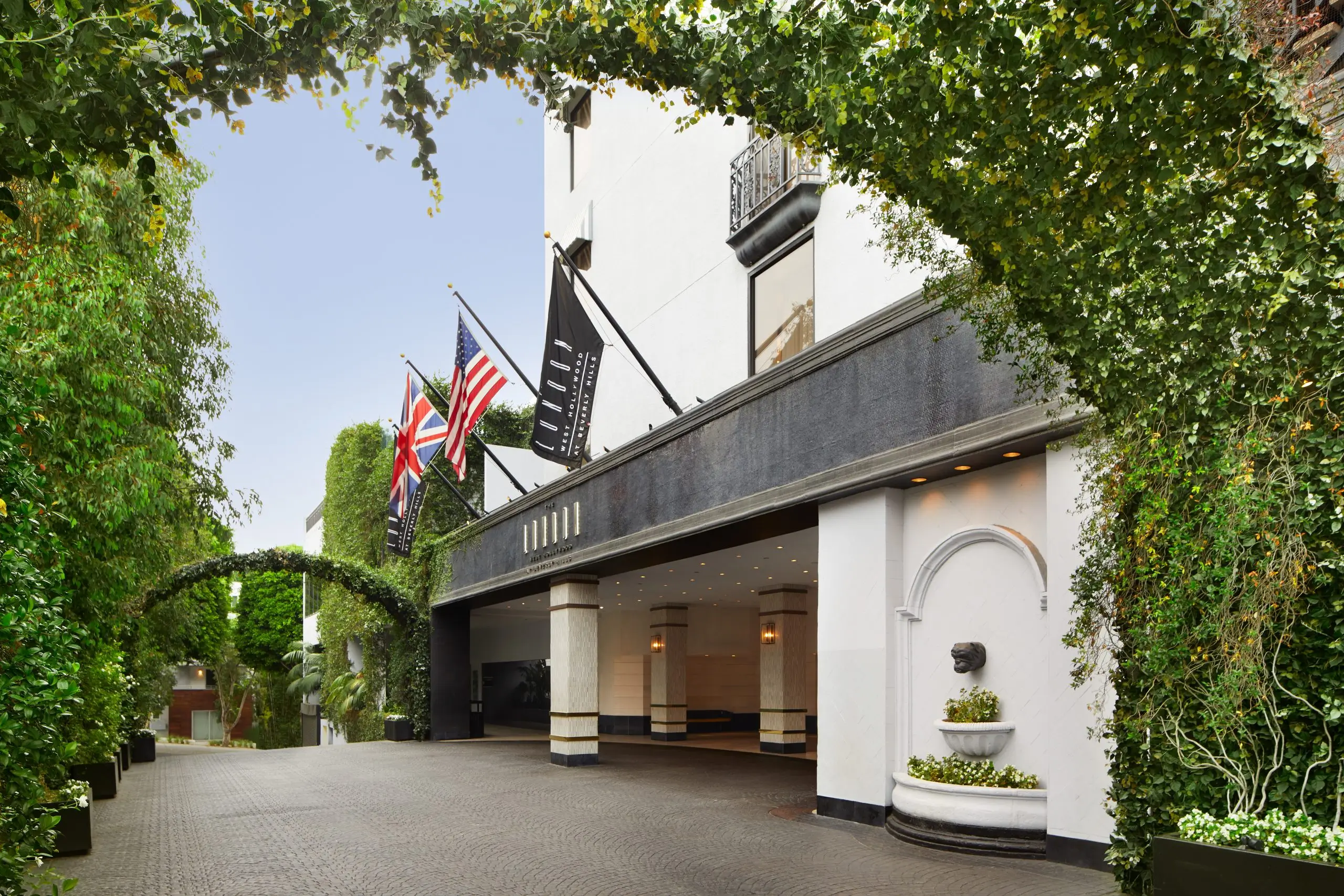
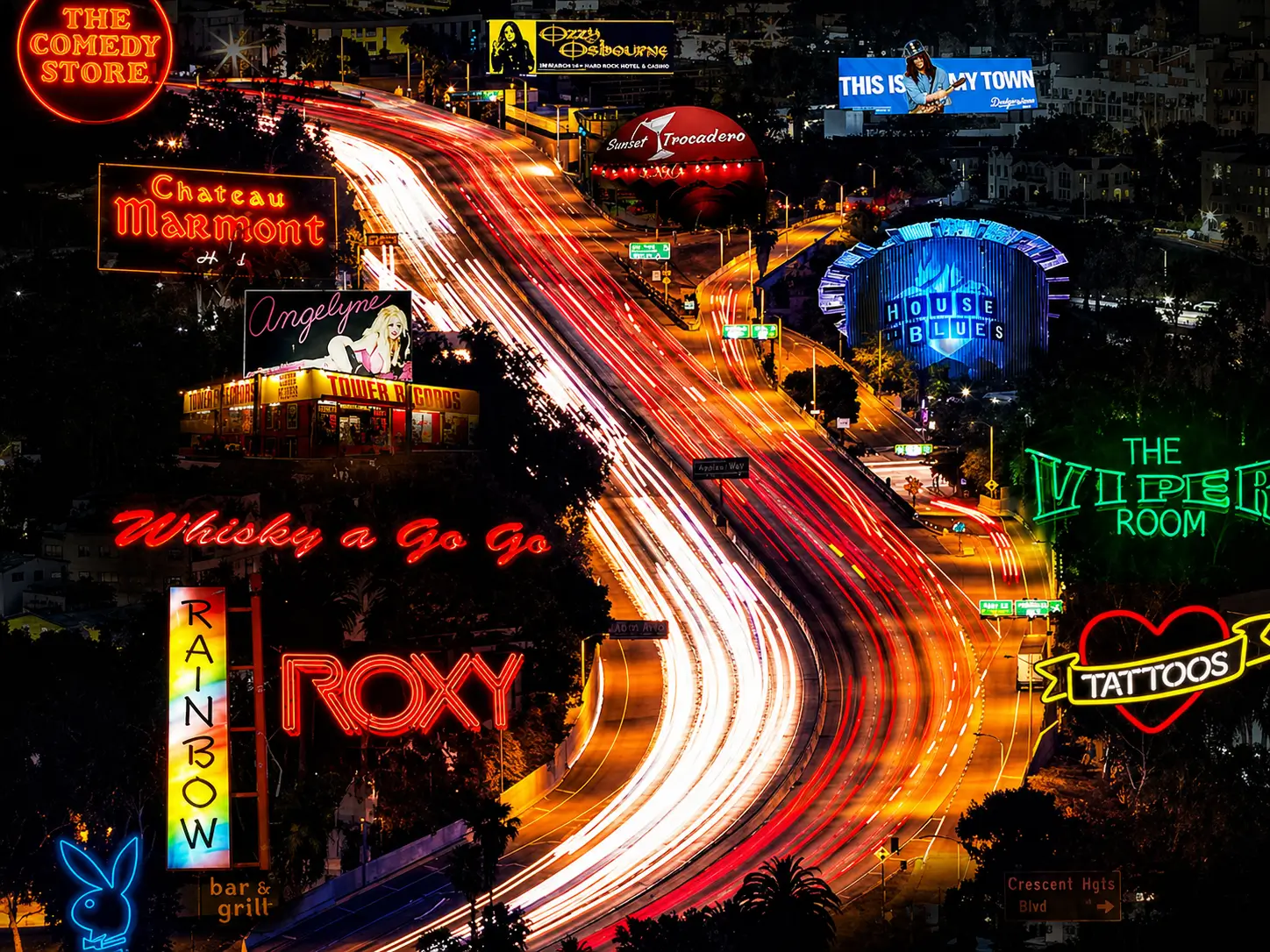
It’s just after midnight on the Sunset Strip. The air hums with bass from a club two blocks over. Neon signs flicker—pink, blue, gold—casting long shadows on the pavement. A tour bus rumbles past, its windows dark, its passengers asleep. The city doesn’t stop. It never does.
And then, a turn. A quiet curve off Sunset, past a low hedge, through a discreet porte-cochère. The noise folds away. The lights soften. The body, without being told, begins to relax.
This is the arrival at The London West Hollywood at Beverly Hills—not a grand entrance, but a ritual of transition. It’s the first act in a carefully choreographed dialogue between two worlds: the relentless rhythm of West Hollywood and the quiet confidence of London. And in that moment—between the last echo of the Strip and the first sight of the marble fireplace—you understand: this is not just a hotel. It’s a statement of intention.
It is, more precisely, an intervention. A recalibration of pace, of perception, of how space can alter the mind before a single word is spoken or a key is handed over. In a city defined by momentum, this pause feels almost radical. Not because it removes you from the city, but because it allows you to experience it differently—through distance, through framing, through a kind of architectural editing that cuts away the excess without diminishing the substance.
stir
The London sits at a rare intersection—where Sunset Strip, Santa Monica Boulevard, and the Design District converge in a tight, almost electric rhythm. Each artery carries its own energy, and together they form a triangulation of movement, culture, and refinement compressed into a few square miles.
Sunset Strip is the city’s cultural pulse—a legacy of rock ‘n’ roll, rebellion, and reinvention. It’s where Janis Joplin once sang, where Guns N’ Roses once raged, where mythology still lingers in the architecture of venues and the memory of sound. It remains a stage, even when no one is watching, its presence embedded in the collective memory of the city.
Santa Monica Boulevard operates differently. It is less symbolic and more structural—a continuous flow of activity that reveals the city’s operational core. Cars move with intent, pedestrians cross with urgency, delivery trucks navigate with precision. It is Los Angeles as system rather than story, a reminder that beneath every narrative is a network of function holding it together.
The Design District introduces a third condition: attention. Here, movement slows not because it must, but because it is invited to. Objects are examined. Materials are considered. Form is not incidental but deliberate. It is a space where aesthetics become language, where design becomes a form of communication rather than decoration.
Most hotels in this position would amplify these forces, reflecting the city back at itself in louder, more immediate terms. The London does something more precise. It absorbs the surrounding intensity and reframes it, offering not a mirror but a lens. The energy of the city is not denied—it is translated.
shh
Step inside, and the first thing you notice is not scale, but tone. The lobby does not overwhelm—it receives. It unfolds gradually, offering luxury without spectacle, presence without insistence.
At its center, the San Lorenzo marble fireplace acts as both anchor and axis. Its veining—gold, gray, fluid—suggests movement captured in stillness, a material history embedded within a contemporary frame. It grounds the space, providing a sense of permanence that contrasts with the transient energy just outside its doors.
Above it, a Cartier-style clock introduces a different relationship to time. There is no digital urgency here, no flashing indicators of speed or efficiency. Time is measured, observed, allowed to pass without pressure. It becomes something to inhabit rather than manage.
Behind the reception desk, a star map of Los Angeles extends across the wall, marking key landmarks—Griffith Observatory, The Getty Center, Dodger Stadium—while placing the hotel itself at the center, highlighted in gold.
This gesture operates on multiple levels. It situates the guest geographically, but it also establishes a narrative position. The hotel is not simply part of the city—it is presented as a vantage point from which the city can be understood.
View this post on Instagram
story
The design operates as a system of cues rather than statements. It guides behavior through atmosphere, shaping experience without overt direction.
The porte-cochère functions as a threshold, a deliberate pause between exterior intensity and interior calm. It signals a shift, not through signage or instruction, but through sensation. The body slows. The mind follows.
The marble introduces continuity, connecting the space to a longer material history that extends beyond the city itself. It carries associations of permanence, of structures built to endure.
The clock reframes time as craft, suggesting that precision and patience are not opposing forces but complementary ones.
And the star map transforms geography into narrative, placing the guest within a curated understanding of Los Angeles rather than leaving them to navigate it blindly.
Together, these elements create a space that communicates quietly but effectively, establishing a rhythm that the guest begins to adopt almost unconsciously.
myth
The gold star at the center of the map invites interpretation.
In a city defined by visibility and recognition, such a gesture could easily be read as self-mythologizing. But within the broader design language of the hotel, it feels more measured. It becomes less a declaration of importance and more a statement of perspective.
It does not claim to be the center of Los Angeles. Instead, it suggests that from this position, the city becomes legible. The distinction is subtle but significant. It shifts the focus from dominance to understanding, from being seen to seeing clearly.
This is where the hotel’s identity sharpens. It does not compete within the city’s existing hierarchy of visibility. It redefines the terms of engagement entirely.
consider
The experience of staying here unfolds not as a sequence of amenities, but as a rhythm of engagement.
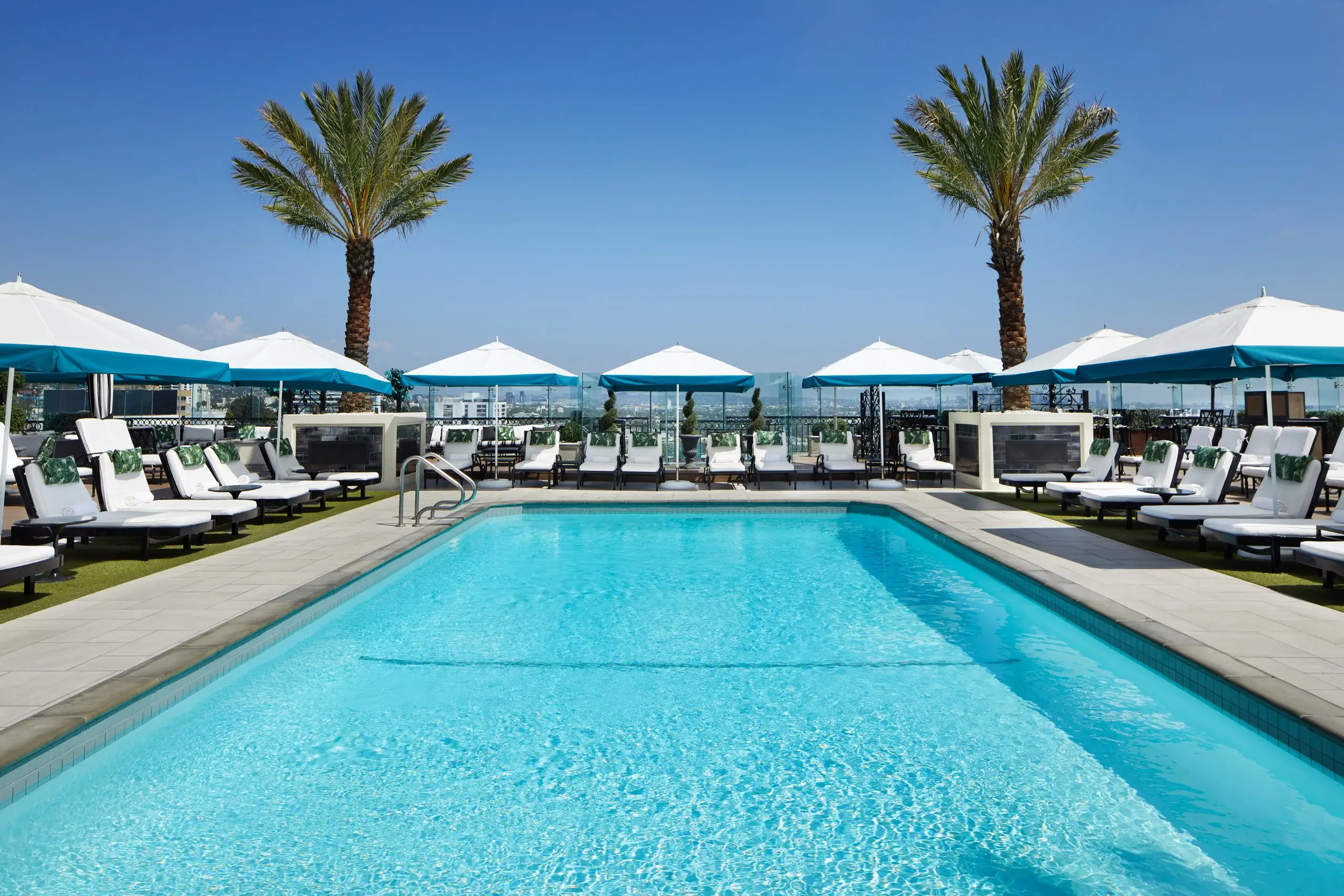
Morning begins with light rather than urgency. The terrace opens outward, offering a view of the Hollywood Hills that feels expansive but controlled, distant but present. It is a moment of orientation rather than stimulation.
Afternoon invites movement, but on different terms. The Design District becomes an extension of the hotel’s interior logic—spaces where attention replaces speed, where objects are encountered rather than consumed.
Evening returns inward. The fireplace regains its centrality, the city’s noise receding into a background texture that no longer demands response.
This is not an escape from Los Angeles. It is a recalibration of how one engages with it. The guest is not removed from the city, but repositioned within it—granted the distance necessary to experience it more clearly.
comfort
There is an inherent tension in spaces of this nature.
Does the act of refinement clarify reality, or does it risk distorting it? By filtering the city’s intensity, does the hotel create a more meaningful experience, or does it construct a curated version of reality that exists at a remove from the original?
This is a question that extends beyond hospitality into broader cultural discourse. The line between interpretation and simulation is thin, and easily crossed.
Yet the execution here resists that collapse. The London does not attempt to replicate London as image or aesthetic. It translates its underlying principles—restraint, craft, intentionality—into a new context.
These are not surface-level decisions. They are structural, shaping the way the space is experienced rather than simply how it appears.
The result is not a simulation, but an interpretation—one that acknowledges its context while offering an alternative mode of engagement.
idea
What emerges from this approach is not a fusion of styles, but a dialogue between two distinct cultural frameworks.
London contributes depth—a sense of history, of continuity, of time as something to be shaped rather than consumed. It brings a discipline of design that prioritizes longevity over immediacy.
Los Angeles contributes movement—a constant state of becoming, a willingness to evolve, an openness to reinvention that resists fixed identity.
The hotel operates between these poles, translating one through the lens of the other without reducing either. It does not resolve the tension. It maintains it, allowing both perspectives to coexist within a single spatial experience.
This is where its value lies—not in synthesis, but in balance.
fin
In a city that never stops, the most valuable offering is not space, but perspective.
The London West Hollywood does not remove you from Los Angeles. It reframes your position within it. It introduces distance—not as separation, but as clarity. Noise becomes texture.
Speed becomes optional.
View becomes secondary to understanding.
And in that shift, the definition of luxury changes. It is no longer about excess or display, but about control—over time, over attention, over experience itself.
Because in a city built on momentum, the ability to pause is not a retreat. It is an advantage.
From the DRIFT archive: Toff London Ladies Blue Orchid Flower Watch TLWS-17495 · Inside the World’s Most Iconic Ski Experiences
Related Articles

Where the Face Should Be, Rafael Silveira Paints Open Sky
A pink shirt, shoulder-length hair, then no face at all: in “Surprise,” Rafael Silveira lets flowers and a clear blue sky stand in for the person.